A beanie sits exactly where a tee often cannot. It hovers near the face, catches the eye in mirror selfies, and survives the jackets and hoodies that swallow most other garments. That position gives custom Beanies for Streetwear brand launch a practical edge: the logo stays visible in winter content without fighting the rest of the outfit.
New labels feel that advantage quickly. Custom beanies for streetwear brand launch can make a brand look established before the wider apparel line exists, and if the drop includes hang tags, inserts, mailers, or Custom Packaging Products, the release reads as intentional rather than improvised. Packaging, fit, and restraint often do more for perception than another graphic ever could. I have seen solid branding lose its effect because the packaging looked like an afterthought.
The beanie is one of the few streetwear pieces that can look premium, photograph well, and avoid the headache of a size curve all at once. One size reaches most customers. The retail math stays cleaner. The product can come back season after season without feeling stale, provided the knit, label, or color palette changes with some discipline.
The decision is rarely whether a brand should make custom beanies for streetwear brand launch. The sharper question is how to make them look deliberate instead of generic. Material choice, decoration method, packing style, and production timing all shape that answer as much as the logo itself. That is where good launches separate themselves from the ones that just kind of exist.
Why custom beanies for streetwear brand launch outperform tees
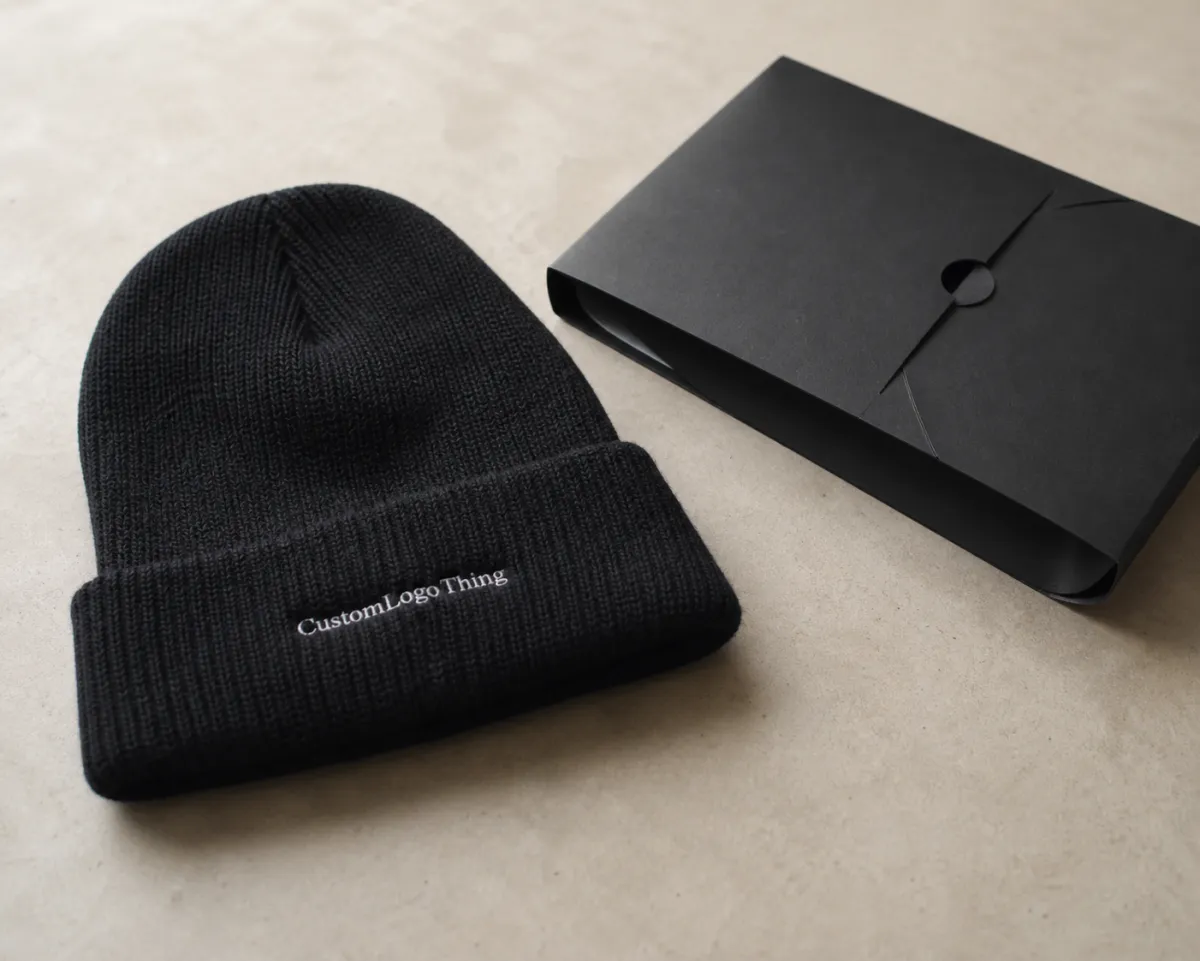
Custom beanies for streetwear brand launch outperform tees for one simple reason: they sit higher in the frame. A shirt disappears under overshirts, coats, and open layers, while a beanie lives near the face, where cameras naturally land. In cold-weather drops, that placement matters. A small logo on a cuff can collect more real-world impressions in a weekend than a large chest print on a tee might earn in a month.
The brand-building upside is equally practical. Custom beanies for streetwear brand launch let a founder test visual identity without building a full apparel program, wrestling with a complicated size chart, or sinking money into a deep assortment. That matters for labels trying to prove a point rather than warehouse it. A beanie gives a cleaner read on brand identity. If the color, stitch, and label work together, the customer understands the label faster.
Perceived value can surprise people. A knit accessory can feel more expensive than it is if the yarn has a good handfeel, the cuff sits correctly, and the branding avoids clutter. For custom beanies for streetwear brand launch, that distinction matters because buyers are not only purchasing warmth. They are buying a signal. A well-made beanie tells the market the brand knows its audience without shouting over it.
Repeat wear adds another layer. A tee may cycle in and out of rotation, but a winter beanie can become part of a daily uniform for weeks. That repetition keeps the logo in circulation, especially when the piece shows up in social circles that the brand wants to reach. A small object with a long life inside the wardrobe does a lot of marketing work quietly.
Limited-drop brands benefit even more. A beanie can anchor a capsule without forcing the label into ten categories on day one. Add a hoodie later, maybe a tee after that, and the beanie still holds its place as the first accessory. That is why custom beanies for streetwear brand launch often feel smarter than tees for founders who want momentum, not clutter.
A good streetwear beanie should read like part of the silhouette, not like a souvenir attached after the fact.
Look at how many labels use winter accessories as the first proof of concept. Our Case Studies page shows how small-format pieces can outperform larger apparel lines at launch, mostly because customers can wear and share them immediately. Custom beanies for streetwear brand launch work best when they feel like the first chapter of a label, not a side note.
That is the real edge. A tee can be blank canvas territory. A beanie is a finishing piece people notice from across the room. For custom beanies for streetwear brand launch, that means a new brand gets a better chance to be seen, remembered, and worn again.
How custom beanies for streetwear brand launch are made
The production path for custom beanies for streetwear brand launch usually starts with a sketch, a logo file, or a reference sample, then moves through a spec sheet, sampling, approvals, production, and packing. The sequence sounds simple enough. The details inside each step decide whether the final piece feels like a premium drop or a promo item with a streetwear price tag.
Artwork comes first. With custom beanies for streetwear brand launch, a logo that looks sharp on screen may need simplification before it can survive knit fabric. Fine lines can vanish. Tiny text can blur. Gradients usually need to become solid color blocks, embroidery thread, or a woven patch. A spec sheet gives the supplier a fixed target instead of a moving one, and that matters more than most first-time founders expect.
Decoration method changes the tone. Embroidery gives a clean, familiar streetwear look and is usually the safest entry point. Woven patches add texture and help small logos hold contrast. Jacquard knit builds the design into the fabric itself, which suits brands that want the logo to feel integrated rather than applied. Cuff labels, hem labels, and inside labels create a quieter, more private-label feel.
Construction matters just as much as the logo. Cuff height determines how much branding space you actually have. Yarn thickness changes warmth and drape. Stitch density shifts the beanie between structured and floppy. Crown shape affects how it sits on the head. A fashion-first streetwear beanie usually has sharper proportions and a cleaner silhouette than a promotional version, which often feels oversized in the wrong places and bland in the right ones.
A useful rule: the more complicated the artwork, the more important it is to test how it translates onto knit fabric. Minimum line weight, thread color, patch border width, and logo scale all deserve a check before production begins. For custom beanies for streetwear brand launch, a design that feels readable on paper can turn muddy once the yarn and stitch structure take over.
Custom beanies for streetwear brand launch usually fall into four production families:
- Embroidered cuff beanies for clean logos and lower setup complexity.
- Woven patch beanies for stronger contrast and a more tactile finish.
- Jacquard knit beanies for integrated graphics and tighter visual control.
- Private-label beanies with woven labels, care labels, and custom packaging for a more polished retail presentation.
The right choice depends on the story the product needs to tell. Minimal brands usually benefit from one color and one logo placement rather than an all-over pattern. Graphic-heavy labels often look stronger with jacquard knit than with a tiny embroidery hit. That is why custom beanies for streetwear brand launch work best when the decoration method shapes the design, not the other way around.
Wearability and photography are not always the same test. A beanie needs comfort and recovery after wear. A product shot needs visual punch and a silhouette that still looks clean under studio lighting. The strongest custom beanies for streetwear brand launch manage both, which is why sampling matters if the goal is a proper release rather than a hurried merch run.
Design and material factors that change the final look
Materials shape the first impression faster than most founders expect. In custom beanies for streetwear brand launch, acrylic is common because it stays affordable, matches color well, and behaves consistently from batch to batch. Cotton feels softer and more casual, which suits lighter-weight styles. Wool and wool blends bring warmth and a richer handfeel, but they also lift cost and can demand more care. Recycled yarns add a sustainability angle that can strengthen the story if the rest of the product backs it up honestly.
Gauge and stitch structure matter nearly as much as fiber content. A finer gauge can look cleaner, hold a crisper logo edge, and photograph with more refinement. A chunkier knit can feel more rooted in streetwear, especially if the brand wants a winter-first mood with texture and weight. For custom beanies for streetwear brand launch, a 12-gauge style often reads more polished, while a lower-gauge knit can feel looser and more expressive. Neither wins by default. They speak to different buyers.
Color strategy changes the whole capsule. A launch does not need six shades to feel complete. One strong core color often does more for coherence than a crowded palette ever could. Black, heather grey, olive, bone, and washed navy show up often because they photograph well and pair with winter wardrobes. Custom beanies for streetwear brand launch usually perform better when the color list stays short, intentional, and easy to style with the rest of the drop.
Fit is where many good ideas slip. A cuffed beanie sits differently from a slouchy style. A fisherman profile rides shorter and feels more fashion-forward. Oversized silhouettes create a bolder streetwear statement, but they need the right yarn and crown construction or they collapse awkwardly after a few wears. For custom beanies for streetwear brand launch, the shape should match the audience, not just the mood board.
Logo placement is the final visual test. Center-front embroidery is common because it reads clearly, but not every brand needs that obvious a mark. Side hits, small cuff marks, woven tabs, and hidden interior labels can feel more restrained and premium. Clarity still matters for a new label. A customer should identify the brand in one glance. That means contrast, spacing, and scale need to be checked in real light, not only on a laptop screen.
Buyers tend to notice a few signals first:
- Acrylic: affordable, warm, and easy to color-match.
- Cotton: softer handfeel and a lighter streetwear look.
- Wool blend: richer texture and stronger premium cues.
- Recycled yarn: useful for brands that want a cleaner material story.
- Finer gauge knit: cleaner branding and tighter visual control.
- Chunkier gauge knit: more texture and a bolder silhouette.
One mistake shows up repeatedly: choosing a material for the spec sheet rather than the customer. A brand picks the cheapest knit, then wonders why the piece does not photograph well or sit comfortably. For custom beanies for streetwear brand launch, the goal is not to chase the lowest-cost fabric. The goal is to find the texture that supports the brand identity, the retail price, and the climate where the product will actually be worn.
The rest of the launch matters too. If the beanie ships in branded packaging, a soft-touch mailer, or a rigid box with inserts, the material should feel as good out of the package as it looks online. Packaging design is not separate from the product. It is part of the same impression. For custom beanies for streetwear brand launch, product packaging, retail packaging, and the unboxing experience all need to point in the same direction.
Process and turnaround: the custom beanie production steps
The production timeline for custom beanies for streetwear brand launch is usually longer than founders expect because several steps sit between “approved artwork” and “boxes on the doorstep.” A normal path starts with quoting, then artwork refinement, then sampling, then final sign-off, then production, then packing, then freight. If any one of those steps slips, the launch date feels it immediately.
Sampling reveals the clock more honestly than the quote does. A supplier may promise a fast production window, but the sample can still take a week or two depending on construction, yarn matching, and decoration method. For custom beanies for streetwear brand launch, a pre-production sample earns its place by showing how the logo sits on the knit, how the cuff folds, and whether the color matches what the screen suggested. Skipping that step can turn a small issue into inventory that nobody wants.
Approvals can slow things down just as much as the factory can. Even a strong vendor cannot move while a brand is debating thread color or asking for one more logo revision. Turnaround is not only about the factory’s speed. It also depends on response speed from the brand side. Custom beanies for streetwear brand launch move fastest when the artwork file is clean, the approval chain is short, and the final decision maker is available during sample review.
Lead times vary by construction. Decorated beanies with embroidery or labels can often finish in roughly 10 to 15 business days after approval, while fully custom knit styles may need 20 to 30 business days, especially if the yarn or colorwork is more involved. Freight comes after that. Air shipping moves quickly but costs more; ocean shipping saves money but takes time. For custom beanies for streetwear brand launch, the calendar has to be mapped backward from the drop date rather than forward from the quote.
Seasonality can squeeze the schedule too. Holiday demand pushes queues out. Custom colors may require sourcing or matching yarn. Late artwork changes can trigger a second sample or another approval round. These are the quiet reasons “simple” projects run late. Brands that plan well for custom beanies for streetwear brand launch build buffer time into the schedule, especially if product photos, social teasers, and retail packaging all need to land together.
A practical timeline looks like this:
- Quote and scope the project.
- Lock artwork, placement, and decoration method.
- Review the sample under real lighting.
- Approve the pre-production version.
- Move into production and packing.
- Plan freight, receiving, and launch content together.
The last step tends to get overlooked. If the beanies arrive first but the packaging is still in transit, the launch can still stall. If the content is ready but the sample never got approved, the photos do not help. The strongest custom beanies for streetwear brand launch sit inside a schedule that includes product, packaging, and media in one planning window.
Freight deserves its own quality-control lens. If the beanies are shipping in mailers or carton packs, ask about transit testing. For packaging validation, the ISTA library is a practical reference for common distribution stresses, and paper-based components can be sourced with FSC materials if the brand wants a cleaner paper trail. Details like these often decide whether custom beanies for streetwear brand launch arrive looking premium or battered.
Cost, pricing, MOQ, and quote basics for custom beanies
Cost is where most custom beanies for streetwear brand launch conversations turn real. A quote is not just a number. It is a summary of fabric, decoration, labor, setup, packing, and freight. Two beanies that look similar in a product photo can price very differently because one uses standard cuff embroidery and the other uses custom knit colorwork, private labels, and upgraded retail packaging.
Order quantity changes the math right away. Smaller runs usually carry higher unit costs because the setup gets spread across fewer pieces. Larger runs improve unit economics, but they also increase inventory risk if the style misses. For custom beanies for streetwear brand launch, MOQ should not be treated like a random obstacle. It should be compared against audience size, expected sell-through, and the cash the brand can realistically hold in inventory.
A practical pricing comparison helps frame the range. The numbers below are typical for moderate-volume orders and can move with yarn choice, decoration complexity, and freight timing.
| Option | Typical MOQ | Approx. Unit Cost | Best Use |
|---|---|---|---|
| Embroidered cuff beanie | 100-300 pcs | $4.25-$7.25 | Clean logo, lower complexity, quick launch testing |
| Woven patch beanie | 150-300 pcs | $4.75-$8.00 | Sharper contrast, more texture, more premium feel |
| Jacquard knit beanie | 300-500 pcs | $6.50-$12.00 | Integrated artwork, stronger brand language |
| Private-label beanie with woven labels | 100-250 pcs | $3.75-$6.50 | Subtle branding, retail-ready presentation, flexible styling |
Those figures are not a universal quote, and nobody should read them that way. They do show the shape of the market. If a supplier sits far below the range, the tradeoff usually appears somewhere else: yarn quality, communication, consistency, or finishing. If a supplier sits far above the range, the extra cost may be tied to labor, packaging, faster turnaround, or a more complex production path. For custom beanies for streetwear brand launch, the cheapest quote rarely turns out to be the best value.
It helps to break the quote into parts. A buyer may see a base product cost, decoration cost, sampling cost, setup or mold cost, label cost, packaging cost, and freight. Some suppliers bundle everything. Others itemize each piece. A careful buyer asks for a line-by-line view because that is the only useful way to compare one supplier against another. Custom beanies for streetwear brand launch should be priced on the full landed picture, not only the headline unit cost.
A few simple choices can control cost without dulling the product. Stick to one or two colorways instead of five. Keep the logo placement simple. Standardize inside labels. Cut extras that do not change customer perception. If the brand wants a cleaner retail feel, spend on one visible upgrade instead of three minor ones. A better yarn or a better label usually does more for custom beanies for streetwear brand launch than a pile of decorative details.
Perceived retail value deserves equal attention. A beanie that costs more to produce can still be the smarter choice if it photographs better, wears better, and supports a higher retail price. For a streetwear label, that tradeoff can separate a commodity-looking product from one that feels worth waiting for. A strong custom beanies for streetwear brand launch order pays for the customer reaction, not only the factory invoice.
Common mistakes when ordering custom beanies for streetwear brand launch
The biggest mistake in custom beanies for streetwear brand launch is overdesigning the artwork. A logo that looks strong on a phone can lose shape once it is stitched, knitted, or patched onto textured fabric. Small text softens. Thin borders disappear. Multi-color gradients can turn muddy. The answer is not weaker design. The answer is to respect the material and simplify the execution so the final piece still reads clearly at arm’s length.
Quantity guessing causes its own problems. A new streetwear label can sell through 200 pieces faster than expected, or sit on inventory because the audience is smaller than the founder hoped. Custom beanies for streetwear brand launch should be ordered against evidence: email list size, past post engagement, prelaunch signups, retail stockist interest, or an established local customer base. Hunches get expensive once inventory enters the picture.
Cheap-quote thinking creates another trap. A supplier that looks attractive on price but weak on communication can cost more later through delays, color mismatch, or uneven production quality. Custom beanies for streetwear brand launch need consistency more than almost anything else. If the first 50 arrive well-shaped and the next 150 do not, the brand pays for it in returns, reviews, and trust.
Fit and comfort are easy to ignore because beanies are one-size items. That does not mean they fit well by default. If the knit is too tight, the beanie feels restrictive. If it is too loose, it collapses instead of sitting cleanly. If the yarn scratches, customers wear it once and forget it. For custom beanies for streetwear brand launch, comfort affects repeat wear, and repeat wear affects how often the brand gets seen.
Presentation causes plenty of damage too. Some founders spend weeks refining the logo, then ship the final piece in the cheapest bag they can find. That disconnect can flatten the unboxing experience. Product packaging is not only about protection; it is about package branding and the customer’s first physical interaction with the label. A clean fold, a tidy hang tag, or a custom insert can do a lot here. If the brand wants stronger retail packaging, that should be planned alongside the beanie, not after it.
If the packaging looks accidental, the brand feels accidental.
Labels that do custom beanies for streetwear brand launch well tend to think from the knit outward through the mailer. Our Case Studies show that customers notice the difference even when they cannot name it. They may not say the distribution standard was better, yet they notice when the box opens cleanly, the beanie is folded properly, and the brand identity stays consistent from product to pack-out.
If the order ships in Custom Printed Boxes, test the box size before production. If it ships in mailers, think about crush resistance. If the product is moving through a longer distribution lane, ask about transit testing and carton strength. A quick check against packaging standards can save embarrassment later. For reference, custom beanies for streetwear brand launch shipped with paper-based packaging often benefit from FSC-certified materials, and shipping validation aligned with ISTA principles can reduce damage surprises.
The final mistake is treating the beanie like a one-off. Streetwear customers read continuity. If the first drop feels polished and the second looks improvised, trust falls off quickly. That is why custom beanies for streetwear brand launch need a repeatable system for logo placement, label specs, and packaging design. The brand is not only selling the beanie. It is teaching the market how to read the label.
Expert tips and next steps for your first beanie drop
If the first drop is still in planning, start small and sharp. For custom beanies for streetwear brand launch, one silhouette, two or three colorways, and one clear visual language is usually enough to test the market without muddying the story. A focused capsule looks more confident than a wide assortment, and confidence matters in streetwear. The customer should understand the point of the product in a second, not a minute.
Ask for a sample, then review it in the same light your customers will use. Indoor light, daylight, and camera flash all show different problems. A beanie can look excellent on a bench under soft light and awkward under flash. For custom beanies for streetwear brand launch, photograph the sample before approving mass production. Logo size issues, cuff behavior, and color shifts reveal themselves faster in a photo than in a spec sheet.
Build launch content before the goods land. Product photos, social crops, email assets, care instructions, and packaging imagery should move on the same timetable. If the drop needs stickers, inserts, tissue, or custom printed boxes, decide that early because packaging design can shape the whole visual system. A clean custom beanies for streetwear brand launch release often feels more valuable because the product, the retail packaging, and the unboxing experience all reinforce the same message.
Think about the customer’s path after the buy button as well. The beanie may arrive in a mailer, a branded box, or a folded pack with an insert card. The way it opens shapes the story. A strong package branding system does not need to be expensive, but it does need to be deliberate. For brands that want a more polished setup, our Custom Packaging Products page is a useful place to think through the support pieces around custom beanies for streetwear brand launch.
A simple checklist keeps first-time launches on track:
- Define the audience and style mood.
- Set a target retail price before quoting.
- Choose the decoration method that fits the logo.
- Request a sample and review it physically.
- Lock packaging and insert details before production.
- Back-plan the launch calendar with freight and content deadlines.
Each step protects the brand from a preventable mistake. The value is not only in avoiding delays. It is in keeping the first release coherent. Custom beanies for streetwear brand launch work best when the product spec, the pricing plan, and the visual presentation all point in the same direction. If one of those drifts, the whole drop feels less certain.
From a packaging professional’s point of view, the strongest launches are rarely the loudest. They are the ones where the knit looks right, the label placement feels deliberate, the price makes sense, and the shipping presentation supports the brand without overcomplicating it. That is why custom beanies for streetwear brand launch can be such an effective first move: they let a new label appear focused, wearable, and ready for repeat business instead of looking like a one-day idea.
Handled with care, custom beanies for streetwear brand launch can become the piece people remember first and reorder later. Keep the design clean, the materials honest, the packaging thoughtful, and the launch timing realistic, and the beanie does more than fill a product slot. It helps the brand introduce itself properly.
The most actionable move is also the simplest: lock the logo scale, yarn choice, and packaging structure before sample approval. That one decision prevents the majority of avoidable problems later, and it gives the first drop a clear point of view instead of a patchwork of good intentions. If the goal is a launch that feels credible on day one, that is where the work needs to happen.
How many custom beanies should a streetwear brand launch with?
Start with a quantity that matches audience size and likely sell-through, not just the lowest MOQ available. Many brands test custom beanies for streetwear brand launch with a smaller color run first, then reorder the strongest performer once demand is clearer. If you already have a proven following, a larger first run can improve unit economics, but only if cash flow and storage can support it.
What decoration method works best for custom beanies for a launch?
Embroidery is usually the most versatile if you want a clean logo and a premium streetwear feel. Woven patches add texture and contrast, while jacquard knit works best when the design should be built into the beanie itself. For custom beanies for streetwear brand launch, the right choice depends on artwork complexity, budget, and how bold you want the branding to feel in photos.
How long do custom beanies usually take to produce?
Timeline depends on sample development, approval speed, and supplier workload. Simple decorated beanies are often quicker than fully custom knit styles with special yarns or detailed colorwork. For custom beanies for streetwear brand launch, add buffer time for revisions, shipping, and content planning so production does not collide with the release date.
What affects the unit cost of custom beanies the most?
Material, decoration method, order quantity, and the number of custom details usually have the biggest impact on unit cost. Packaging and specialty finishes can add value, but they also raise the quote, so they should be chosen intentionally. A simple, well-executed custom beanies for streetwear brand launch order often performs better than an overcomplicated one with a slightly lower production cost.
How do I make custom beanies feel premium without overspending?
Use one strong color story, careful logo placement, and a clean fit so the beanie looks designed rather than crowded. Choose one elevated detail, such as a woven label or better yarn, instead of trying to add every premium feature at once. Spend where customers can see and feel the difference, and simplify the parts they will never notice. That approach keeps custom beanies for streetwear brand launch sharp without pushing the budget out of range.

