Custom Beanies vs Baseball Caps: Which Should You Order?
Choosing between custom beanies vs baseball caps comes down to fit for purpose, not style alone. Beanies make more sense for cold-weather programs, winter merch, and gifts people are likely to keep. Caps work better when you need broader seasonal wear and a front panel that keeps the logo easy to read.
The difference shows up in wear, branding space, and how much production risk you want to take on. Caps are usually easier to decorate cleanly. Beanies can feel more premium in the right season, but knit stretch and fabric texture make artwork control less forgiving. For a launch, team kit, campus store, or event giveaway, the better choice is often the one that fits the weather and the logo, not the one that looks best in a mockup.
Simple rule: if the logo has to fight the fabric, the product is already working against the order.
Custom beanies vs baseball caps: which should you order?
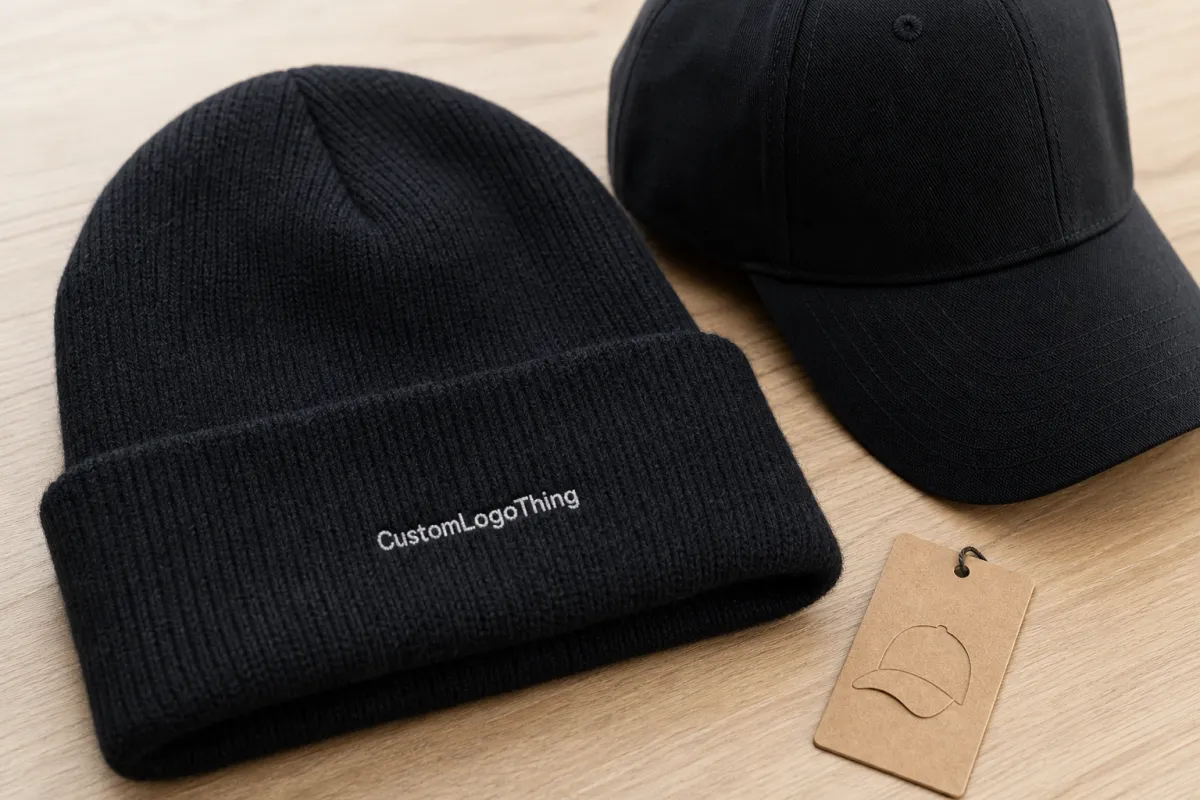
Start with use case. Beanies tend to work better for outdoor crews, commuting, winter promotions, and audiences that care about warmth first. Caps fit events, retail, and year-round merch more easily because they work across more outfits and more months.
Logo visibility comes next. Caps give you a flatter, more predictable front panel, so embroidery or patch placement is easier to control. Beanies can still look excellent, but the decoration sits on stretchy knit and usually needs a smaller, simpler approach. If the artwork includes tiny text or too many details, a cap is often the safer production choice.
For packaging buyers, the decision often comes down to whether the item needs to feel warm and premium or visible and versatile. That matters even more when the hat is part of a broader branded program with Custom Packaging Products or package branding add-ons. The hat should fit the rest of the kit, not fight it.
Top options compared: the builds that actually matter
People often say they just need "hats," but the build changes everything. Cuffed beanies, slouch beanies, structured caps, dad caps, and truckers behave differently in decoration, fit, and perceived value. Build matters more than the label.
| Style | Best use | Decoration | Typical MOQ / unit cost | Watch-outs |
|---|---|---|---|---|
| Cuffed beanie | Winter promos, staff kits, retail bundles | Flat embroidery, woven patch, leather patch | 250+ units / $3.20-$6.50 | Thin yarn can feel cheap quickly |
| Slouch beanie | Streetwear drops, campus merch | Small patch, low-density embroidery | 300+ units / $4.80-$8.50 | Relaxed fit is not for every audience |
| Structured cap | Corporate gifting, outdoor staff, events | Embroidery, PVC patch, woven patch | 100-250 units / $2.80-$5.75 | Low-profile crowns can crush larger logos |
| Dad cap | Lifestyle brands, casual retail | Clean embroidery or subtle patch | 100-200 units / $3.10-$6.00 | Looks relaxed, not polished |
| Trucker cap | Promo giveaways, warm-weather events | Embroidery or front patch | 100-250 units / $2.70-$5.20 | Mesh back feels less premium |
If clean decoration is the priority, structured caps are usually the easiest to execute well. If the goal is the most forgiving winter item, cuffed beanies are often the safest choice. Thin beanies save money up front, but they also show wear sooner and can make the whole order look lower value than it should.
Retail-style finish can improve either product. A woven patch, custom tag, or simple branded package can make a basic hat feel like a deliberate merch item instead of a bulk giveaway. That matters if the product will sit beside Custom Printed Boxes or be bundled into a direct-to-customer launch.
Beanies that actually hold up in real use
Beanies are not all the same. Standard acrylic is the budget workhorse: warm enough, stretchy, and easy to decorate, with common pricing around $3 to $5 before packaging upgrades. Acrylic-wool blends usually feel better in hand and can move into the $4.50 to $7.50 range depending on yarn weight and stitch density. Recycled yarn can support sustainability messaging, but the hand-feel and color matching should be checked before approval.
Decoration choice matters more on beanies than many buyers expect. Flat embroidery is the cleanest option for most logos because it keeps the design readable without fighting the knit texture. Woven patches help when the art has fine lines or multiple colors. Leather patches work well for a retail look, but they are a style choice, not a fix for weak artwork.
Fit is usually where low-end beanies fail. A shallow crown sits awkwardly. A tight cuff can make the hat look stretched on day one. Cheap yarn pills after a few wears, and then the item starts looking tired before the season is over. That is a bad trade for a piece meant to feel premium.
Beanies make the most sense for winter promos, employee welcome kits, campus merch, ski-season retail, and any order where comfort and perceived value matter more than maximum logo size. If the goal is a piece people keep in rotation, beanies can do that well.
One practical check: ask for stitch count, yarn gauge, and a photo of the decoration on the actual blank, not just a render. Beanies are forgiving in theory and less forgiving in production.
Baseball caps that sell without looking cheap
Caps are familiar, which helps selling, but that also means buyers notice fit problems fast. Structured caps hold shape and usually look more polished. Unstructured dad caps feel softer and more casual. Trucker caps are lighter for warm weather. Snapbacks give you a streetwear edge, but only if that matches the brand.
Embroidery usually wins on caps. It lasts, reads clearly, and makes a small logo feel intentional instead of squeezed into the panel. If the logo is simple, front embroidery is often enough. If the artwork is more detailed, a woven or PVC patch can help, though patches add setup cost and can make the front look heavier than expected.
Crown height, closure type, and brim shape matter more than most buyers think. A high crown looks bold but can feel too loud for corporate use. A low crown is easier to wear but can make larger marks feel tight. Strapback and buckle closures usually feel more premium than basic plastic snap closures, while trucker mesh keeps things lighter for summer events.
Caps also pair well with simple inserts and hang tags when the hat is part of a larger packaging program. If the order is tied to a launch, coordinate the cap color, tag stock, and outer shipper before production starts. Otherwise the whole job can look assembled in pieces.
Pricing, MOQ, and unit cost: what changes the quote
The quote is usually driven by five things: material, stitch density, logo size, patch type, and whether the product is stock-made or fully custom. If one supplier is much cheaper than the rest, check what disappeared from the spec. It is rarely generosity. More often, it is thinner yarn, fewer stitches, or a decoration method that does not hold up on the blank.
MOQ matters too. Lower minimums usually carry a higher unit cost, especially on custom-knit beanies or fully branded caps. If you want a better per-unit price, pushing volume higher is the quickest lever. Packaging upgrades, mixed color runs, and special trims can all raise the total as well.
| Factor | Beanies | Baseball caps |
|---|---|---|
| Material | Acrylic is cheapest; wool blends cost more | Cotton twill, polyester, and mesh vary by finish |
| Decoration | Embroidery and patches add cost quickly | Embroidery is standard; patches raise price |
| MOQ | Higher for knit and custom-color runs | More flexible if blanks are in stock |
| Packaging | Custom tags and sleeves add value and cost | Hang tags, inserts, and boxes increase presentation cost |
Base price should never be the only number you compare. A slightly higher quote can still be the better buy if the decoration is cleaner, the fabric feels better, and the packaging lands where you want it. Cheap orders get expensive when they have to be replaced.
Process, timeline, and turnaround for each product
Beanies and caps both move faster when the artwork is clean. Simple logos, one or two decoration areas, and stock materials keep the schedule tight. Complex knit patterns, custom-dyed yarn, or mixed embellishment push timelines out.
Caps usually have the faster path if you are using stock blanks and standard embroidery. Beanies can take longer when the order requires knit sampling or patch approval. Expect extra time if the project includes packaging, inserts, or a custom retail finish.
A realistic workflow starts with artwork approval, moves into sample or proof review, then production, and finishes with packing and shipping. Skipping the sample stage is tempting, but it is where most avoidable problems get caught.
For a launch date, build in a buffer. Delays rarely come from one big mistake. They usually come from a chain of small approval changes that add up.
How to choose based on season, audience, and use case
Season is the fastest way to narrow the choice. Beanies fit fall and winter without much debate. Caps make more sense in spring and summer, and they hold up better for events that run across the whole year.
Audience matters just as much. Outdoor staff, commuters, and colder-climate buyers usually prefer beanies. Retail shoppers, sports fans, and casual brand audiences often reach for caps. If the group splits evenly, choose the product that keeps the logo easiest to read.
Use case should settle the rest. Gifts and premium kits lean toward beanies when warmth is part of the value. Promotional runs and repeat-wear merch usually favor caps because they work in more places and get worn more often.
When the order sits inside a larger branded package, think about how the hat sits beside the rest of the contents. A cap can feel more versatile. A beanie can feel more considered. The right answer is the one that makes the whole kit feel complete.
Our recommendation and next steps for your order
For most buyers, the easiest recommendation is simple: choose beanies for cold-weather impact and caps for broader wear. If the budget is tight and the logo is detailed, a structured cap usually gives the cleanest result. If the brand wants warmth, softness, and a more premium feel, a cuffed beanie is hard to beat.
Before you place the order, lock three things: the decoration method, the blank quality, and the packaging finish. Those three choices decide how the final product feels more than almost anything else.
If the project needs a retail-ready presentation, treat the hat like part of a system, not a standalone item. That approach keeps the merchandise, packaging, and brand story aligned.
FAQs
Are custom beanies or baseball caps cheaper?
Baseball caps are often cheaper at lower MOQs, while beanies can become more cost-effective in larger runs. The decoration method and material quality change the price more than the category alone.
Which is better for branding?
Caps usually give you more readable front branding. Beanies work well too, but the knit surface limits how much detail you can pack into the design.
What looks more premium?
That depends on the season and the finish. A well-made cuffed beanie can feel more premium in winter, while a structured cap with clean embroidery can look sharper year-round.
Can I use the same logo on both?
Yes, though the artwork may need to be simplified for a beanie. Small text and fine lines usually translate better to caps.
Which one works better for giveaways?
Caps tend to work better for broad giveaways because they fit more seasons. Beanies are stronger when the giveaway is tied to colder weather or a winter campaign.

