Buyer Fit Snapshot
| Best fit | Custom Box Manufacturing Lead Time projects where brand print, material claims, artwork control, MOQ, and repeat-order consistency need to be specified before quoting. |
|---|---|
| Quote inputs | Share finished size, material target, print colors, finish, packing count, annual reorder estimate, ship-to region, and any compliance wording. |
| Proofing check | Approve dieline scale, logo placement, barcode or warning zones, color tolerance, closure strength, and carton packing before bulk production. |
| Main risk | Vague material claims, crowded artwork, missing packing details, or unclear freight terms can make a low unit price expensive after revisions. |
Fast answer: Custom Box Manufacturing Lead Time: What Really Slows It should be specified like a repeatable production item. The safest quote records material, print method, finish, artwork proof, packing count, and reorder notes in one written spec.
Production checks before approval
Compare the actual filled-product size with the drawing, then confirm tolerance on folds, seals, hang holes, label areas, and retail display edges. Reserve space for logos, QR codes, warning copy, and material claims before decorative graphics fill the panel.
Quote comparison points
Review material grade, print process, finish, sampling route, tooling charges, carton quantity, and freight assumptions side by side. A quote is only useful when the supplier can repeat the same color, closure quality, and packing count on the next order.
Custom box manufacturing lead time is the detail that gets treated like background noise until a launch date starts blinking red. The box may look simple in a mockup, yet the calendar can disappear into approvals, dieline revisions, proof changes, stock checks, and freight assumptions that never survive first contact with reality. Buyers often discover the same hard truth twice: custom box manufacturing lead time is not one clean number, but a chain of dependencies, and the smallest missing file can cost more time than the print run itself.
That is not a theory. I have watched a single barcode correction turn a tidy packaging schedule into a three-day scramble because it sent the proof back through legal, then back through prepress, then back through the buyer. Nobody planned for that. Everybody paid for it.
Custom box manufacturing lead time: the surprise nobody budgets for
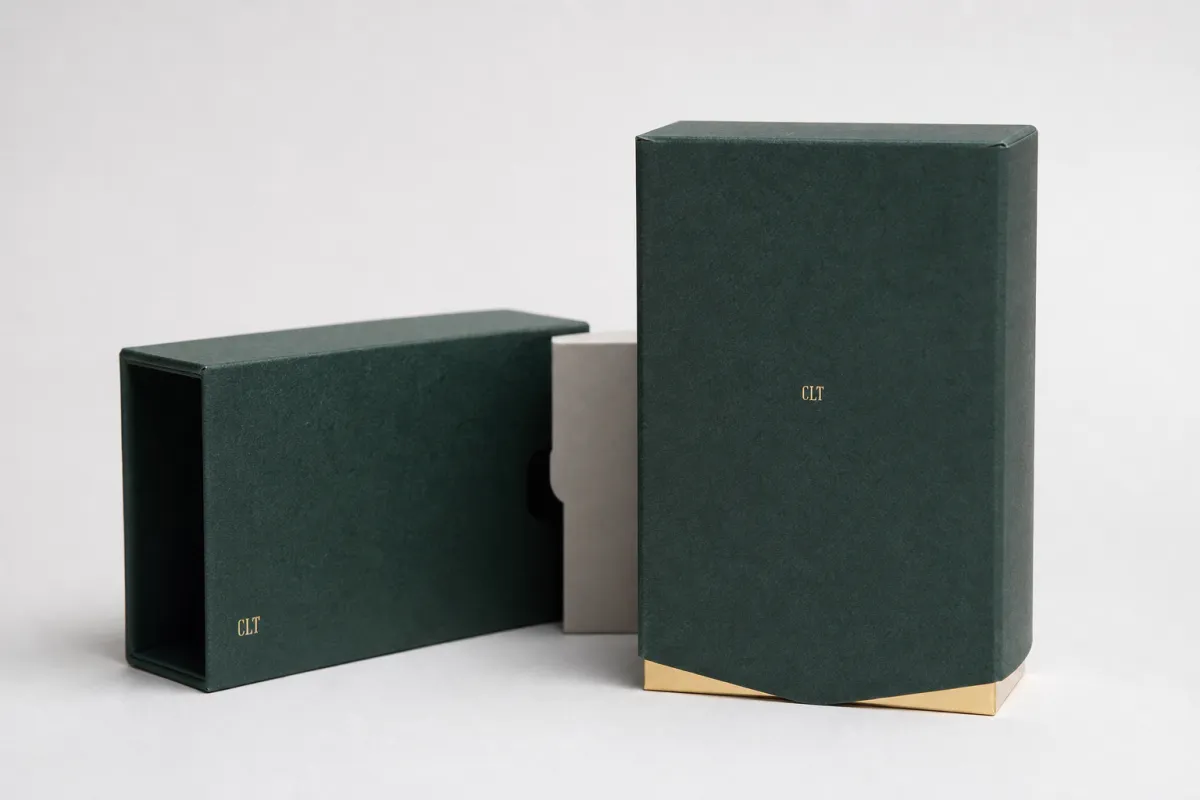
People ask for a quote as if a packaging plant can press a button and produce finished cartons on command. That fantasy dies quickly. Custom box manufacturing lead time begins when an order is approved and ends when the boxes are on site, but the route includes prepress checks, artwork sign-off, material scheduling, production, finishing, packing, and freight. If any link stalls, the whole schedule slips.
Three terms get blended together constantly, and the confusion is expensive. Production time is the factory window for printing, cutting, folding, gluing, and finishing. Lead time is the full span from approved order to finished goods ready to ship. Shipping time is the transit leg after the cartons leave the plant. Buyers mix those up, then wonder why a “10-day turnaround” turns into a three-week arrival. That was never one number. It was three.
Custom box manufacturing lead time usually runs long because the job is waiting, not because the machines are crawling. Waiting for corrected dimensions. Waiting for the final dieline. Waiting for a logo file that is not a screenshot saved from a slide deck. Waiting for someone to answer whether the insert should hold one product or two. A one-day delay in approvals can matter more than a full shift on press. One missing dimension can stop artwork. One proof round can add two business days. One late sign-off can push freight into the next pickup window.
That is why buyers need calendar blocks, not vague promises. A realistic custom box manufacturing lead time often includes:
- 1 to 3 business days for quote review and dieline setup on straightforward jobs
- 1 to 2 business days for artwork checks and proof preparation
- 5 to 10 business days for sampling if a physical sample is needed
- 10 to 20 business days for production, depending on structure and finish
- 2 to 7 business days for domestic freight, longer for cross-country or international moves
That range is not glamorous. It is also more honest than a fake shortcut. If you want branded packaging, product packaging, or retail packaging to land on time, the boring steps deserve respect. The calendar is usually lost in paperwork, not in the press room.
If the file is still moving, the schedule is too.
The phrase “easy box” causes more trouble than it should. A carton can look plain and still require a custom structure, special board, soft-touch lamination, foil stamping, or insert die-cutting. Every one of those choices affects custom box manufacturing lead time. The job may still be routine for the plant, but routine does not mean instant. It means predictable if the buyer stops changing the brief every forty-eight hours. Or, honestly, every other day. That kind of churn will wreck a clean schedule, gonna or not.
How the custom box manufacturing lead time process works
Most packaging projects move through the same chain, even when the final box styles differ. The order may shift a little, but the logic stays the same. The factory cannot print what it does not have. The prepress team cannot build a proof from a half-finished logo file. The assembly crew cannot run a box whose dimensions are still being debated on email thread number twelve. That is the practical side of custom box manufacturing lead time.
The sequence usually looks like this:
- Inquiry and requirements gathering
- Quote and material recommendation
- Dieline setup or structural confirmation
- Artwork prep and preflight checks
- Digital proof approval or sample review
- Production scheduling and press setup
- Printing, die-cutting, folding, gluing, and finishing
- Quality control, packing, palletizing, and freight booking
Where does the time actually go? Mostly into the handoffs. Inquiry to quote can move quickly if the spec sheet is clean. Quote to dieline can stall if the buyer has not settled dimensions. Artwork prep can drag if the file arrives in RGB, has low resolution, or is missing bleed. Proof approval can sit for days because three people need to agree on a black that nobody will describe in the same way. Production itself may be the shortest part of the whole chain.
Parallel work helps, but only up to a point. A quote can be built while the customer finalizes product measurements. A structural dieline can be adjusted while artwork is still being refined. Production cannot start before the proof is approved. Freight cannot be booked accurately before the final carton count is locked. That is why custom box manufacturing lead time is not a simple sum of hours. It is a sequence with dependencies.
Factory capacity matters too. A plant can have the right paperboard in stock and still be booked out for a week because another run has tied up the die-cutting line or the laminator. Finishing complexity changes the rhythm as well. Straightforward Custom Printed Boxes with one-color print and a standard fold can move faster than retail packaging with embossing, foil, spot UV, and a custom insert. Same box family. Very different queue.
For buyers comparing suppliers, one question cuts through the noise: what part of custom box manufacturing lead time is fixed, and what part is variable? The fixed part is the workflow. The variable part is the delay between each approval. That is where launches get pushed.
If you want to see how structure and production capability affect scheduling, review a supplier’s Manufacturing Capabilities before artwork goes too far. It is easier to plan around a plant’s actual setup than around a sales promise with no machine behind it.
For broader format options, sample runs, and packaging formats beyond a basic mailer, their Custom Packaging Products page can help you match the job to the right structure before the clock starts running.
Custom box manufacturing lead time and pricing: what changes the quote
Pricing and timing are linked more often than buyers want to admit. If the board grade changes, the schedule changes. If the box style becomes more complex, the quote changes. If the coating or finishing is upgraded, custom box manufacturing lead time usually stretches because setup and curing steps need room in the schedule. Cheap and fast are not really friends in packaging. They barely tolerate each other.
The main cost drivers are usually obvious once you look at them with a packaging buyer’s eye:
- Board grade: 250gsm to 400gsm SBS or C1S artboard is common for folding cartons; rigid boxes may use 1.5mm to 2.0mm greyboard.
- Print coverage: Full flood color takes more ink, more setup, and more prepress attention than a one-color design.
- Finishing: Soft-touch lamination, matte lamination, gloss varnish, foil stamping, embossing, debossing, and spot UV all add work.
- Structure: Straight tuck end, reverse tuck, auto-lock bottom, sleeve, mailer, and rigid styles do not all run the same way.
- Inserts: Paperboard inserts, foam, molded pulp, or custom trays can add both tooling and assembly time.
MOQ matters too. Low minimums can be attractive for testing a new product packaging concept, but small runs often raise the unit price because setup costs are spread over fewer boxes. Smaller orders also tend to move slower because they get scheduled around larger production blocks. That is the kind of answer nobody likes hearing, yet it is how factories stay efficient.
Here is a practical comparison of common buying options:
| Option | Typical Unit Cost | Typical Lead Time | Best For | Tradeoff |
|---|---|---|---|---|
| Standard folding carton, stock board, simple print | $0.18-$0.35 at 5,000 units | 10-15 business days production, plus freight | Fast-moving retail packaging and reorder jobs | Fewer finish options, less structural customization |
| Custom printed boxes with lamination and one special finish | $0.32-$0.70 at 3,000 units | 12-20 business days production, plus freight | Brand launches and mid-tier branded packaging | More setup, more proof review, more schedule risk |
| Rigid box with insert and premium finish | $1.20-$3.50 at 1,000 units | 15-25 business days production, plus freight | Luxury product packaging and premium gift sets | Higher cost, longer finishing and assembly windows |
| Rush production with compressed review | Often 15%-35% higher than standard | Can save 3-7 business days if files are final | Launches with hard deadlines | Less flexibility, higher freight cost, more stress |
That table tells the real story. A cheap quote is not automatically a good quote if it excludes sampling, proof revisions, or freight. The low number can be a mirage. Custom box manufacturing lead time can also be hidden inside the quote structure. If a supplier says “production starts after approval” but does not tell you how many approval rounds are normal, you are not buying a schedule. You are buying ambiguity.
Rush pricing deserves special attention. If a factory agrees to a rush order, it is usually because the job can jump the queue, the files are clean, and payment is already handled. Rush production often makes sense for seasonal launches or trade show deadlines, but it will not save a project that is still moving on the design side. Paying more to rush a half-finished brief is an expensive way to learn patience.
For buyers trying to tighten package branding without blowing up the calendar, the smartest move is often to simplify the build. Standard board, standard finish, and one clean print pass can shorten custom box manufacturing lead time more effectively than begging for priority. Fancy is nice. On time is nicer.
For industry context on shipping tests and package durability, the ISTA standards are worth a look if your boxes need to survive actual transit abuse. If your brand cares about responsibly sourced materials, FSC certification is another useful filter; see the FSC site for the basics. Standards do not erase delays, but they do help you avoid avoidable rework. They also keep everyone honest about what the packaging has to do once it leaves the plant.
Step-by-step timeline: from dieline to delivery
If you want a realistic custom box manufacturing lead time, map the job from the first measurement to the final delivery date. That sounds obvious. It is also the step most teams skip. They fixate on the press run and ignore the front end, where the schedule is usually lost. A clean timeline is the difference between a launch that lands and a launch that needs apology emails.
Start with dimensions. Not estimates. Not “roughly the same size as the sample we saw online.” Actual dimensions. Length, width, and depth need to be correct before the dieline is finalized. If the insert or inner tray is part of the design, that matters too. A 1-2 mm measurement error can change the fit, and fit problems almost always cause extra rounds of review. That adds days, not minutes, to custom box manufacturing lead time.
The dieline is the first real control point. It is the structural blueprint, and it protects the job from expensive rework. If the dieline is approved before artwork starts, the packaging design team can place logos, copy, barcodes, and dieline-safe graphics with less risk. Skip that step and the whole thing can wobble later. A box layout that looks fine in a PDF can still fail at the fold line.
Artwork setup is where prepress earns its keep. Files need the right format, resolution, color mode, bleed, and fonts converted or outlined as required. If the job includes custom printed boxes with a spot color, a foil block, or small text near a fold, the prepress check becomes more important. This stage often takes 1 to 2 business days, but it can stretch if the customer sends layered files with missing links or low-res imagery. That is not unusual. It is just irritating.
Then comes proofing or sampling. Digital proofs usually move faster than physical samples, but both have a job to do. A proof catches layout mistakes, copy issues, and obvious color problems. A sample verifies structure, size, and insert fit. If the product is part of the box experience, sample approval is worth the time. It is cheaper to catch a mismatch on a bench than after a full run of retail packaging is already packed and palletized.
Here is a practical timeline for a straightforward run:
- Day 1-2: Quote approval, specifications confirmed, dieline requested.
- Day 3-4: Dieline issued, artwork prepared, prepress review completed.
- Day 5-6: Proof reviewed and approved, or sample requested.
- Day 7-10: Production scheduled, materials reserved, press setup completed.
- Day 11-15: Printing, cutting, folding, gluing, finishing, and QC.
- Day 16-18: Packing, pallet prep, and freight booking.
- Day 19+: Transit to destination, depending on lane and carrier.
That example is not fantasy. It is a normal planning window for a mid-size order with clean files. A premium job with foil, embossing, or a complex structure can run longer. International freight can also take the lead from the factory and hand it to the shipping line, which is a polite way of saying that custom box manufacturing lead time does not stop at the dock.
One more point buyers miss: production time is not the same as delivery time. A supplier might quote 12 business days for manufacturing and still be honest, while the shipment arrives a week later because the freight lane is slow. The schedule is only useful if it includes both factory time and transit time. Otherwise, you are guessing with a calendar dressed up as a plan.
When a packaging vendor talks through a project clearly, they usually separate those dates. That is what you want. A real production window. A real shipping window. No magic. Just the numbers.
Common mistakes that stretch custom box manufacturing lead time
The bad news? Most delays are self-inflicted. The good news? Most of them are fixable. Custom box manufacturing lead time gets stretched by the same set of mistakes over and over, which means buyers can avoid them if they stop treating packaging as an afterthought.
The first mistake is sending unclear specs. “We need a medium box” is not a spec. Neither is “something around this size.” The factory needs dimensions, structure, board preference, print coverage, quantity, finish, and destination. Without those, quote accuracy drops and the back-and-forth starts. Every round trip costs time.
The second mistake is file format chaos. A lot of delays start with artwork that is not press-ready: low-resolution images, unconverted fonts, no bleed, wrong dieline layer, or a logo exported from a presentation deck. That is how a simple job becomes a prepress cleanup project. Clean files are one of the easiest ways to shorten custom box manufacturing lead time, and people still manage to ignore that gift.
The third mistake is changing the design after proofing. Teams do this because someone new joins the project late or a sales rep decides the box needs “more pop.” That kind of revision can restart parts of the timeline. If the size changes, the dieline may change. If the finish changes, the production schedule may change. If the text changes, the proof changes. It cascades.
The fourth mistake is overcomplicating the spec. Too many SKUs. Too many mixed carton counts. Too many finish combinations. Too many versions for one launch. Factories can handle variety, but every variation adds setup friction. If you need five box sizes and three inserts, the schedule will rarely be as tidy as a single-box order. That is not a defect. That is logistics.
The fifth mistake is asking for a rush after the design is still moving. That is not a rush order. That is a wish. A rush can help if the brief is locked, the files are correct, and the supplier has capacity. If not, all you have done is pay extra to compress the same unresolved problems into a shorter period. Custom box manufacturing lead time can be reduced, but not through denial.
Shipping errors cause problems too. A lot of buyers focus so hard on factory time that they forget to book freight early. Then production finishes and the boxes sit on pallets because the shipping window is full. That is especially common with international orders, where customs, routing, and port timing can add days or weeks. Freight is part of the schedule. Treat it that way.
Here is a blunt checklist of the most common delay triggers:
- Missing or inconsistent measurements
- Artwork sent in the wrong format
- Late approval from multiple stakeholders
- Repeated copy or color changes after proofing
- Complex finishing added at the last minute
- Freight booked too late for the launch date
None of that is mysterious. It is just easy to ignore when a team is focused on the product itself. Yet a good box does more than hold a product. It supports package branding, protects the item, and creates the first physical impression of the brand. That is why the schedule matters. If the packaging arrives late, the launch still feels late.
Expert tips to reduce lead time without wrecking quality
You do not need to turn every project into a speed contest. You do need a process that keeps custom box manufacturing lead time under control. The smartest buyers plan for clarity first and speed second. That usually produces better results than trying to force a deadline with weak input.
Start by locking specs early. One sheet. One owner. One source of truth. List the dimensions, board grade, box style, finish, insert details, quantity, shipping address, and deadline. That sounds simple because it is. It also prevents a hundred tiny email corrections later. A clean spec sheet does more to reduce custom box manufacturing lead time than almost any sales trick.
Choose standard materials when the deadline matters more than luxury cues. A standard SBS folding carton or a common rigid structure will usually move faster than a fully custom build with special stocks. If the packaging is for a launch, you can always upgrade the next run. There is no prize for making the first order harder than it needs to be.
Batch your revisions. Seriously. Stop sending five separate comments one per hour. Gather them, review them once, and send one consolidated response. Prepress teams love this. So does the schedule. If you can name one decision-maker, even better. Custom box manufacturing lead time shrinks when the supplier is not forced to interpret committee theater.
Be realistic about finish choices. Soft-touch lamination feels premium because it is. Foil and embossing look good because they take extra setup. Spot UV can be sharp on premium custom printed boxes, but it adds a pass and another chance for delay. If the launch needs to hit a date, standard matte or gloss lamination often makes more sense than a finish stack that needs its own calendar.
Ask the supplier direct questions before you approve anything:
- What is the production window, not just the total lead time?
- How many proof rounds are included?
- What happens if we change the artwork after approval?
- Are materials already in stock, or do they need to be sourced?
- What transit method do you recommend for this deadline?
That kind of question tells you whether the vendor thinks like a packaging professional or a quote machine. A good supplier will answer in ranges, explain the dependencies, and tell you where the risks are. If they promise a miracle with no conditions, treat that as a warning, not a gift.
Forecasting helps too. If a box is likely to reorder every month or quarter, place the next run before stock gets tight. Reorders usually move faster because the structure is already approved, the artwork is settled, and the production team knows the spec. That is where buying ahead pays off. Better pricing, less panic, shorter custom box manufacturing lead time. Funny how planning works.
If your team is developing retail packaging or branded packaging for a seasonal launch, build a buffer into the schedule. Not a fake buffer. A real one. Add time for proofing, add time for freight, and add a little more for the inevitable surprise that somebody forgot the barcode on page two. That is not pessimism. That is experience dressed as caution.
Next steps to shorten custom box manufacturing lead time
If you need to move now, keep it simple. Gather the dimensions. Pick the structure. Decide on board and finish. Confirm the artwork specs. Request a line-item quote that separates production, proofing, and freight. That one step alone will make custom box manufacturing lead time much easier to understand and control.
Then work backward from launch day. Count the days you need for approval. Count the days the factory needs. Count the days freight will take. Leave room for one round of normal nonsense, because there is always one. A schedule with no buffer is not a schedule. It is a gamble with a nice font.
It also helps to compare two quoting paths: standard production and rush production. That gives you a real tradeoff chart. Maybe the standard path saves money but lands too late. Maybe rush makes sense because the product is tied to a trade show or retail drop. Without both options on the table, the timing conversation stays vague and the budget gets blurry.
Use the supplier’s expertise. Ask what custom box manufacturing lead time looks like for your specific box style, quantity, and finish. Ask where delays usually happen. Ask whether the board is common stock or needs to be sourced. Ask whether the cartons will ship flat or assembled. Ask all the boring questions now, because boring questions prevent exciting failures later.
The real takeaway is straightforward: lock the spec, approve the structure before design drift sets in, and treat freight as part of custom box manufacturing lead time rather than an afterthought. Do those three things, and the schedule stops acting like a guess. It starts acting like a plan.
FAQ
How long is custom box manufacturing lead time for a standard order?
For a standard order with approved artwork, custom box manufacturing lead time often falls in the 10 to 20 business day range before freight. A simple folding carton can move faster than a custom structure with inserts, coatings, or multiple print passes. The cleanest answer separates proof time, production time, and shipping time, because those are rarely the same thing. If the supplier gives you only one number, ask for the breakdown.
What adds the most days to custom box manufacturing lead time?
The biggest delays usually come from missing specs, artwork revisions, and waiting on proof approval. Complex finishes can also add setup time, especially if the job needs foil stamping, embossing, or a special insert. Late changes after approval can reset part of the schedule and push custom box manufacturing lead time back without warning. In practical terms, the delay usually starts long before the press does.
Can rush orders reduce custom box manufacturing lead time?
Yes, but only if the design, specs, and payment are already locked. Rush production works by jumping the queue and compressing review time, which is why it usually costs more. If the file or dieline is still changing, rush service mostly buys pressure. It does not buy time. That part annoys people, but it is the truth.
Does MOQ affect custom box manufacturing lead time and pricing?
MOQ affects both. Smaller runs are harder to schedule efficiently and often carry a higher unit cost. Larger runs can improve pricing, but they may require more production time and storage planning. If MOQ matters to your launch, ask whether different quantity tiers change custom box manufacturing lead time as well as price. The answer should be tied to the actual production block, not a generic sales script.
How do I get an accurate quote for custom box manufacturing lead time?
Send exact dimensions, board preference, print coverage, finish choices, quantity, and delivery location. Ask the supplier to separate production time, proof time, and freight time so the estimate is easier to trust. If the deadline matters, say so early. Vague timing usually gets a vague answer, and that is how projects drift. A clean brief is the fastest way to get a believable schedule.

