Buyer Fit Snapshot
| Best fit | Custom Box MOQ for Startups projects where brand print, material claims, artwork control, MOQ, and repeat-order consistency need to be specified before quoting. |
|---|---|
| Quote inputs | Share finished size, material target, print colors, finish, packing count, annual reorder estimate, ship-to region, and any compliance wording. |
| Proofing check | Approve dieline scale, logo placement, barcode or warning zones, color tolerance, closure strength, and carton packing before bulk production. |
| Main risk | Vague material claims, crowded artwork, missing packing details, or unclear freight terms can make a low unit price expensive after revisions. |
Fast answer: Custom Box MOQ for Startups: Costs, Specs, and Timing should be specified like a repeatable production item. The safest quote records material, print method, finish, artwork proof, packing count, and reorder notes in one written spec.
Production checks before approval
Compare the actual filled-product size with the drawing, then confirm tolerance on folds, seals, hang holes, label areas, and retail display edges. Reserve space for logos, QR codes, warning copy, and material claims before decorative graphics fill the panel.
Quote comparison points
Review material grade, print process, finish, sampling route, tooling charges, carton quantity, and freight assumptions side by side. A quote is only useful when the supplier can repeat the same color, closure quality, and packing count on the next order.
Custom box MOQ for startups can look simple right up until the first quote lands and the math starts telling a different story. I have seen founders focus on the per-box number, then realize the setup charges, sampling, freight, and revision work changed the real cost far more than expected. That is usually the moment packaging stops feeling like a side purchase and starts behaving like part of the launch budget.
A low MOQ feels reassuring on paper. In practice, custom box MOQ for startups is a decision about cash flow, timing, product protection, and the first impression a customer gets when the package reaches the door. The smallest quantity is not always the safest move if it leads to crushed corners, another round of artwork fixes, or a box that makes a good product feel less substantial than it should.
For a startup, product packaging does a lot more than hold inventory. It protects the item in transit, reduces returns, supports branded packaging, and signals quality before the product is even opened. That matters even more with Custom Printed Boxes, where the carton is doing the work of both container and presentation. If you want a starting point for common formats, our Custom Packaging Products page shows the structures many early-stage brands begin with.
The better question is not, “What is the smallest quantity I can order?” It is, “What version of custom box MOQ for startups fits the product, the launch schedule, and the budget without creating avoidable risk?” That framing keeps the conversation tied to the business instead of just the sticker price, and that is usually where the smarter decisions show up.
Custom box MOQ for startups: the order-size trap
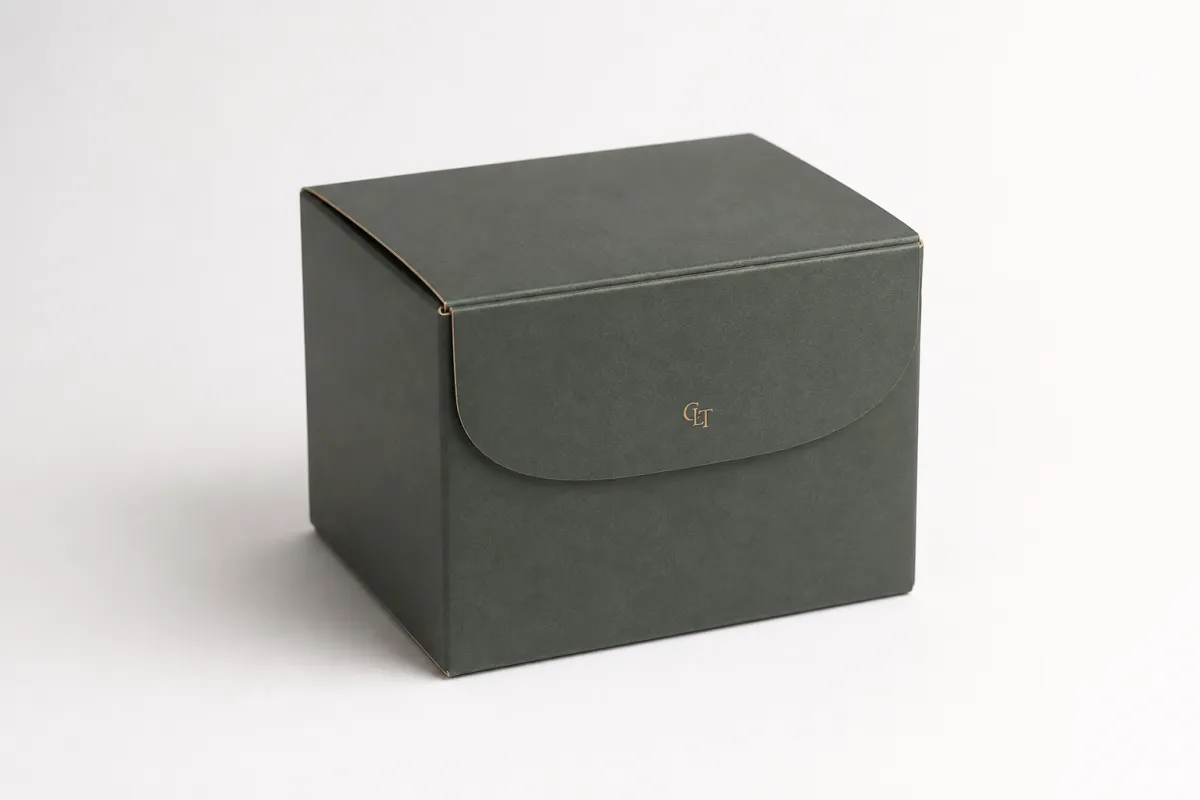
The order-size trap usually follows a familiar pattern. A founder asks for a small run, gets a quote for 250 boxes, and expects the price to behave like a bulk order divided into quarters. Then the rest of the details arrive: dieline work, tooling, proofing, freight, and a unit price that feels higher than anyone wanted because the fixed costs are being spread across a short run. I have watched more than one startup get surprised by the difference between the headline number and the landed cost.
That is not a supplier trick. It is just how manufacturing works. Every custom box has a setup threshold. Die cutting needs a tool. Print needs preparation. Some projects need plates. Even a simple decoration still has to be produced, packed, and shipped. With a small run, those fixed costs sit on top of fewer cartons, which pushes the per-box cost up quickly. With a larger run, the same costs are diluted over more units and the math starts to feel more forgiving.
The lowest MOQ is not automatically the lowest-risk choice. If packaging delays hold up a launch, the cost of waiting can swallow the savings from ordering fewer boxes. If the box arrives under-spec and corners crush during shipping, replacement units and support time can erase the benefit of the smaller order. In many DTC categories, one bad shipment can cancel out the value of shaving a few cents off packaging.
From the buyer side, custom box MOQ for startups should be measured against the cost of failure, not only the cost per unit. That includes:
- reprints caused by artwork mistakes or size misalignment
- damage claims from weak board or loose internal fit
- rush freight when inventory lands late
- support tickets from customers receiving dented or unattractive boxes
- photography and launch delays when branded packaging is not ready
The box sits inside the revenue engine. It protects margins, signals confidence, and shapes the first-touch experience in retail packaging and e-commerce alike. When a startup treats packaging as a plain container, unit cost becomes the only metric that matters, and that is usually too narrow a view. A box that looks fine in a render but folds badly in the real world is gonna cause headaches later, so the spec needs to hold up outside the mockup.
Practical rule: the right custom box MOQ for startups is the lowest quantity that still protects the product, supports the launch date, and leaves enough cash for marketing, fulfillment, and the next reorder.
That last point matters because a startup does not only need boxes today. It needs a packaging plan that still works on reorder two, when sales data is clearer and the spec can be refined with more confidence. In that sense, custom box MOQ for startups is as much about flexibility as it is about quantity.
Custom box MOQ for startups: choosing the right box style
Box style changes the economics more than many founders expect. A mailer box, a folding carton, a shipping carton, and a rigid box all solve different problems, and each one comes with its own MOQ profile. That is one reason custom box MOQ for startups should begin with structure rather than artwork. The wrong structure can make a beautiful design expensive, fragile, or both.
| Box style | Typical startup MOQ | Best use case | Common tradeoff |
|---|---|---|---|
| Mailer box | 250-1,000 | DTC shipping, unboxing, lightweight products | More surface area can raise print and board cost |
| Folding carton | 500-2,500 | Retail shelves, cosmetics, supplements, small goods | Less crush resistance than corrugated structures |
| Shipping carton | 200-1,000 | Transit protection, subscription shipments, bulk packs | Branding space is limited unless outer print is added |
| Rigid box | 300-1,000 | Premium presentation, gifting, high perceived value | Higher material and labor cost, longer lead times |
Mailer boxes are common for custom printed boxes because they balance protection and presentation. A typical startup mailer might use E-flute corrugated board, often around 1/16 inch thick, with one-color or four-color print. That can be a practical entry point for custom box MOQ for startups because it supports e-commerce without pushing the brand into a luxury build it cannot yet justify.
Folding cartons sit in a different lane. They are often made from 18-24 pt SBS or a similar paperboard and suit lighter products or retail packaging where shelf appeal matters more than transit abuse. They can look refined, but they are not the answer when the product needs serious shipping protection on its own. If the package is going through parcel networks, the carton may still need an outer shipper.
Shipping cartons are usually the most functional choice. Their job is less about presentation and more about keeping the product safe. That said, they can still carry custom print, and for some startups that is enough. A single-color logo on a clean corrugated box can signal order and consistency without pushing MOQ or unit cost too high.
Rigid boxes sit at the premium end. They feel special because they are built from heavier chipboard wrapped in printed paper, and that construction supports gifting, electronics, premium cosmetics, and launches that need a high-value unboxing moment. The tradeoff is simple: a rigid structure can push both MOQ and spend upward fast. For early-stage brands, that often makes rigid packaging a stronger second-phase choice than a first move.
Standardization is one of the most overlooked decisions in packaging. If a startup can fit most of its products into one or two box sizes, it reduces SKU sprawl, simplifies forecasting, and makes reordering easier. That is where custom box MOQ for startups becomes a planning tool instead of a guessing game. One box size across several SKUs can lower inventory risk and improve buying power.
There is another structural truth buyers sometimes miss: custom box MOQ for startups gets easier when the box is closer to a standard build. Fully bespoke shapes, unusual locking features, and complex inserts all add cost. If a startup can work from a standard dieline and customize only the print, the result is usually a better balance of speed, budget, and consistency.
Specifications that move the needle on quality
The fastest way to get a useful quote is to specify the box clearly. The fastest way to get a misleading quote is to stay vague. custom box MOQ for startups depends heavily on specification quality, because a supplier cannot price accurately without exact dimensions, board grade, print coverage, and finishing requirements.
Size comes first. A few millimeters can change the result in ways that are easy to underestimate. If the internal fit is too tight, the product scuffs or deforms during loading. If the box is too loose, the product shifts and the package feels cheap. Oversizing also wastes board during die cutting and can raise freight expense, because the packed carton takes more room than necessary. On packed goods, small dimensional changes add up quickly.
Substrate is the next major decision. For corrugated mailers, the discussion usually starts with flute type and board strength. For folding cartons, the conversation shifts toward caliper, coating, and printability. For rigid boxes, chipboard weight and wrap material matter more than flute geometry. FSC-certified paperboard can be a good fit for brands that want a sourcing story tied to responsible forestry, and many buyers like to see that reflected in the spec. If that matters to you, the standards behind the claim are worth reading directly at FSC.
Print method changes the economics as well. Digital print can support lower custom box MOQ for startups because it avoids some of the setup burden tied to traditional processes. Offset and flexographic print can become more efficient as quantity rises, but they are not always the best first move for a brand that needs 300 or 500 boxes. Color count matters too. One or two colors usually keep the quote cleaner than full-coverage, photo-heavy artwork.
Finishes are where budgets can drift if the project is not watched closely. Soft-touch coating, foil stamping, embossing, debossing, spot UV, and heavy ink coverage all improve shelf appeal or perceived value, but they also raise setup complexity and cost. Sometimes that spend is justified. Sometimes it is a distraction. Packaging should support the product category, not compete with the product’s own margin structure.
- Exact dimensions: internal and external measurements in millimeters or inches
- Board grade: SBS, CCNB, corrugated flute, or rigid chipboard
- Print details: one-color, two-color, CMYK, or full bleed
- Finish: matte, gloss, aqueous, soft-touch, foil, emboss, or none
- Internal fit: insert, divider, lock, tray, or protective padding
- Testing target: ISTA profile, drop performance, or shelf display needs
That last item deserves more than a passing mention. If a box is going through parcel networks, ask whether the packaging plan aligns with an ISTA test profile such as 3A. You can review those transit-testing standards at ISTA. A startup does not need to over-engineer every package, but it does need a realistic benchmark for transit performance.
A practical spec sheet should also state whether the box needs inserts, dividers, or a special closure. Inserts improve presentation and reduce movement, which can lower damage claims. Inserts also add die-cut complexity and can increase custom box MOQ for startups if the build becomes too specialized. In other words, the detail that improves the customer experience can also shift the quote structure, and that is normal manufacturing behavior rather than a surprise.
A good rule holds up across categories: the more precise the spec sheet, the less likely the supplier is to pad the quote for uncertainty. That matters for startups because every unexplained line item affects cash planning. A clean brief makes custom box MOQ for startups easier to compare, easier to approve, and easier to reorder later.
Custom box MOQ for startups: cost, pricing, MOQ, and quote drivers
Now the discussion gets concrete. custom box MOQ for startups is not only a production question; it is a pricing-model question. The main drivers are predictable, and once they are clear, a quote becomes much easier to read. Box style, dimensions, board thickness, print coverage, finish, inserts, tooling, and shipping distance carry most of the weight.
MOQ tiers matter because setup costs are fixed. If a run costs roughly the same to prepare whether the order is 250 units or 2,500 units, the unit cost drops sharply as quantity rises. That does not mean the biggest order is always best. It means the startup should understand where the inflection point sits. Moving from 250 to 500 boxes can lower per-unit spend enough to justify the extra inventory in some categories, while other products need the smaller run because demand is still uncertain. The math needs to stay specific.
A 250-piece run may carry a unit cost that feels high, yet the total cash outlay can still be manageable. A 1,000-piece run may lower the unit cost, but it also increases inventory risk and storage burden. The right custom box MOQ for startups sits where those two forces balance. That balance changes by category. A supplement brand with stable reorder velocity can absorb a larger run faster than a seasonal gift brand launching an untested line.
Below is a practical comparison of common cost levers.
| Cost lever | Lower-cost choice | Higher-cost choice | Why it changes the quote |
|---|---|---|---|
| Print coverage | One-side, one-color logo | Full-bleed CMYK artwork | More ink, more setup, more finishing risk |
| Structure | Standard mailer or tuck end | Fully bespoke rigid or lock system | Custom engineering and more conversion labor |
| Material | Stock board grade | Heavier caliper or specialty stock | Higher raw material cost and possibly higher freight |
| Finish | Uncoated or matte | Foil, embossing, soft-touch, spot UV | Extra tooling, setup, and process steps |
| Insert | No insert or simple paperboard insert | Foam, molded pulp, or multi-part divider set | More parts, more labor, more engineering |
For Printed Corrugated Mailers, startups often see broad ranges depending on quantity and decoration. A simple run might land around $0.85-$1.45 per unit at 500 pieces, while a more favorable 2,000-piece run might drop closer to $0.42-$0.88 per unit. Folding cartons can be lower if the structure is light and the print is simple, sometimes around $0.18-$0.45 at larger quantities. Rigid boxes move higher quickly, often $1.60-$3.40 or more even at modest quantities. These are planning ranges, not promises, but they are more useful than guessing.
Freight deserves its own place in the quote discussion. A low unit price can be misleading if shipping is long-distance, if cartons are bulky, or if the project needs air freight to make a launch date. On low-MOQ orders, freight can look disproportionately large because the fixed setup cost is not offset by volume. That is why custom box MOQ for startups should be evaluated on landed cost, not unit cost alone.
Buyers should ask for quotes that are detailed enough to compare cleanly. The quote packet should include:
- exact box dimensions
- target quantity and reorder expectation
- material preference and board thickness
- print method and color count
- finish requirement, if any
- insert or divider details
- target ship date and launch date
- destination ZIP or shipping zone
- compliance or testing needs
Without that detail, two quotes for custom box MOQ for startups can look different for reasons that have nothing to do with supplier quality. One supplier may price in revision risk. Another may quote a thinner board. A third may include freight while a fourth excludes it. The cheapest quote is not always the best value; it is often just the least complete.
Artwork complexity is another hidden driver worth calling out. A clean logo on a kraft mailer is simpler than a dense illustration across all panels. More coverage can mean more proofing time, more ink use, and more production risk. If a startup wants to reduce packaging spend, simplifying the art can lower unit cost without making the box look generic. That is a smarter trade than cutting protection.
Process and timeline: from dieline to delivery
Good packaging projects follow a clear path. custom box MOQ for startups usually moves through discovery, specification gathering, dieline creation, artwork review, proof approval, sampling, production, quality check, packing, and shipping. The sequence is easy to describe, while the delays tend to cluster in a few familiar places.
The first delay is incomplete information. If the supplier does not know the product dimensions, the internal fit, or the shipping method, the dieline can be wrong on the first pass. That leads to revision, and revision leads to another round of proofing. A startup can avoid that by measuring the product carefully, documenting whether it ships with an insert, and confirming whether the box is for retail display, e-commerce fulfillment, or both.
The second delay is artwork. Missing bleed, low-resolution logos, unsupported color profiles, and late content changes can all stretch the schedule. For custom printed boxes, the artwork stage is not cosmetic. It is the point where the packaging design becomes manufacturable. If there is a problem here, the cost is time.
Simple projects can move fast once the proof is approved. More complex projects usually take longer. A straightforward printed mailer with limited coverage may move from approval to production in roughly 10-15 business days, depending on workload and process. A box with custom inserts, foil, embossing, or a structural change can extend that to 15-25 business days or more. Shipping time is separate, and international freight can add another variable layer.
That is why custom box MOQ for startups should be tied to the launch calendar from the beginning. Packaging that arrives after inventory is already in the warehouse creates friction in fulfillment, photography, and retail prep. The worst outcome is not a slightly higher quote; it is a finished product waiting to ship while the boxes are still on the dock.
- Discovery: define product size, fragility, and use case
- Spec gathering: document dimensions, materials, print, and finish
- Dieline: confirm the structural template before artwork starts
- Proofing: review layout, copy, and color placement carefully
- Sampling: check fit, closure, and print quality on a physical sample
- Production: run the approved quantity and inspect quality
- Shipping: allow time for freight, receiving, and storage
One useful way to protect the schedule is to build a packaging buffer into the launch plan. If the product launch date is fixed, the box order should not be. A startup should aim to approve artwork earlier than feels comfortable, because every revision loop consumes days that are hard to recover later. custom box MOQ for startups is easiest to manage when the packaging timeline sits on the critical path rather than being treated like a side task.
Sampling deserves special attention. A sample can reveal a lot that a proof cannot. It can show whether the box closes properly, whether the product rattles, and whether the finish looks right under real light. That is not overkill. It is cheap insurance. In packaging, one sample can prevent hundreds of bad units, and for a startup that usually matters more than a small drop in unit cost.
Quality control also matters more than many founders expect. Ask how the supplier checks dimensions, print registration, glue integrity, and carton consistency. If the box is going into parcel delivery, ask whether transit testing or drop performance is part of the process. If the box is for retail packaging, ask whether shelf presentation and color consistency are being checked against approved art. These questions keep custom box MOQ for startups grounded in production reality.
Why startups choose our custom box program
Early-stage brands do not need packaging theater. They need clarity. custom box MOQ for startups works best with a supplier that explains the tradeoffs instead of hiding them behind jargon. That means clear pricing, realistic minimums, and practical guidance on what strengthens the box and what only adds cost.
Our approach is built around fewer surprises. We review the spec before quoting because a clean brief is the fastest route to an accurate number. We check dielines and artwork for fit issues because a misaligned panel or oversized logo can turn a good concept into a production headache. We also give direct feedback on whether a finish, insert, or structure is worth the spend for the product category.
That kind of support matters because startup packaging is rarely static. A founder may begin with 300 boxes for launch, then reorder at 1,000 once demand becomes clearer. A supplier that understands custom box MOQ for startups can help that brand choose a structure that is easy to repeat, easy to adjust, and easy to scale without reengineering the entire package.
Operational reliability matters too. Predictable timelines, consistent materials, and responsive communication often matter more than flashy promises. A startup with tight cash flow cannot afford avoidable rework, vague updates, or last-minute rush fees. A supplier that is honest about lead times and constraints gives the buyer more control over the entire launch.
If you are comparing options, a useful test is to ask each vendor how they would lower unit cost without weakening the package. The best answer is usually specific: simplify print coverage, use a standard size, reduce special effects, or select a stock structure with custom graphics. That answer tells you the supplier understands custom box MOQ for startups as a business problem, not just a print job.
For more practical reference points, our FAQ covers common proofing and ordering questions that come up during packaging development. That kind of support can save a surprising amount of time, especially on the first custom run.
Credibility matters as well. A packaging partner that can explain material grades, transit expectations, and production limits earns trust faster than one that simply says yes to everything. In packaging, a quick yes without detail is often a warning sign. A measured answer is usually the safer signal.
That is why custom box MOQ for startups should be viewed as a collaboration. The startup brings the product, the launch plan, and the branding goals. The packaging partner brings manufacturing realities, cost structure, and production discipline. The better those two sides align, the more efficient the project becomes.
Next steps for custom box MOQ for startups
If you are ready to move forward, begin with the product. Measure it accurately. Decide whether the box needs to ship, sit on a shelf, or do both. Then define the launch date, the expected reorder speed, and the maximum spend you can absorb without stressing cash flow. custom box MOQ for startups becomes much easier once those three things are clear.
Next, gather the files and facts a supplier needs: artwork, dimensions, target quantity, preferred structure, finish preferences, and any compliance or testing requirements. If the product is fragile, say so. If the box needs to work with retail packaging displays, say that too. A complete brief produces cleaner quotes and fewer revisions.
Then compare at least two or three quotes using the same spec. Look at unit cost, setup cost, freight, sample terms, and lead time. Do not compare a simple quote against a detailed one and assume the lower number is better. The value of custom box MOQ for startups is in making the real differences visible.
After that, confirm the lowest viable MOQ, approve the sample, and lock the timeline early enough to protect the launch. That is the practical path. It avoids rushed reorders, protects the first customer experience, and keeps branded packaging aligned with the brand’s growth plan. custom box MOQ for startups is not a gamble if the process is structured well; it becomes a manageable decision with a clear landing point.
My honest advice is to start with the smallest quantity that still covers your launch window, your transit risk, and one clean reorder cycle. Pick one standard structure, one finish, and one sample approval path, then let the numbers decide whether the run should stay lean or move up a tier. That keeps the decision grounded in the actual job the box has to do, which is the whole point.
What is a realistic custom box MOQ for startups?
For many printed mailer or folding carton projects, a realistic starting MOQ often sits in the low hundreds, although the right number depends on box style, print method, and finish. custom box MOQ for startups is usually lowest when the structure is standard, the print is simple, and the supplier can run digital or low-setup production. Specialty coatings, inserts, and rigid builds usually push the MOQ higher. The right number is the lowest quantity that still protects margins and leaves enough inventory to test demand without creating waste.
How can I lower custom box MOQ for startups without cutting quality?
Use one box size across multiple SKUs, limit the number of print colors, and avoid special finishes unless they directly support conversion or brand value. Choose a stock-sized structure with custom print instead of a fully bespoke construction when launch speed and budget matter more than novelty. Share a complete spec sheet early so the supplier can remove waste from the quote and avoid pricing in extra revision risk. That is the cleanest way to reduce custom box MOQ for startups while keeping the box credible.
What affects the price of a custom startup box order most?
Size, board grade, print coverage, finishing, and inserts usually carry the biggest effect on unit cost. Freight, tooling, and proofing can also change the total spend, especially on low-MOQ orders where fixed setup costs are spread over fewer boxes. A clear quote should separate unit cost from one-time setup items so the startup can compare options accurately. In most cases, custom box MOQ for startups rises in price fastest when the structure becomes more complex or the artwork requires more setup.
How long does a custom box order usually take?
Simple projects can move from approval to production quickly, but the full timeline depends on sampling, artwork revisions, box complexity, and shipping method. A straightforward run may be ready faster than a rigid build with inserts or special finishes, while international freight can add another layer of timing. The biggest schedule risks are incomplete files, slow approvals, and structural changes after proofing. Build in buffer before launch so the packaging arrives early enough to support fulfillment, photography, and retail prep.
Should a startup choose stock boxes or custom boxes first?
Choose stock boxes first if speed and cash preservation are the top priorities and branding can stay simple. Choose custom boxes first if product protection, unboxing, and customer perception are central to the launch. A hybrid path often works well: use a standard structure with custom print, then increase customization after demand is proven. That approach keeps custom box MOQ for startups under control while still giving the brand room to look polished from day one.

