Buyer Fit Snapshot
| Best fit | Custom Box Sample Kit Order projects where brand print, material claims, artwork control, MOQ, and repeat-order consistency need to be specified before quoting. |
|---|---|
| Quote inputs | Share finished size, material target, print colors, finish, packing count, annual reorder estimate, ship-to region, and any compliance wording. |
| Proofing check | Approve dieline scale, logo placement, barcode or warning zones, color tolerance, closure strength, and carton packing before bulk production. |
| Main risk | Vague material claims, crowded artwork, missing packing details, or unclear freight terms can make a low unit price expensive after revisions. |
Fast answer: Custom Box Sample Kit Order: Pricing, Process, Next Steps should be specified like a repeatable production item. The safest quote records material, print method, finish, artwork proof, packing count, and reorder notes in one written spec.
Production checks before approval
Compare the actual filled-product size with the drawing, then confirm tolerance on folds, seals, hang holes, label areas, and retail display edges. Reserve space for logos, QR codes, warning copy, and material claims before decorative graphics fill the panel.
Quote comparison points
Review material grade, print process, finish, sampling route, tooling charges, carton quantity, and freight assumptions side by side. A quote is only useful when the supplier can repeat the same color, closure quality, and packing count on the next order.
Custom Box Sample Kit Order: Pricing, Process, Next Steps
A custom box sample kit order usually costs a lot less than fixing a bad box after the first production run is already moving. A dieline can look flawless on a screen and still fall apart once it is folded, loaded, stacked, and handled by actual people, which is exactly why experienced buyers sample before they commit to volume. I have seen a custom box sample kit order save launches because the insert was too loose, the closure sprang open in transit, or the printed board read darker once the stock changed.
Packaging problems tend to show up early if you know where to look. A weak board grade, a messy tuck flap, or a coating that grabs fingerprints too easily can turn branded packaging into an expensive repair job. A custom box sample kit order gives you a real object instead of a polished promise. You can hold it, fold it, ship it, stack it, and decide whether the box actually fits the job it is supposed to do.
A sample is not a trophy. It is a filter. If the box does not survive the sample stage, it does not belong in bulk production.
Custom Box Sample Kit Order: Why It Pays Off Fast
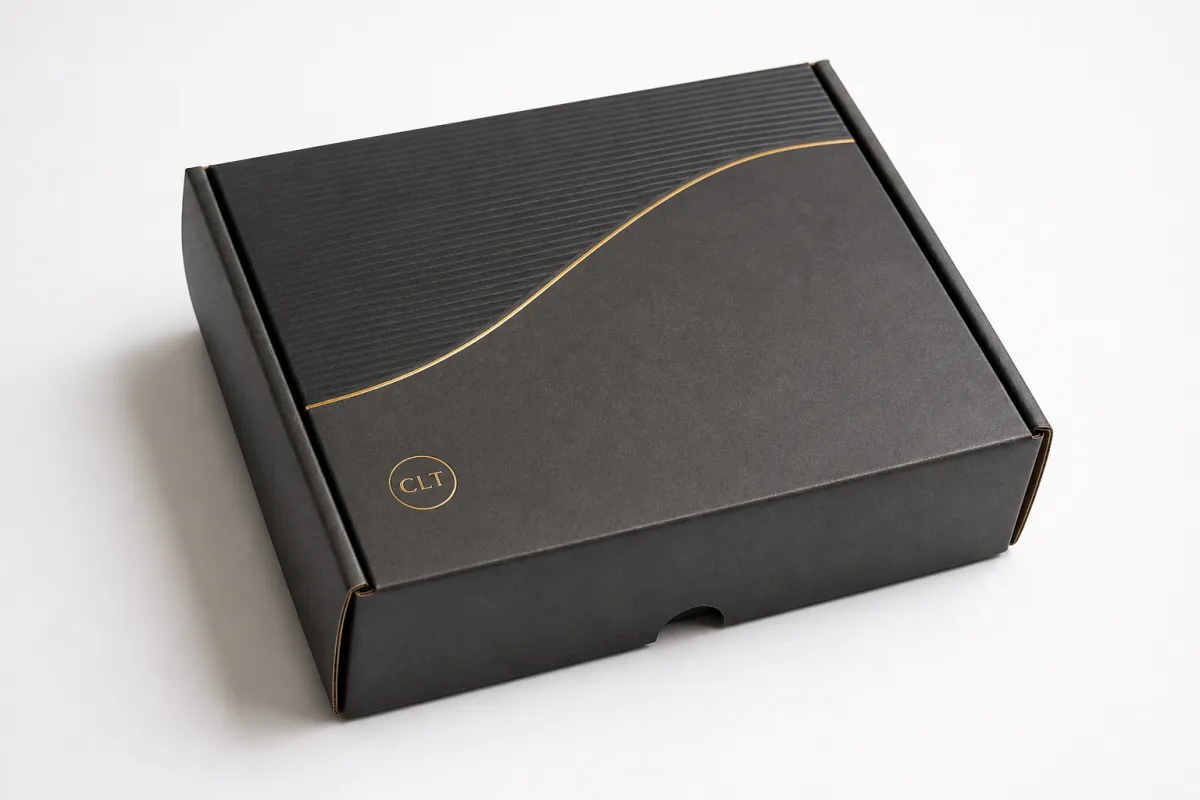
For a packaging buyer, a custom box sample kit order is not about inspiration. It is about stopping the wrong choice before it turns into pallets of waste. A render can hide a lot. It will not show how rigid the wall feels, how the flaps meet, or whether the box opens with a clean pull instead of a clumsy wrestle. A custom box sample kit order puts those answers in your hands before the press is booked.
Most packaging failures are quiet, not dramatic. The sleeve is 2 mm too tight. The mailer crushes at the corners. The insert rattles when the product shifts during fulfillment. The print looks fine under office lights but too dark under retail lighting. A custom box sample kit order catches those problems while the fix is still a revision instead of a reprint.
That matters even more when the box does more than ship product. Investor presentations. Retail approvals. Subscription launches. Holiday gifting. Rebrand sign-off where the whole package depends on one box making the right impression. A custom box sample kit order lowers the odds that the team discovers a bad fit on the morning of launch.
I've sat in enough sample reviews to know that the most expensive mistakes are usually the ones nobody wanted to slow down for. A buyer sees the schedule, the marketing team sees the deadline, and suddenly everyone is hoping the first version is good enough. It almost never is. One extra round of sampling can feel annoying in the moment, but it is still cheaper than guessing.
The math is plain. Spending a little on samples is usually better than gambling on a full production order. If your run is 5,000 units at even $1.20 each, a mistake is not a minor inconvenience. It is a five-figure lesson. A custom box sample kit order is a much smaller bill for much better information.
What buyers want is speed with confidence. Not pretend speed. Real speed. The kind that comes from approving the right structure, finish, and insert on the first or second pass. A custom box sample kit order makes that possible because it turns abstract specs into a working prototype. That part is kinda the whole point.
What Is Included in a Custom Box Sample Kit Order
A good custom box sample kit order should not feel mysterious. You should know exactly what you are paying for, what you can test, and what decisions the sample helps you make. In practice, the contents usually fall into a few useful categories.
- Structural samples: blank boxes that show size, fold behavior, closure fit, and rigidity.
- Printed samples: versions with artwork so you can review color, logo placement, and brand impact.
- Stock swatches: board samples that help you compare thickness, texture, and color.
- Finish examples: matte, gloss, soft-touch, foil, embossing, and spot UV.
- Insert options: paperboard, corrugated, molded, foam, or custom-cut layouts.
Blank structural samples and printed presentation samples are not the same thing. A blank sample answers fit and strength questions. A printed sample answers branding and visual questions. If the job is mostly about packaging geometry, a blank sample may be enough. If the project is premium retail packaging or high-end gift presentation, you usually want both.
A custom box sample kit order can also combine several formats. Mailer boxes, folding cartons, rigid boxes, shipping cartons, and inserts each solve different problems. A subscription brand may need a mailer for ecommerce and a folding carton for shelf display. A luxury product may need a rigid box for first impression and an inner tray for protection. Sampling both often costs less than assuming one format can do both jobs.
Teams also use a custom box sample kit order to compare closure styles side by side. Tuck top, crash lock, magnetic flap, sleeve and tray, or a printed mailer with insert tabs. The box style that looks best on a PDF is not always the one that packs fastest, ships safest, or feels best in the hand. Physical samples make that obvious quickly.
If you are comparing multiple options, a custom box sample kit order is the easiest way to see how the box performs for your channel. Ecommerce handling is rougher than a retail shelf. Gift packaging has different expectations than shipping packaging. A sample kit can be tailored to the actual use case instead of forcing you to guess.
For teams that want broader product packaging support, it helps to review the full line of Custom Packaging Products and align the sample kit with the final production format. That keeps the sample honest. It also keeps the conversation centered on what will actually be manufactured, not on a pretty object with no path to scale.
Specifications to Confirm Before You Order
Before any custom box sample kit order is placed, the core specs need to be real. Not guessed. Not close enough. Real. Start with the product dimensions, because the product should drive the box, not the other way around. Measure length, width, and height at the widest point, then add clearance where needed for inserts, tissue, or protective padding.
The next layer is material choice. Board type, flute grade, and wall thickness all affect performance. An 18pt paperboard carton is not the same as an E-flute mailer, and neither behaves like a rigid box wrapped in chipboard and paper. If the sample is supposed to reflect production, the material in the custom box sample kit order should match the intended run as closely as possible.
These are the specs I would lock before sampling:
- Internal dimensions: exact product fit, not estimate fit.
- Board type: paperboard, corrugated, rigid, or specialty stock.
- Wall thickness: enough to protect the product without making the box bulky.
- Print method: offset, digital, flexo, or unprinted structural sample.
- Coating: matte, gloss, soft-touch, aqueous, or uncoated.
- Insert configuration: none, folded paperboard, die-cut tray, or custom support.
Structural checkpoints matter just as much. Tuck direction, locking tabs, magnet placement, window cutouts, and flap geometry can all affect ease of packing and customer experience. If the box is heavier, a weak closure can fail under load. If it is meant for premium presentation, sloppy alignment will cheapen the whole thing. A custom box sample kit order should reveal those issues quickly.
Branding specs need the same discipline. If color matters, define PMS targets or at least note how far the sample can drift from the final target. Choose matte or gloss with intent. Decide whether foil, embossing, debossing, or spot UV is decorative or functional. This is where Custom Printed Boxes either look disciplined or look random.
Shipping and fulfillment specs should not be overlooked either. How many units fit per carton? What is the packed weight? Does the box still close cleanly after repeated open-and-close cycles? Will climate changes affect coating feel or board warp? A custom box sample kit order is a good place to catch those practical problems before they hit the warehouse.
If your project has sustainability requirements, ask about FSC-certified board options and whether the spec can support them. If the box must survive parcel handling, talk through ISTA transit testing methods so the sample reflects real shipping stress rather than desk-top optimism. Standards do not replace judgment, but they keep everyone honest.
Measure the product first. Then design the box. Buyers run into trouble when they choose a style because it looks premium, only to discover the fit is wrong. A custom box sample kit order is far more useful when the dimensions are locked and the sample can prove the box actually works.
Custom Box Sample Kit Order Pricing, MOQ, and Quote Factors
Pricing for a custom box sample kit order is not pulled from thin air. It is built from the number of versions, the amount of setup, the print complexity, the finish level, and whether the sample is a simple structure check or a presentation-ready prototype. If someone gives you a flat number without those details, they are probably quoting fast, not accurately.
For practical budgeting, simple blank structural samples often land around $35-$90 per version, depending on size and material. Printed presentation samples can run $120-$350, and more elaborate custom box sample kit order builds with specialty finishes, inserts, or multiple variants can reach $180-$500+. If the sample includes custom tooling, rigid construction, or expedited handling, the cost can go higher. That is normal.
MOQ rules vary. Some sample kits have no formal minimum because the goal is evaluation, not volume. Others are tied to a pilot setup or to production-ready artwork, which means the setup cost gets folded into the sample. A custom box sample kit order is often priced more like a development step than a standard item, so ask how much is creditable against production and what is not.
These are the biggest cost drivers:
- Die-line setup: custom structural prep and cutting dies.
- Print setup: plates, color matching, file preparation, and proofing.
- Finish selection: foil, embossing, spot UV, and specialty coatings.
- Insert labor: die-cut or hand-assembled support pieces.
- Rush timing: compressed production windows usually cost more.
The clearest way to compare quotes is to ask what is included. Does the price cover one version or three? Are revisions extra? Is shipping included? Is the setup fee refundable against production? Does the supplier charge again if the artwork changes after the proof? A custom box sample kit order should be judged on total decision value, not just on the number at the bottom of the quote.
| Sample Option | Typical Price Range | Best For | Main Tradeoff |
|---|---|---|---|
| Blank structural sample | $35-$90 | Fit, closure, size, basic strength | No print or finish review |
| Printed presentation sample | $120-$350 | Branding, color, finish, shelf look | Higher setup cost |
| Multi-variation sample kit | $180-$500+ | Side-by-side comparison of formats | Longer approval window |
| Pilot production sample | $300-$900+ | Near-final validation before full run | Most expensive, but closest to production |
Budget for one round of changes. The cheapest quote is not always the cheapest outcome. A custom box sample kit order that exposes a design flaw early will usually save more than it costs, even if you need to tweak a flap, adjust an insert, or simplify a coating choice.
Process, Timeline, and Lead Time for a Custom Box Sample Kit Order
The process should feel orderly, not mysterious. A solid custom box sample kit order usually moves through a predictable sequence: request intake, recommendation, quote, artwork review, sampling, approval, and shipment. If any step feels vague, ask for clarity before the sample is in motion. Vague steps create vague results.
Lead time depends on what kind of sample you need. A basic structural sample might ship in 3-6 business days if the spec is clean and the material is in hand. Printed or finished samples often need 7-12 business days. A more complex custom box sample kit order with multiple versions, inserts, specialty finishes, or rigid construction can take 10-15 business days or more. That is realistic. Fantasy deadlines are for sales decks.
The fastest custom box sample kit order is the one with complete input. Missing dimensions, loose artwork, unclear color expectations, or a late finish change can stall everything. I have seen teams lose more time arguing over a single spec than they would have spent preparing the spec sheet properly in the first place.
What slows a sample down most often?
- Artwork files that are not print-ready.
- Color targets that are not defined.
- Inserts that have not been dimensioned.
- Late approvals from marketing or operations.
- Changes to structure after the first proof.
If the project involves retail packaging or a launch tied to a fixed date, build in time for the review cycle after the sample arrives. The sample itself is only half the process. The other half is the team agreeing on what to do next. A custom box sample kit order is most useful when there is enough breathing room to make a real decision instead of a rushed one.
This is the practical workflow I recommend:
- Confirm the product dimensions and box style.
- Choose the sample objective: fit, print, finish, or all three.
- Send artwork, insert specs, and finish preferences.
- Review the quote, setup terms, and revision policy.
- Approve the sample, inspect it fast, and document changes clearly.
That is the whole point of a custom box sample kit order. It reduces uncertainty. It does not remove the need for judgment, but it gives your team something concrete to judge. The people who rush this stage are usually the same people who complain about rework later. Funny how that works.
Why Choose Us for Your Custom Box Sample Kit Order
Buyers usually want three things from a sample partner: accurate output, clear communication, and fewer surprises when the job moves from sample to production. That is the standard. Anything less wastes time. A custom box sample kit order should help you make decisions, not create another layer of guesswork.
We focus on manufacturability first. That sounds boring, and it should. Pretty samples are easy. Samples that can be repeated at scale are the ones that matter. If a structure looks impressive but will fight the packing line, that is not a clever design. It is a future problem with nice graphics.
Experience across ecommerce, subscription, retail packaging, and premium gifting matters because each channel places different demands on the box. Ecommerce needs survival under handling and shipping. Retail needs shelf impact and clean presentation. Subscription programs need repeatable pack-out and cost control. A custom box sample kit order should reflect the channel it serves, not some generic ideal.
We also help compare options without forcing buyers into one blind guess. That means looking at the structure, the print plan, the finish, and the production path together. A sample is not a dead-end expense. It is a decision tool that should move the project forward with fewer unknowns.
If you are still building the program, it helps to see the rest of the support structure too. Explore Custom Packaging Products if you want production-ready options beyond sampling. Check the FAQ for common ordering questions. If your project is scaling and you need broader purchasing terms, review Wholesale Programs to see how larger runs are handled.
A good custom box sample kit order should feel efficient. No drama. No vague promises. Just a clean process, a sample that reflects the real job, and a straightforward path to production if the box passes the test.
What to Do After the Sample Arrives
The sample arriving on your desk is not the finish line. It is the moment the real review starts. Open it, fold it, and check the obvious things first. Does the size match the product? Does the closure lock properly? Does the insert hold the item without wobble? A custom box sample kit order only earns its keep if someone actually tests the box, not just admires it.
I recommend a simple review checklist:
- Fit: confirm the product sits correctly with no excess movement.
- Closure: open and close the box several times to check wear and alignment.
- Print: compare color, logo placement, and image clarity to the proof.
- Finish: feel the coating, watch for scuffs, and inspect fingerprints.
- Handling: pack it, stack it, and simulate shipping or shelf use.
Do not let only one department review it. Operations sees pack-out issues. Brand sees visual issues. Fulfillment sees handling issues. Sales sees whether the box feels right in a client meeting. A custom box sample kit order is more valuable when multiple teams weigh in before approval.
Document feedback clearly. Mark up photos. List the exact revision. Note whether the change affects dimensions, price, or lead time. "Make it better" is not a usable instruction. "Increase internal width by 3 mm and switch from gloss to matte" is useful. That kind of detail keeps the next custom box sample kit order accurate.
After that, compare the sample against the launch goal. Not wishful thinking. The actual goal. If the box needs to ship safely, does it? If it needs to impress retail buyers, does it? If it needs to protect a premium product while looking refined, does it? If the answer is no, revise the structure or simplify the finish. There is no prize for keeping a weak design alive.
Use this rule for sample review: approve only what you can repeat. A custom box sample kit order should reveal the production path, not just the best-looking one-off version. That is how you avoid surprises later, especially on larger runs where small mistakes become expensive quickly.
Once the sample is approved, move straight into final production planning. Confirm quantity, schedule, shipping method, and any fulfillment requirements. The custom box sample kit order did its job if the team can now buy with confidence instead of crossing its fingers.
Here is the practical takeaway: before you sign off on production, lock the dimensions, verify the closure, compare the finish under real lighting, and test the insert with the actual product. If any one of those checks fails, revise the sample first. That one habit will save more money than a dozen polished mockups ever will.
A custom box sample kit order is the cleanest way to protect a launch, compare structure and finish, and avoid expensive production mistakes. If you take the sample seriously, document the changes, and budget for one smart revision cycle, you give yourself a much better shot at a box that fits the product, supports the brand, and behaves properly in the real world. That is usually cheaper than learning the hard way, and a whole lot less stressful too.
How long does a custom box sample kit order usually take?
Simple structural samples are often faster than printed or finished kits. A custom box sample kit order can move in 3-6 business days for basic structure checks, while printed or specialty versions usually need more time. Lead time depends on artwork readiness, finish complexity, and how many versions you want.
What should I include when requesting a custom box sample kit order?
Send the product dimensions, target box style, quantity range, and shipping method. Add artwork files, finish preferences, and any insert or protection requirements. The best custom box sample kit order requests also explain the use case so the sample matches ecommerce, retail, or gift presentation needs.
Is a custom box sample kit order refundable against production?
Sometimes, but it depends on the supplier and the type of sample. Structural or setup-heavy samples may be partially credited toward production, while highly customized versions may not be. Ask for credit terms in writing before approving the custom box sample kit order so there is no confusion later.
Can I order more than one box style in the same sample kit?
Yes, and that is often the point of a custom box sample kit order. Comparing two or three styles side by side makes fit and finish decisions easier. Expect Pricing and Lead Time to rise as the number of variations increases, especially if each version needs its own print or insert setup.
What is the best way to compare pricing after a sample kit arrives?
Compare what is included, not just the headline price. Check setup fees, finish options, insert cost, and any revision charges. Use the custom box sample kit order to avoid expensive production mistakes, not just to chase the cheapest quote. Cheap and wrong is still wrong.

