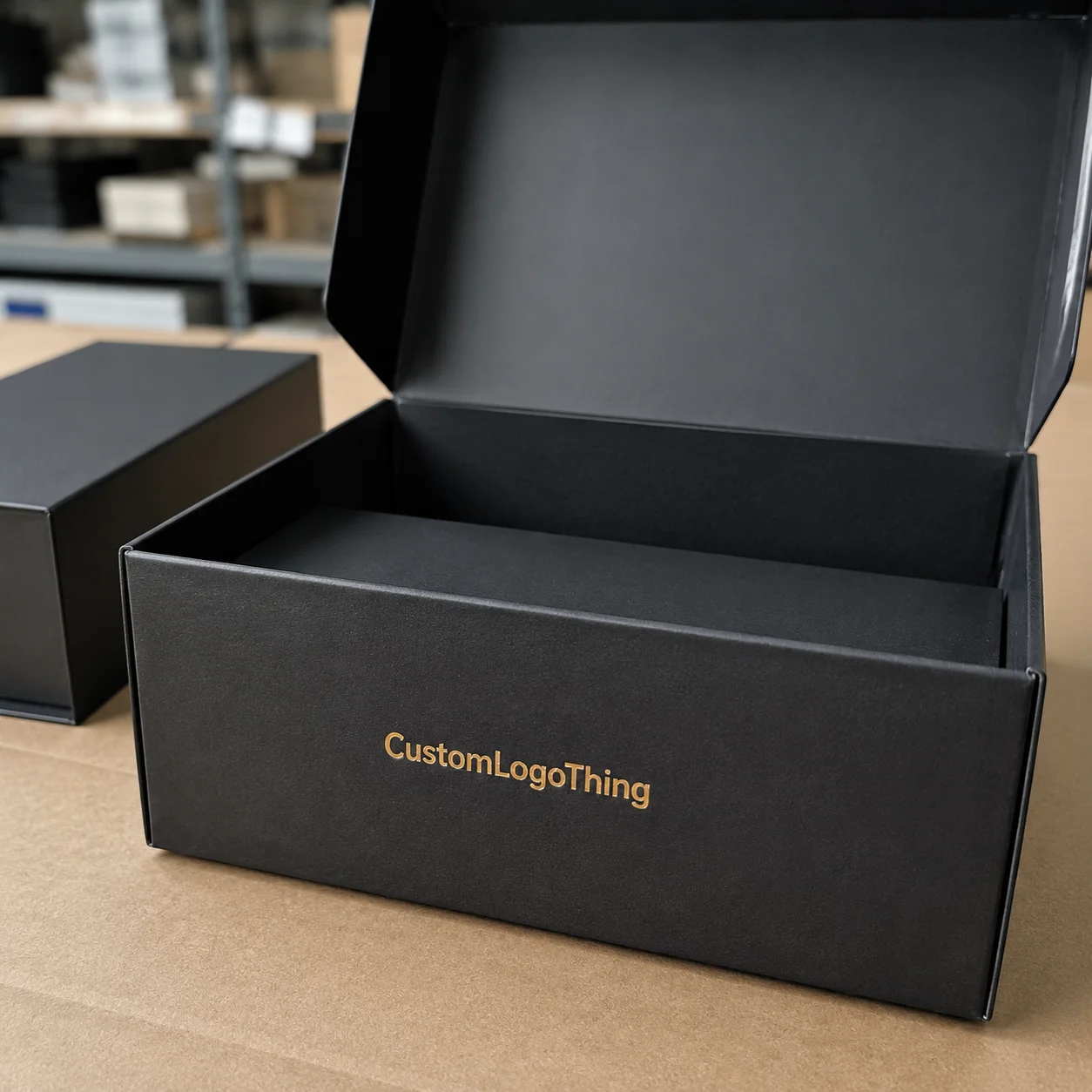
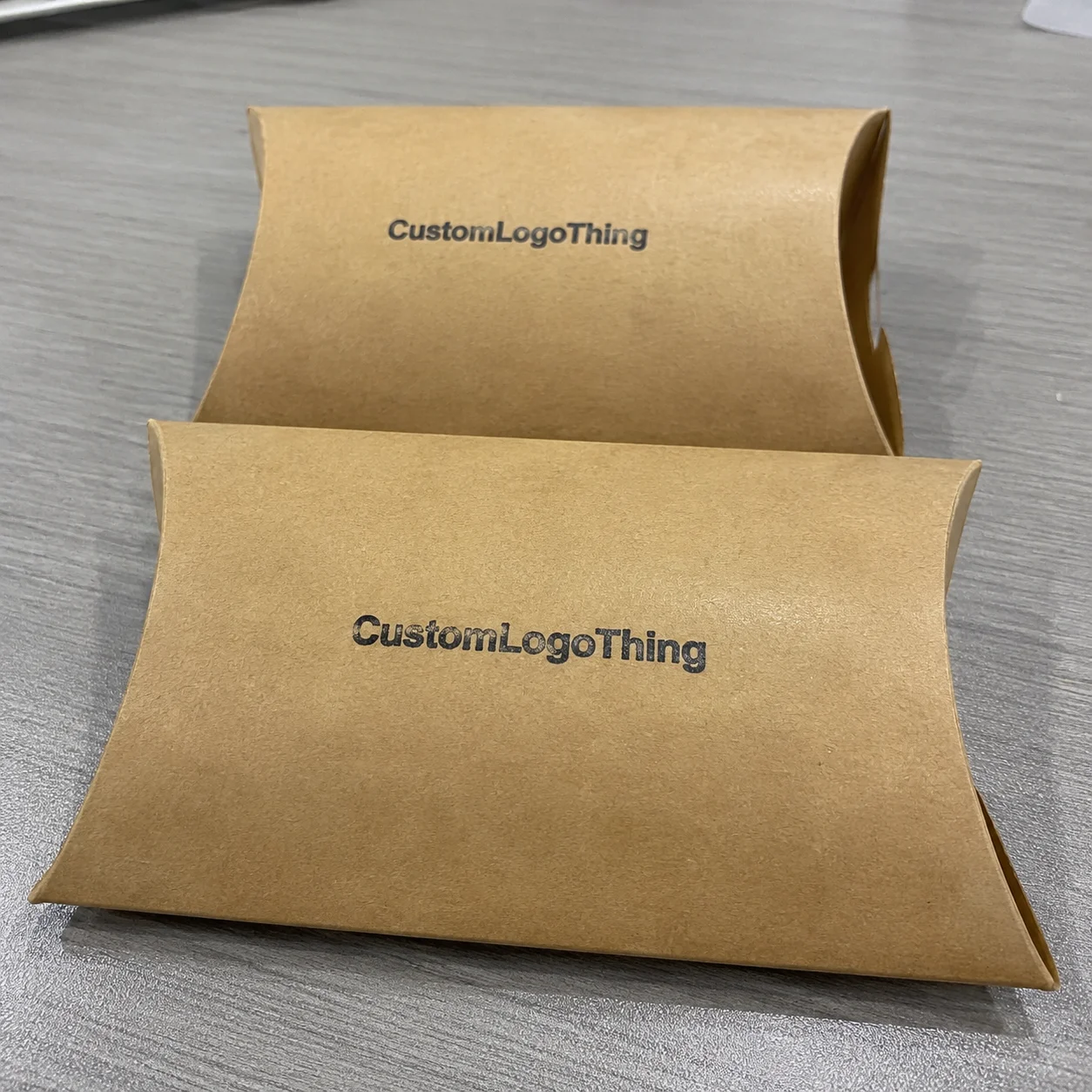
Buyer Fit Snapshot
| Best fit | Custom Boxes for Small Business projects where brand print, material claims, artwork control, MOQ, and repeat-order consistency need to be specified before quoting. |
|---|---|
| Quote inputs | Share finished size, material target, print colors, finish, packing count, annual reorder estimate, ship-to region, and any compliance wording. |
| Proofing check | Approve dieline scale, logo placement, barcode or warning zones, color tolerance, closure strength, and carton packing before bulk production. |
| Main risk | Vague material claims, crowded artwork, missing packing details, or unclear freight terms can make a low unit price expensive after revisions. |
Fast answer: Custom Boxes for Small Business: Artwork Proof, Packing Count, and Landed Cost should be specified like a repeatable production item. The safest quote records material, print method, finish, artwork proof, packing count, and reorder notes in one written spec.
Production checks before approval
Compare the actual filled-product size with the drawing, then confirm tolerance on folds, seals, hang holes, label areas, and retail display edges. Reserve space for logos, QR codes, warning copy, and material claims before decorative graphics fill the panel.
Quote comparison points
Review material grade, print process, finish, sampling route, tooling charges, carton quantity, and freight assumptions side by side. A quote is only useful when the supplier can repeat the same color, closure quality, and packing count on the next order.
A skincare founder I worked with went from a 9% repeat purchase rate to 18% in 90 days, and the formula never changed. We rebuilt her custom Boxes for Small business setup: removed 22 mm of dead space, added a locking-tab insert, and changed the unboxing flow so the serum stayed upright instead of bouncing around like spare hardware. Same product. Sharper packaging execution. Repeat rate doubled.
I’m Sarah Chen. I’ve spent 12 years building packaging programs for startups and mid-size brands, negotiating with plants in Dongguan, Shenzhen, and Los Angeles, and debating 350gsm board calipers at 11:40 p.m. on WeChat (yes, that is somehow my social life). If you’re figuring out custom Boxes for Small business and trying not to light cash on fire, this is the field manual—not the mood board.
I remember when a founder told me, “It’s just a box, Sarah.” Three months later she was staring at a damage report and texting me at 6:12 a.m. Packaging is one of the most underestimated profit levers in a small brand. It’s ops, margin, customer trust, and brand perception stacked into one corrugated decision.
Want a quick format comparison? Start with Custom Packaging Products and benchmark what matches your SKUs, fulfillment flow, and margin targets.
What Are Custom Boxes for Small Business (and Why They Matter More Than You Think)
Custom Boxes for Small business are packaging units built around your exact product dimensions, shipping channel, and brand goals. Not stock cartons. Not one-size-fits-none. We’re talking tuned specs: board grade, closure style, print coverage, insert structure, and case-pack logic tied to the way your operation actually runs.
Most founders classify packaging as a branding expense. It’s also a logistics and margin lever with measurable financial impact. I watched a candle brand cut monthly damage claims from $2,840 to $690 by switching from E-flute mailers with paper crinkle to B-flute shippers with die-cut corrugated inserts. That single move funded better outside print in under seven weeks.
Why do custom boxes for small business carry more weight than people expect?
- Protection: Fewer returns, fewer replacements, lower customer support volume.
- Shipping efficiency: Right-sized boxes reduce dimensional-weight charges from UPS and FedEx.
- Brand perception: Clean branded packaging signals quality before the product is even used.
- Shareability: Better unboxing drives UGC, especially in beauty, gifting, and subscription categories.
Box formats matter as much as graphics. You don’t need every structure on day one, but you should understand the toolkit:
- Mailer boxes: Self-locking, ideal for DTC shipments, usually E or B flute.
- Folding cartons: Retail-facing, typically SBS or FBB board, built for shelf presentation.
- Shipping cartons: RSC kraft corrugated for transit, often flexo printed in 1–2 colors.
- Rigid boxes: Premium gift presentation, high unit cost, best for high-AOV products.
- Inserts and sleeves: Improve fit, storytelling, and presentation without a full redesign.
A coffee accessories client in Austin was convinced they needed rigid magnetic-closure boxes at $3.40 each for a $34 grinder kit. The math was brutal. We shifted to a 32 ECT mailer + SBS sleeve combination at $1.08 landed for 3,000 units. Review sentiment improved anyway because protection and presentation finally matched.
Another misconception: giant MOQs are mandatory. They’re not. Plenty of Custom Printed Boxes can run digitally at 300 to 500 units, depending on size and plant. Offset generally starts making financial sense around 1,500+ units after plate costs are absorbed, but phased rollouts are standard. Start with one top SKU, prove lift, then scale.
For growing brands, custom boxes for small business are rarely about making packaging “fancy.” They’re about making product packaging produce better outcomes per dollar. Fancy is fine, by the way. Fancy that survives transit is better.
How Custom Boxes for Small Business Work from Idea to Delivery
Good packaging projects follow sequence. Bad ones skip core steps, hit panic mode, and pay expedite fees. The full path for custom boxes for small business usually looks like this: audit, structure, artwork, sample, production, freight, receiving.
Stage 1: Product and fulfillment audit
Measure each SKU in millimeters, not “roughly 4 inches.” Record product weight to the gram. Document fragility, orientation limits, leakage risk, and shipping method (parcel vs pallet). A jar moving through FBA has different constraints than a direct-to-consumer serum sent with USPS Ground Advantage.
I require pack tests with real products before final design sign-off. Drop tests from 30 inches on six faces catch most structural mistakes early. If you need formal test standards, review ISTA protocols at ISTA.org.
Stage 2: Dieline and structural engineering
Your supplier or packaging engineer should propose 2–3 structures. For custom boxes for small business, performance and cost are mostly locked at this stage. A smart tuck-top with dust flaps can save four seconds at pack-out compared with a fussy auto-lock setup. At 400 orders per day, that labor gap becomes real money quickly.
Stage 3: Artwork setup
Files should be vector PDF/AI with 3 mm bleed, 5 mm safe zone, and outlined fonts. Use CMYK unless you’re paying for Pantone spots. If brand blue is non-negotiable, call out Pantone 286 C and request a drawdown. Laptop previews are not color management. I learned this the hard way when a “deep navy” proof turned out Smurf-adjacent in production.
Stage 4: Sampling and approval
Most suppliers send white samples first, then a pre-production color sample. Delays usually explode here. Founders sit on approvals for six days, then request rush production. I’ve joined factory calls where everything stalled over one Slack message: “Can we move logo 8 mm left?” That pause missed vessel cutoff and added $1,960 in air freight. Frustrating? Yep. Avoidable? Also yep.
Stage 5: Production and QC
Typical production windows for custom boxes for small business run 12–15 business days after final proof, sometimes 18–22 for specialty finishes. QC should cover dimensions, compression integrity, color tolerance, glue consistency, and carton-count accuracy. Define acceptable quality levels in writing before releasing a PO.
Stage 6: Freight and warehouse receipt
Ocean freight often runs 25–40 days port-to-port by route; domestic LTL usually lands in 3–7 business days. Build those windows into reorder planning. I recommend at least six weeks of packaging safety stock for stable SKUs and eight weeks if you depend on a single overseas source.
Role clarity keeps projects moving:
- Business owner: sets budget, AOV constraints, and approval timing.
- Designer: handles files, color standards, and brand consistency.
- Packaging supplier: owns engineering, print execution, and manufacturing QC.
- 3PL/fulfillment team: validates pack speed and storage efficiency.
Custom boxes for small business projects fail when ownership is vague. Assign one decision-maker. One person. Not five people in a “quick committee” (quick committees are rarely quick).
Cost Breakdown: Pricing Factors for Custom Boxes for Small Business
Numbers matter, because good intentions don’t pay invoices. The biggest pricing drivers for custom boxes for small business are size, substrate, print method, finishing, insert complexity, order volume, and freight.
Below are realistic ranges I’ve seen across U.S. and China sourcing over recent buying cycles. These are planning anchors, not fixed quotes, and paper markets do move.
| Box Type / Spec | Qty | Typical Unit Cost | Setup Costs | Best Use Case |
|---|---|---|---|---|
| E-flute mailer, 1-color outside (digital) | 500 | $1.35 - $1.90 | $0 - $120 | Low-risk pilot for one SKU |
| E-flute mailer, full CMYK outside/inside (offset laminated) | 3,000 | $0.78 - $1.18 | $280 - $850 plates/tooling | DTC brand with regular monthly volume |
| 32 ECT kraft shipper, flexo 1-2 colors | 5,000 | $0.32 - $0.64 | $150 - $400 plates | Transit-focused shipping cartons |
| 350gsm SBS folding carton + matte lamination | 2,500 | $0.42 - $0.88 | $220 - $600 die + plates | Retail packaging for shelf presentation |
Setup cost vs unit cost confuses people constantly. One client rejected a $540 tooling fee, then accepted a no-tooling structure priced $0.14 higher per unit for 8,000 units. Net loss: $1,120. Spend $540, save $1,120. Simple arithmetic, frequent mistake. I’ve literally drawn this on a napkin in a coffee shop because a founder still didn’t believe the spreadsheet.
For custom boxes for small business, digital print is useful for low-MOQ testing and quick artwork iterations. Offset wins at higher volumes because per-unit print cost drops after setup is absorbed. The breakpoint often sits around 1,500 to 3,000 units depending on dimensions and color coverage.
Hidden costs are where margins bleed quietly:
- Dimensional-weight penalties: Oversized cartons can add $1.10–$2.80 per shipment.
- Damage returns: One breakage event often costs 2.5x product COGS after support and reship.
- Storage fees: Extra 3PL pallet footprint can run $18–$35 per pallet/month.
- Rush premiums: Expedited production often adds 15%–30% to base quotes.
Budget framework I use with founders: target total packaging cost (primary + shipper + insert + labels) at roughly 8%–12% of AOV for most DTC categories, lower for commodity products, higher for premium gifting. If AOV is $48 and gross margin is 62%, packaging above $5.75 needs a hard business case.
Don’t score custom boxes for small business by unit price alone. Score landed cost per successful delivery.
Key Factors to Choose the Right Custom Packaging Specs
Specs are where strategy meets physics. Good-looking packaging design helps. Surviving transit and fitting real workflows is mandatory.
Fit and protection first
Set dimensions from product size plus tolerance, not optimism. For fragile glass, I usually spec at least a 10–15 mm buffer with structural insert support. Products shipping through mixed channels (DTC + wholesale) should pass both parcel drop tests and pallet stacking compression.
Brand consistency customers can feel
With custom boxes for small business, logo placement and color consistency should be documented, not debated every run. Define panel hierarchy. Define clear space around marks. Planning soft-touch lamination? Check scuff resistance first—some finishes look premium until conveyors scrape them in week one. Painful lesson. Gorgeous boxes, ugly scuff lines.
Sustainability without performance theater
Use recycled content where performance allows. Request FSC-certified options and chain-of-custody documentation at FSC.org. Right-size boxes to reduce filler and empty shipping volume. Minimal ink coverage on kraft can reduce both cost and material intensity. You don’t need six inserts and a full-page brand essay to make an eco claim credible.
Operational fit at fulfillment
I time pack-out with a stopwatch. If assembly takes 18 seconds instead of 9, labor cost doubles at volume. Validate taping patterns, closure reliability, and scan visibility. Small structure adjustments—like combining a separate insert and card into one printed cradle—can save 3–5 seconds per order.
Compliance and practical constraints
Keep barcode quiet zones clear. Keep warning labels readable. International shipping requires language and declaration discipline. Custom boxes for small business should accelerate growth, not trigger customs holds because required markings were hidden under a fold line.
Brands building package branding systems usually get better results from consistency than complexity. One strong visual architecture across 2–3 box sizes often beats five disconnected designs.
Step-by-Step: Launching Your First Custom Box Project Without Wasting Money
You need a repeatable process for custom boxes for small business. This is the sequence I use with new clients.
Step 1: Measure correctly and define use cases
Capture length x width x height for each SKU in mm and inches. Weigh each item with and without protective wrap. Segment use cases: single-SKU orders, bundles, kits, subscription builds, and wholesale case packs. If 70% of orders are single SKU, optimize that flow first. Edge cases can wait.
Step 2: Request 2-3 structural options
Ask suppliers for alternatives with explicit tradeoffs: pack speed, board cost, and protection level. Example from a supplement brand: Option A was reverse-tuck folding carton at $0.31; Option B was crash-lock at $0.39 but saved about four seconds in assembly. At 12,000 units per quarter, labor savings justified Option B.
Step 3: Build print-ready artwork correctly
For custom boxes for small business, file errors are still the biggest avoidable delay. Include bleed, safe zones, locked dieline layers, and color intent notes. Mixing CMYK and spot colors? Label swatches clearly. Send both mockups and production files so suppliers can align design intent with technical execution.
Step 4: Approve physical samples and run a pilot
Never skip this step. White samples confirm fit. Color samples confirm brand output. Then pilot 200–500 units on your top SKU. Track damage, assembly time, and customer feedback for 2–4 weeks. A candle client discovered wax scuffing from insert friction during pilot; we changed the cut pattern before mass production and avoided a 6,000-unit mess.
Step 5: Place PO with clear QC and delivery terms
Write specs directly into the PO: board grade, flute, print method, finish, color tolerance, acceptable defect rate, overrun/underrun policy, and delivery window. Add remediation terms for major defects. Friendly verbal agreements have a long history of becoming expensive.
Step 6: Track post-launch metrics
Track transit damage rate, packaging-related support tickets, pack-out time, review sentiment, and repeat-purchase behavior. Custom boxes for small business should move at least one of those metrics within 30–60 days. If nothing changes, adjust the spec—not just the artwork.
Need ideas across structures? Browse Custom Packaging Products and compare formats against your fulfillment model.
Common Mistakes Small Brands Make with Custom Boxes (and How to Avoid Them)
I’ve watched the same five mistakes repeat for years. Different logos, identical pain.
Mistake 1: Buying for aesthetics only
Pretty boxes that fail drop tests are expensive confetti. Validate transit performance first. A beauty brand spent $14,200 on embossed mailers that collapsed on corner drops after they downgraded board strength to afford finishes. Studio photos looked excellent. Refund reports did not.
Mistake 2: Wrong sizing, then paying forever
Oversized custom boxes for small business increase void-fill use and dimensional shipping charges. One apparel client cut $1.42 per order by reducing one box dimension from 14" to 12". Same garment count. New parcel tier. Huge annual savings.
Mistake 3: Finish overload too early
Foil + spot UV + emboss + inside print at launch can make sense if AOV is $160 and margins are strong. Most small brands should validate base structure and core print first, then add premium treatments after confirming conversion or retention lift. Honestly, “do everything at once” is how packaging budgets go to die.
Mistake 4: Skipping pre-production checks
No physical sample means gambling with cash. Check color shift, fit tolerance, glue strength, and scuff resistance. I once caught a 2 mm panel misalignment on pre-pro that would have made 4,000 boxes difficult to close cleanly.
Mistake 5: Reordering too late
Inventory panic causes expensive decisions: rush fees, substitute materials, or plain-box fallbacks that break brand consistency. Build reorder points with real lead times, not optimistic estimates. For custom boxes for small business, factor production + transit + receiving + contingency, then reorder before stock feels tight.
“We thought packaging was marketing. Turns out it was operations, margin, and customer trust rolled together.” — Founder, home fragrance brand, $3.2M annual revenue
Need a practical starting point? Pick one hero SKU and one shipping profile, then iterate with data.
Expert Tips and Action Plan: Your Next 30 Days with Custom Boxes for Small Business
If you remember one point, make it this: don’t redesign your entire catalog at once. Start with one high-volume SKU and build a system you can scale.
Quick wins first
Choose the SKU with the highest monthly order count and moderate fragility. Improve fit, simplify inserts, tighten print layout. Signal appears faster. I used this exact approach with a pet supplement brand doing 9,000 orders per month and cut damage tickets by 41% in one cycle.
Build a one-page packaging brief
For custom boxes for small business, a one-pager prevents chaos. Include:
- Budget cap (example: max $1.10 landed per unit at 3,000 qty)
- Lead-time target (example: 15 business days production)
- Protection minimum (example: pass 30-inch 6-side internal drop protocol)
- Brand essentials (logo size, color references, copy hierarchy)
Ask suppliers sharper questions
“What’s your MOQ?” is only the first question. Ask:
- What are your price breaks at 500 / 1,500 / 3,000 / 5,000?
- What overrun/underrun range is standard? (Often ±10%)
- How quickly can you reprint if demand spikes?
- What is your QC failure policy and credit timeline?
Sourcing custom boxes for small business works better when everything is documented in writing.
Run a controlled A/B test
Test plain kraft mailers vs branded mailers for 3–4 weeks with similar cohorts. Measure:
- Damage rate per 1,000 shipments
- Average review rating and packaging mention frequency
- Repeat purchase within 45 days
- Unboxing UGC rate (tagged posts/stories)
Many brands avoid this because they worry one option won’t look premium enough. Data doesn’t care about mood boards. If branded packaging lifts repeat rate by three points and adds $0.28 in unit cost, that can still be an excellent trade.
How Do You Choose Custom Boxes for Small Business Without Overspending?
Start with constraints, not aesthetics: target landed cost, required protection level, and fulfillment speed. Then shortlist 2–3 structures, run samples, and pilot one hero SKU. Compare total cost per successful delivery, including damage rate and dimensional shipping impact. That process consistently beats “pick the prettiest option first,” especially for growing DTC operations using custom boxes for small business.
Your 30-day checklist
- Audit top 3 SKUs: dimensions, weight, break risk, monthly volume.
- Get 2–3 quotes from qualified suppliers for custom boxes for small business.
- Request white sample + color sample.
- Pilot 200–500 units on hero SKU.
- Track damage, labor seconds/order, and repeat rate.
- Lock specs, place PO, set reorder point with safety stock.
One honest disclaimer before you implement this: no packaging consultant (me included) can promise exact repeat-rate lift across every category. What you can expect, if testing is disciplined, is clearer unit economics, lower preventable damage, and fewer operational surprises.
Actionable takeaway: by Friday, choose one hero SKU, write a one-page spec brief, and request two structural samples from two suppliers. By day 30, make your decision using three numbers only—damage rate, pack-out seconds, and landed cost per successful delivery. If a design looks amazing but loses on those three, don’t ship it. Kinda harsh, but that rule will save you money.
What is the minimum order quantity for custom boxes for small business?
MOQ depends on structure and print method. Digital custom boxes for small business can start around 300–500 units, while offset usually starts higher, often 1,500+ units. Request tiered pricing across several quantities and run a pilot on your top SKU before committing larger cash.
How much do custom boxes for small business usually cost per unit?
Unit cost shifts based on dimensions, board spec, print coverage, finish, and order volume. You might pay $0.32 for simple flexo shippers at 5,000 units, or $1.35+ for low-MOQ digitally printed mailers. Calculate total delivered economics, including freight, storage, and damage reduction—not just print invoice cost.
How long does it take to produce custom shipping boxes for small business?
A typical timeline includes design alignment, sampling, production, and transit. Production often runs 12–15 business days after approvals, though sampling delays can add a week quickly. Keep buffer stock so reorders don’t become emergencies.
Are eco-friendly custom boxes for small business more expensive?
Sometimes upfront. Recycled or certified materials may carry a premium, but right-sizing and lighter structures can reduce parcel costs enough to offset part of that increase. Ask for side-by-side quotes with recycled-content and certification options, then compare landed cost.
Can I use one custom box size for all my small business products?
You can, but it usually raises damage risk and shipping inefficiency. Most brands are better served by a 2–3 size box family. Validate with pack-out and transit testing before large production runs.