Buyer Fit Snapshot
| Best fit | Custom Boxes with Lamination projects where brand print, material claims, artwork control, MOQ, and repeat-order consistency need to be specified before quoting. |
|---|---|
| Quote inputs | Share finished size, material target, print colors, finish, packing count, annual reorder estimate, ship-to region, and any compliance wording. |
| Proofing check | Approve dieline scale, logo placement, barcode or warning zones, color tolerance, closure strength, and carton packing before bulk production. |
| Main risk | Vague material claims, crowded artwork, missing packing details, or unclear freight terms can make a low unit price expensive after revisions. |
Fast answer: Custom Boxes with Lamination: Board, Finish, Dieline, and Unit Cost should be specified like a repeatable production item. The safest quote records material, print method, finish, artwork proof, packing count, and reorder notes in one written spec.
Production checks before approval
Compare the actual filled-product size with the drawing, then confirm tolerance on folds, seals, hang holes, label areas, and retail display edges. Reserve space for logos, QR codes, warning copy, and material claims before decorative graphics fill the panel.
Quote comparison points
Review material grade, print process, finish, sampling route, tooling charges, carton quantity, and freight assumptions side by side. A quote is only useful when the supplier can repeat the same color, closure quality, and packing count on the next order.
Custom boxes with lamination do more than make a carton look finished. The film changes how a box handles light, resists scuffing, and holds up when the package is touched, stacked, shipped, and opened again. That is a small material decision with a surprisingly large footprint.
In packaging meetings, I have seen teams debate structural tricks for weeks while the real weak point was staring back at them from the print surface. A good laminate often solves the practical problem first. It protects the graphics, improves the hand feel, and gives the package a cleaner presence without forcing a heavier board or a more complicated structure.
For a buyer, the question is not whether custom boxes with lamination look better. They usually do. The harder question is whether that added finish earns its keep in the budget, especially when margins are tight and the packaging has to perform in more than one channel.
Why custom boxes with lamination stand out
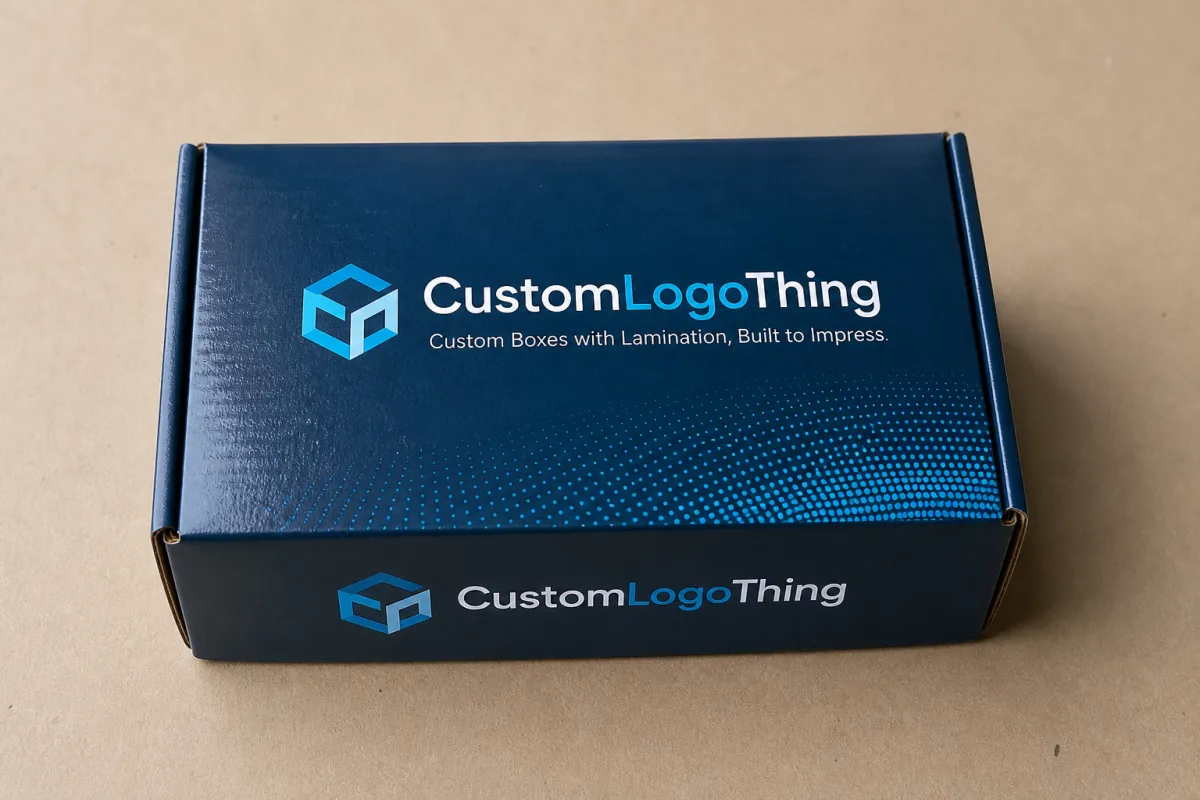
Custom boxes with lamination stand out because printed board wears quickly when it is left unprotected. A laminate film sits on top of the print after the sheet comes off press, helping resist rub marks, fingerprints, light moisture, and the friction that happens in fulfillment centers and retail stockrooms. It is one of the simplest ways to move a box from ordinary to controlled.
That protection matters more than many brands expect. A carton can look excellent in a design file and still arrive with worn corners, faded handling marks, or a dull patch near the fold line. Lamination narrows that gap between mockup and reality. It does not make packaging indestructible, and it should never be sold that way. It does, however, reduce the odds that the box looks tired before the product is even opened.
The visual effect is just as important. Custom boxes with lamination shift how ink reflects light, how colors read in photography, and how the package feels when a customer lifts it from a shelf or shipping mailer. Gloss pushes brightness and contrast. Matte lowers glare and softens the surface. Soft-touch adds a tactile cue that people notice almost instantly, even before they can explain why the box feels different.
In my experience, matte lamination hides minor handling marks better than gloss, while gloss can make vibrant graphics feel louder without changing the artwork itself.
That is why custom boxes with lamination often perform well in categories where the outer carton carries brand value. Cosmetics, electronics, subscription boxes, and gift packaging all depend on surface presentation in a way that plain uncoated board rarely can. A box that survives the route but arrives looking scuffed has still failed part of the brief.
There are limits, of course. A carton tucked inside another package, used once, or discarded immediately may not justify the added step. Premium packaging only works when it fits the role the box is supposed to play. For brands comparing structures, finishes, and product lines, reviewing broader Custom Packaging Products can help place lamination in the context of the whole program rather than treating one SKU as an isolated decision.
How custom boxes with lamination work
The production sequence is fairly direct, and that is part of the appeal. Artwork is printed on the chosen board or paper stock first. A laminate film is then applied to the printed sheet. After that, the sheet moves to cutting, creasing, folding, gluing, and packing. The finish is not an afterthought. It is built into the process from the start.
That order matters because the finish changes how the rest of production behaves. Custom boxes with lamination need accurate registration, a board that folds cleanly, and a dieline that has been checked before press. If the board is too brittle, folds can crack. If the film is mismatched to the artwork, the surface can show odd imperfections. If the prepress review is rushed, tiny errors get multiplied across the run.
Creasing deserves more attention than it often gets. Laminated board can become stiffer at the fold, which means the score depth and fold direction need to be right. A soft-touch film may feel luxurious, but it can also show pressure marks more readily if the tooling is not set carefully. None of this is exotic. It is the normal physics of finishing paperboard.
Three finish types cover most projects:
- Gloss lamination for sharper contrast, brighter color, and a more reflective retail appearance.
- Matte lamination for a softer surface that reduces glare and disguises some handling marks.
- Soft-touch lamination for a velvety feel that signals a premium product before the box is even opened.
Gloss is the obvious choice when a brand wants color to jump off the carton. It works especially well on Custom Printed Boxes with photography, saturated brand colors, or strong contrast. The drawback is just as clear: fingerprints, rub marks, and dust show more easily. On a package that will pass through many hands, that shine can become a maintenance issue.
Matte takes the opposite path. It lowers visual noise, gives the surface a calmer character, and usually hides minor handling better than gloss. Matte custom boxes with lamination are a practical default for apparel packaging, subscription boxes, skin care cartons, and higher-end e-commerce shipments. They still need careful handling, but they are less likely to look loudly worn after a busy week in fulfillment.
Soft-touch is where texture becomes part of the brand story. The finish has a muted, almost suede-like feel that customers notice immediately. Custom boxes with lamination in soft-touch often fit luxury beauty, small electronics, and gift packaging because the tactile experience supports the product positioning. The tradeoff is price, plus a greater need for careful handling during production and packing.
Compatibility with the board also matters. Not every substrate behaves the same way under custom boxes with lamination. Dense blacks, heavy ink coverage, and dark solids can reveal tiny surface defects more easily than lighter designs. Embossing, foil, and spot UV need early coordination so one effect does not interfere with another. I have seen jobs go sideways simply because the finishing order was decided too late.
Custom boxes with lamination are especially useful in categories where the carton itself helps sell the product:
- Cosmetics and skin care
- Electronics and accessories
- Subscription and gift packaging
- Retail packaging with heavy shelf handling
- Shipping cartons that need a premium outer shell
For teams that want to check durability claims against industry practice, resources from groups such as the ISTA and the Institute of Packaging Professionals are useful. Lamination does not replace testing. It changes how the package performs under the tests that come next.
Custom boxes with lamination cost and pricing factors
Pricing for custom boxes with lamination depends on more variables than many buyers expect. Box size, board grade, print coverage, finish type, order quantity, and production complexity all shape the final unit price. A simple-looking carton can hide a fairly complicated quote.
Quantity usually drives the biggest difference. Smaller runs cost more per piece because setup charges, finishing labor, and waste are spread across fewer units. That is why a 1,000-piece order may look materially more expensive per box than a 5,000-piece order, even when the design is unchanged. The machines, setup, and labor are still there.
Finish selection also shifts the number. Standard gloss and matte laminates usually sit near the lower end of the finish spectrum. Soft-touch and specialty films cost more because the material itself is more expensive and the finishing step requires more care. Add embossing, foil, specialty coating, or complex die cutting, and the price rises again. Every extra operation has a cost attached to it.
Here is a practical comparison buyers can use when reviewing custom boxes with lamination quotes:
| Finish | Typical Cost Impact | Best Use | Notes |
|---|---|---|---|
| Gloss | Lowest to moderate | Bright retail packaging, color-heavy artwork | Shows fingerprints more easily, but gives strong shelf impact |
| Matte | Moderate | Premium product packaging, subscription boxes | Soft visual effect, usually more forgiving in handling |
| Soft-touch | Higher | Luxury branding, high-touch presentation boxes | Very tactile, but costs more and can be more sensitive to abrasion |
That table is useful, but it does not replace a careful quote review. When comparing custom boxes with lamination suppliers, ask exactly what is included. Does the number cover printing, lamination, die cutting, folding, gluing, packing, and freight? Or is it only the printed shell, with each other step billed separately? A quote with missing details is often the most expensive one in the end.
A practical rule holds up well in real projects: simplify the structure before trying to force down the finish cost. A complicated carton usually costs more than the laminate itself. Reducing panel count, removing unnecessary inserts, or choosing a cleaner box style can save more than chasing tiny savings in film price. That matters especially for custom boxes with lamination, because the visible value comes from presentation and durability rather than from structural complexity.
For brands balancing margin and perception, the smartest move is often to reserve premium custom boxes with lamination for hero SKUs and use simpler packaging elsewhere. That keeps the visual system coherent without giving every item the same price tag. If your catalog includes several formats, compare them against your custom packaging options before locking one finish into every line.
As a rough planning range, a simple laminated folding carton in a mid-volume order might land around $0.20-$0.60 per unit depending on size, board, and print coverage, while a more involved premium carton can rise quickly once soft-touch, special board, or multi-step finishing enters the picture. Those numbers are planning markers, not quotes. They are useful because they keep a budget conversation honest before the sample stage.
Custom boxes with lamination process and timeline
The process for custom boxes with lamination usually begins with a clear brief. Product dimensions, quantity, board preference, finish choice, and extras such as inserts, windows, or foil should all be in that first conversation. Once the supplier has those details, the dieline gets prepared or checked, artwork is positioned, and proofing begins. A specific brief saves time. A vague one creates avoidable revisions.
A realistic production flow looks like this:
- Brief and specification review
- Dieline setup and artwork placement
- Digital proof or prepress check
- Color review and approval
- Printing
- Lamination
- Die cutting and creasing
- Folding, gluing, and inspection
- Packing and shipping
Custom boxes with lamination can move fairly quickly when the artwork is ready, the spec is locked, and the finish is standard. Simple projects often need about 10-15 business days after proof approval, though more complex orders can stretch beyond that. Specialty finishes, rigid structures, and repeated revision cycles will push the schedule out. A reliable supplier says that early, not after the window has already slipped.
Delays usually come from the same three places: artwork changes, proof approval, and finish indecision. If a buyer keeps switching between matte and gloss, or requests a tactile sample after production has started, the calendar can slide fast. Packaging production is orderly, but it still depends on decisions being made on time.
Color accuracy adds another layer. Dark artwork, rich black backgrounds, and small type can behave differently under custom boxes with lamination depending on the board and print process. If the brand cares about color tone, ask for a sample or press proof instead of trusting a digital mockup alone. Screen color is useful for direction; it is not a substitute for a physical check.
Sample timing deserves its own line item. Some suppliers quote a single turnaround and leave out how long the sample stage actually takes. That is how schedules become slippery. When discussing custom boxes with lamination, ask for the lead time, the proof cycle, and the shipping method in the same review. One timeline is manageable. Three conflicting timelines are not.
For brands that care about sourcing, FSC-certified board may also come into the conversation, especially if the packaging supports sustainability claims. The Forest Stewardship Council is a useful reference point for certification language. Lamination and recycling claims need precise wording too, because a film finish can affect how a package is processed after use. If a supplier makes environmental claims, ask for the exact basis rather than accepting a broad promise.
Common mistakes with custom boxes with lamination
The first mistake is choosing a finish because it looks fashionable. A polished photo does not reveal how custom boxes with lamination will behave in transit, on a shelf, or in a customer’s hand after a courier has handled the parcel with unpredictable care. Matte, gloss, and soft-touch each solve different problems. The right one depends on the product and the channel, not on what looks impressive in someone else’s campaign.
The second mistake is layering too many effects onto a single box. Custom boxes with lamination already add visual polish. Add foil, embossing, heavy spot varnish, dense graphics, and a crowded layout, and the result can feel busy instead of premium. Decoration is not the same as clarity. Sometimes the strongest brand signal is restraint.
File quality causes its own share of trouble. Thin type, low-resolution images, and weak contrast become more obvious once custom boxes with lamination are printed and finished. Matte can soften contrast slightly. Gloss can intensify it. Either way, bad artwork stays bad artwork. The laminate will not fix a sloppy file.
Color handling matters most with dark prints. Deep blacks and saturated colors can reveal surface imperfections if the board or coating is not suited to the finish. That is why prepress checks matter. If the supplier skips that step, ask for it. Correcting a layout before production is far cheaper than arguing over 8,000 finished boxes later.
Testing gets skipped too often. Custom boxes with lamination should be checked for fold behavior, scuff resistance, and fingerprint visibility before the full run starts. A sample that looks perfect under office lighting may not survive warehouse stacking or transit vibration. In packaging terms, “the proof looked fine” is not a defense against real use.
Poor supplier communication is the last common problem. If the quote does not specify laminate type, board grade, dimensions, and what is included, the finished box can drift away from expectations. A vague quote is just a future complaint in a cleaner font. Good suppliers document the spec clearly so everyone is talking about the same custom boxes with lamination, not three slightly different versions of them.
General packaging and recycling guidance can help teams ask better questions, but it should not be treated like a substitute for supplier-specific information. Recycling rules vary by region and facility, and laminated paperboard is not handled the same way everywhere. Ask where the box is expected to go after use, and whether the finish affects recovery in the markets that matter to your brand.
Expert tips for better custom boxes with lamination
Start with the channel. Retail, e-commerce, and gifting ask different things from custom boxes with lamination. Retail packaging needs shelf appeal and handling resistance. E-commerce needs transit durability and a satisfying unboxing sequence. Gift packaging cares more about tactile feel and presentation. Skip that first decision and the spec starts drifting almost immediately.
Use standard finishes where possible. Common matte or gloss custom boxes with lamination usually reduce quote friction and speed up production because suppliers already know how to run them well. Specialty films can be excellent when they solve a specific problem, but standard options are usually easier to approve and less likely to produce surprises. That is not dramatic. It is efficient.
Ask for a physical sample or finish board whenever the tactile feel matters. A digital mockup can show color and layout, but it cannot show how custom boxes with lamination feel in the hand. That matters for premium product packaging, especially when the customer’s first interaction is the outer carton. If the brand promise is supposed to feel refined, the sample should prove it before the order is locked.
Keep the design practical. High-contrast artwork, cleaner edges, and fewer tiny details usually perform better under custom boxes with lamination. Very thin lines can disappear. Overly dark backgrounds can show minor handling marks. The strongest packaging often looks controlled rather than crowded. That holds whether the box is for beauty, electronics, or subscription packaging.
Match the laminate to the board weight as well. Heavier boards often handle production and transit better, though they cost more. Lighter boards reduce freight and material spend, yet they may not feel as substantial in hand. The best choice depends on product weight, shelf life, and how much abuse the carton will face. Custom boxes with lamination only make sense if the structure supports the finish.
A final checklist keeps the order honest. Include quantity, board grade, finish type, turnaround, shipping terms, proof approval, and one named person for sign-off. That sounds basic because it is basic. Basic discipline is what keeps custom boxes with lamination from becoming a project that burns time and margin.
- Quantity: confirm the exact run size and whether there is an overage allowance.
- Finish: lock gloss, matte, or soft-touch before artwork is finalized.
- Board: verify thickness and surface compatibility with the print design.
- Approval: set one person to sign off on proofs.
- Shipping: confirm whether freight, packing, and delivery terms are included.
One more practical point: if your business sells across multiple channels, think about how the same visual system can scale. Custom boxes with lamination can carry a hero retail carton while a simpler companion carton handles shipping. That keeps package branding consistent without forcing every SKU into the same cost bracket. A packaging program should act like a system, not a pile of unrelated box orders.
For brands that want to compare structures and finishes before choosing one path, reviewing Custom Packaging Products can clarify which formats justify lamination and which ones do not. The comparison step is often where the real savings appear. It is less exciting than choosing a shiny finish, but it is usually where the smarter decision lives.
Custom boxes with lamination make the most sense when the finish supports the product, the channel, and the budget at the same time. If those three line up, the result is usually cleaner, more durable, and more convincing than a bare carton. If one piece is missing, the laminate may still look good, but looking good is not the same as doing the job.
The plain takeaway is this: custom boxes with lamination are worth the investment when the package needs to survive handling, sell on sight, or create a stronger tactile impression. They are less compelling when the box is disposable, hidden inside another package, or already overbuilt in every other way. Choose the finish after you decide how the box will be used, not before. That is the quickest route to a package that protects the product, respects the budget, and still feels deliberate in the customer’s hands.
Are custom boxes with lamination worth the extra cost?
Yes, when the box needs Better Shelf Appeal, scratch resistance, or a more premium feel. Custom boxes with lamination usually pay off when the outside of the package affects the buying decision or the unboxing experience. They are less useful if the product is short-lived, low-touch, or hidden inside another package where the finish will not be seen. The value usually shows up in fewer scuffed boxes, stronger first impressions, and less damage to the brand image.
Which laminate finish is best for custom boxes with lamination?
Gloss works well when you want bright color and a high-shine retail look. Matte is often the safest default for a softer, modern appearance and better fingerprint hiding. Soft-touch is best when the box is part of a premium brand experience and the budget can support the added cost. For many buyers, matte custom boxes with lamination are the most practical middle ground because they balance appearance, handling, and price.
How much do custom boxes with lamination usually cost?
Pricing depends on size, board, print coverage, finish type, and order quantity. Smaller runs usually carry a higher unit cost because setup and finishing are spread across fewer boxes. The cleanest way to compare quotes is to check what is included: printing, lamination, cutting, gluing, packing, and freight. If those details are missing, the quote is not really comparable.
What is the typical turnaround for custom boxes with lamination?
Simple projects move faster, but you still need time for artwork approval and proofing. Complex structures, specialty finishes, or multiple revisions can add noticeable delays. Ask for production lead time and sample timing separately so the schedule stays clear. Custom boxes with lamination are manageable on timeline, but only if the approvals are kept tight.
What should I ask a supplier before ordering custom boxes with lamination?
Ask for the exact laminate type, board grade, MOQ, unit cost, and what the quote includes. Confirm turnaround, shipping method, and whether physical samples are available. Request a clear proofing process so artwork changes do not derail the order. If a supplier cannot answer those questions clearly, that is a signal to slow down, not speed up.

