Buyer Fit Snapshot
| Best fit | Custom Boxes with Offset Printing projects where brand print, material claims, artwork control, MOQ, and repeat-order consistency need to be specified before quoting. |
|---|---|
| Quote inputs | Share finished size, material target, print colors, finish, packing count, annual reorder estimate, ship-to region, and any compliance wording. |
| Proofing check | Approve dieline scale, logo placement, barcode or warning zones, color tolerance, closure strength, and carton packing before bulk production. |
| Main risk | Vague material claims, crowded artwork, missing packing details, or unclear freight terms can make a low unit price expensive after revisions. |
Fast answer: Custom Boxes with Offset Printing: Ordering Made Simple should be specified like a repeatable production item. The safest quote records material, print method, finish, artwork proof, packing count, and reorder notes in one written spec.
Production checks before approval
Compare the actual filled-product size with the drawing, then confirm tolerance on folds, seals, hang holes, label areas, and retail display edges. Reserve space for logos, QR codes, warning copy, and material claims before decorative graphics fill the panel.
Quote comparison points
Review material grade, print process, finish, sampling route, tooling charges, carton quantity, and freight assumptions side by side. A quote is only useful when the supplier can repeat the same color, closure quality, and packing count on the next order.
Custom Boxes with Offset Printing: Ordering Made Clear
Two boxes can be made from the same board, shaped to the same dimensions, and still feel like they came from different worlds. One lands with sharp type, dense color, and a finish that looks intentional under store lights. The other looks acceptable in a screenshot and then starts to unravel once it is printed, folded, and handled by actual people. That gap is exactly why custom boxes with offset printing keep showing up in branded packaging, retail displays, and product launches that need polish from the first glance.
Packaging buyers usually are not asking, "Can you print a box?" They are asking a sharper question: will the color hold, will the type stay crisp, and will the carton support the price of the product instead of undercutting it? Custom boxes with offset printing tend to answer yes when the job is planned properly. They are built for repeatability, controlled color, and the kind of surface quality that makes a package feel finished rather than merely functional.
I have sat through enough press checks to know the difference between a box that was designed for print and one that was just sent to print. It shows up in the smallest places: a logo that stays clean at six points, a solid black that doesn't go blotchy, a fold line that does not chew through the artwork. Those details sound minor until you are staring at a pallet of cartons and realizing the brand story got lost somewhere between the PDF and the pressroom.
The sections below cover how the process works, what drives cost, where minimum order quantities come from, and how to order with fewer surprises. If you are planning Custom Printed Boxes for a launch or a replenishment run, the point is to help you ask better questions before the quote starts doing the talking.
Custom Boxes with Offset Printing: What It Means and Why It Matters
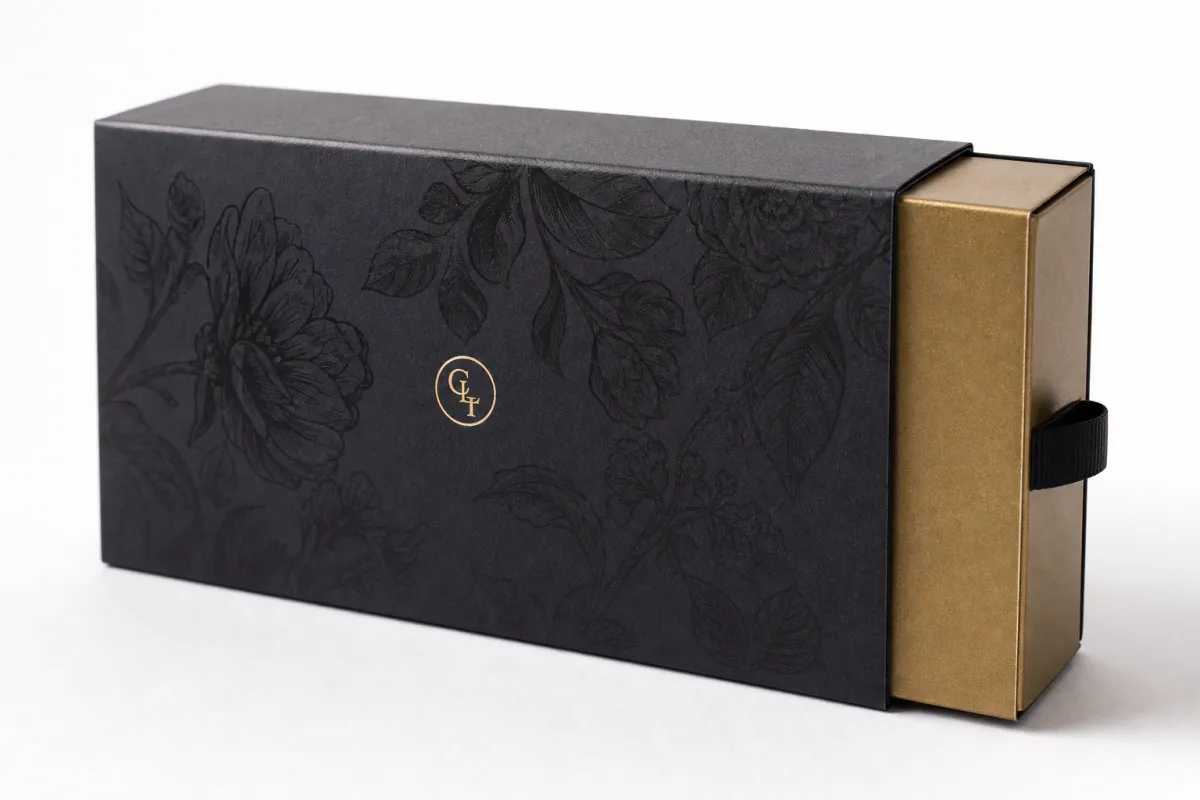
Offset printing is a plate-based method. Ink moves from a plate to a rubber blanket, then from the blanket to the sheet or board. That indirect transfer is one reason custom boxes with offset printing can produce very fine linework and smooth solids. The blanket helps regulate ink laydown, which is why the method is trusted for small type, clean graphics, and repeatable brand color across longer production runs.
Custom boxes with offset printing are a strong fit for folding cartons, presentation boxes, retail cartons, and other packaging where the outer surface has to carry a brand message with discipline. If the box is the first object a customer touches, the print becomes part of the product experience. That holds whether the carton sits in a boutique display, ships through e-commerce, or is stacked in a national retail rollout.
A common mistake is treating offset as the universal answer. It is not. It is the better answer when setup time pays back in output quality. Medium and larger quantities, tighter color control, and a premium printed surface all point toward custom boxes with offset printing. Tiny orders, constant artwork changes, and exploratory launches often belong in digital printing instead. Good packaging design is not a beauty contest; it is a match between print method and business reality.
Substrate choice matters just as much. Coated SBS board, clay-coated stock, and well-prepared artboard usually show finer detail than rough or porous uncoated materials. Uncoated stock is not wrong. It can look restrained, natural, and expensive in the right hands. It just behaves differently, and custom boxes with offset printing perform best when the board and the visual goal are chosen together instead of separately.
Teams comparing packaging across a broader line should think in brand terms. Do you want retail packaging that pops under bright shelf lighting? Do you want premium product packaging with quieter color and texture? Do you want a carton that stays efficient in freight and handling while still supporting package branding? Custom boxes with offset printing can serve all of those goals, but board choice, coating, and finish steer the outcome more than most buyers expect.
For a clear reference on packaging language and industry basics, the Packaging Machinery Manufacturers Institute is useful when a team needs to define terms cleanly. Misunderstood specs cost time. Clear vocabulary saves it.
The fastest way to slow a box program is to treat print quality as an afterthought. When artwork, substrate, and finish are chosen together, custom boxes with offset printing are usually easier to quote, approve, and repeat.
How Custom Boxes with Offset Printing Work
The production path begins before a press ever turns. Artwork prep comes first, and it matters more than many buyers realize. A clean dieline, correct bleed, and accurate safe zone reduce trim issues and keep text from falling into the fold or cut line. Once files are ready, prepress checks the layout, separates colors, confirms panel order, and prepares plates. With custom boxes with offset printing, a lot of the final sharpness is decided in those early steps.
Plate making follows. Each color usually gets its own plate, and each plate controls where ink lands. The image then transfers to a rubber blanket and finally to the board. Because ink does not move straight from plate to substrate, the system can preserve detail very well, especially on smooth stock. That is why custom boxes with offset printing handle tight registration, delicate logos, and small typography so reliably.
Material still changes the result. A coated board accepts ink differently than an uncoated board, and the same artwork can look noticeably different from one surface to another. Smooth stock often gives solids a more even appearance and improves photographic fidelity. More absorbent stock can soften the image, which may suit a natural or matte direction. Packaging design works best when the substrate is part of the conversation from the start, not tacked on at the end.
Color management is another place where custom boxes with offset printing show their value. Many jobs use CMYK builds, but spot colors stay common when brand consistency matters. If a brand blue has to stay stable across cartons, inserts, labels, and related custom printed boxes, a spot ink or a controlled press standard helps keep the color from drifting. Proofs matter here. A press proof, or at minimum a calibrated digital proof, gives the team a chance to see how the colors behave before the full run starts. That step is not glamorous. It is just cheaper than reprinting.
Finishing comes after printing. Aqueous coating can protect the surface and help with handling. Varnish can add a subtle sheen. Lamination can improve durability and tactile feel. Foil stamping, embossing, debossing, and spot UV raise perceived value, especially in premium retail packaging. None of those finishes is automatically better. Each one changes cost, appearance, and often lead time, so the right choice depends on the product, the audience, and the role the box needs to play beyond containment.
Offset printing works as a controlled chain: file quality, plate accuracy, ink consistency, substrate behavior, and finishing all affect the result. Miss one piece and the carton may still function, but the brand feel weakens. That is the practical reason custom boxes with offset printing remain a favored path for polished branded packaging.
Custom Boxes with Offset Printing Cost, Pricing, and MOQ Factors
Price questions usually start with one number, but the real answer is a stack of variables. With custom boxes with offset printing, the biggest drivers are box dimensions, board grade, print coverage, ink count, coating choice, and any special finishing. A small tuck carton with one or two colors is a very different job from a rigid-style presentation box with full flood print, foil, and a soft-touch laminate.
Quantity matters because offset printing carries setup costs that have to be spread across the run. Plates, make-ready time, press adjustments, and waste all happen before the first sellable carton reaches the pile. That is why custom boxes with offset printing often look expensive at low volumes and more attractive as volume rises. A quote that feels high at 500 units can become competitive at 5,000 or 10,000 units because the setup cost is distributed across more finished cartons. I've seen a 1,000-unit job come in oddly close to a 5,000-unit quote simply because the finish package changed. Packaging math can be kinda sneaky.
For a practical range, a simple folding carton at 5,000 pieces may land around $0.18-$0.28 per unit depending on size, board, color count, and finish. Add foil, embossing, or heavier board, and the price can move higher quickly. At 1,000 pieces, the same style may rise sharply because the setup cost is shared across fewer units. Those are not fixed prices. They are the sort of ranges that help a buyer sanity-check a proposal instead of treating the first quote as a law of nature.
MOQ, or minimum order quantity, usually exists because the plant needs enough volume to make the job efficient. Plates, press washup, paper waste, and finishing setup all consume time. If a supplier quotes a very small run of custom boxes with offset printing, the unit cost can become difficult to defend because the labor is front-loaded. That is why many offset jobs begin at a threshold that feels larger than a digital order, even when the carton itself is straightforward.
Artwork readiness also affects price. If the files need dieline cleanup, image replacement, overprint correction, or color management work, prepress may need more time before the job can be scheduled. That labor is real. The cleaner the submission, the less likely the quote will rise because of design fixes rather than manufacturing itself. Buyers sometimes assume the box price only reflects paper and ink, but with custom boxes with offset printing, file prep can move the number more than expected.
Here is a simple comparison that helps place offset printing in context:
| Print Option | Best For | Setup Profile | Typical Cost Behavior | Quality Notes |
|---|---|---|---|---|
| Offset printing | Medium to large runs, strong branding, detailed graphics | Higher setup from plates and press prep | Unit cost improves as quantity rises | Crisp type, stable solids, strong color consistency |
| Digital printing | Short runs, fast changes, variable artwork | Lower setup, quicker start | Often better at very low quantity | Flexible and fast, though less efficient at scale |
| Flexographic printing | Simple graphics on certain corrugated or high-volume applications | Tooling and setup vary by job | Strong for long production runs in the right structure | Often better suited to utility packaging than premium cartons |
If you are sorting through options, ask for quotes on the same exact spec sheet. Same dimensions, same board, same color count, same finish, same quantity. Otherwise the numbers can look comparable while quietly describing different products. That is where custom boxes with offset printing get misunderstood: the lowest quote is not always the same box, and the highest quote is not automatically overpriced. It may simply include more control, better board, or a finish that changes the feel of the package.
For buyers thinking about sourcing and sustainability, recycled content, FSC-certified board, and responsible sourcing are reasonable questions. The Forest Stewardship Council is a clear reference point for certification claims and chain-of-custody language, which can matter when branded packaging needs to support a wider environmental message.
Process and Timeline: From Artwork to Finished Cartons
Once the quote is approved, production starts moving. File review comes first, and prepress checks trim, bleed, image resolution, dieline placement, and color separations. Clean files help custom boxes with offset printing move quickly. Files that need correction can push the schedule back by a day or two, sometimes longer if the artwork is not production-ready.
After prepress, the team creates plates and sets the press schedule. Paper availability, machine time, and finishing capacity all matter here. A basic carton may run inside a straightforward window, while a job with foil, embossing, or heavier coating can require more coordination because every stage adds handling. Custom boxes with offset printing often look like a single step from the outside, yet the internal sequence may include printing, coating, drying or curing, die cutting, stripping, and folding before shipment.
Typical lead times depend on complexity, but many projects fall into a range of roughly 12-15 business days from proof approval once everything is in place. That may shorten when the job is simple and the plant has room, or stretch longer when the order includes special finishes, unusual board, or color-critical matching. File status matters too. A buyer who sends a fully prepared package usually moves faster than one still revising artwork while asking for production pricing.
Approval timing is where schedules often slip. If the proof waits three days, the run does not begin on day three; it begins after sign-off. Custom boxes with offset printing work best when the approval chain is short and clear. Marketing, operations, and procurement should know who signs off on art, who confirms quantity, and who has authority to approve a press proof. If those roles are fuzzy, the timeline becomes fuzzy as well.
Some packaging programs also need performance testing, especially if the carton is part of a ship-ready product system. Depending on the use case, teams may request ISTA or ASTM-related testing to see how packaging behaves during transit. For test guidance and standards context, ISTA is a useful reference. That applies well beyond industrial packaging; even retail packaging that ships directly to customers can benefit from a realistic test plan when breakage risk enters the picture.
From a buyer's perspective, the best timeline is built from the actual job, not from hope. If special board has to be sourced, if the finish needs extra drying time, or if the artwork is still changing, say it upfront. Custom boxes with offset printing can move efficiently, but only when the project is fully defined. That is the part people often underestimate.
Step-by-Step Guide to Ordering Custom Boxes with Offset Printing
If you want the order to move smoothly, begin with the product, not the print spec. What does the box need to hold? Will it sit on a shelf, ship in a case, or arrive as part of a direct-to-consumer unboxing moment? Will it be flat-packed or assembled? Does it need to protect fragile contents, or is it mainly about presentation? Those answers shape the carton structure long before ink gets discussed. Custom boxes with offset printing perform best when the packaging function is clear from the outset.
Next, gather the basic specs. Dimensions matter, but so do quantity, target budget, board preference, print coverage, and finish choices. A buyer who sends a clear request for custom boxes with offset printing usually gets a tighter quote and fewer rounds of clarification. If you are comparing options across a broader product line, it can help to review the supplier's Custom Packaging Products page so you can see which styles and structures are available before requesting revisions.
Here is a practical ordering sequence that keeps most jobs on track:
- Define the product size, weight, and handling needs.
- Confirm the carton style, whether tuck end, sleeve, rigid-style presentation, or another format.
- Choose the board and finish direction that fits the brand.
- Prepare or request the dieline before final artwork begins.
- Build the artwork with correct bleed, resolution, and safe zones.
- Review the proof carefully for copy, color, and structure.
- Approve production only after the decision-makers have signed off.
Artwork setup is where a lot of avoidable friction appears. For custom boxes with offset printing, the dieline is not a decorative guide; it is the map for trimming, folding, and gluing. Bleed should extend past the cut line, and important copy should stay inside the safe zone. Images need to be high resolution, print-ready rather than screen-only, or the result can turn soft and muddy. Spot colors should be named clearly if you are using them, and any special varnish or foil layers should be separated properly so the production team can identify them.
The approval sequence matters just as much as the file itself. A good proof is more than a box image on a screen. It is the moment to catch text errors, confirm panel order, verify color intent, and check that the marketing story still works when it wraps around a physical carton. With custom boxes with offset printing, a rushed proof can cost more than a careful one because a mistake at this stage becomes a physical correction later.
If your team wants help judging what the factory can actually do, the Manufacturing Capabilities page is worth reviewing before you commit to a format. That is especially useful when you are choosing between a simple carton, a more decorative branded package, or a structure with multiple finishing steps.
One last detail deserves attention: do not leave fulfillment until the end. Beautiful custom printed boxes can still create problems if the pack-out method, pallet count, or delivery sequence is unclear. A box that looks excellent on a press sheet still has to fit the warehouse reality. The best ordering process keeps design, production, and logistics in the same conversation.
Common Mistakes That Raise Cost or Delay Offset Jobs
The first mistake is guessing at dimensions. That sounds minor, but it is one of the fastest ways to blow up a quote or create a box that does not fit correctly. Even a few millimeters can change board usage, folding behavior, freight volume, and the fit of the product packaging. Custom boxes with offset printing are exacting by nature, so the measurements need to be exact too.
The second mistake is sending artwork that is not truly print-ready. Low-resolution images, unlinked fonts, missing dieline layers, and unfinished copy all slow the job down. In custom boxes with offset printing, prepress is the stage where good intentions either become production-ready files or turn into revision cycles. A file that looks fine on a laptop can behave very differently on press, especially when brand color consistency matters.
The third mistake is stacking finish after finish without asking whether each one earns its keep. Foil, embossing, soft-touch laminate, spot UV, and heavy coating can all look good on their own. Put them together without discipline, and the quote climbs quickly. Sometimes that is justified. Sometimes it is not. If the carton is for a mass-market item, the smarter move may be clean offset printing, a single coating, and stronger packaging design rather than a pile of embellishment.
The fourth mistake is treating lead time like a fixed number. It is not fixed. Approval delays, board shortages, press queue changes, and shipping constraints all affect the schedule. A buyer might hear that custom boxes with offset printing usually take a certain number of business days, then lose two of those days waiting for a proof response. The printer is not the only variable. The customer side can move the timeline just as much.
The fifth mistake is failing to compare like with like. One supplier's proposal may include a heavier board, another may quote a different coating, and a third may price from a lower quantity break. If the specs are not aligned, the lowest number means very little. This is why custom boxes with offset printing should always be quoted against the same board grade, same print coverage, same finish, and same delivery expectation.
Here is a quick way to think about risk:
- High risk: unverified dimensions, unfinished art, unclear approval chain.
- Medium risk: special finishes without sample review, loose color expectations.
- Lower risk: clear specs, print-ready files, proof approval, and a realistic schedule buffer.
People sometimes assume the press is the hard part. Most delays happen before the press starts. Handle the specification and artwork stage carefully, and custom boxes with offset printing become much easier to manage. The finished cartons usually look like the brand intended instead of a compromise made in a hurry.
Expert Tips and Next Steps for Better Results
If color, texture, or finish matter a lot, ask for a sample, proof, or material swatch before the full run begins. Seeing the board in person helps more than any screen mockup. A soft-touch laminate changes how the carton feels in the hand, while a coated board changes how solids and photographs sit on the surface. Those tactile differences are difficult to judge digitally, which is why custom boxes with offset printing are often easier to approve with a physical reference when the budget allows.
Compare quotes on the exact same spec sheet. That sounds obvious, yet it is where many packaging buyers get tripped up. If one quote uses a different board thickness, a different coating, or a different quantity break, the numbers do not actually describe the same job. When custom boxes with offset printing are evaluated correctly, the real decision often comes down to value rather than raw price. A slightly higher quote may buy better brand consistency, stronger construction, or a finish that helps the carton sell the product more effectively.
Build a small time buffer into your launch plan. Not a huge one, just enough to absorb proof comments, shipping variance, or a late artwork change. That buffer protects everyone involved. It also reduces pressure on the production team, which usually improves the chance that custom boxes with offset printing come through cleanly on the first pass.
Keep the end use in view. If the box is meant for retail packaging, shelf presence and print quality may matter more than extra structural strength. If the box is part of a subscription or e-commerce system, the shipping environment matters more, and testing becomes more important. If you are unsure how much protection is enough, start by mapping the full journey from warehouse to customer handoff. That is where product packaging decisions become practical rather than theoretical.
If you are ready to move from research to action, gather the dimensions, confirm the quantity, choose a starting finish, and request a quote for custom boxes with offset printing. The clearer the brief, the smoother the proposal, and the easier it becomes to compare options without losing sight of the packaging goal. In practice, the strongest results usually come from three things: a clean file, a sensible material choice, and an approval process that does not drag on forever.
FAQs
Are custom boxes with offset printing better than digital printing for large orders?
Usually, yes. Custom boxes with offset printing tend to become more cost-effective as quantity rises because the setup cost is spread across more units. The method also handles fine type, clean solids, and consistent brand color very well when the run is long enough to justify plates and press setup. Digital printing still makes sense for short runs, frequent design changes, or very fast turnaround needs.
What affects the cost of custom boxes with offset printing most?
The main drivers are box size, board grade, print coverage, number of colors, coating choice, and special finishes. Quantity matters too, because a larger run generally improves unit economics. Artwork readiness can also affect cost if the file needs prepress cleanup, dieline corrections, or color adjustments before production can begin.
How long does it take to produce custom boxes with offset printing?
Lead time depends on proof approval, plate making, press scheduling, finishing, and shipping. Simple jobs with clean files and standard finishes usually move faster than projects with foil, embossing, or more complex color matching. A realistic quote request is easier when the dimensions, quantity, and artwork status are confirmed at the start.
What file setup is best for custom boxes with offset printing?
Use print-ready files with correct bleed, safe zones, and the proper dieline. High-resolution artwork and clearly named spot colors help reduce surprises during prepress. If the file is still in progress, ask the printer what specs they want before you finalize the packaging design, because that can save a lot of back-and-forth.
How do I know if my order needs a MOQ for offset printing?
MOQ often appears because plate costs, press setup, and material waste need to be spread across enough units to keep the job efficient. The minimum can vary based on box size, design complexity, and finish requirements. If your run is small, compare custom boxes with offset printing against digital or hybrid options before deciding.

