Buyer Fit Snapshot
| Best fit | Custom Burlap Wine Bags with Logo projects where brand print, material claims, artwork control, MOQ, and repeat-order consistency need to be specified before quoting. |
|---|---|
| Quote inputs | Share finished size, material target, print colors, finish, packing count, annual reorder estimate, ship-to region, and any compliance wording. |
| Proofing check | Approve dieline scale, logo placement, barcode or warning zones, color tolerance, closure strength, and carton packing before bulk production. |
| Main risk | Vague material claims, crowded artwork, missing packing details, or unclear freight terms can make a low unit price expensive after revisions. |
Fast answer: Custom Burlap Wine Bags with Logo: A Practical Overview should be specified like a repeatable production item. The safest quote records material, print method, finish, artwork proof, packing count, and reorder notes in one written spec.
Production checks before approval
Compare the actual filled-product size with the drawing, then confirm tolerance on folds, seals, hang holes, label areas, and retail display edges. Reserve space for logos, QR codes, warning copy, and material claims before decorative graphics fill the panel.
Quote comparison points
Review material grade, print process, finish, sampling route, tooling charges, carton quantity, and freight assumptions side by side. A quote is only useful when the supplier can repeat the same color, closure quality, and packing count on the next order.
Custom Burlap Wine Bags With Logo: A Practical Overview
A plain bottle turns gift-ready fast once it slides into custom burlap wine Bags with Logo. Texture does the heavy lifting. The coarse weave reads as rustic, handmade, and a little more deliberate than a paper sleeve. That shift matters whether the bottle sits in a tasting room, shows up at a wedding favor table, or gets handed across a corporate reception desk. A good bag changes the first impression before anyone reads the vintage.
What Custom Burlap Wine Bags with Logo Actually Signal
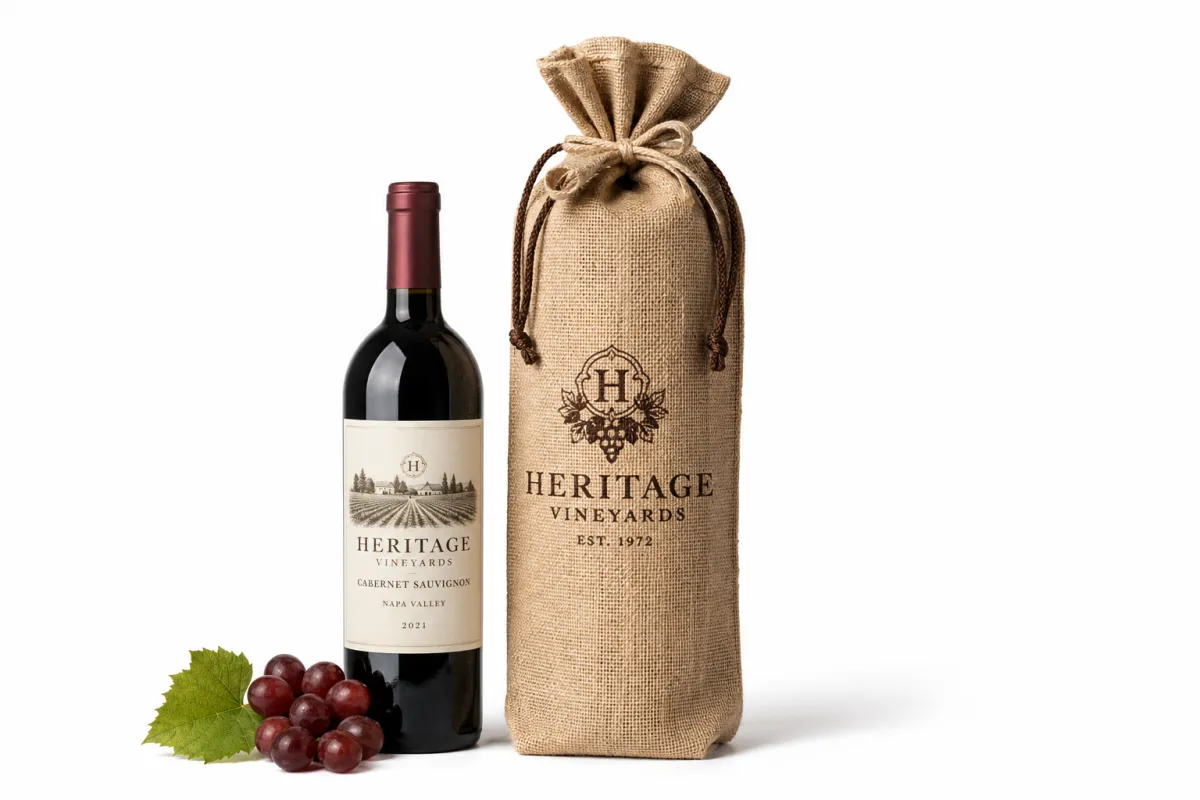
Custom burlap wine Bags with Logo do more than hold glass. They tell the buyer the bottle was meant to feel like a gift. A $15 bottle can suddenly feel like a $25 bottle because the packaging changes the story before anyone touches the cork. People notice texture first. They notice grape variety later, if at all.
That is why custom burlap wine Bags With Logo show up in tasting rooms, gift shops, and seasonal retail sets so often. Burlap sits in a useful middle zone. It feels premium without getting precious, and it feels handmade without drifting into cheap craft-fair territory. Satin can look too formal for a local winery. Kraft can look too thin. Burlap lands in the sweet spot where the bottle feels considered, not overdesigned.
The format works in a few predictable settings. Holiday gifting is the obvious one. Winery tasting rooms use custom burlap wine Bags with Logo because the bag becomes part of the buying ritual. Corporate gifting teams like them because they photograph well and survive the trip from desk to desk. Weddings use them because they are easy to personalize without turning the whole event into a design exercise. Subscription programs use them because the bag adds perceived value without forcing a custom box on every order.
There is a branding effect people underestimate. A reusable bag keeps advertising after the bottle is opened. That matters because package branding does not stop at the register. If the bag goes home, gets reused for another bottle, a candle, or storage, the brand keeps collecting impressions without buying another placement.
Custom Burlap Wine Bags with logo are not shipping cartons, and they should never be treated like one. They still do a job. They add a layer against dust, fingerprints, scuffs, and minor abrasion during short-distance handling. In a tasting room or on a gift table, that is enough. In a parcel shipment, the bag should sit inside another container, ideally one built for transit testing or cushioned product packaging.
For teams thinking about branded packaging more broadly, burlap works best as a signal piece, not a standalone trick. The logo, stitching, cord, and finish all contribute to package branding. A winery can pair the bag with a hang tag, tissue, or one of the formats in Custom Packaging Products so the presentation feels coordinated instead of improvised. I have seen a very nice bottle look oddly unfinished just because the bag and tag were speaking different visual languages. Small detail. Big difference.
A good burlap wine bag does one job immediately: it makes the bottle feel intentional before the customer has even touched the cork.
That is the reason custom burlap wine Bags with Logo keep showing up across so many price points. They are not flashy. They work. In packaging, that usually beats clever by a mile.
How Do Custom Burlap Wine Bags with Logo Help Sell Wine?
Custom burlap wine bags with logo help sell wine because they make the bottle easier to gift, easier to remember, and easier to justify at checkout. That sounds simple because it is. Packaging does not need a manifesto. It needs to make the product feel like the right choice in the moment.
For wineries, that often means converting a browser into a buyer. The bag adds enough polish to move a bottle from “nice” to “I should grab one.” For tasting rooms, custom burlap wine bags with logo also create a cleaner handoff. Staff can wrap the bottle fast, the customer leaves with something that looks finished, and the brand gets a visible carry piece walking out the door.
That matters in retail too. A visible, tactile wine gift bag can act like a small billboard on the shelf. It catches attention without screaming. It also works well in seasonal displays where shoppers are looking for easy gift solutions and do not want to invent one themselves. People like items that reduce effort. Shocking, I know.
When a bottle is sold as part of a gift set, the bag adds value without forcing a full custom box. That keeps the presentation lighter, quicker, and cheaper than a rigid setup. It also gives brands room to pair the bag with custom printed boxes, inserts, or tasting notes when they want the full package to feel more complete.
There is also a repeat-use effect. A sturdy burlap bag can get reused for another bottle, small decor, or storage. That keeps the brand in the house longer than one purchase cycle. In practical terms, custom burlap wine bags with logo extend brand visibility after the sale, which is exactly what smart packaging should do.
The other advantage is positioning. Burlap reads rustic, artisanal, and approachable. That makes it a good fit for wineries, vineyards, seasonal gift programs, and handmade product lines. It also plays nicely with other LSI packaging terms buyers search for, like jute wine bags, wine gift bags, and branded packaging. Different labels, same basic job: make the bottle feel worth giving.
There is a sales angle here that gets missed a lot. If the bag makes the bottle easier to carry and easier to present as a gift, it removes friction. Less friction means fewer abandoned purchases. Nobody walks into a tasting room hoping for a packaging dissertation. They want something nice, fast, and gift-ready. Burlap is kind of perfect for that.
How Custom Burlap Wine Bags with Logo Are Produced
The production path for custom burlap wine bags with logo starts with the fabric. People hear burlap and think it is one thing. It is not. Some bags use a coarse jute-style weave with a natural tan finish. Others use a tighter weave and a liner to reduce shedding and help the bag hang better. Weight matters too. A lighter build can feel loose and floppy. An 8 oz to 10 oz construction usually feels steadier in the hand and holds its shape on a shelf without collapsing like an afterthought.
Construction quality is where cheap and premium packaging split. The seams should run straight, with reinforcement at stress points near the base and drawstring channel. Double stitching is worth asking about if the bag is meant for repeat use. The weave gets all the attention, but the sewing pattern does a lot of the real work. I have seen beautiful artwork ruined by weak stitching. The logo was fine. The bag just gave up.
Logo decoration comes next. Screen printing is usually the cleanest choice for bold, simple marks because it gives crisp edges and strong contrast on a textured surface. Heat transfer can work for some designs, especially short runs with color variation. Embroidery feels more premium, though it raises cost and usually suits simpler artwork. Sewn-on patches and woven labels add texture and permanence. Each method changes the look, the feel, and the lead time.
Custom burlap wine bags with logo also need the right shape for the bottle. A standard 750 ml bottle is not the same as a tall Bordeaux profile or a sparkling bottle with a wider shoulder. For a regular bottle, buyers often want finished internal dimensions around 4.5 to 5 inches wide and 13 to 14.5 inches tall, though exact measurements depend on seam allowance and closure style. Sparkling bottles need more room at the base and shoulder. Multi-bottle sets need even more planning because one size rarely fits all without looking sloppy.
Closures change the customer experience more than people expect. Drawstrings feel casual and giftable. Ribbon ties feel softer and more decorative. Reinforced open-top bags load quickly at the counter, but they are less secure if the bottle gets carried around. If the bag is headed for a retail display, a neat opening and a stable base matter as much as the logo. On a shelf, the silhouette is part of the product packaging.
Proofing catches problems before they turn into expensive mistakes. A supplier should send a mockup showing logo placement, size, color, and the relationship between the graphic and the burlap texture. Fine details need extra scrutiny. A stitched sample or digital proof can reveal whether thin lines will vanish into the weave. That step is not busywork. It is where a brand avoids receiving a full run of bags that only looked good on a screen.
If the artwork has delicate linework, a good supplier may suggest simplification before production. That is not a knock on the brand story. It is usually the opposite. The goal is to keep the story alive on a rough surface. For more package formats that need the same kind of artwork discipline, the broader Custom Packaging Products catalog is a useful reference point.
One more practical point: if the bag will sit inside a larger retail packaging set, the decoration method should match the rest of the presentation. A foil-stamped hang tag next to a rough burlap bag can look sharp. A high-gloss label slapped onto the bag itself, not so much. Packaging design often runs on contrast, but contrast needs a reason. Otherwise it just looks like the items were assembled by three different people who never met.
What Drives Custom Burlap Wine Bags with Logo Pricing
Pricing for custom burlap wine bags with logo makes more sense once the variables are broken out. Material weight is one. Decoration method is another. Size, closure style, lining, and quantity all move the number. Freight can matter just as much as the bag itself, especially if the order ships across regions or splits into multiple destinations.
Order quantity is usually the first lever. Larger runs lower unit cost because setup gets spread across more pieces. Simple enough. The tradeoff is cash flow and storage. A buyer who orders 5,000 bags may get a better unit price than someone ordering 500, but the upfront spend and inventory risk are higher. For a small winery or event planner, that matters as much as the sticker price.
As a rough range, simple one-color screen printed custom burlap wine bags with logo may land around $0.95 to $1.80 per unit on a large run, while smaller quantities often sit closer to $2.50 to $5.25 per unit. Embroidery or sewn patch work can push pricing higher, often into the $1.80 to $3.50 range on larger runs and more on low-volume orders. These are broad ranges, not quotes. Burlap weight, artwork complexity, and packaging requirements can move the math quickly.
Minimum order quantities matter too. Some suppliers only price aggressively once the buyer reaches a threshold such as 1,000 or 3,000 pieces. That can work well for established brands. It creates friction for a launch, a wedding series, or a seasonal test. Better to know the MOQ early than to discover it after the design is already approved.
| Option | Typical Use | Approx. Unit Cost | Lead Time Impact | Notes |
|---|---|---|---|---|
| One-color screen print | Retail sets, tasting rooms, promotions | $0.95-$1.80 at higher volume | Low to moderate | Best for bold logos and clear readability |
| Embroidery | Premium gifting, higher-end resale | $1.80-$3.50+ depending on stitch count | Moderate | Feels elevated, but fine detail may be limited |
| Sewn patch or woven label | Brand-first packaging, repeat reuse | $2.00-$4.50+ | Moderate to high | Strong for tactile branding and durability |
| Custom lining or reinforced build | Luxury gift sets, sturdy carry use | Adds $0.20-$0.80+ | Moderate | Improves structure and perceived value |
The cheapest bag is not always the cheapest project. A custom tag, specialty cord, reinforced seams, or a small liner can make the bag look far more expensive than the extra cents suggest. Freight works the same way. A low unit price can turn into a mediocre landed cost once cartons, pallets, split shipments, and storage get added in.
Buyers should also think about the system around the bag. If the bags need to coordinate with Custom Packaging Products such as insert cards, outer boxes, or retail display pieces, the total brand package should be costed together instead of one item at a time. That is where package branding becomes visible to finance teams, not just marketing teams.
For projects with shipping or multi-touch handling, asking about transit testing is smart. Standards from ISTA help teams understand how a package behaves under vibration, drop, and compression. Burlap bags are not transit protection by themselves, but if they sit inside a retail gift set or a shipping carton, the total system still needs to be thought through with distribution in mind.
One honest disclaimer: those pricing ranges are directional. They are useful for planning, not for signing a purchase order. A custom label, special trim, or a request to match a specific shade can move the number fast. Packaging pricing is never just one line item. It is a stack of little decisions pretending to be one easy answer.
Step-by-Step Ordering Timeline for Custom Burlap Wine Bags with Logo
Good ordering starts with details that look small until they get expensive. Before requesting a quote for custom burlap wine bags with logo, gather bottle dimensions, target quantity, logo files, brand colors, and the delivery date that cannot move. If the bottles include standard 750 ml, Bordeaux, and sparkling shapes, list each one separately. A single generic size request is where too many projects go sideways.
- Measure the bottle and confirm the target fit.
- Send vector artwork, ideally in AI, EPS, or PDF format.
- Choose decoration method and confirm color targets.
- Review the supplier mockup and ask for a production proof if the logo is detailed.
- Approve the sample or pre-production image before the run starts.
- Allow time for production, packing, and freight.
The quote stage should be more than a price check. It should answer questions about bag dimensions, fabric weight, stitch pattern, logo area, and whether the supplier can match a specific brand tone. If the answer stays vague, that is a warning sign. Packaging design looks simple from the outside. Inside the factory, every decision has a cost or a risk attached to it.
Once the mockup comes back, the real question is not whether the logo looks nice on screen. It is whether the logo will survive the burlap weave. Fine serifs, hairline strokes, and tiny copy are the first things to disappear. A smart artwork adjustment can improve legibility more than a color tweak ever will. On a rough surface, thick lines and generous spacing usually print better than detail-heavy branding.
Custom burlap wine bags with logo often move through production in 12 to 15 business days after proof approval for a straightforward run, though that can stretch if the order needs embroidery, special sizing, or repeated revisions. Sampling may add another 3 to 7 days depending on the method. Freight can be quick or slow depending on destination and season. None of that is unusual. It just needs to be planned instead of hoped for.
Seasonal timing matters more than many buyers expect. Holiday programs, wedding peaks, and retail gifting periods can push factories and carriers hard. If the bags are tied to an event date, build in a buffer of at least one extra week. More if the artwork is new, the bottle shape is unusual, or the order crosses borders. The schedule is part of the product.
For teams that already buy other branded packaging, the best move is to keep the artwork process centralized. The logo used on the bag should coordinate with the logo on any gift box, tissue, or promotional insert so the customer does not feel like each item came from a different brand team. A tighter package branding system usually cuts down on approvals too.
If a project depends on FSC-certified paper inserts or hang tags, specify that early. The certification applies to paper-based components, not to burlap itself, but it still shapes the final package. More information on chain-of-custody and certified fiber is available at FSC, which is useful when a buyer wants the full presentation to reflect a stronger sourcing story.
Common Mistakes Buyers Make With Custom Burlap Wine Bags with Logo
The most common mistake with custom burlap wine bags with logo is size assumption. Buyers think “wine bottle” means one shape, then find out that a narrow Burgundy bottle, a broad sparkling bottle, and a tall Bordeaux bottle do not behave the same way inside a bag. The result is either a loose fit that looks awkward or a tight fit that slows loading at the counter and makes the whole thing feel less polished.
Logo complexity causes problems too. Burlap is textured. That texture can swallow thin fonts, small icons, and intricate gradients. A logo that looks crisp on a white mockup can turn muddy on the finished bag. The most reliable designs are bold, high-contrast, and not trying to win a detail contest. Cleaner marks often look more premium than overworked ones.
Rushed purchasing creates a lot of damage. Buyers skip sampling, approve proofs too quickly, or leave too little time for a fixed event date. Then a minor artwork correction becomes a full-blown scramble. Seasonal programs are especially prone to that kind of mess. Experienced packaging teams start with proofing, not optimism.
Some teams chase the lowest quote without asking what got removed to hit that number. Thinner fabric, weaker seams, and inconsistent stitching can create a bad customer experience even if the first bag looks fine. In a retail setting, inconsistency is obvious. One bag stands upright, another collapses, and a third frays at the opening. That kind of variation hurts product packaging credibility fast.
Brand mismatch is a subtler mistake. Rustic burlap fits vineyards, farmhouse retail, seasonal gifting, and handmade goods. It is not always the right fit for a sleek luxury release unless the rest of the design gets adjusted carefully. That might mean a restrained logo, a darker print, cleaner closure hardware, or a more polished insert card. Packaging should support the bottle’s positioning, not argue with it.
There is also a logistics mistake: treating the bag as a shipping solution. It is not. If the bottle is moving through a carrier network, the packaging needs a proper outer structure, often a carton or custom printed boxes designed for transit and protection. The burlap bag can still be part of the presentation, but the bag alone should not be responsible for breakage prevention.
A simple fix is to request a sample and test it the way the customer will use it. Put it on a shelf. Wrap it at a counter. Slide a bottle in and out with one hand. Drop it into a gift basket. A lot of issues show up in those small motions. Packaging design improves when it is tested against actual use instead of just a digital proof.
For buyers building a coordinated brand system, it can help to review other options in Custom Packaging Products before locking the order. Comparing the bag against tags, boxes, and inserts usually makes the weak point obvious before it turns expensive.
Expert Tips for Stronger Branding and Better Resale Value
Strong branding starts with readability. If a customer can see custom burlap wine bags with logo from three feet away, the bag is already doing its job. The best treatments use contrast, simple geometry, and enough empty space around the mark to let the weave breathe. Dark ink on natural burlap often works well, but deep green, black, or warm burgundy can feel more deliberate than generic brown.
Adding a second touchpoint is still an underrated move. A hang tag, tasting note card, or short care insert can turn custom burlap wine bags with logo into a fuller brand moment. That extra piece can explain varietal notes, suggest food pairings, or include a QR code for reorders. The bag becomes a small retail packaging system instead of a sleeve with a logo on it. Customers remember structure. They remember systems even more.
Material and price point should match. A $45 bottle wrapped in a rough, unlined bag may feel underdressed. A $12 bottle in an overfinished pouch can feel inflated. The right choice depends on the product story. Packaging buyers need to think like merchandisers: the bag should support the wine’s positioning, not distract from it. A premium look can be quiet. It does not need to shout.
Tactile packaging improves gift perception because the hand tells the brain something before the eye finishes the scan. Burlap does that well. It feels textured and authentic. If a brand wants that effect without looking accidental, the rest of the package should be disciplined. Consistent logo placement, neat stitching, and a measured color palette matter a lot more than decorative overload.
Retail buyers should test the bag in real conditions, not just on a desk. Put it in a display shelf. Place it inside a shopping bag. Move it through a gift wrap counter. Compare how it looks under warm retail lighting and under daylight. Does the logo still read? Does the seam sit straight? Does the opening stay open long enough for staff to load the bottle quickly? Those are the questions that determine whether custom burlap wine bags with logo earn their keep.
Comparing packaging systems, not just individual items, usually helps too. A brand using Custom Packaging Products for boxes, inserts, or retail sleeves can keep the same visual language across multiple touchpoints. That consistency helps customers recognize the brand faster, and it can make the whole package feel more expensive than any single component would on its own.
For sustainability-minded programs, reusable bags create an additional benefit: the bag can live beyond the bottle. That does not replace a formal environmental claim, and buyers should be careful not to overstate anything. Still, reuse is real value. A sturdy bag that gets used again for storage or gifting can extend the life of the brand impression in a way single-use wrap never can.
One more practical tip from the production side: simplify the mark before you fall in love with it. A logo that is beautiful on a screen can be a pain on burlap. Thickened strokes, slightly larger letterforms, and fewer tiny details usually print cleaner and look more intentional. That is not a compromise. It is good design.
Next Steps for Custom Burlap Wine Bags with Logo
The fastest path to a useful quote is specificity. Before requesting pricing for custom burlap wine bags with logo, define the bottle shape, the decoration method, the approximate quantity, and the brand file format. That cuts down on back-and-forth and helps suppliers respond with numbers that actually mean something.
Compare at least two or three suppliers on price, proofing process, material quality, and delivery timing. The cheapest estimate can turn into the most expensive choice if it hides weak stitching, poor artwork support, or a long delay. For a packaging buyer, the better comparison is total project value: fit, appearance, durability, and landed cost.
If the artwork is detailed, the bottle shape is unusual, or the order is tied to a fixed launch date, ask for a sample or a clear photo proof before production starts. That request is not fussy. It is normal risk control. It also gives the buyer a chance to see whether the logo reads well against the burlap texture and whether the bag feels strong enough for the intended use.
A simple decision matrix helps. Score each option on cost, lead time, logo clarity, and construction quality. If the numbers are close, choose the bag that looks best in the actual customer handoff moment. That is where packaging earns its money. Shelf appeal matters. So does the moment the bottle gets given away, sold, or opened.
For teams building a broader packaging program, the same logic applies across every format. Whether the brand needs bags, inserts, or custom printed boxes, consistency in structure and artwork usually creates a stronger retail experience than chasing novelty in each piece. That is why custom burlap wine bags with logo work best as part of a larger system, not as a one-off decoration.
Custom burlap wine bags with logo can be a small-format package with a large branding job. They make a bottle feel gift-worthy, protect it from scuffs and dust, and keep the brand visible after the sale. If the size, print method, and lead time are chosen carefully, custom burlap wine bags with logo can support both the product and the story behind it, which is exactly what good packaging should do. Pick the size that matches the actual bottle, choose a decoration method that survives the weave, and build enough time into the schedule to proof it properly. That is the move.
What size custom burlap wine bags with logo fit a standard 750 ml bottle?
Most standard 750 ml bottles fit a bag sized for typical wine-bottle dimensions, but shoulder width and overall height still matter. Ask for finished internal measurements, not just a generic size label, because bottle shapes vary more than many buyers expect. If the range includes sparkling or tall Bordeaux bottles, request alternate sizing before production starts.
How much do custom burlap wine bags with logo usually cost?
Price depends on quantity, burlap weight, logo method, and extras such as lining, cords, or custom tags. One-color decoration and larger order volumes usually bring the unit cost down, while embroidery or sewn patches raise it. Shipping, sampling, and split deliveries can change the final landed cost, so it helps to compare total project cost rather than unit price alone.
How long does it take to make custom burlap wine bags with logo?
A simple order may move quickly, but proofing, sample approval, production, and transit all need time. A straightforward run often takes about 12 to 15 business days after proof approval, with more time needed for custom finishes or revisions. Seasonal rushes can add delays, so it is wise to build in a buffer for holidays, weddings, and launch dates.
What logo method works best on custom burlap wine bags with logo?
Screen printing is often the cleanest choice for bold, simple logos because it gives strong visibility on a textured surface. Embroidery and sewn patches can feel more premium, though they usually cost more and work best with simpler artwork. Fine details should be simplified before production so the logo stays legible on the woven burlap.
Are custom burlap wine bags with logo reusable?
Yes, burlap bags are often reused for gifting, storage, decor, or future bottle transport if the stitching and closure are sturdy. Reuse can extend brand exposure after the original purchase, which adds marketing value. If reuse matters, ask about seam strength, closure durability, and whether the fabric is easy to shake out or spot clean.

