Buyer Fit Snapshot
| Best fit | Supplement Packaging Bottles Custom Wholesale projects where brand print, material claims, artwork control, MOQ, and repeat-order consistency need to be specified before quoting. |
|---|---|
| Quote inputs | Share finished size, material target, print colors, finish, packing count, annual reorder estimate, ship-to region, and any compliance wording. |
| Proofing check | Approve dieline scale, logo placement, barcode or warning zones, color tolerance, closure strength, and carton packing before bulk production. |
| Main risk | Vague material claims, crowded artwork, missing packing details, or unclear freight terms can make a low unit price expensive after revisions. |
Fast answer: Supplement Packaging Bottles Custom Wholesale: Quote Scope, Sample Proof, MOQ, and Lead Time should be specified like a repeatable production item. The safest quote records material, print method, finish, artwork proof, packing count, and reorder notes in one written spec.
Production checks before approval
Compare the actual filled-product size with the drawing, then confirm tolerance on folds, seals, hang holes, label areas, and retail display edges. Reserve space for logos, QR codes, warning copy, and material claims before decorative graphics fill the panel.
Quote comparison points
Review material grade, print process, finish, sampling route, tooling charges, carton quantity, and freight assumptions side by side. A quote is only useful when the supplier can repeat the same color, closure quality, and packing count on the next order.
For a supplement brand, Supplement Packaging Bottles Custom wholesale is not a decoration exercise. It affects line speed, seal reliability, shelf presentation, and whether a customer trusts the product before they even read the label. If the neck finish is wrong, the cap fights the filling line. If the panel is too tight, labels pucker. If the bottle is too tall for the carton, freight costs climb before the formula earns a cent.
I always start with function. Pretty comes second. A bottle should protect capsules or tablets, support the label system, and fit the production workflow without turning every run into a troubleshooting session. Supplement Packaging Bottles custom wholesale works best when the buyer thinks in systems: bottle, closure, liner, seal, decoration, and shipper all planned together. That approach cuts down on revisions, keeps proofing clean, and gives the brand a package that looks deliberate instead of patched together.
From a packaging buyer's point of view, consistency is the real payoff. Once a bottle family is set correctly, reorders get easier, shelf presence stays steady, and the team stops wasting time on preventable production problems. A good bottle does its job quietly. That is usually the sign of strong package branding and practical packaging design working together.
"The bottle has to work on the line before it can win on the shelf."
Why Supplement Packaging Bottles Custom Wholesale Matters
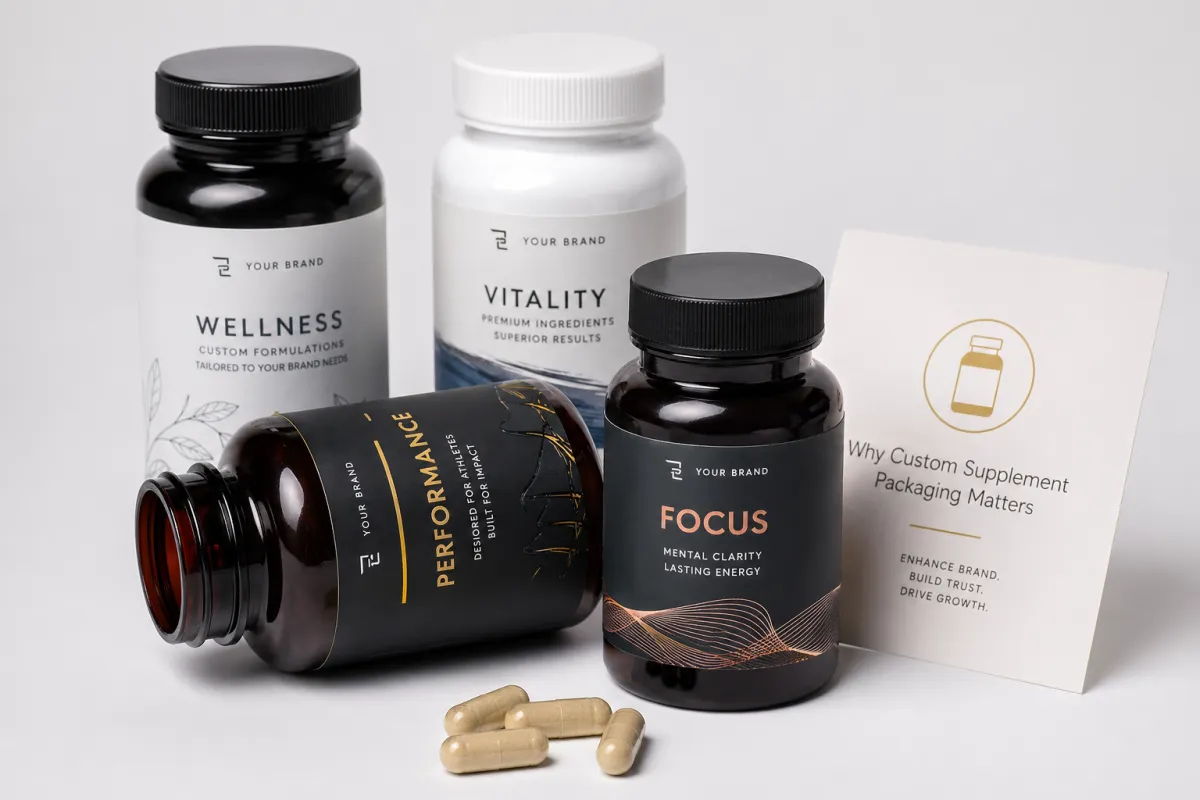
Supplement packaging bottles custom wholesale matters because the bottle is part of the product, not a shell wrapped around it. It holds the count, shields the formulation, helps protect moisture-sensitive capsules, and shapes the first impression in retail packaging and e-commerce alike. A 120-capsule bottle that looks great but ships badly creates costs in the warehouse, not value on the shelf.
Small dimensional mistakes create big headaches. A bottle that is even slightly too narrow can slow counting and filling. One that runs too tall may force a different carton insert. If the closure thread does not match the neck finish cleanly, torque values drift and caps arrive loose or over-tightened. That is why the bottle spec should begin with the production process, not with the mockup.
Wholesale sourcing adds another layer of value. Consistent bottle dimensions make reorders predictable, and planned sourcing for the bottle, closure, and liner usually improves unit economics. When the whole system is ordered together, the buyer has fewer pieces to track, fewer approval cycles to chase, and better control over branded packaging across multiple SKUs. If the goal is scale, a single coordinated bottle program is usually cleaner than piecing together separate components from different suppliers.
There is also a channel issue that gets missed too often. A bottle for Amazon or DTC needs drop-ready strength, clear barcode placement, and an Unboxing Experience That does not feel lazy. A bottle for a retail shelf may need stronger shelf presence, tighter color matching, and a label panel that leaves room for regulatory copy. In both cases, supplement packaging bottles custom wholesale should support the sales channel instead of forcing the brand to compromise later. For brands comparing broader supply options, it can help to review Custom Packaging Products and related Wholesale Programs before locking the spec.
For transit validation, many teams ask for basic distribution testing aligned with industry practice, and the International Safe Transit Association is a solid reference point for that conversation: ISTA testing standards. That kind of discipline keeps the bottle program rooted in performance, not guesswork. I've seen perfectly decent packaging fall apart because somebody assumed a shelf sample was enough. It wasn't. The carton had other plans, as cartons usually do.
Supplement Packaging Bottles Custom Wholesale: Materials and Bottle Styles
Material choice sets the tone for the whole package. Supplement packaging bottles custom wholesale commonly uses PET, HDPE, or PP, and each one behaves a little differently in production and in the hand. PET gives a clear, clean look and works well when a brand wants the customer to see capsules or tablets. HDPE is more opaque, offers excellent chemical resistance, and is a familiar pick for supplements that need a durable, practical bottle. PP sits in a useful middle ground for many applications because it handles heat and stress well and brings solid stiffness to caps and containers.
Clear bottles are attractive. They are not always the right answer. Light-sensitive ingredients often do better in opaque or colored containers, especially if the formula includes botanicals, oils, or vitamins that degrade with repeated exposure. In those cases, the bottle choice should favor protection over visibility. A white or amber bottle may look less flashy, yet it can support shelf life and reduce complaints tied to discoloration or product drift. That's the boring answer, which is usually the correct one.
Bottle shape matters almost as much as material. Round bottles are efficient and easy to label. Oval profiles bring a more premium silhouette and can Stand Out Without becoming hard to pack. Squat formats feel stable and dense, which often helps a supplement look more substantial on shelf. Square bottles maximize pallet density, but the corners can make label placement trickier. In plain English, the bottle should fit the brand story, the pack-out method, and the wall space needed for artwork.
Closures deserve the same attention. Smooth screw caps are simple and cost-effective. Child-resistant caps may be required in some channels or for some formulas. Tamper-evident bands, induction-seal compatible finishes, and liner combinations all affect how the bottle performs after filling. If the product is moisture-sensitive, a liner that looks fine on paper may still be wrong in real life. That is why the system is best quoted as a bottle package, not just as a bottle shell.
| Material or Style | Typical Strengths | Best Use | Watch-Outs | Relative Cost |
|---|---|---|---|---|
| PET round bottle | Clear appearance, good rigidity, easy visibility | Capsules or tablets where product visibility helps sell-through | Less protective for light-sensitive formulas | Low to medium |
| HDPE bottle | Durable, opaque, chemical resistant | General supplement packaging, retail packaging, bulk fills | Less premium visual clarity than PET | Low to medium |
| PP bottle or cap set | Good stiffness, heat resistance, reliable closure performance | Systems that need stable neck and cap fit | Not always the best choice for clear display | Medium |
| Square or oval profile | Strong shelf presence, efficient shipping shape | Brands focused on package branding and shelf differentiation | Needs careful label layout and fill-line review | Low to medium |
For many buyers, the most practical starting point is a stock bottle with custom decoration. That combination keeps supplement packaging bottles custom wholesale manageable on minimums and lead time while still giving the brand control over appearance. If the project grows, a custom mold or custom color can come later, after the market proves the SKU.
Decoration Options for Supplement Packaging Bottles Custom Wholesale
Decoration is where the bottle starts carrying the brand voice. Supplement packaging bottles custom wholesale usually relies on pressure-sensitive labels, shrink sleeves, or direct printing, and each method changes cost, setup time, and consistency. Labels are often the fastest way to launch. They work well for short runs, seasonal product lines, and brands that expect artwork to change often. Shrink sleeves wrap more of the bottle and can create stronger shelf impact, especially on curves or unusual profiles. Direct printing gives a clean, integrated look, but it usually asks for tighter production control and a higher commitment.
The right decoration method should match the sales channel. If the product sells mostly online, a sharp label with a clear hierarchy may be enough. If the bottle sits next to competing formulas in stores, the package may need more visual force, better scuff resistance, and stronger color saturation. That is why the system should be reviewed in context, not as artwork alone. The same design can feel premium on one bottle and flat on another.
Technical details matter more than many buyers expect. Label panel width has to fit the design without crowding the nutritional facts, warning copy, or barcode. Adhesive choice has to suit the bottle surface, especially if the bottle is textured or curved. Artwork should respect the actual silhouette, because a design that looks tidy on a flat PDF can crowd the shoulder or land too low on a finished bottle. Mockups should be reviewed on the real container shape whenever possible.
There is a practical reason to think about finish durability too. Some supplement bottles get handled constantly, especially in subscription boxes or warehouse fulfillment. A sleeve can hold up better to scuffing. A well-specified label laminate can protect print clarity. Direct print can look excellent, but only if the line quality stays tight across the run. In other words, the package should protect the design from the abuse that comes with shipping, stacking, and everyday use.
For brands that want cleaner visual systems, decoration can support broader branding decisions across the line. A family of matched labels on multiple bottle sizes can create consistency without forcing every SKU into the same rigid format. That is especially useful when the bottle program needs to coordinate with Custom Printed Boxes or outer cartons that use a different paper stock and print process.
Decoration method comparison
- Pressure-sensitive labels: best for flexibility, moderate minimums, and fast artwork changes.
- Shrink sleeves: useful for full-body graphics, tamper indication, and stronger shelf presence.
- Direct print: clean and premium, but best when volumes are steady and specs are locked down.
Brands often ask for the most expensive-looking option first, but that is not always the smartest move. A well-built label system can beat a more complex decoration if the label panel is clear, the typography is strong, and the product image reads well at shelf distance. Good packaging design is not about spending the most. It is about matching the method to the job. Fancy is cute. Functional wins.
What Should You Lock In Before You Quote for Supplement Packaging Bottles Custom Wholesale?
The cleanest quotes start with clean inputs. For this project, the buyer should confirm bottle volume, neck finish, closure style, fill count, color, and any need for tamper evidence or moisture control before asking for pricing. A quote built on a vague bottle description usually comes back full of assumptions, and assumptions are where delays begin.
Dimensional accuracy matters for the filling line. A bottle with the wrong neck finish can create closure torque problems. A body that is too wide may not fit the existing conveyor guides. A label panel that is too narrow can force artwork changes after design approval. Those issues are easy to avoid if the bottle is specified with real numbers, not just general preferences. The fill team, the label team, and the freight team all need the same dimension sheet.
Here is the checklist I like buyers to prepare before they request a quote:
- Target tablet or capsule count.
- Nominal bottle volume and preferred bottle shape.
- Neck finish and closure type.
- Label size and print method.
- Need for induction seal, tamper band, or child-resistant cap.
- Shipping channel: retail, e-commerce, subscription box, or mixed use.
- Target freight method and carton count per case.
- Any color matching or brand standard requirements.
That level of detail saves money later. Small spec changes can trigger new artwork, revised inventory forecasts, or different freight loads. If the bottle changes after the cap has already been approved, the project may need another round of sampling. Every change has a cost somewhere, even if it is not obvious on the first quote.
It also helps to think ahead about the packaging system around the bottle. If the bottle will sit in a retail carton, the carton needs enough room for the label and cap profile. If the package will ship in a subscription box, the outer pack may need a lower profile and better crush resistance. That is why the bottle works better when paired with the full package architecture, including secondary packaging and the outer shipper.
For brands that want a coordinated look, the bottle spec should not fight the rest of the line. A bottle that fits well beside custom printed boxes creates a cleaner shelf story, and a system that stays consistent across SKUs gives the brand more control over product packaging as it expands.
Pricing, MOQ, and What Changes the Cost
Pricing for supplement packaging bottles custom wholesale is driven by more than bottle size. Material choice, decoration method, cap type, color matching, tooling, and quantity all move the number. A simple stock bottle with a standard cap may land in a very different range than a custom-colored bottle with printed decoration and a tamper-evident closure. Buyers who compare quotes without separating those variables usually end up comparing different products.
As a practical range, stock supplement bottles with standard closures can sometimes land around $0.12-$0.30 per unit at moderate volumes, depending on size and material. Decorated bottles, sleeves, or specialty caps can push that higher, often into the $0.30-$0.80 per unit range or more for smaller orders. Custom tooling or custom mold work changes the picture again. Those numbers are only directional, but they help frame the market in realistic terms instead of vague promises.
MOQ shapes the conversation just as much as price. Higher quantities usually reduce the unit cost because setup, freight, and production overhead spread across more pieces. Lower MOQs can still be the right call for a first launch or a new formula test. The trick is knowing whether the savings from a smaller opening order outweigh the higher per-unit cost. In many bottle programs, that answer changes once sales volume is proven.
Not every low quote is a good quote. Some prices cover bottles only. Others include bottles, closures, liners, and assembly. Freight may be included or excluded. Decoration may be quoted separately. A buyer who does not pin those pieces down can end up with a lower initial number and a higher landed cost. That is why the program should always be priced apples-to-apples, with written clarity on what is in the carton and what is not.
It also helps to ask for tiered pricing. That gives the team a cleaner view of the next volume break and shows how much the brand saves by stepping up to a larger order. The same logic applies to specialty features. Child-resistant caps, induction seals, and custom colors may all add cost, but they can also protect the product and reduce return risk. Good buying weighs those tradeoffs honestly instead of chasing the lowest sticker price.
| Quote Element | Why It Changes Cost | Buyer Question to Ask |
|---|---|---|
| Bottle material | PET, HDPE, and PP each have different resin and processing costs | Is the bottle clear, opaque, or colored? |
| Closure | Standard screw caps cost less than child-resistant or tamper-evident options | Does the quote include liner or induction compatibility? |
| Decoration | Labels, sleeves, and direct print all use different setup and finishing steps | Is decoration included, and what proofing stage is covered? |
| Quantity | Larger runs reduce unit cost by spreading setup and freight over more bottles | What is the price break at the next tier? |
| Tooling | Custom molds or custom closures create upfront investment | Is tooling owned by the buyer or amortized in the piece price? |
For buyers comparing suppliers, the best pricing conversations include the whole system. Bottle, cap, liner, decoration, and assembly should all be visible in the same quote. That is the cleanest way to judge the package against other packaging options and against the brand's own margin targets.
Process and Timeline for Supplement Packaging Bottles Custom Wholesale
A straightforward process keeps the project moving. Supplement packaging bottles custom wholesale usually begins with a brief intake, followed by material and closure review, then sampling or mockup approval, production confirmation, and finally packing and shipment. The cleaner the brief, the fewer loops needed later. A strong start often saves more time than any rush fee can.
Timing tends to stretch in the same places every time: artwork revision, color approval, and closure compatibility checks. A brand may love the first bottle sample and still lose a week because the label copy needs a compliance pass or the cap torque feels too tight. Those are normal checkpoints, and they should be built into the schedule from the beginning.
Sampling should test both appearance and function. The bottle should be checked for label adhesion, closure fit, torque, panel balance, and how it feels in the hand. If the project will ship through e-commerce, it should also be checked in a carton or mailer. A sample that looks right but fails under vibration is not a finished solution. That is why the package should be judged as a working package, not just a visual sample.
For a stock bottle with a standard cap and simple label, a reasonable timeline is often 10-15 business days after proof approval, depending on workload and inventory availability. A more customized run can take longer, especially if special colors, sleeves, or custom tooling are involved. The actual schedule depends on how much has already been decided before the order lands.
Brands that prepare complete files usually move faster. Final artwork, target quantity, bottle dimensions, closure details, and approval contacts should all be in the same handoff. One missing piece can stall the job for days. If the packaging team and the production team are aligned early, the order becomes a much cleaner operation, and the buyer spends less time chasing updates.
The best process also includes a documentation habit. Ask for the spec sheet, approved artwork, and confirmation of all bottle and closure details before mass production starts. That paper trail protects the buyer later if a reorder or a line extension is needed. It is one of the simplest ways to keep the program organized across the life of the product.
For teams that care about sustainability, there are useful material conversations here too. If the project includes paper inserts, cartons, or literature, FSC-certified paper can support the brand's sourcing goals. If the bottle family is designed for better recovery or lower material use, it can fit a broader environmental story without pretending to solve everything at once. The most credible packaging decisions are usually the ones that stay practical. Nobody needs a sermon in a shipping carton.
Next Steps for Supplement Packaging Bottles Custom Wholesale Orders
The best next move is to gather the facts before asking for pricing. That means bottle size, fill count, material preference, closure type, decoration method, target quantity, and lead time. Once those are clear, the quote becomes easier to compare, and the conversation shifts from guessing to decision-making.
After samples arrive, compare them on the actual product shape, not just on a desk. Check the closure feel, print clarity, color consistency, and the way the bottle sits inside the carton or display unit. If the package will be part of a broader retail packaging program, make sure it looks balanced beside the rest of the line. A good bottle should feel like it belongs there.
Ask for a written specification sheet before approval. That document should state the bottle material, dimensions, neck finish, cap type, decoration process, and any tamper-evident or child-resistant features. When the same sheet is shared by purchasing, production, and design, the program becomes easier to reorder and easier to extend across new SKUs.
Supplement packaging bottles custom wholesale works best when the buyer starts with clear technical requirements, then builds the package around those requirements instead of chasing the cheapest option. The right bottle protects the formula, speeds up the line, supports the label, and creates a better customer experience. That is the real value, and it is usually worth more than a tiny per-unit discount.
If your team is planning the next run, use the spec sheet, compare the sample on the filling line, and keep the full system in view. That is how the bottle program turns into a dependable, repeatable program instead of a one-time purchase.
Frequently Asked Questions
What bottle sizes are most common?
Common sizes are usually built around 30, 60, 90, 120, and 180 capsules or tablets, but the right bottle is driven by product density and tablet dimensions, not just nominal volume. Ask for neck finish, total height, and panel width too, because those details affect label fit, carton size, and how easily the bottle runs on the line. For supplement packaging bottles custom wholesale, those measurements matter more than a generic size label.
Which closure works best for supplement bottles?
The best closure depends on the product and the channel. Standard screw caps work well for simple SKUs, child-resistant caps are used where the market or regulation expects them, and tamper-evident features add another layer of confidence. Liner compatibility matters if the formula is moisture-sensitive or if induction sealing is part of the pack-out.
How does MOQ affect pricing?
Higher quantities usually lower the unit price because setup, tooling, and freight get spread across more bottles. Custom colors, specialty caps, and printed decoration can raise minimums or push the cost up at smaller volumes. The smartest way to compare pricing is to ask for tiered quotes so you can see the cost at your target quantity and the next break above it. That is especially true for supplement packaging bottles custom wholesale, where small spec changes can shift the landed cost fast.
How long does it take to produce supplement bottles?
Timing depends on whether the order uses stock bottles with custom decoration or a fully custom specification. Sampling, artwork approval, and closure testing are the stages that usually stretch the schedule. A clean brief speeds up the process more than any shortcut, because fewer revisions mean fewer delays and less back-and-forth with production.
Can bottles include tamper-evident or child-resistant features?
Yes, many supplement programs include tamper-evident bands, induction seals, or child-resistant caps depending on the product and sales channel. Those features should be chosen early because they can affect neck finish, liner selection, and pack-out workflow. Ask for samples and written confirmation before approving the full run so the compliance and handling details are clear. That is standard due diligence for supplement packaging bottles custom wholesale.

