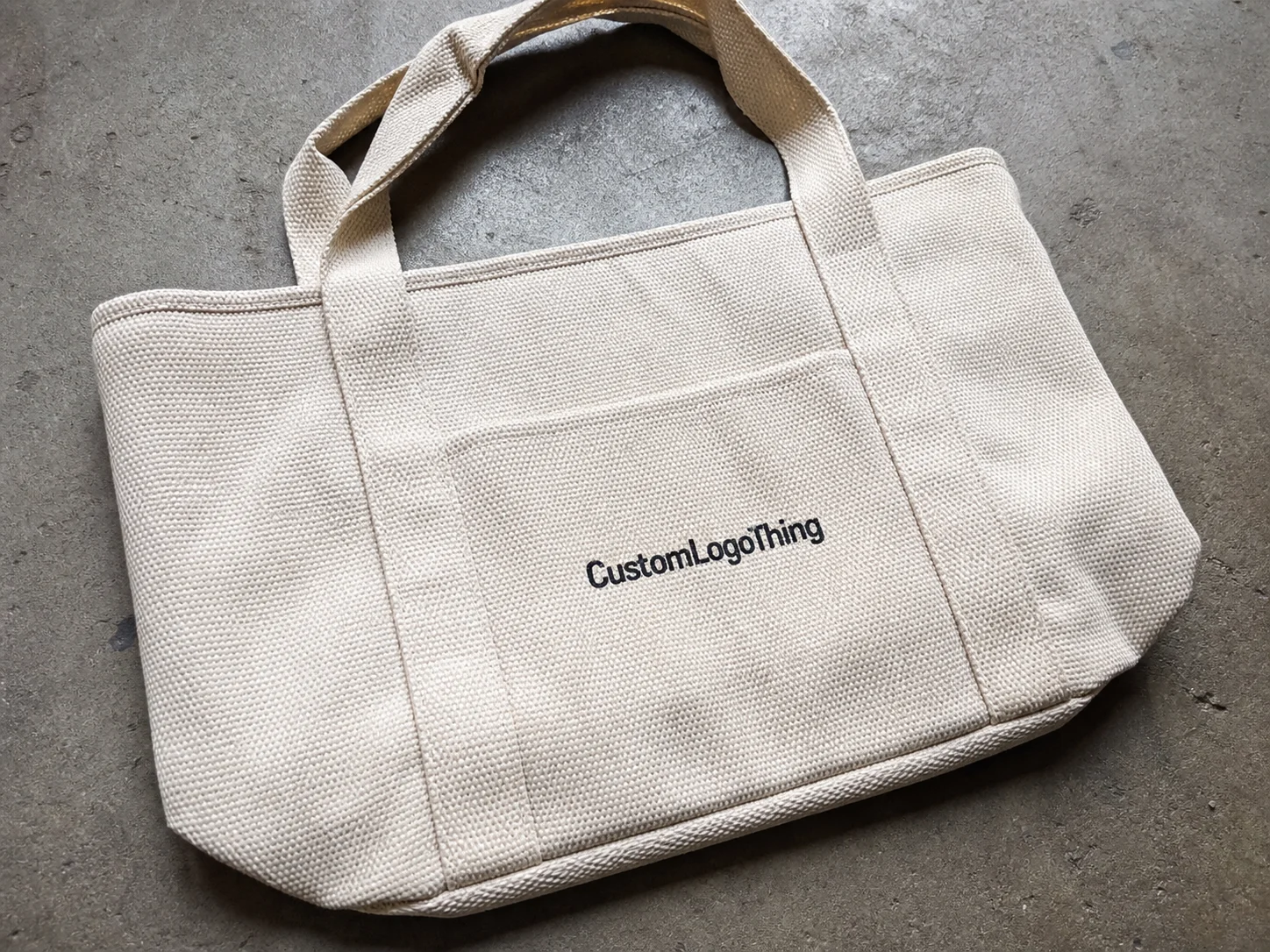
Custom Canvas Bags with zipper solve a simple problem that keeps showing up in buying decisions: people want the relaxed look of a tote, but they do not want contents sliding out the second the bag tips over. Keys, receipts, chargers, lipstick, samples, tickets, all of it stays put. That small strip of hardware changes the bag from “nice enough” to something that feels planned.
For buyers, these bags sit in a useful middle ground between everyday carry and branded packaging. They work for retail gifting, event kits, employee onboarding, product bundles, and reusable packaging that is supposed to survive more than one use. If an open tote feels too casual and a box feels too rigid, a zippered canvas bag usually lands in the right place.
There is also a practical reason these bags keep getting ordered: they present well without demanding a complicated build. A clean canvas body, a reliable zipper, and one well-placed logo can do a lot of work. Add the wrong specs, though, and the bag becomes lumpy, thin, or awkward to use. The difference is rarely subtle once production starts.
Custom canvas bags with zipper: what they are and why buyers notice them
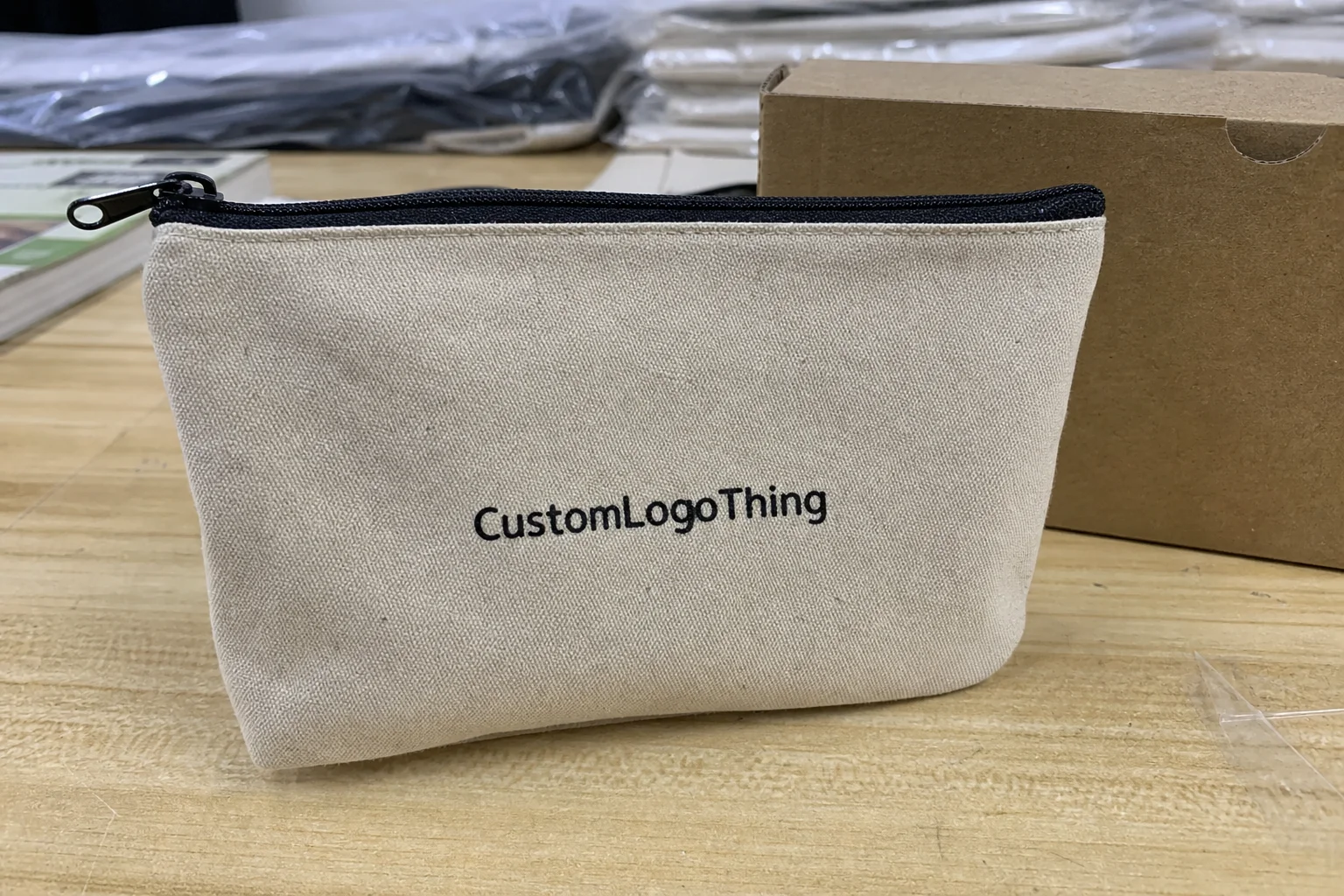
A zippered canvas bag is straightforward on paper: canvas body, top closure, handles, and a decoration area for branding. In practice, the details change everything. One version might use 8 oz canvas with a basic nylon zipper and single-stitch seams. Another might use 12 oz or 16 oz cotton canvas, a metal zipper, a lined interior, reinforced stress points, and a gusset that lets the bag stand up better on a counter. Same category. Different buyer experience.
Buyers notice the closure first because it affects how the bag behaves. Open-top totes work for low-value handouts and light merch, but they are not ideal when the contents matter or the presentation needs to feel finished. A zipper makes the bag more secure and gives it a more deliberate look. That matters for packaging programs where the bag is part of the brand’s first impression, not just a carry item.
Common uses include:
- Retail gifts and branded merchandise
- Event kits and conference welcome packs
- Employee onboarding sets
- Product bundles with samples or accessories
- Travel organizers and daily carry bags
There is a reason these bags are often compared with boxes and mailers rather than with ordinary totes. They do a packaging job and a reuse job at the same time. That only works if the bag is built with enough structure to look intentional after the first opening.
“If the contents are valuable, fragile, or just expected to arrive neatly, the zipper stops being optional very quickly.”
Brands that already use custom printed boxes or other packaging formats often choose zippered canvas because it extends that same identity into a reusable item. The package does not end at the opening moment. It stays in circulation, which is part of the appeal.
How the construction and printing process works
The construction details are where most quality differences hide. Canvas weight, stitch density, zipper type, lining, gusset depth, and handle style all affect the final product. Mockups rarely show those differences clearly, which is why a bag can look premium in a proof and feel disappointing in hand.
Canvas weight is usually measured in ounces per square yard. Light canvas, around 8 oz to 10 oz, can work for promotional use or low-load items. Heavier canvas, typically 12 oz to 16 oz, holds structure better and resists that sagging look that makes a bag feel disposable. If the bag needs to carry notebooks, bottles, folded garments, or sample kits, the heavier range is usually the safer choice.
Printing method matters just as much as material. The main options are practical rather than glamorous:
- Screen printing is best for bold logos, spot colors, and simple artwork. It is usually the most cost-efficient option for larger runs.
- Heat transfer works better for detailed graphics, gradients, or smaller runs where the artwork is more complex.
- Embroidery adds texture and a more premium look, but it needs enough fabric density and a clean logo layout to read well.
- Woven labels or patches work well when the branding needs refinement without covering a large part of the bag.
The zipper itself deserves more attention than it usually gets. A poor zipper can drag the whole product down. If it snags, splits, or feels loose, buyers notice immediately. Ask what zipper type is being used, whether the pull is metal or plastic, and how the zipper is tested before bulk production begins. A smooth zipper is one of those details that quietly signals the rest of the build was handled properly.
Artwork preparation is another point where orders succeed or fail. Clean vector files make production easier, especially for logos and text. When the file is low-resolution or poorly scaled, you get fuzzy edges, awkward spacing, and print placement that looks off even if the color is correct. That is not a decoration problem. It is a file problem.
For buyers comparing packaging formats, the same rule applies to product packaging and Custom Packaging Products: the mockup can only do so much if the production spec is vague. Dimensions, decoration area, zipper placement, material weight, and stitching expectations need to be stated clearly. Production cannot fill in the gaps with guesswork.
Cost, pricing, MOQ, and what actually drives your quote
Pricing for custom canvas bags with zipper is driven by a small set of variables that show up again and again. Fabric weight, zipper quality, bag size, print colors, decoration method, lining, and quantity all affect the final number. A quote that looks mysterious usually becomes obvious once those levers are listed side by side.
As a rough buying benchmark, a simple bag with lighter canvas and one-color screen printing may fall around $1.20 to $2.50 per unit at moderate quantities. Heavier canvas, lining, better hardware, embroidery, or multiple print locations can push the price into the $2.80 to $6.00+ range. Smaller runs usually cost more per piece because setup and labor are spread over fewer units. Larger orders tend to lower the unit price, especially when the design is simple.
A useful pricing framework looks like this:
| Build level | Typical features | Relative unit cost | Best fit |
|---|---|---|---|
| Budget | 8 oz to 10 oz canvas, basic zipper, one-color print, no lining | $ | Promos, handouts, simple event kits |
| Mid-range | 10 oz to 12 oz canvas, better zipper, one or two print colors, reinforced handles | $$ | Retail giveaways, employee kits, brand merch |
| Premium | 12 oz to 16 oz canvas, lined interior, custom zipper pull, embroidery or detailed print | $$$ | Gift sets, higher-end retail packaging, launch kits |
Watch for line items that are easy to overlook. Sample charges, setup fees, custom color matching, rush service, and special packing can change the total more than buyers expect. Unit price alone is not a reliable comparison if the landed cost is much higher.
MOQ varies by supplier and decoration method. A simple screen-printed order may allow a lower minimum than embroidery or a custom hardware request. If your order is small, the unit cost will usually rise. If your order is larger, ask where the price breaks begin — 300, 500, and 1,000 units are common thresholds worth checking.
It helps to decide the priority before asking for quotes. If durability matters most, specify heavier canvas and better zipper hardware. If presentation matters most, prioritize print clarity, lining, and structure. If the budget is tight, keep the decoration simple and avoid extras that do not change how the bag is used. Trying to maximize every feature at the lowest possible cost usually produces a compromised result.
For broader packaging programs, compare the bag against other branded packaging or product packaging options. Sometimes a canvas bag is more valuable than a cheaper mailer because people keep it. Sometimes the opposite is true. The right answer depends on how the item will be used after delivery.
Process and timeline: from artwork to delivery
The workflow is predictable enough: inquiry, quote, artwork proof, sample or pre-production approval, bulk production, quality check, and shipping. The schedule only starts to wobble when the brief is incomplete or the revisions pile up.
A straightforward order can often move through production in about 12 to 15 business days after proof approval. More complex jobs take longer, especially if they include embroidery, custom zippers, lining, specialty sizes, or extra packaging. Shipping is separate from production, so buyers should treat those as different timelines rather than one combined promise.
The usual slowdowns are mundane:
- Artwork revisions that drag on for days
- Missing size or placement details
- Unclear zipper color or pull style
- Late sample approval
- Too many people giving conflicting feedback
If the bags need to arrive for a launch, trade show, or internal event, build in buffer time. A late bag may be functionally perfect and still useless if it misses the event window. Packaging schedules are unforgiving that way.
For buyers concerned about shipping durability, it is fair to ask whether the product will be packed and tested for transit. Some packaging teams refer to ISTA protocols when orders involve heavier contents or retail-ready presentation, because transit damage is usually a packaging problem before it is a shipping problem.
Key spec choices that change durability, look, and usability
Most of the final quality comes from a handful of specs. Once those are understood, quotes become easier to evaluate and less likely to surprise you.
Canvas weight
Light canvas is fine when the contents are soft, light, and short-term. Heavier canvas creates structure, improves feel, and makes the bag look closer to a retail item than a giveaway. If the bag needs to hold bottles, books, catalogs, or bundled merchandise, a thin fabric can become a liability very quickly.
Zipper quality
The zipper is small, but it can affect the whole perception of the bag. A smooth zipper with a clean pull feels dependable; a sticky or weak one makes the bag feel cheaper than the rest of the build. Ask whether the zipper is tested for repeated use, whether the pull is metal or plastic, and whether the closure runs cleanly at scale.
Size and gusset
Flat bags are good for documents, slim gifts, and lightweight merch. Gusseted bags have more depth and usually sit better when filled. Handle length matters too. Short handles work for hand carry. Longer handles are more comfortable on the shoulder. If the bag is going to be used daily, comfort starts to matter more than most buyers expect.
Color and print behavior
Natural canvas gives a warm, textured look and usually pairs well with dark logos. Dyed canvas changes the visual balance and can make some inks harder to read. Contrast is not a decorative detail; it is what keeps the logo legible after the bag is filled, folded, and used in poor lighting.
Finishing details
Lining, inner pockets, reinforced seams, and custom zipper pulls can improve the feel of the bag, but each one adds cost and production complexity. Those extras make sense for premium retail packaging or higher-value gift sets. They are less useful if the bag is being used as a simple event handout.
Brands that care about consistency across branded packaging usually lock the specs before sampling begins. That helps the bag fit cleanly beside inserts, labels, custom printed boxes, and other items in the same campaign without looking like an unrelated add-on.
For material sourcing and broader sustainability questions, the FSC site is useful for understanding certified paper and packaging inputs when a project also includes labels, inserts, or boxed components. Canvas is a different material, but the packaging decisions often overlap.
Common mistakes buyers make before ordering
The worst orders usually fail for ordinary reasons. Not dramatic ones. Ordinary. That is part of why they keep happening.
- Buying the cheapest fabric and then being surprised when the bag feels thin and wrinkles badly.
- Sending low-resolution artwork and expecting crisp branding.
- Ignoring zipper quality because the print looked fine in the mockup.
- Choosing the wrong size without checking what the bag actually needs to hold.
- Skipping sample review and discovering the logo is too small, too high, or off-center after production.
- Comparing only unit price and forgetting shipping, setup, packing, and rush fees.
Another common problem is overcrowding the design. Buyers want the logo, slogan, website, QR code, and campaign message all on one bag. The result usually looks busy rather than premium. A single strong mark often does more than six competing elements packed into a small space.
There is also a tendency to treat the bag as an afterthought in the packaging plan. That mistake shows up quickly. If the bag does not match the rest of the kit in material quality or visual tone, the whole presentation feels less deliberate. People may not describe that problem in technical terms, but they notice it.
Expert tips for a cleaner order and better final result
Keep the design simple if the order is large. Simpler art is easier to print consistently, easier to approve, and usually cheaper to produce. A strong logo on a well-made canvas bag will outperform a crowded layout with tiny text that nobody reads.
Use contrast intentionally. Natural canvas with dark ink is a classic combination because it stays legible and photographable. If the bag is dyed, check how the logo reads against the actual fabric tone rather than the screen color. Packaging often fails quietly when contrast is treated like a secondary detail.
Ask for a pre-production sample when the order is high-value or the brand presentation is sensitive. The sample should be used to check zipper smoothness, stitch quality, print clarity, bag dimensions, and logo placement. A clean proof is not enough. The sample is where the real issues show up.
Confirm the basics early:
- Zipper color and pull style
- Thread color on the seams
- Print size and placement
- Bag dimensions and gusset depth
- Whether the interior is lined
Ask for a quote that separates bag cost, decoration cost, packaging, and shipping. Then compare suppliers using total landed cost, production timeline, and quality confidence. A lower price is not useful if the supplier is vague about materials, slow to answer, or unwilling to define the build. Clarity has value because it reduces risk.
For teams building a larger branded packaging system, this is also the point to decide whether the canvas bag should stand alone or coordinate with inserts, labels, or Custom Packaging Products. A consistent system usually feels more expensive, even when the parts are not.
Next steps: how to compare suppliers and request a useful quote
If you want a useful quote, send a useful brief. Start with size, canvas weight, zipper style, print method, print color count, and quantity. Add any lining, pocket, handle, or packaging requirements. Special finishes should be stated up front. Surprises are fine for celebrations, not for production.
Make sure your artwork is in the right format before requesting pricing. Vector files are the best option for logos and simple graphics. If you only have a raster image, send the highest-resolution version you have and ask whether it is suitable for production. That conversation is much easier before the order is placed.
Ask suppliers for:
- Sample photos of similar bags
- Material and zipper details
- Lead time estimates
- MOQ and price breaks
- Shipping estimates to your destination
Compare three things side by side: total landed cost, production timeline, and quality assurance. If one supplier is cheaper but vague, that is not automatically the better deal. A precise quote with clear specs is usually the safer choice, especially when the bags need to arrive on time and look consistent across the full run.
Before production starts, confirm the final specs in writing: size, artwork placement, zipper color, quantity, and packaging. Anything missing at that stage should be fixed immediately. Corrections after the run starts are more expensive and more annoying than people expect.
Custom canvas bags with zipper work well when the build matches the use case. They protect contents, improve presentation, and give branded packaging a more polished finish. Ordered with clear specs, realistic timelines, and a careful comparison of cost versus quality, they are one of the more practical reusable packaging formats available.
FAQ
What makes custom canvas bags with zipper better than open tote bags?
The zipper keeps items from falling out and gives the bag a more secure, finished feel. They work especially well for gifts, event kits, and branded merchandise that needs cleaner presentation.
How much do custom canvas bags with zipper usually cost?
Cost depends on canvas weight, zipper quality, size, print method, and order quantity. Higher quantities usually reduce unit cost, while special finishes or rush orders increase it.
What is the minimum order quantity for custom zippered canvas bags?
MOQ varies by supplier and production method. Smaller runs are possible, but they usually come with a higher unit price.
How long does the production timeline usually take?
Timeline depends on sample approval, decoration complexity, and order size. Artwork delays and revision cycles are common reasons for slower turnaround.
What should I check before approving a sample?
Check zipper function, logo placement, print clarity, stitch quality, and bag size. Confirm the sample matches the final specs so the bulk order does not drift from what was approved.