Custom Cap Production Timeline for Brands
The custom cap production timeline for brands looks neat on a quote sheet and unruly the moment a factory asks for crown height, closure type, stitch count, and pack-out details. One answer leads to another. One approval unlocks the next step. I have watched a launch slip because a brand spent three days deciding between a curved bill and a flat bill, and the cap itself was never the real problem. The custom cap production timeline for brands is rarely one fixed number; it is a chain of small yes-or-no calls that either keep the order moving or pin it to the bench.
Caps deceive buyers. They seem small, which makes them feel simple. Then the spec sheet arrives and the list starts growing: fabric weight, panel count, embroidery method, sweatband type, visor shape, labeling, and final packaging. A basic run can move quickly. A fully custom build with woven labels, a leather patch, a contrast underbill, and retail packaging needs more time. That is where the custom cap production timeline for brands starts branching in ways a one-line estimate never shows.
The mistake many teams make is comparing cap production to a blank T-shirt order. Hats are three-dimensional, they hold structure, and defects show fast. If the front panel buckles, the logo lands off-center, or the closure feels flimsy, the problem is obvious the second someone opens the box. The custom cap production timeline for brands reflects that reality. Good factories do not rush past checks just to flatter a launch calendar, because a bad cap is still a bad cap when it lands at retail.
What follows is the practical version: how the schedule usually works, what affects price and minimums, where the delays hide, and how to keep the custom cap production timeline for brands under control without shaving off the parts that protect quality. If you are planning a first run or trying to tighten a repeat order, the details below will save time and a few headaches.
Why the custom cap production timeline for brands feels slow
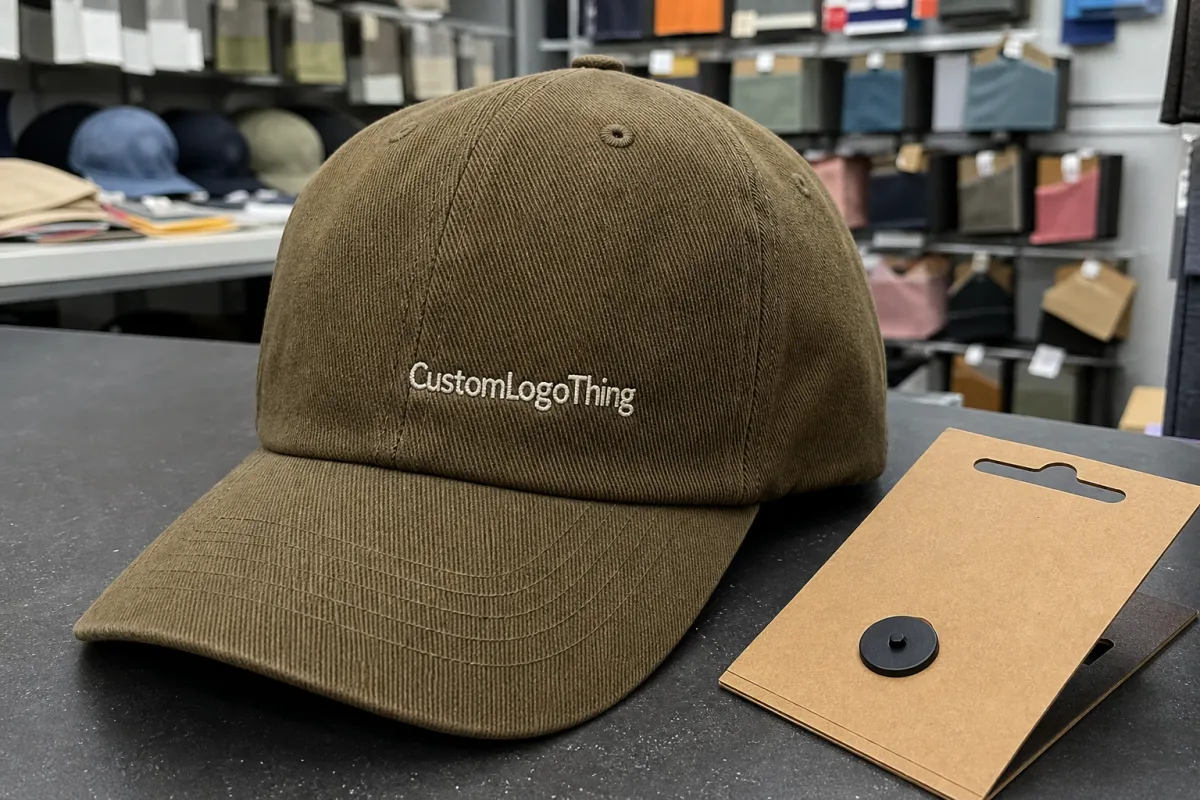
The custom cap production timeline for brands feels slow for one blunt reason: the order waits on people more often than machines. A factory can cut panels, sew seams, and pack cartons at a steady pace, but it still needs accurate artwork, confirmed measurements, material approval, and a clear finishing plan. Miss one of those pieces and the custom cap production timeline for brands pauses while everyone asks the same questions again. That is process, not laziness.
Embroidery digitizing is a common bottleneck. A clean wordmark can move through quickly. Thin strokes, tiny text, gradients, and stacked layouts with too much detail need simplification before thread can handle them. That changes stitch count, thread path, and sometimes logo proportions. The custom cap production timeline for brands gets longer because the first file a brand sends is usually not the final production file. The design has to be translated into stitches, patches, or print, and that translation is where time disappears.
Material sourcing creates another pause. A standard cotton twill cap in a common color can move quickly. A custom-dyed fabric, a special mesh back, or a closure in an exact Pantone match usually takes longer because the factory has to check inventory or source components. The custom cap production timeline for brands also shifts when a team asks for a finish that sounds easy but behaves badly in production, such as garment washing, distressing, silicone patches, or mixed-media fronts.
Cap shape gets underestimated too. A 5-panel unstructured cap, a 6-panel structured cap, and a low-profile dad cap do not follow the same path. Different block patterns, bill curves, and crown heights mean different samples and sometimes different sewing setups. So when a brand says, “Can we just change the front a little?”, the answer is often, “Not without touching the schedule.” That is the truth behind the custom cap production timeline for brands.
How the custom cap production timeline for brands works
The easiest way to understand the custom cap production timeline for brands is to break it into stages. Quote review comes first, then artwork and spec confirmation, then sampling, then bulk production, then inspection and packing, then freight. The order can compress if the factory already has similar materials on hand, but the sequence rarely changes. Skip a stage and the next one usually reveals a fresh problem. The custom cap production timeline for brands is not magic. It is a chain of checkpoints.
| Stage | Typical Range | What Usually Slows It |
|---|---|---|
| Quote and spec review | 1-3 business days | Missing artwork, unclear quantity, no packaging details |
| Artwork digitizing or patch setup | 1-3 business days | Logo revisions, tiny text, complex color changes |
| Sampling or pre-production sample | 5-10 business days | Special fabrics, custom closure, extra revision rounds |
| Bulk production | 12-25 business days | High quantity, many colors, mixed decoration methods |
| Inspection and packing | 2-5 business days | AQL checks, label placement, folding and carton rules |
| Freight | 3-35 days | Air vs sea, customs, destination congestion |
For a standard 6-panel cotton twill cap with one embroidery placement, the custom cap production timeline for brands might land around 18-30 business days after sample approval, plus transit. A more customized build with patchwork, contrast stitching, special wash effects, and retail-ready packaging can stretch to 30-45 business days or more. That is not a factory being dramatic. That is the order asking for more work, more coordination, and more eyes on the final result.
Lead time and shipping time are not the same thing, yet brands still mix them up. A supplier can finish production on schedule and still miss a launch because air freight was not booked or carton labels were wrong. The custom cap production timeline for brands needs both parts planned together. If you only focus on sewing time, you are planning with half the picture and hoping the rest sorts itself out. It rarely does. More often, it turns into a very long email thread.
Custom cap pricing, MOQ, and quote variables
Price follows the same decisions that shape the custom cap production timeline for brands. A cheaper cap is usually cheaper because it uses a standard blank base, fewer decoration steps, and fewer packaging extras. A more expensive cap usually needs more setup, more manual labor, or more component sourcing. The quote is not random. It is a stack of small costs, and each one leaves a fingerprint somewhere on the schedule.
For a basic custom cap, realistic factory pricing often falls in these ranges: roughly $1.80-$3.50 per unit for a simple embroidered cap at 500-1,000 pieces, around $3.50-$6.50 for a more detailed build with woven labels or patch decoration, and about $6.00-$12.00 or more for premium fabric, special closures, heavy embellishment, or retail packaging. Those numbers move with country of origin, freight method, and order size. The custom cap production timeline for brands often gets longer right where pricing gets more interesting. That pattern shows up again and again, which is one reason cheap quotes deserve a hard second look.
MOQ matters too. Some suppliers can do 100-200 pieces if they are using stock blanks and limited decoration. A more standard custom run may sit around 300-500 pieces per style or color. Fully custom fabric, custom colorways, or multiple logo placements often push the MOQ to 500-1,000 pieces total, sometimes more if the factory has to source special trims. If a quote looks too good to be true at a tiny quantity, check what is being reused from stock. That usually explains the math, and it usually explains the timeline too.
These are the main cost drivers brands should ask about before they approve a sample: panel count, fabric type, structure, visor shape, closure, embroidery stitch count, patch type, color count, labeling, packaging, and freight terms. A quote that leaves those blank is not a quote. It is a guess wearing a tie. The custom cap production timeline for brands gets cleaner when the spec is complete, because the factory can price the order without padding for unknowns.
- Panel count: 5-panel and 6-panel caps often cost differently because the block pattern and sewing time change.
- Fabric: Cotton twill, brushed cotton, polyester, nylon, corduroy, and wool blends all sit in different price bands.
- Decoration: Flat embroidery is usually faster than mixed-media decoration, and 3D puff adds labor.
- Packaging: Individual polybags, custom inserts, hang tags, and retail boxes add unit cost and time.
- Sampling: Sample fees are often separate and can range from about $30-$120 depending on complexity.
For brands that care about margin, it helps to think in landed cost, not just factory cost. A cap at $2.80 FOB may become $4.10 or more after packaging, testing, and freight. The custom cap production timeline for brands and the cost structure are linked. Rush air freight on a low-margin order can swallow profit faster than a spreadsheet warning ever could. That part is not glamorous, but it is absolutely real.
Custom cap production timeline for brands and production steps
Here is the normal flow for the custom cap production timeline for brands: quote, artwork, sample, bulk, inspection, and packing. Every factory names these steps a little differently, but the logic stays the same. You cannot sew what has not been approved. You cannot approve what has not been designed clearly. The custom cap production timeline for brands is a long chain of decisions, and every link matters.
- Spec confirmation: The buyer confirms crown style, panel count, fabric, closure, logo method, and target quantity. This step sounds dull because it is dull, but it prevents most of the bad surprises.
- Artwork setup: The factory converts the logo into a production-ready file, which may include embroidery digitizing, print files, or patch artwork. Tiny fonts and thin lines need extra attention.
- Sample making: A sample cap is built so the brand can check fit, color, logo scale, and finish. For the custom cap production timeline for brands, this is the first real chance to catch problems before money is wasted.
- Revision or approval: The buyer requests changes or signs off. One revision is normal. Three revision rounds usually mean the brief was never locked.
- Bulk material prep: Fabric is cut, trims are sorted, and decoration is scheduled. If special materials need to be ordered, this is where the custom cap production timeline for brands often starts to drift.
- Sewing and decoration: Panels are assembled, logos are embroidered or patched, and the visor and sweatband are attached. This stage depends on line speed and workload.
- Finishing and packing: Loose threads are trimmed, caps are steamed or shaped if needed, labels are added, and cartons are packed according to the shipping plan.
A straightforward order can move through these stages without drama. A messy order cannot. If the buyer keeps changing the front logo, the closure, or the lining after sampling, the custom cap production timeline for brands resets every time the factory has to stop and rework a detail. The machine does not care about a launch date. The sewing line waits until the specification stops moving.
It helps to ask the factory for milestone dates, not just one delivery date. That gives you a clearer picture of where the order sits. If sample approval slips by a week, the whole schedule slides a week. The custom cap production timeline for brands becomes easier to manage when each stage has a date attached to it. Vague promises are how brands end up calling freight forwarders in a panic.
For buyers comparing multiple suppliers, ask them to show the production flow in writing. If one factory promises a 20-day turnaround and another quotes 35 days, the difference is usually not honesty versus dishonesty. It is different assumptions about sample approval, sourcing, and packing. The custom cap production timeline for brands depends on those assumptions more than most people realize. Two quotes can look similar and still describe two very different realities.
Materials, decoration, and fit details that change lead time
Materials are where the custom cap production timeline for brands starts to feel tangible. A stock cotton twill cap in black or navy is easy to source. A custom pigment-dyed fabric with a brushed finish and matching thread is harder. A polyester mesh back for a trucker cap is usually simple. A specialty corduroy or wool blend is slower because it may need extra sourcing and more careful cutting. The fabric choice does not just affect hand feel. It affects the calendar.
Fabric choices that move fastest
Cotton twill, recycled polyester, and standard mesh are usually the fastest options because suppliers already carry them in common colors and weights. Structured caps with these fabrics often sit comfortably inside the normal custom cap production timeline for brands. If speed matters, start here. Not glamorous, but true.
Midweight fabrics around 220-280 gsm tend to behave well in production. They hold shape without fighting the sewing line, and they are stable enough for embroidery. Thin fabrics can pucker. Heavy fabrics can become bulky at seams. The custom cap production timeline for brands benefits from fabrics that are easy to stitch and easy to block. In practice, that usually means fewer surprises during sampling and fewer complaints during bulk.
Decoration methods that add time
Flat embroidery is usually the simplest decoration method. 3D puff embroidery adds foam and precision, which means more setup and more risk of misalignment. Woven patches are tidy but need patch sourcing or patch production. Leather patches can look strong, but they need stamp approval, edge finishing, and consistent placement. Screen print is fast on some styles, but it depends on the substrate and whether the logo can sit cleanly on a curved front panel. The custom cap production timeline for brands slows down as decoration complexity rises.
Stitch count matters more than most brands expect. A 4,000-stitch logo is easier to run than an 8,500-stitch logo. Thin letters need more stabilization. Overly dense embroidery can make the front panel stiff and slightly warped. That is a real production issue, not a small aesthetic preference. If the logo is too detailed, the factory may suggest simplifying it. That advice usually comes from experience, not laziness, and it usually saves time later.
Fit and structure details
Structured caps, unstructured caps, high-profile crowns, low-profile crowns, flat bills, curved bills, and snapback versus strapback closures all change the pattern and sewing route. A custom fit that looks small on paper can take longer to refine in sample form because the cap has to sit right on a real head. The custom cap production timeline for brands often extends when a brand wants a more specific silhouette but has no reference sample to work from.
If the fit matters, send a reference cap. Better yet, send measurements: front panel height, brim length, crown depth, sweatband width, and closure preference. That single step can save days. The custom cap production timeline for brands improves when the factory does not have to guess what “a little deeper” means. Guessing is not engineering, and it tends to show up in the final fit.
The simplest rule is still the best one: choose one hero feature and keep the rest standard. If the cap already has a custom patch and a special closure, do not also demand an exotic fabric and a complicated underbill print unless extra time is acceptable. The custom cap production timeline for brands gets longer with every nonstandard choice. That is not a moral issue. It is labor, and labor has a schedule whether the launch deck mentions it or not.
Sampling, quality control, and packaging checkpoints
Sampling is where the custom cap production timeline for brands gets protected or wrecked. A good sample is not just a smaller version of the final cap. It is a test of proportion, structure, color, stitch balance, and finish. Approve a bad sample in a rush and the bulk order will repeat the same mistake 300 or 3,000 times. That is an expensive way to save a week.
In practice, brands may see a few sample stages: a reference sample if the factory already has a similar cap, a logo or patch proof, a pre-production sample, and sometimes a top-of-production sample. The custom cap production timeline for brands is healthiest when the buyer uses those stages properly instead of treating them like optional extras. A sample is not a souvenir. It is a decision tool, and it exists to catch the kind of flaw nobody notices on a PDF.
- Color check: Confirm Pantone references if the brand needs strict color matching, especially for logo thread and fabric shades.
- Placement check: Measure the logo position from seams, the visor edge, and the crown centerline.
- Stitch check: Look for thread tension, loose ends, puckering, and distortion around corners or letters.
- Fit check: Try the cap on a few heads, not just one, because head shape varies more than people think.
- Packaging check: Confirm folding method, polybag style, size stickers, barcode placement, and master carton markings.
Quality control should be described before bulk starts. Ask whether the supplier uses AQL inspection, usually around AQL 2.5 for visible defects and sometimes stricter rules for premium programs. Ask how many units they sample from each lot. Ask whether the factory checks measurement tolerances on the crown, brim, and closure. The custom cap production timeline for brands is easier to trust when the inspection method is not vague. If the inspection plan sounds hand-wavy, that is a warning sign, not a style choice.
Packaging is not a side note. A crushed crown or bent bill can ruin presentation even when the cap itself is well made. For retail projects, it may be worth asking for tissue, individual polybags, insert cards, or Custom Hang Tags. If you use paper inserts or printed cartons, FSC-certified paper can support sustainability claims without making the supply chain theatrical. For shipping tests, some brands ask for ISTA-style carton checks so the product survives transit instead of arriving in a tired heap.
One more practical point: packaging decisions affect timing. A cap can be sewn and approved, then sit while the team decides on label size or carton art. That is still part of the custom cap production timeline for brands. If you want clean execution, approve pack-out at the same time as the sample. Do not leave it floating at the end like an afterthought. It will drift, and then the calendar will pay for it.
How to shorten the custom cap production timeline for brands
You can shorten the custom cap production timeline for brands without wrecking quality, but it takes discipline. The easiest speed gains come from better decisions, not from asking for miracles. If the spec is clear, the artwork is usable, and the components are standard, the factory can move faster. That is the plain truth. It also happens to be the useful one.
- Lock the spec early: Decide on panel count, closure, fabric, decoration, and packaging before asking for final pricing. The custom cap production timeline for brands shrinks when the factory is not waiting on basic choices.
- Send production-ready artwork: Vector files are better than screenshots. Include Pantone references, logo dimensions, and a clear placement diagram.
- Use stock components where possible: Standard twill, common mesh, and known closures are faster than custom-dyed parts.
- Limit revision rounds: One clear revision is normal. Four rounds means nobody agreed on the brief.
- Choose in-house decoration: If the factory already handles embroidery or patch application internally, the order usually moves faster than if a separate vendor has to be involved.
- Approve the sample quickly: A two-day delay in sample approval can become a week of lost production if the line is scheduled tightly.
- Pre-book freight: Air or sea shipping should be planned before bulk is done, not after cartons are already stacked.
If speed matters, reduce variation. Do not launch five colors, three closures, and two decoration methods in the same first order unless the complexity is part of the retail plan. The custom cap production timeline for brands becomes cleaner when the first run is focused. A repeat order can always add more options later. The first order should prove the fit, logo, and quality, not test every creative idea in the building.
There is also a tradeoff between speed and retail polish. Simple packing is faster than custom folding inserts. Standard thread colors are faster than exact thread matching. A clean embroidery logo is faster than a stitched patch plus 3D puff plus woven label combo. None of these choices are wrong. They just cost time. The custom cap production timeline for brands gets shorter when brands stop asking every feature to carry extra work. That is the kind of arithmetic factories see all day.
If a launch date is fixed, protect the sample stage first. Once the sample is right, bulk production becomes more predictable. If the sample is wrong and the order is rushed anyway, time is not being saved. Trouble is being borrowed from the future. The custom cap production timeline for brands usually punishes that kind of optimism, and it usually does so with interest.
Common mistakes that delay custom cap orders
The biggest delays in the custom cap production timeline for brands are usually self-inflicted. That sounds harsh, but it is accurate. Most factories are not slow because they enjoy being slow. They are slow because they are waiting on missing information, late approvals, or a brand that keeps changing its mind after the sample is already made.
- Sending weak artwork: Low-resolution logos, screenshots, or files with no size reference force extra back-and-forth.
- Changing the decoration after sampling: Switching from embroidery to patch, or patch to print, usually restarts part of the timeline.
- Ignoring packaging until the end: A cap can be finished and still miss the ship date because the labels or cartons are not approved.
- Underestimating MOQ: Small quantities can still need setup, so trying to push a factory below its practical minimum wastes time.
- Not checking color tolerance: If the brand expects exact color matching but never sends a Pantone reference, the sample cycle gets longer.
- Assuming all caps are the same: A trucker cap, a dad cap, and a structured snapback do not share the same production path.
Another common mistake is asking for a quote before the brief is ready, then acting surprised when the number changes later. Of course it changes. The custom cap production timeline for brands and the cost structure both depend on the same missing inputs. If the factory quotes a placeholder version, the final order will not stay at the placeholder price. That is not a trick. It is paperwork meeting reality, and paperwork is usually the part nobody wants to read.
Brands also get burned by unrealistic launch plans. Someone picks a trade show date, counts backward with no buffer, and assumes production plus freight will behave perfectly. It will not. A smarter schedule leaves room for sampling, revision, and transit delays. The custom cap production timeline for brands needs slack, especially for first orders. If the margin for error is zero, the margin for stress is huge.
The fix is simple: write the brief properly, approve the sample decisively, and leave room for shipping. That is not glamorous advice, but it works. The custom cap production timeline for brands improves more from discipline than from wishful thinking. A tight process beats a frantic one almost every time.
FAQ about the custom cap production timeline for brands
How long does a custom cap order usually take?
For a straightforward run, the custom cap production timeline for brands is often about 18-30 business days after sample approval, plus shipping time. If the cap uses special fabrics, custom patches, or retail packaging, 30-45 business days is more realistic. If a supplier claims they can do everything in a week, ask what they are skipping. Usually the answer is something important.
Can the schedule be rushed?
Sometimes, yes. The custom cap production timeline for brands can be shortened if the factory has stock materials, in-house decoration, and an open production slot. Rush orders usually cost more and leave less room for revision. The trick is not to speed up every step. The trick is to remove avoidable steps before they slow the job down. That is a better use of energy than chasing a miracle lead time.
What slows cap production the most?
Late approvals, weak artwork, custom-dyed materials, and too many revision rounds are the usual culprits. The custom cap production timeline for brands also stretches when the buyer changes the closure, adds a new patch, or asks for a sample after the bulk schedule has already started. That kind of change tends to be expensive in both time and patience, and nobody likes getting that email on a Friday.
What should a brand send first?
Start with a clear spec sheet, logo files, quantity, target landing date, and packaging plan. If possible, send a reference cap or at least measurements. The custom cap production timeline for brands is much easier to control when the supplier can see what you want instead of trying to decode a mood board and a sentence that says “clean but premium.”
What a clean timeline actually looks like
A clean order is usually the result of boring discipline. The brand locks the spec, the factory gets usable artwork, the sample is approved once, and freight is booked before the cartons are ready. That is how the custom cap production timeline for brands stays predictable. Not by luck. Not by positive thinking. By making fewer last-minute changes and giving the supplier enough information to do the job properly.
If you are buying caps for a brand, treat the custom cap production timeline for brands as part of the product, not a separate administrative chore. The cap is only finished when it is sewn, checked, packed, and ready to land where it needs to go. The smartest orders are the ones that respect that full path. The custom cap production timeline for brands gets shorter, cheaper, and less painful when the brief is tight from the start.
If you want the shortest practical custom cap production timeline for brands, start with the spec sheet, choose standard components where they make sense, approve samples quickly, and leave room for transit. That sounds plain because it is plain. Plain usually ships on time, and in cap production that tends to matter more than flashy promises.

