Buyer Fit Snapshot
| Best fit | Custom Cardboard Sleeves Printing Wholesale for Brands projects where brand print, material claims, artwork control, MOQ, and repeat-order consistency need to be specified before quoting. |
|---|---|
| Quote inputs | Share finished size, material target, print colors, finish, packing count, annual reorder estimate, ship-to region, and any compliance wording. |
| Proofing check | Approve dieline scale, logo placement, barcode or warning zones, color tolerance, closure strength, and carton packing before bulk production. |
| Main risk | Vague material claims, crowded artwork, missing packing details, or unclear freight terms can make a low unit price expensive after revisions. |
Fast answer: Custom Cardboard Sleeves Printing Wholesale for Brands should be specified like a repeatable production item. The safest quote records material, print method, finish, artwork proof, packing count, and reorder notes in one written spec.
Production checks before approval
Compare the actual filled-product size with the drawing, then confirm tolerance on folds, seals, hang holes, label areas, and retail display edges. Reserve space for logos, QR codes, warning copy, and material claims before decorative graphics fill the panel.
Quote comparison points
Review material grade, print process, finish, sampling route, tooling charges, carton quantity, and freight assumptions side by side. A quote is only useful when the supplier can repeat the same color, closure quality, and packing count on the next order.
Custom Cardboard Sleeves Printing Wholesale for Brands
Custom Cardboard Sleeves Printing wholesale is usually the first route I suggest to a buyer who wants stronger shelf presence without tearing apart an entire carton program. I remember a candle brand in Shenzhen that did exactly that on a 12,000-piece run: the glass jar stayed the same, the rigid box never entered the conversation, and a 350gsm C1S sleeve with matte aqueous coating turned a plain product into a holiday display in one production cycle. Less board. Less structural complexity. Faster artwork changes. That combination explains why custom cardboard sleeves printing wholesale keeps earning a spot in packaging plans that need impact without throwing money into a full redesign, especially when a $0.16 sleeve can replace a $0.42 carton on the same shelf.
The numbers matter more than the theory. Buyers do not usually need another speech about packaging philosophy; they need the details that shape a quote they can trust: board grade, print method, finish, dieline, MOQ, and lead time. I have seen one week disappear because a sleeve width was listed as 185 mm in one email and 195 mm in another, which changed the fold allowance by 5 mm on each side. That kind of mistake is not decorative. In custom cardboard sleeves printing wholesale, one wrong dimension can move the entire job from a tight fit to a pile of expensive regret, and a reprint on 5,000 pieces can easily add $650 to $1,200 depending on board and finish.
Sleeves get underestimated. They can carry logo, ingredients, barcode, compliance copy, and seasonal messaging in a format that often uses less material than a full Custom Printed Box. Teams that manage rapid SKU turnover feel that difference immediately. Artwork changes move faster than structural changes, and a supplier can often revise the print layer without rebuilding the pack from scratch. That is one reason custom cardboard sleeves printing wholesale shows up so often in cosmetics, candles, supplements, and gift packaging, where launch dates matter as much as inventory and someone in marketing always says "just one more tweak" at 6:40 p.m. after the final proof has already been sent from Dongguan.
A job I watched on a finishing line in Shenzhen makes the commercial side obvious. A skincare buyer had been quoted a new folding carton at $0.42 per unit for 10,000 pieces. The sleeve option came back at $0.16 per unit using 350gsm C1S board, matte aqueous coating, and a simple tuck style. They chose the sleeve because they needed a shelf refresh in 14 business days, not a six-week structural rebuild. That is the practical edge of custom cardboard sleeves printing wholesale: it solves a branding problem without forcing a packaging overhaul, especially for launches shipping into California, Texas, and Ontario at the same time.
What is custom cardboard sleeves printing wholesale? A surprising first look
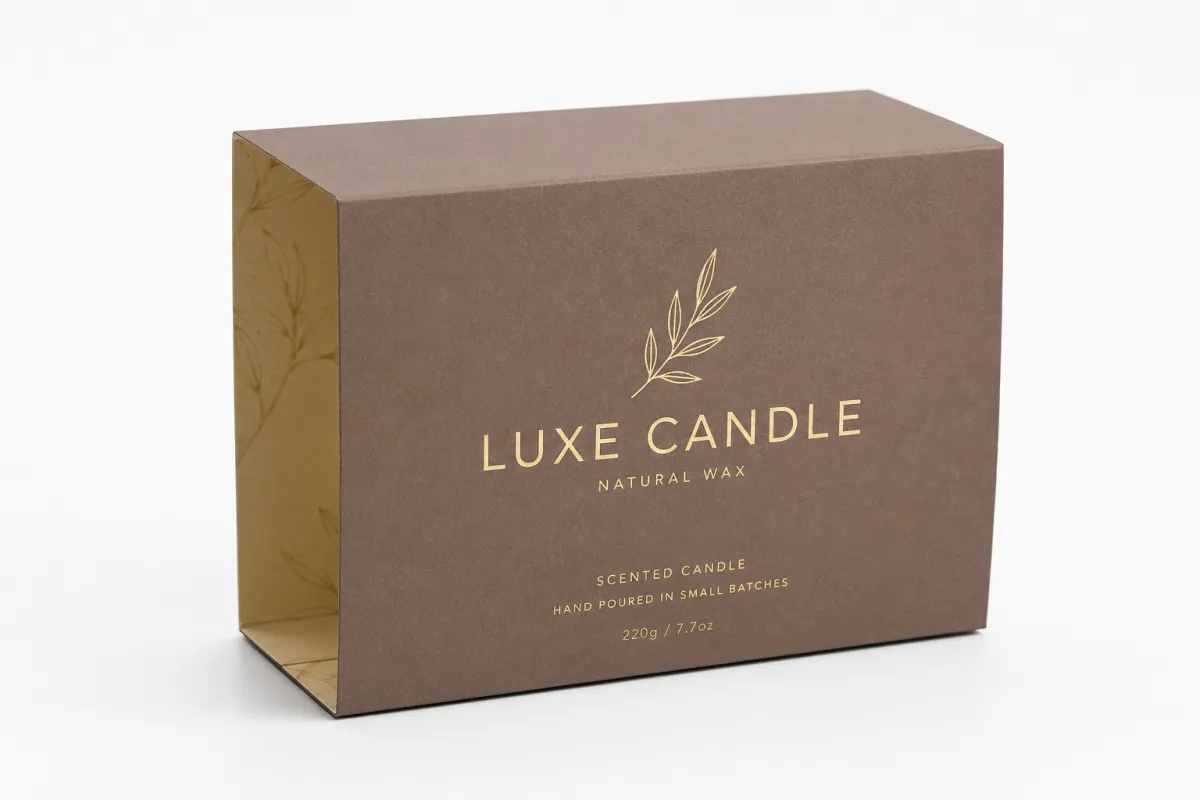
Most buyers picture a sleeve as a strip of paperboard wrapped around a product. That view is too small. In custom cardboard sleeves printing wholesale, the sleeve behaves like a branding layer that sits over an existing carton, cup, jar, tray, or pouch and changes how the item reads from three feet away. I have seen a plain oatmeal tube become a premium retail pack simply by adding a 4-color sleeve with a matte finish and a 12 mm foil mark on the logo. The container underneath did not change; the shelf story did.
Control is the real advantage. A sleeve can be tested, revised, and ordered without committing to a new structural box. Seasonal promotions depend on that. Limited editions depend on that. So do product packaging programs still being shaped by marketing, which is another way of saying the brief is still wobbling around the conference room. Compared with a full carton redesign, custom cardboard sleeves printing wholesale usually means less board, less die complexity, and less risk when the artwork is still moving. A brand can print 5,000 sleeves, check how they sit on the product, then scale to 20,000 after the fit is proven, often in 10 to 12 business days from proof approval.
A supplement company once told me their folding carton was technically sound but visually forgettable. They were paying for retail packaging that vanished next to louder competitors. The sleeve fix was direct: 300gsm SBS, CMYK print, one spot Pantone for the brand green, and a window cut that exposed 18 mm of the bottle shoulder. That project showed how custom cardboard sleeves printing wholesale can sharpen package branding without changing the container underneath, and it cost about $0.19 per unit at 8,000 pieces out of a Guangzhou press schedule.
Procurement teams notice the economics too. A sleeve program usually avoids the labor tied to inner trays, glued inserts, and thick carton board. The useful question is not whether sleeves look stylish. The useful question is whether the format delivers enough shelf lift at a unit cost that still leaves room for margin. I have watched distributors reject a $0.58 rigid box and accept a $0.19 sleeve because the shelf-facing job was identical. That is why custom cardboard sleeves printing wholesale often wins through commercial logic first and design appeal second, especially for regional programs selling into New York, Arizona, and British Columbia.
For buyers comparing formats, it helps to place the sleeve beside other packaging options in the same sourcing conversation. Our Custom Packaging Products page is useful for that, and if the sleeve is being considered alongside a larger carton line, our Custom Shipping Boxes page shows how structural packaging differs from a wrap-style solution. The comparison matters because custom cardboard sleeves printing wholesale is strong on visibility, but it is not the same thing as a ship-ready carton built for 32 lb compression and pallet stacking.
"We did not need a new box. We needed a better first impression in under two weeks."
Custom Cardboard Sleeves Printing Wholesale: What They Cover and Sell
In practical terms, a sleeve is a printed wrap, belly band, or outer cover that fits around an existing product pack. The shape may be simple or highly customized, but the job stays the same: it puts the brand message where the shopper sees it first. In custom cardboard sleeves printing wholesale, one sleeve can carry the work of a logo panel, a promo sticker, and a compliance label if the layout is handled well. Coffee roasters use that trick on kraft pouches all the time, adding origin details and roast notes without changing the bag itself, usually on 280gsm to 300gsm stock with a one-color black print.
The best use cases are easy to spot. Cosmetics use sleeves to turn plain jars into premium retail packaging. Candle brands use them to announce scent, burn time, and collection name. Food brands use them for seasonal editions, multipacks, and retailer-specific promotions. Supplements rely on them when the bottle stays fixed but the outer story changes. Apparel and gift packaging teams use them for wraps around folded garments, gift boxes, or mailer kits. That spread is one reason custom cardboard sleeves printing wholesale keeps its place across categories instead of fading into a niche, from beauty studios in Seoul to subscription brands in Sydney.
Structure changes the outcome, and not only the look. A straight wrap is the simplest format and usually the fastest to price. Lock-end sleeves hold position better when the wrap has to stay aligned on the pack. Die-cut display sleeves can reveal a window, a hang-tab, or a product edge, which works well for retail packaging that needs to show the item inside. Windowed sleeves do especially well for artisanal food and candles because they let the buyer see color, texture, or fill level. Each of those choices shifts the appearance and the unit cost of custom cardboard sleeves printing wholesale, sometimes by $0.02 to $0.05 per unit at 5,000 pieces.
Sleeves do branding and hierarchy well. They do not protect brittle products well on their own. Courier handling, stack pressure, and long-haul export all punish lightweight structures. A sleeve belongs on top of a stronger container when transport strength matters. That is why I treat custom cardboard sleeves printing wholesale as a branding layer first and a protection layer second. If shipping durability matters more than shelf impact, a carton or mailer may be the better answer, especially for routes leaving Ningbo for Los Angeles or Rotterdam.
Brands with a coherent packaging system should make the sleeve match the rest of the line. Typography, color values, and icon language need to align with labels, cartons, and inserts. I have seen a brand spend $9,000 on packaging design and then let the sleeve drift 15% off-color from the carton because no one locked the CMYK build. That is where custom cardboard sleeves printing wholesale works best: as part of the package branding system, not as an afterthought, and not as a random add-on from a late-night email thread.
Material, Print, and Finish Specifications That Matter
Board choice changes the whole job. For custom cardboard sleeves printing wholesale, the common options are SBS, C1S, kraft-style board, and recycled paperboard. A 300gsm SBS sheet usually gives a smoother print face and a cleaner feel for retail packaging. A 350gsm C1S board adds more body if the sleeve needs to hold its shape over a jar or small carton. Kraft stock creates a natural, earthy look that fits organic skincare or food products, while recycled board can support sustainability claims if the brand is ready to show the fiber story clearly. I have a soft spot for kraft, but only if the print palette respects it; otherwise it looks like someone forgot to finish the job.
Print method comes next. Offset printing is often the better choice for larger custom cardboard sleeves printing wholesale runs because it handles dense solids, tight registration, and brand colors more consistently over volume. Digital printing fits shorter runs, seasonal trials, and SKU-heavy programs where artwork changes often. I have seen a beverage brand run 3,000 sleeves digitally for a regional launch in Vancouver, then move the winning version to offset printing at 25,000 pieces after the color and layout were approved. Speed mattered, but so did matching the process to the quantity.
Finishes shape the final perception. Matte aqueous coating gives a soft, restrained look and usually offers strong value. Gloss coating pushes contrast higher and can make product photography pop. Soft-touch lamination adds a velvety feel that buyers notice the moment they pick up the pack. Foil stamping, embossing, and selective UV create focal points, though each one adds setup steps and cost. In custom cardboard sleeves printing wholesale, a foil logo may add $0.03 to $0.08 per unit depending on size and run length, which makes sense for premium beauty or gift packaging but not for a commodity SKU. I once watched a team debate whether a gold foil crescent was "elevating" or just "a very shiny distraction." Both statements were true, which was the problem.
Structural details need to be locked early. Confirm sleeve dimensions, bleed, fold lines, barcode placement, perforations, and whether any glue or lock feature is needed. A barcode too close to a fold can scan poorly. A perforation placed 2 mm off can tear in the wrong place during retail handling. If the pack must satisfy a buyer or distributor spec, ask for the dieline before artwork is finalized. That step saves time and protects custom cardboard sleeves printing wholesale orders from expensive rework, whether the line is produced in Dongguan, Wenzhou, or a contract plant near Ho Chi Minh City.
For sourcing confidence, I always check the standard references. FSC chain-of-custody rules are published through FSC, and if the pack needs transit validation, ISTA transport testing standards remain the benchmark I use in procurement discussions. Good packaging design is not only about looking clean in a photo. It has to survive cartons, pallets, and handling, especially if the sleeve sits inside a wider product packaging program moving through Chicago, Hamburg, or Dubai.
Custom Cardboard Sleeves Printing Wholesale Pricing & MOQ
The cost drivers are plain enough, but they add up quickly. In custom cardboard sleeves printing wholesale, the final price depends on board grade, printed coverage, size, finish complexity, die-cut shape, and quantity. A plain 280gsm kraft sleeve with one-color print and no coating can be very economical. A 350gsm sleeve with full-bleed CMYK, spot UV, foil, and a custom window cut is another job entirely. I have seen quotes vary by 40% on the same sleeve outline simply because one supplier included soft-touch lamination and the other did not. That gap is the reason I never trust a headline price until I see the spec sheet.
MOQ follows the production path. Simple sleeve runs can start lower, especially if the structure is straight and the print is basic. Specialty finishes, custom dies, or multiple versions push the minimum higher because setup has to be spread across more units. In practical terms, I see simple custom cardboard sleeves printing wholesale orders begin around 1,000 to 2,000 pieces, while more complex programs are often better at 5,000 pieces or more. That is not a fixed rule. Board choice, finish choice, and machine schedule all matter, and a press line in Guangzhou may price differently than one in Zhejiang by 8% to 12% on the same day.
One supplier negotiation still stands out. A client wanted a premium sleeve at 1,200 pieces and had been quoted $0.41 per unit because the job included foil, embossing, and a custom die. We removed the embossing, kept the foil mark small, moved to matte aqueous, and the price dropped to $0.23 per unit. The goal was not to make it cheap. The goal was to put the cost where shoppers would actually notice it. That kind of adjustment keeps custom cardboard sleeves printing wholesale workable for real budgets, especially for launch runs under $3,000 total.
For fast quoting, I recommend asking for at least three spec-based comparisons. One quote should show the lowest-cost configuration, one should show the premium option, and one should show the mid-market version buyers are most likely to approve. A quote without exact dimensions is guesswork. A quote without a destination country is incomplete. A quote without finish detail is not useful. If you want custom cardboard sleeves printing wholesale pricing that survives proofing, send the size, quantity, artwork count, coating choice, and delivery address up front, including city, postcode, and incoterm.
| Option | Typical Spec | Estimated Unit Price at 5,000 Pieces | Typical Lead Time | Best Fit |
|---|---|---|---|---|
| Value sleeve | 280gsm kraft, 1-color print, matte aqueous | $0.12-$0.17 | 9-11 business days | Organic food, minimalist retail packaging, trial SKUs |
| Standard retail sleeve | 300gsm SBS, CMYK, matte coating | $0.14-$0.19 | 10-12 business days | Cosmetics, candles, supplements, seasonal promos |
| Premium sleeve | 350gsm C1S, CMYK + spot color, soft-touch | $0.21-$0.29 | 12-15 business days | Gift packaging, premium product packaging, launch kits |
| Luxury sleeve | 350gsm board, foil, embossing, spot UV | $0.24-$0.36 | 14-18 business days | High-margin branded packaging, limited editions, PR sets |
Those numbers are directional, not a promise. A 70 mm-wide sleeve for a lip balm carton will not price the same as a 220 mm sleeve for a candle jar. Even so, the table works as a planning tool because it shows how material grade and finish choices shape the real landed cost of custom cardboard sleeves printing wholesale. The lowest line item is not always the best commercial choice if it weakens shelf presentation, and a $0.15 sleeve at 5,000 pieces can be the smarter buy if it protects a $12 retail price point.
Custom Cardboard Sleeves Printing Wholesale Process & Timeline
The ordering path is clean if the front end is clean. For custom cardboard sleeves printing wholesale, the sequence usually starts with inquiry, then quote, then dieline confirmation, artwork upload, proof review, production, finishing, packing, and shipment. The fastest jobs are the ones where the buyer already knows the board size, the fold style, and the print count. I have watched a clean order move from quote to approved proof in 48 hours because the client sent exact dimensions and a final PDF in the first email. That is rare, which is why it sticks in my mind, and it usually comes from a team that has done 10 or more packaging launches before.
Delays usually come from three places. First, the dimensions are wrong or incomplete. Second, the artwork needs corrections because bleed or barcode placement was missed. Third, the buyer is still deciding on coating, foil, or window placement while the schedule is already open. In custom cardboard sleeves printing wholesale, those decisions should be made before production is booked, not after. A 2 mm change in sleeve depth can alter how the pack sits on the product, and that correction is easier to make on a proof than on a finished run, especially in a plant running double shifts in Shenzhen.
Timeline depends on complexity. A simple sleeve run can often move in about 9 to 12 business days after proof approval. A sleeve with specialty finishes, multiple SKUs, or a new die may take 12 to 18 business days. Shipping time sits on top of production time, which matters if you are coordinating a retail launch or a distributor order window. If your team is building a wider packaging plan, it helps to align the sleeve schedule with cartons, inserts, and labels so the entire product packaging program lands together rather than in pieces, whether the goods are headed to London, Miami, or Toronto.
Approval discipline saves money. I always recommend checking the proof against the physical packaging plan, not just the PDF on a screen. Confirm the color build, panel placement, copy hierarchy, and barcode location. If the sleeve will sit on a clear tray, check what the shopper sees through the cutout. If the sleeve will be packed flat, check how the fold line interacts with the print. That is the point where custom cardboard sleeves printing wholesale moves from a sales quote to a production commitment, and a 1-page proof can save a 1,000-piece reprint.
There is also a practical difference between a visual proof and an actual sample. A digital proof shows layout and copy. A physical sample shows how the board feels, how the sleeve wraps, and whether the tolerance is right by 1 to 2 mm. If a product is fragile, heavy, or unusually shaped, ask for a sample pack before approving the full order. That extra step is cheap insurance in custom cardboard sleeves printing wholesale programs, especially for brands that cannot afford a reprint and need the first carton out of Ningbo to match the second carton out of Ningde.
Why Buyers Choose Our Custom Cardboard Sleeves Wholesale Program
Procurement teams care about three things: consistency, communication, and risk. Our custom cardboard sleeves printing wholesale program is built around those priorities. Buyers want print quality that does not drift between runs, lead times that do not slip without notice, and prepress support that catches dieline errors before they become waste. I have seen those failures cost a brand both money and credibility, especially when the sleeves are part of a launch tied to retail packaging deadlines. One missed panel on a promo sleeve can trigger a chain reaction that no one enjoys explaining to a sales director at 8:15 a.m.
Controlled production helps most. Stable board sourcing matters. Color management matters. So does the ability to scale from one SKU to six without changing suppliers every time a new scent or flavor lands. In our broader Wholesale Programs, buyers often combine sleeves with cartons or inserts so the entire package branding system stays aligned. That is useful for brands that run multiple product lines and need one supplier who can keep the details straight across formats, from a 5,000-piece pilot to a 50,000-piece regional rollout.
Quality assurance should be visible, not vague. On a well-run custom cardboard sleeves printing wholesale order, I expect dimensional review against the dieline, color checks against approved proof standards, and packing rules that keep the sleeves flat and square during transit. I have seen sleeves arrive with corner crush because the carton pack-out was too loose by 8 mm. A better packing spec, plus a tighter master carton, solved the issue the next round. That is the kind of operational detail buyers remember because they usually only have to live through that mistake once.
For brands focused on sourcing and sustainability, the material discussion matters just as much as the print discussion. FSC-certified board can support procurement standards. Recycled content can help if your customer base expects lower-impact materials. Water-based coatings and soy-based inks can also support a cleaner spec, although the finish may differ from a high-gloss conventional system. If your buyer wants proof of capability, our Manufacturing Capabilities page shows the equipment and finishing lines behind the quotes, which is usually more useful than a generic sales pitch from a sales office in Guangzhou.
The strongest reason buyers stay with a supplier is not price alone. It is that the supplier understands how custom cardboard sleeves printing wholesale fits into the broader commercial plan. A sleeve may be a small component, but it sits at the intersection of design, procurement, and shelf performance. When the supplier knows that a 0.5 mm tolerance, a clean spot color, or a 1-week turnaround can influence a retailer's decision, the whole job becomes easier to manage, and the margin math stops wobbling.
What to Prepare Before You Request a Quote
If you want a quote that is accurate on the first pass, gather the core details before you send the inquiry. For custom cardboard sleeves printing wholesale, I ask buyers for exact product dimensions, target sleeve size, quantity, artwork files, finish preferences, and delivery destination. If the sleeve has to fit over a bottle, jar, carton, or tray, I also want the final outer dimension of the packed item, not just the item itself. That one detail removes a lot of guesswork from the estimate and can cut revision time from 3 days to 1.
Product use case helps too. Is this for cosmetics, candles, food, supplements, apparel, or gift packaging? That answer changes board choice and finish choice more than most buyers expect. A sleeve for a powder supplement can tolerate a different structure than a sleeve for a glass candle jar. If the product is part of a larger run of branded packaging, include the existing carton spec or label spec so the new sleeve matches the rest of the line. That kind of context makes custom cardboard sleeves printing wholesale faster to price and easier to approve, especially when the final pack will be sold in Chicago, Montreal, and Dallas under the same brand family.
Before production starts, ask for a dieline or sample pack. The dieline lets your design team place the artwork correctly, and a sample pack shows how the board behaves in hand. I have seen an art team place a key logo 6 mm too low because they designed from a mockup instead of the real template. A sample would have caught it immediately. For many custom cardboard sleeves printing wholesale buyers, that sample review is the least expensive quality control available, and it is cheaper than a rush correction on a 2,000-piece order.
- Product dimensions in millimeters, not estimates
- Target quantity by SKU, especially if there are 2 to 4 versions
- Print-ready PDF, plus AI or EPS files if prepress needs them
- Board preference, such as 300gsm SBS or 350gsm C1S
- Finish preference, such as matte, gloss, soft-touch, foil, or embossing
- Delivery city, postal code, and required arrival window
Comparing two or three spec-based quotes is smarter than chasing the lowest number on the page. A quote that looks cheaper by $0.04 per unit can become more expensive if the coating is weaker, the board is lighter, or the packaging schedule slips by a week. I have seen that happen in a supplier review where the nominally cheaper option required an extra proof cycle and two rounds of artwork correction. That is why serious buyers treat custom cardboard sleeves printing wholesale as a technical purchase, not just a print order, and why a quote from Wenzhou at $0.15 can outperform a quote from another region at $0.13 if the first one includes the correct spec.
My next step is simple: send the dimensions, artwork, and target quantity, then ask for custom cardboard sleeves printing wholesale pricing that reflects the actual production spec. If the sleeve needs to sit inside a larger carton program, include that too. The more exact the brief, the faster the quote, and the fewer surprises you get once the press is booked, whether your factory route runs through Shanghai, Dongguan, or a nearby export hub.
In my experience, the brands that win with custom cardboard sleeves printing wholesale are the ones that treat the sleeve as part of the commercial plan, not a decorative extra. They know their size, their finish, their quantity, and their timeline. They ask for proof before they approve. They compare options by spec, not by headline price. That is how packaging decisions hold up under real retail pressure, especially when a 12-week product calendar gets compressed into a 15-business-day window.
One final practical rule: lock the size, board, finish, and quantity before you request pricing, then insist on a dieline and a physical sample if the pack is new or unusually shaped. That is the cleanest way to keep custom cardboard sleeves printing wholesale on budget and on schedule, and it is the step that saves you from paying twice for the same mistake.
What is the minimum order for custom cardboard sleeves wholesale?
MOQ depends on size, print complexity, and whether the job needs custom tooling or specialty finishing. Simple custom cardboard sleeves printing wholesale runs can start around 1,000 to 2,000 pieces, while foil, embossing, or complex die cuts often work better at 5,000 pieces or more. If you have multiple SKUs, ask whether the supplier can combine versions to reach a production threshold more efficiently, especially if the plant is already running a 10,000-piece sheet plan.
How much do custom cardboard sleeves printing wholesale orders cost per unit?
Unit price is driven by board type, print coverage, coating, quantity, and die-cut shape. A basic sleeve can land near $0.12 to $0.17 per unit at 5,000 pieces, while premium finish work can move above $0.24 per unit. For accurate custom cardboard sleeves printing wholesale pricing, send the exact dimensions and finish requirements so the quote reflects the real production setup, not a rough estimate from a standard table.
What file format should I send for sleeve printing?
A print-ready PDF is usually the safest file to start with, and editable AI or EPS files help if prepress needs adjustments. Fonts should be outlined, bleed should be included, and the dieline should be used as the design base so folds and trim lines can be checked correctly. For custom cardboard sleeves printing wholesale projects that are still in development, ask for the dieline first so your team can build the artwork around the final structure, ideally in the same week the board spec is confirmed.
How long does wholesale sleeve printing take after approval?
Production time starts after final proof approval, not after the first quote is accepted. Simple sleeve jobs may move in 9 to 12 business days, while specialty finishes, custom dies, or large quantities can take 12 to 18 business days. If timing matters, ask for a schedule that separates proofing, production, and shipping so the custom cardboard sleeves printing wholesale order fits your launch plan, whether your freight lands in 3 days or 21 days.
Can custom cardboard sleeves be made with eco-friendly materials?
Yes. Many suppliers offer recycled board, FSC-certified stock, soy-based inks, and water-based coatings. Those choices can change cost and finish appearance, so compare them against the product and market you are serving. If recyclability matters, ask how the coating and ink system affect local disposal or recycling guidance before you approve the custom cardboard sleeves printing wholesale run, especially if your retail channels span the EU, Canada, and the U.S.