Buyer Fit Snapshot
| Best fit | Price Breakdown Custom Sustainable Mailers Explained projects where brand print, material claims, artwork control, MOQ, and repeat-order consistency need to be specified before quoting. |
|---|---|
| Quote inputs | Share finished size, material target, print colors, finish, packing count, annual reorder estimate, ship-to region, and any compliance wording. |
| Proofing check | Approve dieline scale, logo placement, barcode or warning zones, color tolerance, closure strength, and carton packing before bulk production. |
| Main risk | Vague material claims, crowded artwork, missing packing details, or unclear freight terms can make a low unit price expensive after revisions. |
Fast answer: Price Breakdown Custom Sustainable Mailers Explained should be specified like a repeatable production item. The safest quote records material, print method, finish, artwork proof, packing count, and reorder notes in one written spec.
Production checks before approval
Compare the actual filled-product size with the drawing, then confirm tolerance on folds, seals, hang holes, label areas, and retail display edges. Reserve space for logos, QR codes, warning copy, and material claims before decorative graphics fill the panel.
Quote comparison points
Review material grade, print process, finish, sampling route, tooling charges, carton quantity, and freight assumptions side by side. A quote is only useful when the supplier can repeat the same color, closure quality, and packing count on the next order.
Price Breakdown Custom Sustainable Mailers: What You Really Pay For
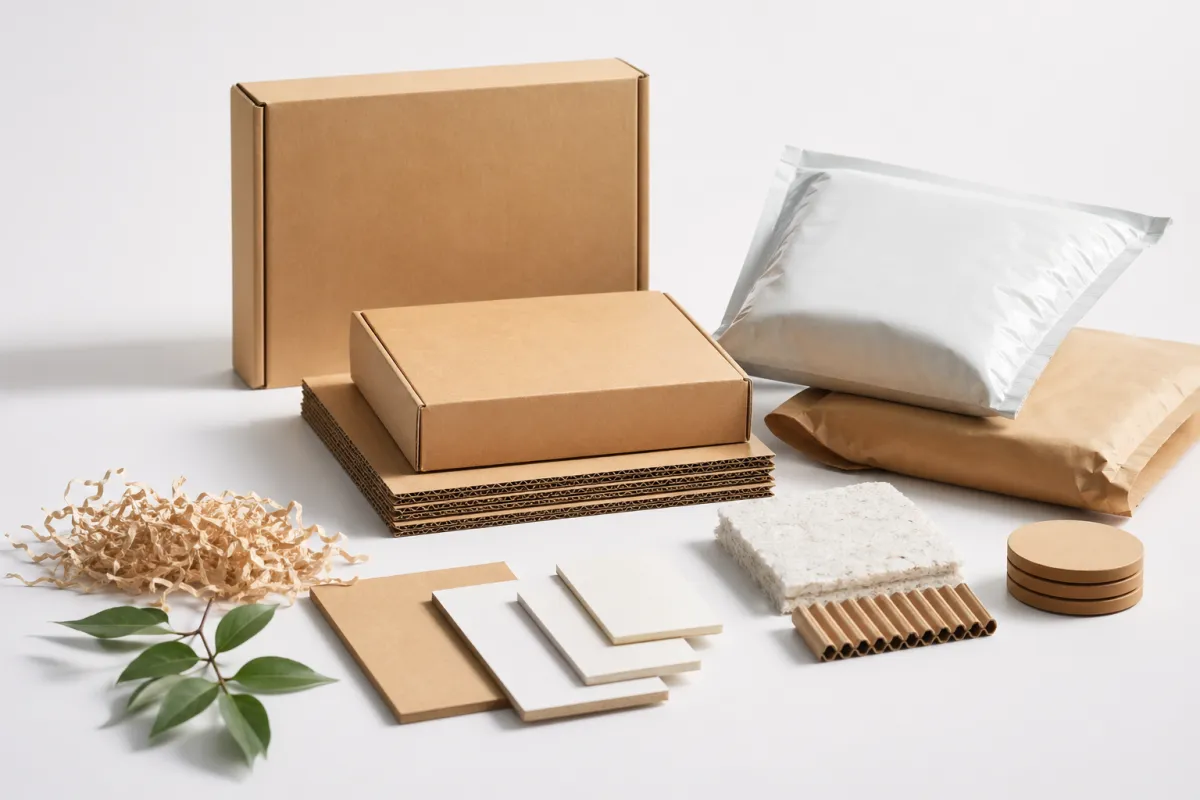
The cheapest quote I ever saw for price breakdown Custom Sustainable Mailers looked like a win on the first screen: $0.19 per unit for 10,000 pieces, quoted ex-works from Dongguan, Guangdong. Clean number. Nice and tidy. The sort of quote that makes a buyer sit up a little straighter in a meeting. Then the freight bill landed at $1,280 for ocean LCL to Long Beach, the coating line item showed up at $0.03 per unit, and export cartons quietly added another $146 nobody had mentioned on the first call. By the time the order reached California, the real number had climbed to about $0.31 per unit. The invoice told the truth the quote had been dodging.
That is why I care more about landed cost than sticker price. A real price breakdown custom sustainable mailers quote should show material, printing, finishing, packaging, freight, and any testing or compliance fee in plain numbers, ideally with a 12-15 business day production window after proof approval. If a supplier hands you one polished unit price while hiding the rest, that is not a quote. It is a teaser, and teaser pricing is how budgets get chipped away one surprise fee at a time. I have watched people nod along to a "great deal" and then stare at the final invoice like it personally offended them.
The most common trap is a low unit price paired with a painful minimum order quantity. A factory may quote $0.15 per unit for 5,000 pieces, then require 30,000 pieces for that rate, add a $240 plate fee, and bolt on palletized shipping from Ningbo that costs more than the product line itself. The unit price looks friendly. The invoice does not. That gap is where buyers lose money and, worse, lose trust in the whole buying process. Honestly, that trust damage hurts more than the dollars, because once a quote feels slippery, every follow-up conversation gets harder.
The cleaner way to read price breakdown custom sustainable mailers is simple enough: what does one usable shipped unit cost after it reaches the dock, clears the freight math, and is ready to use? Material spec matters. Print method matters. Seal strength matters. Ship-to ZIP code matters. Carton count matters. For apparel, beauty, supplements, and subscription boxes, the goal is not the cheapest mailer sitting on a spec sheet. The goal is the lowest usable cost for the actual job, whether that job ships from Dallas, New Jersey, or a 3PL in Ontario, California. Those are not the same thing, and people mix them up all the time.
I learned that lesson on a factory floor in Dongguan, standing beside a stack of compostable film rolls while a buyer argued over a $180 setup fee on a 14x19-inch mailer. He wanted to save eight cents a unit and dismissed the freight penalty on the larger bag. Two hours later, after the factory laid out the pallet count and carton density, the bigger mailer had erased his savings and then some. The math was plain. The emotional attachment to the lower quote was the only thing standing in the way. Packaging procurement is part arithmetic and part therapy. Weirdly, that is still the best description I have found.
What Does a Price Breakdown Custom Sustainable Mailers Quote Include?
Short answer: a good price breakdown custom sustainable mailers quote lists unit price, setup, print, packaging, freight, and any testing or certification fee separately so you can calculate landed cost with confidence. That is the only way to compare Custom Printed Mailers, recycled poly mailers, and compostable mailers without mixing different specs into one false number.
If the quote hides cartons, pallets, or export paperwork inside one tidy line, ask for a revised version before you compare it with another vendor. A fair quote makes eco-friendly packaging decisions easier because the math is visible, the spec is consistent, and the buyer can see exactly where the money goes. The cleaner the breakdown, the easier it is to defend the order in a budget meeting.
What Counts as a Custom Sustainable Mailer?
A custom sustainable mailer is not one product with one price. It can be a recycled poly mailer, a compostable mailer, a kraft mailer, or a hybrid structure that mixes paper and film. Each behaves differently in production, in transit, and in the hands of a customer who is deciding whether your brand feels thoughtful or just expensive. That is why the price breakdown custom sustainable mailers buyers compare has to begin with an actual material choice, not a vague label like "eco-friendly." A 10x13-inch recycled poly bag from a facility in Jiangsu is not the same purchase as a 9x12-inch kraft mailer printed in Valencia and priced in euros.
Recycled poly mailers usually use post-consumer or post-industrial recycled resin, often in the 2.5 to 3.5 mil range, and they remain the workhorse option for ecommerce apparel. Compostable mailers are a different animal entirely; they may rely on PLA, PBAT blends, or starch-based films that require specific claims and documentation, such as ASTM D6400 or EN 13432 support. Kraft mailers lean into paper-based branding and can create a stronger unboxing moment, especially for retail packaging and premium product packaging. I know that sounds obvious, but I have watched teams spend two weeks arguing over the word "green" and zero time defining the structure itself. That is how projects get weird, kinda fast.
I once sat with a beauty brand in Los Angeles that wanted "the green one" because the marketing team liked the look. Their first quote bundled recycled content, compostability, and FSC paper language as if those terms meant the same thing. They do not. Recycled content means the material includes recovered resin or fiber. Compostable means the product is designed to break down under defined conditions. FSC certification speaks to responsible paper sourcing, not magic. Blending those terms makes procurement work harder and makes the price breakdown custom sustainable mailers harder to trust. It also makes the sales rep sound confident in a way that should probably make everyone nervous.
For ecommerce apparel, a 10x13-inch recycled poly mailer with a 2-inch flap is often the sweet spot because it ships flat, packs fast, and protects garments without adding much weight. Beauty and supplement brands usually want a cleaner feel and a tighter presentation, so a kraft mailer or a stronger matte-finish poly option often fits package branding better. Subscription boxes can go either way, but they tend to need extra surface area for logo placement, regulatory copy, and barcode labels. I am slightly biased toward choosing the structure that survives the warehouse first and looks good second. Pretty mailers that fail in transit are just expensive confetti, especially if the route runs through Memphis in summer at 95 degrees Fahrenheit.
If you want to check paper sourcing language, FSC is the right reference point: FSC certification standards. That matters more than many buyers admit, especially when a retailer asks for documentation and the salesperson suddenly discovers the "eco" claim was built on a label, not a spec sheet. A serious price breakdown custom sustainable mailers quote should make the material claim obvious enough that procurement can approve it without a scavenger hunt. I have seen entire approval chains stall because the paperwork was fuzzy. Nobody enjoys becoming the documentation detective after lunch, particularly when the buyer is in Chicago and the mill is in Guangzhou.
Why the label matters less than the spec
Two mailers can both be called sustainable and still land in very different price ranges. One may be a thin recycled film that survives shipping but feels light in the hand. The other may use 80% recycled content, a stronger seal, and a matte ink layer that makes the print look richer while raising cost by 4 to 7 cents per unit. That is why I ask for exact thickness, exact size, and exact print coverage before I discuss price breakdown custom sustainable mailers with anyone. Otherwise we are comparing adjectives, and adjectives do not hold a carton together.
The word "sustainable" gets tossed around like free stickers at a trade show. I have seen buyers approve a quote because it sounded green, then learn the bag was 3.5 mil instead of 2.5 mil, the print was overbuilt, and freight from Shenzhen was doing the real damage. A good supplier should be able to explain the difference between recycled film, compostable resin, and FSC paper without reading from a sales deck. If they cannot, I get suspicious fast. The silence after a vague answer is usually more informative than the answer itself.
Materials, Sizes, Print, and Finishes
The material is the biggest driver in a price breakdown custom sustainable mailers quote, but size and print coverage can move the number almost as hard. A 6x9-inch mailer uses far less film than a 14x19-inch mailer, and that difference shows up in raw material, carton count, and shipping density. Bigger bags also take up more warehouse space, which sounds minor until you are paying to store 50 cases on a pallet instead of 30. Space is one of those costs that feels abstract until it turns into a storage bill with a deadline attached, whether the warehouse is in Riverside or Rotterdam.
Recycled content percentage matters too. A mailer with 30% post-consumer resin is usually cheaper than one at 80% recycled content because the resin blend is easier to source and control. Compostable structures often cost more because the base film, barrier behavior, and certification requirements are stricter. If a buyer asks for a compostable mailer that also needs strong puncture resistance and a custom print on both sides, the price breakdown custom sustainable mailers moves quickly. Quickly enough that I have seen people blink twice when the number lands.
Printing adds another layer. One-color flexographic print is usually the lowest-cost custom option, especially for a simple logo centered on the front panel. Full-coverage print, spot colors, metallic inks, or complex registration raise setup and production time. If your artwork uses four colors and a full bleed, the factory has to hold tighter tolerances, and that shows up in the quote. Nothing mysterious there. Just ink, labor, and line speed in a plant outside Guangzhou or at a regional converter in northern Mexico. The mystery only appears when someone expects a billboard-level design at single-color pricing.
Finishes can be quiet budget killers. A matte coating, tear strip, dual adhesive strips, tamper evidence, or custom gusset sizing all change the price breakdown custom sustainable mailers. I have seen a buyer add a second adhesive strip for returns and increase the unit cost by 11 cents because the factory needed a second lamination pass. That was a useful feature for their apparel line, but it was not a free feature. A useful feature is still a cost, and the invoice never forgets that part. In fact, invoices tend to have the memory of an elephant and the personality of a tax audit.
Most brands should compare specs like this: exact dimensions, material structure, thickness, print colors, seal type, and outer finish. If one supplier quotes a 10x13-inch bag and another quotes a 12x15-inch bag, those numbers are not comparable, even if the sales rep says they are "basically the same." They are not. One uses more material, takes more carton space, and changes the entire price breakdown custom sustainable mailers. The difference may look small in an email. It is not small in a freight lane.
| Mailer Type | Common MOQ | Example Unit Price | Setup Cost | Best Fit |
|---|---|---|---|---|
| Recycled poly mailer, 10x13 inch, 2.5 mil, one-color print | 5,000 pieces | $0.15-$0.24 | $120-$220 | Apparel, basics, high-volume ecommerce |
| Compostable mailer, 10x13 inch, custom print | 10,000 pieces | $0.28-$0.45 | $180-$300 | Brands with compostable claims and premium eco positioning |
| FSC kraft mailer, reinforced flap, custom logo | 3,000 pieces | $0.55-$0.95 | $150-$250 | Beauty, gifting, retail packaging, and boutique product packaging |
| Hybrid paper-film mailer, custom size and print | 8,000 pieces | $0.32-$0.60 | $180-$280 | Mixed protection needs and stronger package branding |
Those numbers are examples, not promises. Freight, ship-from country, carton count, and print coverage can push the final landed cost up or down. Still, they give you a real-world range for price breakdown custom sustainable mailers instead of the false comfort of one neat unit price. I prefer an honest range to a fake certainty. Fake certainty is how teams end up overconfident and underprepared.
For buyers comparing options across Custom Packaging Products and a tighter fit like Custom Poly Mailers, I keep saying the same thing: match the spec first, then compare the quote. If you compare a recycled mailer, a kraft pouch, and a compostable film bag without normalizing size and print coverage, you are not comparing alternatives. You are comparing three different jobs, which is how budgets get chewed up by "cheap" options that were never really cheap. The bargain is often hiding in the wrong category, usually in a 15,000-piece order that looked smart on slide three.
Buyer checklist before you request pricing
- Exact bag size in inches or millimeters, including flap and gusset.
- Material type: recycled poly, compostable film, kraft, or hybrid.
- Thickness or paper weight, such as 2.5 mil or 120gsm.
- Print details: number of colors, one side or two sides, and full bleed or spot logo.
- Finishes: tear strip, double adhesive, matte coating, or reinforced seal.
- Target quantity, ship-to ZIP code, and desired delivery date.
If you can answer those six points in one email, the price breakdown custom sustainable mailers quote gets sharper immediately. If you cannot, expect a fuzzy estimate and a lot of follow-up questions. I have never seen a vague brief produce a clean final invoice. Never. The factory may still reply, but the reply will usually be a sketch, not a number you can defend in a budget meeting. And if you have ever watched procurement and marketing try to argue over a sketch, you know exactly how ugly that gets.
Price Breakdown Custom Sustainable Mailers by MOQ and Setup
MOQ changes the math more than most buyers expect. A small run carries higher setup cost per unit because the plates, proofing, and machine changeover have to be spread over fewer pieces. A large run lowers the per-unit cost, but it also ties up cash and storage space. That is the heart of the price breakdown custom sustainable mailers decision: pay more per piece for a smaller test run, or pay less per piece and commit to inventory. I wish there were a dramatic third option, but mostly there is just math wearing different shoes.
Here is the structure I expect in a clean quote: unit price, print or plate setup, sample cost, production fee, and freight. If there is a compliance test or material certification fee, it should sit in its own line, not vanish into a mystery "other charge." A quote that hides its bones is difficult to trust. I learned that in a negotiation with a supplier in Shenzhen who tried to bury a $95 artwork charge inside a shipping line. We caught it because the carton math did not add up, and the pallet count gave the whole thing away. Numbers have a habit of tattling.
For a 5,000-piece recycled mailer order, you might see $0.21 per unit, $180 setup, and $420 freight from Yantian to Los Angeles. That lands near $0.31 per usable shipped unit before import duty. At 20,000 pieces of the same spec, the unit price may drop to $0.16, setup stays close to $180, and freight may rise to $1,100 because of the larger volume. The landed unit cost might still fall to around $0.22. That is why price breakdown custom sustainable mailers has to be measured at the order level, not just the product level. Otherwise you are comparing a snapshot to a movie and pretending they mean the same thing.
Low MOQ can be smart if you are testing a new SKU, a seasonal launch, or a package branding refresh. I have seen a subscription brand in Brooklyn save money by ordering 4,000 samples worth of a new size before committing to 40,000 pieces. They spent more per unit on the test run, yes. They also avoided a warehouse full of a size that did not fit their knitwear. That is money well spent, even if the spreadsheet looks less elegant for a month. Spreadsheets can survive being less pretty. Inventory mistakes usually cannot.
But low MOQ is not always the cheapest route. If your product packaging is stable and you ship the same unit every week, the small-run premium can chew through margin fast. One apparel client paid 14 cents extra per mailer for a 3,000-piece order versus a 15,000-piece order. On a monthly shipment of 8,000 units, that spread was real money. The quote that looked "safer" turned out to be the more expensive choice. I have watched that lesson arrive slowly, then all at once, which is somehow the worst way for a lesson to arrive.
Rush fees deserve their own warning label. If a factory has to pull your job into a crowded production window, expect a surcharge of $120 to $300 depending on the line. If you need split shipments because your warehouse in Atlanta is not ready, expect another one. If artwork changes after proof approval, rerun charges are very likely. These are not surprises to me anymore; they are the ordinary hidden cost centers in a price breakdown custom sustainable mailers conversation. The surprise is when someone acts surprised. I can usually spot the moment the budget starts wobbling: it is right after the phrase "one small change."
"I thought we were comparing the same mailer," a brand manager told me after the freight bill landed. "Turns out one quote excluded printed tape, export cartons, and the inner poly bag."
That line stayed with me because it happens so often. A quote may look ten percent cheaper until the buyer discovers that the sample charge, the carton upgrade, and the documentation fee were all missing. The best safeguard is to force every supplier to quote the same spec, the same ship term, and the same packaging format. Once the numbers line up, the price breakdown custom sustainable mailers becomes much easier to read. The job stops being guesswork and starts looking like procurement. Not glamorous, maybe, but definitely better than being surprised by a line item you have to Google while the meeting is still running.
How Production Works and When You Get Your Order
A good price breakdown custom sustainable mailers conversation is useless if the timeline is fantasy. The process should move in a predictable order: specs intake, artwork review, proof approval, production, packing, and freight booking. Skip any one of those steps and the schedule gets sloppy, then the budget gets hit later. I have watched that happen on the shop floor in Dongguan and in a warehouse office in Savannah, and it never ends with a happy procurement team. It usually ends with a tense email thread, a warehouse manager asking where the boxes are, and somebody claiming the delay was "unavoidable" with a straight face.
For a standard order, I like to see 1 to 2 business days for quote confirmation, 2 to 4 business days for proofing, and 12 to 18 business days for production after approval if the material is in stock. Sampling can take 5 to 7 business days, though a custom color match or a special finish can stretch that to 10 business days. Freight is the wild card. Ocean freight may take 18 to 28 days to the U.S. West Coast, and air freight can erase every penny you saved on production. That belongs in the price breakdown custom sustainable mailers from the start, not after the order is already in motion. I have seen too many people treat freight like an afterthought and then act shocked when geography behaves like geography.
Rush orders are possible, but only if the specs are simple and the factory queue allows it. A 7 to 10 business day production window is realistic for some recycled poly mailers when the artwork is approved early and the resin is on hand. Compostable structures and special paper blends often take longer because material sourcing is tighter. If someone promises an ultra-fast turnaround on a complex custom structure, I would ask for the exact machine schedule, not the sales pitch. Sales language is easy. Running a line is not. I have yet to meet a plant manager in Guangzhou or Monterrey who was impressed by the phrase "we should be fine."
Delays usually happen for one of three reasons: the artwork file is incomplete, the proof gets revised three times, or compliance questions show up late. I once had a client send a beautiful logo, then forget the required recycling and material claim copy. We lost four days just sorting the panel text. That is not a factory problem. That is a briefing problem. And it changes the price breakdown custom sustainable mailers because every extra proof round costs time, and time is money in every plant I have ever visited. A design tweak that feels harmless in a conference room can be a small disaster on press.
Testing also matters. If your mailer has to survive rough handling, ask whether the supplier can reference ISTA procedures and packaging test logic. For shipping and distribution checks, ISTA testing protocols are a sensible benchmark. I am not saying every pouch needs a full lab report. I am saying that if your order is going into high-volume ecommerce, a drop test and seal check are cheaper than a broken shipment and a replacement rush order. That is the boring truth behind a smart price breakdown custom sustainable mailers. Boring, yes. Also absurdly useful when it keeps you from shipping regret.
When a brand plans around freight correctly, the whole project gets cleaner. The production run stays on schedule, the warehouse books receiving space on time, and the finance team stops chasing surprise charges. That sounds basic because it is basic. Yet it is exactly where a lot of "cheap" packaging projects go sideways. Cost planning is not a decoration. It is the center of the order, the thing holding the rest together. I have never seen a last-minute rush fee improve the mood of a quarterly review, especially not when the order is crossing the Pacific through the Port of Oakland.
Timeline ranges I use for planning
- Standard order: 12 to 18 business days after proof approval, plus freight.
- Rush order: 7 to 10 business days after approval, if materials are available.
- High-volume order: 18 to 30 business days, especially with special film or paper sourcing.
- Sampling: 5 to 10 business days, depending on structure and print complexity.
If a shipment misses the buying window by a week, the lost sales can cost more than a 6-cent-per-unit savings. That is why I treat timeline as part of the price breakdown custom sustainable mailers, not as a side note. Cost and schedule are married. They do not travel alone, and the ones that try usually end up in trouble. I have seen a "great savings" turn into an unhappy customer email chain, and that is not a trade anyone wants to make.
Why Custom Logo Things Makes the Quote Easier to Trust
At Custom Logo Things, the goal is straightforward: give buyers a price breakdown custom sustainable mailers quote that actually means something. That means line-by-line pricing, not a vague number with three invisible assumptions stuffed inside it. I have spent enough time negotiating with factories in Shenzhen, Dongguan, and Ho Chi Minh City to know that a clean quote saves everyone time, especially the buyer who has to explain the budget to finance, marketing, and operations in the same meeting. Those meetings already have enough drama without adding mystery fees.
I have stood in factories where the first price looked beautiful until I started asking about carton counts, inner packaging, adhesive type, and export paperwork. On one order, a supplier wanted to charge separately for the plate, the proof, the carton print, and the pallet wrap, but only after the buyer had already "approved" the sample. That is exactly the kind of nonsense I like to cut off early. If a supplier cannot explain the cost structure, the quote is not worth much, no matter how polished the email looks. A nice PDF does not make a bad quote honest.
Direct factory relationships help because they keep the source of truth close to the machine. You get better control over material sourcing, print consistency, and lead times, and you get fewer telephone-game mistakes between the spec sheet and the finished product. That matters whether you are buying Custom Printed Boxes, retail packaging, or branded packaging in mailer form. A sloppy handoff on one product usually means a sloppy handoff on the next, and the invoice is where that sloppiness shows up. I am biased toward boring clarity here because boring clarity saves real money, and real money is usually the point.
There is also a trust issue that buyers do not talk about enough. Procurement teams are tired of chasing three quotes that all claim to be "competitive" while none of them use the same size, the same film thickness, or the same freight basis. A clear price breakdown custom sustainable mailers quote removes that noise. It gives you something you can compare, defend, and approve without ten follow-up emails. It also gives finance a number they can actually stand behind, which is more important than people admit in public.
That is why we keep the conversation practical. If you want broader sourcing options, browse our Custom Packaging Products selection. If you already know you want a film-based option, our Custom Poly Mailers page is a clean place to start. Either way, the same rule applies: quote the same spec, compare the same spec, and judge the same spec. Anything else is theater, and theater is expensive when it shows up on a purchase order.
Honestly, I think buyers respect straight numbers more than clever sales language. A factory quote with a 4-color logo, a 10x13-inch format, a 15,000-piece MOQ, and a 14-business-day lead time is useful. A quote that says "best price" and nothing else is not. That is the difference between a procurement tool and a brochure. Custom Logo Things exists to stay on the useful side of that line, where the math is visible and the buyer can breathe. In practice, that means fewer late-night clarifications and fewer re-quotes from factories in Guangdong or Puebla.
Next Steps to Get a Quote That Matches Your Budget
If you want a quote that matches your budget, send five things: bag size, material preference, print coverage, quantity, and ship-to location. Add your target delivery date if you have one. That alone will sharpen the price breakdown custom sustainable mailers enough to separate the real options from the noise. If you send a logo file and say "eco mailer," you will get a generic answer. If you send a full spec, you will get numbers you can use. The difference is dramatic, and usually visible by the second email.
Ask every supplier for a landed-cost quote. That means unit price, setup, freight, and any import or duty charges should be shown separately. If sampling is required, have it listed too. I like to see a proof cost, a sample cost, and a production cost broken out so the buyer can decide where the money goes. That is the cleanest way to read a price breakdown custom sustainable mailers, and it avoids the awkward discovery call after the PO is already signed. Nobody enjoys saying, "Wait, what is this charge?" after finance has already stamped the order.
Request a sample or digital proof before you place a large order. I have seen one font shift, one seal placement issue, or one size mismatch trigger a painful rerun. A $35 sample can save a $3,500 mistake. That is not an exaggeration. It is just the math of packaging design and production discipline, the sort of math that never gets applause because it prevented the disaster instead of advertising it. Prevention is terrible for headlines and excellent for budgets.
Compare quotes side by side using the same sheet of paper or the same spreadsheet. Use one row for each vendor and columns for size, material, thickness, print, setup, freight, and delivery date. If one vendor is quoting recycled film and another is quoting compostable resin, do not compare them as if they are identical. They are not, and the price breakdown custom sustainable mailers will not be the same either. Normalizing the spec saves time, and it saves the argument that usually follows a misleading quote. I have seen entire afternoons disappear because nobody wanted to admit the apples and oranges were both fruit, but not interchangeable fruit.
Use this simple rule: compare cost per usable shipped unit, not just cost per piece. If a cheaper mailer tears, arrives late, or forces a repack, it is not cheaper. It is a problem with a low sticker price. I have watched brands burn more cash fixing bad packaging than they would have spent on the better mailer in the first place. That is the part people hate hearing because it is usually true, and it is usually the part that matters most. Procurement can survive a slightly higher unit price. It does not survive avoidable rework nearly as well.
One more practical note. If your brand is evaluating package branding, Custom Printed Boxes, or a new recycled mailer line at the same time, keep the spec language consistent across all vendors. That makes buying easier and helps finance see the logic behind the spend. It also stops the usual "why does one supplier call it a pouch and another call it a mailer?" conversation, which wastes everybody's afternoon and rarely improves the margin. I am not anti-discussion. I am anti-pointless discussion, which is a very different thing.
Send the spec, ask for a landed cost, and compare apples to apples. If you do that, the price breakdown custom sustainable mailers stops being a guessing exercise and becomes a usable buying tool. That is the whole point. No drama. No fluff. Just a clear path from estimate to order, and a lot fewer surprises when the cartons finally show up at the dock.
FAQ
How do I read a price breakdown custom sustainable mailers quote?
Split the quote into unit price, setup, freight, sampling, and any import costs. Then check whether the MOQ is inflating the per-piece price. If the same size, thickness, print coverage, and shipping term are not used across vendors, the quote comparison will be misleading. A clean price breakdown custom sustainable mailers should make every cost visible, not just the headline number. If a line item seems vague, ask for it again. Vague and expensive are often best friends, and they usually show up together in the same email thread.
What changes the cost of custom sustainable mailers the most?
Material choice usually moves the number fastest, especially when comparing recycled poly, kraft, and compostable films. Print coverage and color count can raise setup and production costs quickly, especially on full-bleed artwork. Freight can swing the landed price more than buyers expect, particularly on bulky orders that fill a pallet or more. The shipping lane can matter as much as the bag itself. I have seen a decent unit price get completely swallowed by freight from Yantian to Los Angeles, which is a rude little trick the market plays on people who only look at the first number.
Are compostable mailers always more expensive than recycled mailers?
Usually yes, because the base material and performance requirements are stricter. The gap can narrow on larger runs where setup cost gets spread across more pieces. If the buyer only needs an eco look and not a compostable claim, recycled content is often the better value. That answer changes the price breakdown custom sustainable mailers in a very practical way. Also, if someone says "basically the same" here, I would double-check the spec before I trust the quote.
What MOQ should I expect for printed sustainable mailers?
Many factories set a higher MOQ for custom print because setup costs need to be recovered. Smaller runs are possible, but the unit price usually rises. Ask for the break-even point between low MOQ and better volume pricing so you can see where the real savings start. That is the cleanest way to judge a price breakdown custom sustainable mailers quote without guessing. A useful vendor should be able to show you that line without making it feel like a magic trick, even if the factory is in Fujian or northern Vietnam.
How long does a custom sustainable mailers order take?
Sampling and proof approval usually take the first chunk of time, so do not skip them. Production length depends on material availability, print complexity, and the factory queue. Freight can take longer than production, especially on ocean shipments, so factor shipping into the schedule from day one. If you treat lead time as part of the price breakdown custom sustainable mailers, you will make better buying decisions. I know that sounds basic. It is. Basic is underrated when deadlines are breathing down your neck.

