Buyer Fit Snapshot
| Best fit | Custom Carton Hang Tags Manufacturer projects where brand print, material claims, artwork control, MOQ, and repeat-order consistency need to be specified before quoting. |
|---|---|
| Quote inputs | Share finished size, material target, print colors, finish, packing count, annual reorder estimate, ship-to region, and any compliance wording. |
| Proofing check | Approve dieline scale, logo placement, barcode or warning zones, color tolerance, closure strength, and carton packing before bulk production. |
| Main risk | Vague material claims, crowded artwork, missing packing details, or unclear freight terms can make a low unit price expensive after revisions. |
Fast answer: Custom Carton Hang Tags Manufacturer: Key Things to Know should be specified like a repeatable production item. The safest quote records material, print method, finish, artwork proof, packing count, and reorder notes in one written spec.
Production checks before approval
Compare the actual filled-product size with the drawing, then confirm tolerance on folds, seals, hang holes, label areas, and retail display edges. Reserve space for logos, QR codes, warning copy, and material claims before decorative graphics fill the panel.
Quote comparison points
Review material grade, print process, finish, sampling route, tooling charges, carton quantity, and freight assumptions side by side. A quote is only useful when the supplier can repeat the same color, closure quality, and packing count on the next order.
Pick up a carton, flip it over, and most people read the tag before they even look at the product. That tiny habit is why a custom carton hang tags manufacturer matters more than a lot of teams realize. The tag is doing several jobs at once. It has to carry the brand, hold the right information, and survive handling without coming back scuffed, curled, or just plain sad.
At Custom Logo Things, the practical question is usually simple: how do you make a tag that looks sharp on a shelf, prints cleanly, and still fits the way the carton is packed, shipped, and opened? That is where a custom carton hang tags manufacturer earns its place. The right partner does not just print a logo and call it a day. They translate packaging design into something that can be cut, punched, attached, boxed, and delivered without creating a mess later. If you are working across Custom Packaging Products or need a tag that matches Custom Labels & Tags, the details matter even more because the tag has to sit comfortably inside the broader branded packaging system.
I have seen more than one project go off the rails because someone treated the tag like a decorative extra. That usually ends the same way: last-minute revisions, weird hole placement, and a production team muttering under their breath. Not ideal.
What a custom carton hang tags manufacturer actually does
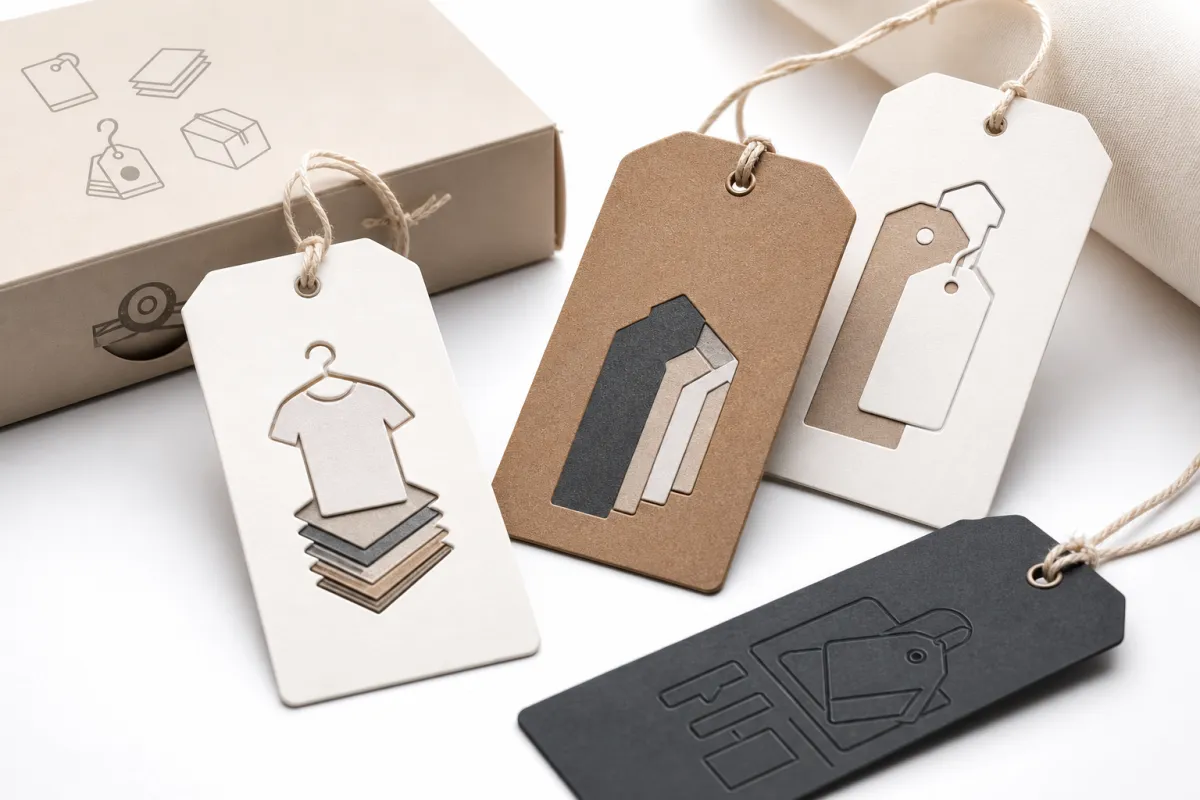
A custom carton hang tags manufacturer is not just a print vendor with a guillotine and a hole punch. The better ones act like the bridge between design intent and production reality. They take a concept built around package branding or retail packaging and turn it into a finished piece that can move through printing, cutting, scoring, hole punching, assembly, and shipping without losing shape or clarity.
Carton hang tags come in a few common forms. Some are simple die-cut cards tied to a carton flap or handle. Others are folded cards with two or four panels, which gives room for compliance copy, SKU details, or seasonal messaging. In some jobs, the tag gets reinforced with a laminate, a patch, or a heavier board so it can hang from heavier cartons, display packs, or shipping-ready product packaging. A custom carton hang tags manufacturer should tell you which structure fits the job before anyone commits to artwork that looks nice and fails in production. That part matters. A lot.
In practice, the tag can do several jobs at once:
- Identify the product and support retail packaging presentation.
- Carry barcode, batch, or SKU information for warehouse and store teams.
- Support seasonal campaigns without reworking the full carton.
- Add a premium feel to custom printed boxes or carton sleeves.
- Help standardize product packaging across a line of SKUs.
That mix of marketing and utility is why a strong custom carton hang tags manufacturer matters so much. If the tag is too thin, it curls or tears. If the finish is wrong, the barcode can scan badly. If the hole placement is off by even a small amount, the tag can hang crooked or interfere with carton folds. Those problems do not show up in a mockup. They show up when cartons are stacked, packed, and handled by people who are not being gentle.
A tag can look perfect on screen and still fail in the hand if the stock is too light, the punch lands too close to the edge, or the coating fights the barcode. Good carton tags are judged in the real world, not just in a PDF.
There is also a broader packaging reason to get this right. A tag that feels intentional can lift the whole buying experience, especially when it sits next to thoughtful packaging design. A weak one can make even well-made product packaging feel rushed. That is why buyers often treat the custom carton hang tags manufacturer as part of the brand execution team, not just a print shop with a fancy website.
For more background on our approach, you can read About Custom Logo Things, where the focus is on practical packaging that looks good and holds up under real production conditions.
How a custom carton hang tags manufacturer turns an idea into production
The production path usually starts with a simple inquiry, but a dependable custom carton hang tags manufacturer will quickly turn that inquiry into a set of production questions. What is the final size? Is it for a hanging display carton, a folded retail carton, or a carton sleeve that will be opened and resealed? How many colors are in the artwork? Do you need one-sided printing or two? Will the tag be attached by string, twine, plastic fastener, or adhesive? Those answers decide whether the job is straightforward or whether it needs structural planning before anybody gets fancy with layout.
From there, the workflow usually looks like this:
- Receive specs and artwork files.
- Review size, stock, finish, and attachment method.
- Recommend a dieline or build around an existing dieline.
- Quote the job with setup, production, and packing details.
- Provide a digital proof for layout and copy review.
- Offer a physical proof or sample if color, thickness, or fit needs confirmation.
- Print, finish, cut, punch, inspect, and pack the order.
That looks tidy on paper. The gap between a digital proof and a finished tag is where the real work happens. A digital proof checks layout, placement, typography, and copy. It does not tell you how a matte coating behaves under fluorescent retail lighting, or whether a 16-point board is stiff enough to stay straight on a carton edge. A physical sample is often worth the extra time when the tag has a premium finish, a precise fold, or a barcode that must scan cleanly on the first try.
Timeline depends on more than print speed. A custom carton hang tags manufacturer has to account for artwork readiness, board availability, die creation, special finishing, and whether the order needs kitting or assembly. A repeat order can move in about 7-10 business days after approval if the specs are already locked. A fresh job with custom tooling, foils, reinforced holes, or manual stringing can stretch to 12-18 business days, sometimes longer if the proof cycle runs through several internal reviewers. That is not a scare tactic. It is just how production behaves.
Delays usually come from predictable places. Missing dielines are common. So are low-resolution logos, barcode files with the wrong contrast, copy that changes at the last minute, and mismatched approvals between marketing and operations. A seasoned custom carton hang tags manufacturer knows the printing press is only one part of the schedule. The rest is process control, and honestly, a bit of project discipline from the buyer side helps too.
Buyers who keep production on track usually treat the tag as a manufacturing component, not a loose creative asset. That means the carton line, the application method, and the fulfillment flow all need to be considered before the file is approved. If the team waits until after signoff to ask how the tag gets attached, somebody is gonna have a bad afternoon.
Materials, structure, and finishes that affect performance
Material choice changes almost everything. A custom carton hang tags manufacturer will usually present several board options because the same design can feel radically different depending on what it is printed on. If you want a premium, crisp look for retail packaging, a coated SBS board or high-quality art card may be the right fit. If the brand story leans natural or earthy, kraft stock can support that voice. Recycled board is often a strong choice when sustainability claims are part of the package branding, although the visual texture may soften very fine detail.
The common stock families include:
- SBS or coated board: smooth, bright, and strong for sharp graphics and rich color.
- Kraft board: natural-looking, sturdy, and well suited to rustic or eco-forward branding.
- Recycled cardstock: useful for buyers who want a lower-bleed, more muted presentation.
- Uncoated cardstock: writable and more tactile, but less punchy in color.
- Heavy tag board: better when the carton tag needs to resist bending, shipping abrasion, or repeated handling.
Structure matters just as much as stock. A tag that is 2 x 3 inches and a tag that is 3.5 x 5 inches can behave very differently on the carton. Hole placement, corner shape, fold direction, score depth, and edge finish all shape the final look and the way the tag hangs. A custom carton hang tags manufacturer can often prevent problems by adjusting those details before the art is locked. That is the kind of boring detail that saves a lot of money later.
Finish options should be chosen for function first, decoration second. Matte coatings reduce glare and help text stay readable. Gloss coatings make color pop, but they can reflect light in a way that makes small copy harder to read. Soft-touch finishes feel elevated in the hand, though they can show wear differently than standard varnish. Foil stamping, embossing, and spot UV are useful when the tag needs a premium focal point, but each one adds cost and needs careful file preparation. If the tag is supposed to survive warehouse handling, the finish has to earn its keep.
Some brands ask for a finish because it looks impressive in a presentation board. The better question is whether the finish matches the environment. Retail packaging that lives under bright lights needs scanability and legibility. A carton tag that ships in bulk needs scuff resistance. A tag tied to premium Custom Printed Boxes may deserve foil on the logo, but not if it compromises the barcode or slows production. Pretty is nice. Functional is better.
Attachment style also affects performance. String, twine, paper fasteners, plastic ties, adhesive backers, and pre-attached hardware all carry different labor implications. A custom carton hang tags manufacturer should think about how the tag is applied at the carton line, because a beautiful tag that demands too much manual assembly can slow fulfillment or create unnecessary labor cost. That part gets ignored a lot, then everyone acts surprised when the floor team complains.
For buyers comparing material claims or recyclability, the guidance from the EPA recycling resources and the FSC can help frame sourcing conversations. For shipping durability, the testing standards from ISTA are also worth reviewing when the tag has to survive freight conditions and carton handling. These sources do not replace a production sample, but they do help anchor the conversation in something more useful than opinions at a meeting table.
The main point is simple: a custom carton hang tags manufacturer is not only printing a graphic. They are matching paper, finish, structure, and attachment method to the way the tag will actually live in the field.
Custom carton hang tags manufacturer pricing: what drives cost
Pricing is where many projects become clearer, because a custom carton hang tags manufacturer has to translate every choice into real production cost. The biggest levers are quantity, board type, size, print colors, finishing, die complexity, and whether the tags need assembly. Change one of those elements and the price can move quickly.
Here is the practical reality: a simple tag can still cost more per unit than expected if the run is small. Setup, plate work, cutting, and packing are fixed or semi-fixed costs, so those costs get spread across fewer pieces. That is why a 500-piece order often looks expensive on a per-unit basis, while a 5,000-piece order can land much closer to what buyers had in mind. It is not magic. It is just math being annoying, as usual.
For a general pricing frame, many buyers see something like this for standard carton tags with basic print and no special assembly. These are broad ranges, not hard quotes, because every custom carton hang tags manufacturer prices based on its own equipment and workflow:
| Order Profile | Typical Unit Range | What Usually Changes the Cost | Best Fit |
|---|---|---|---|
| Simple one-color or two-color tag, standard board | $0.12-$0.22 | Quantity, size, and whether the die already exists | Basic identification, internal carton use, repeat SKUs |
| Full-color tag on coated stock with matte or gloss finish | $0.18-$0.35 | Color coverage, proofing, and finish type | Retail packaging, promotional cartons, branded presentation |
| Premium tag with foil, embossing, or soft-touch coating | $0.35-$0.75+ | Extra tooling, specialty finishing, and slower handling | Luxury product packaging and package branding |
| Tagged, strung, or kitted order | Varies by labor | Assembly time, packaging method, and carton count | Launches, retail-ready shipments, bundle programs |
Those numbers only help if you compare like with like. One quote may include proofing, freight, and package sorting, while another quote leaves those out. A good custom carton hang tags manufacturer will tell you exactly what is included so you can compare apples to apples instead of squinting at two PDFs and pretending that somehow equals clarity.
Special features can shift the budget faster than people expect. Foil adds a tooling step. Embossing adds pressure and make-ready time. Reinforced holes require extra labor or specialized material. Variable data, numbering, or batch coding creates a different workflow than static print. Even a simple change like adding stringing can increase the total if it is done by hand rather than automatically. That is why the cheapest quote is not always the cheapest order.
There are usually savings available, but they should not come from the wrong place. A smart custom carton hang tags manufacturer may suggest a slightly lighter board that still feels substantial, or a standard size that avoids custom knife work. Sometimes the best savings come from simplifying finishes rather than reducing the visible quality of the tag. If the logo needs one premium accent, that may be enough. You do not always need a full suite of effects to create a strong retail packaging presence.
One more point that buyers often miss: reorders can be cheaper when the specs stay stable. If you keep the same tag size, same stock family, same hole position, and same attachment style across multiple SKUs, the custom carton hang tags manufacturer can often reduce rework and speed up production. That kind of standardization makes future quoting easier and usually helps control costs over time. It also saves your team from re-explaining the same layout decisions every quarter, which is frankly a gift.
Step-by-step guide to ordering from a custom carton hang tags manufacturer
The smoothest orders usually begin with a one-page spec sheet. A custom carton hang tags manufacturer does not need a novel, but they do need enough detail to avoid guesswork. At minimum, that spec sheet should include purpose, carton type, final size, quantity, attachment method, print content, finish, and deadline. If the tag is tied to a launch or seasonal run, include the date the cartons must be ready, not just the date you want a proof. Those are not the same thing, and it matters more than people think.
A solid starting checklist looks like this:
- Final tag dimensions and shape.
- Carton or package type it will be attached to.
- Artwork files in the best available format.
- Barcode requirements and scan standards.
- Board or paper preference, if any.
- Finish preference, such as matte, gloss, or soft-touch.
- Attachment style, including string or fastener type.
- Desired ship date and delivery location.
Artwork preparation matters more than many teams realize. The custom carton hang tags manufacturer will usually prefer vector artwork for logos and line art, high-resolution images for photos, and outlined text if the file is moving between different systems. Bleed, safe area, and barcode quiet zones need to be handled carefully. A barcode that is too small or too close to the edge may look fine in a design file and still fail in production. That is one of those little landmines that makes people grumpy later.
Proofing should be read with a production eye, not just a design eye. Check the hole position against the fold. Confirm that the tag hangs in the intended direction. Inspect barcode contrast. Look at the weight of the copy on each panel. If the tag will be folded, verify that no critical text sits too close to the score. A good custom carton hang tags manufacturer should flag those issues before print, but the buyer still needs to review them. No one gets a pass on reading the proof, sorry.
For higher-stakes work, a physical sample or first article is worth considering. That is especially true for regulated product packaging, luxury retail packaging, or any launch where the tag has to align with merchandising windows. A sample gives you the real feel of the board and the actual visual behavior of the finish. It also lets the packaging team test how the tag interacts with the carton and whether it fits the line as planned.
After approval, ask how the tags will be packed. Will they be counted and banded? Boxed by SKU? Sorted by artwork version? Should they ship flat or pre-assembled? Those details matter for receiving teams. A custom carton hang tags manufacturer that thinks ahead on packaging and delivery can save your team from sorting work later. And if you have ever had to sort a mixed box of tags by hand, you already know why that is a big deal.
When buyers work with Custom Logo Things, the best results usually come from combining early artwork discipline with practical packaging thinking. If the tag is part of a wider rollout, it should feel connected to the rest of the branded packaging family, not like an isolated afterthought.
Common mistakes when working with a custom carton hang tags manufacturer
The most common mistake is designing the tag for a screen instead of a carton. A custom carton hang tags manufacturer can print a beautiful layout, but if the hole punches through key copy, the fold cuts into the message, or the tag is too wide for the package edge, the piece stops working. The carton and the tag have to be considered together. That is the whole ballgame.
Another frequent issue is rushing the proof cycle. Teams sometimes approve a screen proof and assume the finished piece will feel identical. That is not how print materials work. Stock weight changes the feel. Coatings change the light response. A barcode that looks fine in a PDF may not scan cleanly on the actual board. A reliable custom carton hang tags manufacturer will encourage proper proof review, and that advice is usually worth taking.
Too much copy is another trap. Brands often try to fit product story, legal notes, a QR code, a tagline, an icon set, and a promotional message onto one small tag. The result is cluttered. Clean design usually wins, especially in retail packaging where the buyer is scanning quickly. If a tag has to carry a lot of information, it may need a fold or a larger format instead of cramming everything into one panel. That is one place where a custom carton hang tags manufacturer can help translate content volume into a better structure.
Finish choice can also backfire. Gloss can be strong for vibrant color, but it may reduce readability under certain lights. Soft-touch can feel premium, but it can mark differently than expected during fulfillment. Uncoated stock can be ideal for a natural package branding story, yet it may not support every graphic style equally well. The right answer depends on the carton, the product packaging environment, and the role of the tag.
Quantity planning is another area where problems show up late. Seasonal promotions, limited editions, and launch programs often need exact counts because the tags are tied to specific SKUs or custom printed boxes. If you order too few, reprints can disrupt timing. If you order too many, you carry stale inventory. A thoughtful custom carton hang tags manufacturer will usually encourage a realistic buffer, but not a huge overrun unless the program truly supports it.
There is also a communication issue that causes trouble: different departments making different assumptions. Marketing wants the tag to look premium. Operations wants it to apply quickly. Finance wants to keep the unit cost controlled. A useful custom carton hang tags manufacturer will help balance those goals, but the buyer still needs to set the priorities clearly from the start. Otherwise everybody assumes somebody else made the decision, and that turns into a delay disguised as a meeting.
Expert tips and next steps from a custom carton hang tags manufacturer
The best place to begin is with the end use. Ask whether the tag is supposed to sell, inform, identify, or protect the carton presentation. A custom carton hang tags manufacturer can build a better solution when the function is clear, because every decision from stock to finish to attachment gets easier to justify. If the tag is mostly informational, readability wins. If it is mainly about branded packaging, visual weight and print quality matter more. If it must do both, structure and copy hierarchy become critical.
Standardizing a few tag sizes across product families is one of the easiest ways to simplify future work. The same idea applies to using a consistent board family or finish. A custom carton hang tags manufacturer can quote faster, proof faster, and repeat orders more reliably when the format stays familiar. That is especially useful for companies managing multiple SKUs, because packaging design decisions compound quickly once you have several versions in circulation.
Ask for a sample book or a printed sample whenever you are choosing between similar stocks. A screen cannot tell you how a board bends in the hand or how a coating changes under warehouse lighting. It also cannot show you the difference between a stiff tag that sits neatly on a carton and a softer tag that may curl over time. Real samples help buyers make grounded decisions, which is exactly what a good custom carton hang tags manufacturer should support.
If you are preparing to request quotes, use an internal checklist before you send anything out:
- Artwork is final or nearly final.
- Quantity is approved by all stakeholders.
- Barcode requirements are confirmed.
- Finish and stock choice are narrowed to one or two options.
- The delivery date leaves room for proofing and production.
That simple discipline often saves more time than any one production shortcut. It also reduces the odds that a custom carton hang tags manufacturer has to pause the job for missing information. The cleanest orders are usually the ones where the buyer has already done the practical thinking up front.
When the tag is part of a larger branded packaging rollout, keep the whole system in view. The hang tag should coordinate with labels, cartons, inserts, and any other product packaging elements so the finished line feels intentional. If the rest of the program uses a matte, natural look, a highly reflective tag may feel disconnected. If the carton is premium and polished, a plain tag can drag the whole presentation down. That is why buyers often ask for one vendor to support multiple pieces of the package branding system, including tags, labels, and related components from Custom Labels & Tags.
Here is the honest version of the advice: do not start with decoration. Start with purpose, then select the board, finish, size, and attachment method that fit the real use case. A strong custom carton hang tags manufacturer can help you get there, but the best results come when the buyer treats the tag like a production component rather than a last-minute embellishment.
One final practical note: if you are comparing vendors, ask them to explain how they would prevent the three biggest failures on your job. For most projects, that means scanability, attachment durability, and carton fit. If the answer sounds vague, keep moving. If the answer is specific and a little unglamorous, that is usually a good sign.
If you are ready to move forward, gather the specs, request a quoted proof, compare two material options, and approve the cleanest production route. Then place the order with enough lead time to protect the launch schedule. That is the simplest path to a tag that prints clean, hangs right, and supports the carton instead of fighting it. For many brands, that is exactly what a custom carton hang tags manufacturer is supposed to deliver.
FAQ
What should I send a custom carton hang tags manufacturer for an accurate quote?
Send finished size, quantity, artwork files, stock preference, finish preference, attachment method, and delivery deadline. Include barcode requirements, carton type, and whether you need assembly or kitting so the quote reflects the real production work. A custom carton hang tags manufacturer can only price accurately when the job details are specific enough to avoid assumptions.
How long does a custom carton hang tags manufacturer usually need to produce an order?
Simple reorders with approved artwork can move quickly, while new jobs need time for proofing, tooling, and finish approval. Add extra time for specialty coatings, Custom Die Cuts, stringing, or any order that needs a physical sample before release. A custom carton hang tags manufacturer will usually give a tighter schedule once the artwork and production method are finalized.
What materials work best for custom carton hang tags on retail packaging?
Heavier cardstock or board is usually best when the tag needs a premium feel, better stiffness, and stronger handling durability. Kraft and recycled stocks work well for natural branding, while coated boards support sharper graphics and richer color. A good custom carton hang tags manufacturer will match the material to the package branding goal and the handling environment.
How can I keep custom carton hang tag costs under control?
Use standard sizes where possible, keep the finish simple, and avoid unnecessary special effects unless they support the brand story. Ordering in larger quantities and limiting unique versions per SKU usually reduces the per-unit cost. A custom carton hang tags manufacturer may also suggest a slightly lighter board or a more efficient attachment method that protects both quality and budget.
Can a custom carton hang tags manufacturer help with barcode and regulatory details?
Yes, a good manufacturer can advise on barcode placement, contrast, quiet zones, and the practical limits of the chosen stock and coating. They can also help you organize legal copy, product identifiers, and other required details so the tag stays readable and compliant. That support is one of the biggest reasons buyers work with a custom carton hang tags manufacturer instead of treating the tag as a simple print order.

