Custom carton packaging has to do more than hold a product. It has to protect it, pack efficiently, meet the channel’s presentation standard, and survive the route from plant to customer. A carton can look right in a proof and still fail in the field if the board is too light, the closure is weak, or the interior fit is loose.
That is why carton work quickly becomes a spec exercise, not just an artwork exercise. Once the product size, weight, and handling path are clear, the real decisions are about structure, material, print method, finish, and cost. Those choices determine whether the carton performs or becomes a source of rework.
For teams comparing formats and build options, the Custom Packaging Products page is a useful reference for how common carton constructions are typically combined.
What Changes When a Carton Has to Do More Than Ship
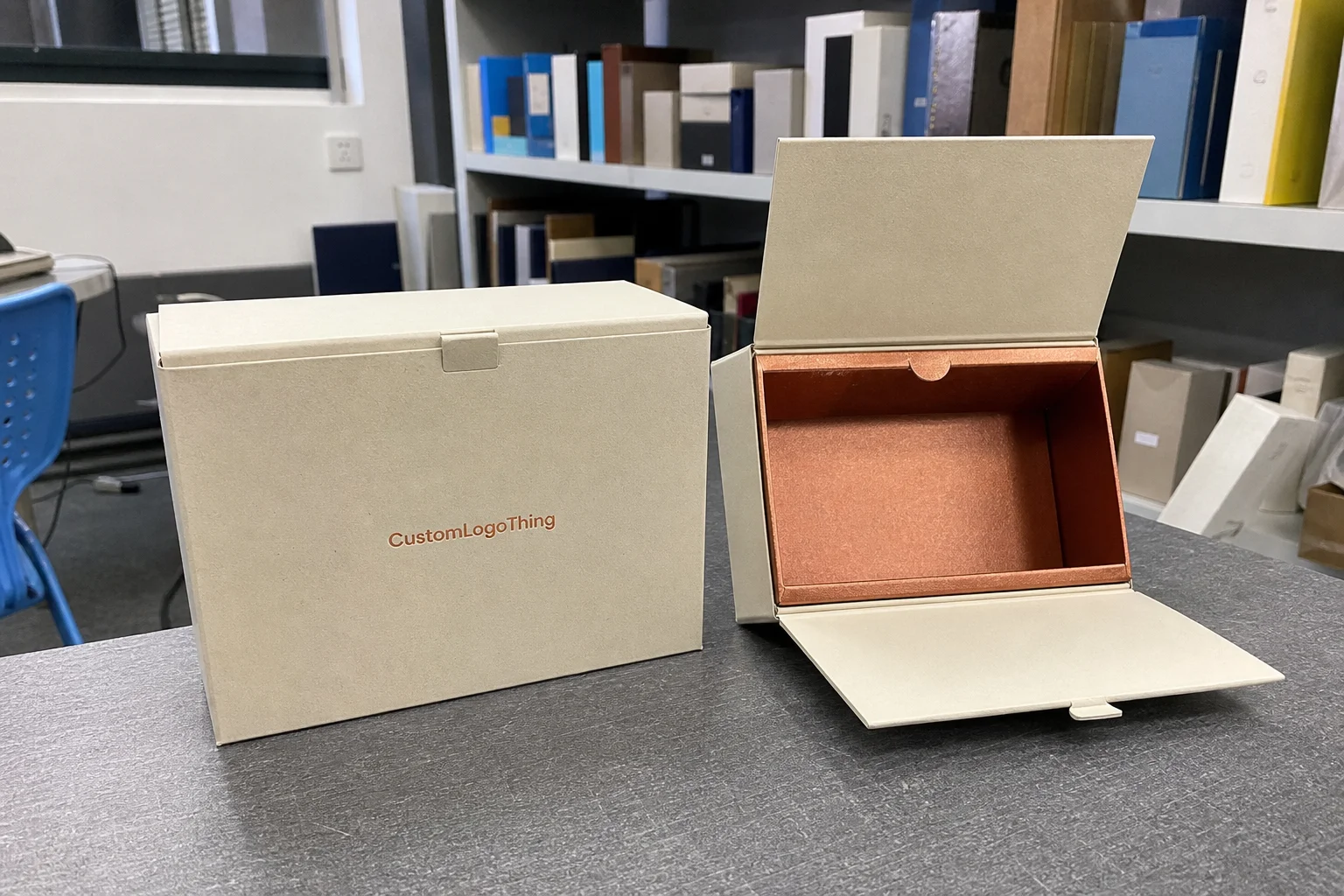
A basic carton only needs to contain the item. A production-ready carton has more jobs: it must resist crushing, keep the product centered, open and close cleanly, stack predictably, and still present well at the shelf or unboxing stage.
Most problems come from assumptions made too early. Corners crush because the board grade is too light. Products shift because internal clearance was estimated instead of measured. Closures fail because flap geometry was not matched to the real weight. These are spec failures, not design failures.
Good carton design usually balances four priorities:
- Hold the product securely with the right clearance.
- Resist vibration, compression, abrasion, and impact.
- Run cleanly on the packing line.
- Match the presentation standard required by the channel.
Those priorities change by use case. A subscription box may value presentation and easy opening. A parcel-shipped carton needs better crush resistance and a closure that survives repeated handling. A retail-ready carton often needs tighter print control and a cleaner shelf face. The same product can need a very different build depending on where it lands.
The best carton is usually not the fanciest one. It is the one that gets through packing, shipping, and unpacking without creating extra labor or damage claims.
For fragile, heavy, or moisture-sensitive products, sample testing matters. Standards from groups such as ISTA are useful because they test the package against transit conditions rather than a tabletop fit check. That is often the difference between a carton that looks right and one that actually survives distribution.
Process, Timeline, and Lead Time: From Spec to Ship
The cleanest projects start with the packed product, not the artwork file. Confirm dimensions, weight, fragile points, accessories, and how the item is loaded before finalizing the carton spec. A sealed cosmetic jar, a tool kit, and a multi-part electronics set do not share the same packaging needs.
After that, choose the structural format. That may mean a tuck-end carton, crash-lock bottom, sleeve, mailer, or a corrugated design with internal supports. Buyers often discover that the first concept was close but not quite right. That is the purpose of the sample: to catch mismatches before production.
Lead time usually follows two tracks. The first is design and approval, where delays are most common. The second is manufacturing. A simple carton can run quickly once approved, but approvals still take time if files are not press-ready, barcode placement needs checking, or the project goes through multiple sample rounds.
Typical stages look like this:
- Confirm product dimensions, weight, and distribution path.
- Choose the carton structure and board grade.
- Build the dieline and place the artwork.
- Review proofs and request sample checks if needed.
- Lock approvals and schedule production.
- Manufacture, pack, and ship.
Schedule risk usually comes from change. If dimensions keep shifting, the dieline changes with them. If artwork is still moving after structure approval, the project slips again. If a rush turn is needed, the team usually gives up review time, and that increases the chance of rework. The safest plan leaves margin before launch, not after it.
When possible, move structure and artwork in parallel after the main dimensions are fixed. That small discipline saves time and reduces revision cycles.
Board Grade, Print, and Structural Choices That Matter
The first major material choice is paperboard versus corrugated. Paperboard is better for lighter products, cleaner retail presentation, and tighter print quality. Corrugated is the better Fit for Shipping strength, compression resistance, and products that need to survive a longer or rougher distribution path.
Within paperboard, caliper matters. A 16pt or 18pt carton can look refined, but it may not be enough for a heavier product or one with internal movement. Corrugated structures have similar tradeoffs. E-flute gives a finer print surface and thinner profile; B-flute offers more cushioning and stiffness. The use case decides.
Print method affects both cost and appearance. Offset printing is common for detailed graphics and stable color on higher-end cartons. Flexographic printing is often used for corrugated runs where speed and cost matter more than fine detail. Digital printing is useful for shorter runs, seasonal versions, or frequent artwork changes.
Finishes add cost and can change how the carton behaves in production and transit. Aqueous coating, UV varnish, spot UV, soft-touch lamination, embossing, and foil all change the final feel and the handling profile. A finish that looks strong on a proof may still scuff differently in shipment or slow assembly on the line.
It is also easy to overbuild. Heavier board does not solve every problem. A premium printed carton with weak scores can still jam on the line. A strong structure with a poor closure can still fail. The right spec supports the product through its actual route, not the one that sounds best in a quote.
Branding should match the buying context. A restrained kraft look can support sustainability messaging. A fully printed carton may work Better for Retail visibility or a polished launch. Good package branding has a clear job and does not fight the format.
If sustainability claims matter, the sourcing details need the same scrutiny as the print. FSC certification can be useful, but the buyer still needs to confirm that the claim applies to the material being used and that the supplier can document it properly.
| Option | Typical Use | Strength / Appearance | Approximate Impact on Cost |
|---|---|---|---|
| Paperboard, 16pt-18pt | Retail packaging, lighter products, premium graphics | Clean shelf presentation, moderate protection | Lower to mid range |
| Paperboard with soft-touch or spot UV | Branded packaging with a more refined feel | High visual impact, added finish complexity | Mid to higher range |
| Corrugated E-flute or B-flute | E-commerce, shipping cartons, multipacks | Better crush resistance and transit durability | Mid range, varies by quantity and print |
| Corrugated with inserts | Fragile, heavy, or mixed-component product packaging | Better fit control, more material and labor | Higher range |
Custom Carton Packaging Pricing: What Drives the Quote
Price starts with quantity, but it does not stop there. Board grade, print coverage, coatings, color count, inserts, and assembly time all move the number. A simple one-color carton at 5,000 units and a specialty carton with finish work are not in the same cost range.
MOQ matters because setup cost is spread across fewer units on short runs. That is why lower quantities usually carry a higher unit price. Digital printing can help with small runs, but it does not remove setup, handling, or packing costs. A 1,000-unit run and a 10,000-unit run can have very different unit pricing even if the structure is identical.
Other costs hide in the workflow. Freight can be meaningful on bulk corrugated. Sample rounds take time and can add charges. Artwork revisions create prepress work. Rush schedules often cost more because they compress planning and press time. Warehousing matters if cartons arrive before the product is ready to fill them.
A useful way to think about pricing is by tier:
- Economy: simple board, minimal finishing, straightforward construction.
- Mid-range: better print control, moderate coatings, small structural refinements, possible insert work.
- Premium: specialty finish, tighter tolerances, more coverage, and higher visual impact.
For reference, high-volume simple folding cartons can land in the low-cent range per unit, while low-volume specialty cartons with inserts and finish work can move into dollars per unit. The useful part of the quote is not the headline figure alone; it is the explanation of what drives it.
Ask for quantity breaks at more than one level. A quote at 2,500, 5,000, and 10,000 pieces usually shows the real breakpoints better than a single line item. If a supplier can price plain, mid-tier, and premium versions side by side, the buyer can see exactly what each upgrade adds.
Step-by-Step Guide to Building the Right Carton Spec
Start with the packed product dimensions, not the item alone. Include closures, trays, desiccants, cables, accessories, and anything else that changes the footprint. Weight belongs in the same conversation. A light cosmetic carton and a denser hardware carton do not share the same structural needs.
Next define the route. Retail shelf, parcel shipping, palletized freight, or subscription fulfillment each creates different stresses. Humidity, stacking height, and handling frequency all matter. A carton that works in local distribution may fail in a longer lane with heavier compression.
Then convert those requirements into a working spec: board grade, closure style, print method, finish, and whether an insert or internal support is needed. For fragile products, a simple locking tab or divider often does more than a decorative surface treatment.
A short spec sheet is enough to start a useful quote:
- Product dimensions and packed weight.
- Quantity for the first run and likely repeat volume.
- Artwork status and whether files are press-ready.
- Shipping method, retail display needs, or e-commerce use case.
- Target launch date and the time available for sample review.
When samples arrive, test more than fit. Check whether the carton closes without stress, whether graphics align properly, whether the board scores cleanly, and whether the pack still looks acceptable after a few openings if repeated access matters.
The best projects review a sample before anyone gets attached to a single concept. That is not indecision. It is discipline. Cartons often reveal problems only after the structure meets the real product.
A carton can be visually strong and structurally weak at the same time. The sample is where that shows up before it becomes expensive.
Common Mistakes That Cause Damage, Delays, and Reprints
The most common mistake is undersizing the carton. Too tight, and corners crush or operators force the product into the pack. Too loose, and the product shifts, scuffs, or rattles in transit. Both usually trace back to rushed measurement.
A second mistake is approving artwork before the dieline is final. Barcode placement, copy safety, bleed, and fold alignment all depend on structure. If the design is locked too early, a logo can land on a score line or legal text can get too close to a flap.
A third mistake is ignoring the shipping environment. Humidity can soften board. Long distribution lanes can expose weak closures. Heavy stacking can deform cartons that looked fine in the sample room. Packaging guidance from groups like Packaging Industry resources is helpful, but the real test is the route the carton will travel.
Skipping samples to save time is another expensive habit. If a problem is found after production starts, the cost multiplies: wasted material, missed ship windows, and freight rebooking all stack together. A sample round is cheaper than a reprint almost every time.
There is a quieter failure mode too. The carton may technically work, but it is awkward on the line. A difficult fold, a narrow glue area, or an insert that does not seat cleanly can slow assembly enough to matter. That friction is easy to miss if the team only checks the finished look and never watches pack-out.
If testing is required, use actual shipping conditions, not an idealized path. A carton that survives a short manual carry may fail after vibration, compression, or a rough parcel route. That is exactly where ISTA-style testing closes the gap between design intent and reality.
Expert Tips and Next Steps for a Cleaner Production Run
Keep the design readable. A carton can look strong on screen and muddy on board, especially if ink coverage is heavy or the substrate tone shows through. The best layouts leave room for handling marks, batch coding, and compliance text that still needs to be legible after production.
Avoid finish decisions that fight throughput. Soft-touch lamination feels premium, but it can raise cost and change scuff behavior in transit. Foil works best when used selectively rather than across every panel. The same is true for heavy spot effects. More is not automatically better.
Before requesting final pricing, a buyer should be able to answer a few questions clearly:
- What is the product and how fragile is it?
- Will the carton be handled by retail, parcel, or freight?
- What quantity is needed now, and what repeat volume is likely?
- Which finish improves the brand without slowing the line?
- What is the latest safe arrival date for the first shipment?
Comparing two material paths is often smarter than defaulting to the premium option. A mid-grade corrugated structure may outperform a prettier paperboard carton if the route is rough and the product is heavy. In a retail launch with a lighter item, a refined paperboard carton may be the better fit because appearance matters more than transit abuse.
Once structure, artwork, and route are aligned, the carton becomes manageable instead of vague. The project stops behaving like a pile of print decisions and starts acting like a production spec.
What information do I need to quote custom carton packaging accurately?
Provide product dimensions, weight, quantity, artwork status, and whether the carton is for retail display or shipping. Add any special requirements such as inserts, coatings, barcode placement, or a specific delivery deadline so the quote reflects the real job.
How does MOQ affect custom carton packaging pricing?
Lower quantities usually raise unit cost because setup, tooling, and press prep are spread across fewer cartons. Higher quantities often reduce per-unit price, but only if storage, cash flow, and launch timing can support the larger run.
How long does the custom carton packaging process usually take?
Simple carton projects can move quickly once artwork and dimensions are approved, but structural changes or samples add time. Build in extra lead time if you need custom inserts, special coatings, or a printed proof cycle before production.
Should I choose paperboard or corrugated for custom carton packaging?
Use paperboard when the carton needs strong shelf presentation and moderate protection. Use corrugated when the product needs better crush resistance, shipping strength, or longer distribution durability.
What is the biggest mistake buyers make with custom carton packaging?
The most common mistake is approving a design before the structure, artwork fit, and pack-out have been checked together. That usually creates avoidable reprints, fit issues, or delays once production is already scheduled.