Buyer Fit Snapshot
| Best fit | Custom Carton Sleeves with Embossing projects where brand print, material claims, artwork control, MOQ, and repeat-order consistency need to be specified before quoting. |
|---|---|
| Quote inputs | Share finished size, material target, print colors, finish, packing count, annual reorder estimate, ship-to region, and any compliance wording. |
| Proofing check | Approve dieline scale, logo placement, barcode or warning zones, color tolerance, closure strength, and carton packing before bulk production. |
| Main risk | Vague material claims, crowded artwork, missing packing details, or unclear freight terms can make a low unit price expensive after revisions. |
Fast answer: Custom Carton Sleeves with Embossing: Board, Finish, Dieline, and Unit Cost should be specified like a repeatable production item. The safest quote records material, print method, finish, artwork proof, packing count, and reorder notes in one written spec.
Production checks before approval
Compare the actual filled-product size with the drawing, then confirm tolerance on folds, seals, hang holes, label areas, and retail display edges. Reserve space for logos, QR codes, warning copy, and material claims before decorative graphics fill the panel.
Quote comparison points
Review material grade, print process, finish, sampling route, tooling charges, carton quantity, and freight assumptions side by side. A quote is only useful when the supplier can repeat the same color, closure quality, and packing count on the next order.
Custom Carton Sleeves with Embossing: A Practical Guide
Custom Carton Sleeves with embossing can turn a plain carton into something people notice, touch, and remember. Raised detail catches light, breaks up a flat surface, and gives the package more authority without making it feel overbuilt. On a crowded shelf, that matters. A lot.
The appeal is pretty simple. The carton underneath handles structure, while the sleeve carries branding, messaging, and the tactile cue that makes the package feel considered. That is why brands use sleeves to sharpen presentation, support premium positioning, and avoid adding weight or complexity to the base pack. Less material. More presence. Good trade.
Teams comparing sleeves with other custom printed boxes should review Custom Packaging Products alongside the sleeve spec. Budget, assembly, and shelf goals all need to agree before anyone starts approving artwork. A sleeve with embossing is not decoration stuck on at the end. It is part of the packaging system, which means material, die cutting, print layers, and finish stack all need to work together from the start.
A sleeve can look perfect in a render and still fail on press if the emboss lands too close to a fold, a seam, or a spot the board cannot hold cleanly.
Custom Carton Sleeves with Embossing: What They Are and Why They Stand Out
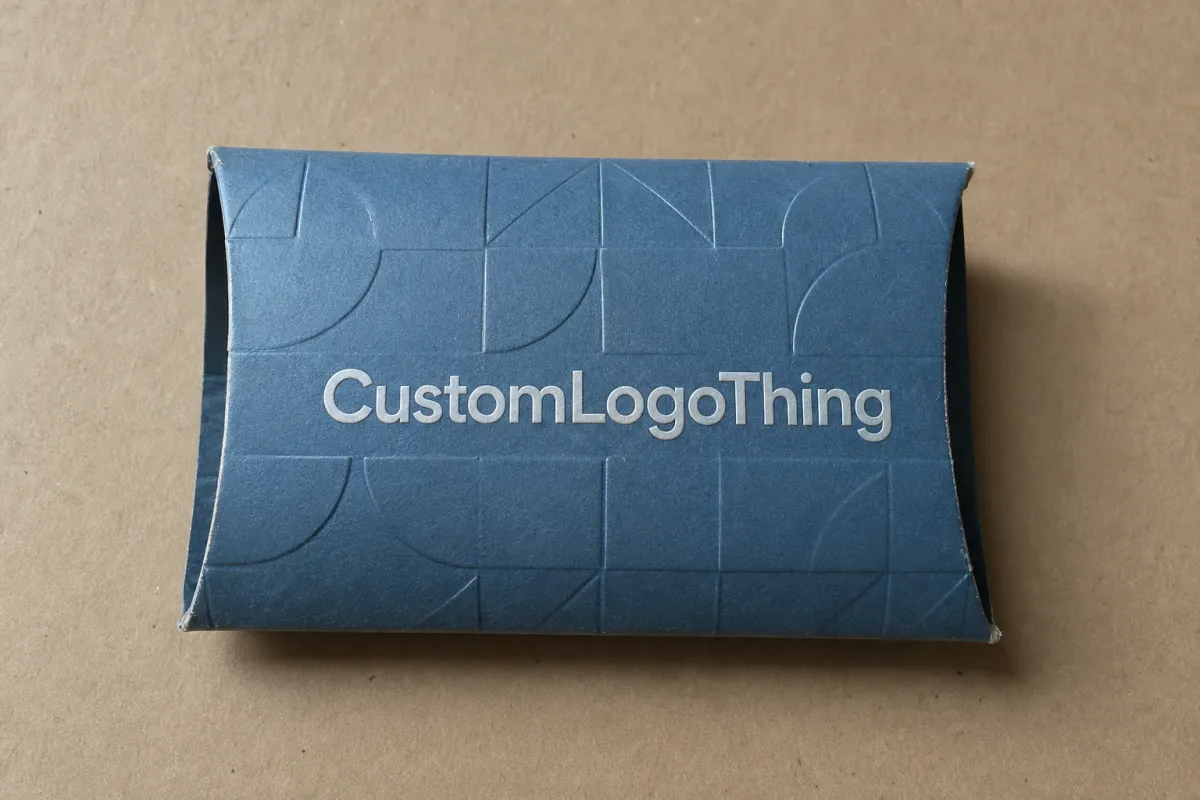
A carton sleeve is a printed wraparound band that slides over a carton, tray, or box. It adds branding, messaging, and structure without replacing the base pack. That makes it a strong fit for packaging programs where the carton does the heavy lifting and the sleeve handles the presentation. Launch kits. Retail cartons. Holiday runs. Subscription inserts. Same structure, different job.
Embossing adds a raised or recessed texture to that sleeve. The effect is physical, not just visual. You can print a logo and you can emboss a logo, but only one of those changes how the package feels in the hand. That tiny difference changes the way the product reads. Raised borders, seals, icons, patterns, and logos all work here, as long as the artwork leaves enough room to breathe.
People usually do not analyze the effect. They just feel that the package is better made. That response is useful. It lifts perceived value without forcing the carton into a more expensive structure. It also keeps the design restrained, which often looks more expensive than stuffing every panel with noise.
Sustainability belongs in the conversation too. A paperboard sleeve can often stay within paper recycling streams if the finish stack is chosen carefully, and a lot of teams prefer that over plastic-heavy decoration. If recycling targets matter, the EPA recycling guidance is a practical reference, and the FSC certification standards are worth checking when the board needs documented chain of custody. Pretty packaging that creates downstream headaches is not clever. It is just expensive.
There is also the shelf test. A carton that looks ordinary from a few feet away can become the obvious choice the moment a raised mark catches the light. The effect is subtle, but retail is full of subtle decisions. That is why custom carton sleeves with embossing show up on premium food items, cosmetics, wellness products, apparel accessories, and giftable goods where touch matters as much as print.
A sleeve is also a useful middle ground. It gives you texture without committing to a rigid box or an overly finished carton. More presence than a basic printed wrap. Less cost and weight than a full luxury build. Not a bad place to land.
For buyers, the practical question is usually not, “Does embossing look nice?” Of course it does, when done well. The real question is whether the finish matches the brand moment, the carton structure, and the production budget. A launch kit for a skincare line, for example, may justify a stronger tactile mark because the sleeve is doing a lot of first-impression work. A warehouse club product with brutal handling and tight margins may need a simpler treatment. Same technique. Different job.
How Embossing Works on Carton Sleeves
Embossing starts with a matched die set. One side presses from above, the other supports from below, and the board is compressed so the chosen image rises or sinks in a controlled way. Simple on paper. The real variable is the material. Paper fibers behave differently depending on thickness, coating, caliper, and grain direction, so the same artwork can look crisp on one stock and tired on another.
The process starts with the dieline. The sleeve needs seam placement, fold allowances, print area, and emboss position mapped before anyone starts chasing pretty visuals. Artwork prep comes next, and this is where packaging design earns its paycheck. If the embossed detail lands across a fold, a glue zone, or a seam overlap, it can crack, flatten, or disappear after wrapping. Planning the emboss at the same time as die cutting saves a lot of irritation later.
Two approaches show up most often. Blind embossing uses shape and light alone, with no ink or foil tied to it. Registered embossing aligns the texture with print, foil, varnish, or another visual element so the relief feels anchored to the artwork. Blind embossing tends to feel quiet and clean. Registered embossing is louder and more explicit.
The board matters more than people expect. A stiffer 14pt to 18pt paperboard usually holds detail better than a flimsy stock, while a heavily coated surface may resist the impression and soften edge definition. Soft fibers can puff and blur. Slick coatings can fight the press and flatten the texture around the edges. Neither result is especially charming.
Tiny detail is where many projects lose their nerve. Small type, hairline rules, and shallow relief often disappear once the sleeve is wrapped, stacked, and handled. A stronger silhouette usually performs better: a bold logo, a seal with room around it, or a pattern with enough depth to survive the press and the supply chain. Packaging has to survive more than the mockup.
Placement matters too. The embossed area should sit where it can be seen and touched, but not so close to a stress point that it gets crushed. That matters on sleeves that will travel in cartons, sit in a warehouse, or be assembled by hand on a busy line. A good converter will usually check the emboss field against the fold map, the seam, and the carton structure before anything gets plated or tooled.
Depth control deserves real attention. Too much depth can distort the board and leave a puffed edge; too little can vanish once the sleeve is wrapped around the carton. The sweet spot depends on the paperboard, the press, and the artwork geometry. There is no magic number that works for every run, which is inconvenient but true. Anyone promising otherwise is either guessing or selling something.
Here is the practical version: the cleaner the relief, the better the result. Packaging buyers often ask for more detail because more detail sounds impressive in a meeting. On press, that usually means more risk. A bold, well-spaced emboss nearly always looks better than a crowded one that fights the stock.
Cost, Pricing, and MOQ for Embossed Sleeves
Pricing for custom carton sleeves with embossing usually comes down to five things: tooling, setup, board choice, print coverage, and run length. The emboss die adds a fixed cost. That can land in the low hundreds or the high hundreds, and sometimes more if the artwork is large, unusually deep, or built with several relief levels. Exact numbers depend on the supplier and the final artwork, so quotes should always match the real spec.
The unit price moves with quantity. A simple printed sleeve on a moderate run may sit around $0.12 to $0.25 per piece, while embossing, better paperboard, or extra finishing can push that closer to $0.20 to $0.45 or beyond. Small runs carry a higher per-unit cost because setup and tooling are spread across fewer sleeves. Bigger runs reduce that pressure. Nothing mysterious there.
Minimum order quantities vary by converter, but embossed sleeves often become economical in the 3,000 to 10,000 piece range. Some plants will go lower if the design is simple and the schedule allows it, though specialty finishing can still push the MOQ above a basic printed sleeve. If the brand only needs a short pilot, ask early whether a prototype run, a short digital proof, or a limited press run is possible.
To get a useful quote, the buyer should provide:
- Finished sleeve dimensions and the carton it wraps
- Board preference, including recycled content or FSC targets
- Print colors and whether there is flood coverage or spot coverage
- Emboss location, size, and whether it is blind or registered
- Finish stack, such as aqueous, soft-touch, varnish, or foil
- Expected order quantity and any reprint forecast
- Whether a sample, prototype, or pilot is needed before full production
There are a few cost-control moves that do not wreck the design. Keep the embossed area focused instead of spreading texture everywhere. Use a standard paperboard grade if it already meets shelf and transit needs. Skip stacking every finish unless the brand story really needs it. Save the texture for the logo, seal, or main symbol rather than embossing the entire sleeve surface, which usually spends more than it earns.
One thing buyers often miss: the least expensive spec on paper is not always the least expensive package overall. If a cheaper board causes more rejects, more rework, or more scuffing in transit, the “savings” disappear fast. I have seen a modest upgrade in board save more money than a round of last-minute troubleshooting. Not glamorous. Still true.
| Option | Typical Use | Visual and Tactile Effect | Cost Impact | Recycling Consideration |
|---|---|---|---|---|
| Standard SBS with blind emboss | Clean retail presentation | Sharp, understated texture | Lower to moderate | Usually favorable |
| Recycled paperboard with emboss | Sustainability-led branding | Natural feel, slightly softer detail | Moderate | Usually favorable if coatings stay paper-friendly |
| Coated board with registered emboss and foil | Premium retail packaging | Bright contrast and strong shelf presence | Higher | Depends on coating and foil stack |
| Soft-touch finished sleeve with emboss | Luxury product packaging | Velvety hand feel with pronounced texture | Higher | Depends on finish structure |
For teams comparing sleeve budgets against other custom printed boxes, the pattern usually becomes clear fast: the more a package depends on texture, registration, and premium finishing, the more important it is to decide where the tactile effect actually matters. A sleeve that uses embossing well can feel upscale without forcing the rest of the package into a much more expensive build.
Production Steps, Timeline, and Lead Time Planning
The production path is simple enough on paper, but every step can slip if the handoff is sloppy. It usually starts with a brief, then moves to dieline review, artwork placement, die creation, proofing, emboss sampling, press production, finishing, folding, and pack-out. If any of those changes after approval, the schedule can slide fast.
Lead time depends a lot on approval speed. If the artwork is ready, the stock is in hand, and the emboss is a simple one-hit design, production can move efficiently. Add foil, special varnish, or custom coating, and the schedule stretches because the work has to be sequenced more carefully. A simple embossed sleeve might finish in roughly two to three weeks after approval, while a more involved program can run longer if sample revisions are needed.
Sampling is often the hidden delay. A digital proof can confirm layout, but it will not tell you how the texture feels in hand or whether the impression reads well under retail lighting. A physical sample answers those questions. If the first sample is off by a few millimeters, or if the emboss feels too soft, a second round may be needed. That is normal. It just needs to be planned, not discovered in a panic.
Revision cycles cause another kind of delay. Changing the emboss placement after tooling is underway can trigger more proofing, more review time, and sometimes a new die setup. Changing the carton size after the sleeve is approved can be just as disruptive because fit, overlap, and seam location all move together. Seasonal launches, retail resets, and subscription programs do not forgive that kind of drift.
A practical planning rule helps keep the project steady:
- Lock the artwork early.
- Confirm the board early.
- Request a physical sample whenever possible.
- Leave buffer time for approval, shipping, and line setup.
- Match the packaging schedule to the inventory schedule, not the other way around.
If the sleeves need transit testing or repeated handling before launch, bring that up early. The ISTA packaging testing standards are a useful reference when a sleeve must survive distribution, vibration, or drop exposure before it reaches the customer. A refined embossed sleeve still has to run cleanly through assembly, ship flat, and arrive ready to use. Looks matter. So does survival.
For a buyer, timeline management usually comes down to one rule: do not treat embossing as a cosmetic add-on that can be finalized after everything else. Tooling, approval, and production sequence all depend on it. If the launch date is fixed, the sleeve spec has to be fixed early enough to respect that date.
Key Factors That Shape the Final Result
Stock choice is the first variable to get right. Board weight, fiber structure, and surface finish determine whether the emboss looks crisp and defined or soft and a little sleepy. A 16pt or 18pt board usually gives a dependable starting point for many sleeve programs, but the final selection should match the print coverage, the handling it will take, and the amount of relief the brand wants to show.
Emboss depth and feature size need to fit the material. Too much depth can crush fibers or create a puffy edge that loses clarity after folding. Too little depth can disappear once the sleeve is wrapped and handled. A strong mark with open space around it usually outperforms a dense cluster of tiny elements, even if the tiny elements look very clever on a screen. Packaging has to survive the press, not the pitch deck.
Finish pairing changes the feel more than most people expect. Matte finishes usually make the raised area easier to read because light moves across the surface more softly. Aqueous coating can protect the print while staying relatively paper-friendly. Soft-touch gives a velvety feel, but it can mute detail if the emboss is not designed with enough depth. Foil can create a sharp contrast, especially when the embossed mark sits inside or beside the metallic area, but the sequence has to be planned so the tooling and registration stay clean.
Sustainability goals should be part of the spec, not a last-minute add-on. FSC-certified board, recycled content, and water-based coating options can support a more responsible package without stripping out shelf appeal. If the brand wants the sleeve to stay paper-based, skipping unnecessary plastic lamination is usually the safer route. The recycling outcome still depends on the finish stack and local recovery systems, so check the downstream path before locking the design.
Transit and line performance matter just as much as appearance. A beautiful embossed surface still has to be folded, packed, stacked, and shipped without scuffing or crushing. Some teams test the sleeve on the actual carton, under real packing conditions, before giving final approval. Sensible move. The package has to protect the product, support the brand story, and stay practical for the fulfillment team.
The relationship between the sleeve and the carton underneath deserves attention too. If the carton is already highly printed, the sleeve may only need a restrained emboss. If the carton is plain, the sleeve has more room to carry the visual identity. That balance keeps package branding intentional instead of crowded.
There is also the human factor. The best sleeve spec still fails if the plant is not briefed correctly or the proof review is rushed by people who are staring at ten other projects. A packaging program only looks effortless after the hard parts were handled early. That is the job.
Common Mistakes to Avoid When Ordering Embossed Sleeves
The biggest mistake is over-detailing the artwork. Tiny decorative lines, small captions, and crowded icons may look elegant in a render, but they often disappear once the emboss hits the board. If the raised detail is supposed to be the hero, it needs room. Otherwise, the final effect becomes a weak suggestion instead of a real tactile cue.
Ignoring fold lines, glue zones, and overlap areas causes a lot of pain for no good reason. Those elements are part of the structure, not just technical marks. A logo that crosses a fold can crack or distort. Texture that sits too close to a seam can flatten during assembly. If the sleeve wraps around the carton and the seam lands in the wrong place, the eye catches the disruption immediately. Good layout avoids that mess before it starts.
Stock mismatch creates avoidable disappointment. Very thin board may buckle under the press. A stock with a heavy coating can resist a clean impression. A recycled board with shorter fibers can still work well, but the emboss depth may need adjustment. The safest move is to test the final board, not approve a sample made on something vaguely similar and hope for the best.
Digital proofs can also give people false confidence. They are useful for layout, ink placement, and artwork integrity, but they do not show how light will move over the raised surface or how the package will feel in hand. A physical mockup can reveal whether the mark is too small, too shallow, or too close to the edge. Better to catch that early than after the press run is already chewing through material.
Late changes are expensive. A small copy edit can trigger a new plate issue; a size change can affect carton fit; a finish swap can alter the appearance of the emboss itself. The more the project relies on registration and texture, the more time it needs for approval. That is not inefficiency. That is specialty packaging doing specialty packaging things.
Here is the short version of the risk list:
- Too much detail in the embossed area
- Embossing placed across folds or seams
- Choosing a stock that cannot hold the texture
- Approving a package without a real sample
- Changing copy or dimensions after tooling begins
If the project also involves a pilot run of Custom Packaging Products, keep the embossed sleeve separate from any structural experiments. Mixing too many unknowns into one release makes troubleshooting harder, and one controlled variable usually teaches more than four changes at once.
Another common miss: treating the carton sleeve as if it will behave like a rigid box panel. It will not. Sleeves flex, travel through lines, and get handled more aggressively than presentation packaging in a display case. That means emboss placement, seam location, and coating choice all need to be judged against real handling, not just a board flat on a table.
Expert Tips and Next Steps for Your Next Run
Start with one strong focal area. A logo, seal, or symbol usually gives better results than spreading embossing across every panel. Restraint often feels more premium because the texture has room to speak. That matters in branded packaging, where the most memorable detail is often the one that does not try to compete with everything else on the sleeve.
Match the emboss to the brand moment. A wellness brand may want a quiet mark that feels calm and natural. A beauty brand may want a sharper, more reflective texture paired with foil. A food or beverage item may need a simpler raised seal that signals craftsmanship without making the label feel busy. The point is not to decorate every surface. The point is to support recognition and shelf appeal.
Ask for both printed and unprinted samples if the vendor can provide them. The printed version shows how the colors and finish interact with the texture. The unprinted one shows the raw relief, which helps when the team wants to judge the tactile effect directly. Review those samples under the lighting the package will actually see: retail fluorescents, warm store lighting, warehouse lighting, or a home shelf if the product is direct-to-consumer.
A useful quote checklist keeps the process clean:
- Final sleeve dimensions
- Quantity target and forecast range
- Board preference and sustainability target
- Finish stack and any foil or varnish details
- Emboss depth and placement
- Shipping destination and needed delivery window
- Prototype, pilot, or production request
If you are still deciding between a sleeve, a setup box, or another form of product packaging, a quick review of Custom Packaging Products can help you compare structure, cost, and presentation side by side. That comparison often makes the choice clearer because the best option is not always the fanciest one; it is the package that supports the product, the line, and the shelf at the same time.
For teams planning custom carton sleeves with embossing, the strongest next step is usually the simplest one: gather the dieline, choose two or three board candidates, request pricing with the exact emboss location, and lock the production window before the launch calendar gets tight. Do that early, and custom carton sleeves with embossing are much more likely to deliver the texture, shelf presence, and practical run performance the project needs.
One last point, because this gets missed a lot: if the emboss is carrying the premium signal, do not bury it under a finish stack that muddies the effect. A sleeve can be elegant, durable, and cost-conscious at the same time. It just needs a clear hierarchy. Pick the one detail that matters, then let the rest of the package support it.
FAQ
Are custom carton sleeves with embossing recyclable?
Usually yes, if the sleeve is made from paperboard and the finish stack stays compatible with paper recycling. The safest route is to avoid plastic-heavy lamination when curbside recyclability matters, and to confirm whether the chosen coating, adhesive, or foil treatment still fits the recovery path you want. Local recycling rules vary, so the full material stack should be reviewed before production.
What paper stock works best for custom carton sleeves with embossing?
Mid-weight paperboard with enough stiffness to hold a clear impression is usually the best starting point. Uncoated or lightly coated stocks often give a cleaner tactile effect than very slick surfaces, but the best board still depends on the design, the embossed depth, and the amount of print coverage. Fiber direction, thickness, and caliper all matter, so a production sample is the safest test.
How much does embossing add to sleeve cost?
The biggest added cost is usually tooling and setup, not the emboss itself on every individual unit. Longer runs spread that fixed expense across more sleeves, which lowers the unit price. Multiple emboss areas, tight registration, and extra finishing steps can raise the total quote noticeably, especially on smaller quantities.
How long do custom carton sleeves with embossing usually take to produce?
Lead time depends on artwork approval, die making, stock availability, and the press schedule. Simple projects can move fairly quickly once proofing is approved, while sampling and revisions can add several days or more if the emboss needs refinement. It is wise to build in a buffer so the sleeves arrive before assembly, packing, or launch dates.
Can embossing be combined with foil, varnish, or other finishes?
Yes, embossing is often paired with foil stamping, spot varnish, or soft-touch coatings for a layered look. The order of operations matters, so the printer or converter should confirm the right finishing sequence for the chosen board and artwork. It is usually best to keep the design focused, because too many effects can make the sleeve expensive, busy, or harder to recycle.

