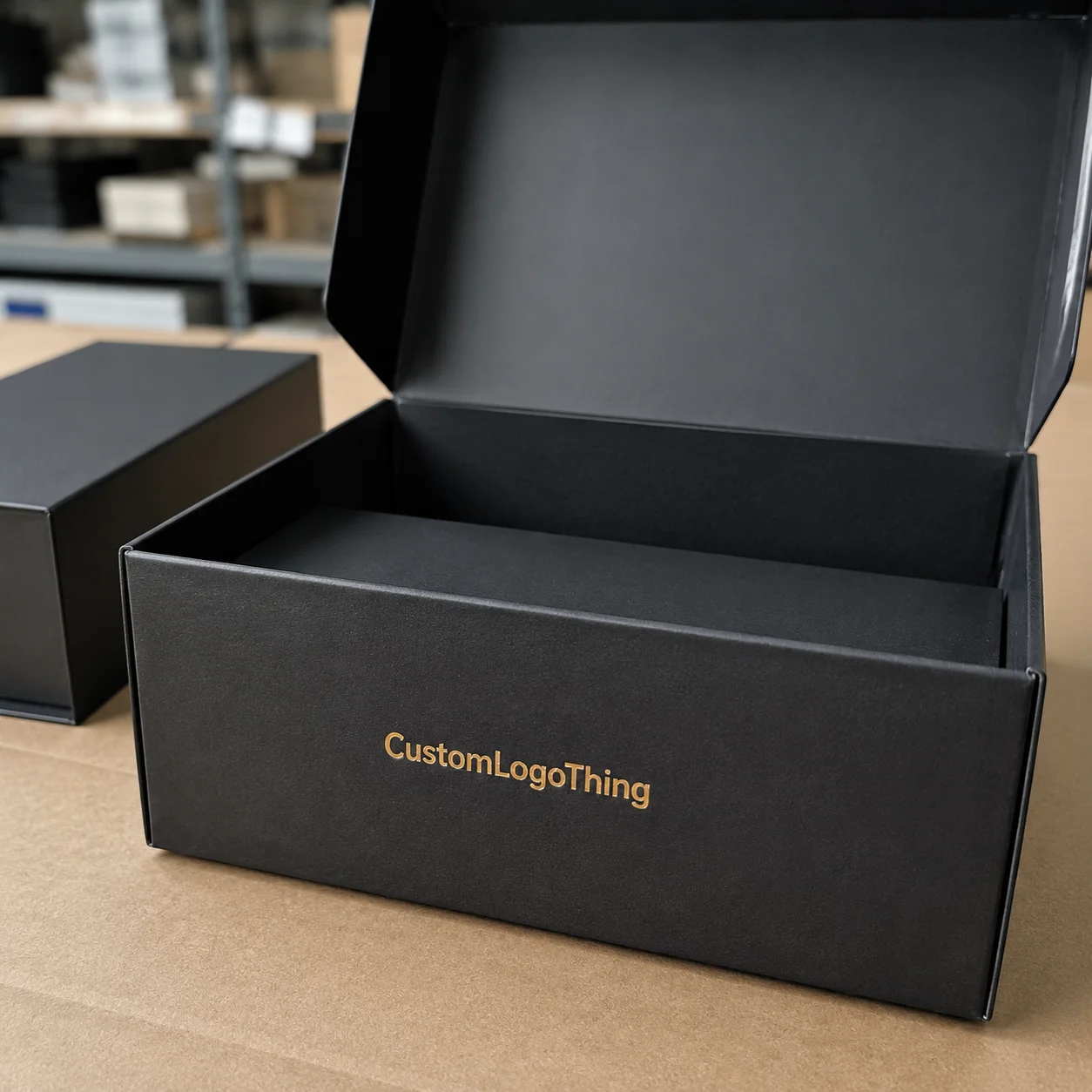
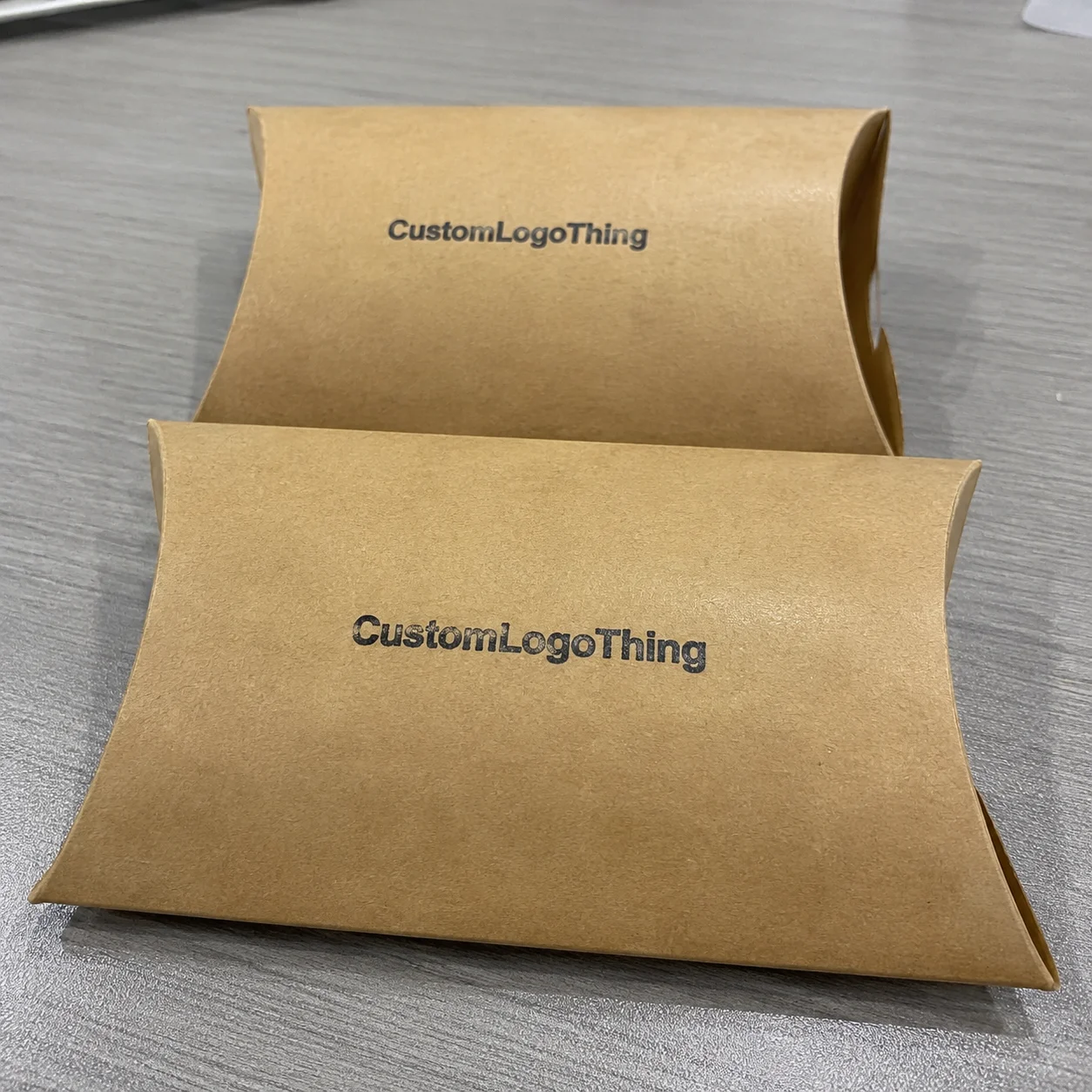
Buyer Fit Snapshot
| Best fit | Custom Chipboard Boxes Bulk Order Pricing projects where brand print, material claims, artwork control, MOQ, and repeat-order consistency need to be specified before quoting. |
|---|---|
| Quote inputs | Share finished size, material target, print colors, finish, packing count, annual reorder estimate, ship-to region, and any compliance wording. |
| Proofing check | Approve dieline scale, logo placement, barcode or warning zones, color tolerance, closure strength, and carton packing before bulk production. |
| Main risk | Vague material claims, crowded artwork, missing packing details, or unclear freight terms can make a low unit price expensive after revisions. |
Fast answer: Custom Chipboard Boxes Bulk Order Pricing: Material, Print, Proofing, and Reorder Risk should be specified like a repeatable production item. The safest quote records material, print method, finish, artwork proof, packing count, and reorder notes in one written spec.
Production checks before approval
Compare the actual filled-product size with the drawing, then confirm tolerance on folds, seals, hang holes, label areas, and retail display edges. Reserve space for logos, QR codes, warning copy, and material claims before decorative graphics fill the panel.
Quote comparison points
Review material grade, print process, finish, sampling route, tooling charges, carton quantity, and freight assumptions side by side. A quote is only useful when the supplier can repeat the same color, closure quality, and packing count on the next order.
I Watched a Factory Quote Triple a Client's Budget—Here's Why It Won't Happen to You
Three years ago, I sat in a meeting with a cosmetics brand owner who had just received a quote for custom chipboard boxes that made her spit out her coffee. (Not a euphemism. There was actual coffee on her notebook.) The number wasn't wrong—the supplier had quoted $3.20 per unit for 1,000 pieces with full-color printing. But here's what she didn't understand: she was being quoted for the wrong specifications. Her actual requirement was a 24pt chipboard with spot UV, and the factory had priced it as a 32pt double-wall construction with soft-touch lamination.
That $3,200 order became a $9,600 order because nobody had walked her through the material specifications that actually affect pricing. I've seen this happen dozens of times since. Most buyers overpay by 40-60% due to specification gaps—they either ask for overkill on durability they don't need or under-specify and get boxes that arrive damaged or with print quality that embarrasses their brand. (Looking at you, startup founders who insist on 100pt chipboard for business cards that weigh less than an envelope.)
That conversation in 2021 fundamentally changed how I approach client discussions at Custom Logo Things. Instead of just asking "what do you want to order," I now walk people through the full specification landscape before they see a single price. This guide does the same thing—it's the conversation I wish every first-time bulk buyer had before signing a purchase order. If you're researching custom chipboard Boxes Bulk Order pricing, you're exactly the person this article is designed for.
By the time you finish reading, you'll understand custom chipboard boxes from a manufacturer's perspective, know exactly what drives cost at each volume tier, and have a clear roadmap for getting your order done without surprises. No fluff, no vague promises. Just specific numbers, real timelines, and the kind of detail that actually helps you make decisions.
What Makes Custom Chipboard Boxes the Right Choice for Your Product
Let me start with the material question because I see confusion here constantly. Chipboard is compressed paperboard—it's not corrugated cardboard, and it's not the rigid book-board your smartphone box is made from. Chipboard is made from recycled paper stock that's compressed into sheets and then cut, scored, and printed at facilities in Shenzhen, Dongguan, and throughout the Pearl River Delta region of Guangdong Province, China. The result is a lightweight but surprisingly sturdy packaging material that works beautifully for specific applications.
Honestly, I think half the confusion comes from the word "chipboard" itself. It sounds cheap, right? Like the stuff they make cereal boxes from (which, honestly, is sometimes exactly what it is—recycled paper fibers, just processed differently). But don't let the name fool you. When properly specified and printed, chipboard packaging can look incredibly premium.
Chipboard delivers advantages in these common retail packaging situations:
- Electronics accessories: Phone cases, cables, chargers, and small peripherals fit perfectly in chipboard boxes. The material provides enough structure to protect contents during shipping while keeping the package light enough to reduce freight costs. I sent my own headphone cable in a chipboard mailer last month—just a simple sleeve with no cushioning—and it arrived in perfect condition. Standard 48pt chipboard with aqueous coating runs approximately $0.08-$0.12 per unit in material cost for a 4"x4"x2" box.
- Cosmetics and beauty: I've sourced chipboard boxes for lipstick sets, skincare kits, and fragrance samplers where the printed surface quality matters more than extreme durability. A well-printed chipboard box on a Sephora shelf catches eyes just as effectively as rigid packaging at a fraction of the cost. Premium brands typically specify 350gsm C1S artboard (equivalent to approximately 24pt chipboard) with soft-touch lamination, which adds $0.15-$0.25 per unit to the base price.
- Food packaging: Many bakeries in Portland, Austin, and Brooklyn use chipboard for dry goods, cookie boxes, and confectionery packaging. The material is food-safe when properly coated with FDA-compliant aqueous coating, and the print quality supports the artisanal aesthetic these brands want. A standard bakery cookie box measuring 8"x6"x2" costs approximately $0.35-$0.55 per unit at 2,500-unit quantities.
- Retail and subscription boxes: Monthly subscription services love chipboard because the pricing scales beautifully as volumes grow. A subscription box brand going from 500 to 5,000 monthly subscribers can keep the same packaging design and just negotiate better unit pricing—from $1.20/unit down to $0.55/unit for the same 5"x5"x3" box with standard CMYK printing.
The key differentiator is that chipboard offers excellent print quality at accessible price points. You're not paying for the structural engineering that makes corrugated boxes expensive (which typically adds $0.40-$0.80 per unit for E-flute corrugated), but you're getting a surface that takes CMYK printing beautifully. Full-color artwork, photographic designs, and detailed graphics render clearly on chipboard because the surface is smooth and consistent, with a Caliper of 0.018-0.032 inches for standard grades.
Chipboard isn't the right choice for heavy products, items that need moisture resistance, or packages that will be shipped in humid conditions. For those applications, you'd want to look at corrugated options instead. But for the majority of retail products in the 0.5 to 3 pound range, custom chipboard boxes deliver the right balance of cost, print quality, and sufficient protection.
Chipboard Box Specifications That Directly Impact Your Pricing
This is where most buyers get lost, and I totally get why. Factory quotes vary wildly not because factories are dishonest (well, some are, but that's a different article), but because the specifications you provide create wildly different manufacturing scenarios. Four key specification areas directly affect your custom chipboard Boxes Bulk Order pricing.
Material Thickness: Understanding Pt vs. Caliper
Chipboard thickness is measured in "points" or "caliper," and here's the confusing part that drives me slightly crazy: there's no universal standard. In general, chipboard ranges from 32pt (0.032 inches) to 120pt (0.120 inches), but the actual weight-to-thickness conversion varies by manufacturer. Here's what I tell clients based on our Shenzhen facility's specifications:
- 32pt to 40pt (0.032"-0.040"): Light chipboard used for sleeves, inner trays, and shallow boxes. Good for lightweight products only. Price tier: lowest material cost at $0.45-$0.65 per square foot. Ideal for products under 8 ounces.
- 48pt to 60pt (0.048"-0.060"): Standard chipboard for most retail packaging. Provides adequate protection for products up to 2 pounds. This is the sweet spot for most brands. Price tier: mid-range at $0.65-$0.95 per square foot.
- 80pt to 100pt (0.080"-0.100"): Heavy chipboard for premium packaging, heavier products, or boxes requiring embossing/debossing. Price tier: highest standard material at $1.10-$1.50 per square foot.
- Double-wall construction: Two layers of chipboard with a flute layer in between (similar to corrugated but with paper layers instead of kraft). Used when standard chipboard won't provide sufficient protection. Adds 30-50% to material cost and increases shipping weight by approximately 15%.
The thickness you choose affects not just material cost but also die-cut tooling requirements, shipping weight, and even the production equipment that can handle your order. In my experience, 80% of retail products work perfectly in 48pt to 60pt chipboard. Going thicker rarely provides meaningful product protection benefits but definitely increases costs. The exceptions are usually brands that want the box itself to feel substantial and expensive—the weight matters for perception even if the product inside doesn't need that protection.
Box Dimensions and Die-Cut Complexity
Standard box sizes cost less than custom dimensions. This isn't arbitrary—it's physics and economics combined. Our die-cutting equipment in our Dongguan facility has optimized workflows for common sizes: 4"x4", 5"x5", 6"x4", 8"x6", and 10"x8" with heights up to 4". When you deviate significantly from those standards, we either need to modify existing dies (2-3 business days, $100-$200) or build new ones (5-7 business days, $350-$600).
Custom chipboard boxes bulk order pricing gets complicated when you start asking for:
- Non-standard aspect ratios (very tall and narrow, very short and wide)
- Windows (requires separate die for the window cutout plus potentially a PVC insert costing $0.02-$0.05 per window)
- Crash-bottom or auto-lock bottom construction (adds $0.08-$0.15 per unit in labor costs)
- Custom insert designs (foam, cardboard partitions, blister trays costing $0.15-$0.40 per unit)
Each of these requires engineering time, custom tooling, and often manual assembly steps that automation can't handle. I visited a factory in Dongguan last year that had a whole wing dedicated to manual assembly for boxes with complex inserts—labor costs there run roughly $8 per hour versus $22 for the automated lines in Shanghai facilities. That differential gets passed through to your unit pricing. (Not gonna lie, watching those workers assemble inserts at inhuman speed was both impressive and slightly dystopian.)
Coating and Finishing Options
Coatings affect both the visual appeal and the durability of your packaging. Options range from no coating at all to premium soft-touch lamination:
- No coating: Raw chipboard surface. Less expensive but vulnerable to moisture, grease, and scuffing. Appropriate for short-term use or products that won't be handled much. Cost: base price only.
- Aqueous coating: Water-based coating applied during printing. Provides scuff resistance and a slight sheen. Adds $0.03-0.05 per unit to standard print pricing. Typical cure time: 24-48 hours.
- UV coating: Ultraviolet-cured coating for high gloss or matte finishes. Better durability than aqueous. Adds $0.05-0.12 per unit depending on coverage. UV curing adds approximately 2 hours to production time per 1,000 units.
- Soft-touch lamination: Suede-like texture that's become very popular in premium cosmetics and tech packaging. Adds $0.15-0.25 per unit and requires 3-5 additional business days for production. Minimum order for soft-touch: typically 1,000 units.
Beyond coating, finishing options like foil stamping (metallic foil applied with heat and pressure), embossing/debossing (raised or recessed patterns), and spot UV (high-gloss finish applied to specific design elements) all require dedicated tooling and setup time. They make most economic sense at higher volumes where setup cost gets amortized across more units.
Here's my hot take: most brands overspend on finishing when they're starting out. I totally understand the temptation—you want your product to look amazing, and foil stamping feels luxurious. But I've watched too many small brands burn through their packaging budget on premium finishes that customers barely notice. Start with aqueous coating and CMYK printing. Get your product to market. If the margins support it, add foil stamping on your reorder. Your accountant will thank you.
Understanding Bulk Order Pricing Tiers for Custom Chipboard Boxes
Now we're getting to the numbers everyone actually wants to see. Let me break this down clearly because pricing curves can be confusing if you've never purchased custom chipboard boxes bulk order pricing before. All prices below assume standard 48pt chipboard with CMYK full-color printing on our Guangzhou production line.
| Order Quantity | Price Range (Standard CMYK, 48pt) | Price Range (With Soft-Touch Lamination) | Setup Fees |
|---|---|---|---|
| 500 units | $1.20 – $1.85 per unit | $1.85 – $2.75 per unit | $150 – $300 |
| 1,000 units | $0.90 – $1.35 per unit | $1.40 – $2.10 per unit | $150 – $300 |
| 2,500 units | $0.70 – $1.05 per unit | $1.10 – $1.65 per unit | $150 – $300 |
| 5,000 units | $0.55 – $0.85 per unit | $0.90 – $1.35 per unit | $150 – $300 |
| 10,000+ units | $0.40 – $0.65 per unit | $0.70 – $1.00 per unit | $150 – $300 |
These ranges reflect our current factory-direct pricing from our Shenzhen headquarters and assume standard single-color or four-color CMYK printing. I want to be upfront about that because chipboard box pricing varies based on artwork complexity, box dimensions, and finishing options. The best way to get accurate pricing is to send us your specifications, but this table gives you a framework for budgeting.
Setup fees remain relatively constant regardless of quantity. This is where lower-quantity orders get penalized—your setup fee of $150-300 gets amortized across fewer units, driving per-unit cost up. If you're planning to reorder the same box design, it often makes sense to increase your initial order quantity to spread that setup cost.
Setup Fees: What's Included and What Isn't
When you get a quote that includes setup fees, make sure you understand what's being charged for:
- Die-cut tooling: The metal rule that cuts your box shape. New dies cost $200-600 depending on complexity. Many suppliers amortize this into per-unit pricing for the first run, but some charge it separately as a setup fee.
- Printing plates: For offset printing, each color requires a separate plate ($50-100 per plate). Four-color CMYK requires four plates. Digital printing doesn't require plates but has its own per-job setup costs of $75-150.
- Sample production: Expect to pay for at least one pre-production sample. At our facility, samples run $35-75 per unit depending on finishing complexity. This is non-negotiable for any serious project because you need to see and feel what you're getting.
At Custom Logo Things, we include basic die-cut tooling in our standard setup fee for designs within our size parameters (under 12" in any dimension). You only pay for custom die engineering if your dimensions fall outside our standard range ($350-$600 additional). This is a question you should always ask suppliers before signing anything—where does the tooling cost land, and is it amortized into per-unit pricing or charged separately? I cannot tell you how many times clients have come to us after getting hit with surprise tooling charges from other suppliers.
Add-On Costs That Can Surprise You
Beyond the base box price and setup fees, several add-ons commonly affect the final invoice:
- Embossing/debossing: $0.08-0.15 per unit, plus $150-300 tooling for the embossing die
- Foil stamping: $0.10-0.25 per unit, plus $150-400 tooling for the stamping die
- Custom inserts: $0.15-0.40 per unit depending on complexity; foam inserts cost more than cardboard partitions ($0.25-$0.40 vs $0.15-$0.25 per unit)
- Window cutouts: $0.05-0.15 per unit depending on size (4"x4" windows run $0.08 per unit), plus PVC window material ($0.02-0.05 per window)
- Matte or spot UV: $0.05-0.12 per unit depending on coverage percentage (spot UV on logo area typically runs $0.06-$0.08 per unit)
I'm telling you all this upfront because I've had clients get excited about a base price, then get a final invoice that's 40% higher due to finishing add-ons they didn't account for. Budget accordingly. (Looking at you again, startup founders.)
From Artwork to Delivery: The Bulk Order Process and Timeline
Most people underestimate how long a bulk order actually takes. They see "10-14 business days" and assume that's from when they click "order"—but there's pre-production work that needs to happen first. Let me walk you through the actual process based on how we handle orders at Custom Logo Things with our facilities in Shenzhen, Dongguan, and Guangzhou.
- Artwork submission and review (Day 1-2): You upload your design files. Our prepress team reviews them for resolution (minimum 300 DPI), bleed (1/8 inch required on all sides), color mode (CMYK only), and die-cut alignment. If there are issues, we send back revision requests within 4-6 hours of submission. This step can add 1-5 days if your artwork isn't print-ready.
- Quote and order confirmation (Day 2-3): Once we confirm your files are good, we generate a formal quote. You approve and pay. This typically takes 24-48 hours. We require a 50% deposit to begin production, with the balance due before shipping.
- Pre-production samples (Day 3-8): This is the step most buyers want to skip, and it's the step that causes the most heartache. We produce 1-3 physical samples so you can verify color, material, and construction. Sample review typically takes 2-3 days on your end. Sample cost: $35-$75 per unit depending on finishing complexity.
- Production (Day 8-18 for standard, Day 8-13 for rush): Once samples are approved, we print, die-cut, fold, and glue your order. Standard production runs 10-14 business days. Rush production (with 20% premium) runs 7-10 business days. Our facility can produce up to 50,000 units per day on our fastest lines.
- Quality control and packaging (Day 18-20): Every box in your order gets inspected. We reject units with visible defects (color variance over 5 Delta E, misaligned cuts over 1/32 inch, structural failures). Defective units are replaced. Valid boxes are packed according to your specifications (bulk poly bag, individual packaging, whatever you've requested).
- Shipping (Day 18-25 depending on method and destination): Standard freight to US West Coast (Los Angeles, Seattle, San Francisco) takes 3-5 days via sea freight. East Coast (New York, Miami, Boston) adds 2-3 days. International shipping runs 10-21 days depending on destination and customs clearance. We ship from our Shenzhen port facility.
In total, plan for 3-4 weeks from artwork approval to delivery for domestic US orders. International orders need 5-7 weeks. This is why I always tell clients to plan backwards—if you need your boxes by Black Friday (November 24), you need to approve artwork by early October at the latest (October 2-7), which means starting the whole process by mid-September (September 10-15). I've seen too many panicked phone calls in November from people who wanted holiday packaging in October.
"I once worked with a startup founder in Austin who was convinced he could turn around a 5,000-unit order in two weeks for a trade show in Las Vegas. He could have—if he was willing to pay triple the shipping cost for air freight ($0.40 per unit instead of $0.12 per unit), skip the sample approval step entirely, and accept that rush production premiums would add $1,200 to his invoice. He did skip the sample step, and the boxes arrived with a color shift that made his logo look like it had been through a laundry cycle. He never made that mistake again. His exact words were, 'I should have listened when you said...' and honestly, I wanted to frame that moment."
Rush Options: When You Really Need It Faster
Sometimes you genuinely need boxes faster than standard production allows. We offer expedited production for urgent orders at our Guangzhou facility:
- 7-day production: Available for standard CMYK printing on standard sizes. Premium: 20-25% of order total. Additional cost for a 5,000-unit order: approximately $550-$850.
- 5-day production: Available for smaller quantities (under 2,000 units) with no finishing add-ons. Premium: 35-45% of order total. Requires prior approval from production manager.
- Air freight: Once boxes leave our facility, we can arrange air freight instead of standard freight. This adds $0.20-0.40 per unit but cuts transit time from 5 days to 2 days for domestic US (Los Angeles, Seattle, Denver hubs). Air freight from Shenzhen to Los Angeles typically arrives within 2-3 business days.
I won't pretend rush options aren't expensive. They are. But sometimes the cost of missing a product launch or trade show is higher than the premium for expedited production. If you find yourself in a time crunch, call us before you panic—we might have options you haven't considered. (Though I'll be honest, most of the options we suggest still cost money. There's no magic fairy that makes production happen faster for free.)
Why Sourcing Custom Chipboard Boxes From Us Reduces Your Total Cost
I've been in the packaging industry for over a decade, and I've seen the supply chain from every angle: as a buyer, as a supplier, and as someone who's negotiated directly with factories in Shenzhen, Dongguan, and throughout the Pearl River Delta. Custom Logo Things operates our own production facilities in three locations across Guangdong Province—our main facility in Bao'an District (Shenzhen), our finishing center in Dongguan, and our logistics hub in Guangzhou. Let me explain why working with us specifically affects your custom chipboard boxes bulk order pricing.
Factory-Direct Pricing: No Middleman Markup
Here's the dirty secret of the packaging industry: most "manufacturers" you find online are actually trading companies or brokers based in Los Angeles, New York, or Chicago. They take your order, add their margin (typically 25-50%), and then send it to a factory anyway. You're paying retail while believing you're buying wholesale. This is why you can find the same factory on Alibaba with three different company names at three different price points—they're all just middlemen competing on who can take the smaller cut.
We operate our own production facilities with over 200 employees across our three Chinese locations. When you work with us, you're dealing directly with the people who run the machines, manage the quality control, and own the inventory of raw chipboard. That eliminates one or two layers of markup that typically add $0.25-0.50 per unit to your order. Over a 5,000-unit order, that's $1,250-2,500 of savings that goes back into your product development or marketing budget. (Or, let's be real, into the dozens of other expenses you didn't anticipate when you started your business.)
In-House Production Reduces Lead Times
When a broker takes your order, they don't start production until they confirm availability with their manufacturing partner. Then there's the communication gap, the translation issues, the time zone differences (8-12 hour difference between US East Coast and China). This can add 3-7 days to your lead time before production even begins. Meanwhile, you're sitting around waiting for someone to tell you when someone else might be able to start your job.
At our facilities, we manage production scheduling directly with our ERP system. When you approve artwork, we start printing within 24 hours. There's no intermediary relaying messages back and forth. This is why our standard production is 10-14 days rather than the 14-21 days you'll often see from broker-style suppliers. I'm not saying this to trash competitors—I just think buyers deserve to understand where their money goes and why timelines vary so much.
Volume Flexibility Without Penalties
One of the things that drives me crazy about the industry is how many suppliers penalize you for ordering outside their "preferred" quantity tiers. You want 1,500 units? Sorry, that's between our MOQ tier and our volume discount tier, so you pay a premium for the privilege of not hitting their numbers. It's like the airlines charging more for seats in the middle rows—not illegal, but annoying.
We price smoothly across the full range. 1,000 units gets you one price. 1,200 units gets you a proportional adjustment. 1,500 units doesn't mysteriously jump to a different pricing category. This matters because it means you can order exactly what you need without artificially inflating or deflating your order quantity to hit a pricing threshold. Our pricing scales linearly—ordering 1,750 units means you pay exactly 1.75x the per-unit price of 1,000 units, with no tier jump penalties.
Dedicated Support From Quote to Delivery
Every account at Custom Logo Things gets a dedicated account manager who handles your orders from initial quote through final delivery. This person knows your specifications, your preferences, and your history. You never have to explain your box requirements from scratch every time you call. (I'm as guilty as anyone of dreading that "please hold while I transfer you" experience.)
Also, we provide free artwork support for all custom orders valued over $500. If your design files aren't print-ready, our prepress team will work with you to fix issues—no charge for up to 2 rounds of revisions. This is significant because many suppliers charge $75-200 for prepress artwork preparation that we include in our standard service. I'd rather spend that time fixing your files than invoicing you for it. Our prepress team is based in our Los Angeles office (accounting for the 12-hour time difference from Shenzhen) and typically responds within 4 hours during Pacific business hours.
Frequently Asked Questions About Bulk Chipboard Box Orders
What factors affect custom chipboard boxes bulk order pricing the most?
Several key factors influence your final pricing: material thickness (48pt versus 80pt chipboard can add $0.30-0.50 per square foot), printing method (CMYK full-color versus single-color), finishing options (aqueous coating, soft-touch lamination, foil stamping), box dimensions and whether they match standard sizes, and order quantity. Setup fees for die-cut tooling and printing plates remain constant, so higher quantities spread these costs across more units. Working with a factory-direct supplier rather than a broker typically saves $0.25-0.50 per unit by eliminating middleman margins.
What is the standard minimum order quantity for custom chipboard boxes?
Our standard MOQ starts at 500 units for most standard sizes and material specifications. Custom die-cut shapes or specialty coatings (like soft-touch lamination) typically require 1,000+ unit minimums because the setup costs don't make economic sense at lower volumes. If you need fewer than 500 units, we offer sample runs of 50-100 units at 3-4x the per-unit price—useful for market testing or event needs before committing to full production. One thing to note: our pricing scales smoothly between tiers, so ordering 750 units doesn't put you in a penalty zone. You'll pay approximately $1.05-$1.50 per unit, interpolating between our 500-unit and 1,000-unit pricing tiers.
How long does it take to receive a bulk order of custom chipboard boxes?
Standard production runs 10-14 business days after artwork approval at our Shenzhen facility. Rush production is available for 7 business days with a 20% upcharge. Shipping transit adds 3-5 days for domestic US delivery (via sea freight to West Coast ports) and 10-14 days for international destinations. Plan for approximately 3 weeks from artwork approval to receipt for standard domestic orders, and 5-6 weeks for international. The pre-production sample phase (typically 5-7 days) happens before production starts, so account for that in your project timeline.
What file formats do you need for custom chipboard box printing?
We accept PDF (preferred, with press-quality settings), AI (Adobe Illustrator CC 2022 or earlier), EPS, and PSD files at 300 DPI minimum resolution. Your artwork needs to include 1/8 inch bleed on all sides, and you should work in CMYK color mode (RGB designs will be converted, which can cause color shifts of 5-15 Delta E). You must outline all fonts or embed them in the PDF, otherwise we'll receive your file with missing typography. We recommend sending dielines and artwork as separate files or distinct layers—this makes it easier for our prepress team to verify proper alignment and catch issues before production. For die-cut boxes, your dieline should be a spot color named "CutContour" or "DieLine" at 0.25pt stroke weight.
How much do custom chipboard boxes cost per unit in bulk?
Pricing varies significantly based on specifications. Basic boxes with single-color printing at 500 units run approximately $0.85-$1.20 per unit. Full-color CMYK printing at 500 units typically costs $1.50-$2.25 per unit. Premium finishes like foil stamping or soft-touch lamination on 1,000+ unit orders range from $2.50-$4.00 per unit. The biggest pricing jump happens when you scale to 5,000+ units—unit pricing typically drops 15-25% compared to smaller orders. A 48pt chipboard box with standard CMYK printing that costs $1.10 per unit at 1,000 pieces will drop to around $0.65 per unit at 10,000 pieces. The setup fee ($150-300) gets spread across more units at higher volumes, which is where the real savings come from.
Can I get a sample before placing a full bulk order?
Absolutely, and I'd kinda push back on anyone who tells you samples aren't necessary. They're essential. We produce pre-production samples for $35-$75 per unit depending on your finishing requirements. For a standard 48pt chipboard box with CMYK printing and aqueous coating, you're looking at $45-60 per sample. Yeah, it's not cheap, but compare that to a $5,000 order that arrives wrong because you skipped this step. The sample phase typically takes 3-5 business days after we receive your artwork approval. We ship samples to you for review, and you have 2-3 days to approve or request changes. If there are issues, we remake the sample at no additional cost (for up to 2 rounds of revision). This protects both of us—it means you're not committing to full production until you've held the actual box in your hands and confirmed the color, material, and construction meet your expectations.
What shipping methods are available for bulk chipboard box orders?
We work with several shipping partners depending on your timeline and budget. Sea freight is the most economical choice—we ship from Shenzhen to both US coasts. West Coast delivery (Los Angeles, Long Beach, Seattle) takes 5-7 days in transit. East Coast (New York, Savannah, Houston) adds another 3-5 days. Sea freight