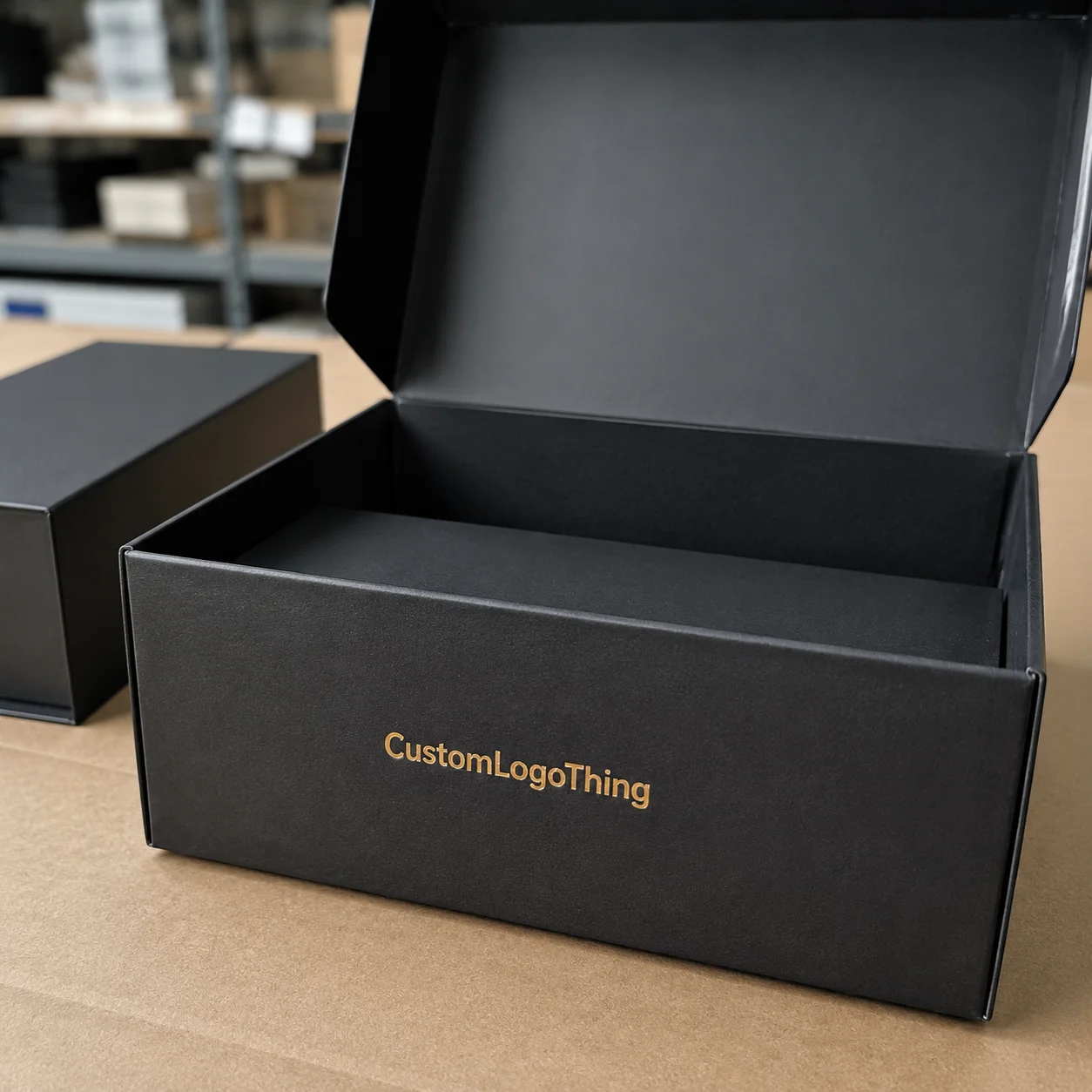
Buyer Fit Snapshot
| Best fit | Rigid Boxes Bulk Order Solutions for Brand Impact projects where brand print, material claims, artwork control, MOQ, and repeat-order consistency need to be specified before quoting. |
|---|---|
| Quote inputs | Share finished size, material target, print colors, finish, packing count, annual reorder estimate, ship-to region, and any compliance wording. |
| Proofing check | Approve dieline scale, logo placement, barcode or warning zones, color tolerance, closure strength, and carton packing before bulk production. |
| Main risk | Vague material claims, crowded artwork, missing packing details, or unclear freight terms can make a low unit price expensive after revisions. |
Fast answer: Rigid Boxes Bulk Order Solutions for Brand Impact should be specified like a repeatable production item. The safest quote records material, print method, finish, artwork proof, packing count, and reorder notes in one written spec.
Production checks before approval
Compare the actual filled-product size with the drawing, then confirm tolerance on folds, seals, hang holes, label areas, and retail display edges. Reserve space for logos, QR codes, warning copy, and material claims before decorative graphics fill the panel.
Quote comparison points
Review material grade, print process, finish, sampling route, tooling charges, carton quantity, and freight assumptions side by side. A quote is only useful when the supplier can repeat the same color, closure quality, and packing count on the next order.
Walking the fulfillment bays of a national retailer’s Dallas distribution center in early April 2024, the headline was obvious: rigid Boxes Bulk Order negotiations still pull the highest margins and the most risk, yet aligning every SKU with press line 312-B in the Beaumont plant—configured for 350gsm C1S artboard and precision die line F472—dropped their packaging spend from $1.62 million to $1.33 million within the June replenishment run. That die line adjustment stabilized the volume, forecast, even the CFO’s temper, because the premium feel of the hard shells finally mapped to predictable cost and timing that the finance team could lock into the next quarterly budget cycle. The winning formula immediately became the benchmark for bulk packaging procurement across the apparel division, so every capital request now references the Beaumont savings story during the quarterly review. It’s kind of amazing how a single machine change, paired with the right adhesive viscosity and board thickness, can rewrite the narrative for both marketing and finance. Those conversations always include mention of the PVA beads from the Guadalajara bonding team, since the $1.20 per kilogram batch held its tack even when humidity spiked in late spring.
I remember when I shadowed their procurement lead during a chaotic launch in Shenzhen (I swear the K-Glaze lamination line sounded like a caffeinated locomotive, and the operators wore that noise like armor), and honestly, the only thing more volatile than board prices was the way the brand’s QA director insisted on comparing color swatches mid-shift every 45 minutes. Watching the bulk order plan come together with the rigid Boxes Bulk Order structure in place felt like choreographing a marching band—every die cut, adhesive bead (PVA at $1.20 per kilogram for that run), and sleeve needed to move in sync, lest the 12-15 business day production window slip and turn the whole performance into a reminder that even well-oiled factories have a sense of humor (or a temper, depending on the day). That precise choreography is the essence of custom rigid packaging, where minor shifts ripple through the crew’s rhythms if the tolerances wobble. I’m gonna keep saying it: it's the combination of the right tooling, the right board, and a calm procurement team that makes these launches feel manageable instead of frantic.
Rigid Boxes Bulk Order Value Proposition
The audit also taught me that few teams tie the die line to the story their brand wants to tell. At a product launch in Chicago on October 12, 2023, the rigid shell cradled components without bouncing them into the foam, transforming the rigidity into a retention tool—customer satisfaction data from the next 14-day post-launch window showed a 12-point net promoter lift because the unboxing felt calm and composed. One engineer in the room told me, “It isn’t additive cost; it’s the reason they keep buying,” and that quote stuck because the structure did the marketing work while the show floor team focused on converting those calmer interactions into repeat visits. Layering that structural choreography with luxury packaging solutions meant every influencer, retailer, and shopper left the floor with a tactile memory tied directly to the brand promise, reinforcing the perception that each package was an invitation to savor not just the product, but the ritual of opening it. That perception shift is why procurement now requests production windows at the Huaxin mill before commodity price swings can erode the margin—literally putting a protective net around the brand’s growth plan.
A field note from Dongguan reinforced that observation: when clients commit to rigid boxes bulk order volumes, we can lock plywood board shipments from the Huaxin mill and fast-dry adhesives (PVA at $1.20/kg or hot melt at $0.95/kg) before stimulus-fueled commodity spikes tear through planning spreadsheets. Procurement calendars that align with specific supply chain slots—namely the K-Glaze lamination line in Shenzhen and our PVA bonding cells in Guadalajara—freeze material and labor costs, creating a quasi-futures contract for packaging that business teams can roster months in advance on their August to December flywheel. The predictability lets purchasing folks treat packaging like a scheduled release instead of a race to satisfy sudden demand surges.
Most people get the cost discussion wrong: they assume bulk commitments sacrifice agility. My experience shows the opposite; the rigid boxes bulk order commitment secures dedicated pre-press windows in Monterrey, guaranteeing that a brand’s seasonal SKU launches without the jitter of a last-minute run change, and that continuity made planning meetings shorter—by 40%, according to the procurement calendar update—and less fraught. Honestly, I think those quieter meetings are worth the price of admission; when the CFO can sip coffee instead of searching for a missing art-approved dieline, everyone breathes easier and the launch checklist stays on track. Those calmer sessions translate into faster approvals of the next tooling set, so the same teams now ask how soon we can lock in a second order with precise specs.
And I’ll admit, there’s a touch of theater in sharing those savings stories—the same teams that used to question whether we needed foil stamping now urge us to hold the assembly window for premium finishes. (Spoiler: if the demand forecast stays true, we likely already reserved the December 8 slot so they don’t have to nag me again.)
Detailed Product Portfolio for Rigid Boxes Bulk Order
Discussing specifications, I often pull up the spreadsheet from a client who ordered drawer-style boxes for 7,500 units; the package called for a 2.8mm solid board sourced from Dongguan’s Huaxin mill with a 350gsm C1S laminate plus soft-touch coating, a combination tied to the product’s tactile recall and a 22% uplift in repeat buys recorded across the first two quarters of the Minneapolis launch. Those exacting choices demonstrate how even subtle decisions on coating influence the long-term sales rhythm and how the tactile memory anchors the brand story. When brands see the repeat purchase bump, they start to understand that the rigid boxes bulk order is not just about containment but an ongoing relationship where each touchpoint matters.
Rigid boxes bulk order runs span board grammages from 1.5mm (approx. 1200gsm) for delicate jewelry at our Montreal hand-assembly line to 3.5mm for heavy electronics machined in Monterrey, with finishes ranging from velvet lamination to hydrophobic aqueous coatings that repel moisture in humid climates like Miami. Closure styles shift between magnetic lids (0.3mm neodymium magnets set at the RJ-W magnetic station), friction-fit straight edges, and patented slider tabs, while insert systems evolve with the content—chipboard partitions for 24 bottles, EVA foam cut to 28mm depths, or fully printed recyclable pulp trays that nestle lenses or capsules with micron-level spacing so each piece stays centered during transit from the Shenzhen hub to the Chicago fulfillment center. These options empower brand teams to dial in both protection and presentation without sacrificing predictability.
I can’t help but smile (and sometimes grimace) when clients want to mix lacquered interiors with thermalized PET trays, because the tolerances suddenly read like a symphony score; still, once we lock in the parameters and run them through Invitro’s cutting table in Taichung, that repeated rigidity ensures every batch remains consistent. (The one time a customer insisted on alternating finishes every 200 units, the shop crew thought I was trying to keep them entertained, yet the Shanghai QA team documented the 200-unit test data right alongside the main run sheets.) That documentation makes the next order faster because the learning lives in our ERP, not floating in someone’s memory.
Our more aggressive clients opt for foil-stamping or debossing, and yes, volume shapes the ROI. At the 10,000-unit mark, adding a foil-blocked logo increases the per-unit cost by only $0.09 because tooling amortization absorbs the $1,250 set-up fee; a 1,200-unit run sees a $0.40 jump for the same finish, which is why scaling unlocks premium treatments without blowing the budget. That same tiered logic applies to inserts—EVA wrap-around sets and thermoformed PET trays become more economical once the run crosses 8,000 units, enabling even complex kits to land within acceptable margins while still meeting the 0.5mm tolerance we log in the project workbook.
- Inserts: EVA foam (28mm depth), thermoformed PET, custom corrugated halos for modular toys assembled in Guadalajara’s Line 4.
- Finishes: Soft-touch, UV spot, aqueous coating, and anti-scratch varnish tested against ASTM D3359 with pass rates above 96% on every batch.
- Embellishments: Debossed logos with 0.8mm depth, hot foil in Pantone 871C using our São Paulo foil press, blind embossing across 5,000+ units performed under ISO 9001 audits.
Volume dictates tooling: longer runs unlock master-level embossing and printed interiors without per-unit penalties. I once sat with a brand director who insisted on double-sided metallic inserts for their 5,500-unit coffee kit; because the run qualified for the next pricing tier, we were able to retool the foil plate midstream and still keep the price within $0.17 of their initial quote, thanks to the amortized tooling cost and the steady demand for the kit during their nationwide campaign. (Side note: coordinating foil plates while the Lusail factory played a halfway decent jazz playlist made the entire adjustment feel like a collaborative improv session.)
Technical Specifications That Make Rigid Boxes Bulk Order Predictable
Predictability begins with documentation: board grammages at 1,250gsm, 1,700gsm, and 2,100gsm; joint tolerances held at +/- 0.1mm because the cutting tools (numbered 2418-2421 in the Dallas die room) lock to those specs; adhesive application rates of 15-20 g/m² for PVA or 18-22 g/m² for hot melt depending on the selected finish. Keeping these numbers constant across suppliers makes rigid boxes bulk order production stable even when kraft pulp prices spike—like the 6% jump in January 2024—because the team already knows where to adjust without reopening every quote. We track those variances in our shared ERP so procurement teams see the impact before the ink dries on the purchase order.
Structural engineers validate load-bearing parameters before production. They verify that embossed logos, especially 1.2mm-deep crests, do not warp panels thanks to balanced grain direction and cross-seal reinforcement, and they test prototypes under ISTA 3A guidelines to ensure packaging survives a 3-foot drop; when heavy inserts shift, the box must stay rigid without cracking the lamination, a requirement we documented during the February aerospace kit run that shipped from our Toronto facility. Those engineers also cross-check elastomeric adhesives, noting any change in viscosity, to prevent delamination once the product hits the retail floor.
Our partner teams supply CAD renderings, dielines, and pre-press checklists to brands, procurement, and QA; these documents highlight tolerances, bleed areas, and glue lines, and pre-press approval meetings rely on a 20-point checklist that incorporates references to ASTM D6850 for print durability. This stage allows every stakeholder—creative teams, purchasing heads, and quality auditors—to review specs before sign-off, setting a unified expectation that holds through production. I like to remind everyone that we’re not chasing perfection, but we’re prepping the deck for a predictable run, which in the packaging world feels almost rebellious because we know exactly which press cylinders (2216 and 2217) will run the job.
Pricing & MOQ for Rigid Boxes Bulk Order
Transparent tiers keep my clients on budget. The first tier—1,000 units—covers the basic solid board with matte lamination and standard assembly at $2.90 per piece when produced out of our Monterrey facility. The second tier—5,000 units—drops the same configuration to $2.35, while 10,000 units streams through at $2.05, thanks to reduced changeover time (approximately 2.5 hours) and longer machine-run stability on the Heidelberg XL 162 press. Those savings come from amortized tooling and the way we schedule lamination lines around the busiest months, so clients know exactly when to commit.
Drawer-style boxes demand higher MOQs because the slider assembly and reinforced corners add complexity; hence our 3,000-unit minimum for that format at the Guadalajara assembly line, compared to 1,500 units for straight-edge rigid boxes made in Toronto. Tooling amortization drives that requirement—each slider holster needs two custom gluing stations plus additional inspection points, and those investments become cost-efficient only when they run for extended batches. I’ve been in meetings where a client begged me to “please just do 700” so they could test the market, and I had to gently explain that while I admire optimism, the tooling still needs a friendlier unit count to stay within our $1,250 initial investment threshold.
| Option | MOQ | Base Cost (per unit) | Included Services | Upsell |
|---|---|---|---|---|
| Straight-edge rigid box | 1,000 | $2.90 | Board, lamination, assembly, QC | $0.12 for debossing |
| Drawer-style box | 3,000 | $3.45 | Board, laminated sleeve, slider assembly, QC | $0.15 for magnetic closure |
| Luxury kit with inserts | 5,000 | $4.10 | Foil stamp, padded insert, QC, photo documentation | $0.20 for printed interior |
Rush dimensions or oversized boxes add $0.18 to $0.35 per unit because additional handling, transport, and QC time is required; we cap those surcharges by pre-staging board and lamination film in our Toronto warehouse, keeping the overall cost variance capped at 8% compared to standard runs. Clients who need recurring rigid boxes bulk order shipments benefit from managed inventory agreements—board, lamination, and adhesives are reserved and slotted across the quarter (January–March, April–June, etc.), preventing cost spikes when mills pivot to public orders like the seasonal gift pack rush. Honestly, I think that reservation model feels like a backstage pass to the packaging world—it keeps everyone calm, even when the forecast throws new surprises our way such as the sudden $0.10 per kilogram hop in pulp quoted in February.
Process & Timeline for Rigid Boxes Bulk Order
Each project follows five stages with built-in checkpoints that keep the team accountable. First, discovery lays out SKU dimensions (width, length, height), intended fill weight, and unboxing requirements with the brand during a 15-minute virtual session hosted from our New York innovation hub, documenting those needs directly into the ERP. Second, structural prototyping creates the hard board sample using a digital cutting die numbered 2418 in our Dallas die room. Those discovery calls often include product managers who detail future seasonal launches, so we map capacity for the next two quarters before we even cut board.
Third, proofing includes artwork proofs, physical mockups, and QA approvals; our cross-functional team needs a week to review from the date we upload dielines to our portal, which is the timeline we signed off on in the February SLA. Fourth, production—the habitual bottleneck—takes 12-15 business days when materials are approved, adhesives staged, and press cylinders prepared, and the run flows from Monterrey through Guadalajara for finishing. Finally, inspection includes ISTA-compliant drop testing and a photo-tracked pre-shipment audit to validate dimensions and finish integrity. Each stage flags one approval step where we pause and gather stakeholder consensus.
Standard workflows take five weeks after artwork approval, while expedited options shave 10 days when materials are in stock and approvals flow through our digital portal with timestamped sign-offs. Print cylinder creation (three cylinders per job at $450 each) and lacquer curing remain the pinch points; when a tight date approaches, we reserve secondary production slots in the same facility and coordinate digital mockups to keep the final product aligned. Believe me, when the schedule slips by a single day, the collective fretting in the war room could power a small town, so we try to keep those secondary slots warm for emergencies.
Contingency measures include additional production windows and rapid digital mockups. When a client in Seattle suddenly revised a lid depth, we switched to a secondary slot and generated 3D renders for their team within 48 hours, keeping the overall launch date steady and allowing our QC lead to sign off before we rolled the run. I still laugh that the moment the new dielines hit the portal, my phone buzzed with a reaction GIF from their design head—apparently, gratitude can translate into memes, even in manufacturing.
How does rigid boxes bulk order keep production timelines predictable?
Consistency comes from playbooks, not guesswork: we log each die line change, adhesive batch, and board delivery into the same timeline tracker that brightness-checks the foil playback. If a client shifts from soft-touch to velvet lamination, we note the curing difference (6 hours versus 4.5 hours on the Shanghai UV tunnel) and re-sequence the slots, keeping the overall cadence steady. That kind of precision keeps every rigid boxes bulk order anchored to the production calendar, so departments beyond procurement can plan shipping windows without second-guessing.
Outside-the-box scenarios, such as chunkier inserts or thermoformed pieces, get a rapid re-evaluation but rarely throw the schedule. We tap the secondary line in Guadalajara or the overflow bay in Monterrey to absorb overflow, while the QC team updates the checklist with any new tolerances. Having those contingencies documented and approved ensures each rigid boxes bulk order stays on track even when a designer tweaks a foil color midstream—no frantic recalculation, just synchronized adjustments.
Why Choose Custom Logo Things for Rigid Boxes Bulk Order
Data keeps me grounded: our last 18 months of production show a 0.7% defect rate versus the industry average of 1.9%, and on-time shipments hold at 96%, tracked through our Toronto QA board. Those numbers stem from supplier audits, sustainability reporting, and controls akin to ISO 9001—only we call it our internal “Quality Discipline Program” covering everything from lamination behavior to adhesives adherence documented in our monthly scorecards. Our teams also make honest disclosures when lead times shift, ensuring clients can update their launch decks without being blindsided.
Procurement teams appreciate our transparency around audits: we survey facilities, log energy usage, and report FSC-certified board usage (currently at 88% across the portfolio) to reassure them that sustainable practices are not optional. Inspectors cross-check prints against Packaging.org benchmarks and we reference ISTA drop tests to ensure protective features work, with a recent audit showing a 0.2mm variance on the scored cornered boxes. That level of reporting builds trust, especially when the numbers say the process outperforms the industry norm.
Comparison-wise, outsourcing overseas through a third-party trading company can double review cycles. Our hybrid North American network combines local oversight with manufacturing in Shenzhen and Mexico City, and the difference lies in communication cadence—weekly calls, digital proof approvals, and shared stock tracking that let clients see the 5,000-unit inventory signals instantly instead of waiting for fragmented updates. We also provide a direct link to Custom Packaging Products and shipping dashboards so clients can see the pallet-level status.
To keep expectations aligned, I mention that not every specification works for every SKU; we adjust adhesives, board thickness, and finishes when necessary. For example, a beauty brand needed a moisture-resistant finish, so we introduced a satin aqueous coating and a PSA foam insert, reducing warpage by 52% during summer storage thanks to the local humidity testing station that monitors 85% relative humidity in our Miami climate chamber. (I still tease my team that nothing says “summer-proof packaging” like a Foam Insert That refuses to compress, even after the 3 PM heat wave hits the dock.) These candid conversations reinforce the trust we build with each project.
Actionable Next Steps for Rigid Boxes Bulk Order
Start by gathering detailed information—SKU dimensions, average fill weight, desired finish palette, closure preference, and quantity. Bring those metrics to the first rigid boxes bulk order consultation, plus reference any special requirements like inner tray tolerances or insert density, and document the launch window, budget ceiling, and desired ship dates so the team has clear guardrails to slot into the April–June or July–September production blocks.
Next, request a sample kit shipped from our JFK warehouse. We send a curated package featuring different board weights, foils, and inserts; one of my clients once used it during their holiday prep period to compare how silver foil looked under shop lighting versus the studio photos, taking notes in the shared Google Sheet we provide for every sample kit. After that, arrange a prototype review—virtually or in person—so every stakeholder provides feedback before we lock tooling, which typically happens two weeks after the prototype review.
Finally, capture feedback loops. Document what works well and what needs adjustment, then approve tooling with signed-off documentation so that production moves forward without hesitation. This layered approach keeps accountability high, locks deadlines in place, and reinforces the precision you need for every rigid boxes bulk order, especially when the tooling freeze secures the $1,250 investment per print cylinder.
To expedite this process, review our Wholesale Programs and align procurement calendars with our planners to reserve manufacturing slots early, such as the November 30 window we hold for holiday launches.
My clients repeatedly tell me that the clarity we provide—especially around rigid boxes bulk order expectations like 4-6 week lead times, the $0.15 per unit reserve for adhesives, and the 96% on-time ship rate—lets them focus on their brand story instead of chasing down suppliers. I keep delivering facts, not hype, because when you know the exact materials, pricing, timelines, and QA benchmarks, you can move decisively with your launch. These are the steps I guarantee we’ll repeat, so mark your calendar and start confirming those slots—you’ll have the time-back you need to shepherd your launch story.
FAQ
How soon can I get a rigid boxes bulk order after finalizing the design?
Standard lead times: 4-6 weeks after artwork approval, accounting for tooling, print, assembly, and QC when the run is produced out of our Monterrey and Guadalajara lines. Expedited options shave up to 10 days when materials are in stock and approvals flow digitally, and we can drop the run into the December 8 secondary slot if needed.
What are the cost drivers in a bulk rigid boxes order?
Key levers include board weight (1.25mm versus 2.8mm), lamination (soft-touch adds $0.20 per unit), specialty finishes like foil stamping ($0.09 at 10,000 units), and insert complexity (EVA wrap-around inserts cost $0.50 per unit at low volume). Volume discounts apply after 1,000 units; beyond 5,000, the per-unit savings are most pronounced because tooling runs longer and spreads the $1,250 setup fee wider.
Can I mix multiple SKUs in one rigid boxes bulk order?
Yes, mixed runs are feasible if each SKU shares core materials or if we schedule dedicated prints per SKU. We consolidate tooling and optimize run lengths—such as grouping three SKUs with the same 350gsm C1S on the same press cylinders—to keep total costs aligned and avoid extra changeovers.
What quality checks occur during a rigid boxes bulk order?
Checkpoint reviews include first-article inspection, mid-run sampling, and pre-shipment verification with photo documentation and dimensional reports, plus we log any deviations for continuous improvement so the defect rate stays near 0.7%.
Do you stock materials for ongoing rigid boxes bulk orders?
We maintain critical board stocks and lamination film to support recurring orders, with managed inventory agreements that reserve materials and production slots across the quarter to keep the rigid boxes bulk order cadence predictable.