Buyer Fit Snapshot
| Best fit | Custom Clear Labels Bulk projects where brand print, material claims, artwork control, MOQ, and repeat-order consistency need to be specified before quoting. |
|---|---|
| Quote inputs | Share finished size, material target, print colors, finish, packing count, annual reorder estimate, ship-to region, and any compliance wording. |
| Proofing check | Approve dieline scale, logo placement, barcode or warning zones, color tolerance, closure strength, and carton packing before bulk production. |
| Main risk | Vague material claims, crowded artwork, missing packing details, or unclear freight terms can make a low unit price expensive after revisions. |
Fast answer: Custom Clear Labels Bulk: Pricing, Specs, and Process should be specified like a repeatable production item. The safest quote records material, print method, finish, artwork proof, packing count, and reorder notes in one written spec.
Production checks before approval
Compare the actual filled-product size with the drawing, then confirm tolerance on folds, seals, hang holes, label areas, and retail display edges. Reserve space for logos, QR codes, warning copy, and material claims before decorative graphics fill the panel.
Quote comparison points
Review material grade, print process, finish, sampling route, tooling charges, carton quantity, and freight assumptions side by side. A quote is only useful when the supplier can repeat the same color, closure quality, and packing count on the next order.
Custom Clear Labels Bulk: Pricing, Specs, and Process
Custom clear labels bulk can make a package look carefully considered, or it can expose every rushed decision in the artwork and material build. On a crowded shelf, clear labels either disappear in the right way and let the product carry the visual story, or they call attention to uneven edges, weak contrast, and flimsy print choices. That is why custom clear labels bulk shows up so often on bottles, jars, tubes, and retail packs that need restraint more than decoration.
From the buyer side, the appeal is pretty direct. You keep the product visible, you still carry branding and compliance copy, and you avoid the heavy look paper can create on glass or smooth plastic. Custom clear labels bulk works especially well when the goal is a lighter, cleaner, more refined package that does not shout from every angle. The label should support the product packaging, not wrestle with it.
The other reason brands go this route is cost control. Buying in bulk lowers the unit price, but the quieter advantage is fewer reorders, fewer launch delays, and less last-minute scrambling across multiple SKUs. If a line has several sizes or flavors, custom clear labels bulk also helps keep naming, color, and layout consistent so the whole range reads as one family. Retail buyers notice inconsistency fast, and they are not shy about it.
Clear labels are not magic, though. Film, adhesive, finish, and print opacity all have to work with the container and the product itself. Guessing leads to curling on chilled bottles, hazing on textured plastic, or peeling in coolers and damp storage. Cheap becomes expensive the moment the first pallet ships and the labels start behaving like they were never meant for the job.
Why custom clear labels bulk works for shelf-ready packaging
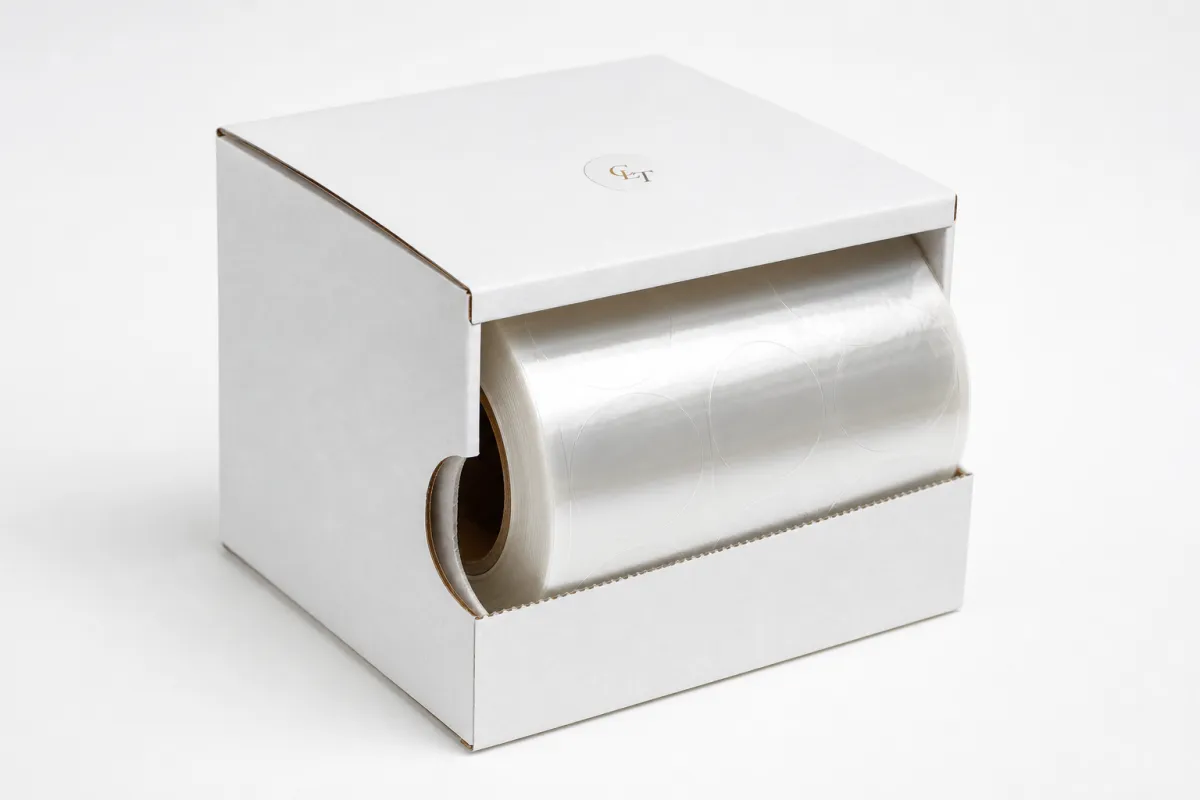
Clear labels are useful because they are honest. They either give a package a sharp, modern look or they reveal exactly where the artwork, sizing, and material choices fall apart. That is part of why custom clear labels bulk is so popular with brands that want a clean shelf presence without piling extra design onto the pack. If the bottle, jar, or tube already has a strong shape, a clear label lets that form do more of the visual work.
Paper labels still make sense in some categories, especially where opacity or a tactile uncoated finish matters. Custom clear labels bulk usually performs better when the goal is to show the contents, preserve a minimal look, or make the pack feel more premium without being loud about it. Glass jars, PET bottles, cosmetic tubes, food pouches, and boutique retail packaging all benefit from the same basic idea: reveal more of the container and less of the label.
The practical upside is easy to see. A transparent label keeps ingredients, barcodes, and compliance copy visible while keeping the package from feeling crowded. That balance matters on products where the front panel is already tight. For some SKUs, custom clear labels bulk also reduces the need for extra decoration because the clear stock creates a cleaner package structure from the start.
The cost picture matters too. Bulk ordering cuts the per-unit cost, and it also trims the hidden costs that usually show up later: rush reorders, inconsistent runs, and redesigns because the first spec did not hold up on the actual container. A brand ordering custom clear labels bulk for a steady SKU usually ends up with a better total cost than a brand chasing the lowest sticker price on a tiny run. I have seen that play out more times than I can count, and it is never very glamorous.
The strongest use case is simple. If you want the product to look more expensive without making the packaging loud, custom clear labels bulk is one of the easiest moves available. That does not mean every clear label looks premium. It means the label has room to fail less visibly than many other styles, which is not the same thing. Design still matters. Print quality still matters. The surface underneath matters too.
- Glass jars: clear stock keeps the contents visible and the branding lighter.
- PET bottles: a good fit for beverage, wellness, and personal care lines with a clean shelf look.
- Cosmetic tubes: useful for packaging that needs clarity without a full wrap of color.
- Food pouches: practical when the front panel already carries enough visual activity.
- Premium retail packaging: works well when the product itself is part of the visual story.
Rule of thumb: if the label has to survive moisture, oil, or cold, test the exact adhesive on the real container before you buy the full run. Mockups are helpful. Peel failure is not.
Custom clear labels bulk: product details that matter
Most label problems start with a vague brief. Buyers ask for custom clear labels bulk, but they leave out the film type, adhesive strength, finish, print opacity, and the way the label has to behave on the container. That is where the trouble begins. Clear labels are not one-size-fits-all. A label for a straight glass jar is not the same build as a label for a curved shampoo bottle or a chilled juice bottle that sweats in a cooler.
The first choice is the film. Clear polypropylene is common for smooth containers because it gives a clean, bright look and holds up well in retail use. Clear vinyl adds more flex and can help on slightly irregular surfaces. If the goal is a near-invisible edge on glass or smooth plastic, ultra-clear stock can reduce the visual border. Matte-clear lowers glare and gives the packaging a quieter feel. Gloss-clear does the opposite and reads louder on shelf.
Print behavior comes next. Transparent stock does not act like white paper, which is where many projects get surprised. If the artwork needs to stand out on a dark bottle or colored tube, white ink underprinting is often the difference between readable and muddy. Spot color control matters too, since the final look depends on how much of the container shows through. If the design is meant to feel airy, the artwork has to be built for that effect rather than forced into it later.
Container behavior changes the whole job. Curved bottles need a label that can wrap without lifting at the edges. Cold-fill products and refrigerated items need adhesives that keep holding when condensation shows up. Oily products can break down weaker adhesive systems. Textured plastic is its own headache. It may look fine in a render and behave like sandpaper in production. That is why custom clear labels bulk should be specified around the real package, not around a polished art file.
The strongest results come from matching the label to the shelf environment. A clear label on a dry room-temperature bottle has a much easier life than one on a freezer item or a hand-sanitizer bottle that gets handled all day. The label has to be chosen for the product, the container, and the retail packaging context at the same time. That is the bit people kinda skip, and it is usually the bit that costs them later.
- Fully transparent: best for a minimal look where the container should remain visible.
- Selectively printed: useful when only the logo, ingredients, or key claims need to stand out.
- Matte-clear: a quieter finish with less glare, good for premium or natural positioning.
- Gloss-clear: brighter shelf presence, sharper contrast, more retail pop.
- Ultra-clear: the strongest choice for reducing the visual edge on glass and smooth plastic.
For product packaging that sits next to custom printed boxes, the label finish should be chosen with the rest of the pack in mind. A shiny clear label can look great beside a glossy carton. A matte-clear label can keep a minimalist line from feeling overworked. That kind of packaging design choice looks small on paper and obvious on the shelf.
There is also a practical trust issue here. If a supplier cannot explain why a certain clear film, adhesive, or ink build was chosen, that is a red flag. A good spec is not just a file handed off to production; it is a record of why the material should behave a certain way on a specific package. That is the kind of detail that saves a team from guessing later.
Specifications for custom clear labels bulk orders
If you want accurate quotes and fewer production headaches, the spec sheet has to be real. For custom clear labels bulk, that means exact dimensions, shape, bleed, label gaps, roll direction, core size, and whether the labels ship on rolls or sheets. If a client cannot tell you the container diameter or the panel height, the quote is mostly guesswork. Guesswork has a habit of showing up later as waste.
One of the most overlooked details is how the labels will be applied. Manual application, semi-auto, and full automation each come with different requirements. Roll direction matters if a machine is feeding the label. Core size matters because dispensers are not all built the same. Gap and backing dimensions matter because a label that is off by a few millimeters can misfeed and slow the line. That is not a design issue. It is a production issue, and production is where budgets get punished.
Adhesive choice deserves more respect than it usually gets. A permanent adhesive works for many standard retail applications, but it is not enough for every job. Removable adhesive can be useful for limited-run products or reusable containers. Freezer-grade adhesive is the right call if the pack will be stored cold. Oil-resistant and moisture-resistant options matter for products that sweat, condense, or contain oils. If the product is going into a fridge, a cooler, or a high-humidity environment, the cheapest stock is usually the wrong stock.
Durability is another place where buyers need to get specific. Does the label need scratch resistance? Water resistance? UV stability? Will it be handled by customers, shipped in cartons, or exposed to a warehouse with changing conditions? These are not abstract concerns. They affect how the label looks after a week, a month, or a full retail cycle. ASTM peel testing methods such as ASTM D3330 can help frame adhesive performance, while shipping validation can be checked against transit methods from ISTA. If the pack has to survive distribution, test for distribution. That is not complicated.
Print and finish specs matter just as much. CMYK is standard, but clear labels often need a white ink layer to keep logos and copy readable. Matte varnish can reduce glare. Gloss varnish can sharpen contrast. Some jobs may call for selective varnish or special effects, but those choices should be made for a reason, not because they sound nice in a quote template. Custom clear labels bulk is supposed to be practical. Fancy does not pay for reprints.
The most disciplined buyers request a digital proof, confirm the die line, and test the label on the actual container before release. That sounds basic because it is basic. It is still the step that gets skipped most often. A label can look perfect on screen and still fail on a curved bottle, a frosted jar, or a product stored in cold conditions. Better to discover that with one sample than with five thousand labels already boxed.
- Exact dimensions: width, height, corner radius, and bleed.
- Application format: roll or sheet, plus core size and roll direction.
- Adhesive type: permanent, removable, freezer-grade, oil-resistant, or moisture-resistant.
- Print build: CMYK, white ink, spot colors, and opacity requirements.
- Finish: matte, gloss, or specialty varnish if the design truly needs it.
For broader product packaging programs, some brands also coordinate label specs with outer cartons and shipping components. That is where consistent package branding matters. If your line includes paperboard cartons or other certified materials, FSC is worth checking for the parts of the packaging system that need responsible sourcing. The label itself is one piece. The package is the whole picture.
Custom clear labels bulk cost, pricing, MOQ, and quote factors
Pricing for custom clear labels bulk is not random, but it does depend on more variables than most buyers expect. Quantity is the biggest lever. Size is next. After that come print colors, white ink coverage, adhesive type, finish, and whether the label needs a custom die line. If someone gives you a quote with no mention of those details, that quote is only useful as a conversation starter.
For a standard clear label on rolls, bulk pricing usually becomes more attractive once the order size moves past the small-run threshold. Smaller orders can still make sense, but the unit price stays higher because setup and material waste get spread across fewer pieces. Larger orders lower the cost per label, though they do ask for better forecast discipline. If the SKU is stable, custom clear labels bulk usually pays back quickly. If the design is still changing every two weeks, keep the first run more conservative.
Setup charges are normal. A custom die, proofing, and press setup all take time. The real question is whether the order size makes those charges sensible. In many cases, a setup charge in the range of $40-$150 is a normal part of the job, depending on complexity. A small increase in label price can be worth it if it buys better adhesion or cleaner print. A label that fails in retail is not the bargain people think it is.
Here is a simple pricing snapshot for a standard clear label roughly in the 2 x 3 inch range on rolls. The numbers are only a practical starting point, because size, white ink, and adhesive choice can move them quickly.
| Order size | Typical unit price | Best fit | Notes |
|---|---|---|---|
| 500-1,000 pieces | $0.20-$0.45 | Testing new SKUs | Higher unit cost, but useful for market proofing and short launches. |
| 2,500 pieces | $0.12-$0.28 | Small bulk orders | A practical middle ground for new products that need better cost control. |
| 5,000 pieces | $0.08-$0.20 | Steady sellers | Often the sweet spot for brands that already know demand is real. |
| 10,000+ pieces | $0.05-$0.14 | Stable SKUs and rollouts | Best unit economics, but only if the artwork and pack spec are settled. |
The range widens quickly if the order needs heavy white ink, specialty varnish, tight registration, or an adhesive built for cold storage or oily surfaces. The quote also shifts if the label size is larger than standard or the shape requires more expensive die work. That is why custom clear labels bulk is never just a number pulled out of thin air. It is a build. Every choice carries a cost.
The tradeoff is the real story. The cheapest label is not the best value if it peels off on curved bottles, turns cloudy in a cooler, or looks uneven on dark glass. A slightly higher unit price can save a launch. It can also save a repack. From a buyer's standpoint, that is a much better use of money than chasing the lowest sticker and paying again later.
Brands that order custom clear labels bulk for multiple SKUs should also think about how the label pricing fits the rest of the line. If the packaging mix includes custom printed boxes, inserts, and secondary shipper cartons, wholesale planning can help keep the whole package family aligned. That is where a program like Wholesale Programs makes more sense than buying each component one-off and hoping the numbers behave themselves.
For teams looking at a broader packaging refresh, it can also help to review the rest of the catalog through Custom Packaging Products so the label budget and the box budget do not drift apart. I have seen too many brands overspend on one element and under-spec the other. The shelf notices imbalance. So do customers.
Process, timeline, and turnaround for custom clear labels bulk
The production path for custom clear labels bulk is straightforward if the buyer stays organized. First comes the spec review. Then artwork check. Then proof approval. After that the job moves into printing, finishing, quality control, and shipping. The whole sequence is designed to reduce risk, but it only works if the information at the start is accurate. Bad input creates bad output. Packaging has not changed that part.
- Quote review: confirm size, quantity, adhesive, finish, and application method.
- Artwork check: confirm file resolution, die line fit, and white ink placement.
- Proof approval: sign off only after the design is checked on the real container spec.
- Production: print, laminate or varnish if needed, then cut and rewind or sheet.
- Quality control: verify color, registration, adhesion targets, and count.
- Dispatch: pack and ship based on the launch schedule.
Standard turnaround is often 12-15 business days after proof approval for straightforward jobs. If the order needs special white ink layers, a non-standard adhesive, or extra testing on a chilled or oily package, 15-20 business days is a more honest expectation. Rush jobs can move faster in some cases, but that depends on the shop load and the exact build. There is no useful reason to promise miracles on labels. The press does not care about your launch deck.
The biggest delays are predictable. Missing dimensions. Low-resolution artwork. A container photo that does not show the curve or finish. Last-minute copy changes after the proof has already been approved. Those issues slow down custom clear labels bulk every time. The cheapest way to speed the process is to send clean information once, not three half-finished versions that need to be untangled later.
What helps most is a simple approval chain. One person should own the final sign-off. One container sample or product photo should be on hand. One final dieline should be used across the order, not swapped midstream because someone spotted a typo after the proof. If the packaging is new, a test run is smart. If the label is going onto a refrigerated product, a test run is even smarter.
Practical timing note: bulk labels should be planned around launch dates, not hoped into existence two days before they are needed. Good labels are produced on schedule, not by wishful thinking.
For shipping-sensitive projects, the product should also be judged against the distribution path. If the cartons will move through rough transit, the label should survive rub, shock, and temperature changes without the edges lifting. That is where real-world testing earns its keep. Custom clear labels bulk is not just about the print file. It is about whether the finished label survives the trip from press to shelf.
I usually tell brands to think like a production manager for a minute: if the label cannot survive the messiest part of the journey, it is not ready yet. That mindset feels slower at first, but it saves a lot of money when the first run lands cleanly.
Why choose us for custom clear labels bulk
Buyers usually come to us for one reason: they want clear answers before they place a bulk order. That is the right instinct. Custom clear labels bulk should come with honest guidance on adhesive, film, finish, and quote structure, not vague sales language and a pretty mockup. If a spec is going to cause trouble, it is better to say so early. That saves time, money, and a lot of annoyance.
Our focus is practical manufacturing support. That means clean pricing, clear spec guidance, and recommendations based on actual package use rather than whatever sounds exciting in a brochure. A label for a glass jar of food does not need the same build as a label for a condensation-prone wellness bottle. A clear label on a retail tube does not need the same finish as a clear label on a premium e-commerce box. The answer depends on the package, not the trend cycle.
Consistency matters just as much as the first run. When a brand orders custom clear labels bulk, batch-to-batch repeatability has to hold. Color needs to stay stable. Cut edges need to stay clean. Adhesive performance needs to stay predictable. If you are scaling from one SKU to ten, the labels cannot behave like ten different products. That is how brands end up with retail packaging that looks assembled instead of planned.
This is also where broader package branding matters. If you are pairing clear labels with custom printed boxes, the label and box should feel like the same system. For brands that want help keeping the whole line aligned, our Custom Labels & Tags page is a useful starting point, and our Custom Packaging Products collection helps connect the label spec to the rest of the package. If you are buying at scale, the Wholesale Programs page is where the economics start to make more sense.
What do buyers usually care about most? Fewer surprise charges. Fewer reprints. Fewer Labels That Look fine in a mockup and fail on the shelf. That is the job. If the label is going on a chilled bottle, an oily jar, or a smooth PET container with a curved profile, the build has to match the reality of that product packaging. Anything else is decoration pretending to be planning.
And honestly, that is where a lot of label projects go off the rails: the art looks polished, the email thread feels efficient, and then the container tells the truth. A label program only earns trust when the details hold up after print, after shipping, and after a few days in the real environment.
Next steps for ordering custom clear labels bulk
If you are ready to order custom clear labels bulk, the fastest route is to gather a few specific details before you ask for a quote. Send the container dimensions, the label size, the artwork files, the quantity, and the surface the label will touch. If you can include a photo of the bottle or jar, that helps more than people expect because it shows the curve, the finish, and the actual print area.
Also note whether the product is refrigerated, frozen, oily, or exposed to moisture. Those details affect adhesive selection immediately. A label for a dry shelf item can use a different build than a label for a chilled beverage or a hand-applied cosmetic product that gets handled repeatedly. If you know the target launch date, include that too. Timeline matters, especially if there is a retail deadline or trade show involved.
The best decision order is simple. First pick the container. Then confirm the label size. After that choose the adhesive and finish. Only then approve the proof and move to bulk production. That sequence is boring, which is exactly why it works. Every time people reverse the order, they end up redesigning around the label instead of choosing the label around the package.
If the packaging is new or the product is temperature-sensitive, a test run is worth it. Bulk orders are not the place to discover that condensation weakens the adhesive or that the label edge catches on a curved shoulder. A small test saves a larger mistake. That is not a sales line. It is basic production math.
For brands that want the cleanest path forward, lock the specs first, then place the bulk order. That gives you a real number, a realistic turnaround, and a label build that fits the product instead of fighting it. If the label needs to survive cold storage, oil, or rough handling, say so in the brief. That single detail changes the whole order.
Frequently Asked Questions
What is the best material for custom clear labels bulk on bottles?
Clear polypropylene is one of the most common choices because it stays visually clean and handles a lot of retail applications well. Clear vinyl can be useful if the bottle has a little flex or the surface is less uniform. The better option depends on the container shape, the product chemistry, and whether the label will face moisture, oil, refrigeration, or repeated handling. If the bottle is curved or chilled, the adhesive matters just as much as the film. That is the part people often miss.
How do custom clear labels bulk quotes usually get priced?
Pricing is usually driven by quantity, label size, print colors, white ink coverage, finish, adhesive type, and whether a custom die line is needed. Bulk orders lower the unit cost, but setup and proofing still affect the final number. If you want a clean quote, send exact dimensions, artwork files, and the container type. Guessing creates a messy quote, and messy quotes do not help anyone.
What MOQ should I expect for custom clear labels bulk orders?
MOQ depends on the label size, material, and print setup, but bulk orders usually start where unit pricing becomes practical. Smaller orders are possible in many cases, just not at the same unit cost as a true bulk run. If the SKU is new, I usually suggest a quantity that balances testing risk with price efficiency instead of chasing the lowest number possible. Cheap only matters if the label actually works.
How long does production take for custom clear labels bulk?
Turnaround depends on artwork readiness, proof approval speed, and whether the label needs special testing or finishing. Standard jobs move faster than custom builds with white ink or specialty adhesives. A realistic timeline is often around 12-15 business days after proof approval for straightforward runs, with longer windows for more complex specs. The quickest way to avoid delays is to approve the proof promptly and confirm every detail before print starts.
Do custom clear labels bulk work on refrigerated or oily products?
Yes, but only if the adhesive and film are chosen for that use instead of guessed. Cold, moisture, and oil can break down weak label systems quickly. Always test the label on the actual container before placing a full bulk order. That one step catches a lot of problems before they become expensive. Custom clear labels bulk can work very well in those environments, but only with the right build.
Custom clear labels bulk is a practical choice for brands that want clear packaging, better shelf visibility, and tighter control over unit cost without giving up a refined look. The label has to fit the container, the product, and the retail environment. Get those specs right, and the whole package looks sharper. Get them wrong, and the shelf will tell on you fast. The cleanest next move is simple: lock the container details, confirm the adhesive and finish, then approve the proof only after the label has been checked against the real package.

