A customer comes in for a morning croissant, picks up a pastry box, notices the mark on the baker’s apron, then sees the same logo stitched onto a tote near the register. That small woven or printed tag is doing quiet brand work. Custom Clothing Labels for bakery brands can make a shop feel more considered before anyone at the counter says a word.
Bakery branding does not stop with signs, menus, stickers, or printed boxes. It also lives in the fabric details customers touch, photograph, wash, wear, and give as gifts. A well-chosen label on an apron, staff shirt, tea towel, canvas tote, or retail T-shirt connects the service counter to the shelf, and that consistency often matters more than buyers expect.
Custom Clothing Labels for Bakery Brands: Small Details Customers Notice
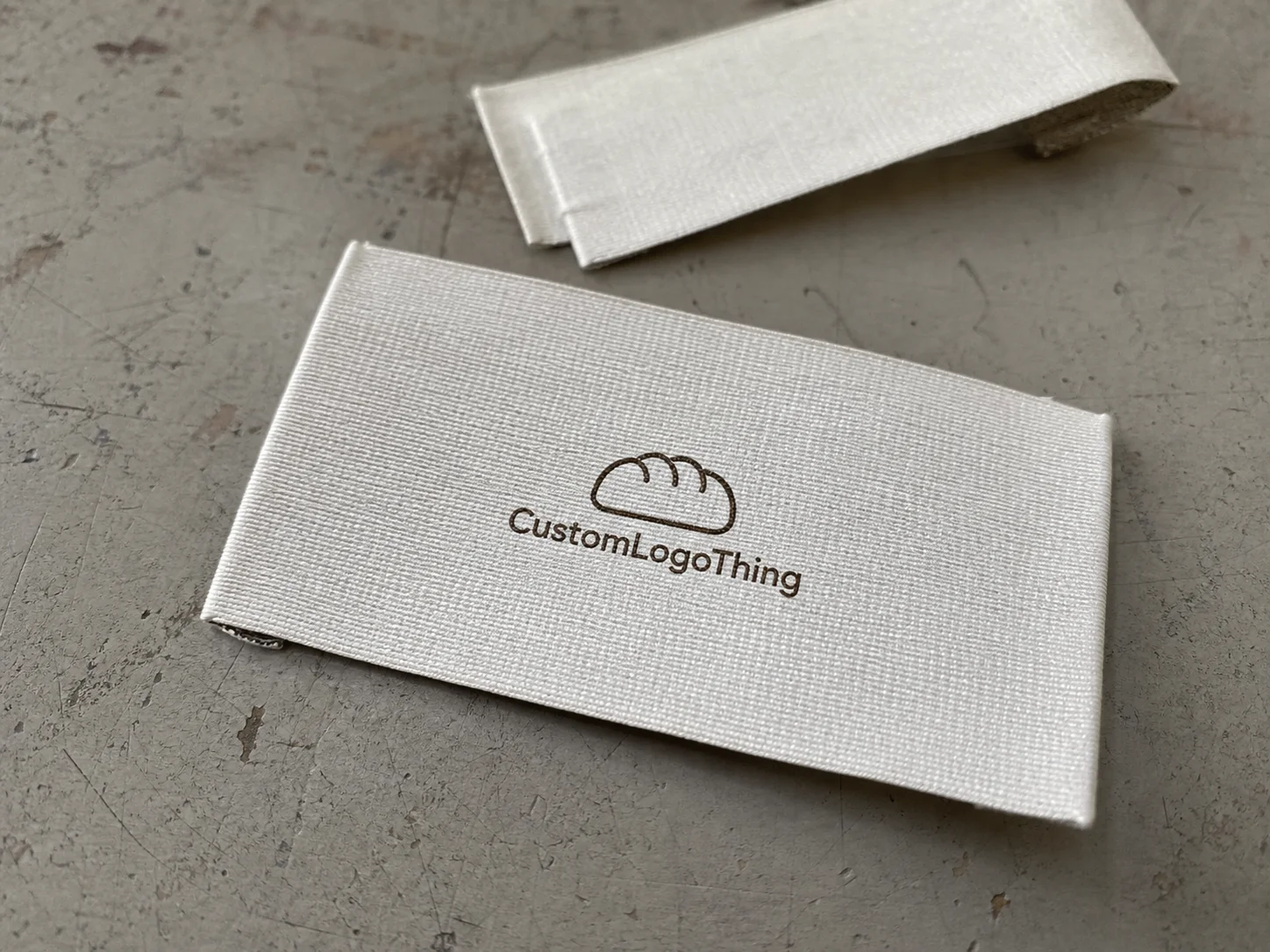
Custom apparel labels are branded fabric tags or tagless marks used on aprons, chef coats, staff shirts, retail tees, tote bags, beanies, tea towels, and other soft goods sold or worn by a bakery. They may carry a logo, size, care instructions, fiber content, location, short tagline, batch-style message, or simple mark that reinforces the bakery’s personality.
In practice, these labels sit between apparel trim and packaging. A label on a staff apron helps the team look organized during service. A merch label makes a basic shirt or towel feel like a finished retail product rather than a blank item decorated on the front. For bakeries building gift boxes, market bundles, or seasonal retail displays, the fabric label can support the same visual system already used on pastry boxes, bags, sleeves, ribbons, and hang tags.
Bakeries are hard on soft goods. Flour settles into seams. Aprons are washed often. Staff uniforms face heat, steam, butter, chocolate, fruit filling, grease, sanitizing routines, and repeated drying. A pretty label that curls after three washes or scratches the back of the neck does not help the brand. The construction has to look polished and survive real use.
Most buyers will compare four common options. Woven labels use thread to build the design and usually have the most finished, textured feel. Printed labels place ink onto satin, cotton, polyester, or similar label stock and work well for care text or detailed artwork. Heat transfer labels create tagless branding inside shirts using heat and pressure. Hang tags do not replace durable garment labels, but they improve presentation on folded shirts, towels, totes, and giftable merchandise.
Packaging-floor rule of thumb: if a label will be washed, rubbed, folded, steamed, or worn against skin, choose the material and attachment method before refining the smallest artwork details.
Custom Logo Things offers label and tag options through its Custom Labels & Tags category, but the strongest quote starts with a clear use case. A rugged canvas apron label should not be specified the same way as a soft inside-neck mark for a retail tee.
How Bakery Apparel Labels Work on Aprons, Uniforms, and Merch
A clothing label is built around four linked decisions: artwork, material, finished size, and attachment method. Change one, and the others often need adjustment. A 0.75-inch side-seam loop label may only have room for a simplified icon, while a 2-inch end-fold label on an apron hem can usually carry a logo and short line of copy with better readability.
Woven labels are made by weaving colored threads into the design. Damask woven labels are common for fine logo detail because the weave is smoother and tighter than many lower-density options. They work well on apron hems, side seams, beanies, canvas totes, towel corners, and premium bakery merchandise where customers notice texture. Practical sizes often fall around 1 inch by 2 inches for an apron hem, or 0.75 inch by 1.5 inches for a side seam, though the best size depends on the artwork and garment weight.
Printed labels use ink on label stock. Satin and polyester are common for care labels and size tags because they can hold small text, laundry symbols, fiber content, QR codes, and multi-color artwork that would be too fine for thread. Cotton printed labels have a natural, soft, slightly craft-oriented feel that suits many bakery palettes, although tiny copy may not look as crisp as it does on satin or polyester.
Heat transfer labels are applied with heat, pressure, and dwell time. They are useful for T-shirts and staff garments where neck comfort matters, especially if a sewn label might irritate skin during a long shift. Compatibility is the caveat. Garment fabric, transfer chemistry, wash routine, and application settings all have to line up. A transfer that bonds well to a cotton-rich tee may behave differently on a polyester blend or a garment with surface treatments.
Placement deserves careful thought because bakery apparel has both visual and practical jobs. Common locations include center back neck, lower hem, side seam, sleeve hem, apron chest pocket, apron waist edge, tote exterior seam, and towel corner. A chest-pocket label gives visibility during service. A lower apron hem feels quieter and more premium. A towel corner label can become part of the retail display if towels are folded with the label facing outward.
Durability is where bakery use separates itself from casual merch. Industrial laundering, hot water, stain treatment, grease exposure, steam, and repeated drying can wear labels faster than normal home use. Darker thread colors such as cocoa, charcoal, navy, burgundy, or deep green often hide daily shop wear better than pale cream on white. Pale labels can still work, but they should be reviewed against the real fabric color and the bakery’s cleaning routine, not only against a digital mockup.
Key Specs to Choose Before You Request Samples
Start with the garment’s job. Staff uniforms need wash durability, comfort, and consistency across sizes. Retail merch needs a stronger brand moment because the label helps support the shelf price. A $32 bakery T-shirt or a $24 tea towel set should feel intentional in hand, not assembled from unrelated components.
Size comes next. Small side-seam labels are often subtle, commonly around 0.5 to 0.75 inch wide after folding. Larger folded labels or apron patches may run 1.25 to 2.5 inches wide depending on artwork and placement. More space gives the logo room to breathe, but oversized labels can look clumsy on lightweight garments or delicate towels.
Fold style affects both appearance and sewing. A flat label is a simple rectangle sewn around the edges. An end-fold label has the short edges folded under for a clean finish. A center-fold label is folded in half and inserted into a seam, often at necklines or hems. A loop-fold label creates a small tab that can sit in a side seam. A miter-fold label angles the ends for a tailored look and is often used where the label hangs slightly from a seam.
Material feel matters, especially near skin. Satin feels smooth and is common for care or size labels. Cotton has a natural, bakery-friendly look and pairs nicely with canvas, linen blends, kraft-inspired packaging, and rustic retail displays. Polyester is durable, versatile, and cost-stable. Woven damask gives sharper logo definition than many basic woven options and usually feels more premium in hand.
Color is one area where buyers can become too subtle. Bakery brands often use cream, blush, butter yellow, chocolate brown, sage, kraft, warm gray, and black. Those palettes can be beautiful. Still, readability should come before a perfect tone-on-tone match. Cream thread on beige fabric may look elegant on a screen and nearly disappear under warm café lighting or in product photos.
Artwork should be prepared with production in mind. Vector files such as AI, EPS, or clean PDF artwork are preferred because they scale without losing edge quality. Thin script fonts, wheat stalks, tiny oven icons, established-date copy, and delicate line illustrations may need simplification for woven labels. Printed labels can hold smaller text, but they still need enough contrast and enough label width for legibility.
If the label includes care symbols, country-of-origin details, size, or fiber content, confirm those requirements before proofing. The Federal Trade Commission provides textile labeling guidance, and many packaging or apparel teams pair that with their own compliance checks. For paper hang tags or mixed retail packaging components, buyers may also ask about responsibly sourced paper options through groups such as the Forest Stewardship Council.
| Label Option | Best Bakery Use | Typical Strength | Watch-Out |
|---|---|---|---|
| Woven damask label | Aprons, totes, beanies, premium merch | Durable texture and strong retail feel | Tiny script and thin lines may need simplification |
| Printed satin label | Care labels, size tags, detailed logo work | Good for small text and multi-color artwork | Ink and stock should be checked against wash routine |
| Cotton printed label | Natural aprons, towels, giftable soft goods | Warm hand feel and craft-friendly look | Fine detail may look softer than satin or polyester |
| Heat transfer label | T-shirts and staff tops | Comfortable tagless neck branding | Requires fabric compatibility and proper application testing |
| Hang tag | Retail tees, towels, totes, gift bundles | Improves shelf presentation and product packaging story | Does not replace a durable sewn or transferred garment label |
Process, Timeline, and Lead Time From Artwork to Finished Labels
The standard production path is simple, but each step protects the final result. Confirm the label type, review artwork, choose size and material, create a digital proof, approve colors and fold style, produce a sample or pre-production proof when needed, manufacture the labels, inspect them, pack them, and ship them.
Proofing is where many bakery brands save money. That is the right time to catch script that will not weave cleanly, a logo that needs stronger contrast, a fold style that does not suit the seam, or a label that is too large for a towel corner. A useful proof should show finished size, fold direction, seam allowance, color callouts, and the front-facing artwork area.
Timelines vary by construction. Simple loose printed labels may move faster than woven labels with several thread colors, special folds, or sampling. Many custom apparel label jobs fall around 10 to 20 business days after proof approval, while sampling, color matching, sewing services, and freight choices can add time. Treat that as a planning range, not a guarantee; quantity, material availability, approval speed, and production route all matter.
There is also a difference between label production and finished apparel production. Ordering loose labels is usually simpler. Asking for labels to be sewn onto aprons, shirts, totes, or towels adds garment receiving, handling, placement setup, sewing time, inspection, folding, and repacking. Even a clean label project can slow down if garments arrive late or have inconsistent seam construction.
Plan backward from the bakery’s need date. Grand openings, Holiday Gift Boxes, farmers market season, staff uniform refreshes, and wholesale merch launches all tend to have fixed deadlines. If labels need to be inserted into seams or used to replace existing neck labels, approve the label before garments are cut, purchased, or decorated. A center-fold neck label cannot be treated as an afterthought once the garment is already finished.
From a buyer’s point of view, the best workflow is to align labels with the rest of the branded packaging calendar. If pastry boxes, retail packaging, stickers, and merch tags are being updated together, keep colors and logo usage consistent across all components. The Custom Packaging Products page is useful for thinking through those related brand pieces as one system rather than separate purchases.
Cost, Pricing, MOQ, and What Changes Your Unit Cost
Pricing for Custom Clothing Labels for bakery brands is driven by quantity, label type, size, thread or ink colors, fold style, backing, finishing, sampling, and whether the labels are supplied loose or applied to garments. The cheapest line item is not always the lowest total cost if the label fails early, feels uncomfortable, or creates extra sewing problems.
Quantity matters because setup time is real. Woven labels require loom preparation and thread setup. Printed labels may involve print setup, material staging, cutting, and finishing. Heat transfers involve the print method, carrier sheet, adhesive system, and application requirements. Those fixed steps are spread across the run, so unit cost usually drops as order volume increases.
For planning only, simple printed labels in moderate quantities may land around $0.08 to $0.25 per piece, while woven labels often run roughly $0.15 to $0.60 per piece depending on size, density, colors, and finish. Small short-run projects can be higher. Sew-on application can add another handling charge, sometimes more than the label itself if placement is precise or garments require individual unpacking and repacking. Actual quotes depend on the specifications.
MOQ means minimum order quantity. It protects the production line from inefficient setups, but the right MOQ should match the bakery’s real garment plan. If a shop needs 80 staff aprons and 200 retail totes, ordering 1,000 labels only because the unit cost looks attractive may tie up cash and create storage clutter. Ordering too few before a holiday merch push can create the opposite problem: a rush reorder with higher freight costs.
Give the quoting team enough detail to make the price useful: label type, finished size, quantity, logo file, number of colors, fold style, material preference, garment type, desired placement, whether sewing or heat application is needed, and delivery deadline. Photos of the apron, shirt, towel, or tote help. A ruler in the photo helps even more because scale problems are easier to catch before proofing.
Do not judge only by the lowest unit cost. A label that frays, curls, feels scratchy, fades, or shrinks oddly after repeated bakery laundering can make uniforms and merch look tired while the garment still has months of life left. For customer-facing bakeries, apparel labels sit in the same trust category as clean pastry boxes, aligned stickers, and well-folded bags.
| Cost Driver | Typical Impact | Practical Buyer Tip |
|---|---|---|
| Quantity | Higher volumes usually lower unit cost | Estimate staff use plus merch demand for 3 to 6 months |
| Label size | Larger labels use more material and finishing time | Size to the garment, not only to the logo file |
| Color count | More thread or ink colors can raise setup complexity | Use 1 to 3 strong brand colors when possible |
| Fold style | Special folds add finishing steps | Match the fold to the sewing method early |
| Application | Sewing or heat pressing adds labor and scheduling | Confirm garment construction before approving production |
Common Mistakes Bakery Brands Make With Apparel Labels
The first mistake is using the bakery logo exactly as it appears on a sign or pastry box. Many bakery marks include thin wheat stalks, tiny oven icons, delicate script, small location text, or an established-date line. Those details may look lovely at 4 inches wide and turn fuzzy at 0.75 inch wide. For woven labels, thread has physical limits. Simplification is not a downgrade; it is production discipline.
The second mistake is picking the label material without considering the garment. A thick woven label may feel excellent on a 12-ounce canvas apron but irritating inside a lightweight T-shirt collar. A smooth printed satin label may work nicely for care details but feel too slick for a rustic towel set. Match the label hand to the fabric weight and use location.
The third mistake is forgetting the laundry routine. Bakery uniforms may face hot water, stain treatment, oxygen cleaners, commercial detergent, and repeated drying. If a label is going onto staff apparel, ask how the garments are actually washed. Home cold wash and line dry is a different life than five hot wash cycles per week.
The fourth mistake is choosing low contrast because it looks elegant on screen. Soft neutrals are common in bakery packaging design, but real service counters have warm bulbs, shadows, flour dust, and quick customer glances. A label should read in about 1 to 2 seconds if it is meant to be noticed.
The fifth mistake is placing labels where they interfere with function. Avoid apron tie zones, pocket openings, bulky neck seams, towel corners that must fold flat, and areas that rub against skin during a full shift. A 0.5-inch move can improve comfort and appearance.
The sixth mistake is ordering labels before confirming garment construction. If the label needs to be inserted into a seam, the sewing plan must be clear before garments are finished. If the label replaces an existing neck tag, removal and reattachment should be budgeted.
The seventh mistake is skipping samples for a merch launch. Staff uniforms can tolerate subtle branding; sellable apparel has to feel intentional in hand, on the rack, and after washing. For bakeries building a broader branded packaging program, the apparel label should sit comfortably beside boxes, bags, stickers, and other retail components. Reviewing examples on the Case Studies page can help buyers think about consistency across different branded pieces.
Next Steps to Order Bakery Apparel Labels With Confidence
Before requesting a quote, gather the logo file, garment photos, intended placement, estimated quantity, target delivery date, and any care or compliance text that must appear on the label. If the label will include fiber content or care instructions, confirm that language before proofing. Reworking copy after production starts is expensive and avoidable.
Choose one primary use case first. For many bakeries, apron labels are the best starting point because they support staff consistency and customer-facing polish. For others, neck Labels for Retail T-shirts make more sense because the merch program is already active. Once that first label system works, it becomes easier to expand into totes, tea towels, beanies, seasonal gift sets, and other soft goods.
Ask for proof details specific enough to approve with confidence: finished size, fold style, thread or ink colors, material, attachment method, seam allowance, and a mockup showing the label on the actual garment area. If a logo has tiny details, ask for production guidance before locking the file. A small artwork adjustment can be the difference between a fuzzy label and a sharp bakery brand mark.
Compare options by feel, wash performance, and presentation, not only price. A label on a staff apron should look clean during service. A label on a T-shirt should feel good at the neck. A label on a tote should support retail display. A label on a towel should survive folding, washing, and gift packaging. For shipping and handling programs that include finished retail kits, some brands also reference package test methods from groups such as the International Safe Transit Association, especially when merch is bundled with breakable jars, mugs, or boxed bakery goods.
The best labels feel like part of the whole retail experience, not an accessory added late. The same care that goes into the pastry box, product packaging, counter display, and take-home bag should show up on the apron, shirt, tote, or towel customers notice, wear, wash, and pass along to someone else.
FAQ
What are the best custom apparel labels for a bakery uniform?
Woven labels are strong for aprons, chef coats, and canvas workwear because they handle repeated use and give the uniform a polished finish. Printed satin or polyester labels work well when the bakery needs care text, sizing, or more detailed artwork inside garments. Heat transfer labels are a good option for T-shirts when comfort at the neck is a priority.
How much do custom clothing labels for bakery brands usually cost?
Cost depends on quantity, label size, material, fold style, color count, proofing needs, and whether labels are supplied loose or sewn onto garments. As a planning range, printed labels may run around $0.08 to $0.25 per piece in moderate quantities, while woven labels often fall around $0.15 to $0.60 per piece. The most accurate quote comes from sharing artwork, dimensions, quantity, label type, placement, and deadline.
Can bakery logos with script fonts be used on woven labels?
Yes, but very thin script, tiny taglines, and detailed illustrations may need simplification so the thread can reproduce the logo cleanly. A digital proof should confirm whether the script remains readable at the chosen label size. For extremely fine logo details, a printed label may be a better fit than a woven label.
Where should labels go on bakery aprons and merch?
Aprons often work well with labels on the chest pocket, lower hem, side seam, or waist edge, depending on visibility and comfort. T-shirts commonly use center-back neck labels, hem labels, sleeve labels, or heat transfers inside the collar. Totes and tea towels often look best with a visible seam label or corner label that supports retail display.
How early should a bakery order custom labels before a launch?
Start before garments are finalized if labels need to be sewn into seams or replace existing neck tags. Allow extra time for artwork cleanup, proof approval, sampling, production, inspection, and shipping. For holiday merch, grand openings, or market season, build in a buffer so labels do not become the bottleneck.