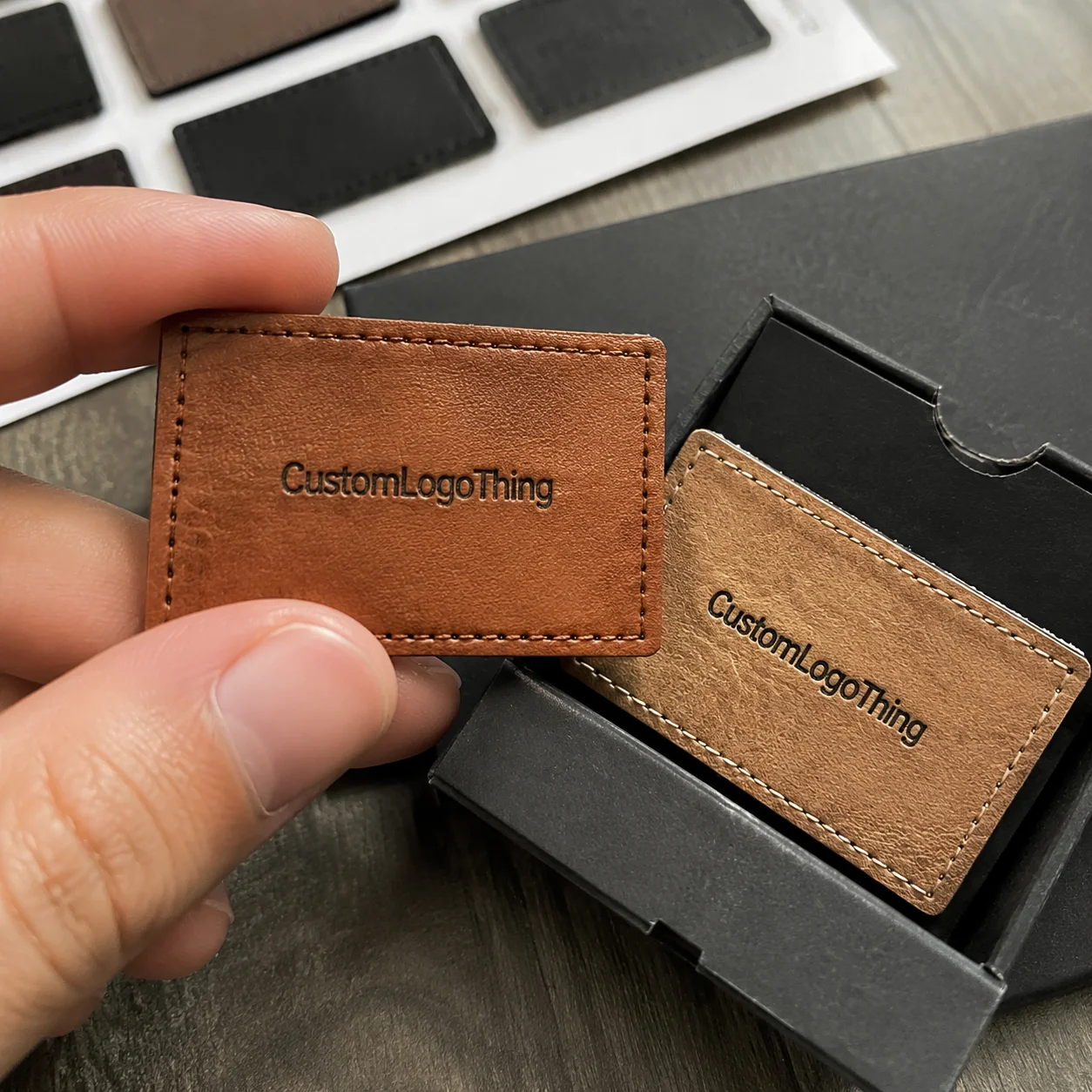
A low-priced label can still make a garment look finished, clean, and ready for retail. The trick with Custom Clothing Labels cheap is not chasing the thinnest material or the smallest quote. It is choosing the right construction, artwork, and quantity so the finished label survives stitching, washing, folding, packing, and normal wear.
From a buyer’s point of view, the label has several jobs. It identifies the brand, gives size or care information, sits comfortably against the skin, and supports the wider retail presentation. If it curls, frays, scratches, bleeds, or becomes unreadable after a few wash cycles, the low unit price stops looking like a smart buy.
A good budget label is simple, repeatable, and matched to the garment it will be sewn or applied to. That sounds basic. It is also where many label orders go wrong.
Why low-cost clothing labels can still look retail-ready
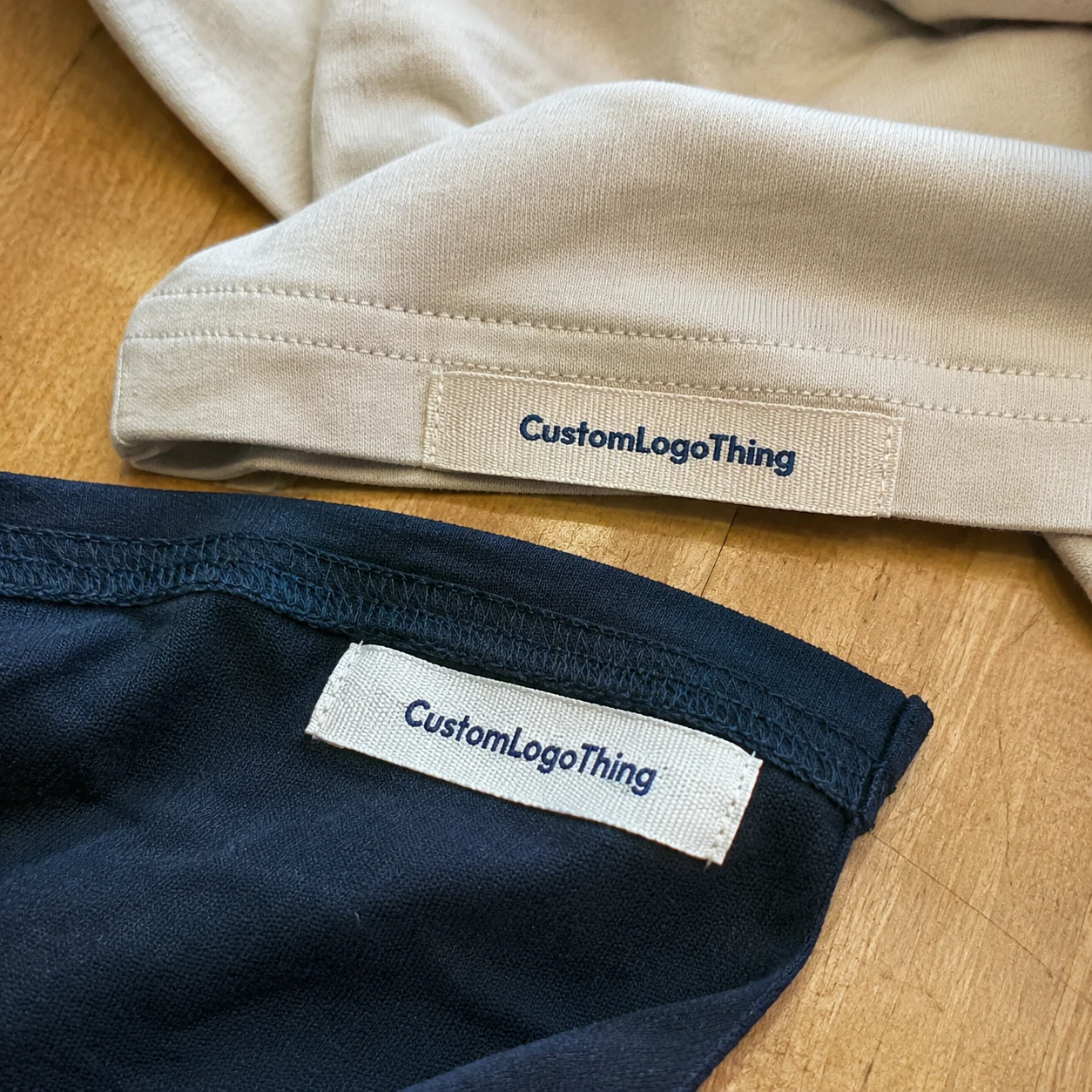
The lowest-cost label is not always the label that looks cheapest on the garment. Simple printed labels often look cleaner than overbuilt woven labels because the buyer kept the artwork readable, picked a practical fold style, and avoided finishes that added cost without improving the product.
Construction does a lot of the quiet work. A 25 mm x 50 mm center-fold printed satin label with one-color artwork may look sharper on a T-shirt neck seam than a crowded woven label trying to carry a logo, care icons, fiber content, origin details, and five lines of copy in the same space.
Buyers usually save the most money by deciding what the label must do first. Does it carry the brand only? Does it need wash instructions? Is it a size tab? Will it sit outside on a hem, or hide inside a hoodie? Once that is clear, extras can be trimmed.
Metallic thread, edge merrowing, specialty cuts, high color counts, and unusually small type all affect cost or production risk. Some are worth paying for. Many are not.
Budget labels still need to hold up through wash exposure, garment movement, stitching tension, and repeated handling. For T-shirts, hoodies, children’s apparel, uniforms, and private-label basics, the label needs enough body to sew cleanly without becoming stiff or scratchy. A rough label in a neck seam gets noticed fast, and not in a useful way.
Budget buying works best when the target is clear: a clean brand mark, readable care details, and a unit price that still protects the margin at volume.
That is the real buying frame. Not premium language pasted over cheap material. The goal is a label that looks intentional, repeats accurately on reorders, and supports the rest of the packaging without becoming the most expensive small part of the garment.
Label materials and styles that protect the budget
Material choice sets the tone for the whole order. Printed satin and printed polyester are often the most budget-friendly choices for clean branding, size information, and care instructions. They can carry small text better than many woven styles, especially if the copy is printed at a practical height, often around 5 pt to 7 pt depending on the font, ink contrast, and label surface.
Woven damask usually costs more, but it gives a more elevated texture for boutique apparel, outerwear, and visible brand patches. The catch is detail. Thread has physical width, so tiny letters, hairline marks, and tight negative space can fill in.
Cotton twill has a natural feel and works nicely for heritage-style apparel, craft brands, and goods with a warmer visual tone. It is not automatically the cheapest path once printing, cutting, and finishing are included. Heat-transfer labels remove the sewn-in tag entirely, which can help athleticwear, base layers, and children’s garments, though setup, application temperature, and fabric compatibility need to be checked carefully. A transfer that works on cotton jersey may not behave the same way on stretch polyester or coated performance fabric.
| Label Type | Typical Best Use | Budget Signal | Practical Watchout |
|---|---|---|---|
| Printed satin | Care labels, size labels, inside brand labels | Often low cost at small to mid quantities | Can feel slick; edges must be finished cleanly |
| Printed polyester | Durable care tags and bulk basics | Strong value for repeat orders | Needs good ink adhesion for wash durability |
| Woven damask | Boutique branding and visible logo labels | Higher minimums may lower unit cost | Fine details can fill in if artwork is too small |
| Cotton twill | Natural-look apparel and craft brands | Moderate cost depending on print method | May shrink or soften differently after washing |
| Heat transfer | Tagless shirts, activewear, kidswear | Efficient for repeat garment programs | Requires fabric and wash testing before scale |
Fold style also affects cost and performance. Straight-cut labels are simple, but exposed edges may fray if the material is not sealed properly. Center-fold labels work well in neck seams and side seams because the raw edge is captured in stitching. End-fold labels create a finished look on both sides and are common for outer hem branding. Book-fold labels carry more information, though they use more material and can add handling time.
Standard sizes help control the quote. A 1 inch x 2 inch label, a 1.25 inch x 2.5 inch label, or a compact 20 mm x 40 mm care tag tends to price more cleanly than a custom shape with tight tolerances. Simple artwork, one or two colors, and a practical fold usually protect the budget while keeping the brand mark legible.
Spend a little more when the garment demands it. Babywear needs a soft hand-feel and no sharp edge. Workwear needs stronger wash durability because laundering may be hotter and more frequent. Boutique goods may justify woven damask because the label supports the full package: garment, hang tag, insert, and outer presentation.
Match the label to the garment weight. A heavy woven label on a lightweight ribbed tee can pucker the seam. A thin satin tag on a dense canvas jacket may look underbuilt. Good packaging logic applies here too: the component should fit the product, not fight it.
Artwork specs, sizing, and construction details to lock in
A clean quote starts with clean specifications. Before asking for pricing, gather the finished size, fold style, label placement, order quantity, garment type, color count, and required content. If the label must include size, country of origin, fiber content, RN number, care symbols, or wash instructions, say so early. Those details change the layout and sometimes the material choice.
Vector artwork matters because labels are small. A logo that looks fine on a website can fall apart on a 25 mm woven mark if it relies on hairline strokes, gradients, or tightly spaced letters. For woven labels, thread limits detail. For printed labels, ink spread and fabric texture can soften fine lines. Most label problems begin as artwork problems that nobody slowed down to fix.
- Finished size: Confirm width and height after folding, not just flat size.
- Seam allowance: Leave enough blank area for stitching, often 3 mm to 6 mm depending on the seam.
- Edge clearance: Keep text away from cut or folded edges so it does not disappear.
- Fold position: Check that logos and care copy remain visible after folding.
- Color count: State thread or ink colors clearly, using Pantone references when color matching matters.
For small labels, text layout needs discipline. Care copy should not be squeezed into a logo label unless the label is sized for it. One common mistake is trying to fit five languages, five care icons, fiber content, origin, and a brand mark into a label meant for neck branding.
Split the job if needed: one logo label and one care label. That can be cheaper than forcing one complicated label through multiple proof revisions.
Finish also needs a decision. Satin gives a smooth, slightly glossy face. Matte polyester looks quieter and may suit minimalist apparel. Woven texture feels more permanent and can read as higher value, especially if the garment is sold folded with a hang tag and branded packaging. For broader merchandising programs, it can help to coordinate labels with Custom Labels & Tags so garment branding, stickers, and hang tags feel related without requiring identical materials.
Prepare one primary production file and one backup version for future reorders. The backup might simplify tiny text, reduce color count, or separate care information from the logo. Keeping approved specs on file reduces rework. It also helps hold the price down because the supplier spends less time rebuilding artwork, correcting fold marks, or guessing how the label should sit on the garment.
Cost, pricing, and MOQ signals buyers should compare
Pricing is driven by quantity, material, size, color count, fold style, finishing, and speed. A simple printed polyester care label at 5,000 pieces may price very differently from a woven damask center-fold label at the same quantity.
As a working range, basic printed labels may land around $0.04 to $0.12 each at several thousand pieces, while woven labels may run closer to $0.08 to $0.25 each depending on size, thread count, density, and finishing. These are not fixed numbers. They move with artwork, freight, and order terms.
Minimum order quantity deserves careful attention. Printed satin or polyester labels often support lower entry quantities because setup can be lighter and production can move quickly. Detailed woven labels may need higher minimums to stay economical because loom setup, thread loading, and finishing time have to be spread across enough pieces.
If you are buying Custom Clothing Labels cheap, ask for tiered pricing at 500, 1,000, 2,500, 5,000, and 10,000 pieces. The unit cost may drop enough at the next tier to justify holding inventory, especially for evergreen sizes or core colors.
| Quantity | Printed Satin Estimate | Woven Damask Estimate | Buyer Takeaway |
|---|---|---|---|
| 500 pcs | $0.12-$0.22 each | $0.20-$0.40 each | Good for testing, but setup weighs heavily |
| 2,500 pcs | $0.06-$0.14 each | $0.12-$0.28 each | Often a practical small-brand breakpoint |
| 5,000 pcs | $0.04-$0.12 each | $0.08-$0.25 each | Better for steady apparel programs |
| 10,000 pcs | $0.03-$0.09 each | $0.06-$0.18 each | Best for repeat basics and private label |
Ask about hidden costs before comparing quotes. Setup fees, artwork prep, sampling, shipping, rush service, and duty can change the landed cost. Reorders matter too. If the same tooling, artwork, or production file can be used again, the repeat order may avoid some first-run charges. If the supplier has to rebuild the file each time, that small waste becomes expensive over multiple seasons.
For a retail garment, the label cost has to fit the target price. A $0.20 label may be easy to justify on a $90 hoodie but harder on a $12 promotional tee. The best value is the balance between acceptable MOQ, reliable quality, and a cost structure that leaves room for sewing, packaging, freight, and margin.
If you also buy custom printed boxes or other branded packaging, compare landed cost across the full presentation, not the label alone. A garment label is tiny, but it touches compliance, branding, comfort, and returns. That is a strange amount of responsibility for something that may cost less than a button.
Responsible sourcing and material choices can also influence buying decisions. For paper-based tags or supporting package inserts, the Forest Stewardship Council provides useful certification context. For broader package testing and transit planning, ISTA standards are helpful when labels are part of a full apparel fulfillment program.
Production steps and turnaround from proof to shipment
The production path is straightforward when the specs are clean. First comes the quote request and specification review. Then artwork is checked for file type, size, color count, text clarity, and fold placement. After that, a digital proof is prepared for approval.
Production should not begin until the buyer signs off on the proof. Even a 2 mm fold shift can hide part of a logo or care line.
After approval, production begins. Printed labels are printed, dried or cured as required, cut, folded if needed, and packed. Woven labels are set up on looms, woven to the approved design, cut, folded, heat sealed or finished, inspected, and packed. Heat transfers follow their own process, often involving film preparation, adhesive layer control, sheet or roll finishing, and application testing.
Turnaround usually starts after proof approval, not after the first email. That distinction matters. A supplier may quote 8 to 12 business days for production, but if artwork revisions take six days because the care copy keeps changing, the calendar stretches.
Printed labels often move faster than woven or multi-fold labels. More complex runs may need sampling, wash checks, and closer inspection before the full quantity is released.
- Proof time: Often 1 to 3 business days after complete artwork is received.
- Production time: Commonly 7 to 15 business days depending on label type and volume.
- Transit time: Can range from a few days to two weeks depending on shipping method and destination.
- Rush work: Possible on some printed orders, but rush fees and capacity limits should be confirmed before ordering.
Ask for proof time, production time, and transit time as separate lines. One vague lead time is not enough for a launch calendar. If garments are waiting at a sewing contractor, a label delay can hold the entire batch. Reorder planning should begin before stock gets tight, especially around holidays, freight congestion, or large seasonal collections.
How dependable suppliers keep costs controlled
A dependable supplier does more than quote a low number. The useful work happens before production starts: checking label size against placement, spotting unreadable copy, warning about risky fold choices, and asking whether a label needs to survive standard home laundering or heavier commercial washing. Those checks reduce waste, and waste is one of the quiet reasons cheap labels become expensive.
Accurate quoting is the first sign. The quote should identify material, finished size, flat size if folded, quantity, colors, finishing, setup, shipping, and timing. Clear proofing is the second sign. The proof should show dimensions, fold lines, cut lines, artwork placement, and color references where needed. If a buyer cannot tell what will be made from the proof, the proof is not doing its job.
Consistency matters as brands grow. A label used across black, white, navy, and heather gray garments should look like the same brand every time. Seasonal collections can shift fabric, dye lots, and sewing locations, so the label becomes one of the anchors of the package branding. Repeatable output is not glamorous. It protects shelf presentation and helps customers recognize the product again.
Quality checkpoints should include color verification, trim accuracy, fold alignment, stitch-zone clearance, count accuracy, and wash-safe finishing. For woven labels, density and thread contrast deserve review. For printed labels, ink adhesion and edge sealing matter. For heat transfers, application temperature, pressure, dwell time, and peel method need to be documented.
Custom Logo Things supports buyers who need labels as part of a broader branded packaging program, including hang tags, stickers, inserts, and Custom Packaging Products. That can simplify ordering because the label is not treated as a loose afterthought. It becomes one coordinated component in the retail presentation.
If you are comparing suppliers for affordable Custom Clothing Labels, pay attention to how they handle questions. Slow or vague answers before payment rarely improve after production starts. A reliable partner helps you avoid the wrong material, the wrong fold, and the wrong quantity before those choices become cartons of unusable labels.
How to order the right labels on budget
Start with the basics. Choose the label style, finished size, garment type, artwork file, quantity target, and required copy. If the label needs care instructions, fiber content, country of origin, or size information, prepare that text before proofing. Clean inputs shorten quoting and reduce revision time.
Ask for a quote that separates unit cost, setup, shipping, and special finishing. True landed cost is the number that matters, not the lowest unit price on a line item. A label quoted at $0.06 can cost more than a label quoted at $0.08 if the first quote hides shipping, setup, or artwork cleanup. For bulk orders, even a few cents per label matters, but only if the label works on the garment.
- Request pricing at several quantities so you can see the real MOQ breakpoints.
- Confirm material, fold style, finished size, and placement before approving artwork.
- Review the proof at actual size, especially tiny text and fold placement.
- Save the approved file, spec sheet, and reorder details for the next run.
- Place replenishment orders before the last carton of labels is opened.
Affordable does not have to mean careless. The right budget label is durable enough for the garment, readable enough for compliance and care, and repeatable enough for future production. If you need Custom Clothing Labels cheap, build the order around the right specs first, then compare price. The cheapest label is only a bargain if it can be sewn cleanly, read easily, washed safely, and reordered without starting over.
FAQ
Are custom clothing labels cheap for small orders?
Small orders can be affordable, but the unit price is usually higher because setup, proofing, and handling costs are spread across fewer labels. Printed styles often give buyers the lowest entry point for small runs. Ask for pricing at multiple quantities, such as 500, 1,000, and 2,500 pieces, so you can see whether a slightly larger order lowers the cost enough to justify it.
Which label material is cheapest for custom clothing labels?
Printed satin or printed polyester is often the most budget-friendly choice for clean branding and care information. Woven damask usually costs more, but it can deliver a more premium finish for boutique apparel and visible brand labels. The cheapest option should still match the garment weight, wash requirements, and skin-contact expectations.
What MOQ should I expect for affordable clothing labels?
MOQ depends on material, construction, and artwork complexity. Simpler printed labels often support lower minimums than detailed woven labels because setup is lighter. Ask for tiered pricing so you can compare the minimum run with larger breakpoints and choose the quantity that fits your inventory plan.
How can I lower the price without sacrificing quality?
Use a standard size, choose a simple fold style, keep the color count low, and avoid unnecessary special finishes. Clean vector artwork also helps because it reduces manual prepress time and proof revisions. If the garment allows it, printed polyester or satin can be a strong value choice.
How long does production usually take after approval?
Timing depends on label type, order size, and proof approval speed. Printed labels usually move faster than woven or multi-step label builds, with many standard runs falling into a 7 to 15 business day production window after proof approval. Shipping time should be confirmed separately from production time so you know the real delivery window.