Custom Clothing Labels for Hotel Brands: Buyer’s Guide
Custom Clothing Labels for hotel brands do more than carry a logo. They affect the first tactile impression a guest gets from a robe or uniform, guide housekeeping through sorting and laundry, and help keep a property’s apparel program consistent across repeated use. A good label disappears into the experience in the right way: it feels soft where it should, stays readable after washing, and supports the garment instead of fighting it.
For hotel teams, that makes labeling a production decision, not a decorative one. A label has to survive commercial laundry, folding, skin contact, and handling by staff who are trying to move quickly. If you already treat Custom Labels & Tags as part of your broader Custom Packaging Products program, the same discipline applies here. The goal is the same: clean brand execution with fewer failures in the field.
There is also a practical procurement angle. The wrong label can fray, curl, scratch, or fade faster than the garment itself. That creates replacement cost, extra labor, and a weaker brand presentation. The right label spec prevents those problems before they start.
Why labels matter on every hotel garment
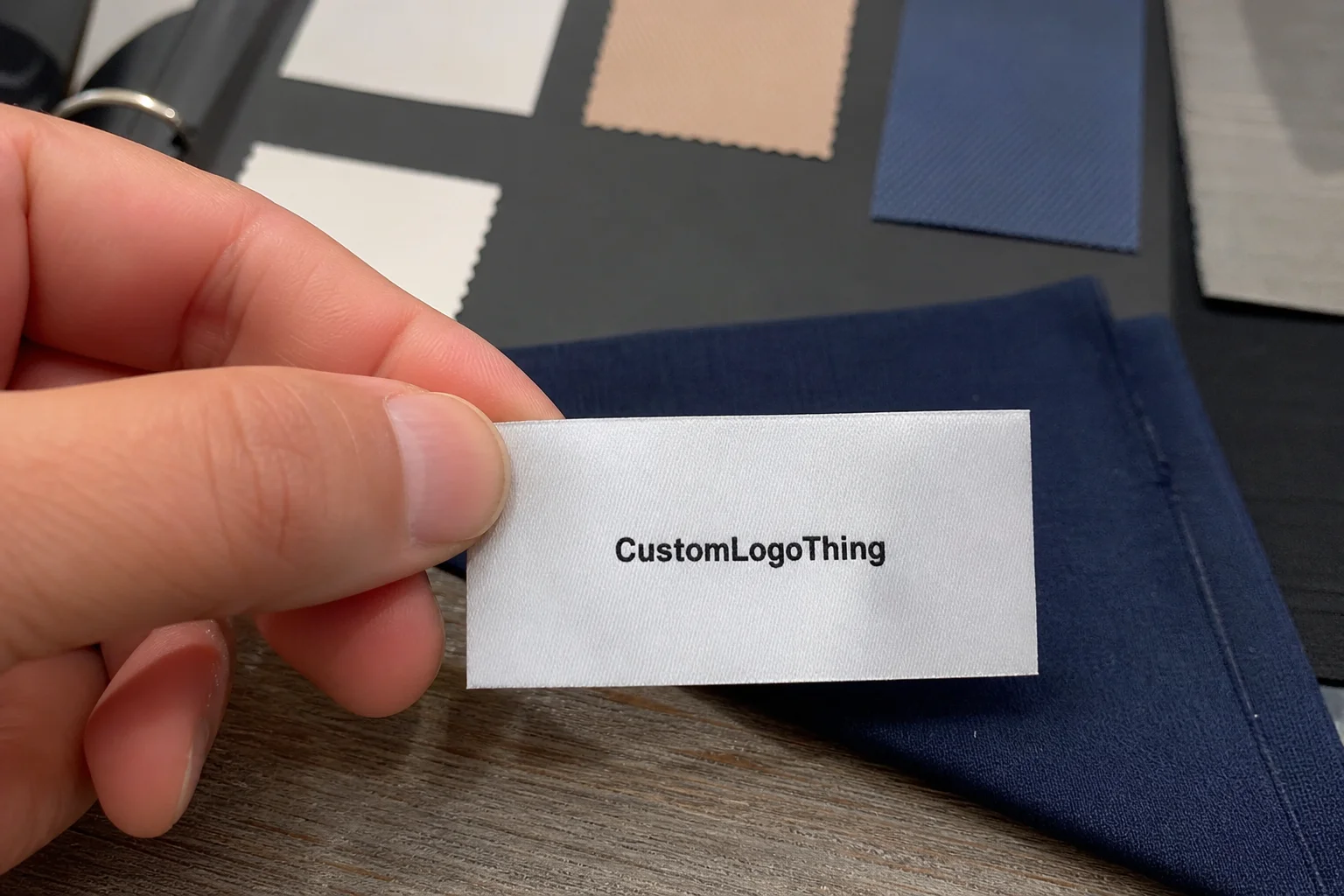
Custom Clothing Labels for hotel brands sit at the intersection of guest comfort, staff workflow, and visual consistency. They are part of the garment system, not an add-on. A robe, spa wrap, or uniform can be beautifully made and still feel unfinished if the label is stiff, blurry, or badly placed.
The tactile effect shows up fast. A guest slips on a robe, feels a scratchy tag at the neck, and the fabric no longer feels luxurious. A housekeeping team opens a uniform carton and finds labels that are hard to read or inconsistent between sizes, and sorting slows down. A retail tee in the gift shop loses perceived value if the label looks generic or wears out after a few washes. Small details do real work in hospitality because they are handled often and judged quickly.
Most hotel programs need several label types, not one:
- Decorative brand labels for robes, uniforms, and retail apparel
- Size labels for sorting and inventory control
- Care labels with washing instructions and fiber content
- Internal ID labels for SKU tracking, department marking, or property use
That mix matters because not every garment serves the same function. A front-desk blazer needs a different label treatment than a spa wrap, and a guest-facing robe should not be handled the same way as a back-of-house shirt. The label spec should follow the wear environment, laundering method, and the amount of skin contact the garment will see.
There is a broader brand lesson here too. The same attention that goes into retail packaging or branded packaging should go into apparel finishing. If the materials, print quality, and finish do not match the brand level, the mismatch is obvious in the hand. Even a strong garment can feel downgraded by the wrong label.
Production process and turnaround for hotel label orders
The production process usually starts with a brief that is more specific than a logo request. A useful label brief includes artwork, dimensions, label type, color count, attachment method, garment category, and the expected wash environment. If the label will sit against the neck seam of a robe, be sewn into a poly-cotton uniform, or be exposed to commercial laundering, say so early. Those details affect material choice and finishing.
After the brief, the supplier prepares a proof. Depending on the label construction, that proof may show a weave simulation, print layout, fold style, or heat-transfer artwork. Buyers should slow down at this stage and check spelling, logo scale, contrast, size wording, fiber-content text, and care instructions. Proof corrections are inexpensive. Corrections after production starts are not.
Turnaround depends on the construction method and the level of finishing. A woven label has a different production path from a printed satin label, and a heat-transfer order is handled differently again. For a standard order, approval and production often take about 12 to 15 business days after proof sign-off, although sampling, revisions, and complex finishing can extend that window. Multi-property rollouts usually need more time than a simple restock.
Sampling is worth the extra step. A strike-off or sample pack lets the team inspect hand feel, readability, size accuracy, and how the label behaves on the actual textile. That check catches issues that do not show up in a digital proof, especially on soft robes, textured spa fabrics, or stretch garments. On those items, even a slight stiffness or an awkward fold can be noticeable immediately.
Lead time also depends on the operating calendar. Opening dates, property renovations, seasonal uniform changes, and spa rebrands all create fixed deadlines. A conservative schedule leaves room for proof revisions, sample approval, and a small margin for shipping delays. If a rollout is tied to a hard date, that buffer is part of the plan, not a luxury.
A label order for hospitality should be treated as a controlled production job: clear specs, a real sample check, and enough time to correct problems before the full run begins.
For teams that like outside references on packaging and production controls, the Packaging and Processing Suppliers Association is useful for general standards, while ISTA is a strong source on transit testing and shipment integrity. Neither replaces a production spec, but both reinforce the same point: small components need testing before they scale.
Cost, pricing, and MOQ factors that change your quote
Pricing for custom clothing labels for hotel brands usually comes down to five variables: material, construction, size, color count, and quantity. Attachment style matters too, along with any special finishing or packaging. A vague request like “logo label for robes” forces the supplier to guess, and that usually results in a wider price range than necessary.
MOQ, or minimum order quantity, exists because setup work has to be spread across the run. Artwork prep, machine setup, color matching, proofing, and finishing all carry fixed costs. Smaller hotel groups tend to see higher unit prices because those fixed costs are allocated across fewer pieces. Once quantities move past common thresholds such as 1,000, 5,000, or 10,000 units, the unit price usually improves, depending on the label type and complexity.
Special features increase cost, but they can improve performance. A woven edge may cost more than a simple cut edge, yet it often looks cleaner and resists fraying better. A soft satin construction can cost more than a basic printed label, but it may be a better fit for robes and spa wear that touch the skin all day. Heat-seal backing can reduce sewing labor, although it needs to match the garment fabric and laundry conditions.
| Label option | Typical use | Approx. unit cost at 5,000 pcs | Strengths | Tradeoffs |
|---|---|---|---|---|
| Woven label | Uniforms, premium brand marks | $0.12-$0.24 | Durable, polished, clear brand detail | Can feel firmer than satin |
| Printed satin label | Robes, spa wear, soft garments | $0.10-$0.20 | Soft hand, good readability | Can show wear sooner than woven |
| Heat transfer label | Tagless comfort, active uniforms | $0.08-$0.18 | No sewn-in scratch point | Requires the right fabric and application process |
| Cut-and-fold label | Inner seams, care information | $0.09-$0.19 | Clean placement, flexible formats | May require more sewing time |
Those figures are directional. The final quote can move with custom folds, special inks, multiple size variants, rush timing, and design complexity. A short run with several SKUs can cost more per unit than a larger standardized program even if the label itself is simple.
Compare quotes on a landed-cost basis. Ask whether sampling, shipping, art revisions, and reorder setup are included. Some suppliers price aggressively on the label itself and add fees later. Others build more into the base price and keep the process clearer. For hospitality procurement, the lowest unit price is not always the lowest real cost.
If your brand is paying attention to material sourcing across printed collateral and packaging, FSC-certified paper-backed components can be a useful reference point. The FSC standard does not replace performance requirements, but it can support a broader sustainability story when paper inserts, cartons, or information cards are part of the label program.
Material and attachment choices that affect comfort and wear
Material choice is where guest experience meets laundry reality. Woven labels are a strong fit for uniforms and premium branding because they are durable and usually hold up well through repeated washing. Printed labels are often smoother against the skin and can work better for robes, spa garments, and other items where comfort matters most.
Satin sits in the middle for many hotel programs. It feels soft, prints clearly, and can carry care instructions without the firmer hand of some woven constructions. Heat-transfer labels remove the sewn-in tag entirely, which is useful for tagless comfort on garments that touch the body directly. The tradeoff is that the textile and application process need to be right, or the print can wear poorly.
Attachment method should be chosen with the fabric, laundering method, and labor model in mind. Sew-in labels are reliable and familiar, and they work across a wide range of garment types. Heat-seal or iron-on backing can speed installation in some programs, but it has to be tested against the actual textile. Peel-and-stick labels are useful for internal sorting or short-term staging, not for long-term garment use.
A practical shorthand helps procurement narrow the choice:
- Woven labels for durability and a premium appearance
- Printed satin labels for softness and strong readability
- Heat transfer labels for tagless comfort and cleaner interiors
- Cut-and-fold labels for care content and flexible placement
For hotel garments, the best option depends on the textile, the wash cycle, and how visible the label is to the guest. A luxury robe with a scratchy inner seam needs a softer solution. A housekeeping uniform with heavy turnover needs stronger wash resistance. The garment use case should set the spec, not the logo file alone.
Compliance details belong in the layout from the beginning. Care symbols, fiber content, and any region-specific language need to stay readable through repeated laundering. Buyers often treat brand artwork and compliance text as separate tasks, but in practice they are one label program. That is the same logic used in other packaging systems: the graphic needs to support the operational and regulatory job at the same time.
Step-by-step ordering workflow for hospitality labels
A clean ordering workflow reduces delays and keeps revisions under control. The process should begin with the use case. Is the label for a guest robe, a spa wrap, a housekeeping shirt, or retail apparel sold through the gift shop? That answer tells the supplier whether softness, durability, readability, or visual finish should carry the most weight.
Next, build a spec sheet. Include garment type, fabric content, expected wash method, quantity, dimensions, brand colors, attachment preference, and required compliance text. If the brand has approved files or Pantone targets, include those as well. The more exact the brief, the fewer assumptions the supplier has to make.
Internal approval is often the slowest part. Marketing usually wants the logo to look right. Operations cares about stock flow and lead time. Housekeeping cares about feel and durability. Procurement cares about unit cost and reorder logic. If those groups are not aligned before proofs are sent, the project stalls right where speed matters most.
- Define the garment category and use case.
- Select the label style and attachment method.
- Confirm dimensions, colors, and compliance text.
- Review the artwork proof and mark corrections clearly.
- Approve a sample on the actual garment fabric.
- Move into production and set the reorder plan.
Testing on the actual garment matters more than testing on paper. Fabric stretch, seam placement, nap, and thickness all affect how a label sits. A design that looks clean on one textile can pucker or curl on another. That is especially true on soft fabrics, loose weaves, and garments with decorative edges.
If labels are part of a broader branded packaging system, the same order discipline should apply across all physical brand assets. Whether the project involves retail packaging, a uniform program, or a guest amenity kit, the sequence should stay the same: brief, proof, sample, production. Anything looser than that tends to create avoidable rework.
Common mistakes hotels make when spec'ing labels
The most common mistake is choosing a label that looks good on screen but feels wrong in hand. A glossy mockup does not tell you whether the label will scratch skin, crease at the seam, or fade after commercial laundering. For hospitality, the tactile result is the real result.
Another frequent problem is underestimating replacement needs. Hotels rarely order labels once and stop. There are restocks, size replacements, property additions, and seasonal refreshes. If those future needs are not built into the plan, the brand ends up with mismatched versions across locations or garment groups.
Artwork issues also slow projects down. Missing color references, low-resolution files, vague placement notes, and last-minute logo changes all create avoidable proof rounds. A clear file package speeds up the process, and so does a naming system that separates garment type, size run, and property code without confusion.
Hotels also make the mistake of using one label style for every garment category. A luxury robe, a housekeeping shirt, and a retail tee should not automatically share the same construction. The robe may need a softer hand, the uniform may need stronger durability, and the retail item may need a more premium visual finish. Matching the material to the use case keeps the brand coherent.
Finally, some teams skip the reorder plan. That is risky. If the label is tied to a property-wide rollout, set a par level and decide who approves changes. When the first batch is gone, the second order should match it exactly. A label program loses value fast if each reorder becomes a new interpretation of the brand.
Next steps for a label brief procurement can approve
If procurement needs a fast path forward, the best next step is a short but complete brief. Collect garment categories, fabric types, label dimensions, estimated quantities, compliance text, and the preferred attachment method. Add brand files, color references, and the expected wash environment. That gives the supplier enough information to quote accurately without guessing.
Ask for a sample pack or a test run before committing to the full order. That is the simplest way to compare hand feel, print clarity, and durability on actual hotel textiles. A small sample often reveals things a proof cannot, especially with dark fabrics, soft robes, and logos that depend on contrast.
Set the reorder logic before the first shipment leaves the dock. Decide who approves changes, what the target stock level is, and how far ahead reorders should be placed. For hotels that refresh uniforms seasonally or property by property, this prevents rushed reprints and inconsistent label versions later.
The short version is straightforward: custom clothing labels for hotel brands should be specified like operational components, not decorative extras. If they are treated as part of the garment system, they can support guest comfort, laundry performance, and brand presentation at the same time.
What should custom clothing labels for hotel brands include?
At minimum, include the brand name or logo, size information, and any required care or fiber-content details. If the garment is washed commercially, the text should stay readable after repeated laundering. For multi-language properties or regulated markets, add the required language and compliance elements for that region.
Which label material works best for hotel uniforms and robes?
Woven labels are a strong choice when the hotel wants a premium look with excellent wash durability. Printed or satin labels can feel softer against the skin, which is useful for robes, spa wear, and other guest-facing garments. The right option depends on fabric type, wash conditions, and how visible the label will be.
How do I estimate quantity for hotel clothing labels?
Start with the number of SKUs, then add backup stock for lost items, replacements, and future size runs. For multi-property operations, factor in each location separately so one site does not run short while another holds excess inventory. If turnover is high, plan for a higher par level because housekeeping and uniform replacement can move faster than expected.
What affects the price of hotel brand clothing labels the most?
Quantity is usually the biggest driver, followed by material choice, color count, finished size, and attachment method. Rush timing, sampling needs, and special finishes can also increase the final quote. To compare prices fairly, confirm whether shipping, revisions, and sample costs are included.
How long do custom clothing labels for hotel brands usually take?
Timeline depends on proof approval, sampling, order size, and the production method chosen. Simple printed labels may move faster than complex woven or specialty-finish orders. If the labels are tied to an opening, renovation, or seasonal uniform change, build in extra time for review and rework.


