Buyer Fit Snapshot
| Best fit | Custom CMYK Tissue Paper projects where brand print, material claims, artwork control, MOQ, and repeat-order consistency need to be specified before quoting. |
|---|---|
| Quote inputs | Share finished size, material target, print colors, finish, packing count, annual reorder estimate, ship-to region, and any compliance wording. |
| Proofing check | Approve dieline scale, logo placement, barcode or warning zones, color tolerance, closure strength, and carton packing before bulk production. |
| Main risk | Vague material claims, crowded artwork, missing packing details, or unclear freight terms can make a low unit price expensive after revisions. |
Fast answer: Custom CMYK Tissue Paper: Printing, Cost, and Timing should be specified like a repeatable production item. The safest quote records material, print method, finish, artwork proof, packing count, and reorder notes in one written spec.
Production checks before approval
Compare the actual filled-product size with the drawing, then confirm tolerance on folds, seals, hang holes, label areas, and retail display edges. Reserve space for logos, QR codes, warning copy, and material claims before decorative graphics fill the panel.
Quote comparison points
Review material grade, print process, finish, sampling route, tooling charges, carton quantity, and freight assumptions side by side. A quote is only useful when the supplier can repeat the same color, closure quality, and packing count on the next order.
Custom CMYK tissue paper changes the first impression of a package before the product is even visible. A plain mailer opens, a printed sheet appears, and suddenly the whole presentation feels more deliberate, more finished, and usually more expensive than the materials would suggest. That effect is not a trick. It comes from a simple visual truth: a branded layer inside the box tells the customer the package was considered as a whole, not assembled from leftovers.
I have seen a lot of packaging decisions get judged by the wrong benchmark. Buyers focus on the carton, the sticker, or the insert and treat tissue as a minor detail, then wonder why the package still feels plain. In actual production, tissue shows up early in the unboxing sequence, gets touched directly, and carries a surprising amount of identity for a relatively modest spend. Custom CMYK tissue paper is built for logos, gradients, illustrations, and repeat patterns in full color, which makes it useful for retail packaging, e-commerce inserts, subscription boxes, seasonal launches, and influencer kits. The result depends on more than artwork, though. Paper weight, ink coverage, print method, and order size all shape how polished the final sheets look once they are folded and packed.
For a packaging buyer, the real question is not whether tissue can be printed. It is whether the sheet still looks intentional after it is folded, tucked, wrapped, and shipped. That is where custom CMYK tissue paper proves its value, or exposes weak planning if the file, the stock, or the production expectations are off. Good packaging usually comes from a handful of small decisions made early, not one dramatic move at the end.
Custom CMYK Tissue Paper: Why It Looks Expensive Fast
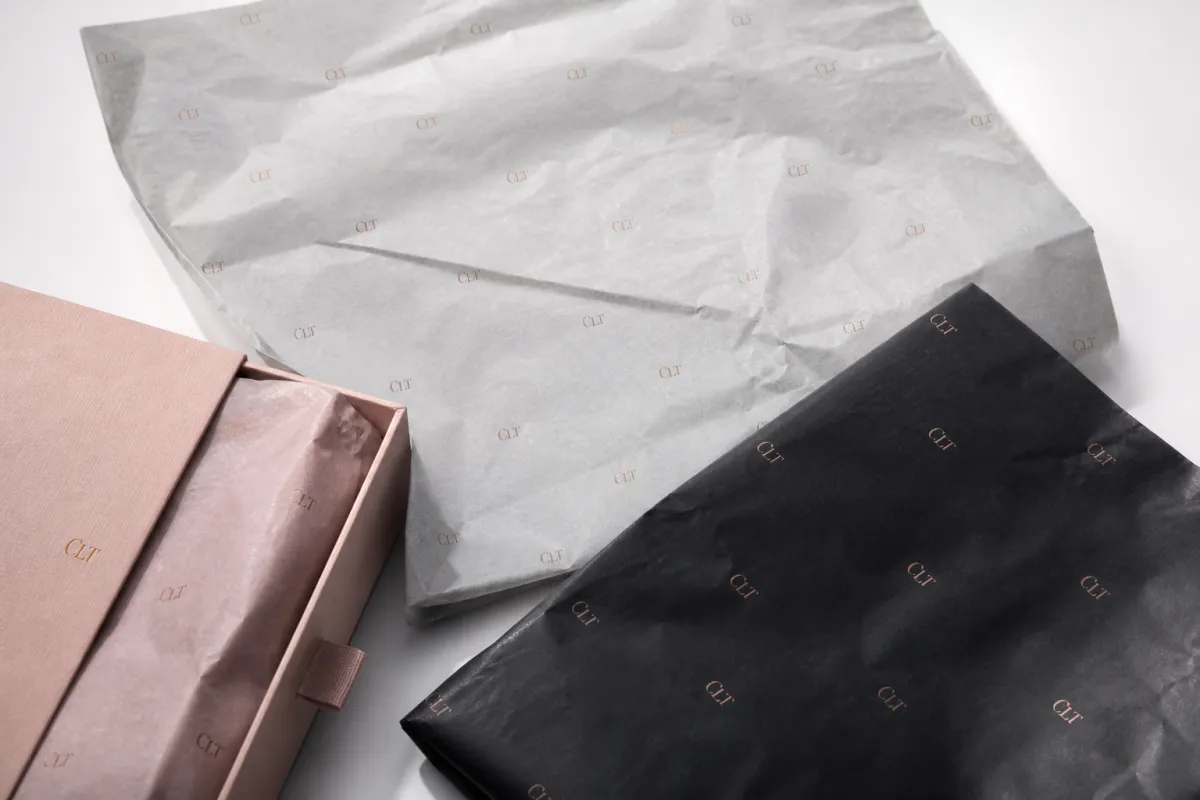
A plain mailer can feel generic in a heartbeat. Add custom CMYK tissue paper inside, and the package immediately reads as more considered. The customer opens one more layer, sees a print pattern or logo repeat, and the entire unboxing experience starts to feel more complete. That shift is not magic; it is visual layering, and it works because the eye naturally reads added surfaces as added effort.
Custom CMYK tissue paper gives the impression of a finished system. You are not redesigning a carton, replacing the structure, or committing to Custom Printed Boxes for every product variation. You are adding a light, visible component that fits into the packaging flow you already have. For many brands, that is the ideal point of contact: enough polish to matter, without forcing a full packaging overhaul.
The material also fits more use cases than many buyers expect. E-commerce inserts, gift wrapping, subscription boxes, boutique retail, cosmetics, candles, and accessories all benefit from custom CMYK tissue paper. It is especially useful for seasonal programs, because artwork can shift more easily than rigid packaging. Strong graphics, clean spacing, and a sensible fold can make even a simple sheet look careful and polished.
Most buyers end up in one of three practical situations:
- They need branded packaging that feels better than standard white tissue.
- They want full-color graphics for a campaign, holiday drop, or launch set.
- They are trying to coordinate tissue with labels, cartons, tape, and inserts without paying for a full redesign.
Paper weight changes the experience more than many people expect. A 17gsm sheet feels light and airy, while 22gsm or 28gsm adds body and can hide the contents a little better. Custom CMYK tissue paper usually sits in the 17gsm to 22gsm range for retail and e-commerce use because it folds cleanly and does not add much bulk. Heavier stock can be useful, but it changes the look and handling enough that buyers should treat it as a different choice, not a small adjustment.
Coverage matters just as much as the artwork itself. A full-bleed repeat pattern often makes custom CMYK tissue paper feel richer, but it also makes subtle shifts in tone more noticeable. A small repeat logo may print more cleanly, though it may not create the same visual presence. There is always a tradeoff between richness, clarity, and cost. The right answer depends on what the packaging needs to communicate in the moment.
If the rest of the package is being built at the same time, it usually helps to treat the tissue as one part of a coordinated set instead of a standalone item. Brands often order tissue, labels, and inserts through Custom Packaging Products so the unboxing feels connected rather than pieced together from unrelated parts. That kind of consistency makes the difference between a branded system and a stack of separate purchases.
Custom CMYK tissue paper is not always the cheapest line in the box. It is often the line that makes the box feel intentional. That is why it performs so well for product packaging that needs a stronger presentation without changing the base structure.
How Custom CMYK Tissue Paper Is Printed
The printing process begins with artwork separated into CMYK channels, then applied to tissue in a way that takes the paper’s transparency, absorbency, and fiber texture into account. Custom CMYK tissue paper behaves differently from coated stock because the ink has more room to spread and soften. The sheet is thin, the surface is porous, and both of those details shape the final result.
Coated board can hold crisp edges and deeper blacks more easily. Tissue does not behave that way. If you expect the sharpness you would get from offset printing on a carton or a heavy insert, you will probably be disappointed. Custom CMYK tissue paper is closer to a controlled compromise: enough color to brand the moment, but not so much ink that the sheet turns muddy, stiff, or brittle.
Artwork setup is where good ideas often succeed or fail. High-resolution files help, though resolution alone will not save a weak layout. A repeat pattern needs to fit the sheet size, the bleed has to account for trimming, and the safe zone should keep logos away from the edge. Tiny text causes trouble. Hairline rules cause trouble. Very subtle gradients can disappear into the fibers of custom CMYK tissue paper.
A few setup rules are worth following:
- Use CMYK files rather than RGB so the color shift is predictable.
- Keep small text above 6 pt if you want it to survive production cleanly.
- Avoid ultra-thin rules; anything below about 0.3 mm can vanish on absorbent tissue.
- Build repeats with enough spacing so folds do not cluster the same graphic in one spot.
- Ask for a physical sample if the artwork uses gradients, skin tones, or very light brand colors.
Digital printing is often the practical choice for custom CMYK tissue paper in short and medium runs because it allows more flexibility. Designs can change without committing to large plate costs, which matters if you are testing a new branding concept or running a short seasonal drop. Plate-based methods can still make sense at scale, but the numbers only work when the volume is high enough to justify them. If you are ordering a few hundred sheets, digital printing usually fits the math better.
The print method is only part of the story. The paper itself shapes the look almost as much as the ink does. Some tissues absorb more and produce softer color. Some hold the color a little better, though they still read lighter than a coated sample. A digital mockup tells you the layout. A physical proof tells you whether custom CMYK tissue paper actually reads the way you expected once ink meets fiber.
There is also a real difference between a design that looks good flat and one that looks good folded. A repeat pattern can seem balanced on a monitor and still place the logo awkwardly once the tissue wraps around a product. With custom CMYK tissue paper, the fold pattern is part of the design, not something to think about after approval.
For brands that care about packaging consistency, it helps to compare tissue next to cartons, labels, and inserts instead of judging the sheet alone. If you already have branded packaging options selected elsewhere, bring those colors into the proof review so the tissue supports the full system. A package feels stronger when the parts speak the same visual language.
The proof can look good and still fail in the box. Tissue is honest that way. It shows every assumption you made about color, scale, and fold placement.
If you want a broader packaging reference point, the Institute of Packaging Professionals is useful for terminology and standards awareness, while the FSC site is worth checking if your sourcing story depends on certified fiber claims. Neither one prints tissue, obviously, but both help anchor the conversation in real packaging practice.
Custom CMYK tissue paper is not hard to print in theory. It is simply unforgiving about sloppy setup. Respect the material, and the final result often looks far better than the cost would suggest.
Custom CMYK Tissue Paper Pricing, MOQ, and Unit Costs
Pricing is where buyers get tempted by a low headline number and then get annoyed by the actual total. Custom CMYK tissue paper is shaped by sheet size, paper weight, print coverage, quantity, packing style, and freight. A quote that looks tidy on paper can stop looking tidy once setup, proofing, carton packing, and delivery enter the picture.
MOQ matters because setup cost has to land somewhere. Smaller minimums usually cost more per sheet since prepress, press setup, and handling are spread across fewer units. Larger volumes lower the per-sheet cost, but they also increase inventory risk. If the artwork is seasonal or likely to change soon, buying too much custom CMYK tissue paper can turn into stored cash on a shelf.
Here is a practical range buyers often see, though the final quote still depends on coverage and sheet size:
| Order Tier | Typical Quantity | Approx. Unit Cost | Best Use | Main Tradeoff |
|---|---|---|---|---|
| Short-run digital | 500-1,000 sheets | $0.24-$0.55 | Launches, test designs, small campaigns | Higher per-sheet cost |
| Mid-volume production | 2,500-5,000 sheets | $0.14-$0.28 | Ongoing e-commerce and retail packaging | Needs better forecasting |
| Large-volume run | 10,000+ sheets | $0.08-$0.18 | Established programs with stable artwork | More inventory and storage |
Those numbers are realistic enough to use as a planning frame, though they are not promises. A dense all-over pattern on custom CMYK tissue paper costs more than a lighter repeat logo. A larger sheet costs more than a small insert sheet. Heavier tissue can increase cost while also improving handling. A buyer should compare the quote to the actual customer experience, not just the paper line item.
Unit cost and landed cost are not the same thing. The per-sheet price may look attractive, then freight, packing, and sample charges show up and move the total higher than expected. A small domestic shipment might add $35-$180 depending on carton count and service level. International freight can climb much faster, especially if the order ships by air and is not being consolidated with other goods. Custom CMYK tissue paper is light, but cartons still occupy space, and carriers charge for that space regardless of thickness.
Here is the buying rule I would use: if custom CMYK tissue paper goes into every outgoing order, price it against customer perception and repeatability. If it only appears in launch kits or occasional promotional boxes, be honest about whether the higher unit cost still earns its keep. A premium-looking tissue sheet can support product packaging, but only if the effect matters enough to justify the spend.
Another detail that gets missed is print coverage. A full-sheet flood of ink often costs more than a centered logo repeat because it uses more color and requires tighter control. The same goes for two-sided printing, unusual sheet sizes, or custom packing methods. Custom CMYK tissue paper gets expensive fastest when the brief changes after the quote has already been built.
If you are comparing suppliers, compare what is included rather than staring at the lowest number. Does the quote include proofing? Are standard cartons included? Is artwork adjustment included or billed separately? Is there a surcharge for tighter color matching? A cheap print price for custom CMYK tissue paper means very little if every other line item is floating around it like loose confetti.
For broader sourcing decisions, many brands also review related items through matching product packaging so the budget does not get trapped inside one piece while the rest of the system feels unfinished. That kind of balance matters.
Custom CMYK tissue paper can become surprisingly economical at scale, but only when the cost drivers are understood. Most people look at the first number and stop reading. That is usually where the bad order begins.
Production Steps and Timeline for Custom CMYK Tissue Paper
The production flow is straightforward, but the timeline only moves as quickly as the slowest approval. A typical custom CMYK tissue paper order moves through artwork review, quoting, proofing, prepress, printing, drying, cutting, packing, and shipment. Miss a file detail at the beginning and the schedule can slip before anyone realizes what happened.
Proofing is usually where the process stays smooth or starts to drag. A digital proof may arrive in a day or two, while a physical sample can take longer depending on how the supplier handles samples. If the color needs revision, another round follows. For custom CMYK tissue paper, a few extra days on proof approval is normal. Rushing that stage often creates a bigger problem later.
Realistic timing ranges are more useful than optimistic promises. For a simple run with clean artwork, proofing may take 2-4 business days, production 8-15 business days after approval, and shipping another 3-7 business days domestically. International shipping can stretch further depending on customs, carrier capacity, and route. If your custom CMYK tissue paper order includes a dense full-coverage design, a custom size, or a complex repeat, build in more cushion. A launch calendar tends to appreciate the extra space even when nobody else does.
Here is where delays usually show up:
- Missing or low-resolution files that need redesign before prepress.
- Unclear color expectations, especially around brand colors on absorbent tissue.
- Back-and-forth on repeat size, logo spacing, or sheet dimensions.
- Peak production periods where the factory queue is already full.
- Shipping delays that have nothing to do with print quality and everything to do with logistics.
Good suppliers ask a few annoying questions for a reason. They want to know when the clock starts, whether weekends count, whether the proof needs signoff before production begins, and whether revisions reset the schedule. If you are buying custom CMYK tissue paper, ask those questions yourself. It is a lot easier to plan honestly than to discover on day nine that the order was never in production.
Lead time and transit time are different things, and buyers mix them up constantly. Lead time covers factory work. Transit time covers freight. A quote that says 10 business days may mean 10 business days before the shipment even leaves the dock. For custom CMYK tissue paper, that distinction matters because the sheets often support launches, events, or seasonal retail dates where timing is not flexible.
Paper drying and packing deserve respect too. Thin tissue can wrinkle if it is packed too soon or handled roughly. The print may be fine, yet the stack can arrive with curl or edge damage if packing is careless. That is why it helps to ask how the tissue is packed, not just how it is printed. Custom CMYK tissue paper is part print job and part handling job.
If your packaging plan already includes inserts, cartons, or campaign kits, line up the schedule early so the tissue does not show up long before the rest of the system. There is no reward for storing finished sheets for six weeks while you wait on other components. A well-run custom CMYK tissue paper order should fit the same launch rhythm as the rest of your branded packaging.
Common Mistakes When Ordering Custom CMYK Tissue Paper
The first mistake is design creep. Buyers keep adding logos, tiny copy, background texture, and decorative marks until the sheet looks busy and muddy. Custom CMYK tissue paper needs breathing room. If every part of the sheet is shouting, none of it feels premium. Simpler layouts usually print better and fold better.
The second mistake is edge placement. Put important artwork too close to the trim area and it may clip or drift during production. Tissue is thin, and small shifts become visible quickly. A safe margin is not a design tax. It is insurance. With custom CMYK tissue paper, a 0.25 to 0.5 inch cushion can be the difference between polished and sloppy.
The third mistake is color expectation. Screen color, coated stock color, and tissue color are not the same thing. They never were. They never will be. A brand can love a bright coral on a monitor and hate it on absorbent paper because the ink softens and the sheet itself changes the tone. That is exactly why a physical sample matters so much for custom CMYK tissue paper.
The fourth mistake is file quality. Low-resolution artwork, RGB files, jagged vector paths, and tiny type all look worse once they hit tissue. If you are using gradients, make sure they are smooth enough to survive print conversion. If you are using photos, expect a softer finish. Custom CMYK tissue paper can print full-color art, but it is not a forgiving medium.
The fifth mistake is buying the wrong quantity. Too little, and you reorder constantly, pay extra freight, and risk inconsistent color batches. Too much, and you sit on inventory that no longer matches the next collection. The right quantity depends on how stable your branding is, how often you repackage, and whether the tissue is tied to a short campaign or a long-term program. For custom CMYK tissue paper, the cheapest quantity is often the one you can actually use.
The sixth mistake is vague communication with the supplier. Never assume they know how you fold, what your box size is, or how much color variation your team can tolerate. Tell them the intended use: mailer insert, gift wrap, retail bag filler, or box liner. That context changes the recommendation. Custom CMYK tissue paper is a practical packaging component, not a guessing game.
One more point matters: do not compare tissue only against tissue. Compare it against the rest of your Custom Packaging Products mix. If the box, label, and insert are all tuned well, the tissue can be simpler and still look strong. If the other pieces are plain, then the tissue has to carry more of the brand work. That is packaging design, not luck.
Custom printed boxes still matter too. Tissue is a finishing piece, not a substitute for structure. If the box is weak or the fold is sloppy, the prettiest custom CMYK tissue paper will not rescue the package.
Expert Tips for Better Color, Finish, and Folding
Start with the material rather than the artwork fantasy. That is the easiest way to avoid disappointment. Custom CMYK tissue paper rewards designs that are clean, contrast-rich, and repeatable. Busy backgrounds can work, but only if the palette is disciplined and the brand marks are not trying to survive by force.
Designing for slight softening helps. Brand colors that are too exact on screen often look wrong once printed on tissue, because the paper absorbs and relaxes the ink. A red that tolerates a little warmth and a blue that can soften slightly will usually print better than a color that depends on razor-sharp precision. That is not a flaw in custom CMYK tissue paper. It is the medium telling you how it behaves.
Test orders are worth the effort when the design is new. Even 500 or 1,000 sheets can reveal a lot before you commit to a larger run. Look at the flat sheet, then fold it the way your team actually packs orders. The same custom CMYK tissue paper can look elegant in a stack and awkward in a box if the repeat lands poorly after folding.
Think about the fold pattern early. If your warehouse team wraps products in a specific sequence, the logo or pattern should land where customers can see it after opening, not buried on the underside of the wrap. A design that looks great in the file can still fail in real use. Custom CMYK tissue paper is judged in motion, not on a design board.
If sustainability matters to your brand, ask about fiber content, recycled content, and certification before you lock the order. A supplier should be able to explain whether the tissue is FSC-certified or otherwise sourced to a standard you can defend. For more context on certified fiber programs, the FSC site lays out the basics clearly. That kind of sourcing detail matters in retail packaging, especially when the product story already touches responsible materials.
Think in systems, too. Tissue, labels, cartons, tape, and cards should feel related. They do not need to match exactly, and matching everything too tightly can look stiff. The pieces should belong to the same packaging family. That is how custom CMYK tissue paper supports package branding instead of behaving like a one-off decoration.
If the tissue is doing too much work, the rest of the packaging is probably too quiet. Balance is the goal, not decoration for its own sake.
From a print standpoint, digital production makes sense for quick turnaround and lower MOQ orders, while offset printing is usually more relevant for cartons, inserts, and other board-based components. If your broader packaging plan includes custom printed boxes, do not assume the same production logic applies to tissue. It usually does not. That is why custom CMYK tissue paper deserves its own review process even inside a larger branded packaging program.
The best results usually come from buyers who ask direct questions early, insist on a physical proof, and keep the artwork honest. Custom CMYK tissue paper can look very expensive when it is done well. It can also look cheap in a hurry if nobody respects the material.
Next Steps: Request a Quote and Order Custom CMYK Tissue Paper
If you are ready to price a run, gather the artwork, decide on sheet size, estimate monthly usage, and set a target budget before you request quotes. That sounds basic because it is basic, and it saves you from comparing offers that are not actually asking the same thing. A good custom CMYK tissue paper quote should be specific enough that you can compare apples to apples instead of guessing which supplier quietly changed the assumptions.
Use a simple checklist before you approve anything:
- Send CMYK artwork in the correct resolution with bleed and repeat built in.
- Ask for a digital proof or physical sample, especially if the design uses gradients or light colors.
- Confirm sheet size, tissue weight, and print coverage before payment.
- Ask when production starts, whether weekends count, and how revisions affect the schedule.
- Verify shipping method, carton count, and whether freight is included or billed separately.
Compare suppliers on more than price. Look at proof support, print clarity, MOQ, Lead Time, and what is actually included in the quote. That is where the real difference shows up. Two quotes for custom CMYK tissue paper can look similar until one of them is hiding extra prepress charges or a shipping cost that makes the cheaper option expensive enough to be pointless.
If you are building a broader launch or refresh, review the tissue alongside your other branded packaging pieces rather than after them. A coordinated set feels stronger than a series of unrelated components. For many brands, the cleanest path is to start with one design, one size, and one controlled test run, then scale once the result is proven.
That approach also makes reorders easier. Once the file is dialed in and the fold logic is set, custom CMYK tissue paper becomes a repeatable tool instead of a one-time experiment. That is the real value: not just a better first impression, but a packaging component you can order again without crossing your fingers.
If you want to expand the rest of the kit, take a look at Custom Packaging Products and build the tissue around the same visual language. The goal is not to buy paper for the sake of it. The goal is to make custom CMYK tissue paper work as a practical branding asset that supports product packaging, shipping presentation, and retail packaging without creating extra headaches.
What is custom CMYK tissue paper used for in packaging?
Custom CMYK tissue paper is used to wrap products, line boxes, and add a branded unboxing moment without changing the whole package structure. It works well for retail, e-commerce, subscription boxes, gift kits, and promotional mailers where presentation matters. The sheet carries logos, patterns, or full-color graphics while staying light and easy to pack.
How much does custom CMYK tissue paper usually cost?
Cost depends on sheet size, print coverage, paper weight, quantity, proofing, and shipping. Lower MOQ orders usually cost more per sheet because setup is spread across fewer units. If you are comparing quotes, look at landed cost, not just the print line. That is where custom CMYK tissue paper often becomes more expensive or more reasonable than the headline number suggests.
How long does custom CMYK tissue paper production take?
Typical timing includes artwork review, proof approval, printing, drying, cutting, packing, and shipping. Simple runs can move faster, but revisions, custom sizing, and busy factory schedules push the schedule out. Ask the supplier when the clock starts and whether weekends or holidays affect the timeline for custom CMYK tissue paper.
Can I print photos or gradients on custom CMYK tissue paper?
Yes, CMYK printing can handle full-color art, but tissue is more absorbent than coated paper, so the result is usually softer. Photos and gradients work best when they have enough contrast and do not rely on tiny details. A physical proof is the safest way to see how custom CMYK tissue paper will actually read once printed.
What file should I send for custom CMYK tissue paper artwork?
Send a high-resolution print file in CMYK format with bleed, repeat spacing, and safe margins already built in. Vector logos, clean patterns, and simple layouts usually print more cleanly than tiny text or low-res images. If the supplier gives you a template, use it. That is the easiest way to keep custom CMYK tissue paper from coming back with clipped logos or a broken repeat.

