Paper Bags

Custom Coffee Paper Bags Factory Quote Request: Pricing Tips

✍️ Sarah Chen 📅 May 12, 2026 📖 13 min read 📊 2,512 words
Custom Coffee Paper Bags Factory Quote Request: Pricing Tips

A custom coffee paper bags Factory Quote Request is only useful when the brief is technical, not generic. Coffee packaging looks simple until the quote reflects the real build: barrier layer, seal geometry, print coverage, laminate choice, valve, zipper, and the fill process all affect cost and performance. Two bags that look similar on shelf can price very differently once those details are fixed.

That is why buyers should start with shelf life, shipping route, and fill weight before they ask for decoration options. A pack for fast retail turnover needs a different structure than one that must survive export, warehousing, and repeated handling. The right quote depends on whether the bag protects freshness, prints cleanly, and fits the line without rework.

Why a coffee bag quote changes once barrier specs are real
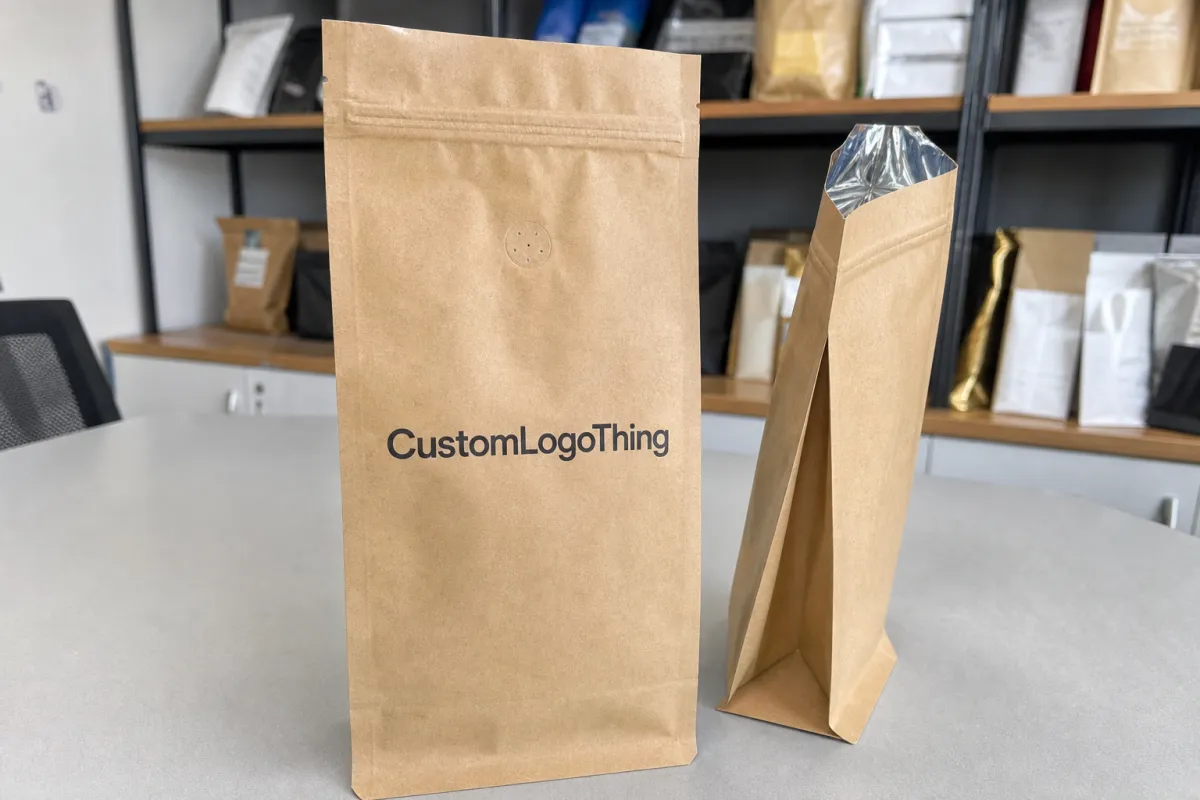
Why a coffee bag quote changes once barrier specs are real - CustomLogoThing packaging example

Early quotes are often based on assumptions. A buyer asks for a custom paper coffee bag, and the factory fills in a standard structure. Then the next revision adds a valve, a zipper, stronger barrier, and a higher-end finish. The product has changed, so the quote changes too.

Coffee is especially sensitive to packaging. Roasted beans release carbon dioxide, which is why a one-way valve matters. Ground coffee loses aroma faster, which is why barrier matters. Light paper can work for short sell-through, but it is not enough for longer storage, export channels, or brands that need the coffee to taste the same at the end of the route as it did at the start.

A practical buyer looks at preservation first and artwork second. If the goal is a 30- to 60-day retail cycle, a simpler structure may be enough. If the pack must sit in inventory or travel farther, the factory may need a higher oxygen barrier, tighter seal control, and more stable print performance. Those requirements can move unit cost by 15% to 40%, especially on small runs or complex finishes.

Paper affects print quality, hand feel, and shelf presence. The barrier layer does the preservation work. Confusing the two is one of the fastest ways to get a quote that looks attractive and performs poorly.

Coffee bag styles, liners, and valve choices that affect performance

Bag style affects both appearance and line efficiency. Flat bottom bags give the strongest shelf presence and a larger front panel for branding. Side gusset bags are compact and often more economical. Stand-up pouch formats sit between the two, balancing visibility, space efficiency, and cost. The best option depends on shipping, stacking, and how the pack will sell.

Paper choice matters just as much. Natural kraft gives a warmer, more rustic look and hides handling marks well. White kraft supports cleaner color reproduction and tighter brand matching. Coated paper usually improves ink definition, especially for full-bleed graphics or photo-heavy designs. Laminated paper can look sharper and resist scuffing, but it usually increases cost and may complicate recyclability claims.

The liner determines how well the bag protects the coffee. A basic PE liner offers moisture resistance for simpler programs. PLA may support compostable positioning only if the local disposal pathway is real. Foil or high-barrier film improves oxygen and aroma retention, which matters for specialty roasts and longer distribution cycles. Buyers should ask for the actual material stack, not just the marketing label.

For fresh roast coffee, the valve is not decorative. A one-way degassing valve releases carbon dioxide while limiting outside air entry. A zipper adds consumer convenience after opening. Tin tie works for lighter retail use, but it is not the right choice for every coffee program. Tear notches, euro holes, and windows each add a little labor or risk; together they can change the quote enough to matter.

  • Flat bottom: strongest shelf presence, more premium, usually higher setup and finishing complexity.
  • Side gusset: efficient to pack and carton, often the most economical route for simpler programs.
  • Stand-up pouch: flexible format with broad retail acceptance and moderate tooling requirements.
  • Valve + zipper: common for roasted coffee sold through retail, e-commerce, and export channels.

What specs control shelf life, print quality, and unit cost

A factory can only quote accurately when the brief includes size and construction. Start with bag dimensions, fill weight, paper grade, liner type, closure style, and print coverage. Then add target shelf life, because barrier requirements depend on how long the coffee needs to stay stable.

Paper weight is one of the first technical choices buyers overlook. A face stock in the 80 to 120 gsm range is common for coffee packaging, but the right number depends on stiffness, print method, and handling conditions. Liner thickness matters too. Many common builds use a PE or compostable inner film in the 30 to 50 micron range, although exact specs vary by supplier and barrier target.

Print method changes appearance and cost. Flexographic printing usually keeps setup cost lower for larger runs, especially with one to four colors. Digital print is useful for short runs or frequent artwork changes, but unit cost is often higher. Full-coverage CMYK graphics, gradients, and precise color matching need more proofing and press control than a simple two-color layout.

Food-contact paperwork and sourcing documents can also affect timing. Some brands need material declarations, ink compliance statements, or fiber sourcing proof such as FSC. If the coffee is export-bound, shipping tests matter as well. Packaging that looks fine on a table can fail after humidity swings, vibration, compression, and pallet stacking. Industry references such as ISTA and FSC are useful because they point buyers back to measurable standards rather than vague claims.

Logistics details also affect the final cost and the usefulness of the quote. Carton count, carton dimensions, pallet pattern, label placement, and shipping marks all influence receiving efficiency. A clear product packaging spec sheet prevents warehouse errors and customs problems later.

Volume tier Typical structure Indicative unit price What usually drives the cost
3,000-5,000 pcs Side gusset, kraft + PE, 1-2 colors $0.22-$0.40 Setup, lower run efficiency, fewer carton economies
5,000-10,000 pcs Flat bottom, printed kraft, valve, zipper $0.38-$0.72 Structure complexity, add-ons, print coverage
10,000-30,000 pcs High-barrier laminated paper, full-color print $0.55-$1.05 Barrier film, tighter quality control, more finishing steps

These ranges are indicative, not promises. They usually assume standard trade terms and exclude freight, duties, and special tooling. A small change in dimensions or print coverage can invalidate a comparison if the two quotes are not built on the same spec.

Custom coffee paper bags factory quote request: pricing, MOQ, and tiers

A clean quote breaks price into parts instead of hiding everything in one figure. Base material, print method, lamination, valve, zipper, carton packing, sample cost, and freight term should all be visible somewhere. If they are not, the low price may simply mean something important was left out.

MOQ is usually a production issue, not a sales trick. More colors increase setup, flat-bottom bags take more forming work than simple gussets, and high-barrier builds need tighter waste control. For many coffee programs, simple gusset bags can start around 3,000 to 5,000 pieces, while more complex flat-bottom or barrier-heavy builds may sit closer to 5,000 to 10,000 pieces. The exact floor depends on print style, equipment, and whether the order is planned for repeat business.

Tiered pricing makes comparisons easier. Ask for the same size, artwork, liner, closure, and shipping term at two or three quantity levels. Otherwise one supplier may quote FOB while another folds freight into the number, or one may assume a lighter liner that would never meet the shelf-life target. That is how quotes become impossible to compare.

When the quote is built correctly, the differences are easier to read. Entry-level structures suit test launches and short seasonal runs. Mid-tier builds usually add valves, zippers, and better print control for retail programs. Premium builds make sense when the coffee sits in export channels, needs a longer life on shelf, or has to stand beside stronger brand packaging. The premium number is not wrong if the structure actually needs it.

Quote tier What to ask for Good for Watch out for
Entry Basic structure, 1-2 colors, no window Test launches, smaller roasters, seasonal runs Limited shelf-life protection, less premium feel
Mid Valve, zipper, better liner, clearer print Retail packaging with repeat demand Higher MOQ and more approval steps
Premium High-barrier laminate, full-color print, specialty finish Brand-building, export, longer channel life Tooling, lead time, and tighter defect control

Production steps, lead time, and approval checkpoints

The production sequence should be simple: brief review, dieline confirmation, artwork proof, sample approval, mass production, inspection, and dispatch. If a factory cannot describe the process in that order, something is missing. A supplier that handles coffee packaging regularly should know where delays usually appear and how to stop them before the order starts.

Sampling usually takes 5 to 10 business days for a standard build. Special barrier materials, custom printing, or nonstandard closures take longer. Bulk production often falls into the 12 to 20 business day range after approval, but imported liners, peak seasons, and artwork changes can stretch the schedule. Shipping adds another layer of uncertainty, especially for export orders.

Approval checkpoints catch expensive mistakes early. Color proofing should match the brand guide, not a monitor. Seal tests should confirm that the zipper closes properly, the top seal holds, and the pack survives normal handling. Barcode and lot-code placement should be checked before the full run starts. A wrong code on 20,000 bags is a warehouse problem, not a minor print issue.

  • Proof check: artwork placement, copy, barcode, and dieline fit.
  • Sample check: feel, seal strength, zipper action, valve placement.
  • Pre-shipment check: carton count, pallet pattern, defect tolerance, labeling.

Buyers often rush the quote and slow the approval, but production works the other way around. A correct spec with a quick sign-off usually moves faster than a vague brief that triggers multiple correction rounds. Production is not rewarded for optimism; it is rewarded for decisions that do not need to be revisited.

How to compare factories without paying for recycled promises

Factories show process. Brokers show adjectives. That is the easiest filter. Ask for the machine list, QC workflow, material names, and sample photos tied to a real spec. Statements like “high quality” and “best price” say almost nothing.

Useful suppliers can talk about sealing stability, print registration, odor contamination risk, and transport durability without drifting into slogans. They should explain where defects are measured, how lot traceability works, and what happens if a bag fails seal checks during inspection. For coffee packaging, the difference between a pretty sample and a reliable run is often in those details.

A cheap quote may not be cheap at all. If it leaves out liner type, incoterm, or sample timing, the missing pieces often return later as revisions. A usable quote reads like a build sheet: structure, materials, print method, closure parts, and approval path. That level of precision is worth more than a low number that must be rebuilt.

When comparing factories, look for repeatability:

  1. They identify the paper weight, liner material, and closure parts clearly.
  2. They explain MOQ by structure and print method instead of giving one number for everything.
  3. They specify inspection criteria before production starts.
  4. They can repeat the same build without changing the pack quietly on the next order.

That discipline matters across packaging categories, not only coffee. The strongest suppliers work from specifications, not vibes.

What to send for a clean quote and faster sampling

The fastest way to get a useful quote is to send the details a factory would otherwise chase by email. Include bag dimensions, fill weight, bag style, valve and zipper requirements, artwork files, target quantity, and the destination port or country. If shelf life matters, say so plainly, because barrier decisions depend on it.

Reference images help more than most buyers expect. A photo of a current pack clarifies panel hierarchy, finish, zipper style, or seam placement faster than a paragraph. If you have a physical sample, that is even better because it gives the supplier a real baseline for stiffness, closure feel, and print tone.

A strong quote request also answers the operational questions:

  • What is the fill weight per bag?
  • Do you need food-contact declarations or FSC paperwork?
  • Is the order for domestic retail, export, or both?
  • Do you want FOB, EXW, or CIF pricing?
  • Will the design be reordered on the same spec if the launch works?

Before sampling is approved, confirm MOQ, sample timing, price tier, and reorder trigger. If the first sample is right, it becomes the reference for the production run. If it is wrong, correct it before bulk manufacturing begins. One adjustment at the sample stage is cheaper than one correction after 10,000 bags have been printed.

For coffee packaging, a complete brief is not extra work. It is the shortest route to a quote that holds up when procurement, finance, and production all review it together.

What should I include in a custom coffee paper bags factory quote request?

Include bag dimensions, fill weight, structure, liner type, print colors, closure needs, quantity, destination, and the shelf-life target. If barrier expectations are missing, the quote may be based on a lighter build than the coffee needs.

What MOQ is normal for custom coffee paper bags from a factory?

MOQ depends on bag style, print method, and finishing. Simple side-gusset bags can start lower, while flat-bottom bags, valves, zippers, and high-barrier materials usually raise the floor. Ask for tiered pricing so you can see where the unit cost changes.

How much do valve, zipper, and foil liner options change pricing?

A valve and zipper both add parts and assembly steps, so they increase unit price. Foil or other high-barrier liners usually cost more than a basic PE liner because they improve oxygen and aroma protection. The increase depends on the full structure, not one option alone.

How long does production take after artwork approval?

Sampling often takes 5 to 10 business days for a standard structure and longer for special materials or complex printing. Bulk production often takes 12 to 20 business days after approval, although imported components and peak seasons can stretch the schedule.

Can I get samples before I place a bulk order?

Yes. That is the safest way to verify seal quality, zipper feel, print accuracy, and overall structure. Expect a sample fee or freight charge, then use the sample to lock the spec before mass production starts.

A quote request works only when it reads like a packaging specification instead of a wish list. For coffee, the details that matter most are the barrier, closure, print method, and approval path. Everything else is secondary to whether the bag protects the roast, survives the route, and arrives looking like the brand intended.

Get Your Quote in 24 Hours
Contact Us Free Consultation

Warning: file_put_contents(/www/wwwroot/customlogothing.com/storage/cache/blog/5bf95f873f14b18a1baa41113b936c0e.html): Failed to open stream: Permission denied in /www/wwwroot/customlogothing.com/inc/blog/PageCache.php on line 20

