A Nylon Camp Hats factory quote request can look straightforward until the first number comes back 28% higher than expected because the closure, patch method, and packing style were never fixed in writing. That gap is rarely a trick. More often, it is what happens when a buyer sends a loose idea instead of a usable brief. A camp program buying 800 pieces for staff, a retailer planning a launch, and a promotional buyer ordering giveaways are not shopping for the same product, even if the blank hat looks identical on screen.
The practical goal is simple: remove enough uncertainty that the factory can price the job without building in a safety margin for every unknown. When that happens, the quote becomes comparable, the sample process gets shorter, and the risk of surprise costs drops. The difference usually shows up in the details first. Sewing count, reinforcement, closure hardware, decoration size, carton count, and artwork complexity tend to matter more than the headline description of "custom Nylon Camp Hats."
Buyers who handle apparel or promotional goods already know the pattern. The low unit price is only useful if it reflects the same fabric, the same decoration method, the same packing, and the same shipment term as the other quotes on your desk. If one supplier assumes bulk packing and another assumes individual polybags with hangtags, those offers are not competing on equal ground.
What a nylon camp hats factory quote request should include
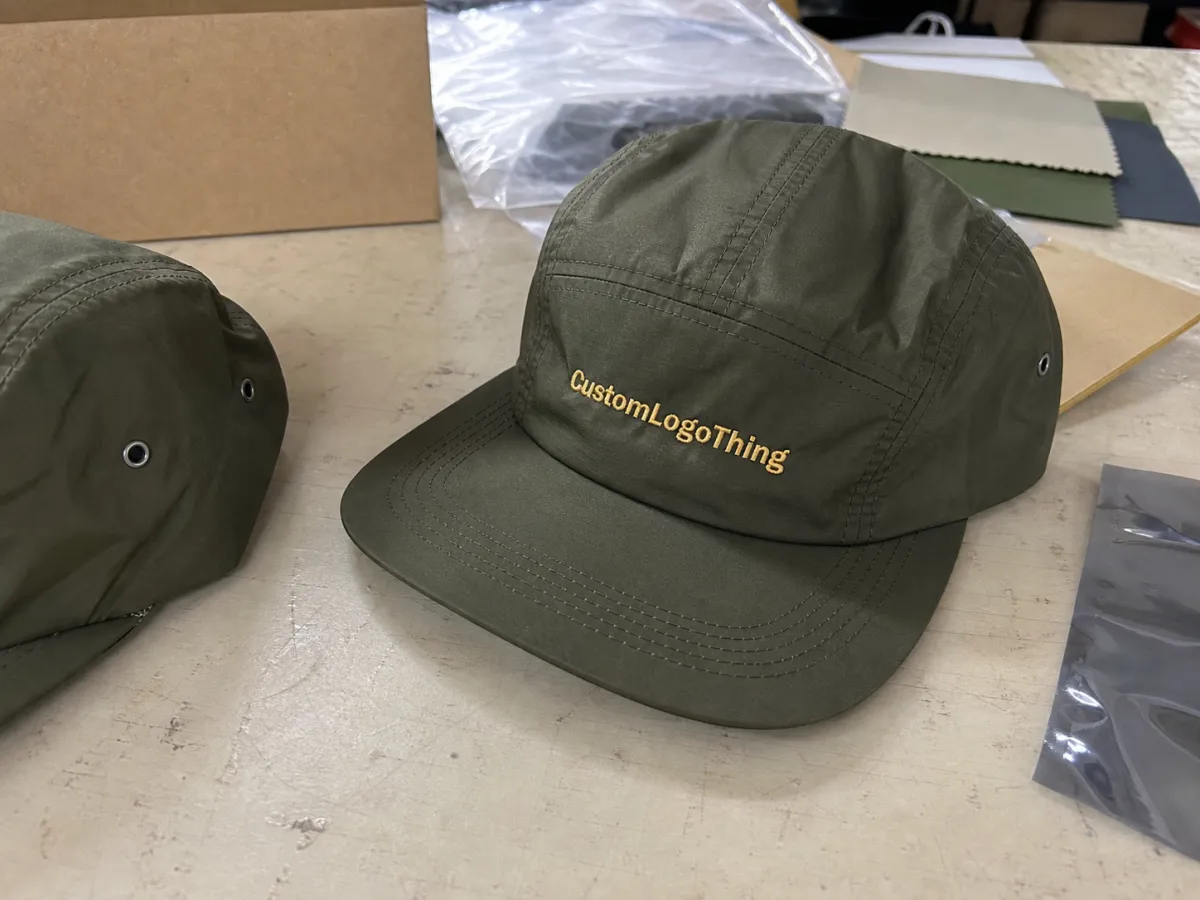
The cleanest nylon camp Hats Factory Quote request starts with the order context. A factory prices risk as much as labor. If the use case is unclear, the supplier has to guess at defect tolerance, packing expectations, and how much handwork the order may need. That is one reason a "simple hat" can be priced like a low-risk promotional item by one supplier and like a retail accessory by another.
State the purpose in plain language: retail launch, promo giveaway, camp program, team uniform, resale order, or event merchandise. Then give the numbers that drive production. A useful request normally includes:
- Target quantity and any tiered pricing targets, such as 300, 1,000, and 5,000 pieces.
- Delivery destination and the shipment term being requested, such as EXW, FOB, or DDP.
- Preferred fabric, such as lightweight nylon, recycled nylon, water-resistant nylon, or coated nylon.
- Color count for body, brim, lining, trim, and closure components.
- Decoration method, such as embroidery, woven patch, rubber patch, leather patch, or heat transfer.
- Packing style, including polybags, hangtags, size stickers, bulk cartons, or retail-ready packing.
- Artwork status, especially whether the logo is final, editable, or still in draft form.
That list saves time because it cuts down on back-and-forth. It also tells the factory whether the order fits a standard production line or needs extra setup. A snap closure, hidden seam tape, internal label, or custom badge can carry more cost than a small fabric upgrade. Buyers often focus on the shell fabric and overlook the parts that create labor.
Ask for the quote to be broken out by component. A workable response should separate the hat blank, decoration, packaging, sampling, and freight. A single lump sum can look tidy, but it hides where the money is going. That makes comparison nearly impossible, especially when one factory includes sampling and another does not. It also hides the difference between a real production quote and a placeholder estimate.
If a supplier cannot explain how unit price, sample fee, plate or mold cost, packing, and shipping fit together, the offer is not ready for comparison.
For buyers managing several suppliers, a one-page spec sheet is usually enough to keep the quotes aligned. The more fragmented the brief, the more likely you are to receive answers that cannot be compared cleanly. A strong quote request is not long; it is exact.
Nylon camp hat build choices that affect fit and durability
Start with the shell fabric
Nylon is a family of options, not a single material. Lightweight 70D or 210D nylon keeps the hat soft and packable, which suits travel retail and casual promo use. Coated nylon changes the feel immediately. It adds stiffness, improves water resistance, and usually costs more because the fabric is less forgiving to sew. Recycled nylon is now common in orders where the buyer wants a lower-impact story without moving to a heavier hand or a more structured cap.
Ask whether the fabric is plain woven, DWR-treated, or PU-coated. Those choices matter because they affect drape, stitch behavior, color saturation, and how the hat will age after being folded in a bag for weeks. A buyer looking at two samples side by side can often feel the difference before checking a spec sheet. The softer shell usually packs better; the coated shell usually holds shape better. Neither is universally superior.
Match the structure to the channel
Structure affects the whole production path. An unstructured camp hat feels relaxed and collapsible, which works for travel retail, outdoor events, and giveaway programs. A soft-crown five-panel style gives a clean front panel without the hard look of a full trucker cap. Curved brims feel more familiar to a broad customer base. Flat brims read more fashion-led and can narrow the market.
Fit is another place where details can derail the order. One-size-fits-most may be acceptable for a promo run, but retail buyers usually need a clearer head circumference range, often around 56-60 cm with an adjustable closure. If the closure is a fabric strap and slide, the fit can feel lighter and more flexible. A low-profile plastic buckle is usually faster to produce and easier to pack. Metal slides can raise cost and may scratch other goods in retail packaging if they are not protected.
Comfort details matter because they change how the cap wears over time. A thin sweatband can feel cheap after an hour outdoors, while a brushed inner tape or cotton-blend sweatband makes the cap more wearable. Ventilation eyelets, internal seam tape, and top-stitch density all affect perceived quality. None of these parts are glamorous. All of them show up in customer feedback.
Ask the factory to describe the build in the quote, not only in the art file. If the supplier understands seam count, panel shape, brim insert, and closure style before sampling begins, the chance of a fit complaint drops. That is especially true on nylon, where a small change in tension can alter the final shape more than buyers expect. A cap can look identical in a mockup and still behave differently once it is sewn, turned, pressed, and packed.
Decoration options buyers actually pay for on nylon camp hats
Decoration is where quotes split apart fastest. Two hats with the same blank shell can land at very different price points because the branding method changes labor, setup, and reject risk. Embroidery is still the most familiar option, but dense stitching on a light nylon shell can pull the fabric if the base is too thin. Woven patches preserve fine detail well and work for logos with small text. Rubber patches add dimension and usually require tooling plus attachment work. Leather patches create a premium finish, though they are not ideal for every outdoor use. Heat transfer and printed labels sit lower on the setup scale, but the finish quality depends on exposure, washing, and whether the design is expected to flex frequently.
Placement changes pricing as well. A centered front-panel logo is the simplest path. Side-panel branding, brim printing, or decoration placed across a seam usually adds alignment work. That extra handling is not expensive in isolation, but it does add up across hundreds or thousands of units. If the logo must line up with a seam, curve, or panel join, say so early. A simple patch and a seam-crossing patch are different jobs.
Artwork readiness matters more than many buyers admit. Send vector files, Pantone references if available, and a note on minimum line weight. If the logo includes fine text, ask whether it needs to be simplified for embroidery or woven patch production. Factories can help clean up files, but they should not be asked to guess at brand standards. If the decoration has to be applied before the crown is fully shaped, mention that too. Placement order affects distortion, especially on nylon, which can shift under heat and tension.
A useful way to compare suppliers is to ask for decoration options ranked by cost and durability. That exposes whether the factory actually understands the product or is only quoting from a blank template. The same request can also reveal whether a supplier is thinking about stitch density, patch edge finish, and long-term wear, or just about getting the quote out quickly.
Cost, MOQ, and unit pricing for custom nylon camp hats
The cheapest-looking quote is not always the cheapest landed cost. A proper quote should split fabric, decoration, labor, packaging, sampling, and freight. That way you can see whether a low unit price is being offset by expensive setup or carton charges. In apparel and packaging buying, the landed number is the one that matters. A good-looking piece of spreadsheet theater does not help once the goods hit customs or the warehouse dock.
For early screening, the ranges below are useful on standard custom nylon camp hats with one logo treatment and normal packing. Real pricing shifts with artwork complexity, fabric selection, color count, and destination.
| Order size | Typical unit price range | What usually drives the price | Quote risk to watch |
|---|---|---|---|
| 300-500 pcs | $3.10-$4.80 | Lower volume, higher setup absorption, less efficient carton use | Sample fees and decoration setup can make the first quote look high |
| 1,000-2,000 pcs | $2.25-$3.60 | Better labor spread, steadier material buys, easier packing math | MOQ by color or decoration method may still reduce flexibility |
| 5,000+ pcs | $1.55-$2.70 | Better fabric utilization, lower setup per unit, stronger freight efficiency | Color consistency and inspection discipline matter more at scale |
Expect separate one-time charges for sampling, plate work, or custom hardware. Sampling often lands around $35-$120, depending on how complex the hat is and whether multiple decoration tests are needed. Plate or mold fees for rubber patches, logo badges, or custom metal parts can run roughly $45-$180. Some factories credit part of that back on a bulk order. Some do not. It is a small detail until it becomes a budget line.
MOQ should be stated in plain terms. Some factories quote by total pieces, some by colorway, and some by decoration method. A woven patch may be accepted at 300 total pieces, while a molded rubber badge may need a larger run to justify tooling. Ask for the MOQ by total quantity, by color, and by artwork version. That makes internal planning much easier and avoids a late-stage surprise.
If tiered pricing is available, request at least three price breaks. The spread between 500 and 1,000 pieces may show whether scaling up actually improves margin or just adds inventory risk. A clear quote tells that story without forcing you to reverse-engineer the math. The most useful quote is usually the one that explains the cost structure in plain language, not the one with the prettiest PDF.
One more practical point: packing can quietly change the economics. Individual polybags, size stickers, hangtags, and carton labeling all add labor. If retail presentation matters, that cost belongs in the quote from the start. If the goods are moving straight to a warehouse, bulk packing may be better. The right answer depends on the channel, not the factory's default.
Process and lead time: from mockup to finished shipment
Lead time becomes manageable once it is broken into stages. A good request should ask the supplier to identify each milestone: inquiry, quotation, artwork review, sample approval, bulk production, inspection, packing, and export booking. If the factory gives only one total number of days, there is no way to see where the delay will happen. A quote with no stage breakdown is often a schedule estimate, not a production plan.
- Inquiry and quote - usually 1-3 business days if the spec sheet is complete.
- Artwork review and sampling - often 5-12 business days for a straightforward design.
- Bulk production - commonly 12-25 business days after sample approval.
- Inspection and packing - usually 2-4 business days, depending on carton count.
- Freight booking - air freight can move in days; sea freight is usually measured in weeks.
Sampling and bulk production are separate clocks. Buyers still get caught when a supplier says "20 days" and does not clarify that the number excludes sample development. The safer approach is to ask for two timelines: one for pre-production sample and one for bulk. If revisions are allowed, ask whether each revision adds one day, three days, or a full week. That detail matters more than most sales notes suggest.
Freight terms matter too. EXW, FOB, and DDP are not interchangeable, and the quote should say which one is being used. A low ex-factory price can become less attractive once inland pickup, export handling, and destination charges are added. Buyers who compare quotes without matching the shipment term are comparing different cost structures. That is one of the fastest ways to misread the market.
For transit performance, it helps to ask how the factory handles carton stress. Hats are not fragile in the same way glass is fragile, but crushed brims, deformed crowns, and scuffed closures still cause returns. Packaging tests modeled on common distribution stress, including compression and drop handling, are useful for longer routes. They are not required for every order. They are useful when the goods need to survive a rough chain from factory to warehouse to store floor.
If the calendar is tight, the real accelerator is fast approval. A complete art file, one decision maker, and a signed color reference often save more time than any promise of rush production. The production line can only move as quickly as the approval chain. That is a buyer problem as much as a factory problem.
Quality controls and factory documentation that reduce rework
Quality control on nylon camp hats should be measurable, not theatrical. The details that matter are stitch consistency, logo placement tolerance, shade matching, and closure durability. A clean sample is useful, but it does not guarantee that the rest of the run will match it. The 600th unit matters as much as the first one. Buyers should ask how the factory checks panel alignment, stitch density, patch placement, and loose threads before packing.
Inspection method matters as well. In-line inspection catches defects early. Final random inspection gives a broader view of batch quality. Photo approval before carton sealing can work for buyers who need one more visual checkpoint without hiring a third party. Each method has limits, but a supplier with no stated process is harder to trust. Silence on quality control is usually more useful as a warning sign than as a detail.
Documentation keeps the shipment from turning into a puzzle. A solid order normally needs a packing list, carton dimensions, carton count, shipping marks, and export details that match the broker's paperwork. Buyers who import regularly often ask for HS code guidance so the documents line up with customs entries. If certified packaging matters, ask whether the cartons are sourced from FSC-certified board. That is not essential for every order, but it can matter when retail compliance teams ask where the packaging came from.
Responsiveness is part of quality, too. A supplier who notices that the patch size is out of proportion, the buckle is too light for the intended use, or the packing spec does not match the shipping method is saving money before production starts. The best factories are not the ones that answer fastest; they are the ones that catch a problem before it becomes rework. On a simple hat order, that difference can be the margin between a smooth inbound and a warehouse headache.
One more buyer habit is worth keeping: ask for approval photos of the first production units before the run continues. That step does not solve every issue, but it often catches color drift or placement errors before they multiply. For lightweight nylon, that early check is especially helpful because the material can look slightly different under factory light than it does in natural light.
Next steps for sending a stronger quote request and comparing replies
Send one spec sheet and ask every supplier to price the same scope. A strong nylon camp hats Factory Quote Request includes quantity, material, structure, decoration method, colorway, delivery address, packing requirements, and target timeline. If those inputs are identical, the quotes become comparable. If they are not, the lowest number is often the least useful.
Comparing replies works better when you score the suppliers on a short list:
- Unit price at the quantity you actually need.
- MOQ and whether it changes by color or decoration method.
- Sample speed and whether revisions are included.
- Lead time from approval to shipment.
- Clarity of the communication, especially on packing and freight.
If the first response is vague, ask for a revised offer with line items and a mockup note before sampling begins. That is not being difficult. It is basic buying discipline. The same logic applies to payment terms. Confirm the deposit, the balance timing, and what happens if artwork changes after approval. The most useful supplier is the one that answers those questions directly and in writing.
Before placing the order, lock the final artwork, packing count, and shipment term in writing. That turns the quote into a usable purchase record instead of a loose proposal. For buyers who handle several cap programs a year, that discipline pays off quickly. A careful nylon camp Hats Factory Quote request does more than price a cap order. It sets the tone for the run, from sample to carton to delivery.
What should be included in a nylon camp hats factory quote request?
Include quantity, fabric choice, hat structure, decoration method, color count, packing style, delivery destination, and the shipment term being requested. Add artwork files and a target timeline so the factory can price sampling and production accurately. If the order is for retail, promotion, or camp use, say that upfront because it changes the way the supplier estimates labor and risk.
What is a normal MOQ for custom nylon camp hats?
MOQ depends on the factory, decoration method, and color setup. Some suppliers quote a minimum by total pieces, while others set it by colorway or by artwork version. Simple decoration can often support a smaller run, but specialty patches and custom hardware usually raise the threshold because of setup and tooling.
How do pricing and decoration choices change the unit cost?
Embroidery, woven patches, rubber patches, and printed labels each carry different labor and setup costs. More colors, special closures, extra labels, and retail packing usually raise the landed price even if the base hat looks inexpensive. On lighter nylon shells, small build changes can matter more than buyers expect because the material reacts quickly to stitch tension and heat.
How long does sampling and bulk production usually take?
Sampling and bulk production are separate timelines, so confirm both before approving the order. For many simple orders, sampling can take about 5-12 business days and bulk production another 12-25 business days after approval. A complete spec sheet and fast artwork sign-off often shorten the schedule more than any other factor.
How can I compare two nylon camp hat factory quotes fairly?
Compare line items, MOQ, sample fees, lead time, packaging, and shipping terms instead of looking only at unit price. Also check how clearly each factory explains revisions, inspection, and payment milestones. The better quote is usually the one that makes the whole order easier to execute, not the one with the lowest first number.


