Custom Coffee Paper Bags Supplier Comparison Checklist
Custom Coffee Paper Bags supplier comparison sounds simple until the samples land on your desk. Two pouches can share the same size, the same artwork, and even the same glossy finish, then behave very differently in production. One keeps coffee fresher, seals cleaner, and prints more consistently. The other looks fine in a PDF and starts failing once oxygen, shipping, and a real packing line enter the picture.
The useful comparison is not about which supplier has the prettiest mockup. It is about which one can match the bag to the roast, the shelf life, and the sales channel without padding the quote or hiding the tradeoffs. A small roaster shipping direct-to-consumer has a different set of needs than a grocery brand moving pallets through distribution. If your packaging program includes custom printed boxes or insert cards, the same logic should carry across the full packaging system, not just the coffee pouch.
A bag can look premium and still be wrong for coffee. The coffee will expose weak seals, loose liners, and sloppy conversion faster than a buyer will.
What supplier comparison should reveal
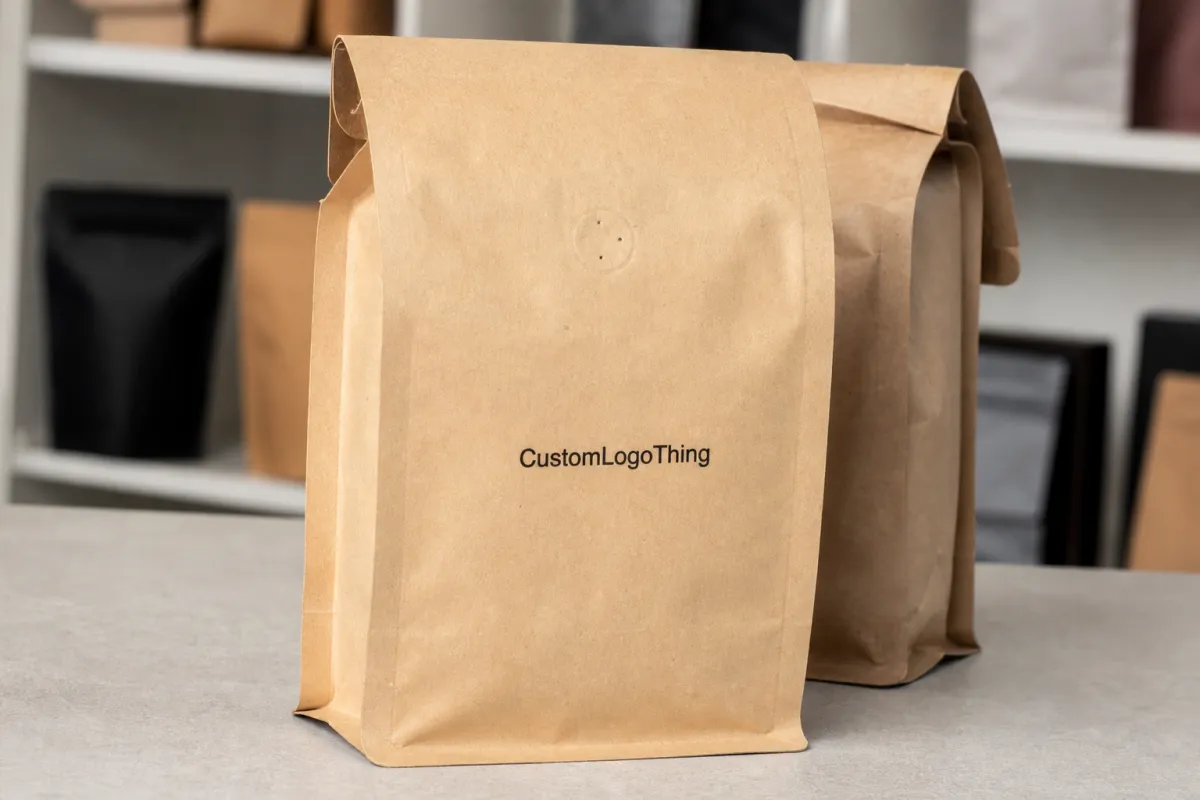
The first job of a supplier comparison is to separate design from function. Coffee is sensitive to oxygen, moisture, odor transfer, and light. A pouch that photographs well can still damage aroma if the barrier layer is thin, the seal area is inconsistent, or the valve is poorly mounted. Buyers often miss that because the sample arrives empty, clean, and carefully staged.
Two suppliers may send pouches that appear nearly identical. Under the hood, one can use a stronger laminate, better heat-seal performance, and tighter converting tolerances. The other may save money on liner thickness or closure quality. That difference rarely shows up in the first week. It appears later as weak seals, curls at the gusset, or bags that look worn before they should.
A practical comparison should answer a few direct questions:
- Will the bag protect freshness for the expected shelf life?
- Can the supplier hold color and registration across reorders?
- Does the closure survive repeated opening and closing?
- Will the pouch run cleanly on the buyer's filling equipment?
Ask for the exact structure, not the marketing version. Material stack, seal type, valve spec, closure type, and testing method matter more than a polished render. If a supplier cannot explain those details without drifting into sales language, the quote is probably stronger than the process behind it.
How the bag structure affects freshness and handling
Coffee packaging is a stack of small decisions, and each one has a job. The outer paper stock carries the look of the brand. The liner blocks oxygen and moisture. The one-way valve lets gas escape after roasting. The zipper or tin tie helps the customer reseal the pouch. The gusset helps it stand upright. The heat seal is the real closure. If one of those pieces is under-specified, the whole bag becomes less useful.
Outer kraft paper can create a natural, specialty-roaster look, but paper by itself does very little for aroma retention. For roasted coffee, a lined or laminated structure is usually the safer choice. Common structures include paper with a barrier laminate, paper with a metalized layer, or paper paired with an inner PE or similar sealing layer. The right choice depends on the fill weight, storage time, and whether the product sits on a shelf or ships quickly after packing.
Handling issues matter just as much as freshness. A bag that wrinkles badly, fills slowly, or jams the line costs labor. Tin ties are convenient for low-volume programs, but they can slow packing. Zippers help the customer, yet they add cost and can complicate conversion. A valve may be essential for freshly roasted beans, but a valve on a short-shelf-life promo blend may be overkill. The smart spec is the one that fits the operation, not the one that looks expensive in a catalog.
Size is another place where buyers get burned. A 250 g pouch that is overfilled looks stressed at the seal and sloppy at the top. An undersized bag can balloon at the gusset and make the label area drift. Fill behavior matters more than flat dimensions on a drawing. Ask the supplier how the bag behaves once it is actually packed with coffee, not just how it looks sitting empty.
If the packaging must survive retail display and e-commerce shipping, plan for both. A pouch that stands beautifully on a shelf may still arrive scuffed, crushed, or misaligned after transit. For direct-to-consumer coffee, a stronger seal and better surface durability are usually worth more than decorative extras.
Printing, branding, and finish options that change buyer perception
Printing is where packaging strategy becomes visible, and it is also where budget gets distorted fast. Flexographic printing works well for repeat orders and steady artwork. Digital printing suits shorter runs, seasonal offerings, and frequent design changes. Gravure sits at the high-volume end, with stronger consistency and lower unit costs once the cylinder expense is absorbed. None of these methods is universally better; each one fits a different buying pattern.
If the artwork changes often, digital printing can prevent dead stock and reduce setup pain. If one core SKU runs for months, flexo often gives a better balance of cost and quality. Gravure makes sense for larger retail programs that need heavy ink coverage and consistent output across long runs. The wrong choice is usually the one made because it sounded premium, not because it matched the order profile.
Finishes influence how the bag reads on shelf. Kraft texture signals handmade or earthy. Matte coating feels cleaner and more modern. Spot gloss can guide the eye to a logo or origin detail. Foil can work, but too much of it turns a coffee pouch into a costume. Window cutouts create visibility, yet they can weaken barrier performance or complicate the structure if the supplier does not handle them carefully.
Small print details separate a professional bag from a disappointing one. Barcode readability matters for retail scanning. Logo placement matters if the top seal trims into the design zone. Scuff resistance matters because dark inks often show freight wear faster than buyers expect. A bag that arrives marked up or misregistered makes the brand look careless even if the coffee is excellent.
For brands managing more than one packaging format, keep the visual language consistent. A pouch, a subscription box, and a shipping mailer do not need to match exactly, but they should feel related. That consistency matters across the line, including Custom Packaging Products, because a fragmented packaging system makes the brand feel improvised.
The best suppliers discuss print tolerance, color matching, and finishing limits without puffery. Ask whether plates or cylinders are retained, how they handle repeat orders, and how they control color drift between runs. That tells you more about the supplier than a gallery of polished mockups.
Cost, MOQ, and quote traps to watch
Price gets attention because it is easy to compare. The problem is that pouch quotes are rarely apples-to-apples unless the buyer forces them to be. A plain kraft pouch without a valve is not the same product as a laminated pouch with a zipper, valve, and soft-touch finish. If those are treated as comparable, the comparison is already broken.
Typical pricing shifts with size, paper weight, barrier layer, print method, closure type, and finishing complexity. At 5,000 pieces, a simple printed kraft pouch might fall around $0.12 to $0.22 per unit. Add a better barrier, zipper, and valve, and the range can move to roughly $0.18 to $0.35. Premium finishes, heavier coverage, or specialty structures can push pricing higher, sometimes to $0.28 to $0.60 or beyond. These are broad ranges, but they are useful for spotting quotes that are obviously out of line.
| Option | Typical MOQ | Price Impact | Best Fit |
|---|---|---|---|
| Digital print, simple zipper pouch | 500-2,000 pcs | Lower setup, higher unit cost | Short runs, seasonal blends, frequent artwork changes |
| Flexo print, lined pouch with valve | 5,000-20,000 pcs | Balanced setup and unit cost | Core SKUs, steady reorder programs |
| Gravure, premium finish, heavy coverage | 20,000+ pcs | Higher setup, lower unit cost at scale | High-volume retail programs |
The trap is not just unit price. Setup charges, plate fees, valve upcharges, freight, duties, carton specs, and repacking costs can change the real number quickly. A low quote that leaves out tooling or export packaging is not a bargain. It is a later surprise with better handwriting.
To compare quotes properly, every supplier needs the same spec sheet. Same size, same material, same closure, same print method, same finish, same quantity, same delivery term. Compare landed cost, not the teaser number. If one quote still comes in much lower, ask what was removed. Usually something was.
Production steps, lead time, and proofing timeline
A credible supplier should be able to walk through the production sequence without drifting into generalities. The usual path is spec sheet, artwork review, digital proof, plate or cylinder creation, printing, lamination if needed, converting, inspection, packing, and shipment. If a vendor skips over that chain, the schedule risk usually shows up later.
Timing varies by structure and artwork. Sample development and proofing often take a few days to two weeks, especially if the design needs revisions or the material is not standard. Full production commonly takes about 12 to 20 business days after proof approval for standard programs. Special finishes, multiple layers, or busy factory schedules can stretch that window. Freight is a separate variable. Air is faster and expensive. Ocean is slower and kinder to the budget. Launch dates should always carry buffer, because shipping tends to behave as if nobody planned for it.
Common delay points are predictable:
- Artwork changes that keep bouncing between teams.
- Color matching on dark or highly saturated designs.
- Missing compliance documents for food contact or FSC claims.
- Late approval after the supplier has already booked production time.
A supplier worth trusting asks for final dielines, bleed rules, and barcode placement early. They should also tell you whether the sample is a production sample or just a look-and-feel mockup. Those are different things. One proves the file looks right. The other proves the bag can actually be made.
For shipments that need a little more certainty, ask what testing they use for transit and seal performance. Many buyers reference ISTA testing standards for distribution abuse and look at common seal or leak checks when closures matter. That is not extra caution. It is standard discipline for packaging that has to survive real handling.
How to judge samples, tests, and supplier claims
Ask for filled samples, not just empty display bags. Empty pouches tell you almost nothing beyond graphic placement. Filled samples show the real behavior: how the bag stands, how the zipper feels, whether the seal holds, and whether the structure handles gas pressure after roasting.
A simple sample check can catch more problems than a sales deck ever will:
- Press the seals and look for wrinkles, weak spots, or uneven closure.
- Drop a filled bag from counter height and inspect the corners.
- Open and reclose the zipper several times to judge wear.
- Rub the printed surface to check scuff resistance.
- Hold the pouch to light to spot pinholes or thin areas.
If the supplier is making food-contact, FSC, recyclable, or compostable claims, ask for the documents that support those claims. The FSC site is a useful reference for understanding what certified sourcing actually means. For buyers, the point is not to collect logos. It is to separate a verified claim from decorative green language.
Ask how the supplier defines recyclability or compostability. Those words only matter if local infrastructure can process the material. A bag can be technically recyclable and still end up in landfill because the collection system cannot handle the structure. Biodegradable is even looser. Without a real disposal path, it is just a comforting word on a spec sheet.
Inspect samples after shipping, not only after production. Freight can crush corners, scuff coatings, and expose weak cartons. If the sample arrives damaged, that is a signal about the final packaging experience, not just the courier.
Common mistakes buyers make when comparing vendors
The first mistake is buying on price alone. That sounds disciplined until the bags arrive with weak seals, fading print, zipper failures, or a reprint because the launch batch missed its window. A lower quote can become the most expensive line item in the program.
The second mistake is mixing material claims. Buyers hear recyclable, compostable, and biodegradable used as if they mean the same thing. They do not. Material structure, ink system, and local disposal infrastructure all matter. If the claim sounds greener than the spec sheet, ask for the test basis and the end-of-life route.
The third mistake is forgetting the coffee itself. Roast weight, degassing behavior, storage time, and display conditions should shape the pouch. A 1 kg wholesale bag and a 200 g shelf pouch are not built the same way. Valve placement, gusset width, and carton fit need to match the actual use case.
There is also a measurement mistake that shows up often. Buyers choose by flat dimensions alone, then the pouch looks too tall, too narrow, or overly swollen once filled. That is a spec problem, not a design problem. Fill behavior should be part of the comparison from the start.
Finally, many teams overlook communication quality. A supplier that replies slowly, changes answers, or cannot confirm lead time in writing can turn a clean order into a mess. Packaging work depends on revision control as much as on materials. If the process is sloppy, the product usually follows.
Next steps for a smarter supplier shortlist
Start with a one-page spec sheet. Include bag size, roast weight, paper stock, barrier need, print colors, closure type, valve requirement, finish, target volume, and any certifications. That page does more to stabilize quotes than a week of vague emails.
Then ask at least three suppliers to quote the same package. Request pricing, physical samples, proof timelines, and a written note on what is included. Score each vendor on four things: print quality, structural fit, communication speed, and total landed cost. If the whole field is quoting the same spec, the comparison becomes useful instead of theatrical.
Reorder consistency matters just as much as first-order quality. A supplier that can make a good sample but cannot repeat the color, fit, or finish is not dependable over time. Coffee packaging programs fail quietly when the second and third runs drift from the first.
One more practical check: make sure the packaging system holds together beyond the pouch. Coffee bags, mailers, and Custom Packaging Products should feel like parts of the same brand, not unrelated purchases made at different times. A good program looks controlled because the details agree with each other.
The cleanest Custom Coffee Paper Bags supplier comparison is usually the least glamorous one. Same spec sheet. Same fill test. Same freight term. Same question asked of every supplier: can you repeat this without hidden compromises? That is the sort of comparison that protects freshness, keeps the brand honest, and stops the buyer from paying twice for the same mistake.
Frequently Asked Questions
What should I compare first when reviewing custom coffee paper bags suppliers?
Start with structure. The liner, seal type, valve, and closure matter more than the mockup. If the bag cannot protect aroma and handle shipping, the branding does not matter much. After that, compare MOQ, lead time, Proofing, and Reorder consistency on the exact same specification.
How do I compare custom coffee paper bags suppliers on price?
Use landed cost, not just unit price. Add setup, plate or cylinder fees, freight, duties, and repacking charges before deciding who is cheaper. Make every supplier quote the same size, material, finish, and quantity. A quote that looks low because it quietly removes a valve or upgrades less material is not a real saving.
What is a normal MOQ for custom coffee paper bags?
MOQ depends on the print method and structure. Digital short runs often allow lower quantities, while flexo and gravure usually need higher volumes to justify setup. Special finishes, custom valves, and multiple print colors can raise MOQ quickly. If a supplier will not state MOQ clearly, the answer is probably uncomfortable.
How long does production usually take for custom coffee paper bags?
Samples and proofing can take a few days to a couple of weeks depending on revisions. Full production often runs about 12 to 20 business days after approval for standard orders, but complex finishes or busy periods can stretch that. Freight is separate, and artwork changes or compliance review are common reasons schedules slip.
Should I choose kraft paper bags or lined bags for coffee?
Plain kraft paper is not enough if you need real aroma protection or a useful shelf life. A lined or laminated structure is usually better for roasted coffee because it controls oxygen and moisture more effectively. The right choice still depends on roast weight, storage time, and whether the bag lives on a shelf, in a carton, or in a mailer.

