A Custom Coffee Paper Bags unit cost breakdown is not just paper plus printing. That would be convenient. It would also be wrong.
The finished price is built from bag format, material thickness, barrier layers, print method, ink coverage, valve choice, zipper type, packing count, freight cube, and order quantity. A few millimeters in the gusset or a small change in closure can move the unit price more than most buyers expect.
Two 12 oz coffee bags can look almost identical on a retail shelf. One may cost more because it uses a heavier kraft laminate, a foil barrier, a one-way degassing valve, a pocket zipper, matte varnish, and a wider bottom gusset. None of those features are automatically wasteful. None are automatically necessary either. The work is figuring out which ones protect the coffee, which ones support the brand, and which ones quietly eat margin.
Roasters, private label teams, subscription sellers, and retail buyers usually need reliable pricing before they commit to a blend launch, a wholesale pitch, or a seasonal run. Custom Logo Things helps compare practical specifications so the bag holds up in production, protects aroma, presents well, and lands near the target cost. Pretty simple goal. Getting there takes better details than “kraft bag with logo.”
Why a Few Millimeters Can Change Your Coffee Bag Price
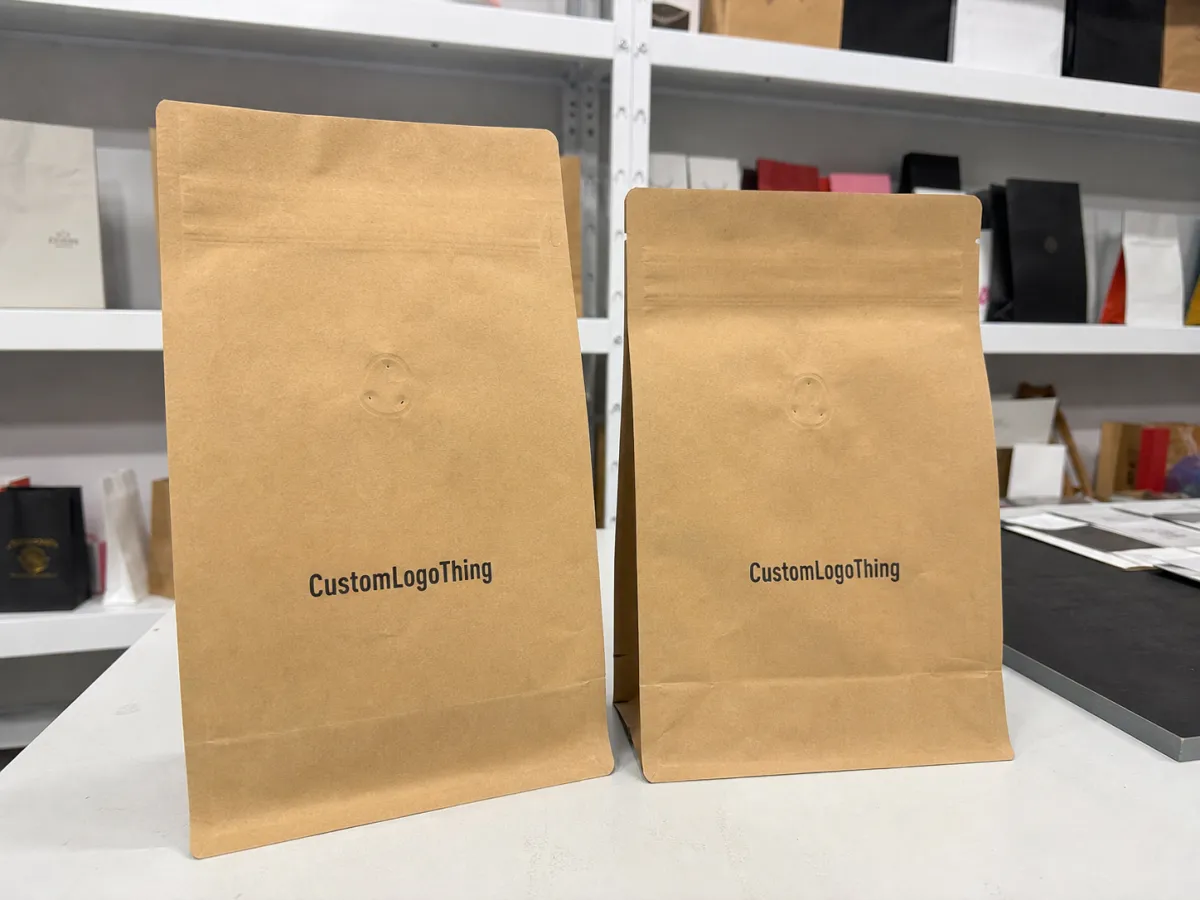
Coffee packaging is sensitive to dimensions because every millimeter affects web width, gusset depth, seal area, carton count, and shipping volume. A deeper base may help a block bottom bag stand better on shelf. It may also use more laminated material, require a larger carton, and reduce the number of empty bags packed per master case.
That extra cost does not always show up in the mockup. The paper exterior carries the brand, so it gets most of the attention. The inner layers, seals, zipper, and valve do the less glamorous work: freshness protection, filling performance, and leak prevention.
A proper cost review should answer practical questions first. What is the fill weight? Is the coffee whole bean or ground? How soon after roasting will it be packed? How long will it sit before consumption? Will it ship through parcel networks, palletized retail distribution, or both?
For many roasted coffee programs, I like seeing three quote versions: a value kraft pouch for short runs or local use, a standard retail-ready Bag with Valve and resealable closure, and a premium option with stronger shelf presence. Those three bags may look close in a flat proof. In production, they can price very differently.
A cheaper bag is not a bargain if it slows filling, leaks aroma, crushes in cartons, scans poorly, or makes the coffee look underfilled. That is just an invoice with a delayed punishment attached.
Custom Logo Things can narrow the options before production starts by confirming bag style, fill weight, print coverage, closure, barrier needs, quantity, destination, and delivery window. The earlier those details are settled, the fewer quote revisions and awkward surprises show up later.
Bag Structure, Barrier Layers, and Freshness Requirements
Most Custom Coffee Paper Bags are not plain paper. A common build uses a kraft paper exterior for appearance, then food-contact inner layers for heat sealing, oil resistance, moisture control, and aroma retention. Depending on the coffee and sales channel, the structure may include laminated paper, foil, metallized film, PE, CPP, PET, or other barrier films designed to reduce oxygen and moisture transfer.
Paper gives the bag its texture and retail feel. The technical performance sits inside the laminate. Roasted coffee releases carbon dioxide after roasting. It also stales when exposed to oxygen, moisture, heat, and light. Whole bean coffee packed soon after roasting often benefits from a one-way degassing valve because the valve lets gas escape while limiting oxygen entry.
Ground coffee needs its own attention. More exposed surface area means aroma loss can happen faster. A bag that works for a short local whole bean program may not be enough for ground coffee moving through retail distribution.
Format matters too. Flat pouches work for samples and light promotional packs. Stand-up pouches are common for small retail sizes and e-commerce shipments. Side gusset bags remain a familiar coffee format and can pack efficiently. Block bottom bags stand cleanly and create a strong front panel. Quad seal bags provide crisp panels and better shape control, but they usually use more material and require tighter conversion control.
Closures add convenience and cost. A zipper helps consumers reseal the bag. A tin tie gives a classic coffee-shop feel, especially on paper-forward bags. Tear notches, rounded corners, hang holes, pocket zippers, laser scoring, and specialty valves can all be useful. They also add components, machine steps, tooling considerations, or extra quality checks.
The right structure depends on the product. Fresh whole bean coffee for retail may need a higher barrier and valve. Ground coffee may need stronger aroma protection. Sample packs, subscription refill packs, and short-use promotional bags may not need the same build as a premium 1 lb retail bag expected to sit on a shelf for weeks.
Custom Coffee Paper Bags Unit Cost Breakdown by Specification
A useful custom coffee Paper Bags Unit Cost Breakdown separates the quote into real cost buckets instead of treating the bag as one mystery number. The usual buckets include raw material, barrier laminate, printing setup, ink coverage, finishing, valve or zipper components, bag conversion, quality inspection, cartons, freight, and any required documentation.
Material is often a major share of the unit cost. Paper grade, paper weight, barrier film, foil layer, adhesive system, and total bag size all determine how much substrate is consumed per piece. Natural kraft with a moderate barrier will not price the same as white kraft with full-surface printing, foil laminate, and soft-touch coating.
Printing changes the quote fast. One-color printing on kraft is usually simpler than full-coverage CMYK. Spot colors, metallic effects, matte varnish, soft-touch coatings, heavy black coverage, and dense ink on brown kraft need more proofing attention. Digital printing may suit shorter runs or multi-SKU launches. Flexographic or gravure production can reduce unit cost at higher volume, especially when the same artwork repeats.
| Specification Choice | Typical Cost Effect | Buyer Notes |
|---|---|---|
| Natural kraft with 1-color print | Lower to moderate | Works for simple branding, local roasters, and label-style designs. |
| Full-coverage CMYK print | Moderate to higher | Gives stronger visual control but needs tighter proofing and more ink. |
| Foil or high-barrier laminate | Higher | Useful for aroma retention, longer shelf life, and broader distribution. |
| Degassing valve | Adds component and application cost | Usually justified for freshly roasted whole bean coffee. |
| Pocket zipper or specialty closure | Moderate increase | Improves consumer use but adds conversion complexity. |
Size is another quiet cost driver. Width, height, bottom gusset, side gusset, seal width, headspace, and fill weight all matter. Overbuilding the bag raises cost without improving performance. A bag that is too large also looks underfilled, ships more air, and reduces carton efficiency.
MOQ changes the math because setup, machine adjustment, plate making, color matching, and proofing are spread across more or fewer bags. A small trial run may be smart if the product is new. It usually carries a higher unit cost. Larger repeat orders can bring the per-piece number down if the structure, artwork, and finish stay consistent.
Ask for a line-item quote when available, or at least a comparison between two or three defined constructions. The lowest bag price is not always the lowest total cost if the structure causes seal failures, stale product, crushed cartons, filling slowdowns, or returns.
Sizes, Capacities, and Artwork Choices That Affect Pricing
Coffee bag sizes often include sample sachets, 4 oz, 8 oz, 10 oz, 12 oz, 16 oz, 1 lb, and larger service packs. Actual dimensions depend on bean density, roast level, grind, and desired headspace. Dark roasts can occupy more volume than denser light roasts, so fill testing matters. Weight alone is not enough.
Artwork affects production more than buyers sometimes realize. Front-only printing is simpler than front-and-back printing. Full wrap designs, registered gusset graphics, bottom panel markings, and tight barcode placement require clean dielines and realistic tolerance planning. If artwork crosses folds, gussets, or seal areas, normal production movement must be allowed.
Kraft paper color changes the print result. Natural brown kraft gives a warm, organic look, but colors can look muted. White kraft gives brighter print results. Black or dark paper effects can look sharp, but light inks and dense coverage need testing. Coated surfaces improve consistency. Uncoated textures may absorb ink differently.
Practical artwork files should include the dieline, bleed, safe zones, barcode contrast, nutrition panel placement, ingredient copy, roast date area, valve clearance, zipper clearance, and seal zones. Certification marks such as FSC should only be used when the material and sourcing support the claim. Buyers can review chain-of-custody basics at FSC.
Before asking for pricing, prepare the SKU count, size range, print coverage, and finish preference. If the program also includes mailer cartons, inserts, displays, or Custom Packaging Products for launch kits, mention that early. The bag price is only one part of the packaging cost. Carton fit and shipping method can matter just as much.
MOQ, Pricing Tiers, and Quote Request Details
MOQ is a production reality, not a random sales hurdle. Machines require setup time. Materials must be purchased in workable quantities. Print preparation, color checks, proofing, and conversion setup have to be absorbed across the run. A 1,000-piece trial and a 20,000-piece repeat order will not carry the same unit cost unless something very strange is happening.
Small runs give flexibility, but the per-piece price is higher. Mid-size runs often balance cash flow and efficiency. Larger repeat runs can reduce cost when the bag size, material, artwork, and finish stay stable. Multi-SKU projects can also price better when several blends share one structure, one size, and the same print method, even if front artwork changes.
For a faster quote, send these details together:
- Bag style, such as stand-up pouch, side gusset, block bottom, quad seal, or flat pouch.
- Target fill weight, coffee type, roast level, and dimensions if already tested.
- Material preference, including kraft color, foil need, and barrier expectations.
- Valve, zipper, tin tie, tear notch, hang hole, or other closure choices.
- Print colors, finish, SKU count, quantity, destination, and delivery window.
Watch the common cost traps. Changing dimensions after proofing can restart layout work. Adding a valve late may affect artwork, component sourcing, and production setup. Heavy ink coverage on kraft should be tested before a large run. Freight can also surprise buyers because empty coffee bags are light but bulky, especially with wider gussets and rigid carton packing.
A smart request asks for a value specification, a standard retail specification, and a premium shelf-impact specification. That gives the team a real comparison before production approval. “Cheap” and “expensive” are not specifications. They are vibes, and vibes do not survive purchasing meetings.
Production Process and Lead Time from Artwork to Delivery
The process usually starts with specification review and quote confirmation. After that comes dieline preparation, artwork check, proof approval, material ordering, printing, lamination or curing if needed, bag forming, valve or zipper application, inspection, packing, and shipment. Repeat orders move faster than first-time custom builds because fewer decisions need to be settled.
Lead time depends on order complexity, material availability, print method, component availability, proof revisions, and whether the buyer is approving a first run or repeating an established job. Many custom printed coffee bag projects need several business days for artwork review and proof approval before production time begins. Laminated builds may also need curing time before conversion to support bond strength and control residual odor.
Proof approval deserves boring, serious attention. Dimensions, copy, barcode, logo placement, roast date area, regulatory panels, valve position, zipper clearance, and seal zones should be checked before production. A barcode that fails scan testing or a valve that lands inside a key logo area is much easier to correct on the proof than after cartons are packed.
Quality checks are practical. Teams review seal integrity, print registration, valve placement, zipper function, bag count, carton labeling, odor, and visible defects. For distribution packaging and transit planning, buyers may also review testing guidance from groups such as ISTA, especially if filled bags ship through parcel networks or mixed retail loads.
Build a buffer around launch dates. Coffee packaging is tied to roast schedules, wholesale commitments, subscription drops, and seasonal gift boxes. Rushed approvals on half-finished specifications tend to create expensive little problems. Custom Logo Things helps keep projects moving by clarifying the bag details early and checking artwork against the dieline before the job reaches production.
Reducing Cost Without Weakening the Bag
Cost reduction should come from smarter specifications, not from removing the features that keep coffee fresh and packaging reliable. One buyer may not need foil for a short local program. Another may need a stronger barrier because the product sits in retail for weeks and ships through changing climates. The right answer depends on coffee type, sales channel, shelf life target, and margin target.
Custom Logo Things can review whether a program truly needs heavier paper, full-coverage ink, specialty varnish, a premium closure, or a high-barrier structure. Sometimes the better move is to standardize one bag size across several blends and use controlled artwork changes or label zones for smaller SKU runs. Sometimes a clean one-color kraft design supports the brand better than a costly full-coverage print. Not every bag needs to scream.
Right-sizing is one of the simplest cost controls. A bag that is too large wastes material, ships air, looks soft on the shelf, and may increase carton and freight expense. A bag that is too tight creates filling problems, weak seals, and inconsistent shelf stance. Both choices cost money in different ways.
Print planning can also reduce waste. Keeping critical art away from folds and seal areas makes production smoother. Limiting unnecessary ink coverage can improve cost and appearance on kraft. Using shared structures across SKUs can help with material purchasing, setup efficiency, and reorders.
The team can compare samples, print finishes, closures, and bag formats so buyers understand the tradeoff between presentation, protection, and unit price. That support is useful for branded retail coffee bags, private label packaging, promotional coffee packs, subscription packaging, and multi-SKU launches.
If the program includes sleeves, inserts, mailers, or custom printed boxes, review the full packaging plan together. Bag count per carton, master case size, and shipping method can influence landed cost as much as the bag itself.
Checks to Make Before Production Approval
Before approving a coffee bag order, confirm the commercial and technical details together: coffee type, fill weight, bag style, target dimensions, barrier needs, valve choice, closure choice, print coverage, quantity, shipping destination, and required delivery window. Small gaps become proof revisions, cost changes, or production delays.
Ask for physical samples or close material references when comparing kraft texture, matte finish, zipper feel, valve placement, and shelf stance. A digital mockup is useful for layout. It cannot show paper stiffness, surface feel, or how the filled bag stands after handling.
Prepare artwork in editable format where possible. Include logo files, color references, barcode files, required copy, nutrition or ingredient panels, roast date area, and approved certification marks. If several blends share one size, provide the full SKU list so pricing reflects the actual production plan.
Final approval should cover unit price, MOQ, payment terms, production timeline, freight terms, carton packing, proof version, and tolerance notes. Reorder planning matters too. Coffee packaging is tied to roasting cycles, and a stockout can interrupt wholesale, retail, and subscription commitments fast.
The best quotes come from real order details, not rough guesses. Send Custom Logo Things the bag structure, artwork direction, quantity, fill weight, and shipping requirements you intend to use. The team can then prepare a practical cost breakdown based on production reality instead of wishful math.
FAQ
What affects a custom coffee paper bag unit cost breakdown the most?
The biggest cost drivers are material structure, bag size, barrier layer, print method, ink coverage, degassing valve, zipper or tin tie, MOQ, and freight volume. A small change in gusset depth, paper weight, or closure style can shift cost because it changes material consumption, machine setup, or component use. For the most accurate quote, provide bag style, fill weight, dimensions, artwork, quantity, and destination.
Is a degassing valve necessary for custom coffee paper bags?
A valve is strongly recommended for freshly roasted whole bean coffee because beans continue releasing carbon dioxide after roasting. For pre-degassed coffee, ground coffee, or short-use promotional packs, the valve decision depends on freshness goals, packing timing, and shelf life. Adding a valve increases unit cost, but it can protect bag shape, aroma, and product quality when coffee is packed soon after roasting.
How does MOQ change the unit cost of printed coffee paper bags?
Lower MOQs usually carry higher unit costs because setup, proofing, material preparation, and machine adjustment are divided across fewer bags. Larger runs can reduce the unit price when the same size, material, and artwork are repeated. If you have multiple blends, using one shared bag structure with different artwork or labels may help control cost.
What details should I send to get a fast custom coffee bag quote?
Send the target fill weight, preferred bag style, dimensions if known, material preference, valve and closure needs, print colors, finish, quantity, delivery location, and timeline. Include artwork or a rough layout so print coverage, barcode placement, and valve clearance can be checked early. If dimensions are not final, send the coffee type, roast level, and desired retail look so the packaging team can recommend a practical starting size.
Can I lower coffee paper bag pricing without using cheaper materials?
Yes. Cost can often be reduced by right-sizing the bag, standardizing dimensions across SKUs, simplifying print coverage, choosing efficient finishes, or ordering in better production tiers. Do not remove barrier protection or seal quality if the coffee needs freshness protection for retail or shipping. Compare value, standard, and premium specifications before approving production.

