Buyer Fit Snapshot
| Best fit | Custom Compostable Produce Bags projects where brand print, material claims, artwork control, MOQ, and repeat-order consistency need to be specified before quoting. |
|---|---|
| Quote inputs | Share finished size, material target, print colors, finish, packing count, annual reorder estimate, ship-to region, and any compliance wording. |
| Proofing check | Approve dieline scale, logo placement, barcode or warning zones, color tolerance, closure strength, and carton packing before bulk production. |
| Main risk | Vague material claims, crowded artwork, missing packing details, or unclear freight terms can make a low unit price expensive after revisions. |
Fast answer: Custom Compostable Produce Bags: Film, Print, MOQ, and Carton Packing should be specified like a repeatable production item. The safest quote records material, print method, finish, artwork proof, packing count, and reorder notes in one written spec.
Production checks before approval
Compare the actual filled-product size with the drawing, then confirm tolerance on folds, seals, hang holes, label areas, and retail display edges. Reserve space for logos, QR codes, warning copy, and material claims before decorative graphics fill the panel.
Quote comparison points
Review material grade, print process, finish, sampling route, tooling charges, carton quantity, and freight assumptions side by side. A quote is only useful when the supplier can repeat the same color, closure quality, and packing count on the next order.
Custom Compostable Produce Bags: A Practical Guide
A produce team may want shelf-ready branding. The bag still has to breathe, survive cold storage, and back up compostability claims without confusing shoppers. That is the real tension behind custom compostable produce bags: the packaging has to do the boring job first. Branding comes after that. If the film is too stiff, too weak, too cloudy, or too heavily printed, the bag stops helping and starts causing problems.
That is why buyers should treat custom compostable produce bags as a packaging system, not a material checkbox. Size, thickness, venting pattern, seal style, print coverage, and compliance language all affect whether the bag runs on a line, presents well in a retail case, and supports the end-of-life claim. For brands that care about eco-friendly packaging, that combination matters just as much as the compostable material itself.
Custom Compostable Produce Bags: What They Are and Why They Matter
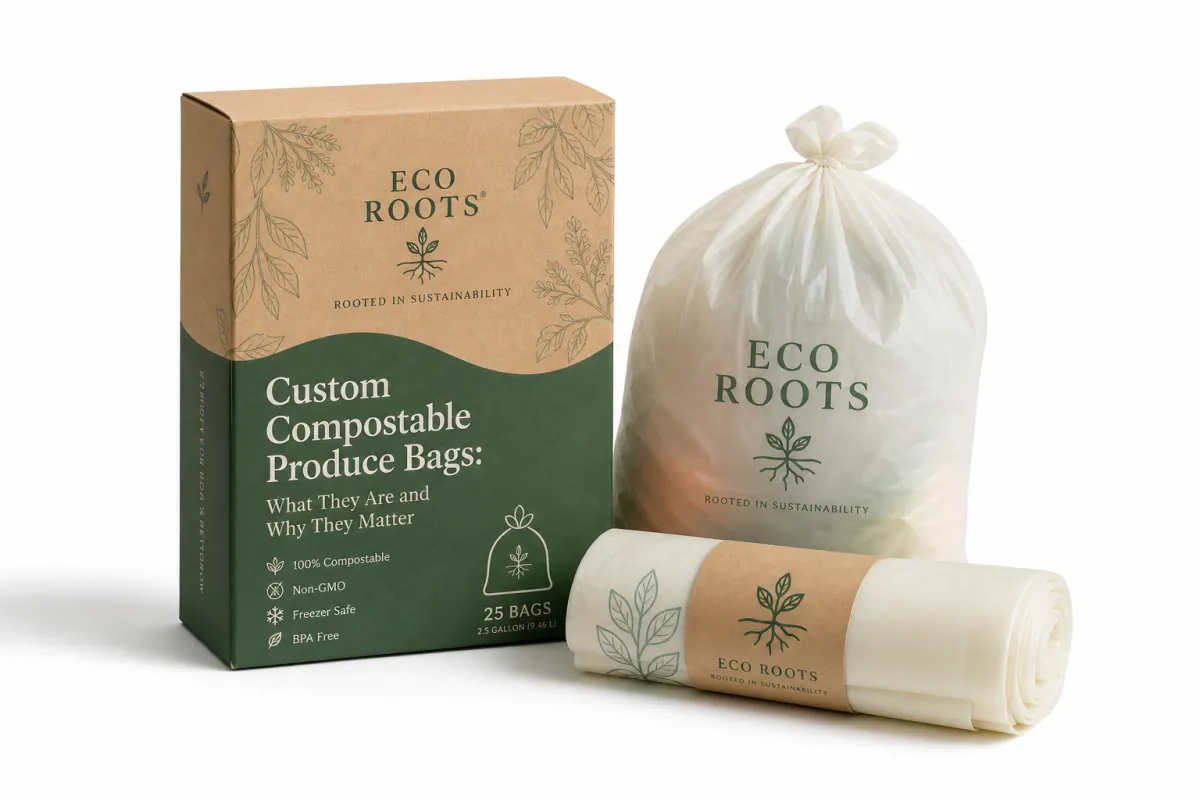
Custom compostable produce bags are produce bags made from compostable film structures that are specified for a particular fruit, vegetable, display style, and branding need. In plain language, they are not generic stock bags with a logo slapped on at the end. They are built around the product. A bag for leafy greens behaves differently than a bag for apples. A bag for mushrooms behaves differently again because moisture, weight, and shelf life all change the spec.
Traditional polyethylene produce bags are popular because they are lightweight, inexpensive, clear, and forgiving on the line. Compostable bags have to match that practical usefulness while also supporting a different material story. Most are built from PLA-based films, starch blends, or other certified compostable structures designed for a defined industrial composting pathway. The exact blend matters because it changes clarity, stiffness, moisture sensitivity, seal performance, and the way the bag feels in the hand. A bag that looks good on paper can still fail in a cold, damp produce room if the film is not matched to the job.
That is where the word custom matters. In packaging design, custom does not only mean printed artwork. It can mean the bag width, gusset depth, gauge, venting pattern, perforation spacing, wicket format, handle style, closure method, and even the language printed on the back panel. For retail packaging, those details shape shopper trust. For foodservice or distribution, they shape line speed and waste. For a buyer comparing branded packaging options, the custom spec often decides whether the bag feels thoughtful or just expensive.
Honestly, I think a lot of buyers underestimate the gap between a compostable stock bag and custom compostable produce bags. The stock version might be close. Close is not always enough when you are packing 30-pound cases of produce in a refrigerated environment, or when the bag has to carry a certification mark that shoppers actually recognize. If the bag tears, fogs up, or looks flimsy, the sustainability story gets weak fast. Cute label, bad bag. That never helps.
There is also a brand side to this. Produce packaging is one of the few places where package branding can sit directly next to the product without a carton, label sheet, or outer wrapper in the way. That makes the bag itself part of the shelf conversation. A clean logo, a short disposal instruction, and a well-balanced layout can make a compostable bag feel intentional instead of temporary. That matters whether the product is sold through grocery, club, farmers markets, or subscription channels.
One more thing: compostable does not mean magical. It usually means the bag is designed for a specific composting stream, not that it disappears anywhere a shopper tosses it. That distinction is boring, but it matters. If the claim is vague, the bag is basically inviting confusion.
How Custom Compostable Produce Bags Work on Real Produce Lines
Custom compostable produce bags have to perform three jobs at once. First, they protect the produce from handling damage, bruising, and contamination. Second, they manage air and moisture enough to suit the product inside. Third, they communicate clearly on shelf so the shopper knows what the bag is, why it exists, and how it should be disposed of. When one of those jobs is ignored, the bag starts creating friction somewhere in the chain. Usually right where nobody has time for it.
Breathability is a good example. Leafy greens usually need enough airflow to keep condensation down, which is why venting holes, micro-perforation, or a lighter film can help. Apples and citrus are less delicate, but they still need the right balance of rigidity and clarity if the bag is going to show the product well. Mushrooms are especially sensitive to trapped moisture, so the bag structure often needs more thoughtful venting and less aggressive print coverage. Herbs can be even more demanding because a little extra humidity can shorten shelf life noticeably.
Film thickness changes how all of that feels in practice. A lighter gauge, often around 0.8 to 1.0 mil for smaller or lighter packs, can work well for delicate produce if handling is careful. Heavier items may need something closer to 1.2 to 1.6 mil, depending on the blend and the closure style. Thicker does not automatically mean better. It can improve toughness, but it can also reduce drape, add cost, and make the bag feel less natural on the line. The right choice depends on the weight of the fill, how the bag is opened and closed, and whether it is being used as a retail package or a transport layer.
Print behavior is another practical issue. On compostable films, ink compatibility and adhesion matter more than many buyers expect. Water-based inks and compostability-safe systems are common, but the print area still has limits. A simple one- or two-color logo usually behaves better than a full flood of dark ink, especially if the bag needs to keep some transparency for product visibility. Heavy coverage can also make the material feel stiffer and may increase scuffing during transport. If the artwork needs a strong shelf presence, it is usually better to build that through layout, contrast, and a clean message rather than loading the film with ink like you are trying to win a print budget trophy.
On an actual packing line, custom compostable produce bags need to run at a speed operators can live with. If the bags are wicketed, the wicket spacing and tear-off behavior matter. If they are on rolls, the perforation needs to separate cleanly without tearing a corner. If they are supplied as flat packs, static and opening behavior become more important. Small details like these decide whether the bag is welcome at 60 packs per minute or becomes a source of handwork and rework. And once operators start fighting the bag, everybody knows it.
The disposal claim is part of the product too. Buyers should be careful about the difference between compostable in a controlled industrial setting and compostable in a backyard pile. Those are not the same promise, and shoppers should not be left to guess. Clear label language, certification marks when appropriate, and simple instructions help reduce confusion. For reference on materials and end-of-life guidance, reputable industry and public resources such as the packaging industry trade group and the EPA composting guidance can help buyers understand the broader framework.
Key Factors That Shape Performance, Compliance, and Shelf Appeal
Several technical choices decide whether custom compostable produce bags feel dependable or disappointing. Material composition is the first one. PLA-based structures often deliver good clarity, while some blends built with starch or other compostable components may improve softness or flexibility. Neither is automatically better. The right answer depends on how much clarity the retailer wants, how much toughness the product needs, and how the bag behaves in cold storage.
Thickness is the next big decision. Buyers sometimes ask for "the strongest film possible," but in produce packaging that is not always wise. A bag that is too heavy can hold heat differently, trap moisture, or feel overbuilt for the item. A bag that is too light can split at the seam or tear when a shopper lifts it by one corner. The sweet spot usually comes from testing the actual produce, not guessing from a sample swatch on a desk.
Hole pattern and venting deserve real attention. A few punched vents can be enough for some items, while others need a more deliberate array of micro-perforations to manage condensation during a cold chain. The closure style matters too. Heat seals, adhesive closures, open-top bags, drawstring-style closures, and wicketed formats all change the workflow and the shelf appearance. If the bag needs a flat bottom or side gusset to stand up and show the product better, that should be decided early, not after artwork is already approved.
Compliance can make or break a launch. Buyers should ask for certification evidence that matches the claim being made, such as ASTM D6400 or EN 13432 testing data when relevant, and they should confirm whether the bag is intended for industrial composting or some other disposal pathway. If paper components are part of the package, such as carton inserts or outer shipping labels, it can also make sense to look at FSC-certified paper support materials. For shipping or multi-pack programs, associations like ISTA can be helpful when the project includes transit testing or distribution concerns. The goal is not to drown the project in paperwork; it is to make sure the story on the bag matches what the bag can actually support.
Shelf appeal is the part people see first, but it should not be treated as decoration. Clarity, finish, and print placement all affect how fresh the produce looks under grocery lighting. A very glossy bag can create glare. A cloudy bag can make strawberries or greens look less appealing. A highly printed bag can look busy in a case that already has a lot going on. Good retail packaging usually has restraint. It gives the product room to remain the hero.
Here is a simple way to think about the tradeoffs for custom compostable produce bags:
| Option | Typical Use | Approx. Unit Range | What You Gain | What You Give Up |
|---|---|---|---|---|
| Simple clear bag, light print | Leafy greens, herbs, light produce | $0.10-$0.18 at 10,000-20,000 units | Lower cost, cleaner look, easier visibility | Less graphic space, fewer branding cues |
| Mid-coverage branded bag | Mixed produce, retail programs | $0.14-$0.24 at 10,000-20,000 units | Better package branding and shelf presence | Slightly more print complexity |
| Specialty bag with vents, gusset, or closure detail | High-moisture or premium produce | $0.18-$0.32 at 5,000-15,000 units | Better handling and product fit | Higher setup cost and tighter spec control |
Those numbers are a working range, not a promise. They still help buyers think in a more realistic way. The cost of custom compostable produce bags rises when the film is more specialized, the print coverage is heavier, the format is more complex, or the compliance work takes more time. That is normal. The key is to match the structure to the product instead of paying for features the bag does not need.
"The best compostable bag is the one that fits the produce, the line, and the claim. Anything else is just expensive optimism."
Step-by-Step Timeline for Ordering Custom Compostable Produce Bags
Ordering custom compostable produce bags goes more smoothly when the buyer treats it like a specification project instead of a quote request. The first step is discovery. Start by writing down the produce type, the average fill weight, the expected cold-chain conditions, the retail environment, and the sustainability claims you actually need to make. If the bag will sit in a chilled display case for hours, that matters. If it will be packed hot and cooled later, that matters too. If the brand wants a lower-carbon-footprint story, that should be stated clearly so the material choice supports it.
After discovery, move into sampling and basic testing. In a good process, the supplier provides a sample bag or pre-production proof so the buyer can judge film feel, print clarity, dimensions, and handling. A sample should not just sit on a conference table. It should be filled with the real produce, moved through the expected packing motion, and checked after a few hours in cold storage. If condensation builds up, if the opening is awkward, or if the print scuffs too quickly, that is useful information. Catching those issues before approval saves money and frustration later.
Then comes artwork and proof review. This is the stage where companies often lose time. A dieline has to be confirmed, the logo needs to sit in the right place, the compliance language must be accurate, and any disposal marks or certification icons need to be sized correctly. If the bag includes both retail branding and operational instructions, the hierarchy of information matters. The shopper should see the brand first, the product or use case second, and the disposal language third. That order helps the bag feel clean rather than crowded.
Once artwork is approved, production can be scheduled. A realistic timeline for custom compostable produce bags is often 12 to 15 business days from final approval for straightforward jobs, though more complex runs can take 18 to 25 business days or longer if certification review, specialty venting, or print setup is involved. Shipping adds its own clock. Domestic freight might take a few days, while imported production can take much longer depending on consolidation and transit method. Buyers who need bags for a seasonal launch should plan backward from their sell date, not forward from the quote date.
The final step is receiving, trial, and launch. Even if the sample was approved, the first full run should be tested on the actual packing equipment. Operators may need a few adjustments to bag loading, stack handling, or line speed. Retail teams may also want to see how the bags look under store lighting and in a cold case. A short launch review two to three weeks after rollout can catch small problems before they become expensive habits.
From a practical standpoint, the timeline often looks like this:
- Discovery and specification: 1-3 business days
- Sampling and field testing: 3-7 business days
- Artwork proofing and compliance review: 2-5 business days
- Production: 12-25 business days depending on complexity
- Freight and receiving: 3-10 business days depending on route
- Line trial and launch checks: 1-3 days
That schedule is not rigid, but it is realistic enough to keep a project honest. If a supplier promises custom compostable produce bags in a very short window, ask what part of the process has been simplified. Sometimes the answer is fine. Sometimes the answer is that the sample testing or compliance review has been squeezed too far. I have seen both, and one is a lot less fun than the other.
Custom Compostable Produce Bags Cost and Pricing Factors
Pricing for custom compostable produce bags comes down to a handful of very tangible drivers. The first is material blend. Compostable resin systems are usually more expensive than conventional polyethylene, and some blends cost more because they are designed to deliver better clarity, better seal behavior, or a more stable feel. The second driver is thickness. More film means more material, which increases cost. The third is bag size. A larger bag needs more resin, more print area, and often more careful handling on the line.
Print complexity matters more than many buyers expect. A one-color logo with a short product line message is cheaper and easier than a multi-color print with a full panel graphic, a certification mark, a QR code, and a set of disposal instructions. More print colors can raise setup cost, and large coverage can slow production. If the brand wants the bag to act as a miniature billboard, that can be done, but it should be priced like a real packaging design decision, not a cosmetic tweak.
Order volume has a major effect on unit cost. Lower minimums usually carry a higher price per bag because setup, proofing, and material waste are spread across fewer units. Larger runs often reduce the unit price, but they also require storage space and a better forecast. A buyer who orders 50,000 bags because the unit cost looks good can still lose money if half the inventory sits untouched for a year. That is why I always push people to think in terms of inventory turnover, not just sticker price.
There are also less obvious costs. Testing can take time and may involve extra samples or performance checks. Artwork changes after proof approval can create rework. Freight can swing the landed price more than expected, especially if the bags are coming from a distant plant or if a rush shipment is needed. Certification documentation can also add administrative work. None of these should scare a buyer away, but they should be part of the conversation from the start.
For a grounded view, here is how a buyer might think about the economics of custom compostable produce bags:
| Scenario | Order Size | Likely Unit Range | Cost Pressure | Best Fit |
|---|---|---|---|---|
| Entry-level branded bag | 5,000-10,000 | $0.16-$0.28 | Setup, sample approval, lower volume | New launch, pilot program |
| Mainstream retail program | 10,000-25,000 | $0.09-$0.19 | Moderate print, moderate material needs | Stable SKU, regular replenishment |
| Higher-spec produce pack | 25,000+ | $0.08-$0.17 | Special vents, closures, compliance work | High-volume, consistent demand |
Those are not promises, but they are useful planning numbers. A buyer should also compare the bag against the rest of the packaging system. Sometimes a slightly better produce bag reduces waste, improves presentation, and cuts complaints enough to justify the extra cents. That is especially true when the bag is part of a larger product packaging program where labels, trays, and outer cartons all need to support the same sustainability message. A well-chosen compostable bag can also strengthen the brand's eco-friendly packaging story without needing a full redesign of the rest of the pack.
If your team also orders labels, cartons, or secondary packaging, it may help to review Custom Packaging Products as a way to keep the visual system consistent across the line. Consistency matters. A bag that looks aligned with the rest of the package family feels more deliberate, and that generally reads better to buyers and shoppers alike.
Common Mistakes to Avoid With Compostable Produce Packaging
The most common mistake with custom compostable produce bags is choosing a bag by certification alone and skipping real-world testing. A compostability mark is useful, but it does not tell you whether the bag will behave correctly with wet herbs, heavy citrus, or a packing crew that opens 2,000 bags a day. The bag still has to survive handling, cold storage, and shelf presentation. Certification is part of the answer, not the whole answer.
Another frequent issue is overprinting. Buyers sometimes want a large logo, a long sustainability statement, a barcode, a QR code, and multiple icons on every panel. That can make the bag look cluttered and can distract from the product itself. It can also create production challenges if the print area becomes too dense for the film structure. A cleaner layout usually works better, especially for branded packaging that is meant to sit in a chilled produce case under bright store lights.
People also assume compostable film should behave exactly like regular plastic. It should not. The stiffness, moisture response, and shelf life profile can differ in noticeable ways. That does not mean compostable is weaker; it means the design rules are different. A buyer who expects the same feel as polyethylene may be disappointed, while a buyer who designs around the material can get very good results.
Disposal messaging causes its own share of problems. If the bag says "compostable" but does not say where or how, shoppers may assume it can go anywhere. If the language is too technical, they may ignore it entirely. The best labels are short, specific, and aligned with the actual disposal path. When the claim and the instruction do not match, trust drops quickly.
Timeline mistakes are just as costly as material mistakes. Approving artwork late, skipping sample validation, or ordering too close to peak season can force rushed production or premium freight. That is avoidable. A clean launch plan gives the team time to test the bag in cold conditions, verify the claim language, and make sure the final custom compostable produce bags do not arrive after the season they were meant to support.
Here are the mistakes I see most often, stripped down to the essentials:
- Buying a compostability claim without testing the actual produce fit.
- Ignoring condensation and cold-room behavior during sample review.
- Using too much ink coverage and crowding the design.
- Skipping clear disposal language on the bag.
- Ordering too late for a seasonal or promotional launch.
None of those problems are hard to avoid, but they do require discipline. In practice, the best custom compostable produce bags projects are not the flashiest ones; they are the ones where the buyer asks the awkward questions early and gets the answers into the spec before production starts.
Expert Tips and Next Steps for Launching Custom Compostable Produce Bags
If I were guiding a buyer through custom compostable produce bags, I would start with one pilot SKU instead of trying to convert the whole produce wall at once. One item gives you enough data to judge handling, print, consumer response, and line performance without creating a massive inventory commitment. A pilot also makes it easier to refine the spec. If the first bag is 0.2 mil too light or the venting is a little tight, you can fix that before the next order.
Ask for samples under real conditions. That means cold storage, condensation, packing-line speed, and retail display lighting. Dry tabletop approval can be misleading because compostable film may look fine in a conference room and behave very differently after four hours in a refrigerated environment. A proper test should include opening speed, seal behavior, fill stability, and the way the bag reads visually once the produce starts to sweat.
Keep the spec sheet short, but complete. It should capture produce type, target fill weight, bag dimensions, print goals, closure style, certification needs, and disposal language. If you are working with multiple teams, that one document keeps everyone pointed in the same direction. Packaging buyers, brand managers, compliance staff, and operations leaders do not always care about the same detail, but they all need the same baseline.
A practical launch order usually looks like this:
- Audit the current bag and identify the pain point.
- Set the performance target for the new bag.
- Review samples with real produce and real handling.
- Lock the artwork and compliance language.
- Schedule production around the launch calendar.
- Receive the bags and run a line trial before rollout.
That sequence sounds simple, but it catches most avoidable mistakes. It also helps a brand connect the bag to the bigger story. A well-designed compostable produce bag can support package branding, improve the shopping experience, and reinforce a sustainability message without looking like a compromise. It fits best when the team treats it as part of the full packaging strategy rather than a one-off purchase.
From a buyer's point of view, the best decision is usually the one that balances performance with honesty. Do not overbuy material. Do not under-spec the seal. Do not print so much that the bag loses its clarity. And do not assume every compostable structure will behave the same way. Custom compostable produce bags can absolutely work in demanding produce environments, but they need to be specified with care, tested with the real product, and launched with enough lead time to avoid a scramble.
If you are planning a switch, start small, ask for samples, and compare the bag against the actual handling environment before you commit to scale. That is the cleanest path to a launch that feels credible, looks polished, and supports the sustainability story without making the operations team pay for wishful thinking.
Frequently Asked Questions
Are custom compostable produce bags strong enough for everyday grocery use?
Yes, when the material, gauge, and venting are matched to the produce weight and handling conditions. Strength should be verified with real produce, cold storage, and packing-line testing instead of assuming all compostable films perform the same. Well-made custom compostable produce bags can handle normal grocery workflows very effectively.
How do custom compostable produce bags differ from regular plastic produce bags?
They use compostable material structures designed for certified end-of-life pathways rather than conventional polyethylene. They also usually require more careful specification for moisture, clarity, sealing, and print performance. In other words, custom compostable produce bags are designed around a different material behavior from the start.
What affects the price of custom compostable produce bags the most?
Material blend, thickness, bag size, print complexity, order volume, and any custom tooling or compliance work. Testing, proofing, freight, and rush timing can also affect the final delivered cost. If the project includes more branding or more specialized performance, the unit price will usually move upward.
How long does it take to get custom compostable produce bags made?
Timing depends on artwork approval, sampling, certification review, production capacity, and shipping method. A simple project moves faster than a fully custom bag with multiple print colors or special compliance language. For many buyers, a realistic planning window is a few weeks from first sample to landed delivery.
What should I ask before ordering custom compostable produce bags?
Ask for material details, certification proof, sample availability, print options, lead time, and recommended use cases for your produce. Also confirm disposal language, food-contact suitability, and whether the bag has been tested in the same conditions you will use it in. That last question is especially useful when the bags will sit in cold storage or move through a busy retail pack line.
If you are ready to evaluate custom compostable produce bags for your own product mix, start with a sample, run it against the real produce, and make sure the final spec fits your line as well as your brand story. The takeaway is simple: test the bag where it will actually live, lock the claim to the real disposal path, and choose the spec that protects the produce before it tries to impress the shopper.

