Buyer Fit Snapshot
| Best fit | Custom Corner Boards Wholesale for Sustainable Shipping projects where brand print, material claims, artwork control, MOQ, and repeat-order consistency need to be specified before quoting. |
|---|---|
| Quote inputs | Share finished size, material target, print colors, finish, packing count, annual reorder estimate, ship-to region, and any compliance wording. |
| Proofing check | Approve dieline scale, logo placement, barcode or warning zones, color tolerance, closure strength, and carton packing before bulk production. |
| Main risk | Vague material claims, crowded artwork, missing packing details, or unclear freight terms can make a low unit price expensive after revisions. |
Fast answer: Custom Corner Boards Wholesale for Sustainable Shipping should be specified like a repeatable production item. The safest quote records material, print method, finish, artwork proof, packing count, and reorder notes in one written spec.
Production checks before approval
Compare the actual filled-product size with the drawing, then confirm tolerance on folds, seals, hang holes, label areas, and retail display edges. Reserve space for logos, QR codes, warning copy, and material claims before decorative graphics fill the panel.
Quote comparison points
Review material grade, print process, finish, sampling route, tooling charges, carton quantity, and freight assumptions side by side. A quote is only useful when the supplier can repeat the same color, closure quality, and packing count on the next order.
Custom Corner Boards Wholesale for Sustainable Shipping
Custom corner boards wholesale is often the difference between a pallet that rolls into receiving squared up and one that arrives with a crushed edge, a loose wrap job, and a little story nobody wants to hear twice. The part itself looks plain. Almost stubbornly plain. But in a real shipping lane, that plain strip of protection can do more than thicker film, extra void fill, or a last-minute layer of hope ever will.
I have watched well-built loads fail for annoyingly small reasons: a strap tightened a bit too hard, a cold dock floor pulling moisture into untreated board, a forklift tine clipping one corner and setting off a slow chain reaction. None of those moments looks dramatic in isolation. Together, they can turn a clean outbound shipment into a claim, a repack, and a second freight bill. That is why custom corner boards wholesale stays relevant. It gives the pallet a harder edge before the trouble starts.
Distribution teams, retail packaging buyers, and product packaging managers usually ask the same question in slightly different language: can one component protect the load without adding needless weight or labor? Most of the time, the answer is yes. custom corner boards wholesale can protect cartons, drums, trays, and mixed-SKU shipments while keeping the pallet face tidy enough for repeat handling and warehouse scanning.
There is a habit in packaging programs that still surprises me. Teams will add more stretch wrap, then more dunnage, then more corrugated, and the corner still gives way. The weak point is usually the same old place: the vertical edge. A board cut to the right height spreads force, keeps straps from biting into carton seams, and gives the wrap something solid to press against. That is a modest engineering fix on paper. In practice, it can cut rework and keep damage from becoming routine.
A corner board does not have to be flashy to earn its keep. It just has to fit the load, hold its shape, and stop the strap from chewing into the carton edge.
Custom Corner Boards Wholesale: The Small Part That Prevents Big Damage
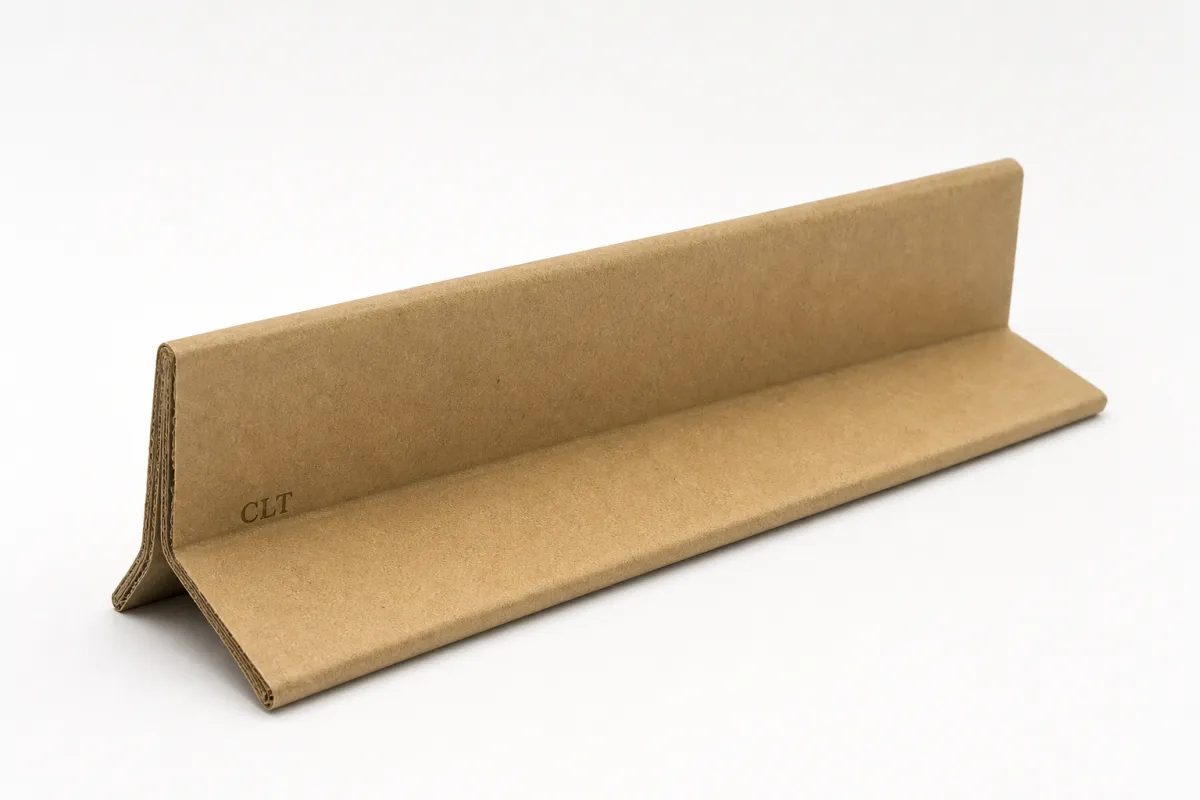
custom corner boards wholesale matters because edge failure almost always starts at the corner, not in the middle of the stack. Once a carton crushes, the pallet face loses alignment. The load leans. Stress shifts downward. A few bad inches at the top can turn into a bad pallet by the time it reaches the dock door. Edge protection helps because it stabilizes that vertical line before the line goes crooked.
In everyday shipping, custom corner boards wholesale helps reduce claims in a few straightforward ways. It limits lean when stretch wrap tightens around the stack. It absorbs pressure from polypropylene strapping or PET banding. It keeps upper layers from printing down into lower layers. It gives warehouse staff a stronger contact point during repeated touches, which matters more than people think. A pallet gets handled by real people, not by a packaging diagram.
There is also a presentation side, and I do not mean glossy marketing language. Retail receiving teams notice whether a shipment arrives organized or battered. So do warehouse managers who process thousands of cartons a week. A pallet protected with custom corner boards wholesale tends to look tighter, more intentional, and easier to count. That can matter even when the end customer never sees the board itself.
Shipping damage rarely comes from a single dramatic event. It is usually a stack of smaller pressures: tight wrap, band tension, damp dock air, a rough fork pass, a little tilt during transfer. A well-built corner board is a low-cost answer to that whole cluster of risk. Not overpackaging. Just targeted protection matched to the lane, the load, and the handling environment. For companies that ship often, custom corner boards wholesale is one of the cleaner ways to lower damage without bulking up the package.
The economics are not mysterious. Fewer crushed corners mean fewer returns, fewer relabels, less repacking, and less freight waste. It also means fewer people pulled off normal work to fix preventable problems. Buyers who watch unit economics closely tend to notice custom corner boards wholesale as soon as the same lane keeps producing repeat damage or the same carton pattern keeps failing under pressure.
For buyers who want a broader industry reference, Packaging.org is a useful source for packaging standards and material context. For fiber sourcing and chain-of-custody questions, FSC explains how certified material is documented and maintained. That kind of source-checking sounds dull. It is also how teams avoid guessing.
Product Details: What Custom Corner Boards Are Made to Do
The core job of custom corner boards wholesale is pressure distribution. A corner board spreads force across a wider vertical edge so the load is less likely to crush at one narrow point. That matters whether the shipment is built from cartons, cases, drums, pails, or bundled product stacks. The board takes the hit, not the box corner underneath it.
Material choice changes how that protection behaves. Most custom corner boards wholesale programs use recycled paperboard, layered kraft board, or laminated profiles made from multiple plies. Single-wall paperboard works well for lighter loads and cleaner retail flows. Laminated builds add stiffness for taller pallets or heavier strap pressure. Moisture-tolerant finishes help on lanes that see cold storage, dock condensation, or humidity swings that would soften untreated board too quickly. If the board is going into a refrigerated lane, I would not gamble on bare, untreated stock unless the load is very forgiving.
Profile shape matters too. An L-shape is common for simple corner coverage and quick pallet wrap. A V-shape can fit tighter stacks and still give strong edge control. A U-shape gives more wrap-around contact and works where the board needs to sit closer to the product face. With custom corner boards wholesale, shape is not a cosmetic choice. It changes how the load receives pressure, how easily the board nests against the packout, and how much resistance it gives under banding.
Typical thicknesses can range from light-duty board around 1.5 mm to 2.5 mm, up through heavier laminated structures in the 4 mm to 6 mm range, with special builds going beyond that if the lane demands it. Thicker is not automatically better. A stronger profile only helps if it still fits the pallet pattern, clears the product footprint, and works with the wrap or strap method. The best custom corner boards wholesale solution is the one that matches the handling risk, not the one with the biggest number on the spec sheet.
Sustainability is another reason buyers keep these parts in the mix. Paper-based corner boards are often recyclable in many municipal systems, and recycled-fiber content can support waste reduction goals when the board is built without unnecessary mixed materials. For buyers trying to improve package branding and environmental performance at the same time, that combination is useful. It allows the shipper to protect the load while staying close to the company’s broader product packaging standards.
Print and branding can be added as well. Some teams want handling instructions, SKU identification, orientation arrows, or a simple mark that matches the rest of the branded packaging system. Others want the corner board to stay plain and functional. Either choice can work. What matters is that custom corner boards wholesale can be built to fit the workflow rather than forcing the workflow to adapt to a generic stock profile.
For buyers who already specify Custom Printed Boxes or retail-ready shippers, the corner board should be treated as part of the same packaging design language. A clean outer presentation, consistent carton sizing, and a stable pallet face work together. If one layer is weak, the rest of the system absorbs the strain. custom corner boards wholesale helps keep that system balanced.
Specifications for Custom Corner Boards Wholesale Orders
Good quoting starts with real measurements, not guesses. A buyer asking for custom corner boards wholesale should be ready with leg length, board thickness, total length, angle, inside width, and whether the board needs to protect all four corners or only the exposed pallet edges. Those details sound basic, but they make a big difference in fit and performance.
Load conditions matter just as much as size. A 600-pound pallet of cartons behaves very differently from a 2,000-pound mixed stack with several layers under wrap. If the shipment is tall, the board needs more rigidity to resist bowing. If the wrap is tight, the board needs enough crush resistance to keep the film from collapsing the corners. If the product is banded, the edge protector has to handle localized strap force without breaking down. custom corner boards wholesale should always be specified against the real shipping environment.
Here is the spec data that should be on every quote request:
- Board length: overall corner protection height or run length per side.
- Leg length: how far each face extends across the carton or pallet edge.
- Thickness: single-wall, laminated, or heavy-duty build.
- Angle: the degree of the corner profile, especially for nonstandard fits.
- Inside width: critical for nested cartons, drums, and irregular footprints.
- Finish: plain kraft, moisture-resistant treatment, or printed surface.
- Quantity: pilot run, recurring wholesale order, or full production volume.
- Handling method: stretch wrap, strapping, banding, or a combination.
Dimensional tolerance deserves attention because automated or semi-automated packing lines depend on repeatability. If the board drifts too far from the target size, the load pattern changes and the wrap head or strap head may not sit in the same place from pallet to pallet. That creates inconsistency, and inconsistency is expensive. With custom corner boards wholesale, consistency is what keeps the packout running at line speed.
There is also a difference between carton protection and pallet protection. A buyer may think in terms of box size, but the board has to work with the full pallet footprint, including film overlap, pallet overhang, and the compression created by stacking. A board that fits the carton perfectly can still fail if it does not account for how the load is actually handled. The most reliable custom corner boards wholesale specs are based on the complete shipment, not just the case dimensions.
For tall or fragile loads, some buyers compare corner-board samples against internal transit checks and ISTA-style distribution logic. That does not mean every job needs full lab validation, but it does mean the board should be judged against drop risk, vibration, and compression, not just by eye. A good supplier will ask about the shipment lane before locking the build. That kind of detail keeps custom corner boards wholesale tied to real-world performance instead of a pretty spec sheet.
Pricing, MOQ, and Unit Cost for Custom Corner Boards Wholesale Orders
Pricing for custom corner boards wholesale depends on several variables at once: dimensions, board grade, finish, print coverage, order volume, and whether the structure is a standard angle or a fully custom profile. A short, light board made from recycled single-wall material will sit at a very different cost point than a tall laminated profile with moisture resistance and printed handling marks. That is normal. The material and the production steps both change the number.
MOQ also matters. For recurring wholesale programs, higher volumes usually lower the unit cost because setup time gets spread over more pieces and the production run becomes more efficient. A pilot order might be 1,000 to 2,500 pieces, while a recurring program can move into 5,000 pieces or more depending on size and tooling. Buyers should always ask for price breaks at several quantities because the right answer is not just the lowest unit price; it is the best balance between unit cost, carrying cost, and reorder frequency. That is especially true for custom corner boards wholesale programs that support ongoing shipments.
Here is a practical comparison of common build types:
| Build Type | Best Use | Typical Wholesale Cost Driver | Notes |
|---|---|---|---|
| Recycled single-wall paperboard | Lighter cartons, short pallet runs, clean warehouse presentation | Lowest fiber usage and simplest conversion | Often a strong fit for basic custom corner boards wholesale needs |
| Laminated heavy-duty profile | Tall stacks, strap-heavy loads, repeated handling | Higher material input and more production control | Useful where compression and lean are recurring problems |
| Moisture-tolerant coated board | Cold storage, humid docks, mixed transit lanes | Added finish and processing cost | Good for lanes where edge softening is a real risk |
| Printed or branded profile | Retail packaging, package branding, handling instructions | Setup, print coverage, and registration control | Useful when the board is part of a branded packaging system |
Some buyers focus only on the per-piece number and miss the broader cost picture. A board that costs a little more but prevents just one damaged pallet can pay back faster than the cheapest option. That is especially true if the load is expensive, hard to replace, or sent into a customer receiving process that charges for defects. In that setting, custom corner boards wholesale is not just a packaging line item; it is damage control.
If you are quoting a new program, send the supplier the following in one message: size, board type, quantity, ship-to location, print needs, and target timeline. The cleaner the brief, the cleaner the estimate. It also helps to state whether recycled content or recyclable construction is part of your internal packaging design requirements. That can affect the recommended material and the final price for custom corner boards wholesale.
One more practical point: freight can change the landed cost more than many people expect. A small difference in board size can affect how many pieces fit on a pallet, which changes transportation efficiency and warehouse storage density. A good quote should help you see the total picture, not just the per-unit figure. That is how procurement teams make better decisions on custom corner boards wholesale.
Process and Lead Time: From Quote to Delivery
The buying process for custom corner boards wholesale should be orderly and predictable. It usually starts with a request for dimensions and application details, followed by a review of the load, a quote, a confirmation of the board profile, and then production approval. If the order needs printed marks, moisture treatment, or a nonstandard angle, those details should be locked before the run begins so the line does not lose time on revisions.
Lead time depends on four main things: material availability, order complexity, proof approval, and freight scheduling. A simple repeat order can often move from approved quote to shipment in about 10 to 15 business days. More complex custom corner boards wholesale jobs, especially those with print, coatings, or unusual dimensions, may take 15 to 25 business days or more. That is not slow; it is the time required to make sure the board matches the actual use case.
Clean drawings speed things up. So do photos of the current packout, a short sketch of the pallet pattern, and clear notes about whether the board protects only the top corners or runs the full load height. Unclear measurements are what usually slow a job down. If a buyer says, "We think the carton is about 18 inches," the estimate becomes a guess. If the buyer says, "The pallet is 48 by 40, the stack is 62 inches high, and we strap twice," the supplier can work like a partner instead of a detective. That is a better starting point for custom corner boards wholesale.
Sampling can be worth the time on a first-order application. A pilot run lets the team confirm fit, inspect how the board behaves under wrap tension, and check whether the profile interferes with labels, bands, or automated equipment. Many buyers prefer to validate a new lane with a smaller quantity before moving into a larger wholesale schedule. That is a sensible way to reduce risk with custom corner boards wholesale, especially when the shipment has a high value or a difficult receiving environment.
Packaging and shipping logistics matter too. Wholesale orders are typically palletized, wrapped, and labeled before dispatch so the receiving team can handle them quickly. The supplier should be able to explain how the order will be packed, how many units fit per pallet, and whether mixed SKUs or split shipments are possible. Transparent milestones make warehouse planning easier and prevent surprises at the dock. Buyers should expect the same discipline they would want from any other production item in custom corner boards wholesale.
The best suppliers keep the schedule visible. They confirm the proof, confirm the run, confirm the ship date, and flag any issue before it becomes a delay. That matters because corner boards are often tied to a larger shipping program, not just a one-off purchase. If the pallet protection arrives late, the whole outbound schedule can slip. Predictability is one of the main reasons custom corner boards wholesale is worth sourcing from a team that communicates clearly.
Why Buy Custom Corner Boards Wholesale from Custom Logo Things
Custom Logo Things is positioned to support buyers who want the corner board to behave like part of a larger packaging system, not a loose add-on. That means the focus stays on fit, material choice, load behavior, and presentation. custom corner boards wholesale should not be sold as a generic commodity if the shipment needs a tighter specification. It should be matched to the way the carton, pallet, wrap, and strap all work together.
That approach is useful for teams managing branded packaging across several touchpoints. A buyer may already be specifying Custom Printed Boxes, branded labels, or a retail packaging format that needs to stay consistent across channels. The corner board should support that system by keeping the load square and the outer packout tidy. Package branding is not just about the box front; it also includes the shipping structure that gets the product there safely. custom corner boards wholesale can play that role without making the load look busy or overbuilt.
There is also a sustainability angle that buyers should not ignore. If a program calls for recycled fiber, right-sized protection, or easier end-of-life handling, the board specification should reflect that from the start. FSC-certified fiber sourcing can be part of that conversation, and the right board design can reduce material use without reducing protection. That is a sensible way to connect custom corner boards wholesale with broader environmental goals.
For buyers who want to compare one supplier with another, the useful questions are simple: can they match the dimensions, can they support repeat wholesale orders, can they keep the material consistent, and can they explain the tradeoff between cost and protection without talking in circles? Those are the things that matter on the floor. Fancy language does not keep cartons from crushing. A well-specified custom corner boards wholesale program does.
Good packaging design is not only about what the customer sees on the shelf. It is also about what the warehouse sees on the pallet and how that load behaves through the trip.
If your program already runs through Wholesale Programs, it makes sense to fold corner boards into that same buying rhythm. If you are building out a broader kit of Custom Packaging Products, the edge protector should be planned alongside the cartons, inserts, and labels rather than added as an afterthought. That is how custom corner boards wholesale stays consistent across reorders.
Custom Logo Things is a practical fit for buyers who want clear communication, repeatable specs, and packaging that supports the shipment instead of fighting it. That is the real value of custom corner boards wholesale: you get a part that performs the same way every time, which is exactly what a distribution team wants.
Next Steps: How to Order Custom Corner Boards Wholesale
If you are ready to request custom corner boards wholesale, start with the basics. Gather pallet dimensions, carton heights, load weight, shipping method, and any strap or wrap requirements. If the product ships in mixed sizes or odd footprints, note that too. The more complete the initial brief, the faster the recommendation will be.
It also helps to send a photo or sketch of the current packout. A picture shows how the board has to sit against the load, how much overhang exists, and where the pressure points are. That is often more useful than a rough verbal description. For a first-time application, a pilot quantity is usually the safest place to begin. It lets you confirm fit and handling before you scale into a recurring custom corner boards wholesale program.
Use this quick ordering checklist before you place the request:
- Measure pallet footprint and stack height.
- Confirm carton or product edge size.
- Note whether the load is strapped, wrapped, or both.
- List any print, labeling, or orientation needs.
- State recycled-content goals or recyclability requirements.
- Ask for quantity tiers so unit cost can be compared by volume.
- Confirm target delivery date and receiving constraints.
Once those details are in hand, ask for a specification review and compare the options by fit, material, and landed cost. Do not decide on price alone. A lower number can still be the wrong board if it bows under load or interferes with the wrap pattern. The goal is to buy a component that protects the pallet efficiently and supports the rest of the shipping plan. That is the practical mindset behind custom corner boards wholesale.
After the quote is approved, confirm MOQ, proof timing, and freight routing so your warehouse team can plan receiving with no surprises. If the order is repeating, put the final dimensions on file and keep the same spec across reorders. Consistency saves time, reduces errors, and keeps the pallet face looking the same from the first shipment to the next. That is the kind of discipline that makes custom corner boards wholesale worth using as a standard part of the program.
What information do I need to get a quote for custom corner boards wholesale?
Provide board length, leg size, thickness, quantity, and whether the order is for pallet corners, carton edges, or both. Share the load weight, stacking height, and whether the shipment uses stretch wrap, banding, or both. Include delivery location and any print or recycled-content requirements so the quote reflects the full job. The more complete the brief, the more accurate the custom corner boards wholesale quote will be.
How do custom corner boards wholesale orders help reduce freight damage?
They distribute pressure away from vulnerable carton edges and help loads resist crushing during stacking and transit. They reduce strap cutting, wrap indentation, and corner collapse when pallets are handled repeatedly. They also help keep stacked product aligned, which lowers the chance of leaning or shifting in shipment. That is why many buyers treat custom corner boards wholesale as a first-line damage control part.
What is the typical MOQ for wholesale corner boards?
MOQ depends on the board size, material type, and whether the order is standard or fully custom. Higher volumes usually bring better unit cost and make sense for recurring shipping programs. If you are testing a new packout, ask about a pilot run before committing to a larger production quantity. A small trial is often the smartest way to start custom corner boards wholesale.
Are custom corner boards wholesale options recyclable?
Many paper-based corner boards are recyclable, especially when they are made from recycled fiber and kept free of heavy contamination. Coatings, adhesives, and mixed materials can affect recyclability, so the exact construction should be confirmed before ordering. If sustainability is a priority, ask for the simplest structure that still meets the load requirement. That keeps custom corner boards wholesale aligned with most recycling goals.
How long does production usually take for custom corner boards wholesale?
Lead time depends on material availability, order size, finishing, and proof approval. Clear dimensions and fast approval usually shorten the timeline, while design changes can add time. A good supplier should give a realistic schedule from quote approval through shipment so receiving can plan ahead. For repeat custom corner boards wholesale orders, consistent specs usually make the schedule easier to manage.
For buyers who want fewer damaged units, cleaner pallet presentation, and a more controlled shipping process, custom corner boards wholesale is a practical choice that solves a real problem without adding unnecessary bulk. Measure the load, match the board to the handling method, and lock the spec before the first production run. That way the protection fits the shipment instead of fighting it.

