Buy Custom Corrugated Boxes That Ship Smarter, Not Just Cheaper
Custom corrugated boxes can look like a line-item expense until the first damaged shipment lands on a desk. Then the economics change fast. Repacking labor, replacement product, freight re-bills, and customer frustration often cost more than the original carton ever would.
The useful way to think about packaging is as part of the shipping system. It has to protect the product, fit the pack-out process, and survive the route it actually takes. A box that looks fine in a sample room can still fail on a conveyor, in a humid warehouse, or under a stack of pallets. That is why the spec matters more than the sales pitch.
There is another trap here. Buyers often compare carton prices as if the carton were the whole cost. It is not. The better comparison is total landed cost: board, print, void fill, labor, damage rate, and freight. Once you include those pieces, a well-designed custom box often beats a cheaper stock option that forces everything else to work harder.
What custom corrugated boxes are and why they matter
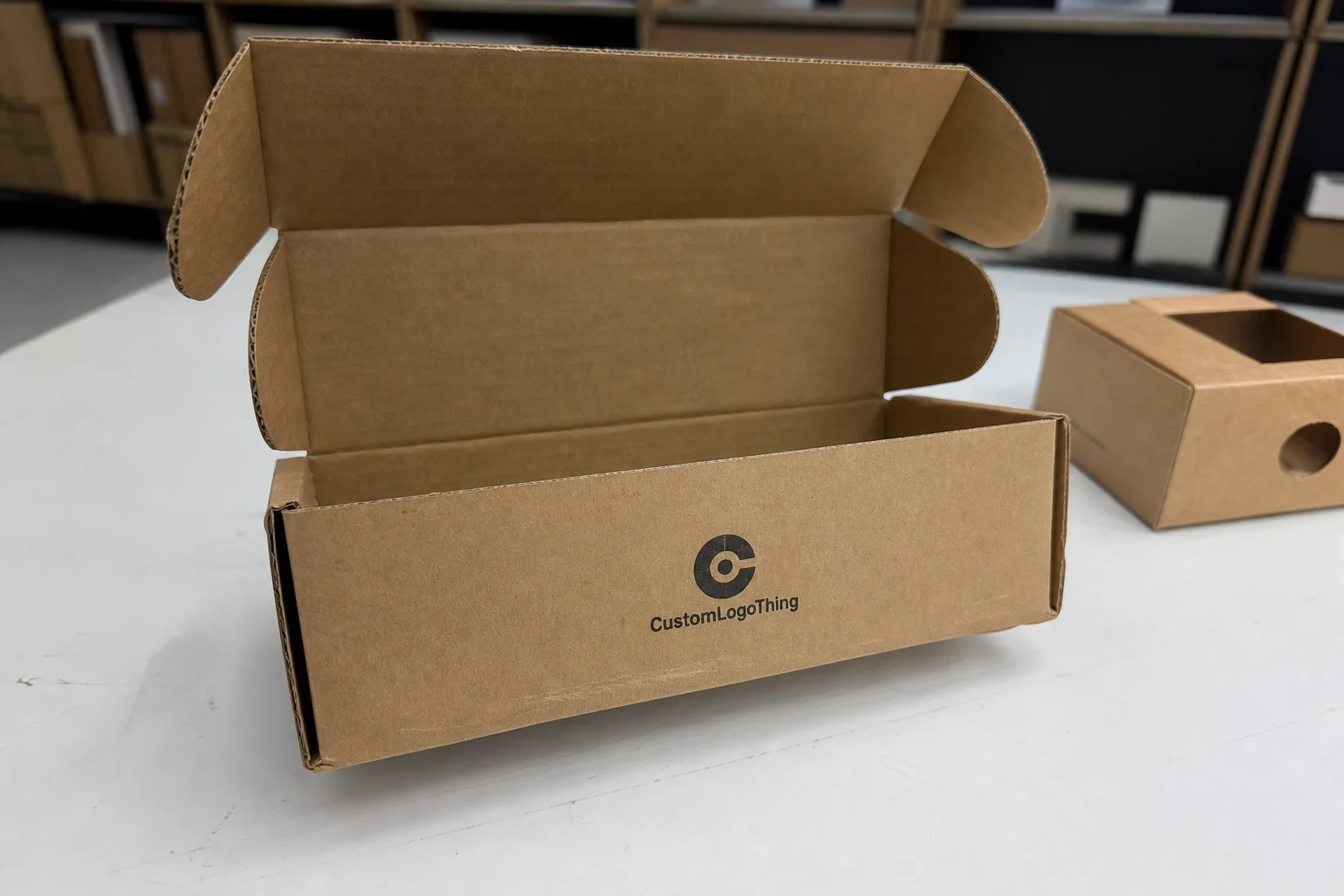
Corrugated board is a layered material made from linerboard on the outside and a fluted medium in the middle. That flute is not decorative. It is the structure that gives the box much of its stiffness, compressive strength, and impact resistance. The liner protects the flute and gives the carton a printable surface.
Custom corrugated boxes are built to the product, not the other way around. The carton size, board grade, closure style, and print method are selected around the packed unit, the shipping channel, and the handling conditions. That difference sounds small on paper. In practice, it changes how the item moves, how fast it packs, and how often it arrives intact.
The main benefits are straightforward:
- Tighter fit with less internal movement.
- Less need for filler or dunnage.
- Cleaner branding and better shelf or unboxing presentation.
- Improved stack behavior in storage and transit.
- Lower damage risk when the board spec matches the job.
That does not mean every item needs elaborate packaging. A lightweight accessory shipping in low volume is one problem. A 40-pound industrial component moving through a parcel network is another. The carton should be sized and built for the actual risk, not the ideal version of the shipment.
The cheapest box is often the one that fails quietly. The failure shows up later as returns, replacement labor, or a customer complaint.
For buyers comparing packaging formats, the box is only one part of the decision. Some programs need a basic shipper. Others need a branded outer with inserts or dividers. The right answer depends on the product, the route, and how much damage the business can tolerate before the economics break.
How the board, flute, and liner work together
The outer liner does three jobs: it carries print, resists scuffing, and helps the box hold its shape. The fluted medium does a different job. It acts like a springy structural layer that helps resist compression and absorbs part of the shock when a package is dropped or bumped. The glue bond between those layers matters too. If the bond is weak, the board loses performance long before the box looks obviously damaged.
Flute choice changes both protection and presentation. Larger flutes usually cushion better and support stacking, while smaller flutes give a flatter surface for print and a slimmer profile. There is no single best option. The right flute depends on what the box is protecting and where it is going.
- A flute offers strong cushioning and good vertical support.
- B flute balances crush resistance with better printability.
- C flute is a common shipping choice with solid all-around performance.
- E flute is thinner, prints well, and works well for lighter retail packaging.
- Double-wall constructions such as BC or BE add strength for heavier loads or rough freight.
Single-wall board is lighter and usually cheaper. Double-wall costs more and takes up more space, but it handles stacking pressure and rougher handling better. That tradeoff matters. A carton can look only slightly sturdier in a quote and still behave very differently once it is loaded and stacked.
Moisture is another issue buyers miss until storage conditions change. Corrugated loses strength when it gets damp. That does not mean the board is defective; it means the environment matters. A warehouse with humidity swings, condensation, or long dwell times can make a perfectly good carton behave like a weaker one. If the shipment has to survive that, ask about board grade, storage conditions, and whether coatings or moisture-resistant options are warranted.
For sourcing and testing, two references are worth knowing. FSC-certified paper sourcing is relevant if fiber traceability matters to your program. ISTA transit testing standards are useful when the box must prove itself under handling conditions rather than just look right in a proof.
Specs that change strength, fit, and print quality
Dimensions come first, but the right dimensions are the packed dimensions. That means the item plus inserts, sleeves, wrap, or any other material that changes the final footprint. Measuring the product alone is one of the fastest ways to create a box that is technically close and operationally wrong.
There is no universal clearance rule because the packing method changes the answer. A snug retail-style carton with a die-cut insert can tolerate very little extra space. A loose shipper needs more tolerance so the product does not rack inside the box. The useful question is not, “What size is the product?” It is, “What does the packed assembly actually need to survive the trip?”
Strength is usually discussed through burst strength or edge crush test, commonly called ECT. Buyers do not need to become packaging engineers, but they do need to know that strength is tied to the load and the route. A 32 ECT single-wall box can be fine for many light-to-medium parcels. Heavier contents, longer storage, or stack pressure often push the spec toward 44 ECT or double-wall construction. The point is to match the board to the abuse level, not to choose the highest number by default.
Print and finish affect both cost and performance. They are not just visual decisions.
- One-color print often gives the best balance of branding and price.
- Multi-color print adds setup and can increase waste during make-ready.
- Inside print improves presentation but adds a production step.
- Coatings can improve scuff resistance or moisture behavior, but they add cost and can change how the board converts.
- Die-cuts and inserts improve fit and reduce pack-out time when the item needs structure rather than loose fill.
If the carton will move through parcel shipping, warehouse handling, or palletized freight, the print spec should not interfere with the structural one. A visually polished box that collapses under stack pressure is a bad trade. The reverse is also true: an overbuilt box with no need for it burns money and usually offers no practical benefit.
Structural extras such as hand holes, partitions, locking tabs, and cut-outs can save time if they are used for a real purpose. If they do not improve packing speed, product protection, or handling, they are decorative complexity. That kind of complexity tends to show up later as cost, not value.
Cost, pricing, and MOQ: what drives the quote
Pricing on custom corrugated boxes comes from a few moving pieces. Size matters first, because board consumption rises with dimensions. Board grade is next, since stronger material costs more. Print coverage changes the quote too, as do dies, plates, inserts, and special finishing. Quantity matters because setup costs get spread across the run.
These ranges are broad, but they are useful for planning. Actual pricing can sit outside them depending on board type, freight terms, location of production, and how much setup the job requires.
| Order type | Typical use | Rough unit range | What usually drives cost up |
|---|---|---|---|
| Plain custom-sized corrugated box | Basic shipping and storage | $0.35-$1.10 | Large dimensions, stronger board, low quantity |
| 1-color branded box | Custom branding with controlled cost | $0.45-$1.35 | Ink coverage, plate setup, tighter registration |
| Die-cut box with inserts | Retail packaging or fragile product protection | $0.80-$2.50+ | Tooling, insert design, multiple production steps |
Minimum order quantities are where smaller buyers get caught off guard. Low-volume runs usually cost more per unit because the setup work does not shrink just because the order is smaller. Plates, dies, proofing, and machine adjustments still have to happen. Once the run gets into a more efficient range, the unit cost often drops faster than people expect.
That is also why two quotes can look close while hiding very different assumptions. One may include a stronger board or better print control. Another may not. One may bundle setup into the unit cost. Another may show it separately. If the specs are not identical, the prices are not comparable, even if the boxes sound similar in a sales summary.
The right comparison is total landed cost. A stock carton that requires more filler, more labor, and more damage replacements may end up more expensive than a properly sized custom box. Shipping is full of these false economies. They look efficient until the returns start showing up.
Production steps and lead time: from dieline to dock
Lead time depends on the box structure, artwork readiness, and whether sampling is needed. A straightforward run with approved art can move quickly. A new shape, a custom insert, or a print-heavy project takes more coordination and more checkpoints. That is normal, not a delay by itself.
- Discovery and spec gathering: the supplier collects dimensions, weight, fragility, shipping method, quantity, and print requirements.
- Dieline confirmation: the carton layout is set so the panels, flaps, folds, and closure style are correct.
- Artwork and proof approval: the file is checked for bleed, placement, color expectations, and production readiness.
- Sampling or prototyping: a physical sample confirms fit, closure, and appearance.
- Production: the board is printed, cut, scored, glued, and assembled.
- Packing and freight booking: finished cartons are staged and shipped by the agreed method.
For standard jobs, 12 to 15 business days after proof approval is a common planning window. Complex die-cut work, multi-color print, or new tooling can extend that. If revisions are still open, the schedule slips fast. Most of the time, the press is not the real bottleneck. Late artwork, unclear dimensions, and sample approval delays cause more problems than the machine itself.
Most lead-time failures come from missing details: a packed dimension that was never confirmed, a sample nobody approved, or artwork that changed after production was already scheduled.
Rush orders can be possible, but they usually narrow the material choices and raise the cost. If a launch date matters, say it early. That gives the supplier a chance to tell you whether the request is realistic before time is spent on a spec that cannot make the window.
For fragile or high-value products, a sample is worth the extra step. It shows how the box closes, how the insert fits, and whether the pack-out process is efficient. A PDF cannot tell you whether a product rattles, catches on a flap, or needs one more millimeter of clearance. A prototype can.
Common ordering mistakes that waste money
The most common mistake is measuring the product instead of the packed unit. Buyers grab the item size, forget the insert or protective wrap, and then end up with a carton that is too tight or too loose. Both problems cost money. Tight boxes slow pack-out and can stress corners. Loose boxes invite movement and damage.
Another mistake is choosing strength by appearance. A carton can look thick and still be the wrong grade. Shipping method matters. So does pallet stack pressure, route length, and whether the box will spend days in a warehouse before it moves. A light product in harsh handling can fail just as badly as a heavy one in gentle handling if the board spec is mismatched.
Artwork causes avoidable problems too. Low-resolution files, missing bleed, and unrealistic color expectations are still common. Not every printer reproduces a brand color the same way, especially on corrugated stock. If the box is carrying package branding, the file has to be built for production, not just for a presentation deck.
There is also the quieter mistake of over-specifying everything. Better board, extra graphics, coatings, and inserts may all be justified. They are not automatically justified. If the item ships short distances, moves in low volume, and does not need special presentation, a simpler spec may be the smarter buy. Overbuilding packaging is just another way to pay for protection you never use.
A quick buyer check catches many of these errors before the order is placed:
- Measure the packed assembly, not only the product.
- Confirm the shipping method and likely handling conditions.
- Match board strength to weight and stack pressure.
- Review a proof before production starts.
- Ask whether inserts, coatings, or partitions actually solve a problem.
That checklist is plain, and it saves more money than most packaging advice. The mistakes in this category are rarely dramatic. They are small misses that compound across the run.
Next steps: how to order the right box the first time
Start with a clean quote packet. The supplier should get packed dimensions, product weight, fragility level, shipping method, target quantity, print needs, and the delivery deadline. If the product is unusual, include photos or a sample. That removes guesswork and keeps the conversation anchored to the actual use case.
If the product is fragile, high-value, or awkwardly shaped, ask for a sample or prototype before production. That single step can expose issues in fit, closure, and pack-out speed that would be expensive to discover after a full run. It also gives you a more reliable way to compare suppliers, because you are comparing the box that will actually ship, not just the drawing.
Then compare quotes only after the specs are identical. Same board. Same dimensions. Same print method. Same quantity. Same freight term. If one quote is much lower, there is a reason. Sometimes the reason is an efficient process. Sometimes it is a weaker carton. The spec usually tells the truth if you read it carefully.
For most buyers, the right approach is simple: confirm the design, approve the sample, lock the schedule, and keep every detail aligned before production begins. That is what makes custom corrugated boxes useful. Not the label, not the mockup, and not the promise. The box earns its keep when it fits the product, survives the route, and keeps the rest of the operation from paying for avoidable mistakes.
What do I need to quote custom corrugated boxes accurately?
Provide packed dimensions, not just the product size. Include weight, shipping method, quantity, and print requirements. If you need inserts, coatings, or special handling features, include those too. Missing one of those inputs can change the quote more than buyers expect.
How do I choose the right flute for custom corrugated boxes?
Start with the load, the shipping method, and the amount of compression the box will see. Larger flutes generally cushion better, while smaller flutes print more cleanly. Double-wall board makes sense when stack pressure, rough freight, or heavier contents justify the extra material.
Why is the unit cost higher on small orders?
Setup work, tooling, and proofing have to be absorbed across fewer cartons. That is why small runs usually cost more per unit. Pricing often improves once the order reaches a more efficient production volume.
How long does production usually take for custom corrugated boxes?
Simple jobs can move in roughly 12 to 15 business days after proof approval. New tooling, sample revisions, and multi-color print usually add time. Rush orders may be possible, but they tend to narrow material options and increase cost.
Can custom corrugated boxes reduce shipping damage?
Yes, if the carton is sized correctly and the board grade matches the load. A tighter fit reduces movement, and a better structural spec can reduce crush or puncture risk. The result is usually fewer returns, less repack labor, and fewer damage claims.