For apparel brands, Custom Mailing Labels do more than carry an address. They sit between checkout and unboxing, and they sit inside the warehouse workflow long before the customer ever sees the parcel. If a label lifts at the corners, smudges under handling, or scans poorly, the problem is not cosmetic. It slows the line, creates rework, and makes the shipment feel less considered than the rest of the package.
That is why the best teams treat labels as a production item with a branding role, not the other way around. A small shift in adhesive strength, face stock, or format can change how fast orders move and how cleanly they arrive. The effect is easy to overlook until the first batch misbehaves.
The choice is less about decoration than fit. Does the label hold on the actual packaging surface? Can the barcode scan at speed? Will the format work for packers using rolls, sheets, or fanfold stacks? Those questions matter more than a polished mockup.
Why custom mailing labels matter more than they seem
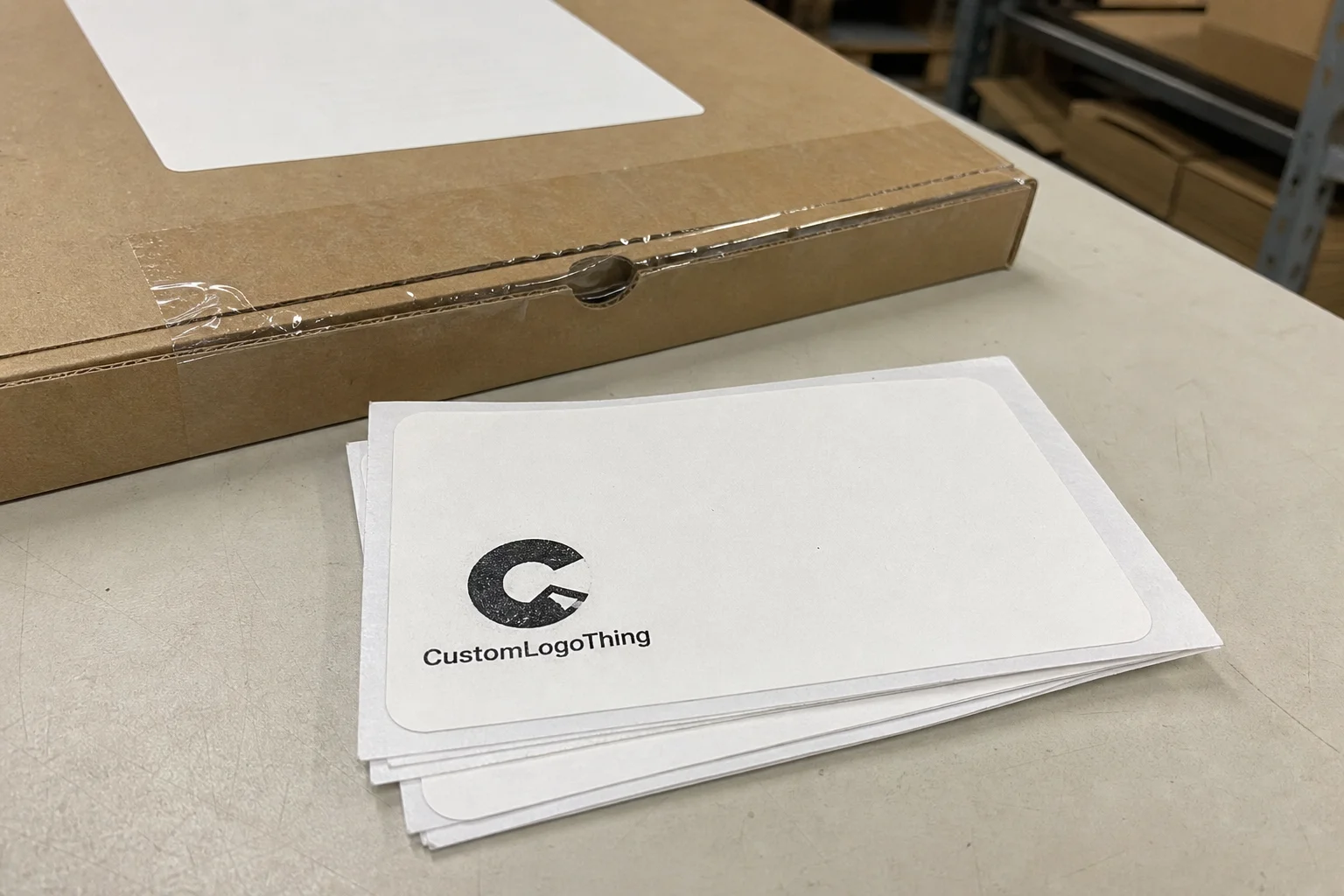
A shipping label is a tiny part of the parcel, but it carries more responsibility than most packaging elements. It identifies the order, directs the carrier, supports returns, and often contains the first branded detail a customer notices. If it looks sharp and performs cleanly, the shipment feels organized before the box is opened.
Custom mailing labels are labels specified around your size, artwork, workflow, or packaging surface instead of pulled from a generic stock system. They may include a return address, barcode, QR code, handling note, SKU reference, brand mark, or a combination of those elements. That makes them different from plain address labels and also different from standard thermal shipping stickers, which are usually chosen for speed first and branding second.
The mismatch shows up quickly in apparel operations. Brands will spend on custom cartons, inserts, or tissue, then apply a label that looks improvised. Sometimes the label itself is the least considered item in the entire package, even though it touches every shipment.
A label should be easy for the warehouse to use and clean enough for the customer to trust. Those two goals can coexist, but only if the specs are chosen deliberately.
In practice, the main variables are not flashy. Material, adhesive, size, layout, and print method affect durability and labor more than brand teams expect. If the wrong label is ordered, the cost tends to show up later as manual re-sticking, extra scans, or delayed packs rather than in the initial quote.
How the labeling process and timeline work
Label production usually follows a familiar path: artwork submission, proofing, printing, converting, inspection, packing, and shipment. For straightforward orders, a typical turnaround is often around 7 to 12 business days after proof approval. Specialty materials, odd shapes, or variable-data work can extend that window.
Proofing is usually where timelines slip. A clean file with live text, correct dimensions, and readable barcode artwork can move quickly. A file with missing fonts, low-resolution graphics, or unclear margins often triggers revision rounds, and each revision adds delay. If the label is tied to a launch date or seasonal shipment, those delays matter.
What tends to slow the process most is not printing itself. It is unresolved specs. A last-minute switch from sheets to rolls, uncertainty about the packaging surface, or a barcode area that was never sized correctly can hold up approval longer than the production run.
Common lead-time drivers include:
- Proof revisions — one round is normal; several usually signal missing information in the brief.
- Substrate availability — paper, film, and specialty stocks are not always stocked the same way.
- Print method — digital, flexographic, and thermal setups have different setup needs and timing.
- Format — rolls, sheets, and fanfold stacks pack differently and affect application speed.
- Quantity and SKU mix — multiple versions or seasonal splits require more coordination.
A practical timeline usually looks like this:
- Concept and specs: define the size, stock, adhesive, format, and use case.
- Artwork and proof: confirm layout, barcode zones, and brand hierarchy.
- Approval: sign off only after the packaging surface and application method are confirmed.
- Production: printing, converting, inspection, and pack-out.
- Delivery: ship according to the chosen format and quantity.
Where brands lose time is usually ordinary stuff: no bleed, no clear margin rules, no barcode guidance, or a late change to the copy. Those are small misses on paper. They become expensive once they interrupt the production schedule.
Material, adhesive, and size choices that affect performance
Material choice is where a label can look correct and still fail in real use. A glossy sample might look polished under bright lighting, yet perform badly on a recycled mailer or a rough corrugated box. The right face stock depends on the package surface, moisture exposure, handling speed, and expected transit conditions.
Paper labels are usually the most economical option and work well on smooth cartons in dry environments. They print clearly and are easy to handle, which makes them a common fit for standard apparel shipping. Film labels cost more, but they hold up better against moisture, abrasion, and tearing, which can matter for poly mailers or parcels that rub during transit. Specialty stocks can add durability or a premium appearance, though they are usually justified only when the application truly needs them.
Adhesive choice is just as important. A standard permanent adhesive often works on corrugated board. Flexible mailers, textured recycled surfaces, cold conditions, and certain coated materials may require a stronger or more specialized adhesive. If the corners lift or the label starts to curl, the problem is usually with the adhesive-to-surface match rather than the artwork.
Size affects readability, placement, and speed at the pack station. Larger labels give more room for barcodes, return addresses, handling notes, and brand graphics. Smaller labels reduce material use on compact packaging, but only if the scan field stays clear and the label still leaves enough white space for reliable reading. If the format feels cramped, the design starts working against the workflow.
| Label type | Best use | Typical strengths | Watch-outs |
|---|---|---|---|
| Paper label | Corrugated cartons, dry indoor packing | Clear print quality, lower cost | Less resistant to moisture and abrasion |
| Film label | Poly mailers, rough transit, moisture exposure | Tear resistance, stronger durability | Usually higher unit cost |
| Specialty label | Premium branded packaging or harsher conditions | Enhanced performance, custom features | Longer lead time and tighter spec control |
If you need handwriting space, batch codes, return information, or a visible brand mark, build those elements into the label layout from the start. A mailing label is not just a sticker. For apparel shipping, it is part of receiving, picking, packing, scanning, and customer service records. A weak format in any one of those steps creates avoidable work later.
It also helps to compare the label against the rest of the packaging system. A box, insert, and mailer can all look consistent while still creating friction at the shipping stage if the label was chosen separately. For related packaging planning, brands often review Custom Labels & Tags and Custom Packaging Products alongside the mailing label spec.
Cost, pricing, and quote factors to compare
Pricing for custom mailing labels usually depends on quantity, material, adhesive type, print coverage, shape, and any special finishing. Larger runs generally lower the unit price, but that does not automatically make them the best choice. Setup complexity, proofing, and storage can cancel out some of the savings if the order is too customized or the artwork changes often.
As a rough market pattern, a basic paper label ordered in volume will usually sit in a very different cost range from a short-run film label with custom finishing or heavy brand coverage. The exact numbers vary too much to present as a single standard. What matters more is the full delivered cost, including setup, proofing, shipping, and the cost of any likely reprint.
Ask for quotes that include the same variables every time. Otherwise the comparison is not useful.
- Material — paper, film, or specialty stock.
- Size — exact dimensions, not approximate dimensions.
- Format — roll, sheet, or fanfold.
- Adhesive — permanent, removable, or specialty performance adhesive.
- Proofing — number of rounds included.
- Shipping — packed and delivered terms, not just production.
- Reprint policy — what happens if a defect is found.
MOQ matters too. A modestly larger order can sometimes reduce the per-unit cost enough to make sense, especially if artwork and specs stay stable through the season. But if the design changes often, a smaller batch can be the safer choice. Excess stock only saves money if it is still usable when you need it.
There are hidden costs that rarely appear on a quote. A label that misfeeds at the pack station slows labor. One with weak adhesion creates repacks. A barcode that scans poorly leads to manual intervention. Those operational costs are easy to ignore when comparing line items, yet they are often more expensive than the label itself.
From a buyer’s point of view, the smartest pricing discussion is about fit, not just price. The label should suit the package, the volume, and the shipping environment. If your operation also uses Custom Poly Mailers, test the label against that exact surface before placing a larger order.
For brands that want to check sourcing claims, FSC is a useful reference for paper sourcing context, and the EPA provides general guidance on environmental considerations and materials.
Step-by-step: choosing the right custom mailing labels
The most efficient way to choose a label is to start with the job, not the artwork. A label for an outer carton has different requirements from a return-address label, an internal sorting label, or a branded seal for a mailer flap. If design comes first, the finished label can look right and still work poorly.
Use this order instead:
- Define the job: shipping, branding, returns, internal sorting, or promotional use.
- Set performance needs: moisture resistance, abrasion resistance, scan speed, or tamper resistance.
- Match the material: paper for standard cartons, film for tougher conditions, specialty stock if needed.
- Confirm the adhesive: test on the exact mailer, carton, or recycled surface you will use.
- Check the workflow: roll direction, label size, pack station setup, and application method.
- Review the artwork: address hierarchy, barcodes, compliance marks, and white space.
If the label is part of a broader packaging system, coordinate the typography, logo scale, and color contrast with the rest of the shipment. Consistency helps the package feel intentional, but it should never get in the way of scan speed or legibility. In apparel packaging, visual order is useful only if the warehouse can still move quickly.
Samples are worth requesting when the label will face moisture, abrasion, freezer storage, or high-volume scanning. A proof can confirm layout, but it cannot fully predict how a label behaves on the actual surface. A label that looks sharp on screen may wrinkle on textured board, curl after handling, or refuse to stay flat once applied.
An internal approval checklist keeps the process from drifting:
- Does operations approve the format?
- Does marketing approve the visual hierarchy?
- Does procurement approve the price and MOQ?
- Does the barcode scan cleanly at the required distance?
- Does the adhesive hold on the actual substrate?
That list is basic, but it prevents expensive surprises. A label that satisfies the design team and fails the warehouse is not a finished product. It is a reprint waiting to happen.
Common mistakes that cause reprints and delays
The costly mistakes are usually dull. Under-specified files create more proof cycles than necessary. Missing dimensions lead to assumptions. Low-resolution barcodes trigger rework. One vague instruction in the brief can delay a shipment that was already close to deadline.
Adhesive mismatches are another frequent issue. Recycled board, coated surfaces, and flexible mailers all behave differently, and not every stock sticks the same way on each one. If the label lifts at the edge or shifts after application, that problem usually appears only after production begins.
Scanner contrast gets overlooked more often than it should. A label can look premium and still fail in the warehouse if the font is too small or the contrast is too weak for fast reading. In a high-volume apparel operation, that becomes a labor issue almost immediately.
Finish can also cause trouble. Matte and gloss coatings can improve presentation, but they do not guarantee performance under moisture, abrasion, or repeated handling. The warehouse is less forgiving than the proof.
Storage and roll direction matter as well. If the label format fights the way workers actually apply it, time disappears in small increments all day. That kind of inefficiency is hard to see in a mockup and easy to feel during a busy packing shift.
Performance first, design second, format third. That order prevents most of the problems teams blame on “production” later.
Expert tips to improve durability and workflow
Test labels on the exact packaging surface before scaling. Not a similar carton. Not a nearly identical mailer. The exact one. That single step catches more failures than most teams expect, especially on flexible mailers and recycled boxes.
Standardize templates across SKUs where possible. When every style has a slightly different layout, ordering gets messy and reprints become more likely. A cleaner system is easier for operations to learn and easier for procurement to reorder.
Plan a buffer if you expect a seasonal spike. Apparel shipments can jump around launches, sales, and holiday periods, and rush orders are rarely the cheapest option. A small reserve protects the schedule without forcing you to overbuy far beyond real demand.
Ask suppliers how they handle proof standards, inspection, and defects. A good answer should be specific: what is checked, what is not, how off-spec product is handled, and whether reprints are governed by a clear policy. Clear process details matter more than polished sales language.
If the label is part of a larger packaging set, keep the spec aligned with the rest of the order flow. Inconsistent stock choices or mismatched formats make pack stations harder to train and slower to run. The best label choice is usually the one that reduces friction across the whole system, not the one that looks the most dramatic in a render.
Next steps: build a label spec before you request quotes
The fastest way to get custom mailing labels right is to define the job clearly and quote against the same spec every time. A one-page brief is often enough. Include the measurements, quantity, material preference, adhesive type, format, artwork files, and target delivery date.
Here is a practical spec list you can reuse:
- Label size and shape
- Face stock preference
- Adhesive type
- Roll, sheet, or fanfold format
- Print coverage and color count
- Barcode or variable-data requirements
- Packaging surface the label will be applied to
- Delivery deadline and replenishment needs
Then compare at least two suppliers using that same brief. That is the cleanest way to judge price, lead time, and support. If the label will be used on a nonstandard surface, ask for a proof or sample run before ordering volume. That extra step is minor compared with the cost of a run that does not stick, scan, or fit the workflow.
Review the pack-out process before the order is placed. If the format does not match how the team applies labels, the whole operation pays for it later. A label should be easy to stock, easy to apply, and easy to read. If it does those three things, the branding benefit follows naturally.
For apparel shipping, custom mailing labels are one of the simplest places to improve consistency without changing the entire packaging system. The right spec does not just look better. It reduces friction where shipping speed and customer presentation meet.
What are custom mailing labels used for in apparel shipping?
They identify and brand outgoing parcels, return addresses, and packing workflows. They also help apparel brands improve presentation, scanning accuracy, and pack-out consistency while supporting tracking, batch organization, and seasonal campaigns.
Which material works best for custom mailing labels on poly mailers?
Film or other durable label stocks usually handle flexible mailers better than basic paper. The adhesive matters just as much as the face stock because poly surfaces can be difficult. Testing on the exact mailer surface is the safest way to confirm performance.
How much do custom mailing labels usually cost?
Price depends on quantity, size, material, adhesive, and print complexity. Unit cost usually drops as quantity rises, but setup and proofing can affect short runs. Ask for an itemized quote so you can compare suppliers accurately.
How long does it take to produce custom mailing labels?
Timeline depends on proof approval, artwork readiness, quantity, and finishing requirements. Simple orders move faster than labels with specialty materials or complex formats. Clear specs and prompt proof approval usually shorten the schedule.
What should I include in a custom mailing labels quote request?
Include dimensions, quantity, material preference, adhesive type, format, artwork files, and delivery deadline. State the packaging surface and shipping environment so the supplier can recommend the right build. If you need barcode or variable-data support, mention that up front.