Custom Corrugated Cardboard Boxes: What They Are and Why Buyers Care
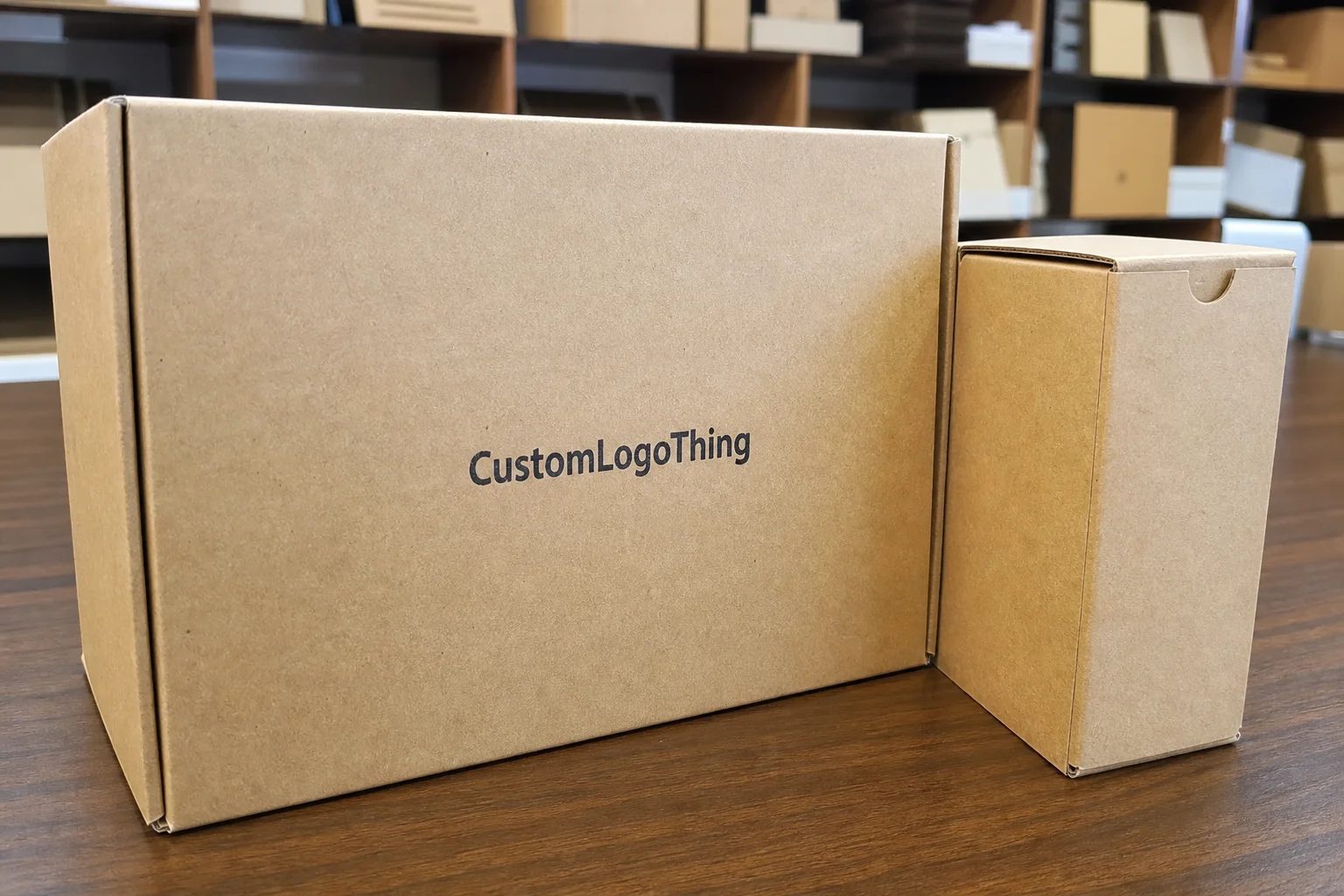
Custom corrugated cardboard boxes do three jobs at once. They protect the product, control shipping cost, and carry the brand without turning the carton into a fragile display piece. That mix is why buyers keep coming back to corrugated instead of thinner paperboard or off-the-shelf packaging that almost fits.
Corrugated board has a simple structure with real consequences: an outer liner, a fluted medium, and an inner liner. The flute is the useful part. It gives the board compression resistance, absorbs impact, and creates stiffness without needing a solid sheet of heavy material. Kraft liners usually bring better strength. White or coated liners help when print quality matters more than plain utility.
Most buying decisions boil down to four variables: protection, presentation, freight efficiency, and ease of packing. Improve one and you usually push on the others. Better graphics cost more. Heavier board improves durability but can add cube and freight weight. A tighter box reduces movement, but if the packer has to fight it on the line, throughput drops. Packaging is always a tradeoff. Pretending otherwise is how budgets get blown.
Common formats show up again and again:
- Mailer-style boxes for ecommerce and branded presentation.
- RSC shipping boxes for warehouse packing, storage, and bulk transit.
- Retail-ready cartons for shelf display or club-store handling.
- Inserts and partitions for products that need movement control inside the carton.
If you are comparing a presentation box with a basic shipper, start with the failure mode. A pretty box that crushes in transit is expensive waste. A plain box that protects the product may be the correct answer, even if it is less exciting to look at.
That is the first thing I tell buyers: build the carton around the actual route, not the mockup in the slide deck.
How Corrugated Structure Handles Weight, Shock, and Stacking
Corrugated board works because the fluted layer behaves like a series of tiny arches. It spreads load, resists bending, and absorbs shock better than flat stock. That is why two cartons with the same outer dimensions can perform very differently once they hit parcel handling, warehouse stacking, or pallet compression.
Single-wall corrugated is the common baseline. It uses one fluted medium between two liners and handles many ecommerce and retail shipments without issue. Double-wall adds another fluted layer and another liner, which improves compression strength and gives the box more margin under load. Triple-wall exists for heavy industrial use, but most buyers do not need it unless the carton is replacing a crate or carrying unusually dense contents.
Three specs matter more than most people realize:
- Edge crush measures how well the board resists vertical pressure on the edge.
- Burst strength measures resistance to rupture under pressure.
- Compression strength shows how much stacking load the box can handle before it fails.
The shipping method matters as much as product weight. A light item that travels through a rough parcel network can need a stronger carton than a heavier item that stays on a pallet and never leaves controlled storage. Humidity matters too. Board that looks fine in a dry sample room can lose performance in a damp warehouse. That is why compression tests and transit testing standards, including ISTA, are useful. They replace guesswork with data.
One useful rule: build for the load, the route, and the storage condition. Not for the most expensive-sounding board grade in the quote. A heavier specification is not automatically better. Sometimes it is just heavier.
Cost, MOQ, and Unit Price: What Actually Moves the Quote
The price for custom corrugated cardboard boxes usually comes down to six levers: board grade, dimensions, print coverage, finishing, inserts, and order quantity. Buyers often anchor on unit price and ignore setup, tooling, or freight. That is how a cheap-looking quote turns into an expensive purchase order.
Quantity drives unit cost hard. Press setup, die cutting, and conversion costs do not disappear just because the order is small. A 500-piece run can make sense for a launch or pilot. A 5,000-piece run usually lowers the unit cost, but only if the spec is locked and the artwork is final. Changing size after quoting is where projects go sideways.
Dimensions deserve more attention than they get. Oversized cartons waste board, waste pallet space, and raise dimensional shipping cost. A box that is one inch too large in the wrong direction can create a surprising amount of recurring expense. Finish choices do the same. Soft-touch lamination, specialty coatings, and decorative effects can make Custom Printed Boxes look premium, but they also add cost, setup, and production time. That is fine when the box is part of the product experience. It is unnecessary when the carton is just a shipping vessel.
Here is a practical comparison of common builds:
| Format | Best For | Typical Build | Cost Pressure | Notes |
|---|---|---|---|---|
| Mailer box | Branded ecommerce | E-flute or B-flute, printed exterior | Moderate | Good for presentation, requires die cutting |
| RSC shipping box | Bulk shipping and storage | Single-wall corrugated cardboard, kraft exterior | Low to moderate | Efficient, familiar, easy to pack |
| Double-wall carton | Heavier products or stacking | Heavier board, stronger compression | Higher | Use only when load or route justifies it |
| Retail-ready carton | Shelf display or club store packing | Printed exterior, easy-open features | Moderate to high | Must work on shelf and in transit |
Planning ranges help, even though every plant prices differently. For a simple one-color RSC in medium volume, a rough range might be $0.45 to $1.10 per unit depending on size and quantity. A die-cut mailer with stronger graphics can land around $0.70 to $1.60. Add inserts, coating, or unusual dimensions and the number moves again. Freight can move it too, especially when the boxes ship flat but still consume a lot of pallet space.
The cleanest way to compare quotes is to keep the spec identical. Same internal dimensions. Same board grade. Same print method. Same quantity. If one quote is for a plain brown carton and another is for a full-color branded package with inserts, those are not competing prices. They are different products wearing the same label.
Process, Timeline, and Lead Time: From Dieline to Delivery
The order flow is usually straightforward, but delays hide in the handoffs. It starts with the brief, moves to sizing and dieline setup, then artwork, proofing, sample approval, production, and shipping. If any step is vague, lead time stretches. Not by months. Just enough to miss a launch window or force expensive freight upgrades.
A useful request includes internal dimensions, product weight, print area, quantity, closure style, and target ship date. That is not extra work. That is the minimum needed to quote accurately. A surprising number of buyers send a render and expect the supplier to infer structure, board grade, and assembly details from the image alone. That is how revisions happen after proof approval. Revisions after approval are slow and expensive. Simple as that.
Typical timing ranges look like this:
- Simple stock-style custom print: often 7 to 12 business days after approval.
- Die-cut mailer or retail carton: often 12 to 18 business days after approval.
- Special finishes, inserts, or complex tooling: often 15 to 25 business days.
Those are planning ranges, not guarantees. Actual schedules depend on press availability, board supply, proof turnaround, and freight method. If you need a structural sample, add time. If you need a packed-out prototype with inserts, add more. That extra week is still cheaper than discovering a fit problem after thousands of units are already in motion.
Approval speed matters more than people think. Suppliers can be ready to proceed, but if artwork questions sit unanswered for three days, the schedule slips. Same if the dimensions keep changing. Finalize the spec before asking for quotes. The more boring the spec sheet looks, the smoother the job usually runs.
Key Specs That Decide Fit, Print Quality, and Durability
Most packaging failures start with a sloppy spec sheet. For custom corrugated cardboard boxes, the buyer needs a few things locked before quoting starts: internal dimensions, product weight, ship method, print method, and closure style. If those are loose, every downstream decision becomes less reliable.
Internal size matters more than outer size. Buyers still get this wrong because they measure the sample carton sitting in storage instead of the packed product. Once inserts, sleeves, closures, or protective padding enter the picture, the real dimensions change. A carton that is too tight can scuff the product or prevent clean closure. A carton that is too loose allows movement, and movement turns into damage.
Print method affects both appearance and economics. Flexo is common on shipping cartons because it is efficient and good for simpler graphics. Litho-lam can deliver a cleaner retail look and better image quality. Digital print works well for shorter runs and variable artwork, though the unit price usually reflects that flexibility. Finish matters too. Matte can hide scuffs. Gloss can pop under retail lighting. Aqueous coating adds some protection without turning the carton into a plastic-wrapped object nobody asked for.
If sustainability or sourcing claims matter, ask about recycled content and FSC certification. If you need a neutral reference for material reduction and recovery practices, the EPA sustainable materials management resources are more useful than marketing language.
Other details make a difference:
- Product weight including inserts, closures, and any bundled components.
- Storage conditions such as humidity, temperature swings, and stack time.
- Compliance requirements if the carton touches consumables or regulated goods.
- Retail presentation if the box must hold up on shelf after distribution.
The best packaging specs remove uncertainty. They do not add drama. They tell the supplier exactly what the carton has to survive, how it will be packed, and how much visual polish is actually worth paying for.
Common Ordering Mistakes That Waste Money and Time
The first mistake is sizing from the product alone instead of the finished packed unit. A product may fit on paper and still fail in the box once sleeves, inserts, or assembly clearance are included. Measure the product as it will ship, not as it sits in isolation.
The second mistake is overbuilding. Some buyers choose a heavier board because it feels safer, then pay extra for material, freight, and storage they did not need. More board does not always equal better packaging. Sometimes it just means the carton is harder to move through the supply chain.
Proofing errors cause a lot of pain. Low-resolution art can look acceptable on screen and poor on corrugated stock. A logo can get chopped by a flap. A line of type can land too close to a score. If artwork crosses folds or seams, the file needs to account for that from the start. That is not a design preference. It is production basics.
The cheapest quote is often the one that forgot the inserts, forgot the freight, and forgot the part where the box has to survive transit.
Logistics mistakes are just as common. Buyers forget to ask how many cartons fit on a pallet. They forget to confirm freight class. They forget to check warehouse storage limits until the boxes are already in production. That is a bad time to discover receiving constraints. A clean order for Custom Packaging Products should include pallet count, storage volume, and the receiving plan.
One more mistake: approving a box before confirming the final product dimensions. That sounds obvious, but it happens a lot when marketing, operations, and procurement are all editing the same project at once. The carton does not care who changed the spec. It only cares whether the math works.
Expert Tips and Next Steps for a Cleaner Order
If the product is fragile, irregular, or expensive, order a structural sample before committing to a full run. A plain white prototype is enough for fit testing. The goal is not to admire the sample. The goal is to verify closure, insert fit, pack-out speed, and stack behavior.
Give the supplier a one-page spec sheet. Keep it direct. Include dimensions, product weight, quantity, board preference, print coverage, finish, and target ship date. If the launch date matters, say so clearly. Suppliers quote faster when they are not decoding a brand brief that reads like a mood board.
Compare vendors on the same variables only:
- Board type and flute profile.
- Print method and ink coverage.
- MOQ and setup cost.
- Lead time and proof process.
- Freight assumptions and palletizing method.
That is the cleanest way to buy custom corrugated cardboard boxes without getting trapped by a low headline price or a vague promise. The right carton is the one that survives the route, supports the brand, and does not create a mess in production. Start with the spec. Lock the structure. Confirm the artwork. Then place the order with enough lead time for the box to behave like a packaging component, not a guess.
There is no magic here. Good packaging is mostly disciplined choices made early. Miss those choices, and everything gets more expensive later.
How do I choose the right size for custom corrugated cardboard boxes?
Measure the packed product, not the bare item. Use internal dimensions first. Leave enough clearance for inserts, padding, and assembly, but not so much space that the product shifts during transit.
What is the difference between single-wall and double-wall corrugated boxes?
Single-wall uses one fluted medium and handles many standard shipments. Double-wall adds another fluted layer, which improves stacking strength and impact resistance for heavier or longer-haul loads. The right choice depends on the load, the route, and how long the carton will sit in storage.
How much do custom corrugated cardboard boxes cost?
Price depends on size, board grade, print coverage, quantity, and finishing. Small runs usually cost more per unit because setup is spread across fewer boxes. As a rough planning range, simple shipping cartons can fall under a dollar each in medium volume, while die-cut or full-color builds can cost more. Compare identical specs if you want a real read on pricing.
What is a normal lead time for custom corrugated cardboard boxes?
Simple printed runs can move quickly once artwork is approved. Die-cut cartons, special finishes, and custom inserts usually need more time. Lead time also depends on proof speed and material availability, so finalizing the spec early is the fastest way to avoid delays.
Can I print full-color graphics on corrugated shipping boxes?
Yes. Full-color printing works well for branded packaging and retail packaging, but it usually increases cost and production time. The artwork should account for folds, seams, and panel transitions so the final carton still looks clean. For most buyers, the box should do the heavy lifting first and the graphics should support that job, not fight it.