Buyer Fit Snapshot
| Best fit | Custom Corrugated Inner Cartons projects where brand print, material claims, artwork control, MOQ, and repeat-order consistency need to be specified before quoting. |
|---|---|
| Quote inputs | Share finished size, material target, print colors, finish, packing count, annual reorder estimate, ship-to region, and any compliance wording. |
| Proofing check | Approve dieline scale, logo placement, barcode or warning zones, color tolerance, closure strength, and carton packing before bulk production. |
| Main risk | Vague material claims, crowded artwork, missing packing details, or unclear freight terms can make a low unit price expensive after revisions. |
Fast answer: Custom Corrugated Inner Cartons: What They Do and Why should be specified like a repeatable production item. The safest quote records material, print method, finish, artwork proof, packing count, and reorder notes in one written spec.
Production checks before approval
Compare the actual filled-product size with the drawing, then confirm tolerance on folds, seals, hang holes, label areas, and retail display edges. Reserve space for logos, QR codes, warning copy, and material claims before decorative graphics fill the panel.
Quote comparison points
Review material grade, print process, finish, sampling route, tooling charges, carton quantity, and freight assumptions side by side. A quote is only useful when the supplier can repeat the same color, closure quality, and packing count on the next order.
Custom Corrugated Inner Cartons: What They Do and Why
Damaged shipments usually get blamed on the outer shipper, but a lot of failures actually start inside the box. The product shifts, corners strike the wall, closures loosen, and one rough impact turns a normal delivery into a claim. That is why custom corrugated inner cartons matter so much: they hold the product in place, absorb abuse, and keep the item where it belongs from pack-out through final delivery.
For a packaging buyer, that sounds simple. The reality asks for a lot more judgment. custom corrugated inner cartons can take the form of trays, sleeves, inserts, partitions, wraps, or fitted supports, and the right structure depends on product shape, weight, fragility, and the shipping lane. A poor fit can slow fulfillment or push freight costs higher. A well-built structure can cut returns, reduce damage, and make Custom Shipping Boxes act like a complete system instead of a loose stack of parts.
What Custom Corrugated Inner Cartons Actually Do
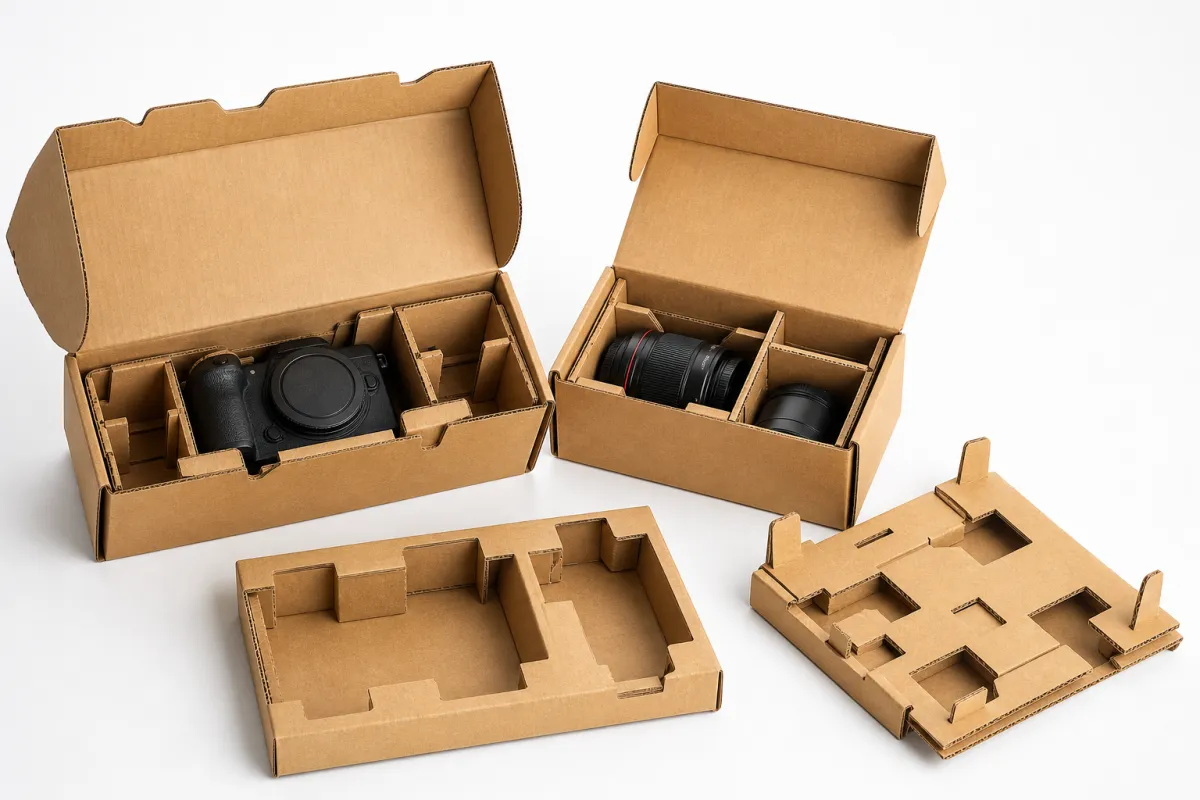
Custom corrugated inner cartons solve a very specific problem: they stop the product from moving. That matters more than many teams expect. A master shipper can have strong panels, good tape, and tight seals, yet still produce damage if the item inside slides a few millimeters during transit. That small gap is enough to create edge wear, surface scuffing, cracked corners, and impact marks on fragile components.
In practical terms, custom corrugated inner cartons are fitted inserts, trays, partitions, sleeves, or wraps designed around actual product dimensions and weight. They are not generic void fill. They cradle a shape, brace weak points, and keep parts from touching each other. From a packaging design standpoint, that is a very different job than stuffing a box with kraft paper or air pillows.
The difference shows up quickly in real product packaging. A one-size-fits-all buffer can work for light, forgiving items, but it often wastes space and still allows movement. A shape-specific insert can hold bottles upright, separate medical components, or secure a retail kit with several pieces and different finishes. That is why custom corrugated inner cartons are common in electronics, glass, cosmetics, subscription packs, spare parts, and branded packaging that needs to survive direct-to-consumer handling.
Some of the most common applications include:
- Fragile kits with multiple loose components that must not rub together.
- Bottles, vials, and jars that need upright support and partitioning.
- Medical parts and lab components that require controlled presentation and stable movement.
- Electronics and accessories where surface protection matters as much as crush resistance.
- Retail-ready e-commerce packs that need both protection and clean presentation.
From a buyer's perspective, the real question is not whether an insert looks tidy. It is whether custom corrugated inner cartons protect the product at a sensible cost, fit the packing line, and avoid overpackaging. A structure that adds three extra seconds per pack can quietly become expensive. A structure that prevents one return for every few hundred shipments may pay for itself quickly. That tradeoff is where smart packaging decisions are made.
How Custom Corrugated Inner Cartons Work Inside the Shipper
The physics are pretty straightforward. custom corrugated inner cartons hold the product in place, spread force across a wider surface, and reduce concentrated impact at corners and edges. When a shipper is dropped, vibration-tested, or stacked in a trailer, the goal is to move stress into the corrugated structure instead of into the product itself. That is the purpose of a protective secondary pack.
Flute direction matters here. Board caliper matters too. Panel layout matters as well. A narrow cavity with the flutes running the wrong way can bend too easily in one direction and resist too much in another. A well-designed tray can create vertical support under weight-bearing zones while leaving enough flex to absorb impact. This is why custom corrugated inner cartons are usually engineered as systems, not as isolated pieces.
Partitions and dividers are especially useful for multi-item shipments. If a box contains glass bottles, coated metal parts, or painted components, part-to-part contact becomes a major risk. A divider set can keep each item in its own cell, reducing abrasion and preventing the domino effect that happens when one component shifts into the next. In that sense, custom corrugated inner cartons are not only protection; they are spacing controls.
Matching the insert to the outer carton matters just as much. A strong insert placed inside a loose, oversized outer box may actually create more motion because the whole assembly can slide as a unit. The outer carton, inner structure, and any void fill need to work together. If the product is high value or unusually fragile, it is worth reviewing the full pack-out rather than only the insert in isolation. For teams comparing options, Custom Packaging Products can help frame the conversation around the full structure instead of a single component.
Testing often reveals issues that never show up in CAD. Drop tests can expose corner crush that no drawing captured. Vibration checks can uncover a loosened fit after repeated movement. Compression testing can show whether the stacked pallet load will deform the insert over a long distribution route. Industry groups such as the International Safe Transit Association exist for a reason: lab conditions and real freight conditions are different, and custom corrugated inner cartons need to survive both.
One useful way to think about it is this: the insert is doing three jobs at once. It blocks movement, redirects force, and keeps the pack looking deliberate. That last piece matters more in retail packaging than many buyers admit. If the customer opens the box and sees a well-fitted structure, the product feels considered. That is package branding, even when the insert stays hidden for most of the journey.
Key Factors That Shape Fit, Protection, and Performance
The biggest mistake I see is treating custom corrugated inner cartons as if dimensions alone solve the job. Dimensions matter, but they are only one variable. Tolerance stack-up, product weight distribution, finish sensitivity, and shipping orientation all affect whether the insert performs as intended. A 100 mm wide item with a glossy surface behaves very differently from a 100 mm wide block with a rough edge.
Shipping environment matters just as much. Temperature swings can change how adhesives behave. Humidity can soften corrugated board or alter compression resistance. Long distribution routes, especially those with multiple handoffs, create more vibration opportunities than a local route. When a buyer asks for custom corrugated inner cartons, it helps to share the real shipping profile: parcel, LTL, palletized freight, cross-border lanes, or mixed distribution.
Board choice deserves a plain-language explanation. Single-wall board works for many light to medium products. Double-wall or higher-caliper structures become relevant when the item is heavier, more compressible, or more sensitive to crushing. Flute profiles matter too. E-flute often supports cleaner print surfaces and tighter folding, while B-flute and C-flute may offer stronger stacking or cushioning depending on the design. There is no universal answer, and that is exactly why custom corrugated inner cartons should be specified against actual product behavior rather than habit.
Assembly speed is another hidden variable. A clever insert that takes 45 seconds to fold is not clever in a busy warehouse. It becomes a bottleneck. Good packaging design respects the packing line, not just the rendering. If staff can build the pack in a repeatable motion, error rates drop and throughput stays predictable. If they need to stare at a diagram each time, the process breaks down fast.
Sustainability and presentation now sit in the same conversation more often. Many buyers want recyclable structures, FSC-certified fiber where appropriate, and a design that uses minimal ink coverage. Some also want the insert to support retail presentation after delivery. That can mean neat windows, crisp die-cuts, or a structure that looks intentional the moment the outer shipper is opened. Brands often ask for custom printed boxes on the outer pack, but the inner structure still shapes the opening experience. Good custom corrugated inner cartons make that moment feel controlled rather than improvised.
For teams that want a benchmark on fiber sourcing and responsible material choices, the Forest Stewardship Council is a useful reference point. It does not solve structural design, of course, but it helps buyers think more clearly about material claims and chain-of-custody expectations when sustainability is part of the brief.
Custom Corrugated Inner Cartons Pricing: What Drives Cost
Pricing for custom corrugated inner cartons usually comes down to a familiar set of variables: board grade, sheet size, die-cut complexity, scoring, folding method, and order quantity. The more intricate the geometry, the more likely the price will rise. A simple two-panel divider is usually cheaper than a multi-cavity tray with locking tabs, but the cheapest structure on paper is not always the least expensive in total.
That last point matters. A buyer may save a few cents per unit on material and then lose those savings in labor, damage claims, or dimensional weight. If the insert is too bulky, it can force a larger outer carton. If the insert is awkward to assemble, packing time increases. If the fit is sloppy, returns increase. Custom corrugated inner cartons should always be evaluated against total landed cost, not just carton price.
Minimum order quantities also shape the quote. Short runs often carry higher per-unit pricing because tooling, setup, and production changeovers are spread over fewer pieces. Repeat programs can come down sharply once the design is proven and the press setup stabilizes. Many buyers are surprised by this, but it is normal in corrugated conversion. The economics of custom corrugated inner cartons improve when the structure is repeatable and the forecast is steady.
| Option | Typical Unit Cost | Best For | Main Tradeoff |
|---|---|---|---|
| Simple divider set | $0.12-$0.22 at 5,000 units | Multiple small items, bottles, basic part separation | Lower protection than a formed tray |
| Custom-fit tray | $0.18-$0.38 at 5,000 units | Products with fixed orientation or presentation needs | More die complexity and setup |
| Multi-component insert system | $0.30-$0.65 at 5,000 units | Fragile kits, high-value electronics, mixed assemblies | Higher material cost and more pack-out steps |
| Heavy-duty double-wall structure | $0.40-$0.85 at 5,000 units | Heavier loads, compression-sensitive products, long routes | Greater freight cube and more board usage |
These are broad ranges, not promises. Print coverage, board market swings, complexity, and freight all move the final number. Still, the table shows the real pattern: custom corrugated inner cartons become more expensive when they do more work, not simply when they look more finished. That is why a buyer should ask for a quote broken into material, conversion, freight, and any assembly labor. Comparing those lines separately gives a truer picture than looking at a single unit price.
There is also a second pricing trap: overdesign. Using heavier board than needed can raise cost without adding meaningful protection. I have seen teams specify extra rigidity because it feels safer, then discover the insert is difficult to fold, hard to store, and needlessly expensive. Good packaging buyers pressure-test the structure against the actual damage mode, not against anxiety. That mindset saves money and usually keeps the warehouse from grumbling later, which is kinda nice too.
Custom Corrugated Inner Cartons Process and Timeline
The process for custom corrugated inner cartons usually starts with discovery. That means dimensions, product weight, photos, handling concerns, and the shipping method. A good designer wants the real object if possible, because measurements on a drawing often miss details like protrusions, fragile corners, or irregular surfaces. The more complete the brief, the faster the work moves.
After discovery comes the structural concept. Sometimes that is a simple divider layout. Sometimes it is a fitted tray with cutouts or a wrap that locks around the item. Then comes the prototype. This is the moment where fit checks matter most. Can the product go in without force? Does it rattle? Can a warehouse worker assemble the pack quickly and consistently? Does the closure stay secure after movement? Those questions sit at the center of custom corrugated inner cartons development.
Testing follows. A prototype should be checked under conditions that resemble transit: drop, vibration, stacking, and sometimes temperature or humidity exposure. Not every project needs a full lab sequence, but many do benefit from at least a practical pilot. If the shipment is sensitive, you want to know whether the insert protects the item after repeated handling, not only during a single neat drop from a controlled height.
Timeline depends on complexity. A straightforward structure can move from concept to approval quickly, especially if the buyer supplies samples and responds fast. A more complex system with multiple cavities, strict compression targets, or difficult nesting requirements usually takes longer. As a working range, simple custom corrugated inner cartons projects may need a few business days for concepts and sample adjustments, while more demanding designs often need multiple review rounds before production approval. In many programs, 12-15 business days from proof approval is a realistic production window, but that depends on plant schedule, tooling, and order size.
Where do delays usually happen? Missing measurements. Slow sample review. Multiple stakeholders who all want a different thing. A design that keeps changing after prototype approval. None of that is unusual, but all of it can be managed. The fastest projects usually share three traits: complete specs, one clear decision-maker, and a willingness to test early. That is especially true for custom corrugated inner cartons used in retail packaging or high-value shipments where the cost of delay can be larger than the cost of the carton itself.
When planning the process, it helps to think in stages:
- Share product samples, not just dimensions.
- Define shipping method and distribution risk.
- Review one or two structural concepts.
- Prototype and test the best option.
- Approve only after the fit and pack-out are confirmed.
That sequence sounds basic, but it removes a lot of surprises later. It also keeps custom corrugated inner cartons tied to reality instead of to an attractive mockup.
Common Mistakes With Custom Corrugated Inner Cartons
The most common mistake is designing only to the product drawing and ignoring manufacturing tolerance. Real products vary. Even well-controlled production lines produce slight differences in width, height, coating thickness, or closure position. If the fit is too tight, the insert becomes hard to use or impossible to load at scale. If it is too loose, the product moves and the protection disappears. Custom corrugated inner cartons have to respect variation, not just ideal dimensions.
Another mistake is overengineering. It is easy to add board, add folds, add tabs, and feel more secure. Extra structure can raise cost and slow packing without meaningfully improving protection. The better question is: what failure are we actually trying to prevent? Corner crush? Surface wear? Part-to-part contact? Once that is clear, the design can stay focused. The best custom corrugated inner cartons are usually the ones that solve the actual failure mode cleanly, not the ones that look strongest.
Skipping testing is another expensive shortcut. A sketch can look perfect while hiding a weakness in a locking tab or a compression zone. Once a structure sees vibration, stacked pallets, or a temperature swing, the weak points show up fast. That is why many packaging teams rely on practical trial runs and standards-based thinking. For broader packaging guidance, the EPA recycling guidance is a useful reminder that material choices should be considered alongside end-of-life behavior, not after the design is locked.
Warehouse fit is often forgotten too. A beautiful insert can become a labor problem if the team has to rotate the item three times to pack it or fold a sequence of panels that is hard to remember. If the line slows down, the economics change. A structure that saves a few cents in material but adds 10 seconds to pack-out is rarely the right answer. That is one reason custom corrugated inner cartons should be reviewed with the people who actually use them.
A short failure checklist helps keep projects honest:
- Loose fit that lets the product drift.
- Excess voids that create impact space.
- Confusing orientation that causes packing errors.
- Weak locking features that open during handling.
- Board choice that is too light for the route.
When teams catch those issues early, custom corrugated inner cartons become a practical asset instead of a source of hidden waste.
Expert Tips and Next Steps for Custom Corrugated Inner Cartons
My strongest recommendation is to start with real samples, not just CAD files. A drawing can show a dimension. It cannot show how a glossy bottle finish behaves inside a tray, or how a heavy part settles after the carton is lifted by one side. With custom corrugated inner cartons, the physical object tells the truth faster than the spec sheet.
Ask for two or three structural options whenever possible. One might favor the lowest material cost, another may favor faster assembly, and a third may offer better product presentation. That comparison is useful because the right answer is rarely obvious at the outset. A design that looks slightly more expensive on paper can outperform a cheaper structure once the packing line and damage rate are included in the math.
It also helps to run a small pilot shipment. Send a modest quantity through the same channel you expect to use at scale, then track damage rate, pack time, and customer feedback. That real-world data is often more persuasive than a lab report alone. Custom corrugated inner cartons are meant to survive shipping, not presentation on a design review screen. Pilot results make the decision easier and far more defensible.
For brands balancing protection and presentation, custom printed boxes can set the tone on the outside while the inner structure protects the payload. That pairing matters. Outer graphics build recognition; the inner system prevents disappointment. If the product is part of a retail-ready experience, the insert should support package branding in a subtle but visible way: clean folds, accurate fit, and a presentation that feels intentional rather than improvised. That is why many teams explore custom corrugated inner cartons alongside the broader packaging system instead of as a separate purchase.
Here is a practical action plan:
- Gather product samples, photos, and exact dimensions.
- Define the shipping environment and damage risk.
- Request structural concepts and at least one alternate.
- Prototype, test, and adjust before committing to volume.
- Approve the final custom corrugated inner cartons spec only after pack-out and transit performance are confirmed.
That process may sound cautious, but it usually saves time. It reduces redesign cycles, limits rush orders, and helps the final pack perform the way the buyer expected. In most programs, custom corrugated inner cartons are not just an accessory to the shipper; they are the part that decides whether the package arrives as intended.
Frequently Asked Questions
How do custom corrugated inner cartons compare with foam inserts?
Corrugated is often easier to recycle and usually cheaper for repeat runs, while foam may offer more cushioning for highly delicate items. The better choice depends on product weight, fragility, and whether the insert needs to be folded flat, assembled quickly, or shipped as part of a larger packaging workflow. For many brands, custom corrugated inner cartons are the better balance of protection, cost, and end-of-life simplicity.
What information do I need to request custom corrugated inner cartons?
Provide product dimensions, weight, tolerances, photos, shipping method, and whether the item ships alone or with accessories. It also helps to share pack-out goals, the level of protection required, and any warehouse constraints. The more complete the brief, the more likely the first design for custom corrugated inner cartons will be close to what you actually need.
How long does the custom corrugated inner cartons process usually take?
A simple insert can move from concept to approval quickly, while complex structures usually need more prototype and testing rounds. The fastest projects start with complete specs, fast sample review, and one decision-maker who can approve changes without delay. In practical terms, custom corrugated inner cartons can be straightforward or highly iterative depending on the product and the shipping environment.
What drives the price of custom corrugated inner cartons most?
Material choice, board thickness, die complexity, and order quantity usually have the biggest effect on unit price. Labor matters too, because designs that are hard to fold, lock, or assemble can cost more in the warehouse even if the carton itself is inexpensive. That is why custom corrugated inner cartons should be priced as a full system, not as a single board cost.
Can custom corrugated inner cartons be made from recycled material?
Yes, many designs can use recycled-content board while still meeting strength and protection needs. If sustainability is a priority, ask for recyclable constructions, minimal inks, and a design that avoids mixed materials when possible. Many custom corrugated inner cartons can support responsible material goals without sacrificing performance.
For packaging teams that want fewer claims, cleaner pack-outs, and a better opening experience, custom corrugated inner cartons are one of the most practical tools available. They protect the product, support branded packaging, and make the whole shipment feel more controlled. If you want the best result, start with the actual product, test the pack in the real shipping lane, and approve the structure only after it proves itself in handling. That is the simplest way to make custom corrugated inner cartons earn their keep from the first shipment onward.

