Buyer Fit Snapshot
| Best fit | Custom Corrugated Inner Cartons projects where brand print, material claims, artwork control, MOQ, and repeat-order consistency need to be specified before quoting. |
|---|---|
| Quote inputs | Share finished size, material target, print colors, finish, packing count, annual reorder estimate, ship-to region, and any compliance wording. |
| Proofing check | Approve dieline scale, logo placement, barcode or warning zones, color tolerance, closure strength, and carton packing before bulk production. |
| Main risk | Vague material claims, crowded artwork, missing packing details, or unclear freight terms can make a low unit price expensive after revisions. |
Fast answer: Custom Corrugated Inner Cartons: Design, Cost, and Fit should be specified like a repeatable production item. The safest quote records material, print method, finish, artwork proof, packing count, and reorder notes in one written spec.
Production checks before approval
Compare the actual filled-product size with the drawing, then confirm tolerance on folds, seals, hang holes, label areas, and retail display edges. Reserve space for logos, QR codes, warning copy, and material claims before decorative graphics fill the panel.
Quote comparison points
Review material grade, print process, finish, sampling route, tooling charges, carton quantity, and freight assumptions side by side. A quote is only useful when the supplier can repeat the same color, closure quality, and packing count on the next order.
Custom Corrugated Inner Cartons: Design, Cost, and Fit
Custom Corrugated Inner cartons solve a problem every packaging buyer knows too well: the product looks safe on paper, then one rough lane, one sloppy packout step, or one bad transfer on the line turns the whole thing into a rattle trap. The outer carton can be perfect and still fail if the item has room to shift, tip, rub, or ride up against a hard edge. That is why custom corrugated inner cartons matter in real shipping conditions, not just in nice-looking mockups.
For brands that care about product packaging, branded packaging, and packout efficiency, custom corrugated inner cartons are not just loose fill with a better haircut. They are the custom-fit corrugated components that hold, separate, and stabilize products inside a larger shipper, retail-ready pack, or kit. The right structure can speed assembly, cut returns, improve presentation, and keep damage claims from eating the margin alive.
What Custom Corrugated Inner Cartons Are
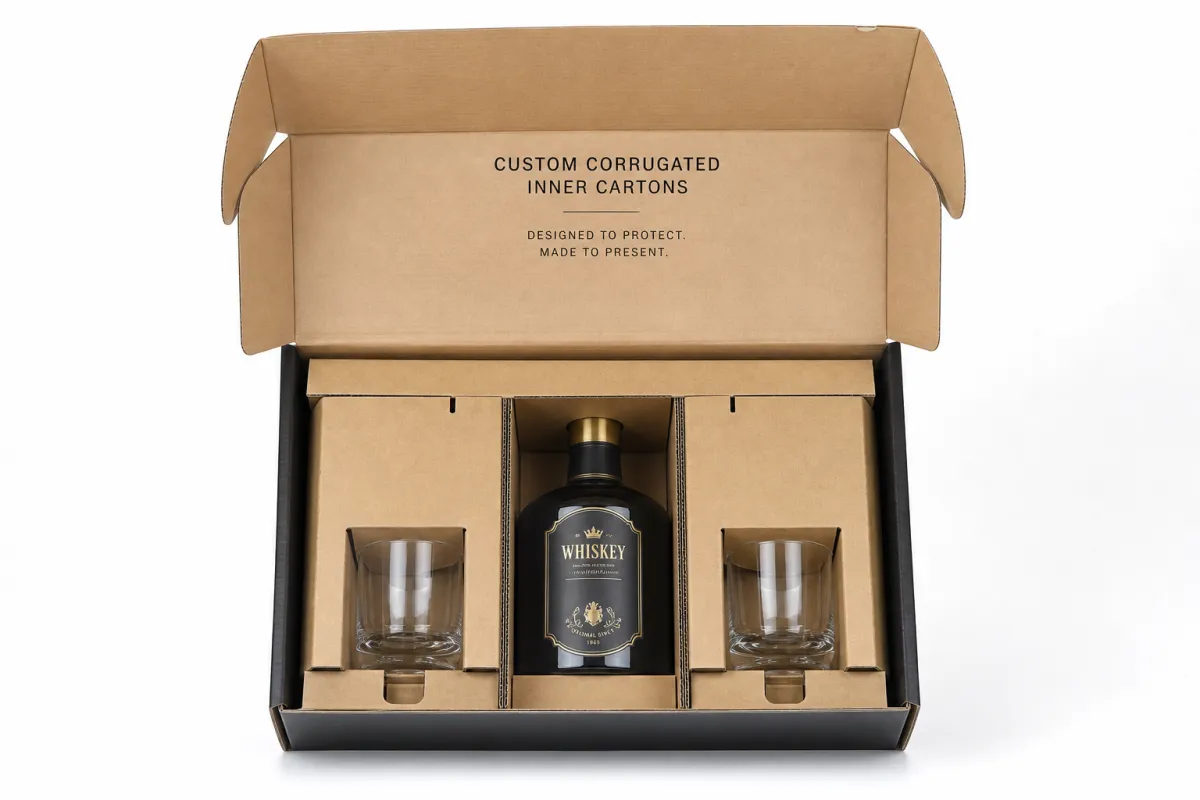
Picture a glass component, a printed kit, or a machined part sitting inside a master carton with a little too much room around it. The outer box closes fine, but the first vibration event sends the product drifting to one side, and now the corners are bruised or the finish is marked. Custom corrugated inner cartons solve that by creating a controlled interior environment, so the item stays where it belongs instead of turning the shipper into a moving target. In practice, custom corrugated inner cartons are the shaped corrugated pieces that hold, separate, or stabilize goods inside a larger package.
That sounds simple. It is not trivial. The value shows up in several places at once. A well-built set of custom corrugated inner cartons can reduce abrasion, keep multi-piece shipments in order, improve presentation for retail packaging, and make the packout sequence faster because the operator is not improvising with void fill or extra tape. From a packaging buyer's point of view, the best design is the one that protects the product, fits the workflow, and does not create waste on the line. Custom corrugated inner cartons do all three when they are designed correctly.
These structures show up everywhere:
- E-commerce kits that need a neat first impression and a stable interior layout.
- Fragile goods, especially glass, ceramics, electronics, and coated surfaces.
- Industrial parts that need separation to avoid rubbing or metal-on-metal contact.
- Multi-piece shipments where order matters, such as sets, accessories, or replacement components.
- Retail-ready packs where package branding and product positioning are part of the sales story.
I think a lot of packaging problems start with the wrong mental model. People point at the outer shipper and call it the solution, but the interior is where movement gets controlled. Custom corrugated inner cartons make that control possible by tying fit, board strength, and handling behavior together. The product shape, tolerances, and the way the carton gets handled in the real world matter just as much as the box size on the drawing. If the pack will be stacked, dropped, shipped through a parcel network, or stored in humid conditions, custom corrugated inner cartons need to be designed for that reality, not for some polished lab fantasy.
The strongest programs usually start with a simple question: what are we trying to stop from happening? Once the answer is clear, custom corrugated inner cartons become much easier to specify. Maybe the goal is to prevent tip-over. Maybe it is to keep components separated. Maybe it is to improve presentation for Custom Packaging Products or to pair the insert with Custom Shipping Boxes for a matched system. Either way, the structure should serve the product first, then the line, then the budget.
How Custom Corrugated Inner Cartons Work
At a practical level, custom corrugated inner cartons work by creating a shaped boundary around the product. That boundary may be a die-cut cradle, a slotted divider set, a wrap-around sleeve, a partition pack, or a locking tray that supports the item at specific pressure points. The goal is not to trap the product with brute force; the goal is to control movement while keeping loading easy enough that operators can place the product quickly and consistently.
Board selection matters because corrugated board is doing more than just standing up. The flute profile influences shock absorption and stiffness, while the liner combination affects printability, compression resistance, and surface quality. A B-flute inner carton behaves differently than an E-flute insert, and a double-wall build is a different animal altogether. With custom corrugated inner cartons, a thinner board may be enough for a light kit, but heavier parts, long freight lanes, or stack loading often justify a stronger grade. The important point is that the board should match the actual load, not just the mood of the quote.
Fit engineering is where a lot of value gets created. Custom corrugated inner cartons are usually designed around the product dimension, the practical tolerance range, and the clearance needed for loading, coatings, labels, or minor variation from one production lot to the next. If the clearance is too loose, the product shifts. If it is too tight, assembly slows down and surfaces can scuff during insertion. A good fit feels snug without forcing the operator to wrestle the product into place.
Separators, tabs, cutouts, and partitions matter just as much as the outer shape. A set of custom corrugated inner cartons can keep items from rubbing against each other, protect polished edges, and stop components from crossing over during transit. In a kit with five or six parts, the interior arrangement may be the difference between a polished retail presentation and a box that arrives scrambled. For many buyers, that is where custom corrugated inner cartons pay for themselves: fewer damaged returns, fewer labor corrections, and a cleaner unboxing moment that supports branded packaging.
There is also a system-level effect. Custom corrugated inner cartons interact with the outer shipper, the amount of void fill, the closure method, and the packing line itself. If the outer carton is oversized, the insert has to work harder. If the inner fit is excellent but the operator needs three extra motions to close it, the design may still fail on speed. Good packaging design treats the interior and exterior together as one system, not two separate parts.
A carton should fit the product the way a good tool fits the hand: snug enough to control it, but not so tight that it slows the work or marks the finish.
For validation, many teams look at vibration, drop, and compression behavior using methods tied to industry practice. ISTA guidance at ISTA is useful for transport simulation, and fiber sourcing or responsible forestry claims can be checked through FSC. Those standards do not design the carton for you, but they give the program a common language for performance, proof, and accountability. That helps when custom corrugated inner cartons have to satisfy operations, purchasing, and quality at the same time.
Custom Corrugated Inner Cartons: Cost and Pricing Factors
Pricing for custom corrugated inner cartons depends on a handful of variables that can change the cost structure quickly. The biggest drivers are board grade, flute profile, sheet size, die-cut complexity, print coverage, and whether the design is a simple scored fold or a more intricate locking shape. A plain die-cut insert is usually cheaper to make than a carton with multiple tabs, partitions, and tight nesting tolerances, because every extra feature adds tool complexity and production handling.
Quantity matters just as much. Setup and tooling costs are spread across the run, so a 500-piece order often looks expensive on a per-unit basis, while a 5,000- or 10,000-piece run can bring the unit cost down noticeably. For example, a basic single-wall insert might land around $0.18-$0.35 per unit at 5,000 pieces, while a more complex double-wall or partitioned design can move into the $0.35-$0.80 range or higher depending on structure. Those are working ranges, not fixed quotes, but they reflect how custom corrugated inner cartons are usually priced in the real market.
Material choices shift the numbers as well. Recycled content, moisture resistance, higher burst strength, and heavier liners can all raise cost. So can specialty coatings or print treatments if the insert is visible in a retail-ready pack. If the project requires stronger performance for compressed stacking or long transit lanes, the added cost can be worth it, but it should be justified with a specific risk, not a vague sense that the carton should be "better."
There are also hidden costs that show up after the quote. Freight can be meaningful if the design ships flat but uses a large sheet size. Storage matters if the carton takes up more space than a simpler alternative. Assembly labor can outweigh material savings if the structure is awkward to load. Trial samples and revisions add time and sometimes a bit of extra money, yet those are often the cheapest parts of the project compared with the cost of damaged product later. The cheapest custom corrugated inner cartons are not always the lowest-cost answer if they slow the line or fail under actual use.
| Option | Best Fit For | Typical Unit Cost at 5,000 Pieces | What It Gives You |
|---|---|---|---|
| Single-wall die-cut insert | Light to medium products, simple kits | $0.18-$0.35 | Fast production, good basic control, lower material spend |
| Double-wall inner carton | Heavier products, long freight lanes, stack load | $0.35-$0.80 | Higher compression strength, better protection margin |
| Partitioned divider set | Glass, multi-piece kits, parts that must stay separate | $0.22-$0.55 | Better separation, less rubbing, clearer packout order |
| Complex locking cradle or tray | Fragile, premium, or unusually shaped items | $0.40-$1.10 | Strong fit control, polished presentation, more design precision |
That table is why experienced buyers compare total landed cost instead of carton cost alone. If one version reduces breakage by even a small percentage, the savings in returns, replacements, and customer service time can dwarf the extra cents per unit. Custom corrugated inner cartons should be evaluated the same way a plant evaluates a machine part: by the full system behavior, not by the first line item on the quote.
Rule of thumb: if a design saves two cents but adds five seconds of labor, it may be the more expensive choice. If it adds one cent but eliminates repeated product movement, it may be the smarter one. That is the kind of practical math that keeps product packaging honest.
For teams comparing suppliers, it helps to ask for a material spec, a structural drawing, and a clear explanation of what changed the price. That gives purchasing and operations something concrete to compare, instead of guessing why one version of custom corrugated inner cartons looks cheaper than another.
Step-by-Step Process and Timeline for Custom Corrugated Inner Cartons
The best projects start with good information. Before anyone draws a dieline, gather the product dimensions, weight, surface sensitivity, shipping method, stack requirements, and any restrictions from the packing line. If the item has a fragile edge or a finish that scratches easily, say so early. If the carton has to fit a specific master shipper or retail program, include that too. Custom corrugated inner cartons work best when the designer understands the part, the route, and the labor environment at the same time.
Next comes the design and sampling phase. A packaging engineer or converter will usually create a dieline, build a prototype, and test the fit with the actual product. That sample round is where most projects get better, because even a careful drawing can miss something small: a label bulge, a seam on the part, a coating that changes friction, or a loading motion that slows the line. Custom corrugated inner cartons often need one or two adjustments before the structure is ready for production tooling. That is normal, not a sign that the process is off track.
A realistic schedule depends on complexity. A repeat order with an approved structure can move fast once materials are available, sometimes landing in a 10-15 business day window after proof approval. A fully custom build takes longer because the team may need sizing work, sample rounds, and quality review before the run starts. If the design is unusually intricate, the timeline can stretch further, especially if there are print changes, specialty coatings, or supplier capacity constraints. The safest planning move is to build the timeline around the full process, not just the press time.
Preproduction checks should be practical. Does the carton close cleanly? Does the product stay seated after vibration? Can the operator load it without fighting the structure? Does the pack still perform if the outer shipper flexes a little in storage or transit? Those are the questions that matter most for custom corrugated inner cartons because they reveal how the pack behaves outside the CAD drawing. Many teams also compare the result against ASTM-based methods such as compression and drop testing to make sure the real-world use case is covered.
Once approved, production moves into manufacturing, finishing, packing, and shipment. That part is often straightforward, but it still deserves attention. A well-documented spec keeps custom corrugated inner cartons consistent from one reorder to the next, which matters a lot when the purchasing team does not want to rediscover the design every time they need more units. Good documentation is one of the cheapest forms of insurance in packaging.
The cleanest handoff usually includes:
- Product measurements with tolerance notes.
- Material and board grade selection.
- A fit sample approved with the real product.
- Production notes about stacking, print, and packout sequence.
- Final artwork or labeling requirements, if the insert is visible.
That sort of discipline sounds basic, but it is exactly what keeps custom corrugated inner cartons from turning into a moving target. A strong spec helps purchasing, quality, and operations speak the same language, which saves a lot of back-and-forth later.
Common Mistakes When Specifying Custom Corrugated Inner Cartons
One of the most common mistakes is measuring the product and stopping there. The product size is only the starting point. You still need room for tolerances, coatings, labels, seams, and the way the item actually enters the carton during packing. A design that fits perfectly on a spreadsheet can be too tight on the line, especially if the operator has to angle the product or if the finish has a bit of drag. Custom corrugated inner cartons should be based on real loading behavior, not just nominal dimensions.
Another common error is choosing board that looks fine in a sample but fails in storage or transit. A light board may survive a one-time drop in the office and still collapse after a week in a humid warehouse or a long stack in freight. If the carton will be stored on pallets or nested under weight, compression resistance matters. That is why custom corrugated inner cartons need a board grade that matches the environment, not a best-guess assumption that lighter always means better.
People also overcomplicate the structure. Extra folds, locks, and partitions can look clever, but if they do not solve a real failure mode, they just add labor and cost. In a high-volume operation, a simple die-cut or slotted design is often better because it packs faster and has fewer ways to go wrong. Custom corrugated inner cartons should earn every added feature by improving fit, separation, or protection in a measurable way.
Skipping real-world testing is another expensive habit. A carton can look excellent in a photo and still abrade the product, loosen under vibration, or spring open under stress. The only honest test is the actual product in the actual structure, ideally with the outer carton and the intended closure method. That is where a lot of custom corrugated inner cartons prove themselves or fail quickly.
Finally, some teams focus too hard on print or appearance and not hard enough on function. Yes, branded packaging matters. Yes, retail packaging may need a clean look. But if the carton loads badly or allows movement, the graphic polish is just decoration on a weak structure. Good packaging design supports the product first and the brand second, not the other way around.
- Do not ignore tolerance stack-up across multiple components.
- Do not assume a stronger-looking board is automatically the right board.
- Do not approve a structure without testing it with the actual product.
- Do not overbuild a pack if a simpler one meets the risk profile.
- Do not let graphics distract from closure, fit, and handling behavior.
These mistakes are common because they are easy to miss during early conversations. The good news is that custom corrugated inner cartons are very fixable once the team slows down and evaluates the whole system instead of one piece of it.
Expert Tips for Better Custom Corrugated Inner Cartons
Start with the process, not the box. That sounds obvious, but it is where strong programs begin. If the structure protects the product but forces the operator to slow down, the design is incomplete. If it packs quickly but leaves room for movement, it is also incomplete. The best custom corrugated inner cartons balance protection, speed, and cost at the same time.
Standardizing dimensions where possible can save real money over time. If several products can share a common footprint or a family of related inserts, purchasing gets easier and reorder headaches drop. I have seen buyers trim SKU complexity just by tightening the range of acceptable sizes, which makes custom corrugated inner cartons easier to stock, easier to spec, and easier to explain across departments.
Ask for a sample built with the exact product and, if possible, the final outer shipper. That reveals whether the insert sits too high, whether the closure fights the load, and whether the combined system still stacks properly. A sample without the real product is only half a test. With custom corrugated inner cartons, the real item is part of the structure, because its weight, shape, and finish all influence performance.
The best interior pack is usually the one nobody notices during packing because it fits naturally and keeps the product exactly where it should be.
It also helps to think in terms of total system cost. A slightly stronger board may reduce damage enough to justify itself. A slightly simpler shape may save labor every single day. The point is not to overbuild custom corrugated inner cartons; the point is to design them so the carton does useful work without wasting material or time. Honestly, I think that practical balance is what separates a good packaging program from a busy one.
Clear communication with your packaging partner makes a bigger difference than many buyers expect. Share photos of the product, exact weights, product sensitivity, desired stack height, line-speed concerns, and any issues you have already seen in transit. If the product has sharp corners or a slippery finish, say that plainly. If package branding matters because the pack is visible on shelf or at unboxing, say that too. The more grounded the input, the better the custom corrugated inner cartons will fit the job.
Useful details to send up front include:
- Product dimensions with tolerance ranges.
- Weight per unit and any heavy side or weak point.
- Shipping mode, including parcel, LTL, or mixed freight.
- Annual volume and likely reorder cadence.
- Photos of failures, if you have them.
If sustainability is part of the conversation, ask about recycled content, FSC certification, and print choices that support recycling. The right choices depend on the market and the product, but the conversation should happen early. Custom corrugated inner cartons are easier to optimize when environmental goals are included at the same time as performance goals.
Next Steps for Choosing Custom Corrugated Inner Cartons
Once the basic requirements are clear, the next move is to turn them into a usable brief. Measure the product carefully, note the failure points, estimate annual volume, and document how the carton will be packed, stacked, and shipped. That single exercise usually exposes more design clues than a long email thread ever will. Custom corrugated inner cartons are easier to choose well when the team writes down what the package must do in the field.
Request two or three structural options if possible. A simple insert, a partitioned version, and a more protective tray can reveal a lot about the tradeoff between cost, protection, and packout speed. The right answer is not always the strongest or the cheapest. It is the one that fits the product, fits the Process, and Fits the budget without creating another problem downstream. That is true for custom corrugated inner cartons just as much as it is for the outer shipper or any other part of the pack.
A small pilot run is often worth it, especially for fragile, premium, or multi-part items. A preproduction sample or short trial lot lets operations see how the design behaves before the larger purchase is committed. That kind of test is especially useful if the item is sensitive to abrasion, if the line has tight labor targets, or if the product has to arrive looking right for retail packaging or presentation.
Bring operations, purchasing, and fulfillment into the review together. A design that makes purchasing happy but slows down the line is not a win. A structure that moves quickly but increases damage is not a win either. Custom corrugated inner cartons succeed when everyone sees the same evidence and agrees on the tradeoffs. That is the practical heart of packaging work, and it is where experienced teams usually make the best call.
For buyers building out a wider packaging program, it can help to compare inserts alongside other Custom Packaging Products and related Custom Shipping Boxes. That way, the team is not just choosing one part in isolation. They are building a complete system that supports product packaging, warehouse handling, and customer presentation.
If you are starting a project, write down the product weight, tolerance range, failure mode, packing sequence, and shipping method before you ask for samples. That one sheet will do more for your custom corrugated inner cartons than a dozen vague notes, and it will keep the design grounded in the way the package actually gets used.
FAQ
How do custom corrugated inner cartons differ from standard cartons?
Standard cartons are built for general shipping, while custom corrugated inner cartons are shaped around a specific product, kit, or component layout. The custom version usually gives better product control, less movement, and a cleaner packout process. They are especially useful when the item has irregular dimensions, fragile surfaces, or multiple parts that need separation.
What do I need to request a quote for custom corrugated inner cartons?
Share product dimensions, weight, material sensitivity, shipping method, annual volume, and any line-speed or assembly constraints. Include photos or samples of the product, plus notes on how it should sit, stack, or separate inside the outer box. If you have a target cost, tell the packaging partner early so they can recommend the right board grade and structure.
How much do custom corrugated inner cartons typically cost?
Pricing depends on board type, cut complexity, quantity, and whether the design needs special finishing or print. Small runs usually cost more per unit because setup and tooling are spread across fewer pieces. The best way to evaluate cost is to compare material price, labor time, damage reduction, and freight impact together.
How long does it take to produce custom corrugated inner cartons?
Simple repeat designs can move quickly once specifications are approved and materials are in stock. New custom designs usually need time for sizing, prototype samples, testing, and final approval before production starts. Build your timeline around the full process, not just manufacturing, because fit review and revision can affect delivery.
Do custom corrugated inner cartons need inserts or dividers?
Not always, but inserts and dividers are helpful when products can rub together, tip over, or need to stay separated. They are common in kits, multi-part shipments, glass items, and products with exposed finishes. The right choice depends on the item shape, weight, and how much movement the package will see in transit.

