Buyer Fit Snapshot
| Best fit | Custom Corrugated Inserts MOQ projects where brand print, material claims, artwork control, MOQ, and repeat-order consistency need to be specified before quoting. |
|---|---|
| Quote inputs | Share finished size, material target, print colors, finish, packing count, annual reorder estimate, ship-to region, and any compliance wording. |
| Proofing check | Approve dieline scale, logo placement, barcode or warning zones, color tolerance, closure strength, and carton packing before bulk production. |
| Main risk | Vague material claims, crowded artwork, missing packing details, or unclear freight terms can make a low unit price expensive after revisions. |
Fast answer: Custom Corrugated Inserts MOQ: Pricing, Specs, Timeline should be specified like a repeatable production item. The safest quote records material, print method, finish, artwork proof, packing count, and reorder notes in one written spec.
Production checks before approval
Compare the actual filled-product size with the drawing, then confirm tolerance on folds, seals, hang holes, label areas, and retail display edges. Reserve space for logos, QR codes, warning copy, and material claims before decorative graphics fill the panel.
Quote comparison points
Review material grade, print process, finish, sampling route, tooling charges, carton quantity, and freight assumptions side by side. A quote is only useful when the supplier can repeat the same color, closure quality, and packing count on the next order.
Custom Corrugated Inserts MOQ: Pricing, Specs, Timeline
A nice-looking box means nothing if the product slides around like it missed the memo. The insert did not get engineered. It got guessed. I’ve seen that mistake more than once, and it usually starts with a buyer asking for the lowest number on a quote sheet without checking the structure. That is the whole mess with custom corrugated inserts MOQ: the quantity is not just a buying decision, it shapes the build itself. Too few units and the per-piece cost turns ugly. Too many and you sit on inventory while the product, carton, or shipping plan changes. Either way, custom corrugated inserts MOQ hits the real economics of packaging, not just the quote.
Cheap insert, in the real sense, usually means the right batch size. Not glamorous. Still true. A clean spec, a sane MOQ, and a layout that nests well usually beat the “low price” option that wastes board, chews up labor, and still lets the product bounce around in transit. Comparing custom corrugated inserts MOQ options for a pilot launch, a subscription box, or a wider rollout? Ask the practical questions: how much protection is needed, how fast do you need it, and what happens to labor, freight, and replenishment when the order lands?
For the rest of the packaging system, the insert cannot be an afterthought. It has to match the carton, the product, and the warehouse flow. Building from scratch? Start with our Custom Packaging Products and compare the insert against the box style you already use, including Custom Shipping Boxes. If the spec already exists and you just need the next step, the FAQ covers the usual fit and ordering questions without the sales fluff.
Custom corrugated inserts MOQ: why the smallest number matters
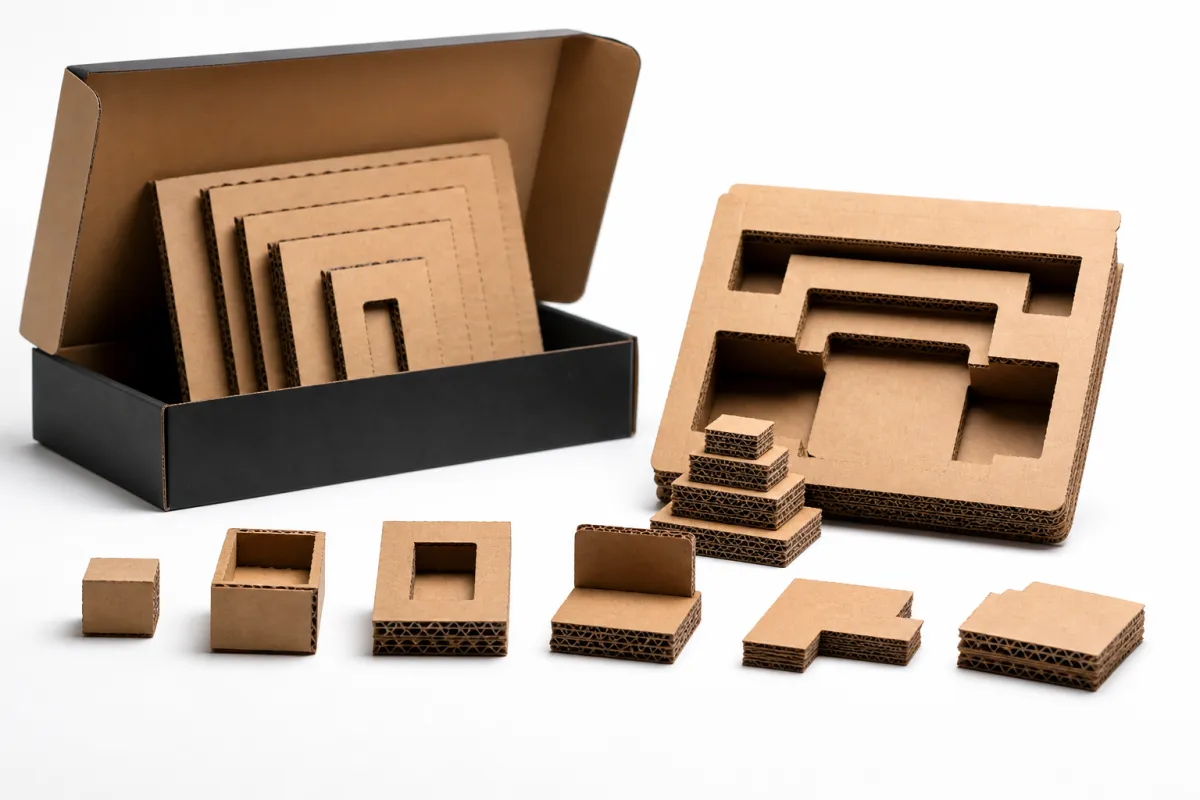
Picture the classic failure. The carton is fine. The product survives impact. It still arrives loose because someone copied a different item’s insert or used dimensions that were “close enough.” That is not a vague packaging issue. It is a fit issue. And fit is exactly why custom corrugated inserts MOQ needs attention early, before the returns stack up.
The smallest order size changes the math immediately. There is tooling, die cutting, sheet utilization, and usually some hand work. Tiny run, fixed setup, very few units. The unit cost climbs. A better-sized run spreads setup across more pieces, the board nests more efficiently, waste drops, and the per-piece price gets closer to reality. The best custom corrugated inserts MOQ is not always the lowest number on paper. It is the number that keeps the insert affordable without forcing you to overbuy.
Launches make the decision more sensitive. A founder might only want 200 or 300 inserts to test demand. Fair. If the product is fragile or the insert takes time to assemble, that run can cost more than expected because setup and labor do not shrink just because the order does. A slightly larger custom corrugated inserts MOQ can lower the total spend enough to matter. Unit price drops, the process steadies out, and the pack-out team is not rebuilding the same structure by hand all day.
Consistency matters too. Once a carton and insert are approved, repeatability becomes valuable. A stable custom corrugated inserts MOQ supports repeat order consistency, which matters for retail packaging, subscription shipments, and branded packaging that has to look identical batch after batch. Change the insert from one run to the next and the fit changes with it. That means more damage risk, more labor, and more complaints from the warehouse floor.
The wrong insert can turn a cheap shipment into an expensive return. A good custom corrugated inserts MOQ usually pays for itself by cutting damage, packing time, and rework.
Short version: treat MOQ like a planning tool, not a wall. It tells you how material yield, setup cost, and production logic line up for the job. That matters most on custom corrugated inserts MOQ projects that sit between a small test and a full launch.
What custom corrugated inserts actually include
Corrugated inserts are not one thing. They are a group of structures built to keep a product steady inside a carton. A custom corrugated inserts MOQ project might include die-cut cushions, slotted partitions, fold-over braces, layered supports, trays, cradles, or shaped end caps. The right structure depends on the product, the box, and the kind of punishment the shipment has to survive.
Die-cut cushions work well for items that need edge protection or a snug pocket. Slotted partitions are common for bottles, jars, glassware, and grouped components because they keep items separated and cut down on side-to-side movement. Fold-over braces are simple and quick to assemble, which makes them common in higher-volume runs where labor cost matters. Layered supports help when a product is heavy or has one pressure point that needs more crush resistance. Shaped cradles fit premium items better and usually improve the unboxing experience, which matters in retail packaging and product packaging that should feel deliberate, not improvised.
Board construction matters just as much as shape. Single-wall corrugated is often enough for lighter loads and basic protection. Stronger builds make more sense for heavier items, taller cartons, or products that get stacked in transit. Recycled kraft liners are common, especially when sustainable packaging goals matter and the insert does not need a glossy outer face. For custom printed boxes, the insert usually stays unprinted unless the customer will see it during opening. Fit, support, and assembly beat decoration most of the time. Fancy foam is not automatically better. Sometimes a simple fiber insert does the job cleaner and cheaper overall.
These structures work inside mailer boxes, RSC cartons, folding cartons, retail-ready packs, and subscription-style shipping formats. The goal stays the same: hold the product still, protect the corners, and keep pack-out repeatable. That is why custom corrugated inserts MOQ planning should happen with the box style in mind. An insert that works beautifully in one carton can turn into a mess in another if the interior height or side clearance changes.
There is a sustainability angle here that is not just packaging-brochure talk. Corrugated fiber is recyclable in most common collection systems, and a well-designed insert can reduce the need for plastic void fill or molded protectors elsewhere in the pack. Right-sized inserts also improve cube efficiency, which helps freight and warehouse handling. If your branded packaging program is trying to cut plastic without making the product vulnerable, custom corrugated inserts MOQ is part of the plan, not a separate line item.
Specifications that control fit, strength, and assembly
A clean quote starts with the right inputs. For an accurate custom corrugated inserts MOQ estimate, send product dimensions, box inside dimensions, product weight, fragile points, and shipping condition. Does the product ship full, nested, or partially filled? Does it arrive assembled or flat? Does it need room for accessories, cables, or paperwork? Those details change the structure more than most buyers expect.
Tolerance matters a lot. Tight footprint, tiny margin, and a few millimeters decide whether the insert feels secure or becomes a wrestling match during assembly. The same issue shows up in cartons with little interior clearance. Ignore tolerance and you get either a loose pack or a jammed one. Neither is good, and both can make a custom corrugated inserts MOQ run more expensive because the design gets revised after sampling.
Structural specs are where the protection actually comes from. Flute direction can improve stiffness in one direction and weaken it in another. Crush resistance matters if the insert will support a stack of products or sit under something heavy. Compression strength matters for taller cartons that may be palletized. When the load is serious, double-wall construction or a heavier board grade may be worth the extra spend. Usually that extra spend is smaller than the cost of breakage. Not always. Often enough that it deserves a check before someone optimizes the wrong number.
- Product dimensions: width, depth, height, and any protruding parts.
- Box interior dimensions: the usable inside size, not the outside carton spec.
- Weight and distribution: total product weight and where the mass sits.
- Handling risk: drop height, vibration, compression, or shelf wear.
- Assembly method: flat-packed, pre-glued, hand-folded, or machine-ready.
Assembly format can quietly eat the budget. A flat-packed insert may lower freight and storage cost, but if the warehouse has to spend extra minutes folding it, the savings disappear fast. A pre-glued or one-piece insert may cost more upfront but cut pack-out labor. That is why custom corrugated inserts MOQ should be evaluated with assembly in the room, not just cut shape. A perfectly sized insert can still feel overpriced if the build method is clumsy.
Sustainability specs belong in the brief too. Ask about recycled content targets, FSC availability, and whether the layout can be arranged to cut trim waste. For general recycling guidance, the EPA’s recycling basics page is a useful reference at EPA recycling basics. If certified sourcing matters for your retail packaging or package branding program, review FSC options early. A good custom corrugated inserts MOQ quote should reflect those requirements, not bury them in a footnote.
Custom corrugated inserts MOQ: pricing, tiers, and tradeoffs
Pricing is where buyers either get clarity or get a stack of vague numbers. A proper custom corrugated inserts MOQ quote should break out the actual cost drivers: die or tooling, board grade, insert footprint, number of cutouts, assembly labor, print requirements, and the pack-out format. If a vendor cannot explain those pieces, the quote is hiding something. Not always malice. Sometimes just sloppy quoting. Either way, it is useless.
The unit price drops as quantity rises, but not in a neat straight line. Setup cost is fixed. Nesting efficiency changes with layout. A low-volume pilot run may carry a higher unit cost because tooling and make-ready are spread across a tiny batch. A mid-size run may hit a better balance. A full production order usually gives the best unit cost, but only if the design is locked and nobody decides next week to “tweak” the product shape again.
| Order tier | Typical MOQ | Indicative unit cost | Best for | Main tradeoff |
|---|---|---|---|---|
| Prototype | 25-100 pcs | $1.50-$4.00 | Fit testing, early launches, fragile items | Highest setup cost per unit |
| Pilot run | 250-500 pcs | $0.65-$1.75 | Small campaigns, market tests, seasonal drops | Less efficient than production pricing |
| Production run | 1,000-5,000+ pcs | $0.18-$0.85 | Ongoing fulfillment, retail packaging, replenishment | Requires stronger forecast confidence |
Those ranges are directional, not magic. A simple single-wall insert with basic folds can land near the low end. A large, complex insert with tight tolerances and extra labor climbs fast. Material thickness, print coverage, and whether the insert ships flat or pre-assembled all change the math. Freight can surprise people too. Corrugated is light, but bulky. A bulky insert can cost more to move than buyers expect, especially if it does not nest efficiently.
The hidden costs usually cause the trouble. Sampling can add cost if multiple revisions are needed. Warehouse storage matters if you bring in more than you can use quickly. In-house labor matters if the insert is cheap on paper but annoying to build. A buyer looking only at unit price can pick the wrong custom corrugated inserts MOQ and then pay for it in labor or damage claims. That is not a bargain. That is a delayed bill with a nicer font.
Want to save money? Start with the simplest structure that still protects the product. Keep cutouts efficient. Skip print on inserts nobody sees. Reduce the number of parts if one-piece construction works. Where should you not cut corners? Drop protection, compression support, and fit. If the insert lets the product move, the price conversation already went sideways. A better custom corrugated inserts MOQ is the one that keeps the package honest and the product safe.
Process and timeline from dieline to delivery
A fast quote starts with a clean brief. Send product dimensions, box inside dimensions, target quantity, shipping destination, and any special requirements. If you have photos of the item or an existing sample, include those. If you already know whether you want the cheapest workable version or a stronger premium build, say it upfront. That one sentence saves a lot of back-and-forth. It also makes the custom corrugated inserts MOQ discussion much easier because the supplier can price to the real goal instead of guessing.
The workflow is pretty direct. Concept review comes first, with a price range. Then the dieline or structure gets checked. After that, a sample or prototype is produced. If the fit passes, the job moves to production signoff. Buyers who skip sample review often pay later when the insert is 2 mm too tight or the cavity is too loose and the product shifts. A decent custom corrugated inserts MOQ plan leaves room for this validation step.
Timing depends on complexity, but these ranges are common:
- Quote turnaround: often 1-2 business days if the specs are complete.
- Dieline or structure review: 1-3 business days for a straightforward shape.
- Prototype or sample: about 5-10 business days, depending on tooling and revisions.
- Production: often 10-18 business days after proof approval.
- Freight: 2-7 business days domestically, longer if the shipment is bulky.
Those are useful averages, not promises. A more complex custom printed boxes program or a harder structural spec can stretch the schedule. Tight tolerances, unusual board requirements, and special assembly requests slow things down. So does indecision. The fastest jobs are the ones where the buyer knows the product, the carton, and the shipping method before asking for a quote. That is where custom corrugated inserts MOQ stops being a bottleneck and starts acting like a planning tool.
One more practical point: shipping and warehouse readiness. If the insert arrives before the product launch team is ready to pack, the “fast” project still gets delayed. Freight booking, carton pack-out, and storage space should be planned with the production date. For fragile items, I also prefer a preproduction review instead of pretending the sample solved everything. It is cheap insurance. One bad shipment can wipe out the savings from a lower custom corrugated inserts MOQ.
Why choose us for sustainable corrugated inserts
Custom Logo Things keeps it simple: clear specs, practical guidance, and no fake drama. If you need custom corrugated inserts MOQ support, the useful part is not a buzzword-heavy pitch. It is a response that tells you what the structure can do, what it will cost, and how long it will take. That matters more than trying to make every project sound exciting.
The sustainability upside is operational, not decorative. Right-sized board usage means less waste. Recyclable fiber materials reduce dependence on plastic protectors. Better nesting can cut trim waste and lower freight cube. Those are the kinds of gains that actually show up in a supply chain. They also support stronger package branding because the box opens cleaner, the product sits better, and the pack feels intentional instead of stuffed with filler.
Smaller runs are not a problem if the design is honest. A good supplier should be able to review a modest custom corrugated inserts MOQ project without pushing you into a bigger commitment than you need. Once the shape proves out, scaling up gets easier because the structure is already locked. That is better than overshooting the first order and discovering the insert needs revision after the warehouse has 2,000 pieces gathering dust.
Support matters too. Buyers usually need help with one of three things: fit, labor, or repeatability. Fit means the insert actually holds the product. Labor means the pack-out process does not drag. Repeatability means the next production order matches the last one. Those are the places where thoughtful packaging design beats a generic quote. A good custom corrugated inserts MOQ supplier should be comfortable talking through all three.
For buyers building a wider packaging system, the insert should support the carton, not fight it. That includes retail packaging, shipping formats, and branded packaging that has to look consistent across orders. If the insert is right, the product arrives better protected, the warehouse moves faster, and the unboxing feels cleaner. That is a boring sentence. It is also the one that matters.
If the insert saves one damage claim and one repack cycle per batch, the custom corrugated inserts MOQ decision usually pays for itself faster than the unit price suggests.
That is why customers care about more than the lowest quote. They want the right fit, a sensible MOQ, and production that stays put. That is the difference between product Packaging That Works and packaging that merely looks fine on a screen.
What to do next if you need a quote fast
If you need a quote quickly, skip the vague email. Start with the dimensions. Send the product width, depth, and height; the box interior dimensions; the target quantity; and the shipping destination. If you know the board preference, include that too. A simple brief gets a better custom corrugated inserts MOQ answer than a long note that never names the product size.
For awkward shapes, send photos or an existing sample. Irregular bottles, cutout handles, loose parts, and premium retail items often need a visual check because dimensions alone do not tell the whole story. If the fit is sensitive, ask for a prototype before production. That extra step can protect the whole order. It also keeps the custom corrugated inserts MOQ from being based on guesswork.
Ask for two options: the lowest-cost build that still works, and a stronger premium version for comparison. That lets you compare board grade, assembly method, freight impact, and actual protection level instead of staring at a single unit price. One version may be fine for a pilot. The other may be better for long-term replenishment. That is how a buyer makes a real decision on custom corrugated inserts MOQ instead of taking the shortcut.
Use this checklist before you send the request:
- Product dimensions and weight
- Box inside dimensions
- Target order quantity
- Photo, sketch, or sample of the product
- Drop risk or shipping conditions
- Board preference, recycled content, or FSC requirement
- Destination zip code or country for freight
If you want the cleanest path forward, ask for a dieline review, a sample check, and a quote in the same conversation. That cuts the usual back-and-forth and gives you a realistic view of fit, Pricing, and Timing. It also makes the custom corrugated inserts MOQ choice easier, because you are comparing real structures instead of abstract guesses. And yes, that is usually the difference between a quote that sits in your inbox and one that actually moves the project.
For companies balancing branded packaging, unit cost, and protection, the right custom corrugated inserts MOQ is the one that keeps the product safe, the warehouse sane, and the next reorder simple. Lock the box interior, define the product envelope, and validate the sample before production. That is the practical move, and it saves everybody a headache.
What is the usual MOQ for custom corrugated inserts?
The usual custom corrugated inserts MOQ depends on die-cut setup, board size, and how much hand assembly is involved. Simple pilot runs can work at low quantities if the layout nests well and the board spec stays standard. Tighter tolerances, heavy waste, or complicated folding usually push the minimum higher.
Can I order custom corrugated inserts before my box is finalized?
Yes, if you already know the inside dimensions and the product dimensions that matter. The safer move is to review the box and insert together so the fit is not guessed. If the carton design may still change, ask for a prototype before you commit to production on the custom corrugated inserts MOQ.
What affects custom corrugated inserts pricing the most?
Board thickness, insert footprint, number of cutouts, and whether the insert ships flat or pre-assembled have the biggest impact. More pieces and tighter tolerances increase labor, and labor raises cost fast. Freight can also be a major factor when the insert is bulky but lightweight, which is why custom corrugated inserts MOQ quotes should include shipping assumptions.
Are corrugated inserts recyclable and sustainable?
Yes, most are recyclable when they are made from fiberboard without mixed plastic layers or heavy lamination. Recycled content and right-sized design reduce waste and usually improve shipping efficiency. Simpler structures are easier to recover and often cheaper to move through the supply chain, which helps any sustainable packaging program tied to custom corrugated inserts MOQ.
How do I get a faster quote for custom corrugated inserts MOQ?
Send product dimensions, box size, quantity, photos, and the target ship date. State whether you want the cheapest workable option or a stronger premium build. Include your destination zip or country so freight and timing are realistic. The more complete the brief, the faster the custom corrugated inserts MOQ quote comes back with something you can actually use.

