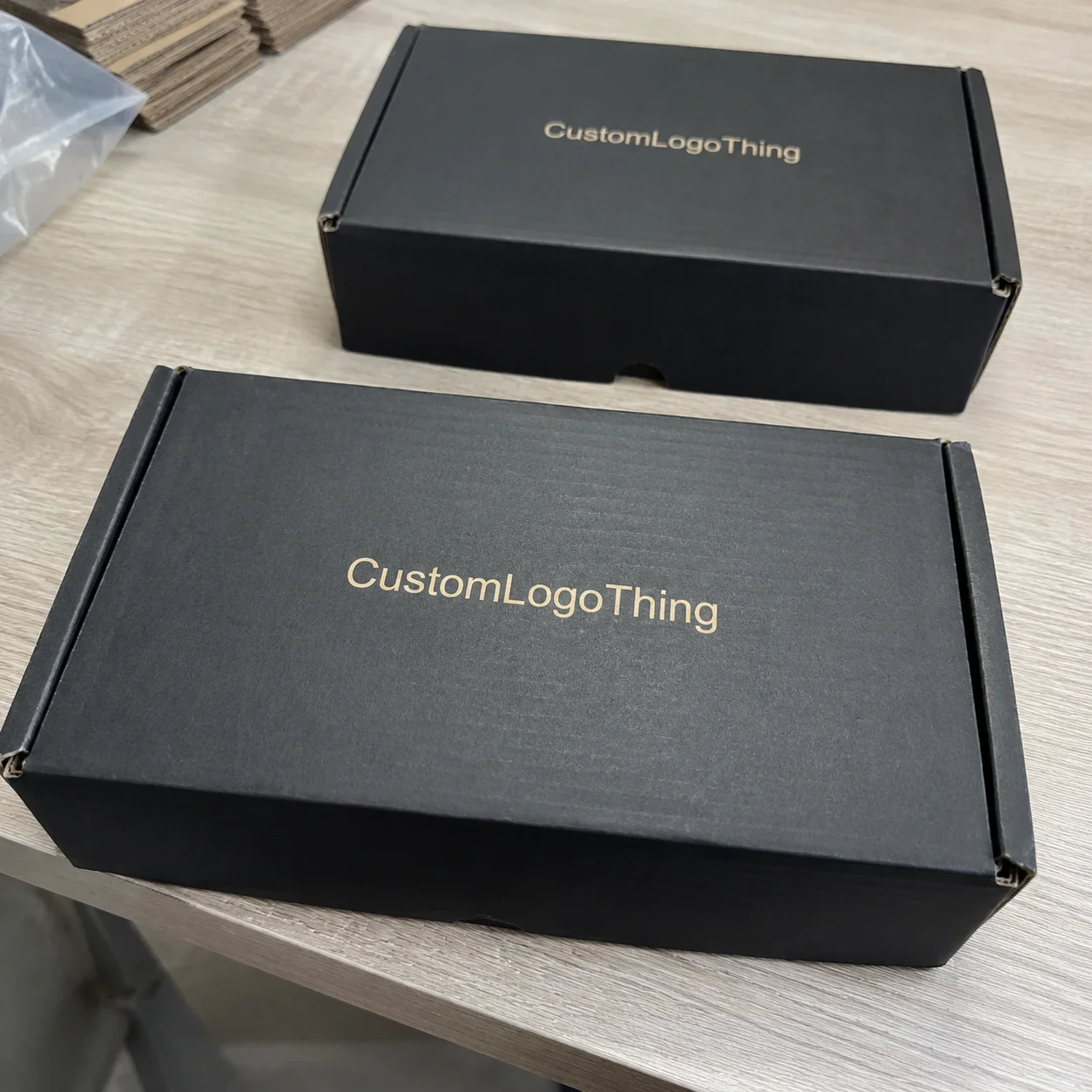
Buyer Fit Snapshot
| Best fit | Custom Corrugated Mailer Boxes projects where brand print, material claims, artwork control, MOQ, and repeat-order consistency need to be specified before quoting. |
|---|---|
| Quote inputs | Share finished size, material target, print colors, finish, packing count, annual reorder estimate, ship-to region, and any compliance wording. |
| Proofing check | Approve dieline scale, logo placement, barcode or warning zones, color tolerance, closure strength, and carton packing before bulk production. |
| Main risk | Vague material claims, crowded artwork, missing packing details, or unclear freight terms can make a low unit price expensive after revisions. |
Fast answer: Custom Corrugated Mailer Boxes: Design, Cost, and Use should be specified like a repeatable production item. The safest quote records material, print method, finish, artwork proof, packing count, and reorder notes in one written spec.
Production checks before approval
Compare the actual filled-product size with the drawing, then confirm tolerance on folds, seals, hang holes, label areas, and retail display edges. Reserve space for logos, QR codes, warning copy, and material claims before decorative graphics fill the panel.
Quote comparison points
Review material grade, print process, finish, sampling route, tooling charges, carton quantity, and freight assumptions side by side. A quote is only useful when the supplier can repeat the same color, closure quality, and packing count on the next order.
The first time I watched a customer open custom corrugated mailer boxes at a fulfillment center in Los Angeles, the team had spent more money on the product than the packaging. That was the mistake. The box landed first, got handled by three people, and shaped the whole impression before the actual item was even visible. I’ve seen that same pattern in client meetings in Chicago, on factory floors in Dongguan, and in warehouse audits in New Jersey: custom corrugated mailer boxes are often the first physical touchpoint, and they do a lot more than “hold stuff.”
I remember one factory visit in Shenzhen where the packaging line was moving like a machine with a caffeine problem. Fast, loud, and slightly chaotic. The product was great. The box? Barely holding it together. That’s the part brands miss when they treat packaging like an afterthought. Honestly, I think that’s a little nuts. If the box is the first thing the customer touches, why would you want it to feel generic? I’ve also seen a brand in Austin lose a full week because their “good enough” mailer kept popping open on the line at 240 units an hour.
If you ship direct-to-consumer, sample kits, subscription products, or influencer drops, custom corrugated mailer boxes sit right at the intersection of protection and presentation. They’re self-locking shipping boxes made from corrugated board, usually designed around a specific product size, brand look, or fulfillment workflow. Standard mailers get the job done. Custom versions do that plus fit better, print better, and usually waste less space. That last point matters more than many brands expect, especially once UPS, FedEx, or DHL rates and damage claims enter the conversation. A 12 mm tighter fit can mean less void fill and fewer “why is this box so huge?” comments from customers.
Packaging gets treated like a finishing touch far too often. It isn’t. A crushed corner or a box that opens in transit can undercut trust before the customer ever touches the product. I’ve had brand managers show me returns photos where the packaging damage was worse than the product damage, and that changed the conversation in ten seconds. With custom corrugated mailer boxes, the box itself becomes part of the product experience, whether a brand plans for it or not. And yes, customers absolutely notice when a box looks like it lost a fight with a conveyor belt. They notice even more when the shipping label is slapped on a warped lid and the tear strip is hanging by a thread.
Custom Corrugated Mailer Boxes: What They Are and Why They Matter
Custom corrugated mailer boxes are self-locking shipping boxes built from corrugated board and tailored to a brand’s dimensions, print needs, and presentation goals. In plain language, they’re sturdy paper-based boxes that ship products safely while also carrying branding on the outside, inside, or both. Compared with plain stock mailers, the custom version can be sized to the product, printed with a logo or full-color graphics, and engineered for a specific shipping route or packing process. A common spec for premium DTC kits is 350gsm C1S artboard laminated to E-flute corrugated, or a plain kraft liner with a 32 E flute when the priority is strength over showroom shine.
That sizing detail is not cosmetic. It affects how much void fill you need, how much the item rattles in transit, and sometimes whether you pay for a larger dimensional weight tier. I’ve walked through packing lines in Vietnam and Ohio where a 10 mm change in internal width saved a company a surprising amount of kraft paper stuffing and labor time. Those minutes add up fast across 20,000 shipments. That’s not theory. That’s money disappearing one box at a time. A box that is 245 x 180 x 65 mm instead of 260 x 190 x 70 mm can change the whole packing rhythm.
Custom corrugated mailer boxes show up everywhere now: ecommerce apparel, candles, beauty kits, electronics accessories, gift sets, book drops, and subscription programs. They’re also common in retail packaging samples and press kits because they create a cleaner unboxing moment than a plain brown shipper. When a brand wants the packaging to do double duty—protect the product and signal quality—custom corrugated mailer boxes make sense. I’ve seen them used for skincare launches in Seoul, coffee sample subscriptions in Portland, and limited-edition merch drops in London.
“We stopped thinking of the box as a cost center and started treating it like a sales tool,” a client in Singapore told me after switching to custom corrugated mailer boxes for a skincare launch. Their damage rate dropped from 4.1% to 0.9% over 8,000 orders, but what they really noticed was a better repeat-purchase rate from first-time buyers.
There’s also a trust factor that’s easy to overlook. A box that arrives crushed, taped shut by a carrier, or too flimsy for the product creates doubt. Customers may never say it out loud, but they notice. With custom corrugated mailer boxes, the structure itself sends a signal: someone paid attention. Someone cared enough to get the basics right. That matters whether you’re shipping from a warehouse in Dallas or a co-packer in Guangzhou.
If you’re building out a packaging program, these boxes often sit alongside other formats like Custom Packaging Products, Custom Shipping Boxes, and sometimes Custom Poly Mailers for lighter-weight items. The right choice depends on weight, fragility, and how much brand storytelling you want the package to carry. I’ve had clients use mailers for a 180g candle and shipping boxes for the same item once they added glass inserts and a metal lid.
How Custom Corrugated Mailer Boxes Work
Corrugated board is simple in concept and smart in structure. It has one or two flat linerboards with a fluted medium sandwiched between them. Those wavy flutes create stiffness and absorb shock. When I toured a converting line in Shenzhen, the operator showed me how a single flute change altered the feel of the entire box—same print, same dimensions, very different crush resistance. A move from E-flute at roughly 1.5 mm to B-flute at around 3 mm can make a box feel dramatically sturdier without changing the artwork.
Custom corrugated mailer boxes usually use a folding design with tabs, slots, or tuck closures. Many versions do not need tape, which speeds up packing and gives the box a cleaner opening experience. That matters in fulfillment centers where 2 seconds per order can become a real labor number at scale. It also matters to customers who would rather not reach for scissors before they can open a package. I’ve watched people stab at tape like they were trying to win a tiny wrestling match, usually right before slicing the insert in half.
The strength of custom corrugated mailer boxes depends on board grade and flute profile. Common flute types include E-flute, B-flute, and sometimes a micro-flute construction when print quality is a priority and the product is lighter. E-flute tends to print crisply and keeps walls relatively slim; B-flute usually offers more cushioning. The best choice depends on the product’s weight, shipping lane, and whether the outer surface will carry detailed graphics or a simple one-color logo. For example, 1.2 lb skincare kits shipping from New Jersey to California often do fine in E-flute, while a 3 lb electronics bundle from Suzhou to Texas usually needs more cushioning.
Custom sizing matters because it reduces product movement. If the item is too loose, it can bounce around and get scuffed. If the box is too tight, packers waste time forcing the product in, and corners can crush. I’ve seen both errors in the same warehouse. A jewelry brand once used a stock mailer that was 18 mm too tall, and their inserts shifted just enough to scratch coated boxes inside. A better-fit custom corrugated mailer box would have solved the problem before it started. The fix was not glamorous: reduce the internal depth by 6 mm and change the tuck flap by 4 mm.
Here’s the basic journey:
- Design the structure and artwork around the product dimensions.
- Produce the board, print, and die-cut the mailer, usually at a converting plant in Guangdong, Vietnam, or northern Mexico.
- Pack the product with or without inserts, tissue, or dividers.
- Ship through parcel or fulfillment networks.
- Unbox the package and evaluate how it feels, holds, and presents the product.
If you want a benchmark for shipping performance, industry groups like ISTA publish useful test methods for distribution hazards and transport simulation; their standards are a practical reference point for brands that ship fragile goods. You can review their resources at ISTA. For fiber sourcing and responsible forest materials, the FSC system is another useful signal when sustainability claims matter. For a 36-inch drop test, I’d rather see a box fail on a lab table than in front of 2,000 customers.
Key Factors That Affect Performance, Cost, and Pricing
The price of custom corrugated mailer boxes is driven by a handful of variables, and most buyers underestimate at least two of them. Size is the obvious one. Board thickness is next. But print coverage, finish, insert complexity, and order quantity can move the number more than expected. I’ve seen a quote for a simple one-color mailer come in at $0.38 per unit for 5,000 pieces, while a fully printed version with a matte aqueous coating and insert set landed closer to $0.92 per unit for the same volume. Same footprint. Very different total cost. On a 20,000-piece order, that gap gets loud fast.
Volume changes the math. With custom corrugated mailer boxes, setup and tooling get spread across more units at higher runs, so the per-unit price usually falls. That doesn’t mean smaller brands should avoid them. It means the design needs to be simpler, with fewer colors and fewer special finishes, so the economics still work. A startup shipping 800 subscription kits may not need a foil stamp and dual inserts. A clean two-color print on E-flute can look polished without blowing the budget. I’ve seen a brand in Toronto get from $1.14 per unit down to $0.62 just by dropping one ink color and standardizing the insert.
Print style is another major cost lever. Unprinted kraft mailers are cheapest. One-color printing adds branding without much complexity. Full-color Custom Printed Boxes are pricier because they usually require more ink coverage, tighter registration, and more production control. For brands with strong visual identity, full print can be worth it. For functional shipments or secondary packaging, a logo plus panel copy may be the smarter move. A one-color black print on 32ECT kraft board can still look sharp if the layout is clean and the logo is not shoved into a corner like an apology.
| Option | Typical Use | Relative Unit Cost | Notes |
|---|---|---|---|
| Unprinted corrugated mailer | Basic shipping, internal logistics | Lowest | Good for cost control, minimal branding |
| One-color custom corrugated mailer box | DTC orders, samples, subscriptions | Moderate | Strong balance of brand and price |
| Full-color custom corrugated mailer box | Influencer kits, premium retail packaging | Higher | More design impact, more setup and ink |
| Mailer with inserts and specialty finishes | Fragile or premium products | Highest | Best presentation, most complex spec |
Inserts deserve their own line item because they often get treated like an afterthought. Foam, corrugated dividers, molded pulp trays, and folded paperboard inserts all affect pricing. They also affect recyclability and assembly time. A cosmetic brand I worked with in Barcelona chose molded pulp because they wanted a fiber-based claim they could explain in one sentence. Their buyers liked the story, but the real win was that the insert cut breakage on glass bottles from 3.4% to just under 1% in their distribution tests. That saved about $1,200 in monthly returns on a 15,000-unit run.
Then there are the hidden costs. Tooling fees for dies. Setup charges for print plates or digital production. Freight to your facility. Special tests if you need drop or compression validation. Even shipping cartons for the finished mailers can matter. Brands often budget the box and forget the logistics around the box. That is how packaging plans get blindsided. A quote that looks low on paper can climb once you add a test pack, a prototype run, and inbound freight from the supplier. Frustrating? Absolutely. Predictable? Also yes, unfortunately. I’ve watched a $0.21 box turn into a $0.37 landed unit after palletization, inland freight, and a second proof.
Sustainability is part of pricing, but not always in the way people assume. Recycled-content board can be cost-competitive. Water-based inks and recyclable coatings may add a small premium or may not, depending on volume and region. Heavy lamination or mixed-material finishes can complicate recycling and increase cost. The best route is usually the one that aligns the material story with the actual package structure. If the brand says “recyclable,” the box should make that claim easy to defend. A 100% paper-based box from a factory in Dongguan or Ho Chi Minh City is easier to explain than a shiny mixed-material box with a vague sustainability badge slapped on it.
One practical benchmark I use is this: if the box itself costs more than the damage it prevents, you’ve probably overspecified. If the box costs less than the returns, repacks, and lost brand value it avoids, then the extra spend is working. That sounds blunt, but packaging decisions are financial decisions. I’ve had more than one supplier try to sell me on “premium” features that were really just expensive glitter in disguise. For a 5,000-piece order, a $0.15 per unit difference is $750. Not small. Not imaginary either.
Step-by-Step Process for Ordering Custom Corrugated Mailer Boxes
Start with the product, not the artwork. Measure the item’s length, width, height, and weight with any protective materials included. If the product ships with tissue, a tray, a booklet, or a cable bundle, those pieces must be in the dimensions. I once reviewed a wellness kit where the founder measured the bottle only, not the foam cradle. The final box arrived 14 mm too short. That kind of mistake costs time, cash, and credibility. A tape measure is cheaper than a reprint.
Next, choose the structure. Custom corrugated mailer boxes come in different styles, and the right one depends on the shipping method and presentation goal. If the product is relatively light and needs a polished unboxing, an E-flute self-locking mailer can work well. If the package will face rough parcel handling, a thicker board or added insert may be better. For heavier merchandise, compare with Custom Shipping Boxes before locking in the spec. A 1.5 lb candle set in New York does not need the same structure as a 6 lb electronics bundle leaving a warehouse in Shenzhen.
Artwork preparation is where packaging design either stays clean or gets messy. You need the dieline, bleed, safe zones, and barcode placement reviewed before production starts. I’ve seen brands cram a logo too close to the edge and then wonder why the fold line cut through it. The press can only print what the spec allows. Strong package branding is usually the result of disciplined layout, not decorative overload. A clean 3 mm bleed and a 5 mm safe zone are boring, yes, but boring is cheaper than reprinting 10,000 boxes.
Here’s a simple production path that works for most custom corrugated mailer boxes orders:
- Confirm dimensions and product weight.
- Choose board grade, flute type, and print method.
- Approve a dieline and artwork proof.
- Request a physical sample or flat mockup.
- Test fit with actual product and packing team.
- Sign off on final production.
- Receive, inspect, and stage inventory for launch.
Sampling is not optional if the package is doing anything beyond plain shipping. In one client meeting, a subscription brand had beautiful artwork but a closure that popped open when the insert shifted. We fixed it by altering the tuck depth by 3 mm and widening one panel score. Small changes. Big difference. That’s why sample approval is one of the smartest line items in the whole project. A flat mockup in a conference room is not the same thing as a real box on a pack line in Dallas or Kuala Lumpur.
A realistic timeline for custom corrugated mailer boxes often runs 12 to 15 business days from proof approval for straightforward orders, then longer if the structure is complex, the print is full coverage, or the order includes custom inserts. Freight timing adds another layer. I usually tell clients to plan for the box program, not just the box. If a launch date is fixed, work backward from warehouse receiving, not the shipping quote. For ocean freight from Shenzhen to Los Angeles, add 18 to 28 days; for domestic freight in the U.S., 3 to 7 days is more typical.
For sustainability reporting or supplier due diligence, it can help to reference packaging guidance from the U.S. EPA, which has practical material recovery and waste reduction resources. Their site at EPA recycling guidance is a sensible starting point when you want to pressure-test material claims and disposal assumptions. I’ve also used it to challenge a supplier who called a laminated box “fully recyclable,” which was not true in three states and definitely not true in my notebook.
Common Mistakes Brands Make with Custom Corrugated Mailer Boxes
The first mistake is buying on looks alone. A beautiful mockup can hide a weak structure, especially if the board grade is too light for the route. I’ve watched brands approve gorgeous custom corrugated mailer boxes with oversized artwork and then discover the corners crush in parcel transit after only one or two distribution cycles. A box that photographs well but fails in shipping is not a good box. A pretty render from Shanghai does not care whether the box survives a 24-hour truck line in Atlanta.
Second, brands over-size the mailer. They assume extra room equals safety. Often the opposite is true. More empty space means more movement, more filler, and more opportunities for scuffing or shifting. It can also raise dimensional weight charges in some shipping scenarios. If you can reduce internal volume by 10% without stressing the product, that improvement usually pays back across freight and packing labor. I once saw a brand cut one panel by 8 mm and save $0.11 per shipment on filler alone.
Third, the packaging gets overdesigned. Heavy ink coverage, soft-touch lamination, foil, embossing, and multiple insert layers can be attractive, but they increase complexity. They can also interfere with recyclability. I’m not anti-finish; I’ve sold clients on premium effects when the product price point supported it. But if the product retails at $24 and the package starts acting like a luxury gift box, the economics can drift quickly. A foil-stamped mailer in Milan might be gorgeous; it still needs to close, stack, and survive a conveyor.
Fourth, brands skip sample testing. That’s a costly habit. You need to see how the box opens, whether the closure catches cleanly, whether the print lands where you expected, and whether the product feels secure after a 36-inch drop simulation or a warehouse shake test. ISTA testing methods are useful here because they force the team to think beyond the first open. A board sample on a desk is not the same thing as a box traveling through parcel networks. In one test I watched in Amsterdam, the box passed compression but failed at corner impact after 4 drops. Good catch. Cheaper than a return wave.
Fifth, operations gets ignored. This is the one that frustrates me most because it’s so avoidable. A box can be perfect on paper and still slow the line if it takes too many folds, too much tape, or too much hand assembly. I saw one fulfillment team lose nearly 18 seconds per order because the insert had to be slid in after the product. Multiply that across thousands of units and you’ve got a labor problem, not a packaging problem. At 2,000 orders a day, that mistake burns more than an hour of labor.
Custom corrugated mailer boxes should fit the warehouse as well as the product. If a team packs 500 units a day, the design has to respect that speed. Packaging design is not only about graphics. It is about the rhythm of the line, the weight in the hand, and how one box stacks on another in the staging area. If the packers are muttering at the box, the box is already losing. I’ve heard that muttering in Fresno, and it was not flattering.
Expert Tips for Better Branding, Lower Waste, and Smarter Ordering
Use every surface with intent. The outside of custom corrugated mailer boxes gets the first glance, but the inside panels often get the second and third. That is where brands can add a small note, a repeat pattern, a care message, or a QR code without cluttering the primary face. I’ve seen a plain exterior with a clever interior print outperform a loud all-over design because it felt more deliberate and less shouty. A 25 mm margin can do more for readability than another bright color ever will.
Keep the design hierarchy clear. One headline, one logo lockup, one supporting message. That’s usually enough. A crowded box can look expensive in a render and chaotic in real life. Good package branding works because the eye knows where to land. The customer should understand the brand in under three seconds, not search for the logo like it’s a puzzle. If your lid needs a legend, you already lost the plot.
Design around standard shipping dimensions whenever possible. That helps avoid wasted space in master cartons, keeps pallet patterns cleaner, and can improve warehouse efficiency. It also reduces the chance that the final box lands in an awkward courier size band. This is especially true for high-volume ecommerce programs where a few millimeters can affect everything from carton nesting to stacking stability. A box sized to 240 x 160 x 50 mm may palletize better than a prettier size that wastes 6% more board.
Think about material honesty. If the brand’s sustainability message is “paper-based and recyclable,” use board, inks, and coatings that support that claim. If the package includes non-recyclable laminations, say so carefully or avoid the feature altogether. Buyers are increasingly savvy. They notice when the material story and the packaging story do not match. A recycled-content liner from Taiwan is useful only if the finishing choices do not cancel the claim.
One useful tactic is to create one core mailer format and adapt it with variable inserts, sleeves, or interior print changes. That lets brands serve multiple product lines without redesigning the entire box for every SKU. It also simplifies purchasing. Instead of ordering three different structures, you may only need one custom corrugated mailer box format and three insert layouts. That is easier on procurement, inventory, and forecasting. I’ve seen this cut SKU count by 40% in a brand with seven launch variants.
There’s also a branding upside to simplicity. Some of the best custom corrugated mailer boxes I’ve seen used restrained visuals: one color on kraft, a strong mark on the lid, and a clean message inside. Not flashy. Effective. A little like a well-cut suit. You notice the fit first. The irony is that the “simple” box often takes more discipline than the loud one. A minimalist mailer with 32ECT board, one ink color, and a tidy interior message can look more premium than a crowded full-color box that forgot restraint exists.
If you are comparing package formats, it may help to look across your full mix. Some brands use mailers for starter kits and switch to rigid cartons for premium sets, while others mix in lightweight Custom Poly Mailers for soft goods. The right system is usually a family of packages, not a single box for everything. I’ve seen brands in Berlin use corrugated mailers for skincare, rigid cartons for gift sets, and Poly Mailers only for apparel returns. That mix made the math work.
What to Do Next Before You Order Custom Corrugated Mailer Boxes
Before requesting quotes, build a short spec sheet. Include product dimensions, weight, shipping method, target order quantity, print goals, and any must-have sustainability requirements. When multiple vendors quote the same spec, you get a real comparison instead of three different answers to three different questions. That saves time and prevents apples-to-oranges pricing headaches. A one-page brief with 245 x 180 x 65 mm dimensions and a 5,000-piece target is a lot more useful than “something nice and sturdy.”
Ask for mockups or samples and test them with real people. I mean actual packers, not just the design team. Have the person who will fold the box try it. Have the person who will seal it inspect it. Have the product team check fit with inserts installed. Custom corrugated mailer boxes often reveal their strengths or weaknesses only when hands touch them, not when they sit on a screen. A box that looks perfect in Illustrator can still be a pain in the neck on a line in Phoenix.
Then test shipping conditions. A box may look perfect, but if the product is fragile, send a few samples through a real parcel route or run a distribution simulation. Ask whether the product shifted, whether the closure stayed secure, and whether the graphics stayed clean. That one round of testing can prevent a return campaign later. I’ve watched a simple 36-inch drop test save a client from a $9,000 recall on glass jars shipped out of Dallas.
Create a launch checklist that includes art approval, receiving dates, warehouse training, and a reorder trigger. I’ve seen brands run out of mailers because they approved a beautiful packaging update and forgot that the old inventory still had to be used or scrapped. If the new custom corrugated mailer boxes are tied to a campaign launch, build in enough lead time for sample revisions and freight delays. A 12-day production estimate does not help if the boxes arrive after the product has already launched. I usually tell teams to add 5 to 7 business days of buffer, because suppliers and trucks do not care about your calendar.
If you are still deciding on the right package family, review your options across Custom Packaging Products and compare structure, cost, and brand impact against your actual shipment profile. That side-by-side view usually makes the answer clearer than any sales pitch. It also makes it easier to tell the difference between a packaging need and a packaging mood.
My honest recommendation: start simpler than you think you need, then add complexity only where it solves a real problem. If the product is safe, the box fits, and the brand is clear, you are already ahead of most packaging programs I’ve audited. Custom corrugated mailer boxes do their best work when they are engineered, not just decorated. A clean spec, a real sample, and a supplier who answers emails within 24 hours will beat a fancy render every time.
So here’s the actionable takeaway. Measure the product with its inserts, choose the lightest board that still passes real transit tests, and approve the artwork only after you’ve handled a physical sample. Do that, and your custom corrugated mailer boxes will protect the product, speed up packing, and make the brand look intentional instead of improvised. That’s the whole point. Anything else is just expensive cardboard with a logo on it.
What are custom corrugated mailer boxes used for?
They are used for shipping products that need both protection and presentation, especially ecommerce orders, subscription kits, and influencer shipments. Custom corrugated mailer boxes also help reduce damage and improve the unboxing experience at the same time. In practice, I see them used for 180 g candles, skincare sets, and accessory bundles shipped out of fulfillment centers in California, Texas, and Ontario.
How much do custom corrugated mailer boxes cost?
Pricing depends on size, board grade, print complexity, finishes, quantity, and whether inserts are included. Simple custom corrugated mailer boxes at higher volumes usually cost less per unit than fully printed, highly finished versions. As a rough benchmark, a one-color E-flute mailer can land around $0.38 per unit for 5,000 pieces, while a full-color version with coating and inserts may be closer to $0.92 per unit at the same volume.
How long does it take to produce custom corrugated mailer boxes?
Timelines vary based on artwork readiness, proof approvals, box complexity, and order size. A straightforward run of custom corrugated mailer boxes may move from proof approval to production in 12 to 15 business days, with freight added on top. If the order includes molded pulp inserts, specialty coatings, or overseas shipping from Guangdong or Ho Chi Minh City, the full timeline can stretch to 4 to 6 weeks.
Are custom corrugated mailer boxes recyclable?
Most corrugated mailer boxes are recyclable, especially when they use recyclable inks and minimal coatings. Recyclability can be affected by heavy lamination, mixed materials, or specialty finishes, so the exact spec matters. A plain kraft mailer with water-based ink is usually easier to recycle than a soft-touch box with foil and plastic lamination.
How do I choose the right size for custom corrugated mailer boxes?
Measure the product with any inserts or protective materials included, then allow enough room for a secure fit. The goal is to reduce movement without forcing the product into the box, which can damage both the packaging and the contents. A good starting point is to measure length, width, and height to the nearest millimeter, then test a sample with 2 to 3 mm of clearance on each side.