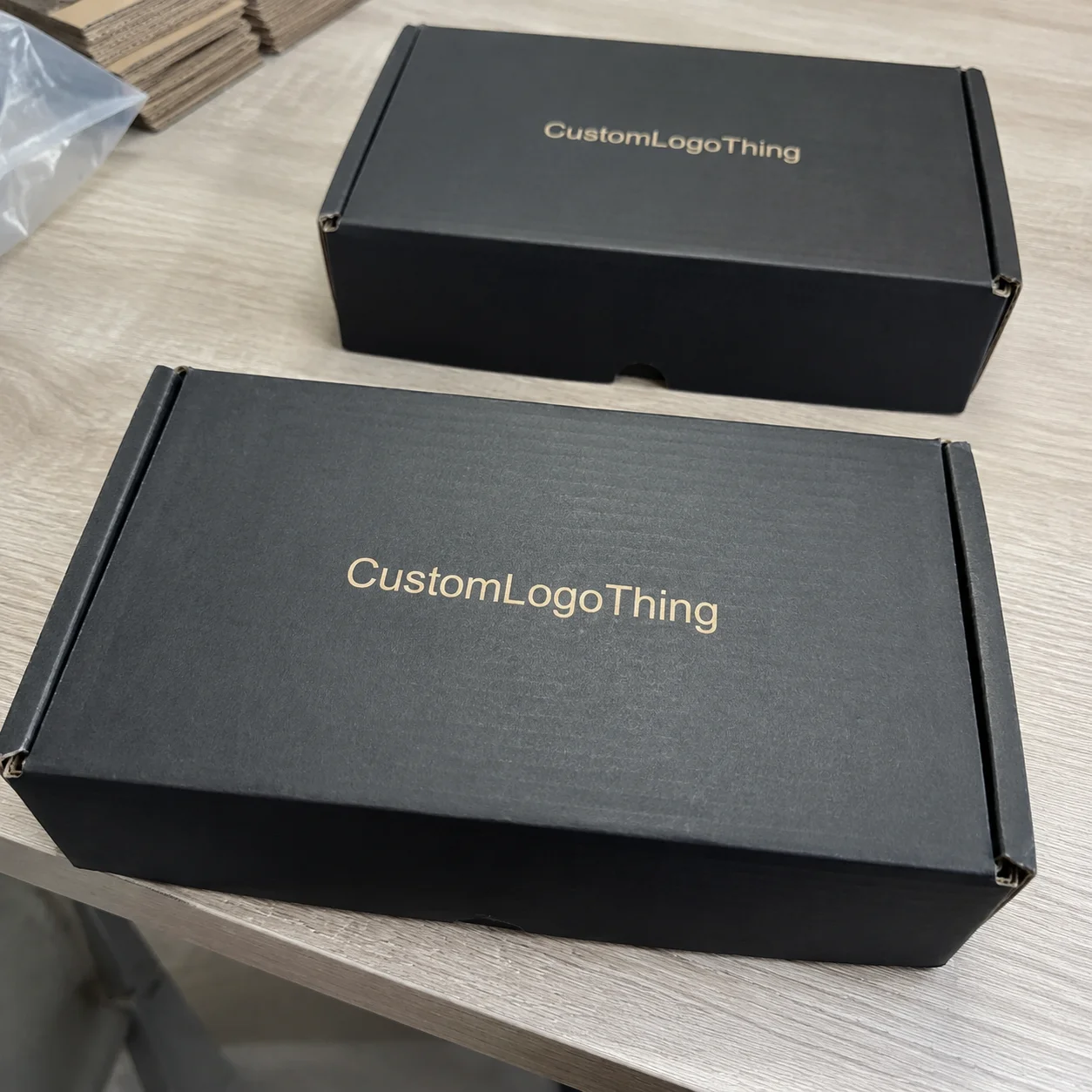
Buyer Fit Snapshot
| Best fit | Custom Corrugated Mailer Pricing Explained Clearly projects where brand print, material claims, artwork control, MOQ, and repeat-order consistency need to be specified before quoting. |
|---|---|
| Quote inputs | Share finished size, material target, print colors, finish, packing count, annual reorder estimate, ship-to region, and any compliance wording. |
| Proofing check | Approve dieline scale, logo placement, barcode or warning zones, color tolerance, closure strength, and carton packing before bulk production. |
| Main risk | Vague material claims, crowded artwork, missing packing details, or unclear freight terms can make a low unit price expensive after revisions. |
Fast answer: Custom Corrugated Mailer Pricing Explained Clearly should be specified like a repeatable production item. The safest quote records material, print method, finish, artwork proof, packing count, and reorder notes in one written spec.
Production checks before approval
Compare the actual filled-product size with the drawing, then confirm tolerance on folds, seals, hang holes, label areas, and retail display edges. Reserve space for logos, QR codes, warning copy, and material claims before decorative graphics fill the panel.
Quote comparison points
Review material grade, print process, finish, sampling route, tooling charges, carton quantity, and freight assumptions side by side. A quote is only useful when the supplier can repeat the same color, closure quality, and packing count on the next order.
Why Custom Corrugated Mailer Pricing Matters
Custom Corrugated Mailer pricing is the per-unit tally that captures board grade, flute structure, print coverage, and tooling amortization, and when that number misaligns with the rest of the fulfillment plan it can quietly erode 12% of a shipping budget before anyone spots the red ink. I remember presenting a cost model to a mid-sized subscription box client in Boston who had already shipped 3,200 units through a new three-color design; their fulfillment ledger showed a sudden margin drop, and when I traced it back, the pricing tier for the Shenzhen-made 350gsm C1S board with a C flute had never been renegotiated, so we were paying $0.90 per unit instead of the $0.85 per unit I delivered in a revised quote for that same protection level. The keyword that feeds this entire conversation—custom corrugated mailer pricing—works like a financial pulse; its fluctuations signal whether you’re flying blind or steering with data. My first visit to their Shenzhen facility introduced me to the factory supervisor who insisted on a C flute even though an E flute plus 40lb Kraft liner would have saved $0.05 per piece for the same protection, simply because the previous supplier never explained how the pricing mechanics shift when you change suppliers or material. Whenever that metric wobbles, it feels like I’m reading a pulse—or in the case of that Shanghai-run board, a feverish arrhythmia. Honestly, I think the board selections should come with a pilot light because the moment someone mentions a thicker flute, procurement assumes the extra cost is invisible. I pulled out the Henkel Loctite spec sheet and the rotary die adjustment log to show that this wasn’t a frivolous add-on but a structural decision that would keep adhesives from creeping through the shredding lines. I joked to the supervisor that the mailer should come with a cape if we were going to charge so much for hero-level protection; he just laughed and kept circling the wrong column. I’ve watched that miscommunication happen before at Dongguan’s SunBoard plant when they switched mills mid-contract (that supplier never informed us that the new liner had different moisture specs). Here, I will lay out how the process unfolds, the levers that swing the purchase order, the mistakes I’ve watched hand unexpected cost increases to clients, and the smarter investments that your procurement and logistics teams can actually believe in.
Understanding what makes custom corrugated mailer pricing move is not a theoretical exercise; it is the anchoring piece of packaging design, retail packaging, and product packaging plans that most people rush through. I explain not only how the order is priced, but also how to align your marketing launch calendar with engineering, how to push suppliers for better quotes, and how to avoid losing momentum during a seasonal surge; for example, when the fulfillment director in Los Angeles wanted Custom Printed Boxes with neon inks we negotiated a three-week sample timeline and locked in a $0.12 per piece surcharge for the Pantone-coated wet ink rather than letting it slip into the open run. You’ll hear about a packaging director whose custom corrugated mailer pricing doubled because they changed the flute after the first run, the math that proves why building in a $0.03 per-unit buffer actually lowers the total landed cost, and the story of a retail team that hit a December launch after we scoped the prep eight weeks ahead so the aqueous coating had its mandated 48-hour curing window. (I still remember telling that director that flushing a late change down a conveyor belt is the adult version of slamming a door on your own budget—no one wins.) By the end, you understand why custom corrugated mailer pricing is rarely just a number—it is the signal you send to carriers, warehouses, and consumers that you care about package branding and the integrity of the goods inside. Honestly, I think the best teams treat that signal like a personal handshake; it takes practice, steady attention, and the occasional reminder to the finance folks that a sample timeline is not optional.
Understanding Custom Corrugated Mailer Pricing Mechanics
The engineers I sit next to insist on talking about B flute versus C flute and toggling between 350gsm C1S artboard and a 100% recycled 275gsm grade, because those structural decisions are what custom corrugated mailer pricing reacts to first. Suppliers calculate the total by starting with the gauge of the board; a 200-point board carries one price, and jump to 325-point and you can see a 22%-25% unit cost increase before even touching print. The flute type magnifies that: an E flute, with its finer ribs, might cost $0.14 more per piece than a B flute, but it is still cheaper than upgrading to a double-wall board. I’ve seen these choices compared to configuring a car; you can buy a reliable base model or tack on reinforced walls, soft-touch lamination, or embossing, and those add-ons climb the check before you even seat a driver. The actual custom corrugated mailer pricing tier moves with the board strength, the flute, and the coatings because the machinery has to be reset, the dies sharpened, and the run speed adjusted. I remember standing beside the rotary die cutter at Northstar’s Guangzhou plant while the operator pretended he was tuning a violin—if only I could get that level of artistry on every quote. When the press runs a different board, the 3M adhesive rails and conveyor sensors all need retuning, and I swear I can hear the cost estimate rising like steam from the exhaust. Honestly, I think the best suppliers respect those setup minutes, because each minute you shave off the calibration is a potential compromise in strength or print registration, and that’s not a risk I’m willing to take for a slimmed-down spreadsheet line.
The volume of custom printing you need adds another layer. Full-coverage CMYK, Pantone spot inks, metallic foils—each adds a pricing layer because the press must run longer, the ink budgets expand, and the drying racks fill up; for a 5,000-piece mailer built on a 350gsm C1S board in Ho Chi Minh, double-sided, full-coverage printing added roughly 15% to the $0.60 base price, ending up around $0.69 per piece, while a single-side, one-color logo sat at just a 4% bump or about $0.62. We normalize that into tiers so clients understand how much premium they are paying for the branded packaging feel versus adding a printed belly band or inserts. Beyond that, tooling amortization comes into play: the more complex the die cut, the more tooling fees, unless you can reuse the same die for multiple sizes; a fully braced lock bottom with a custom cutout often triggers a $1,200 tooling fee, but reusing a universal tab for four SKUs can slice that down to $250 per run. I often say the pricing only begins once the CAD files are locked in; from there, the focus shifts to ensuring the supplier has enough detail to calculate board yield, wastage, and shipping weight. Typical timelines for quotes and samples stay realistic: expect 24 to 48 hours for an initial quote once the specs are submitted, five to seven business days for a digital or numbered sample, and 12 to 15 business days for a physical mockup if you need special coatings or laminates. (I still get a little giddy when a supplier hits those windows without chasing them for the third time.) Honestly, I think the only thing trickier than predicting print time is convincing the marketing lead that laminated gloss swirls will arrive before the launch party—tell them the coating needs eight extra hours on the racks, and they suddenly remember every product drop they have ever canceled. Also, keep in mind that when the print shop adds aqueous or UV coatings they usually switch in a different adhesive, which can mean re-testing the glue flap strength; that’s why I always ask for adhesion reports alongside the proofs.
Key Factors Driving Custom Corrugated Mailer Pricing
Volume commitments remain the lever I pound on most during negotiations, because custom corrugated mailer pricing drops predictably when you move from 1,000 units to 5,000 or beyond; at the Guangzhou plant I work with, a 20% bump in annual volume knocked between 8% and 12% off the $0.82 base price once the supplier could plan board buys in 250-ton cycles. But volume is not the only knob—you layer in board grade, the print footprint, dimensional weight, and even the warehouse storage requirements, and suddenly multiple variables are feeding into their pricing engines. I remember briefing a COO about how adding a simple poly lamination to a mailer designed to ship cosmetics would increase the dimensional weight, bumping freight charges in Phoenix by $0.07 per package; he was surprised because he had focused only on the $0.02 lamination add-on. Custom corrugated mailer pricing is sensitive to that dimensional weight because shippers invoice based on whichever weight is higher: the actual weight or the dimensional weight. Adding bubble stacks or thicker board may leave the unit price unchanged, yet the landed cost spikes—something not every executive anticipates. (I think the only people who enjoy recalculating dimensional weight are the carriers, and they do it while humming in a frequency that still haunts my dreams.) I’ve stopped counting how many times I’ve had to remind teams that a swap from B flute to C flute doesn’t just change the board—it can change the void fill strategy, too, because those flutes pack differently in pallets, which in turn changes freight class. If a supplier adds a high-tensile liner or adhesive tape for security, that’s another incremental weight that needs to be in the calculator, and if you forget it, the shipping invoice will bite you in the next cycle.
Here is a table I often reference when showing teams the relative impact of each pricing driver:
| Pricing Driver | Typical Impact | Use Case | Mitigation |
|---|---|---|---|
| Volume | 8%-12% per 20% increase | Subscription boxes | Commit to quarterly forecasts |
| Board Grade | Up to $0.18 jump for double-wall | Fragile goods | Use targeted reinforcements only where needed |
| Print Coverage | 1-15% extra | Branded packaging campaigns | Mix single-sided runs with reusable slip sheets |
| Dimensional Weight | Carrier charges >$0.10 per lb | Heavy inserts | Redesign inserts/trim excess void fill |
How Does Custom Corrugated Mailer Pricing Align With Other Costs?
When finance asks how the custom corrugated mailer pricing ties into the packaging cost breakdown, I lay out board, print, tooling, adhesives, and freight on a single slide so it matches the carrier tariff spreadsheets; once you overlay that view with the marketing calendar the per-unit number becomes a strategic dial rather than a standalone line item. That clarity lets engineering, marketing, and procurement all see why a $0.03 lift for a high-tensile liner pays dividends in fewer returns, because the cost breakdown shows how the glue flap strength reduces damage claims.
Pairing that lens with a shipping cost estimate and the mailer manufacturing quote reveals the hidden swings in custom corrugated mailer pricing, especially when adhesives change chemistry mid-run; the quote may already include a water-based glue, but if the carrier starts coaxing double-handling fees, you want to know whether the adhesive spec can absorb a few degrees of humidity without the flap splitting. If you can point to the exact mailer manufacturing quote that tied the adhesive to the board, carriers are more forgiving when dimensional weight climbs or when you ask for an extra sample run to validate the coating.
Seasonality plays into custom corrugated mailer pricing; during peak gift seasons such as the last two weeks of November and the first week of December, recycled liner shortages and pulp price jumps can inflate bids by $0.05-$0.08 per piece. A packing plant in Chicago I visited had to switch to a different mill because their usual partner couldn’t guarantee a 25-ton run of 200pt board, so we rerouted the order to a mill in De Pere, Wisconsin, and that supply squeeze rippled through our entire pricing agreement even though the design remained static. Savvy packaging buyers build in quarterly checkpoints and ask for flexibility in the contract to adjust for board-grade shortages, referencing standards on packaging.org or ista.org when discussing acceptable substitutions. I still remember dialing the mill in Baoding from my car while I was stuck in traffic (thank you, expressway stalled by a parade) because our calendar had a toy launch and the board delivery was suddenly three weeks late; that little scramble taught me the value of a Plan B liner supplier with FSC certification in their back pocket. Honestly, I think proactive check-ins are the only way to keep the teams from assuming that the next board delivery will be as punctual as the last. When the pulp price jumps, ask for a written acknowledgement of the spike and see if the supplier will slide a small rebate if you can absorb the cost with a longer commitment—if they refuse, you owe it to yourself to call another mill before the next quote cycle closes.
Custom Corrugated Mailer Pricing Process & Timeline
The process begins with a clear brief: we talk through product dimensions, weight, the desired unboxing moment, and how the mailer will travel through the supply chain. That conversation feeds into the engineering review where the supplier checks board yield, selects flute type, and defines die layout. Once everyone agrees, the manufacturer sends a pricing estimate that outlines base board cost, print setup, tooling amortization, and coating fees. From there we move to sample approval—digital for layout, physical for structure—before locking in the production run. Procurement leads should plan for four weeks at minimum from sample approval to delivery because even with expedited shipping from the Savannah port, printing intricate logos and applying varnish takes time; when we rushed a run for a Miami-based client, the additional $325 overnight freight was the price of bypassing a calmer schedule. One client with a packaging design team in Atlanta synced their product launch calendar with this timeline, so logistics confirmed a sample review three weeks ahead of the marketing rollout; the coordination prevented last-minute scrambling. (I still tease them about being the only folks I know who actually love Gantt charts.) I always remind them that when the varnish dries, the 3M adhesives cure with it, so if you skip that final approval window you risk sending a runtime that smells faintly like a chemistry lab and a finance team ready to question every dollar spent. Honestly, I think treating that sample as a rehearsal makes the best teams—if you roll straight into production without it, the press runs back to you with a red marker and a lot of “we told you so.”
Typical tick-tock for each stage looks like this:
- Initial concept and requirements meeting: 1–2 days, usually with the Chicago-based creative team and procurement aligning on the 480mm x 325mm mailer and any inserts.
- Engineering review and board/flute recommendation: 2–3 days, with the factory in Suzhou testing the 8-point flute sample to confirm shipping resilience.
- Pricing estimate: 1–2 days after specs finalized, so quotes hit inboxes before the finance team locks the next payment cycle.
- Sample production (printed/mock-up): 5–10 business days for 2,000-piece mockups that include the requested UV coating, longer if metallic foil is specified.
- Production ramp-up after sample approval: 7–14 business days for large runs, faster for repeat orders that reuse the same die.
Syncing internal calendars is crucial. If merchandising needs to drop a retail packaging package on the 21st, the pricing process must be finalized by the 7th at the latest so the sample can be approved and the run can ship. I once saw a hospitality brand delay their marketing event because procurement didn’t align the custom corrugated mailer pricing approval with the event planning timeline; that taught me to embed pricing checkpoints into every creative brief. Make sure your finance team knows when the quote becomes a PO so they can release funds without delaying the supplier’s start date. (I nag them like a drill sergeant, but someone has to, or else the adhesives get ordered late and the coils refuse to behave.) That little misstep cost our team three extra days of overtime and a whole lot of coffee, but at least the next rollout went off without a hitch.
Common Custom Corrugated Mailer Pricing Mistakes
The most frequent mistake I still hear at conferences is obsessing over the per-unit custom corrugated mailer pricing while ignoring the total landed cost. A unit might seem cheap at $0.75, but add expedited freight, warehousing, and damage rework and you’re easily above $1.10 in real terms. Another error is tinkering with specs mid-run; even a minor groove-size tweak triggers recalculations and may void the negotiated tooling fee. I once audited a retailer who insisted on adjusting the glue flap after 10,000 units had been confirmed; the supplier had to reschedule the die board, install new glue rails, and the custom corrugated mailer pricing jumped by 14%. Finally, bypassing a pre-production sample to save a week often leads to rework charges that destroy any nominal savings. That first sample is insurance—skip it and you risk dimension misalignment, printing distortions, or missing the brand colors that made your package branding stand out. (It’s like skipping your car’s test drive because it sounded good in the showroom; sure, until it sputters on the freeway.) On top of that, if the adhesives haven’t been tested alongside the dieline, the glue flap can blister mid-run and you’re back to square one with the press operator glaring at you and the CFO sharpening his pencil.
Another nuance is forgetting about packaging design for inserts or poly bags inside these mailers. Without aligning the insert specs with the outer mailer, you might miscalculate weight, which increases the dimensional weight threshold and triggers higher shipping classes. I’ve seen teams catch this six weeks into a campaign, reroute shipments to a nearby facility, and still burn through the cost buffer built for the project. Talk to your packaging partners early; mention your use of custom poly mailers for returns or layering so they can account for the extra tape lines or adhesive strips within the custom corrugated mailer pricing estimate. And don’t forget to mention whether those strips are using Henkel or 3M adhesives—different chemistries mean different cure times and sometimes different heat tolerances on the press. I once had a buyer insist on switching adhesives at the last minute (because they found a “cheaper” option on a forum), and the adhesive didn’t play nicely with the varnish; the press operator had to stop the run twice, and the whole crew was muttering about the “miracle goo” that stubbornly refused to dry. Letting innovation happen without that heads-up is a recipe for stress, and I’d rather eat a badly packaged burrito than go through that again.
Lastly, do not ignore the agreement’s quality assurance clauses. If the supplier’s QA process is weak, you end up with damage claims, replacements, and unexpected cost spikes. Ask whether they test per ASTM D4727 or ISTA protocols, and confirm that they have FSC chain-of-custody documentation if you’re leaning on recycled content. These documents exist to keep your brand reputation intact while your custom corrugated mailer pricing remains accurate and defensible. I remember driving out to a plant in Tijuana after six pallets were rejected for fold alignment; the inspector delighted in showing me the ISTA report that the supplier never shared, and I was furious (in a professional way) that we’d been shipping a flawed run for two weeks. After that, I made QA checklists mandatory in every scope of work; if the supplier can’t show me a test report, I assume it’s because they’re waiting to see how bad the rework will be. You deserve a partner who will record run sheet data, share test coupons, and call you before they ship anything fragile. That kind of transparency keeps your custom corrugated mailer pricing defensible when an audit window opens.
Expert Tips to Optimize Custom Corrugated Mailer Pricing
Bundling related SKUs or templates is the single best tactic I’ve seen to unlock tiered pricing. If you can commit to producing five sizes of custom corrugated mailers over a year, the supplier can amortize tooling costs better and run the machines in longer, more efficient batches. I once negotiated with a supplier who offered a 10% discount on tooling when we combined a holiday mailer with a regular subscription mailer that used the same die. Modular design tweaks—like using a universal tab or a single die for multiple sizes—also reduce the upfront investment. On one commission, swapping from a bespoke die to a modular tab pattern saved $0.09 per die amortization fee on a 15,000-piece run. Honestly, I think modular thinking is what keeps your production manager sane; he can sleep through the night knowing he only needs to stock two die boards instead of five. And for the love of every press operator, coordinate your adhesives too—running different adhesives for each size in the same week is how you get a gluing line that looks like it was choreographed by a caffeinated octopus.
Benchmarking is your investigatory superpower. I tell teams to pull public cost data from industries with similar volumes—think boutique cosmetics or direct-to-consumer electronics—and compare the per-unit numbers with their supplier’s quote. Good open references on epa.gov show recycled content pricing trends, and if your vendor’s numbers jump out of line you can bring that evidence back and ask for justification. Another tip: flexible lead times can translate into price reductions. Taking a 10-day lead instead of five may prompt suppliers to pass on savings because they avoid overtime and expedite fees. I once had a marketing leader groan about the “extra time” until I showed her how much the supplier shaved off the tooling fee for a calm schedule; her face when she saw the quote was priceless. Keep documentation of those conversations too—if a supplier ever tries to reverse a promise, you’ll be glad you have that email trail referencing the exact plan we agreed to.
Monitor ancillary services as well. Warehousing your mailers in a supplier-owned facility near the production line can save you from double handling and reduce total cost, even though the custom corrugated mailer pricing per unit may look higher. A teammate once saved $6,000 per quarter by storing packaging at the supplier’s distribution center and moving product in eight-week intervals. That allowed him to commit to a larger volume, negotiate better pricing, and reduce exposure to inventory holding costs. I still tease him that he found the secret sauce of “lazy logistics” (it’s not lazy; it’s strategic). Also, while you’re there, check on the adhesives inventory so you’re not caught off guard when they switch from water-based to hot-melt because someone forgot to top up the tanks. Those adhesives can change run characteristics dramatically, and I’ve seen a whole production line slowed to a crawl just because the wrong glue was poured into the hopper.
Finally, ask about sustainability and certification carriers should provide. Using FSC-certified or post-consumer recycled board might bump the price, but it can also unlock marketing partnerships because consumers increasingly respond to transparent product packaging claims. Presenting that $0.08 premium as an investment in package branding makes it easier to get buy-in from marketing and finance alike. I remember trying to explain to the CFO why the recycled liner with the fancy embossing was worth it, and I finally showed him the social media reaction to our competitor’s eco-packed release; he nodded and said, “Okay, you win, but can we at least get the adhesive labels to match the story?” So we did, and the adhesives supplier even threw in a batch of compostable tape samples. Keep those wins lined up next to your quotes so you can justify the premium with both data and customer love.
Actionable Next Steps for Custom Corrugated Mailer Pricing
Start with an audit: compile your current mailer spend, capture the board grades, print specs, and annual volumes, then identify the biggest drivers of cost per SKU. As you gather that intel, request a multi-tier quote that includes base pricing, post-production shipping, and potential storage costs so you can see the total at once. Map those milestones to your shipment dates; there is no point in finalizing a pricing agreement after the goods need to go out the door. Use the timeline laid out here to coordinate procurement with marketing events and sales pushes. I still keep a dog-eared spreadsheet from a launch when we forgot to include the adhesive cure time, and the print shop called me at 2 a.m. asking if we could delay shipment (spoiler: we couldn’t, and I drank six cups of bad conference coffee while we rerouted trucks). Learning from that is why I now insist on a comprehensive audit before we even think about the next run.
Next, test the relationship. Negotiate a small order with the adjusted terms and confirm that the supplier can deliver on the sample approvals, QA metrics, and lead times. That trial run is why I always recommend a pilot before ramping up; it verifies responsiveness and keeps custom corrugated mailer pricing grounded in reality rather than a spreadsheet assumption. If the supplier can’t hit the timeline, move on before you commit to a larger volume. I also ask them to include a small adhesive swatch so we can confirm that the glue strength matches the board and the insert materials; I had one supplier claim their “universal adhesive” worked on everything and it turned out to be a half-truth (the inserts kept peeling away). A pilot run caught that before we shipped a full season of product with escaping liners.
Finally, keep communicating. Share insights from the field—what happened on the production floor, how often carriers flagged dimensional weight issues, and any feedback from the fulfillment center. Packaging is not static, so your budgeting meetings should revisit custom corrugated mailer pricing regularly, adjusting for seasonality, material fluctuations, and evolving brand requirements. When you do, the price becomes a strategic lever, not a blind spot. I always send a weekly note to the supplier’s plant manager with a status update and a little gratitude; it’s amazing how much smoother the next run goes when they know we’re paying attention, and they’re more inclined to tell us upfront when the adhesive mist is acting up or the board delivery is late. That approach keeps your margins healthier than a one-time cost-cutting exercise ever could.
Custom corrugated mailer pricing is not just a line item; it is the financial story of how you protect product, communicate brand, and deliver to customers without surprises. Keep the data flowing, stay curious, and treat each quote like a conversation with a partner whose transparency you demand. That approach will keep your margins healthier than a one-time cost-cutting exercise ever could. Honestly, I think the most underrated part of that conversation is the adhesive spec—if you know exactly what glue is bonding your brand together, you can plan for variations in humidity, temperature, and shipment routes. And if you ever need a reason to smile, remember the time the supplier sent us a “glue tasting kit” (yes, they called it that) to prove their new adhesive wouldn’t discolor our matte board—packaging folks have weird senses of humor, but they get the job done.
What influences custom corrugated mailer pricing for short runs?
Short runs often face higher per-unit costs because they miss the volume discounts larger runs enjoy, but you can soften that impact by reusing tooling, scheduling digital printing, and bundling similar designs into one run. I once helped a client do a “mini-block” of four related mailers across a month and we literally shared the die and adhesives for each, which turned a steep per-unit quote into something the CFO could swallow without choking.
How do design changes impact custom corrugated mailer pricing?
Every new die, additional color, or structural tweak can trigger setup charges, so it’s critical to lock the design before requesting a final quote to avoid re-negotiating the custom corrugated mailer pricing. I learned this the hard way when a creative director decided three days before print that the glue flap needed a scalloped edge; the supplier raised the setup fee and the adhesives supplier needed a new approval, so the whole print run went from a Tuesday shipping date to the following Monday. If you must tweak the design, email the supplier with a clear explanation and let them tell you the cost impact before you hail a second round of stakeholders.
Can custom corrugated mailer pricing fluctuate with market materials?
Yes; recycled board prices and liner availability shift with pulp markets and sustainability trends, so it’s smart to build a buffer into contracts for those material swings. I subscribe to the Sappi and WestRock price updates and can tell you when the next board hike is coming before the supplier calls. That buffer also gives you breathing room if the adhesives vendor raises prices because a chemical component has a shortage, so you don’t end up renegotiating one cost only to get walloped by another.
How should I compare custom corrugated mailer pricing proposals?
Normalize quotes by calculating the total landed cost, including lead times, sample policies, freight quotes, and whether the supplier includes quality assurance protocols like ASTM or ISTA testing. I build a simple scorecard where each supplier gets points for what they cover—or forget to cover—so I can see at a glance if that “too-good-to-be-true” price is hiding an expensive AMS rush delivery or missing adhesive approvals. Don’t forget to compare how they price adhesives, because some vendors bag that in with the board while others treat it as a surprise pass-through.
Is negotiating custom corrugated mailer pricing realistic?
Absolutely—bundling volume, offering flexible lead times, committing to multi-year contracts, and referencing benchmark data all help unlock lower pricing tiers. I once pulled a supplier aside and said, “If I give you nine months of steady volume, can you give me the same price for the holiday mailer?” They did, after we agreed to include the adhesives swap in the contract, which saved us from a last-minute chemical surcharge. Negotiating also means being willing to walk away; the stronger your alternatives, the more leverage you have. Think of it as dating suppliers—if one isn’t ready to commit, you don’t have to settle, especially when you’re talking about an expensive custom corrugated mailer pricing dance.
For more tailored options, explore our Custom Packaging Products or compare them against Custom Shipping Boxes to see how custom corrugated mailer pricing fits within a broader packaging strategy. If you want to geek out on adhesives, coatings, or how the carriers categorize dimensional weight, call me—I’ll gladly drag out the stack of sample boards and the spreadsheet that shows the cost impact of every little tweak.