Hotel boutiques waterproof apparel mailers artwork proof checklist
A folded resort hoodie can look beautiful on a shelf and still arrive wrinkled, damp, or poorly branded if the package is wrong. For a hotel retail team, the hotel boutiques Waterproof Apparel Mailers artwork proof checklist is more than a design review; it is the last practical checkpoint before a custom mailer becomes part of the guest experience.
Think about a boutique inside a coastal property shipping embroidered tees, spa robes, swimwear, or limited-run apparel to guests after checkout. The mailer has to protect soft goods from humidity, rain exposure on a delivery route, abrasion in a parcel network, and the rough handling that can make a premium garment feel ordinary. At the same time, the logo, monogram, return message, QR code, and color field all need to print cleanly on film that may stretch slightly, reflect light, or soften a pale brand palette.
Proofing matters more than many buyers expect. A 4 mm logo shift may sound harmless on a screen, yet it can look visibly off-center once the bag is sealed and stacked. A tagline set at 5 pt may read fine in a PDF, then fill in during flexographic printing. A background color with heavy ink coverage can affect dry time, scuff resistance, and perceived finish. Even the seal area needs attention because no one wants a call-to-action hidden under the adhesive strip or trapped in a fold.
Two risks travel together here. First, the package must function as a protective plastic mailer. Second, it must act as a brand touchpoint that feels appropriate for a hotel boutique, not like a commodity shipping bag pulled from a warehouse shelf. A structured proof checklist saves money, protects timing, and keeps the final package aligned with the property’s retail presentation.
Practical rule: approve the proof as if you are approving both a printed ad and a protective component. If either side fails, the guest notices.
How waterproof apparel mailers perform in hospitality use
A Waterproof Apparel Mailer is usually a sealed plastic pouch or poly mailer designed to keep garments clean, dry, and presentable during storage, transfer, or shipping. In hotel use, that can mean a self-seal bag for ecommerce-style fulfillment, a resealable pouch for room-drop apparel, or a frosted garment pouch used for boutique pickup. The common goal is simple: keep fabric away from moisture, dust, handling marks, and transit scuffs.
Most custom apparel mailers use polyethylene film, often LDPE, HDPE, or co-extruded PE structures. Thickness is commonly discussed in mils for U.S. buyers or microns for international production. A light apparel mailer might sit around 2.0 mil, while a more durable boutique-grade mailer may run 2.5 to 3.5 mil depending on size, opacity, and seal strength. For folded tees, 2.5 mil often feels adequate; for bulkier robes or sweatshirts, 3.0 mil or a reinforced closure deserves a closer look.
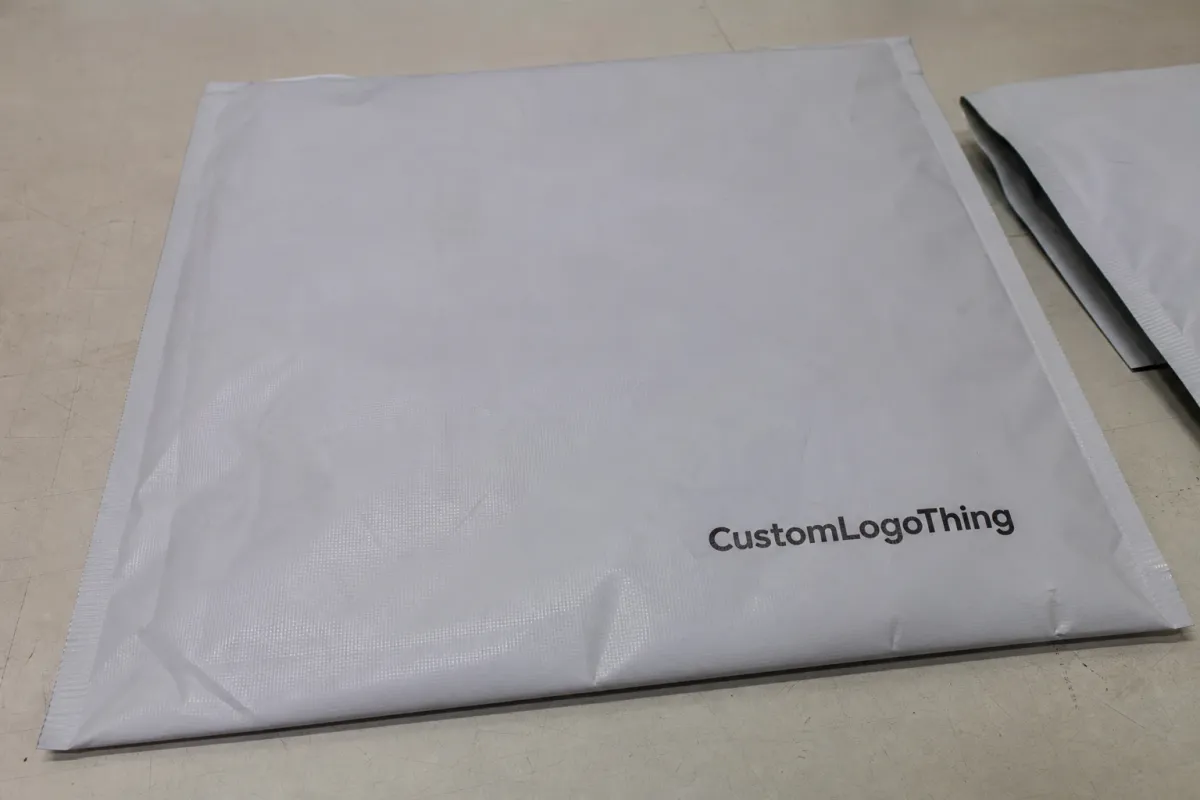
Finish changes both performance and appearance. Glossy white film gives color more pop, but fingerprints and glare can be more visible. Matte or frosted film feels softer and more boutique-oriented, yet light gray, beige, pale blue, and low-contrast gold artwork may need adjustment so the print still reads under lobby lighting. Clear film works well if the garment itself is part of the presentation, although it leaves less room to hide wrinkles, tissue, or internal labels.
Seal style matters just as much as film gauge. A permanent self-seal strip is efficient for shipping, especially for one-way guest orders. A resealable zipper or adhesive flap can suit amenity kits, spa apparel, or in-room merchandise where staff may need to open and close the pouch before final handoff. Vent holes are sometimes used for air release in thick garments, but they reduce moisture resistance, so that choice should be tied to the use case rather than treated as a default feature.
From a hotel workflow point of view, these bags show up in several places: laundry handoff for branded robes, fulfillment of gift shop orders, staff assembly of welcome kits, storage of seasonal resort apparel, and direct-to-guest shipping after an online purchase. If the mailer will enter a parcel network, it should also be viewed through a distribution lens. The International Safe Transit Association offers useful testing frameworks for packaged-product distribution at ISTA. Not every boutique apparel bag needs formal lab testing, but the thinking behind drop, compression, vibration, and moisture exposure is still useful.
The best material choice depends on the garment, route, and guest expectation. Not every order needs the thickest film. Buyers sometimes overspec the plastic and underspec the artwork review. A medium-gauge mailer with smart sizing, good seals, and clean print often beats a heavy bag with crowded graphics and poor fold planning.
Artwork proof checklist for brand, layout, and print accuracy
The artwork proof is the controlled version of what the factory is being asked to produce. It should show size, panel layout, logo placement, print colors, closure position, and any technical markings needed for production. If the proof is vague, the finished mailer may still be technically “within tolerance” while feeling wrong to the hotel team.
Start with the art files. Vector files such as AI, EPS, or press-ready PDF are preferred for logos, icons, line art, and type. Raster images should usually be 300 dpi at final size, but plastic film printing is not the best place for tiny photo details unless the print method is selected for that purpose. Fonts should be outlined or packaged. Fine lines should be checked carefully; anything below roughly 0.25 pt can become risky, and reversed-out type often needs to be larger because ink gain can close up small counters and thin strokes.
Next, review the dieline. A proper proof should identify the front panel, back panel, flap, seal zone, fold edges, hang hole if used, and any gusset area. Keep important text and logos away from seals and edges. A typical safe area might be 5 to 8 mm from trim or fold lines, but some bag styles need more room, especially if the film moves during converting. Bleed should extend beyond the trim if color is intended to run off the edge, but heavy bleed near the seal area may need factory confirmation.
- Logo: confirm vector format, correct version, spacing, and final printed size.
- Typography: check font outlines, minimum point size, tracking, and reversed-out text.
- Dieline: verify front/back orientation, flap direction, seal position, and safe zones.
- Codes: test QR codes and barcodes at printed scale, not just enlarged on screen.
- Color: compare Pantone, CMYK, or spot-color expectations against the chosen film finish.
Barcodes and QR codes deserve their own pass. A QR code printed on flexible film can distort slightly as the bag flexes, so avoid shrinking it to the absolute minimum. Leave quiet space around it and test a printed-size proof with several phones. Retail barcodes should be placed on a flatter area of the mailer, away from side folds, bottom gussets, and heavy wrinkles. If a hotel boutique uses POS scanning, the barcode has to work for staff, not only look tidy in the design.
Color is where many proof approvals get optimistic. Screen color is backlit. Film print is not. A pale cream logo on frosted white film may look understated in the PDF and nearly invisible in production. Gloss film can make dark colors look richer, while matte film can reduce contrast. Metallic-looking artwork printed as standard ink will not behave like foil. If brand color is strict, ask whether the order will be printed with spot colors and whether a drawdown, printed swatch, or pre-production sample is available.
A hotel boutique mailer proof should also cover copy accuracy. Check the URL, social handle, care statement, country-of-origin language if used, recycling note, SKU, and any guest-facing message. Small copy errors are painful because the bag may be otherwise perfect. Reprinting 10,000 mailers over a typo is a rough way to learn that proofing is a shared responsibility.
For sustainability claims, be careful. If the mailer includes recyclable, recycled-content, or paper-insert claims, those statements need to match the actual material and local collection reality. The EPA has useful background on materials management and recycling considerations at epa.gov/recycle. Plastic mailer claims should be specific and defensible, not decorative language added late in the design.
Cost, pricing, MOQ, and quote drivers
Custom waterproof apparel mailer pricing is driven by specification first, then quantity. Size, film thickness, opacity, print coverage, number of colors, closure style, plate or setup needs, packing method, and freight all affect the final number. Two mailers that look similar in a mockup can price very differently once one uses a 3.5 mil matte co-ex film with two-sided print and the other uses a 2.5 mil white LDPE film with one-color front print.
For planning, a simple Custom Printed Poly mailer might land around $0.18 to $0.35 per unit at 5,000 pieces, depending on dimensions, print coverage, and freight. Boutique-grade mailers with heavier film, matte finish, resealable closure, or two-sided printing can move into the $0.35 to $0.75 range at similar volumes. Smaller runs can be higher. Very low quantities may require digital print or stock-size customization, which often reduces tooling cost but increases unit price.
MOQ is the lever buyers feel quickly. A 1,000-piece order may be attractive for a single property testing a retail program, but the per-piece price can be much higher because setup, proofing, machine time, and packing are spread across fewer units. A 10,000-piece run may produce a cleaner unit cost, especially if multiple hotel boutiques can use the same size and base artwork. Consolidating properties can help, but only if branding, storage, and replenishment timing are truly aligned.
| Mailer option | Typical use | Common spec range | Estimated unit range | Buyer watchout |
|---|---|---|---|---|
| White self-seal poly mailer | Guest apparel shipping, online boutique orders | 2.0-3.0 mil, 1-2 color print | $0.18-$0.40 at mid-volume | Confirm opacity so garment color does not show through. |
| Matte boutique apparel pouch | Retail handoff, room-drop merchandise | 2.5-3.5 mil, soft matte or frosted film | $0.35-$0.75 at mid-volume | Light branding may need stronger contrast. |
| Resealable zipper or flap pouch | Spa kits, robes, reusable guest packaging | 3.0 mil or heavier, zipper or reusable adhesive | $0.50-$1.20+ depending on size | Test opening feel and seal reliability before bulk approval. |
| Digital short-run mailer | Seasonal drops, limited apparel collections | Stock or semi-custom size, full-color print | Often higher per piece | Color and size options may be more limited. |
Hidden quote variables can surprise even organized buyers. Plate charges, art cleanup, color matching, proof revisions, special packing, carton labeling, palletization, inside delivery, and rush handling may sit outside the first unit-price conversation. Hang holes, tear notches, gussets, double adhesive strips, suffocation warnings, and special venting also change the quote. If the mailer ships internationally, duties and freight terms can matter as much as the piece price.
The cleanest RFQ includes finished size, film preference, thickness target, print colors, artwork file type, quantity tiers, closure style, ship-to ZIP code, and required in-hand date. If you are still comparing formats, review related options under Custom Poly Mailers or broader Custom Packaging Products so the quote starts with the right structure instead of forcing every need into one bag style.
Production process and timeline from proof to shipment
The normal path starts with artwork submission and specification review. The supplier checks whether the file is usable, whether the chosen bag size supports the layout, and whether any print areas conflict with seals, folds, or converting requirements. A digital proof follows. That proof may be enough for straightforward one-color work, while color-sensitive hotel branding may need a physical sample, drawdown, or production reference.
After the first proof, the buyer reviews and marks revisions. This part is buyer-controlled, and it is often where schedules slip. A file can sit for three days waiting on brand approval, then the production team is asked to recover that time later. Fast internal review helps. So does giving one consolidated revision list instead of sending five separate emails from retail, marketing, purchasing, and operations.
Once the proof is approved, the factory side takes over: plate or cylinder preparation if needed, film printing, curing or drying, lamination if part of the structure, converting into bags or pouches, closure application, quality checks, carton packing, and shipment. Tolerances should be understood before production. Flexible packaging can have small movement in registration, cut position, and finished size, so the artwork should be built with realistic manufacturing variation in mind.
For many standard custom poly mailer runs, proofing may take 1 to 3 business days if files are clean. Revisions add time. Production after proof approval may run roughly 10 to 20 business days for common specifications, though larger quantities, special films, multi-color work, and custom closures can extend that. Rush orders may be possible, but rush capacity depends on material availability, print schedule, tooling, and freight. Air shipping can save calendar days and still strain the budget.
A clean hotel boutiques Waterproof Apparel Mailers artwork proof checklist shortens the path because it removes back-and-forth. The supplier does not have to ask whether the logo should be centered on the bag or centered between the side seal and flap. The designer does not have to rebuild a QR code after approval. Purchasing does not discover freight terms after the bags are already packed.
- Submit files and specs: size, quantity, film, print method, closure, and deadline.
- Review digital proof: layout, color callouts, dieline, safe areas, and copy.
- Approve or revise: send one clear revision list with marked locations.
- Confirm production: approve final proof, pricing, shipping details, and timing.
- Manufacture and inspect: print, convert, pack, and check against approved proof.
- Ship and receive: verify carton counts, packing condition, and sample pulls upon arrival.
If the launch date is tied to a property opening, seasonal retail drop, wedding block, or loyalty campaign, build a buffer. A hotel team is better off approving a proof two weeks earlier than paying rush freight on a package that still needs a color correction.
Common mistakes that create reprints or weak seals
The first mistake is crowding the printable area. Designers often want the mailer to carry a full brand story: logo, pattern, tagline, web address, QR code, social handle, care message, recycling note, and maybe a resort illustration. It can all look charming on a flat PDF. On a soft plastic bag wrapped around a folded sweatshirt, the same layout can feel busy and uneven. Give the design room to breathe.
Edges are risky. Important art placed close to a side seal, bottom fold, flap, or trim edge can disappear, distort, or look accidentally cropped. Even with good converting, flexible film moves more than paperboard. A 5 mm safe zone is not decoration; it is insurance. For larger bags or gusseted structures, ask the supplier what safe area they recommend for that exact construction.
Low-resolution art causes another common failure. A hotel crest pulled from a website may be 72 dpi and look acceptable in an email, then print fuzzy on a 12 inch mailer. Screens hide problems. Presses reveal them. Use original vector artwork whenever possible, especially for monograms, thin serif type, and detailed icons.
Color assumptions create frustration too. A marketing team may approve a PDF on a bright laptop, then reject the production run because the warm gray logo appears cooler on white film. That may be a true production issue, or it may be an expectation issue that should have been discussed earlier. If color is critical, specify Pantone targets where appropriate and ask what tolerance is realistic for the print method and substrate.
Operational mistakes can be just as costly as artwork mistakes. Choosing a mailer that is too tight for folded apparel makes staff fight the package, which creates wrinkles and stressed seals. Oversizing the bag can make the garment slide, bunch, and feel less premium. As a rough starting point, measure the folded garment stack and add enough allowance for insertion, closure, and natural fabric loft. A thin tee needs far less depth than a fleece pullover or terry robe.
Moisture exposure should be assessed honestly. If bags sit in a back-of-house area near laundry carts, pool inventory, or loading docks, light film and weak adhesive may not be enough. If the mailer is used only for boutique counter handoff inside a climate-controlled space, a softer presentation pouch may be fine. Not every application needs parcel-grade durability, but every application needs a real use case.
Finally, test how the mailer opens, closes, stacks, and scans. Staff will notice if the adhesive liner is hard to peel. Guests will notice if the bag tears raggedly. Fulfillment teams will notice if glossy bags slide off each other in stacks of 50. These details rarely appear in a polished mockup, but they show up immediately on the floor.
Next steps for samples, revisions, and ordering cleanly
A clean order starts before the quote. Gather final art files, confirm garment-fold dimensions, define quantity targets, select the preferred closure, and decide whether the bag is mainly for shipping, retail presentation, storage, or a mix of all three. That answer affects film thickness, seal style, print placement, and even carton packing.
Ask for the proof to match the actual film and print method as closely as the process allows. If the job will print one spot color on matte white PE, the proof should not leave everyone imagining full-color digital output on glossy film. Digital proofs are useful for layout, but they cannot fully predict ink laydown, opacity, surface reflection, or hand feel. For a guest-facing hotel retail program, a comparable production sample can be worth the extra step.
For samples, be specific. Request a similar thickness, similar finish, and similar closure, not just “a poly mailer sample.” A 2.0 mil glossy shipping bag tells you very little about a 3.0 mil frosted resealable pouch. If seal performance matters, open and close the sample multiple times. Put the actual folded garment inside. Leave it stacked overnight. If the mailer will ship, run a small internal test by packing, labeling, and handling it like a real order.
Revision control is another practical habit. Name proof files clearly, such as “resort-tee-mailer-proof-v2-approved,” and make sure only one person sends final approval. Conflicting approvals are a quiet source of production errors. If multiple properties are included, create a simple matrix showing property name, logo version, quantity, shipping location, and any copy differences. Shared artwork can save money, but only if the differences are controlled.
Before approval, run through this short gate:
- Finished size matches folded apparel, including fabric loft.
- Film type, thickness, finish, and closure match the intended use.
- Logo, copy, barcode, QR code, and legal text are final.
- Artwork stays clear of seals, folds, flap, and trim risk areas.
- Color expectations are documented for the actual print method.
- Quantity, MOQ, setup charges, freight, and timeline are confirmed.
- One final approver signs off on the latest proof version.
If you need help narrowing the format, start with Custom Poly Mailers and compare them against other options in Custom Packaging Products. The goal is not to buy the fanciest mailer. The goal is to buy the right mailer for the garment, the handling path, the brand standard, and the guest moment.
Use the hotel boutiques Waterproof Apparel Mailers artwork proof checklist as the final gate before production approval. It keeps creative review, material performance, pricing, and timing tied together, which is exactly what a hotel boutique needs when a simple apparel package has to protect the product and carry the brand well.
FAQs
What should I check first on a hotel boutique waterproof apparel mailer proof?
Start with size, panel orientation, logo placement, and any text that sits near a seal, fold, flap, or trim edge. Then confirm the proof reflects the intended film finish and print method, because the same artwork can look different on glossy white, matte white, frosted, or clear plastic.
How does material choice affect waterproof apparel mailer performance?
Film thickness, seal style, opacity, and finish all influence durability, moisture protection, and the way the package feels in the guest’s hands. Heavier or more specialized material usually costs more, but it can better support hotel retail, guest amenities, room drops, and longer transit handling.
What drives pricing for custom waterproof apparel mailers?
Main pricing factors include quantity, dimensions, film specification, print complexity, number of colors, custom features, setup requirements, and freight. MOQ and rush timing can shift unit cost noticeably, so review the quote using final volume, final artwork, and the required delivery date.
How long does the proofing and production process usually take?
The timeline depends on proof revisions, order size, material availability, and whether the artwork is press-ready when submitted. Clean files and fast approvals can keep proofing to a few business days, while layout changes, color corrections, special closures, or physical samples add time.
Can hotel boutiques use one artwork proof for multiple properties?
Yes, if size, branding, legal text, quantity, and property-specific details are confirmed for each location. Verify whether the same mailer structure works across all properties before ordering, because one shared bag can reduce unit cost only if the operational needs truly match.