Book Merch Brands Soft Touch Poly Mailers Factory Quote: What You Actually Buy
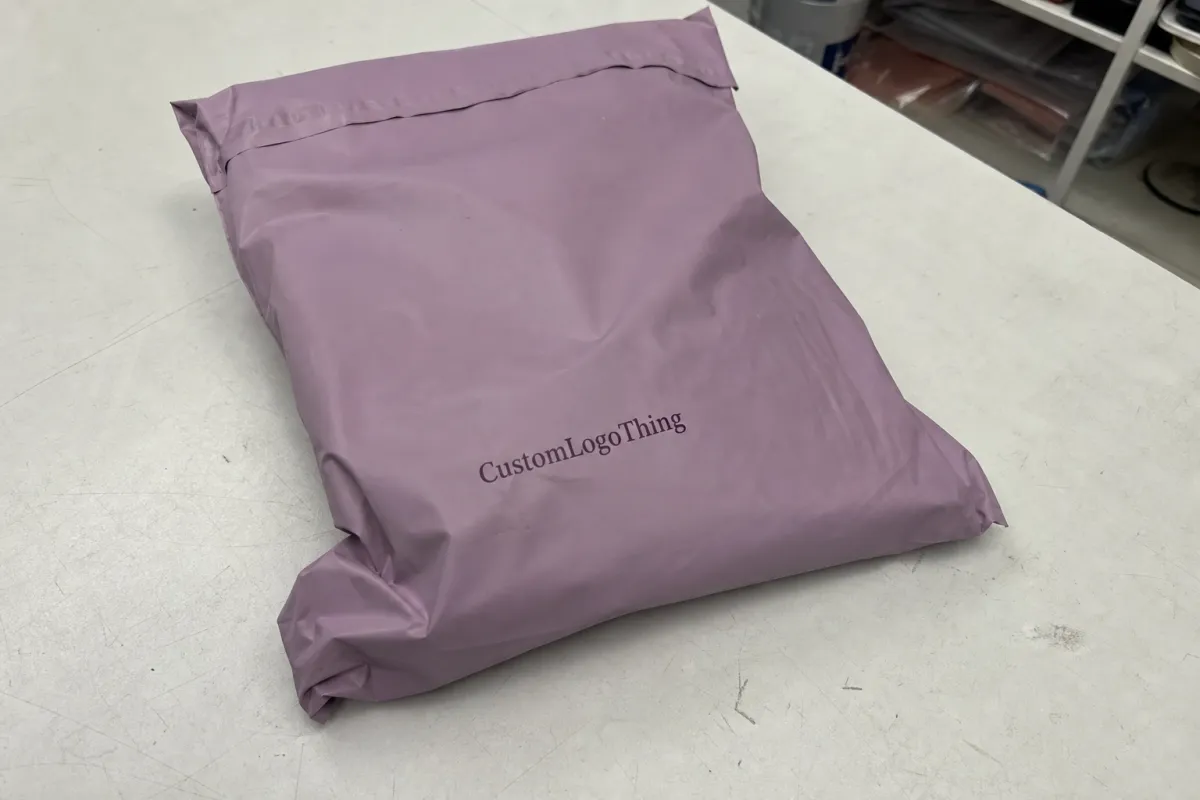
Books are a strange thing to ship. They are flat, dense, and just heavy enough to expose weak packaging fast. A bag that feels perfectly fine for a T-shirt can make a premium book order feel careless the moment it lands on a customer’s table. That is why buyers searching for a book merch brands Soft Touch Poly Mailers factory quote are usually trying to solve two problems at once: protecting the contents and preserving the brand experience.
Soft Touch Poly Mailers sit in a useful middle ground. They feel more deliberate than a standard glossy courier bag, but they do not carry the cost and material overhead of a rigid box. For book merch brands, author stores, publisher campaigns, limited edition releases, stationery bundles, signed copies, and subscription shipments, that balance is often exactly right. The package looks considered, packs quickly, and keeps unit cost within reach.
The practical question is not whether the mailer looks premium in isolation. It is whether it survives fulfillment, prints cleanly, resists punctures, and keeps the invoice from drifting into uncomfortable territory. A good quote has to answer those questions plainly. If it does not mention size, thickness, material structure, print method, quantity, and freight terms, it is not really a quote yet. It is just a number waiting for context.
Most book merch programs that use custom mailers fall into a few patterns:
- Single-book shipments for paperbacks, slim hardcovers, and signed editions
- Book-plus-merch bundles with bookmarks, art prints, stickers, or pins
- Collector drops where presentation matters as much as protection
- Publisher promo kits sent direct to readers, partners, or reviewers
- Launch and event mailers that need to look branded, not improvised
For buyers comparing packaging formats, custom mailers are often the most efficient upgrade from plain poly bags. If you want to compare products directly, start with Custom Poly Mailers and decide whether the soft touch finish belongs in the working spec or only in the premium tier.
Soft Touch Poly Mailer Details for Book Merch Orders
Soft Touch Poly Mailers are flexible polyethylene mailing bags with a matte, velvety outer feel. They are built to feel smoother and more premium than standard glossy mailers, and that handfeel matters more than buyers sometimes expect. Customers touch the package before they register the title inside it, and that first physical impression carries real weight.
A typical build includes an outer printable layer, the soft touch finish, an inner film layer, and a self-seal adhesive strip. Some versions add a tear strip for easier opening, a double adhesive strip for return handling, or an opaque inner layer for privacy. The right configuration depends on what is being shipped, how often the package will be handled, and how much branding needs to sit on the outside of the bag.
For books, the finish earns its keep when the package is part of the product experience. Signed copies, collector editions, influencer kits, and direct-to-consumer sales are the obvious examples. In those cases, the mailer is not just a shipping item. It is the first visible part of the purchase.
There are limits, though. Soft touch poly mailers are not a cure-all for poor packaging choices. Sharp corners, heavy hardcovers, and fragile presentation sets often need more structure than a mailer alone can provide. Board inserts, padded mailers, or rigid book mailers are still the better answer when the contents need shape, not just coverage. If the item flexes, a mailer may be enough. If it needs support, add support.
Common options include:
- Full-color print for artwork-heavy campaigns
- One-color or two-color logo print for cleaner budgets
- Custom sizing for specific book stacks or mixed bundles
- Reinforced seams for heavier or awkward loads
- QR codes and barcodes for campaign tracking or fulfillment routing
- Suffocation warning text and warehouse labeling where required
For teams that want a benchmark on transport performance, the ISTA testing framework is a useful reference. Not every mailer needs a laboratory scorecard, but it helps to think in terms of actual handling, drop risk, compression, and abrasion rather than just appearance.
Specs That Change the Feel, Strength, and Print Result
The spec sheet does the heavy lifting here. Film thickness, bag size, print coverage, material choice, and seal style all change how the mailer feels in hand and how it performs in transit. Buyers who leave those details vague end up comparing products that should never have been compared in the first place.
Thickness is usually the first decision point. For book merch shipments, custom poly mailers often land in the 2.0 to 3.5 mil range. Lighter gauges can work for paperbacks, zines, and slim bundles. Heavier gauges generally resist punctures better, feel more substantial, and hold up better in high-volume fulfillment, but they cost more and add weight to the shipment.
Size is just as important. Measure the packed stack, not the cover alone. Leave enough room for insertion, sealing, and a little movement at the corners. A mailer that fits too tightly slows packing and stresses the seams. One that is too loose makes the shipment look sloppy and can shift around in transit. Neither outcome is especially flattering to the brand.
Common custom sizes for book merch include:
- 6 x 9 inches for small paperbacks or zines
- 8.5 x 11 inches for notebooks, journals, and slim merch packs
- 10 x 13 inches for larger books or book-plus-merch bundles
- Custom dimensions for box-set style drops or unusual formats
Print method changes both the appearance and the unit price. One-color logo printing is efficient and clean. Two to four spot colors give a tighter brand system without turning the job into a full artwork project. Full-color process printing makes sense when the packaging itself is part of the visual campaign. Soft touch surfaces tend to mute color slightly compared with gloss, so a bright mockup on a screen will not always come back with the same punch on film.
Functional features also carry real weight. Permanent adhesive strips, tamper-evident closures, tear strips, opaque interiors, and extra seals affect warehouse speed as much as customer experience. A good factory should be able to explain the purpose of each option without turning the answer into a sales monologue.
For privacy-sensitive shipments, marketplace fulfillment, or retailer receiving, ask how the mailer is checked against common packaging expectations, including material testing and handling requirements. Not every order needs a full laboratory file, but the supplier should know the difference between a decorative bag and a shipping material that has to work repeatedly under pressure.
“If the quote does not mention thickness, size, print coverage, and freight terms, it is not really a quote yet. It is a number with a mood.”
Pricing, MOQ, and Unit Cost Factors for Factory Quotes
Pricing comes down to quantity, size, film thickness, material type, print coverage, number of colors, finishing, packing, and freight. That is the honest version. A factory cannot price “premium book mailers” in a vacuum because premium is not a measurable unit.
For custom printed soft touch poly mailers, the MOQ often starts around 1,000 to 3,000 pieces for simpler specifications. More complex structures, special films, custom base colors, and full-coverage artwork can push the minimum higher. Reorders can behave differently once tooling and setup are already in place, so the first run is rarely the cheapest run.
Unit cost tends to behave the way experienced buyers expect. Higher quantities usually reduce setup cost per unit, but they also tie up cash and storage space. The lowest price on paper is not always the smartest first order, especially for a launch with uncertain demand. A modest buffer is usually wiser than a heroic spreadsheet that assumes every forecast will behave.
| Mailer Option | Typical MOQ | Typical Use | Cost Position | Notes |
|---|---|---|---|---|
| Standard glossy poly mailer | 1,000-2,000 pcs | Basic shipping | Lowest | Functional, but less premium in hand |
| Soft touch custom poly mailer | 1,000-3,000 pcs | Book merch, author drops, branded fulfillment | Mid | Better handfeel and stronger brand presentation |
| Heavy-gauge soft touch mailer | 3,000+ pcs | Hardcovers, bundles, higher handling risk | Higher | Better puncture resistance and a sturdier feel |
| Recycled or specialty film version | Often higher | Sustainability-led campaigns | Higher | Check material claims carefully and request documentation |
Cost adders usually come from thicker film, custom base colors, full bleed print, high ink coverage, metallic effects, recycled content, double seals, tear strips, individual bundling, rush production, and air freight. Nothing mystical there. Just normal manufacturing math, which is less glamorous than marketing copy but much more useful.
When preparing a book merch Brands Soft Touch Poly Mailers factory quote request, send enough information that the factory can price the job without guessing. Size, packed product dimensions, book weight, insert or merch details, quantity, artwork files, print colors, finish preference, delivery location, and target arrival date all matter. If the bundle is unusual, include a photo or mockup. That saves time for everyone and usually improves the quote.
If you are comparing packaging lines, the broader Custom Packaging Products catalog helps separate what belongs in a premium drop from what belongs in a plain fulfillment carton. Not every shipment needs a luxury finish. Some only need to show up intact and on time.
Process and Timeline from Artwork to Delivered Mailers
The production path is usually straightforward, even if the email thread is not. First comes spec confirmation. Then pricing. Then artwork review. Then a digital proof. Some orders need a physical sample or pre-production approval. After that comes mass production, quality control, packing, freight, and delivery.
Timelines vary with the spec and the shipping method. Clean artwork can move through proofing in a few business days. Sampling may add one to two weeks. Mass production often takes several weeks after approval. Ocean freight is cheaper, but it takes longer. Air freight is faster and usually more expensive than people hope it will be.
Buyers can shorten the schedule by handling the obvious tasks early:
- Send vector artwork instead of a screenshot with optimism
- Confirm Pantone or CMYK expectations before proofing starts
- Approve the dieline quickly
- Keep the size stable after the proof is issued
- Decide early whether speed or freight cost matters more
Artwork proofing deserves a careful pass. Logo placement, bleed, seal flap position, barcode zones, warning text, and print direction all matter. These details look small until thousands of bags arrive with the logo drifting under the flap or the barcode sitting in the wrong place. Then they stop being small.
Sampling is a tradeoff, not a luxury. A physical sample gives better confidence on finish, opacity, seal performance, and film feel. A digital proof is faster and usually enough for a reorder or a proven spec. For a premium book launch, a sample is usually worth the extra time. For a known reorder, a proof may be enough.
Packaging should arrive before the books need to ship, not during the week the warehouse is already under pressure. Fulfillment teams need time to test pack speed, seal strength, label placement, and damage rates. Late packaging pushes everyone into improvisation, and improvisation is rarely kind to margins or morale.
Factory Checks That Separate Good Mailers from Regrets
Book merch brands tend to notice packaging more than a lot of other buyers do. The bag is part of the product moment, especially for limited editions or collector releases. A sloppy finish can make a good book feel cheaper than it is, and that is exactly the kind of problem a buyer wants to avoid.
Working direct with a factory gives you more control over size, print, structure, and quality checks. You can ask for a tighter film tolerance, stronger seams, better print registration, and packaging that actually fits the book stack. You also get a clearer view of what is possible before production starts consuming budget.
These are the checks worth asking about:
- Film thickness tolerance
- Seam strength
- Adhesive hold
- Print registration
- Ink rub resistance
- Opacity
- Surface feel consistency
- Carton count accuracy
- Random inspection during production
Soft touch mailers also give you room for brand control. They can match an author identity, a seasonal release, a subscription program, or a launch palette without looking loud for the sake of being loud. Done well, the packaging feels like part of the product instead of leftover warehouse stock.
There are tradeoffs. Factory custom production is not the right answer for someone who needs a small emergency batch by Friday. It is better for launches, subscriptions, repeat sales, and inventory programs where consistency matters. If the order is truly one-off and urgent, a custom factory run may be the wrong tool.
Suppliers worth working with ask practical questions early. Book size. Weight. Packing method. Storage conditions. Delivery date. That is not bureaucracy. It is how expensive surprises get prevented before they exist.
Next Steps Before You Request a Custom Mailer Quote
Before you request pricing, gather the basics. The cleaner the input, the cleaner the quote. That usually decides most of the outcome.
- Measure the product stack. Include the book, inserts, bookmarks, pins, stickers, tissue, backing boards, or anything else that ships together.
- Pick the protection level. A paperback may need only a sturdy poly mailer. A signed hardcover may need a board insert or padded option.
- Choose the finish. Standard matte, soft touch, recycled content, black interior, white exterior, full bleed artwork, or simple logo print all lead to different pricing.
- Set a realistic quantity. Use launch forecasts, subscription counts, wholesale commitments, and reorder timing. Do not buy on fantasy demand.
- Gather the quote details. Size, thickness target, quantity, artwork, number of print colors, delivery location, target arrival date, and any compliance copy.
For packaging that is meant to protect a book and still feel intentional, the details matter more than the headline. That is why a well-prepared quote request usually gets answered faster, priced more cleanly, and produces fewer surprises on the invoice. It also makes the production conversation feel less like guesswork and more like manufacturing, which is where the real value lives.
What should I include in a soft touch poly mailers factory quote request for book merch?
Send the mailer size, book dimensions, book weight, order quantity, artwork files, print colors, film thickness preference, finish preference, delivery address, and target arrival date. If you have a mockup of the packed bundle, include that too. It helps confirm the fit before anyone commits to tooling.
What MOQ should book brands expect for custom soft touch poly mailers?
Many custom printed soft touch poly mailer orders start around 1,000 to 3,000 pieces, depending on size, print complexity, material, and factory setup. Special films, full coverage artwork, custom base colors, or unusual sizes can push the MOQ higher.
Are soft touch poly mailers strong enough for shipping books?
They can work well for paperbacks, zines, notebooks, and light merch bundles when the film thickness and size are chosen correctly. For hardcovers, signed editions, sharp corners, or collector items, add a board insert, padded structure, or rigid mailer option.
How does soft touch finish affect poly mailer pricing?
Soft touch finish usually costs more than standard glossy poly because of the material feel, coating, and production requirements. The final unit cost also depends on thickness, print coverage, number of colors, quantity, sealing features, packing, and freight.
How long does production take for book merch custom poly mailers?
Timelines vary by specs, proofing, sampling, production queue, and shipping method, but buyers should plan several weeks after artwork approval for most custom factory orders. Sampling and ocean freight add time. Air freight is faster, but the cost can be rude.


