Custom cuffed knit Beanies Bulk Order for Teams and events
Custom Cuffed Knit Beanies are a practical bulk buy when the goal is warmth, visibility, and easy distribution. The cuff gives you a stable area for branding, which is why these hats show up in school stores, staff kits, winter events, and merch programs.
They also solve a common buying problem: one size can usually cover a wide range of wearers. That keeps inventory simple and reduces the risk of ordering a size run that leaves extras in the wrong places. For teams that need a dependable cold-weather item, the value is in the fit, the decoration, and the ability to produce consistently.
Why custom cuffed knit beanies bulk order works for teams
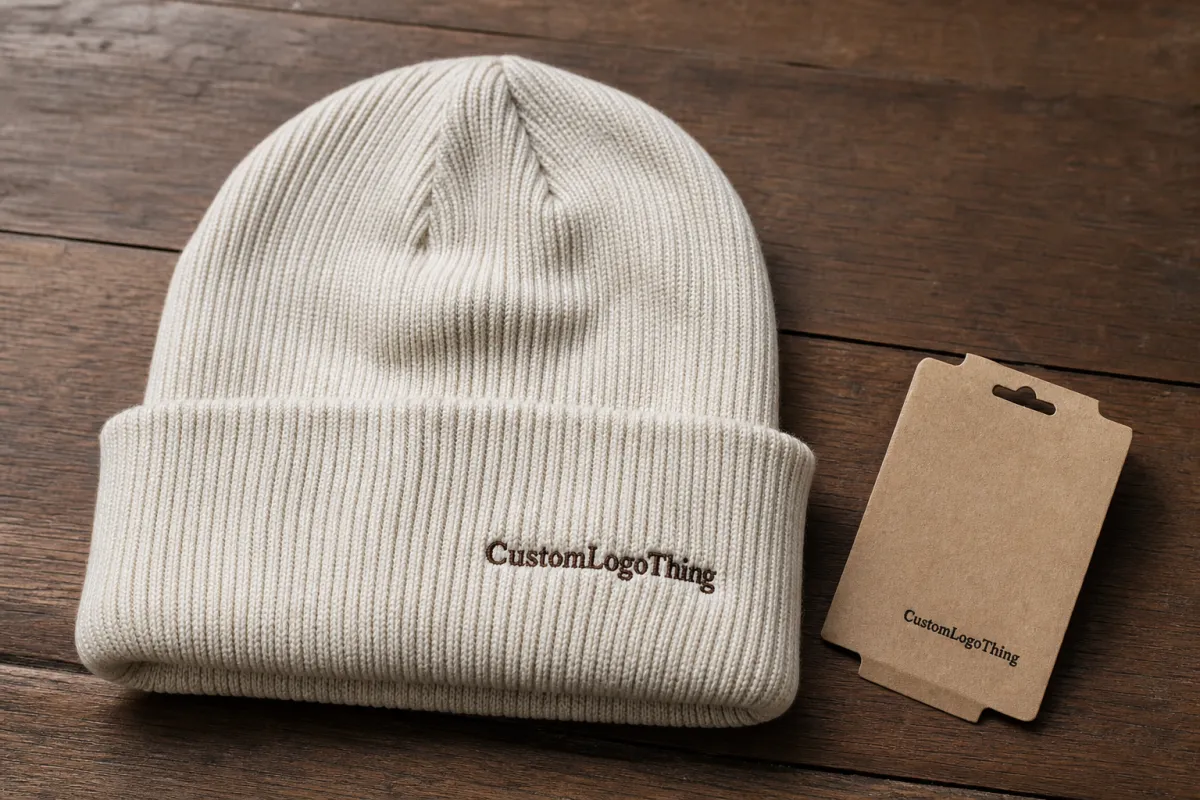
The cuff is the main branding zone. It gives logos a flatter, more readable surface than the rest of the knit body, so the mark stays visible when the beanie is worn low or under outerwear. For crews, volunteers, and event staff, that visibility matters more than subtle decoration on the crown.
Cuffed beanies are also easier to issue across mixed head sizes than fitted hats. That reduces the chance of unused stock and makes distribution faster. For school groups, field teams, and campus programs, the one-size approach usually saves time and avoids a size-run problem.
From a budget standpoint, these hats sit in a useful middle ground. They feel more substantial than a disposable promo item, but they are still affordable enough for volume. In many programs, the wear rate per dollar is better than with low-use giveaways.
Material choice affects both cost and feel. Acrylic and acrylic-polyester blends are common because they are warm, economical, and repeatable across runs. Wool blends usually cost more and can feel better in cold weather, but they may also feel rougher against skin if the knit is loose. That tradeoff is worth checking before approval.
For recurring orders, the biggest advantage is consistency. A school store, retail line, or staff uniform program can reorder the same silhouette and decoration without rebuilding the product from scratch. That makes planning easier when the beanie is part of a larger branded system.
Decoration details that affect fit and shelf appeal
Decoration changes how the hat performs in use, not just how it looks in a proof. A tighter knit usually gives cleaner embroidery and less distortion around patches. A looser knit can feel softer and more casual, but it also creates more movement in the decorated area.
Embroidery works well for simple logos, short text, and clean brand marks. It is durable and easy to approve. Woven patches are better for fine lines, small type, or color transitions that would lose clarity in thread. Leather-like patches create a more premium retail feel, while woven labels are useful when branding needs to stay subtle.
Cuff height is one of the most overlooked variables. A short cuff reduces the usable decoration area and can crowd the logo. A taller cuff improves readability on shelves and in photos, but it changes the balance of the hat. The proof should show the artwork at actual size, not as a floating icon on a blank template.
Color choice also affects sell-through and reorders. Solid colors are safest for staff programs and large giveaways because they match easily and are simpler to replace later. Heathered or melange yarns feel more retail-ready, but they can soften logo contrast. Two-tone styles work best when the brand story calls for them, not just because they look different.
Packaging can change how the item is perceived. A simple fold and polybag is efficient for distribution. Header cards, belly bands, and retail inserts make the product feel intentional and shelf-ready. If the program also needs support for Custom Packaging Products, it is better to align the apparel and packaging spec at the same time.
Specifications buyers should lock before approval
Before a quote is approved, the spec should be pinned down. The key fields are fiber blend, cuff height, total length, knit gauge, logo placement, decoration size, and packaging method. A small change in cuff height can alter the usable branding area enough to affect legibility, especially on dark yarns or detailed art.
Most bulk orders are best handled as one-size-fits-most, but not every audience wants the same feel. Field crews usually want warmth, stretch, and low fuss. Retail buyers care more about thickness, finish, and how the hat holds shape after repeated wear. The clearer the end use, the easier it is to match the spec to the job.
A short checklist helps reduce revisions:
- Main yarn color and any accent color
- Cuff height and total beanie height
- Fiber blend and knit gauge
- Logo file type, ideally vector art
- Decoration method and finish
- Packaging and labeling needs
- Target delivery date and ship-to location
Brand standards should be mentioned early. National programs often need tighter color control than a local event order, and that affects both cost and risk. A close visual match may be fine for a volunteer group, while a retail line may need a narrower tolerance. Those are different jobs, even if the hat looks similar.
If the beanies are part of a larger presentation system, say so before artwork is finalized. Inserts, care cards, barcode stickers, and carton labeling all add pack-out steps. FSC-certified paper is a sensible reference for printed inserts or cards, and the standard is easy to verify through FSC. For shipment durability, ISTA testing is a useful benchmark when cartons need to protect folded goods and decorated surfaces in transit.
Pricing, MOQ, and unit cost drivers for bulk orders
Price depends on more than quantity. Decoration method, yarn choice, number of knit colors, packaging, and any custom labeling all move the number. A stock acrylic beanie with embroidery is usually the lowest-cost route. A fully custom knit with multiple yarn colors and retail-ready presentation sits higher.
MOQ depends on construction. A stock base with embroidery or a patch often starts lower because setup is lighter. Fully custom knit patterns usually require a higher minimum because loom setup and color changes are more complex. Buyers should ask for tiered pricing rather than a single flat quote. A jump from 250 units to 500 units can reduce the per-unit cost enough to justify the larger run.
Here is a practical planning view for bulk orders:
| Option | Typical best use | Estimated unit cost at 300-500 pcs | Cost driver |
|---|---|---|---|
| Stock knit + embroidery | Staff, events, giveaways | $3.25-$5.25 | Lower setup, simpler decoration |
| Stock knit + woven patch | Retail merch, premium uniforms | $3.75-$6.50 | Patch production and placement |
| Custom knit pattern | Branded collections, retail drops | $4.50-$8.50 | Yarn colors, stitch complexity, setup |
| Custom knit + label + packaging | Gift sets, shelf-ready programs | $5.00-$9.50 | Decoration, labeling, pack-out |
Those numbers are directional, not a promise. Landed cost also includes proofing, freight, and any special pack-out request. A low headline price can become expensive once revisions, upgraded packaging, or shipping are added, so compare quotes on the same scope.
Volume matters, but use case matters too. Larger runs usually work well for seasonal staff orders because inventory clears during the season and unit cost drops. Retail buyers need margin after product presentation, freight, and shrink risk are included. A small change in decoration choice can change the whole economics of the program.
Process and timeline from proof to shipment
The production path should be predictable. It usually starts with inquiry and spec confirmation, moves to a digital proof, then to sample or mockup approval, production, inspection, and shipment. Each step has a job, and if one is rushed the error usually shows up later, where it is harder to fix.
Timing is most useful when it is tied to actual inputs. Spec confirmation can happen in a day if the buyer already has quantity, artwork, and color direction. Proofing often takes 1-2 business days. Production commonly runs 10-15 business days after approval for standard orders, while custom yarn sourcing or complex knit patterns can add time. Transit depends on destination and shipping method.
Fast orders usually come from buyers who send vector artwork, confirm colors early, and approve proofs without a long chain of edits. Delays usually come from missing artwork, unclear color expectations, and uncertainty about decoration placement. Those are common friction points in knit production, not unusual problems.
After approval, the run is scheduled, decoration is checked, and the hats are packed for shipment. If the order includes inserts, barcode labels, or custom printed boxes, the pack-out step becomes more involved. That should be visible in the schedule before production begins, not discovered after cartons are packed.
The most honest answer to “How fast can we get them?” is that it depends on artwork, yarn, packing requirements, and approval speed. A supplier that explains those variables clearly is usually more dependable than one that promises speed without describing the limits.
Risk controls that matter on real orders
The best orders are usually the ones with fewer surprises. Pre-production proofing, color confirmation, decoration checks, and consistent sizing all reduce the chance that the finished lot drifts away from the approved sample. On knit headwear, small errors are visible. A logo placed too low or a yarn shade that shifts slightly can make a batch feel off.
Quality control should cover more than a quick glance. The batch needs checks for stitch consistency, logo alignment, packaging accuracy, and visible snagging or distortion. In colder weather, buyers notice texture quickly. A beanie that feels scratchy, uneven, or flimsy is less likely to get worn often, which weakens the point of the purchase.
Receiving also matters. Cartons that arrive crushed can flatten the fold, weaken the presentation, and force re-folding after delivery. That is one reason shipping method and carton spec should be discussed with the same care as color and decoration. A small freight savings is not much of a win if the product needs extra handling at arrival.
Reorder support matters too. If a team expands or a seasonal line sells through, the ability to repeat the same spec saves time and protects consistency. Good documentation helps here. The buyer should not have to rebuild the order just to keep the same cuff height and logo placement on a second run.
How to build a clean quote request
A useful quote request is short, specific, and complete. Send the quantity, target delivery date, logo file, color preference, decoration method, and packaging needs in one place. If the order is for retail, staff, or a promotional event, say that directly. Those use cases do not produce the same spec and should not be priced as if they do.
Ask for a proof before approval so cuff placement, logo scale, and color balance can be checked at the actual size. That step catches most preventable issues and gives a better sense of how the beanie will read in photos, on racks, or on a job site.
For teams comparing bids, the real comparison is not just unit price. It is unit price plus setup, proofing, packaging, freight, and timing risk. The quote that looks modest on paper can become the most expensive once the order is fully landed, especially when custom knit work needs multiple colors or retail presentation.
For buyers comparing this category against other branded headwear or accessories, the same habits help across the board: lock the spec early, keep the decoration simple where possible, and make the delivery requirements visible before production begins. That approach saves more time than chasing a cheaper line item after the fact.
FAQ
What is the typical MOQ for custom cuffed knit beanies in bulk?
MOQ depends on whether the beanie uses a stock knit base or a fully custom pattern. Embroidered stock beanies usually allow lower entry quantities, while custom-knit styles often need a higher minimum because setup is more involved. If your order is near a threshold, ask for tiered pricing because a slightly larger run can sometimes lower the unit cost enough to justify it.
Which decoration method works best for custom cuffed knit beanies bulk orders?
Simple logos often work best with embroidery or a woven patch. Embroidery is durable and clean for text or basic marks. Patches handle fine detail better when the yarn texture would blur the artwork. For a more premium retail look, a woven label or leather-like patch can add polish without overcomplicating the hat.
Can I mix colors in one custom beanie order?
Yes, but color mixing depends on yarn availability and the minimum tied to each color. Keeping the same base style, cuff shape, and decoration method across the order helps control setup costs. If multiple colors matter, confirm them before proof approval so the quote reflects the real production path.
How long does production usually take after proof approval?
Standard production often takes 10-15 business days after approval, but that can change if the design uses custom yarn, a complex knit pattern, or special packaging. Shipping time is separate and depends on destination. Fast approvals and complete artwork usually shorten the schedule more than any other single factor.
What files should I send for a quote on custom cuffed knit beanies?
Send a vector logo file if possible, along with quantity, preferred colors, delivery deadline, and any packaging or labeling requirements. A high-resolution image can work for a preliminary quote, but vector art is better for proofing and decoration setup. The clearer the file, the fewer revisions usually needed.

