Custom embroidered Beanies Bulk Order is a practical buy because the item is compact, easy to distribute, and visible in real use. The decision still has consequences: a beanie can look polished and retail-ready, or it can look stiff, cramped, and hard to wear if the knit and embroidery do not match.
The key is to treat the purchase like a specification problem, not just a price check. Cuff width, logo size, thread contrast, and knit construction all affect whether the final hat reads cleanly. For buyers comparing options, the best order is the one that balances decoration quality, unit cost, and timeline without creating rework later.
Why a bulk beanie order can beat other winter merch
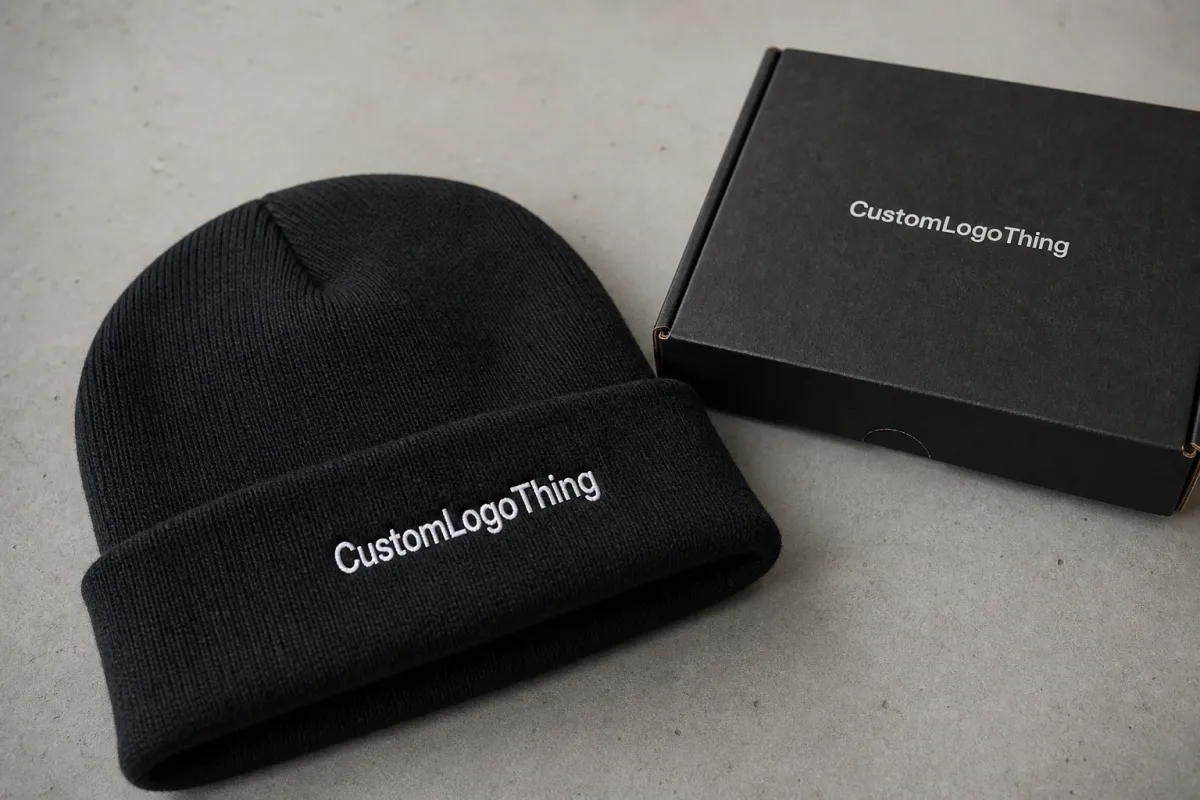
Beanies work well because one style fits many people and one carton holds a lot of units. That makes them easier to store and hand out than winter apparel with a full size matrix. For teams, schools, breweries, field crews, and retail buyers, the simpler logistics often matter as much as the decoration itself.
They also get worn in places where logos are visible: commutes, outdoor events, job sites, and stadium lines. A well-made beanie can create more repeated impressions than a low-cost item that stays in a desk drawer. If the embroidery is clean and the blank has enough structure, the hat feels closer to retail merchandise than a temporary giveaway.
A beanie is small on paper, but in practice it performs like a high-use branding item: simple to distribute, easy to wear, and visible in daily winter routines.
The operational upside shows up in receiving and replenishment too. A Custom Embroidered Beanies Bulk order is easier to count, sort, and restock than mixed-size apparel. That matters when the order supports employee gifting, event handouts, or seasonal retail. Buyers get fewer sorting errors and fewer leftover units in the wrong size.
Compared with other winter merch, beanies also tolerate moderate branding better. A small logo can still look intentional if the placement and scale are right. The item only becomes a weak buy when the decoration is forced onto the wrong style or when the fabric is too thin to support the stitch structure.
Embroidery placement, sizing, and knit details buyers can compare
Front cuff placement is the standard because it gives the cleanest read and the most stable surface. Side cuff embroidery works better for an icon, initials, or a secondary mark. Back cuff placement can make sense when the front needs to stay plain or when the goal is a more retail-style look.
Common placement choices
- Front cuff: strongest visibility and easiest to read.
- Side cuff: better for compact logos or subtle branding.
- Back cuff: useful when the front stays minimal.
- Centered fold-over: high impact, but sizing has to be exact.
The beanie style matters as much as the placement. Cuffed acrylic beanies usually give the most reliable embroidery surface for bulk orders. Ribbed knits can look sharp, but the texture can absorb thin lettering. Slouch styles drape more than they hold shape, so a large logo may buckle or sink into the fabric.
Logo size should be checked against the cuff, not just the mockup. Knit fabric is not a flat panel, and the available space is smaller than many first proofs suggest. Leave margin on both sides, avoid crowding the edge, and simplify any letters that are too delicate to survive stitching.
Thread color can change the result more than the artwork itself. Dark thread on a textured knit may disappear, while pale thread on a light beanie can lose definition. High contrast usually helps. Simple shapes and sturdy letterforms tend to survive embroidery better than gradients, hairline rules, or compressed slogans.
Some logos are better served by a woven patch or a simplified stitch file. That is not a downgrade; it is a material choice. Knit embroidery works best with moderate detail and bold shapes. If the design depends on tiny type or layered effects, a patch may hold up better over time.
Materials, stitch density, and construction specs that affect wear
The blank beanie has a bigger impact on the final result than many buyers expect. Acrylic is still the most common choice because it is consistent, warm enough for most use cases, and cost-effective at volume. Acrylic-spandex blends add recovery, which helps the cuff return to shape after repeated wear. Recycled yarns are also common in programs that need a sustainability claim.
Material choices buyers usually see
- Acrylic: dependable, cost-effective, and easy to source in volume.
- Acrylic-spandex blend: better stretch recovery and fit retention.
- Recycled yarn: useful for sustainability positioning, though stock can vary.
- Fleece-lined styles: warmer and softer for colder weather or premium resale.
Stitch density affects both appearance and comfort. Too little thread and the logo looks sparse. Too much and the embroidery can stiffen the cuff or pull the knit. For a simple logo, a stitch count in the rough range of 4,000 to 8,000 is common, though the actual number depends on size, detail, and color changes. The goal is readable coverage without turning the beanie into a rigid patch.
Construction details also matter. Single-layer styles are lighter and softer, but they offer less structure for embroidery. Double-layer beanies usually hold stitches better and often look more finished. Cuff height changes the available decoration area, seam placement affects comfort, and yarn weight changes warmth and hand feel. These specs directly influence how the hat wears.
For colder climates or outdoor crews, a fleece-lined beanie can justify the extra cost. It adds warmth and comfort, but it may also change how the embroidery sits on the front panel. For event merch or large distribution, a standard acrylic style often makes more sense because it balances price, repeatability, and decoration quality.
If the order will be packed into kits or retail units, carton strength and transit handling should be planned with the beanie spec. For shipping and pack-out guidance, ISTA testing standards are a useful reference. That becomes especially relevant in Wholesale Programs, where damage rates and count accuracy affect margin and schedule.
Pricing, MOQ, and what changes the quote
Pricing for a custom embroidered Beanies Bulk Order usually comes down to quantity, blank style, stitch count, logo complexity, and setup requirements. The beanie itself is only part of the number. Digitizing, proofing, thread matching, packaging, and rush handling can all move the quote, so the lowest unit price is not always the lowest total cost.
| Option | Typical range | Best fit | Notes |
|---|---|---|---|
| Standard cuffed acrylic beanie, one-color front embroidery | $4.50-$7.50 per unit at 250-500 pieces | Teams, school stores, field crews | Usually the most efficient setup and easiest to repeat |
| Premium knit or fleece-lined beanie, multi-color embroidery | $7.50-$12.00 per unit at 250-500 pieces | Retail, premium merch, higher perceived value | More thread changes and a heavier hand feel |
| Smaller run with simple logo | $8.00-$15.00 per unit at 24-72 pieces | Small teams, pilot launches, sample programs | Lower quantity usually means higher unit cost |
MOQ is worth asking about early because it changes the economics quickly. Stocked beanie bodies can sometimes support small runs, but the unit cost usually drops once the same setup is repeated across a true bulk quantity. Many buyers test 24 to 48 pieces first, then move to 100 to 250 after they see the actual hand feel and embroidery quality.
Color variety also affects pricing and fulfillment. If the order includes several beanie colors, confirm whether each shade is stocked in the needed quantity and whether thread changes are included. Mixed-color runs are common, but they can add handling steps and push out the timeline if the inventory is not already in place.
Packaging can add another layer of cost. If the beanies need to ship in custom printed boxes, branded sleeves, or bundled kits, the labor rises even when the embroidery does not change. A more useful question than “What is the unit price?” is “What work is included, and what will I still need to do after delivery?”
Production steps, proofing, and timeline to ship
Good production follows a fixed sequence: art review, digitizing, stitch proof, approval, bulk production, finishing, and packing. That structure keeps an order from drifting. The proof stage is the biggest checkpoint because even a small change in size or placement can alter how the stitch sits on the cuff.
What to check on the proof
- Placement: confirm the logo location on the actual beanie style.
- Scale: make sure the mark fits the cuff without crowding the edge.
- Thread color: compare it to the brand standard or approved chart.
- Spelling and spacing: check every character, especially in short logos.
Lead time depends on stock and decoration complexity. A simple logo on a stocked blank usually moves faster than an order with several colors, multiple placements, or special packing. Production time and shipping time are separate, so a buyer planning for a trade show or winter launch should confirm both parts before promising a delivery date internally.
Rush orders can work if the inventory is available, the artwork is ready, and the shipping method is realistic. The biggest delays usually come from unresolved art or missing stock, not from embroidery itself. It is better to slow down briefly at proof approval than to discover the issue after production has started.
For winter kits, pack-out should be settled before work begins. If the beanies are going into larger branded drops with inserts, flyers, or Custom Packaging Products, the carton count and label plan need to match the receiving process. That keeps the warehouse from reworking the shipment later.
What a dependable supplier controls on repeat orders
Repeat orders show whether the process was documented well. A dependable supplier keeps the logo scale, thread colors, blank color, and placement notes intact so the second batch matches the first. That matters for retail replenishment, uniforms, and seasonal programs that need continuity.
What should be documented
- Digitized file: the stitch program used for the approved logo.
- Placement spec: exact distance from cuff edge and center line.
- Thread callout: approved colors or nearest matching thread codes.
- Blank style: body type, knit profile, and color name.
A strong supplier also calls out problems before production begins. If the artwork is too detailed, that should be said clearly. If a beanie color may vary by dye lot, the buyer should know that before approval. If the timeline depends on inventory arriving first, the estimate should reflect that. Buyers need constraints and tradeoffs, not a polished sales pitch.
That documentation helps more than the first run. Reorder notes reduce back-and-forth, protect quality, and make it possible to repeat the order without rebuilding it from scratch. It also keeps purchasing organized when several departments are involved.
The best suppliers make the process legible. They can explain why one knit is better than another, where the embroidery should sit, how much detail the fabric can support, and what the packing method will look like before shipment. That kind of control makes a custom embroidered beanies bulk order easier to approve, easier to receive, and easier to reorder.
What is the usual minimum for a custom embroidered beanies bulk order?
MOQ depends on the blank style, decoration setup, and what is stocked at the time. Many buyers start with a small run and scale up after the first proof is approved. If the order includes several colors or multiple logo locations, the minimum usually rises because each variation adds setup work.
How long does a bulk embroidered beanie order usually take?
The timeline includes art review, digitizing, proof approval, production, and shipping, so the total depends on how quickly the proof is signed off. Simple logos on stocked beanies usually move faster than custom color programs or special packaging. Rush timing can work, but stock and artwork readiness should be confirmed first.
What logo file works best for beanie embroidery?
A vector file such as AI, EPS, or PDF is the best starting point because it scales cleanly for digitizing. Thin lines, tiny text, and heavy gradients should be simplified so the design reads well on knit fabric. If only a raster file is available, a high-resolution version can still work, but the artwork may need cleanup.
Can I order mixed colors in the same bulk beanie run?
Yes, mixed color runs are common when the beanie style is available in several shades and the logo setup stays the same. Color mixing can affect pricing and lead time if certain shades need to be sourced separately or if inventory is tight. Confirm the color split before production so the packout matches the distribution plan.
What should I confirm before approving the proof?
Check logo size, placement, thread color, spelling, and the relationship between the embroidery and the cuff edge. Make sure the proof reflects the correct beanie style, because a cuffed beanie and a slouch beanie can change the look of the same artwork. Once the proof is approved, changes can add cost and delay the schedule.

