A Custom Dad Hats bulk order is less about the hat itself and more about controlling the variables around it. One blank can sit softer than another. Stitch tension can shift the logo slightly. Thread, patch material, and cap wash all affect how the final run reads in person.
Buying in bulk helps keep those variables fixed. You approve one proof, one material spec, and one production path, which is usually the simplest way to keep a branded cap order consistent across a team, event, or retail release.
Dad hats are comfortable and easy to brand, but the low-profile crown and curved brim make artwork placement important. The right spec balances comfort, decoration method, and cost without forcing the logo into a shape the cap cannot support.
Why bulk dad hats beat piecemeal merch buys
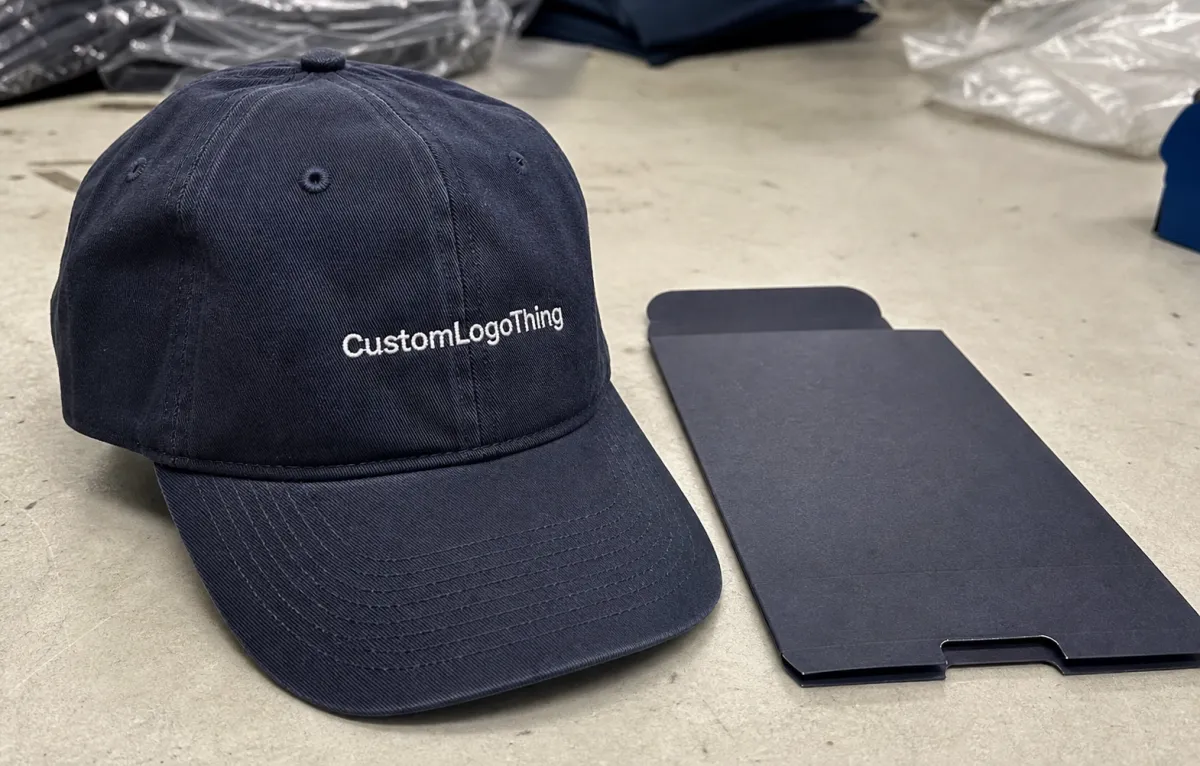
Piecemeal buying creates variation quickly. One batch may use a different blank, a different wash, or a different embroidery setting, and the hats start to look like separate products. A bulk run reduces that drift by keeping the materials and decoration settings fixed.
It also makes approval easier. One proof is simpler to judge than several near-identical options, especially when the differences are small. That matters because the small details are what make branded merchandise feel deliberate instead of improvised.
The economics are also cleaner. Setup costs such as digitizing, mockups, patch cutting, and label prep are easier to absorb across 100, 250, or 500 hats than on a short run. Once those costs are spread out, the unit price usually becomes more efficient.
Dad hats are deceptively technical. The soft front panel moves under stitching pressure, the low crown compresses artwork vertically, and the brim curve changes how the logo reads from the side. If the design is too wide, too high, or too small, the cap can look awkward even when the embroidery is clean.
Bulk production works especially well for staff uniforms, campus groups, sponsor kits, and seasonal merch because the repeatable spec matters as much as the cap itself.
Dad hat construction, materials, and decoration options
A classic dad hat is unstructured, low-profile, and adjustable, usually with a curved brim and a soft front panel. That construction makes it comfortable, but it also limits how much artwork the crown can hold cleanly. The design needs to fit the cap surface, not fight it.
Fabric choice affects appearance, stitch quality, and consistency. Cotton twill is the most dependable option for a bulk run because it is stable and easy to embroider. Brushed cotton and garment-washed finishes create a softer look, but the surface can vary slightly from cap to cap. Blends can also work well, depending on the fiber mix and finishing process.
Decoration method changes both cost and visual impact. Flat embroidery is the safest choice for initials, short text, and simple logos with strong outlines. 3D puff embroidery can work for bold lettering or simple marks, but it needs thick forms and enough stitch density to hold shape. Woven patches are often better when the logo has tiny text, layered detail, or more color than thread can reproduce cleanly. Leatherette patches add a more retail-ready finish.
Placement matters as much as the decoration method. A logo that looks fine at 3 inches wide on a screen may need to shrink to 2.25 or 2.5 inches on a real cap so it clears the seam and sits naturally on the crown. On a soft panel, a little too much size can crowd the front and a little too little can disappear into the fabric.
| Decoration method | Best use | Typical cost impact | Buyer notes |
|---|---|---|---|
| Flat embroidery | Clean logos, initials, short text | Lowest | Best for simple shapes and strong contrast |
| 3D puff embroidery | Bold letters and simple marks | Moderate | Needs thicker artwork and enough stitch density |
| Woven patch | Detailed logos and small text | Moderate | Often cleaner than stitching for fine detail |
| Leatherette patch | Premium retail look | Moderate to higher | Strong on dark caps and simple branding |
For compact artwork, direct embroidery usually gives the best balance of cost and durability. When the logo includes thin script, gradients, shadows, or tiny interior spaces, a patch often protects the design from becoming muddy. The goal is not the flashiest option. It is the one that survives the cap surface without distortion.
Fit, sizing, and artwork specs that prevent rework
One size fits most, but that does not remove the need to check fit. Dad hats usually close with a metal buckle, fabric strap, or snapback-style adjustment, and each closure changes how the cap sits on the head. Buyers should think about headroom, sweatband comfort, and how much adjustment the closure really provides.
The measurements that matter most are crown depth, brim curve, logo width, stitch count, and placement from the center front. On low-profile caps, embroidery usually sits just above the brim seam. Too high and the art floats; too low and it crowds the seam and bends with the curve.
Artwork prep prevents most rework before it starts. Vector files are still the standard because they scale cleanly and let the digitizing team map stitch paths with less guesswork. Spot-color references help match thread, while patch artwork should show clear borders and manageable negative space. If the design includes a gradient, fine serif type, or very thin linework, it should be reviewed before proof approval.
Common mistakes show up fast:
- Logo placed too high on the crown, leaving empty space above the brim.
- Text sized too small to stitch cleanly on a soft panel.
- Color names listed loosely without a physical reference or thread match.
- Gradient artwork sent as if thread can reproduce it pixel for pixel.
- Patch art with details too fine for the chosen patch size.
A short preflight list keeps approval moving: send the vector file, confirm the hat color, choose the decoration method, and ask for a proof that shows the logo at actual size on the correct cap style. That one review step saves time on a large run because one mistake can affect the entire order.
Custom dad hats bulk order pricing, MOQ, and unit cost
Pricing usually comes down to quantity, blank quality, decoration complexity, thread count, and any added finish like custom labels or individual packaging. A basic bulk embroidered run on a stocked blank is a very different job from a garment-washed cap with a woven patch, inside label, and retail hangtag.
MOQ depends on the decoration path and on whether the order uses stock blanks or custom-built components. Simple embroidery on stocked caps often starts lower because the setup is lighter and the materials are easier to source. Patch-heavy jobs, specialty trims, and unusual cap colors usually push the minimum higher.
Useful planning ranges:
- 100 to 250 pieces: simple embroidered dad hats often land around $6 to $12 per unit before shipping, depending on blank quality and stitch count.
- 500 pieces or more: the same style can often move closer to $4.50 to $9 per unit as setup costs spread out.
- Patch or custom label upgrades: expect roughly $1 to $4 extra per cap, depending on the material and complexity.
These numbers move with the market, the season, and the supply chain. A useful quote should spell out what is included: cap style, decoration method, art prep fee if there is one, sample policy, lead time, and shipping assumptions. If a quote only gives a unit price, it is not enough to compare suppliers fairly.
The easiest way to keep cost steady is to keep the first run disciplined. Use one primary logo placement, keep the thread count manageable, and avoid adding a second decoration location unless there is a clear branding reason. Secondary placements can come later, after the main spec has already proven itself.
Process and timeline: artwork approval to shipment
A clean production run usually follows the same sequence: Request a Quote, send artwork, confirm materials, approve the proof or sample, start production, inspect the run, and ship. The order moves faster when the artwork arrives in the right format and the buyer answers proof questions quickly. The delay is usually in approval, not sewing.
Simple embroidered stock orders often move faster than patch builds or custom label programs. A straightforward run can sometimes ship in 7 to 15 business days after approval. Patch-heavy or multi-location decoration can take 2 to 4 weeks, especially if materials need to be sourced first. Add special folding, individual bagging, or retail packaging and the timeline stretches again.
Three habits save the most time:
- Send vector artwork up front instead of a flattened image.
- Confirm thread or patch colors quickly instead of leaving the proof open.
- Review the mockup against the actual cap shape, not just the logo file.
Shipping should be planned with the same discipline. If the hats are going into retail packaging, a sponsorship kit, or a product launch, the carton plan should be set before the run finishes. Brim shape and cap volume matter in transit, so packaging should protect the front panel instead of crushing it flat. For paper inserts, hangtags, or sleeves, FSC-certified board is a practical material choice for printed components: FSC. For transit testing, ISTA standards provide a useful framework for drop, vibration, and compression checks.
Deadlines should be built around approval, not just the purchase order date. A trade show, team reveal, or retail launch needs buffer for sample changes, shipping time, and receiving.
How we keep repeat runs consistent and easy to reorder
Repeatability is what buyers remember after the first order ships. Saved artwork, fixed color references, documented placement notes, and approved decoration settings make later runs easier to duplicate. The second order should feel like a continuation, not a new experiment with the same logo.
That matters most for organizations that reorder in waves or for brands that restock seasonally. A staff program may need 200 caps now and 150 later. A merch line may sell through faster than expected and require a quick refill. If the stitch density changes or the cap wash shifts from one batch to the next, customers notice.
The most useful quality checks are practical. Inspect stitch alignment on the front panel. Confirm the brim curve. Check the closure hardware. Count the cartons before they leave the floor. If the caps are going out with other branded materials, consistency across the whole set matters even more because the buyer sees every component together.
One approved logo, one color standard, one placement map: that is what keeps the line stable. When the hats sit beside other branded materials, the collection works because the details agree with each other. If the hat feels like a separate decision, the whole set loses some of its coherence.
The payoff is simple: reorders move faster, communication gets clearer, and the product line looks controlled instead of improvised.
Next steps for a clean quote and faster production
The fastest quote usually starts with four things: the logo file, preferred hat color, quantity range, and target in-hand date. Add the decoration method if you already know it, because embroidery, patching, and label work price differently. A clear brief reduces revisions and gets a custom run moving without unnecessary guesswork.
Before pricing starts, make a few decisions. Choose between direct embroidery and a patch. Decide whether the cap should be standard twill or garment-washed. Confirm whether the run needs retail-ready packaging or basic bulk packing. Those choices affect both cost and lead time, and they are easier to settle before the proof stage than after it.
It also helps to judge the art against the actual cap surface, not against the screen. Thin lines, tiny type, and gradients often need simplification before they will reproduce cleanly on a soft front panel. If the logo may need adjustment, say so early so the proof can move toward something that stitches better and reads more clearly.
Before ordering, confirm the fit, approve the proof, verify the shipping address, and keep one approved sample for future reference. That sample becomes the most useful document in the next reorder cycle, especially for teams and event programs that need the same look across multiple shipments.
FAQs
What is the minimum for a custom dad hats bulk order?
MOQ depends on the decoration method and whether the hats are stocked blanks or custom-built. Simple embroidery usually starts lower than patch-heavy or custom label orders because the setup is lighter. The quote should confirm the minimum before artwork is finalized.
How much does custom dad hats bulk order pricing change by quantity?
Unit cost generally falls as quantity rises because setup and production labor are spread across more hats. The biggest savings usually come when the design stays simple and the cap color stays the same across the run. Complex decoration and special packaging reduce some of that volume discount.
Which decoration method is best for a custom dad hats bulk order?
Flat embroidery works well for clean logos with strong lines and limited detail. Patches are better when the artwork is detailed, textured, or needs a more premium finish. The right choice depends on logo size, stitchability, and the look you want on the front panel.
How long does production usually take for bulk dad hats?
Turnaround depends on decoration complexity, sample approval speed, and whether materials are already in stock. Plain embroidery orders usually move faster than patch applications or custom-trim builds. Fast approvals and clean artwork are the easiest ways to shorten lead time.
What artwork should I send for a bulk dad hat quote?
Send a vector file when possible, plus any brand color references and the preferred hat color. If the logo has small text or thin lines, include a larger version so the stitch team can review it properly. Also share the quantity target and deadline so the quote reflects the real production plan.

