Guests pick up on staff presentation fast, and headwear is usually part of that first impression. Custom Dad Hats for restaurant teams help a host stand, patio, bar, or counter line feel coordinated without looking stiff. The curved brim and soft crown read relaxed, which tends to fit hospitality better than a rigid athletic cap.
There is a practical side to it too. A good hat gives the logo a clear place to live, cuts down on the random mix of personal caps, and makes the floor look more put together when service gets busy. When the order is handled well, the result looks like part of the brand instead of a promo giveaway.
For buyers, the real issue is not whether the hat looks good in a mockup. It is whether the blank, decoration, price, and lead time all make sense for daily use. That is what turns a useful uniform piece into something the team actually wears.
Custom dad hats for restaurant teams: what guests notice first
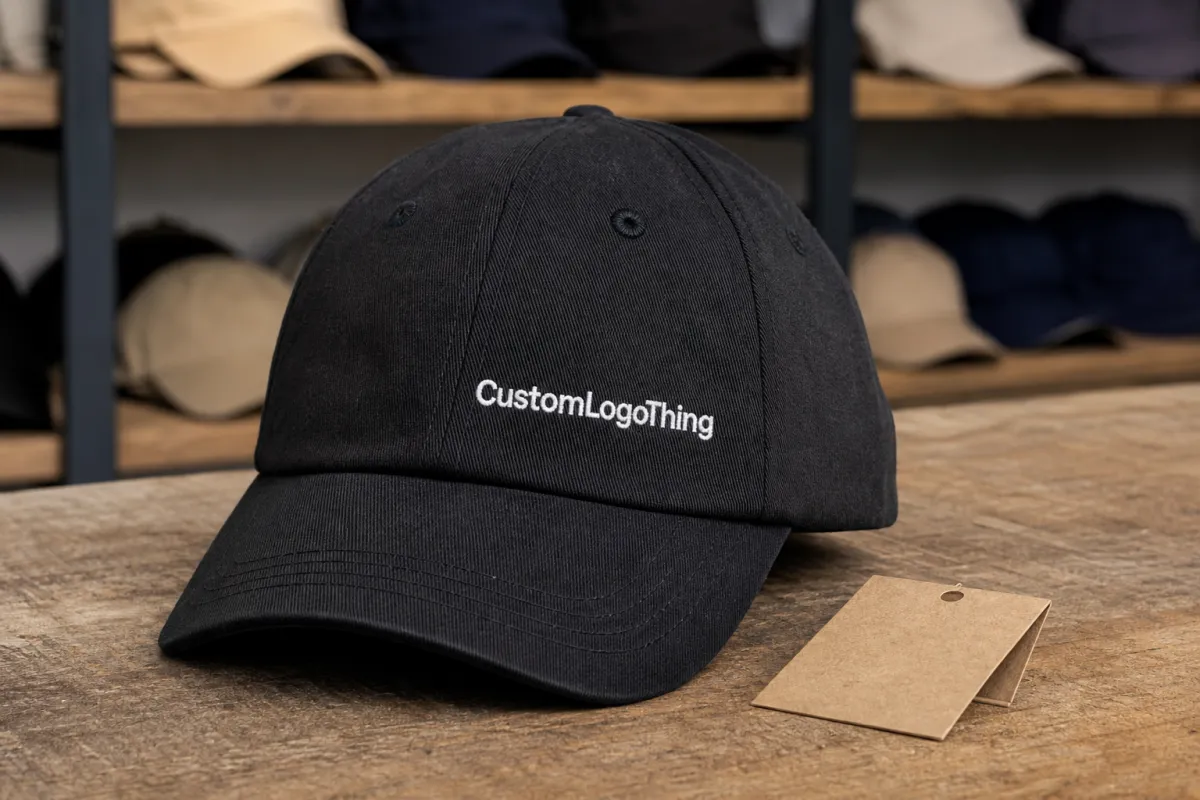
Most guests do not study uniforms. They notice whether the team looks pulled together, then move on. A dad hat works because it feels easy and familiar rather than corporate or overly styled.
This style fits the people guests actually see: hosts, servers, bartenders, barbacks, coffee teams, catering crews, and managers moving between spaces. Low-profile crowns are usually the safest bet because they sit closer to the head and avoid the bulky look that can fight against a warm brand.
Comfort matters more than a lot of buyers expect. A cap that looks great in a proof can turn into a nuisance after a long shift. Staff with hair tied up, people moving from kitchen heat to patio sun, and anyone under bright lights need a fit that stays put without digging in. Adjustable closures still make the most sense, and a sturdy strap-back or metal slide usually lasts longer than a cheap plastic buckle.
If the same hat will be used across several roles or locations, keep the spec simple. One style, one placement, one approved sheet. Uniform systems work best when they are easy to repeat and easy to reorder.
"If the hat still looks good under dining-room lighting, it usually survives everywhere else."
How the branding process works from mockup to delivery
The smoothest hat orders follow the same basic path: choose the blank, send the logo, confirm colors, review the proof, approve production. Delays usually come from skipped approvals, blurry art files, or last-minute changes after the quote is already out.
Artwork quality is the first thing worth checking. A vector file gives you the best shot at sharp embroidery or a clean patch edge. A PNG can work as a reference, but it is not the file you want to rely on for production. Tiny text, thin outlines, and dense details need to be checked against the decoration method, not just the screen image. What looks fine on a monitor can turn muddy on fabric.
Lead time depends on the blank, the decoration method, the stitch count, and whether the order needs split shipping or store labeling. Simple embroidery on in-stock blanks is usually the fastest route. Patch builds take longer because they add another production step and another proof cycle.
For a straightforward order, a realistic turnaround is often 10-15 business days after proof approval. It can stretch if the blank is out of stock, the artwork needs cleanup, or the order has multiple shipping destinations. Anyone working toward a fixed launch date should ask for the timeline in writing and leave a little room. Rush service exists, but it rarely stays cheap.
Shipping deserves its own check. Multi-location groups should ask how the hats are packed, whether cartons are tested for transit damage, and whether the supplier can keep store bundles intact. The ISTA shipping test standards are a useful reference if a vendor says the cartons are drop-tested or distribution-ready. It is a small detail, but it saves bent bills and flattened boxes.
One person should approve the proof. A committee can help with brand direction, but it usually slows down thread color decisions. The more people involved, the more likely the order sits while everyone debates a shade nobody will notice later.
Pricing, MOQ, and unit cost: what restaurants should expect
Price usually comes down to four things: the blank quality, the decoration method, the quantity ordered, and whether the artwork needs setup work. If a quote looks too low, check what is missing. Setup, shipping, digitizing, and rush charges often show up later if they are not listed up front.
For restaurant buyers, broad ranges are easier to use than vague promises. At moderate quantities, embroidered dad hats often land around $9-$18 per unit, depending on the blank and stitch complexity. Woven patches usually run $12-$22 per unit. Leather or rubber patches can land higher, often $14-$28 per unit, especially when the goal is a more polished front-of-house look. Setup fees are commonly in the $30-$85 range, though some suppliers roll them into the unit price.
MOQ is the other big variable. Many suppliers will not produce a tiny run because the setup time is not worth it. A common minimum is 24-48 pieces. For restaurant groups, ordering a little above current headcount usually works better than matching staffing exactly. People leave, hats get stained, and new hires show up before the first reorder.
| Option | Typical unit range | Best for | Tradeoff |
|---|---|---|---|
| Direct embroidery | $9-$18 | Simple logos, quicker production | Less detail on tiny text |
| Woven patch | $12-$22 | Sharper detail, cleaner retail feel | Usually adds setup and lead time |
| Leather or rubber patch | $14-$28 | Premium branding, front-of-house teams | Can feel too styled for casual concepts |
Ask for pricing that separates the blank, decoration, setup, shipping, and any special labeling. That makes comparison possible instead of fuzzy. It also helps if the hats are part of a larger opening kit or packaging order, because consistency is easier when every line item is visible.
If your buying team cares about sourcing, ask what the blank is made from and whether the shipping cartons use recycled or FSC-certified paper where relevant. The FSC-certified paper sourcing standard is especially useful for multi-location rollouts that want the packaging side to feel as intentional as the product itself.
Best materials and decoration methods for sweaty shifts
The restaurant floor is rough on hats. Heat, steam, sun, grease, and long service windows wear out cheap materials fast. That is why the blank matters as much as the logo. Cotton twill feels familiar and wears well. Washed chino twill gives a more relaxed look. Performance blends handle moisture better and dry faster, which helps when hats are worn every day.
Structure changes how the cap reads on different heads. Unstructured crowns and low-profile shapes usually fit more naturally across a mixed staff. They feel less fussy than high-crown styles and usually look better with hospitality uniforms. The aim is not fashion for its own sake; it is a hat people will actually keep on through service.
Decoration should match both the logo and the environment. Direct embroidery is the most durable and the safest default for many restaurants. It handles simple shapes well, looks clean, and holds up through regular wear. Patch decoration makes sense when the logo needs more detail or when the brand wants a sharper, more retail-style finish. Leather and rubber patches bring more presence, but they can feel too dressed up for casual concepts.
Color choice matters too. Neutral blanks make the logo easier to read and stay cleaner visually on a busy floor. Black, navy, stone, olive, and washed charcoal are the most forgiving options, especially for kitchens and bars where spills happen. If the brand leans brighter, keep the hat color a step back so the logo still has room to breathe.
For hot climates or outdoor service, ventilation helps. Some styles use mesh panels or lighter materials, but those choices should match the brand instead of chasing a trend. A breathable cap is useful only if the team actually wants to wear it.

