Why custom daycare labels matter more than most parents expect
Custom daycare labels are not a decorative extra. They keep clothing, bottles, lunch gear, blankets, shoes, and backup outfits from disappearing into the lost-and-found cycle that comes with busy classrooms.
A missing sweater is annoying. A bottle swap or mislabeled snack container creates actual work for parents and staff. Clear labels reduce those mistakes, save time at drop-off and pick-up, and make it easier for caregivers to return the right item to the right child.
The need changes by age. Infants usually need bottle labels, milk bag labels, and formula container labels. Toddlers need clothing labels, shoe labels, and tags that can survive laundry and rough handling. Preschoolers usually need a mix of labels for jackets, lunch gear, backpacks, and sports items.
The format matters more than the design. A label that looks good but fails on the wrong surface is wasted money. A plain label that survives washing, wiping, and daily handling is doing the job.
How custom daycare labels work on clothing and gear
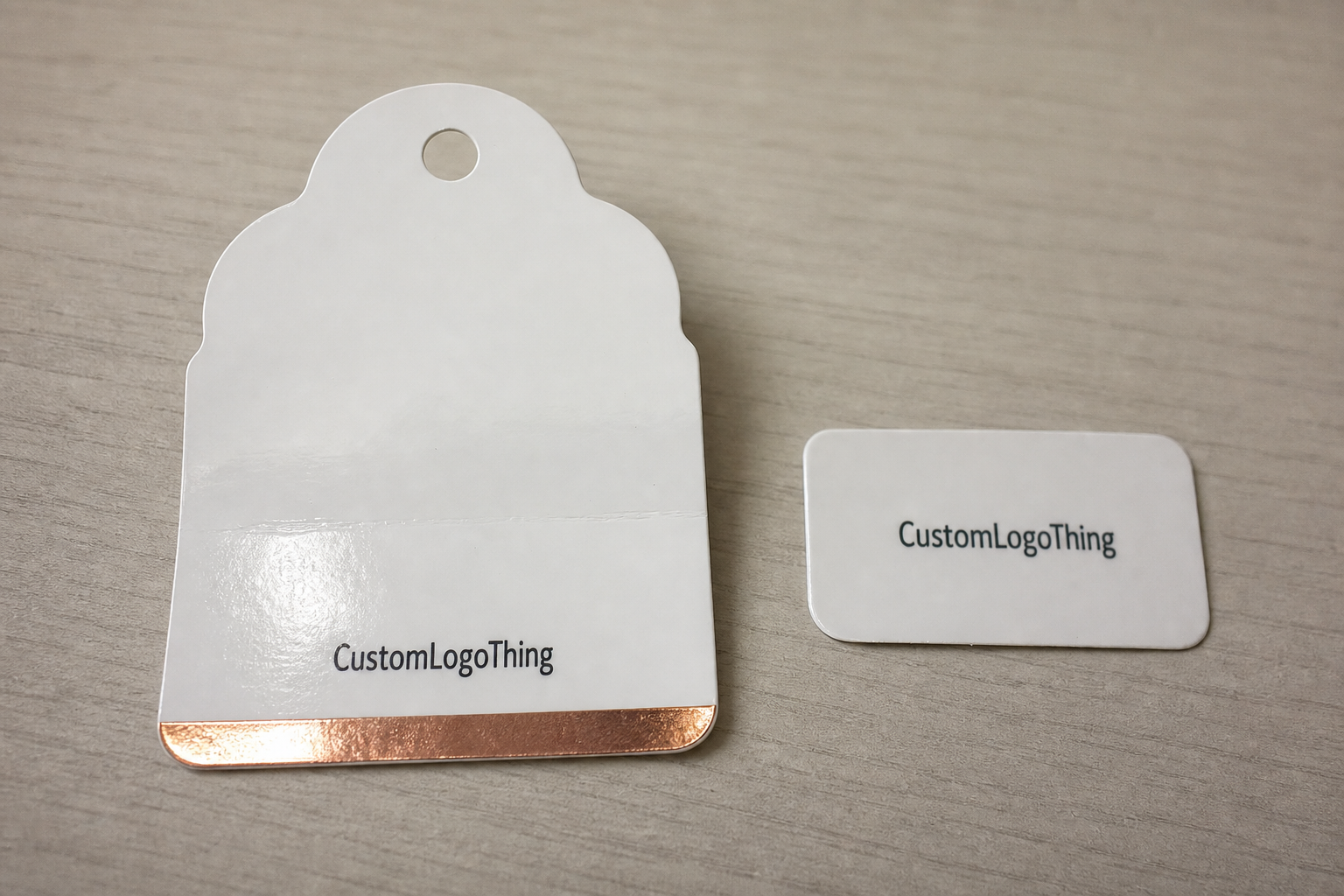
There are four common formats to understand before ordering. Iron-on clothing labels use heat and pressure to bond to fabric. Waterproof adhesive labels stick to smooth, non-porous surfaces like plastic, glass, coated metal, and stainless steel. Tag-style labels attach mechanically to items that should not get adhesive directly on them. Temporary hang tags can help for short-term use, but they are not a durable daycare solution.
Iron-on labels are usually the best option for clothes because they hold up to repeated wash cycles better than standard stickers. Adhesive labels are better for bottles, lunch boxes, sippy cups, food containers, and storage bins, provided the surface is clean, flat, and not constantly flexing.
Surface type matters. Polyester behaves differently from cotton. Silicone is a difficult surface for many adhesives. Curved bottle walls, ribbed lids, and fuzzy fabrics all create failure points. If the item is textured or highly curved, expect reduced lifespan unless the product is specifically built for that application.
Most orders use a name, room name, phone number, allergy note, icon, or a backup contact detail. For daycare, the label only needs to make the item identifiable at a glance. If staff has to decode it, the label is already too complicated.
There is no reason to make one product handle every job. A better setup is usually a small system: iron-on Labels for Clothing, adhesive labels for hard goods, and specialty tags for the items that do not fit either category. That is the same logic behind good Custom Labels & Tags, and it usually works better than trying to force one generic format everywhere.
Key factors that affect label quality, durability, and fit
Material choice is the first factor that separates a label that lasts from one that peels early. Polyester is common for fabric labels because it prints cleanly and tolerates laundering. Vinyl and similar synthetic films are common for waterproof adhesive labels because they resist moisture and wiping. Thermal transfer printing can also be very durable when the ribbon and stock are matched correctly.
The second factor is the surface. Fabric, nylon, polyester blends, stainless steel, polypropylene, glass, and coated containers all behave differently. A smooth lunch container is straightforward. A fleece blanket or silicone snack cup is not.
Size is another place where orders go wrong. Tiny labels fit almost anywhere, but tiny text becomes hard to read quickly. For most daycare gear, a label around 1 to 2 inches wide is easier to read without handling the item. If the label needs more information, split it across lines or use a secondary tag instead of shrinking the type until it becomes useless.
Contrast matters as much as size. Dark items need light text or a light background. Light items need readable contrast, not a pale color that disappears under indoor lighting. Icons can help younger children recognize their belongings and help staff sort similar items faster.
Comfort and safety are not side notes. Clothing labels should sit flat, avoid scratchy edges, and resist lifting or fraying. On soft garments, smooth heat-transfer labels or soft woven-style labels are usually more practical than anything with a rigid edge. On bottles and lunch gear, the real question is whether the adhesive stays put without leaving residue when removed.
Quality control also matters. Good production checks include cut size, alignment, ink density, and adhesive consistency. A crooked edge or off-center print may still be usable, but it raises the chance of failure. That is the kind of issue better caught before shipping.
For buyers who care about sourcing or standards, look at material claims rather than marketing language. If durability testing matters, the ISTA framework is more useful than vague toughness claims. If paper sourcing matters, FSC certification is a real signal that the paper chain was checked.
Pricing and what drives unit cost
Pricing usually depends on material, print method, label size, quantity, finishing, and artwork setup. The quote is not just for the printed label. It also includes the prep work needed to get names, fonts, icons, and layout correct before production starts.
Small runs cost more per label than larger bundles because setup costs are spread across fewer pieces. If you know you will need labels for clothes, bottles, and lunch items, a full set usually makes more sense than three separate small orders.
Typical pricing ranges vary by shop and specification. These numbers are directional only.
| Label format | Best for | Typical unit cost | Durability notes |
|---|---|---|---|
| Waterproof adhesive labels | Bottles, lunch containers, storage tubs, smooth gear | $0.12-$0.35 each in larger runs | Strong on clean, flat surfaces; dishwasher resistance depends on stock and adhesive |
| Iron-on clothing labels | Shirts, socks, bibs, blankets, pajamas | $0.18-$0.45 each | Built for laundering; application quality affects lifespan |
| Tag-style labels | Gear that should not get adhesive directly on it | $0.20-$0.60 each | Useful for removable identification and edge-case items |
| Mixed daycare bundles | Families labeling clothing and gear at once | $15-$45 per set | Usually better value if you need several formats and repeated names |
Other cost drivers matter too. Rush production adds pressure to the schedule. Special shapes add cutting complexity. Multiple names add file prep time. Lamination can improve wear resistance but also raises the price. Matte finishes often reduce glare and improve readability, while gloss may look sharper but show fingerprints or reflections more easily.
Compare exact specs, not just headline price. A cheap label that peels after two washes is not cheap. It is a replacement order waiting to happen. The useful question is who is quoting the same label type, quantity, finish, and turnaround.
Process and turnaround
The production process is usually straightforward. First comes the quote. Then the format and quantity get confirmed. After that, the buyer submits names, contact details, icons, logos, and any room or class identifier. The vendor prepares a proof, the buyer reviews it, and production starts after approval.
Proofing is where money gets saved or wasted. A typo on a daycare label is not a small issue when it appears on dozens of items. Check spelling, capitalization, phone numbers, allergy notes, spacing, and icon placement line by line. If the proof looks close enough, it probably needs another pass.
Typical lead times vary by shop and stock availability, but a straightforward order often lands around 7 to 12 business days after proof approval. Simple labels usually move faster. Mixed bundles, multiple names, custom shapes, or specialty materials usually need more time. Rush work is possible in some cases, but the tradeoff is usually price, limited finish options, or both.
Timing matters more than many buyers plan for. If labels are needed before daycare starts, before a room change, or before a trip, waiting until the last minute narrows the options and raises the odds of paying for rush service. That is true for Custom Packaging Products too.
A clean order file helps. If one child needs 14 labels and another needs 26, it is better to organize the list by item type than to send 40 names in one block of text. Less back-and-forth means fewer proof errors and faster production.
How to choose the right label set
Step 1: list every item that needs labeling. Include clothes, shoes, bottles, lunch containers, bibs, blankets, backpacks, pacifiers, and any comfort item that tends to disappear in a pile of similar gear.
Step 2: split the list by surface. Fabric items need one solution. Smooth plastic or metal needs another. Soft silicone often needs a more specialized adhesive or a different attachment method entirely.
Step 3: decide how much information each label needs. For clothing, a name may be enough. For bottles or lunch containers, a phone number or allergy note can help. For cubby items, a name plus icon may be the fastest combination. More text is not automatically better.
Step 4: choose the size and shape based on how the item gets handled. Slim labels work on zipper pulls, bottle lids, and narrow spaces. Wider labels are easier to read on lunch boxes and storage bins. Round labels can work for lids and icons, but they are awkward if the name needs to stay readable in a small area.
Step 5: confirm the application method and care instructions. A heat-applied label should not be treated like a peel-and-stick decal. A dishwasher-safe label may still have limits on top-rack placement, soak time, or heat level.
Step 6: review the proof before approval. Check spelling, digits, punctuation, spacing, icon size, alignment, and contrast. If the labels need to match other branded materials or a family organization system, this is the point where consistency gets locked in.
A simple order matrix helps keep the decision clear:
- Item type
- Surface type
- Cleaning method
- Label format
- Required information
- Quantity needed
That is basic on purpose. Basic prevents expensive reprints.
Common mistakes buyers make with daycare clothing labels
The first mistake is using the wrong label on the wrong surface. A fabric label on a slick bottle is a bad fit. A standard sticker on a stretchy garment is a bad fit. The result is usually peeling, curling, or a replacement order.
The second mistake is choosing a decorative font that looks good on screen but gets lost in a busy classroom. Readability matters more than personality. If the name cannot be recognized quickly, the style is getting in the way.
The third mistake is assuming all labels survive the same abuse. They do not. Laundry is not the same as dishwashing. Heat is not the same as wiping. A label that handles cold wash cycles may fail under high dryer heat, and a bottle label that survives rinsing may still fail after repeated soaking.
The fourth mistake is ordering too few. That becomes expensive when every sock, jacket, backup shirt, bottle, and lunch container needs its own identifier. A second small order usually costs more per piece than one larger order.
The fifth mistake is ignoring growth and hand-me-down use. Kids change sizes constantly, and some items get passed between siblings. A label system should survive that reality. First names work well for personal items, but if reuse is part of the plan, the naming convention should be decided before anything is printed.
The last mistake is skipping proof review. That is how "Mia" turns into "Mla," and now everyone is living with a typo on a jacket for months.
Expert tips and what to do next before you order
Use one naming system across the entire set. If one label says "Ava M." and another says "Ava Miller," sorting gets harder. Consistency matters more when multiple children share a room or the same color gear.
Do not force one label type to do every job. A better system is usually mixed: iron-on labels for clothes, waterproof adhesive labels for bottles and lunch gear, and specialty tags for the odd items that do not fit the first two categories.
If the labels are going on an expensive jacket or delicate fabric, test a small batch first. One sample is cheap. A bad application on a premium item is not. That is the practical way to find out whether the adhesive is too aggressive or the contrast is too low before committing to the whole order.
Keep a spare set. Not a giant backup drawer. Just enough to cover replacement needs when a bottle goes missing, a shoe label wears down, or a shirt gets handed down to the next child.
Build the order around real routines, not just a shopping list. Morning drop-off, lunch cleanup, nap time, and end-of-day packing all create different failure points. A label that works during lunch is not enough if the item gets washed, wiped, and shoved into a bag several times a day.
Before placing the order, do three things in order: inventory the items, match each item to a surface type, and review the proof line by line. If the set needs to match other branded materials or packaging, keep the type style, color, and icon logic consistent across the system.
For most buyers, the simplest approach is to map the items, Choose the Right formats, request a quote, and approve the proof only after checking every name and number. That is the cleanest way to buy custom daycare labels without paying for avoidable reprints or replacing gear that should have stayed identified.
What are custom daycare labels used for besides clothing?
They are commonly used on bottles, lunch containers, pacifiers, shoes, blankets, jackets, diaper-bag items, and storage bins. The best label type depends on the surface and how often the item gets washed, wiped, or handled.
Are custom daycare labels waterproof and washer-safe?
Some are, but not all. Waterproof adhesive labels work well on smooth surfaces, while iron-on clothing labels are made for laundry. Always match the material to the cleaning method so the print and adhesive last.
How much do custom daycare labels usually cost?
Price depends on material, quantity, print method, finish, and whether you need multiple names or special shapes. Larger orders usually lower the unit cost, while small rush orders tend to cost more per label.
How long does production usually take for daycare labels?
Simple orders move faster once the proof is approved. Lead time increases with custom artwork, multiple label types, larger quantities, or rush requests. A straightforward order is usually quicker than a mixed bundle with several name variations.
What should I check before approving my daycare labels proof?
Check spelling, capitalization, phone numbers, allergy notes, sizing, icon choice, and contrast. The proof is the last easy chance to catch mistakes before the labels are printed and shipped.
Good custom daycare labels are practical first and decorative second. They keep clothing, bottles, and gear organized with less friction, and the right spec choice is what makes that work day after day.