Buyer Fit Snapshot
| Best fit | Custom Degradable Packaging Materials projects where brand print, material claims, artwork control, MOQ, and repeat-order consistency need to be specified before quoting. |
|---|---|
| Quote inputs | Share finished size, material target, print colors, finish, packing count, annual reorder estimate, ship-to region, and any compliance wording. |
| Proofing check | Approve dieline scale, logo placement, barcode or warning zones, color tolerance, closure strength, and carton packing before bulk production. |
| Main risk | Vague material claims, crowded artwork, missing packing details, or unclear freight terms can make a low unit price expensive after revisions. |
Fast answer: Custom Degradable Packaging Materials: What Actually Works should be specified like a repeatable production item. The safest quote records material, print method, finish, artwork proof, packing count, and reorder notes in one written spec.
Production checks before approval
Compare the actual filled-product size with the drawing, then confirm tolerance on folds, seals, hang holes, label areas, and retail display edges. Reserve space for logos, QR codes, warning copy, and material claims before decorative graphics fill the panel.
Quote comparison points
Review material grade, print process, finish, sampling route, tooling charges, carton quantity, and freight assumptions side by side. A quote is only useful when the supplier can repeat the same color, closure quality, and packing count on the next order.
Custom Degradable Packaging Materials look straightforward until a real product asks them to behave like more than a nice mockup. The trouble usually shows up in the unglamorous layers: adhesive, ink system, sealant, coating, laminate design, and the way those layers age under heat, humidity, and handling. The base substrate may be fine. The package still fails when one layer refuses to play along.
In plain terms, degradable packaging is designed to break down under selected conditions. That is not the same thing as biodegradable, compostable, or recyclable, and those distinctions are where a lot of sustainability claims either hold up or wobble. With custom degradable packaging materials, the right choice changes with print coverage, closure type, barrier needs, shelf-life target, and shipping route. A dry-goods pouch, an apparel mailer, and a cosmetic carton can share the same brand story and still need completely different structures.
The business question usually starts outside the lab: what problem are you trying to solve? Waste reduction, premium shelf presence, compliance pressure, freight efficiency, or some messy combination of all four? Once that is spelled out, custom degradable packaging materials stop being a marketing phrase and become an engineering decision.
“A package that looks sustainable on a mockup can still fail in the line room, in transit, or in the wrong disposal stream. The material is only part of the story.”
That gap is bigger than most teams expect. Resin choice or fiber choice is only one variable. Inks, coatings, adhesives, conversion quality, and the equipment used to run the pack all shape whether the material performs or falls apart under real conditions. I’ve seen a paper-based mailer clear a sustainability review and then turn gummy in summer heat because the adhesive was never tested against the actual distribution profile. One incompatible layer can turn custom degradable packaging materials into expensive noise, and kinda fast.
What Are Custom Degradable Packaging Materials?
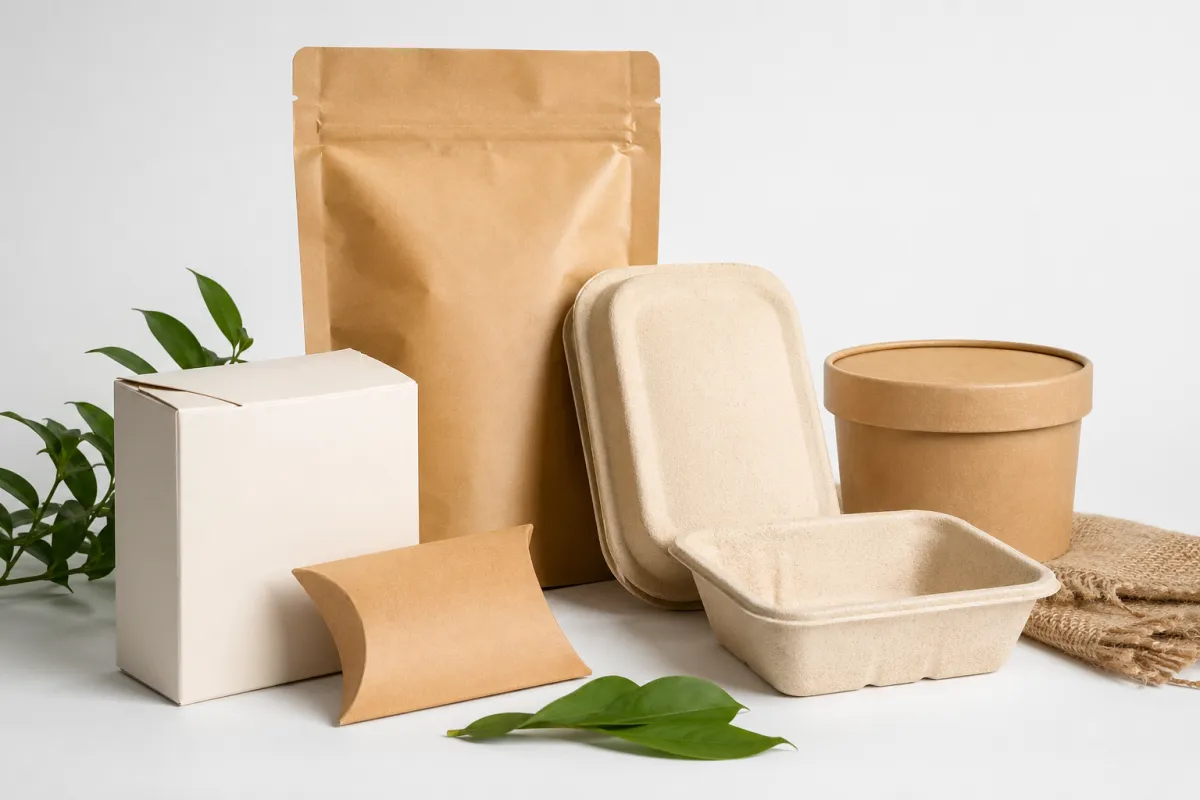
custom degradable packaging materials are packaging substrates that are converted to a specific size, shape, and structure, with the intent that they break down under defined environmental conditions. The idea sounds simple. The execution is not. A technically degradable material can still be a poor packaging choice if it cannot seal reliably, survive print conversion, or hold up through normal warehouse handling from pallet to porch.
The terminology is often blurred until a packaging program loses credibility. Degradable usually means a material changes over time and begins to break apart or chemically alter. Biodegradable means microorganisms can break it down into natural by-products, but usually only under certain conditions and timeframes. Compostable is narrower still and typically refers to certified performance in composting environments, such as those described by ASTM D6400 or EN 13432. Recyclable means the material can enter a recycling stream if that stream exists and the package is designed for it. Conventional plastic may be durable and useful, but durability alone does not make it part of any of those pathways.
Those distinctions matter because custom degradable packaging materials are often sold with broad claims and very few practical boundaries. A brand may hear “earth-friendly” and assume disposal is solved. Disposal is never solved by adjectives. It depends on local infrastructure, collection behavior, and the chemistry of the pack itself. Industrial composting, home composting, landfill, and open-environment exposure behave nothing alike. A material that looks strong on a lab sheet can behave very differently once it is mixed into a real waste stream with food residue, labels, and a lot of ordinary contamination.
Customization matters because packaging is never one shape doing one job. A folded carton, stand-up pouch, poly mailer, and corrugated shipper each stress materials in different ways. With custom degradable packaging materials, the spec has to reflect product weight, seal requirements, barrier needs, and shelf presentation. A retailer-facing box may need a refined print surface and precise fold lines. A mailer may need tear strength and a closure that holds. A pouch may need moisture control that does not undermine degradation performance later.
Display packaging rewards visual control and brand clarity. Shipping formats reward abuse resistance. That difference is why custom degradable packaging materials should be selected after the job is defined, not before it. Packaging decisions made in reverse — appearance first, function second — almost always create expensive revisions. I’ve watched teams spend weeks polishing typography only to discover the seal window was too narrow for the product line. Pretty is fine. Pretty and functional is better.
Most teams can answer this quickly: are you solving primarily for protection, brand positioning, compliance, or a combination? If all three matter, the specification becomes a balancing act. Packaging design is tradeoff management with a deadline. Ignore that, and budgets get pulled into avoidable redesigns.
One useful habit: treat every specification as a hypothesis. Start with a claim, then test it against conversion, handling, and disposal. That mindset keeps custom degradable packaging materials from becoming a short-term campaign story with long-term operational pain.
How Custom Degradable Packaging Materials Break Down
custom degradable packaging materials do not all break down in the same way. Some systems respond to moisture and heat, some react under oxygen exposure, some rely on UV energy, and some only move forward in specific biological environments. A package can also fragment first, which is not the same as fully decomposing into harmless components. That distinction matters more than most marketing decks admit.
The environment dictates the outcome. Industrial composting is engineered: temperature, moisture, aeration, and retention time are managed. Home composting is far more variable and usually slower. Landfills can be oxygen-poor, which delays or alters breakdown. Marine environments vary by salinity, light, microbes, and water movement, so one coastline is not interchangeable with another. Many packaging programs assume one broad promise and end up with a much narrower reality.
Breakdown usually moves through three broad stages. First is fragmentation, where the material visibly splits into smaller pieces. Second is chemical weakening, where the structure loses integrity. Third is biodegradation, where microbes consume the material under the right conditions. Those stages do not automatically follow one another, and performance changes with additives, layer architecture, and thickness.
Compare two mailers and the difference is obvious. A thin mailer using a simple water-based adhesive may degrade relatively quickly under the right conditions. A multilayer construct with a higher-barrier film, metallized finish, and heavy print treatment can hold together much longer than expected, even if both are marketed as “green.” The performance profile is never only the substrate. It is the whole stack.
The same mechanics show up in food and retail packaging. A kraft-based structure may be a strong fit for dry goods, but moisture or grease resistance can force an entirely different barrier chemistry. Frozen distribution pushes the spec toward anti-condensation behavior. High-gloss finishing can boost visual appeal and still change aging behavior, seal response, or break-down timing. Packaging is a little rude that way; it rarely rewards wishful thinking.
Testing has to include all layers, not just the base material claim. Evaluate substrate, adhesive, print system, coating stack, and closure as one unit. If one layer interrupts the intended pathway, the whole package behaves as though the original claim never existed. Packages respond to chemistry and conditions, not to PowerPoint wording.
For programs that need comparability, standards help. Transit durability can be checked using methods aligned with ISTA frameworks. Compostability claims should be backed by explicit standards and measurable testing, not adjectives or promise statements. That is how custom degradable packaging materials stay credible instead of becoming a short-lived reputational gamble.
Key Factors That Decide Performance
custom degradable packaging materials work only when the technical spec matches the product reality. Start with mechanical requirements: puncture resistance, heat resistance, tear strength, moisture control, and shelf-life tolerance. A package that cannot survive routine handling is not advancing sustainability goals; it is just creating returns, rework, and brand damage.
Product category changes the equation. Dry goods generally tolerate simpler constructions. Cosmetics often demand visual precision and low-stain print performance. Frozen food adds condensation, cold cycling, and seal stability risk. Shipping mailers prioritize stiffness and impact resistance. If the same design is stretched across all use cases without testing, the weakest use case eventually defines the whole program.
Vague labels carry little weight in procurement rooms. If a supplier says “compostable,” “recyclable,” or “degradable,” ask for the exact standard, test method, and test conditions. ASTM and EN references are not decoration; they are practical filters. Ask the same questions about logistics integrity: drop resistance, compression strength, vibration response. A company that cannot explain its test basis is usually asking you to buy confidence instead of evidence.
Print and surface treatment decisions can quietly reshape the outcome. High ink coverage, metallic effects, heavy varnishes, and specialty coatings all alter how materials behave. Paper-based conversions often show stronger print compatibility with some inks; film systems may demand tighter drying and sealing controls. A matte finish can look elegant on camera and still create scuff risk or line instability in production.
Material and line fit
Operational compatibility is where many plans quietly break. A minor seal-temperature shift, a slower recommended speed, or a tighter die-cut tolerance can add minutes per 1,000 units and stack up into meaningful line cost. A packaging team might accept a 4% reject-rate increase to preserve eco messaging, but that margin gets eaten quickly. Confirm machine fit before locking in custom degradable packaging materials at scale.
Fiber formats offer practical options. Corrugated and kraft structures remain strong candidates for retail and shipping where paper-first aesthetics matter. Add moisture or grease barriers and the coating layer becomes the most important variable. In many cases, the fiber itself behaves well; the added surface chemistry changes almost everything downstream.
For a stronger baseline on environmental handling, the EPA recycling and composting resources are a better reference point than one-off supplier claims. They do not tell you exactly what to buy, but they do force a cleaner reading of disposal pathways and consumer-facing claims. That helps separate real tradeoffs from polished packaging narratives.
Custom Degradable Packaging Materials Cost and Pricing
custom degradable packaging materials usually carry a premium over standard stock, especially on shorter runs. That is not a mystery, just process reality: less common resins or fibers, tighter QA loops, and more conversion support all add cost. Pricing is pushed by resin or fiber grade, thickness, print complexity, certification demands, and order volume. No single number fits every job, and pretending otherwise usually creates bad comparisons.
Smaller production volumes commonly sit 10% to 30% above standard packaging on a unit basis. Higher volumes usually narrow that spread because setup cost is spread across more units and suppliers can optimize material purchasing. Specialty inks, complex graphics, and unusual shapes can push price upward again, so low quantity plus high complexity remains the most expensive combination.
Separate setup cost from unit cost early. A 5,000-piece run may look expensive because tooling, artwork corrections, and die adjustments sit up front. A 20,000-piece run can look leaner per unit even if total spend is larger. Comparing total landed cost and expected yield protects teams from being trapped by a misleading piece-price narrative. custom degradable packaging materials usually perform better from a budget perspective when volume and design are planned together.
Use the following as a practical comparison set, not as a promise of final pricing. Actual quotes still move with dimensions, brand finish, lead time, and conversion architecture.
| Option | Best Use | Typical Strengths | Common Watch-Outs | Approx. Premium vs Standard |
|---|---|---|---|---|
| PLA or PBAT film mailers | Apparel, soft goods, ecommerce | Flexible, lightweight, clean branding surface | Seal settings, heat sensitivity, disposal confusion | 10% to 25% |
| Kraft paper with barrier coating | Dry goods, retail packaging, pouches | Paper-first look, good printability, strong brand appeal | Moisture resistance depends on coating quality | 12% to 30% |
| Molded fiber | Inserts, trays, protective dunnage | Good structure, lower plastic use, tactile feel | Less flexible for intricate brand graphics | 8% to 20% |
| Custom corrugated cardboard | Shipping cartons, custom printed boxes | Strong protection, familiar recycling stream, easy sizing | Heavy print coverage and coatings add cost | 5% to 18% |
| Specialty compostable laminate | Premium pouches, shelf display packs | Better barrier, higher-end package branding | Certification and conversion complexity raise price | 15% to 35% |
Cost pressure should not force overbuilt designs. Three practical levers usually work: keep dimensions standard where possible, reduce ink stations, and avoid unnecessary finish layers. A package That Feels Premium but uses extra material is rarely a smart sustainability move. Packaging economies usually come from simplification, not ornament.
Small pilot runs still have value, but they are often the least efficient route on a unit-cost basis. They are useful for concept validation and line testing, not for long-term national launch economics. If you are choosing a production partner, ask for pricing at 1,000, 5,000, and 20,000 units. That simple comparison usually shows where cost cliffs appear.
For a broader structural review, Custom Packaging Products can help teams compare formats before a final material lock. Use that same structure-first comparison when evaluating product packaging options. The most useful result is often not a flashier material, but a cleaner cost-to-performance ratio.
Step-by-Step Process and Timeline
custom degradable packaging materials should be managed as a project sequence with checkpoints, not a rushed purchase. Start with an audit of the current packaging stack: dimensions, fill weights, damage rates, warehouse handling, and waste pain points. A 20% oversize carton or a recurring seal failure usually tells you more than any supplier webinar.
Next, narrow the shortlist to two or three options and request physical evidence: spec sheets, material certificates, seal guidance, and sample packs. For branded boxes, ask for one engineering sample and at least one print proof. For custom degradable packaging materials, the sample has to represent the full structure, not just the raw substrate claim.
Trialing should mimic real use conditions. Run print adhesion checks, seal pull tests, drop cycles, humidity exposure, and handling simulation. Cold and heat exposure belong in the protocol whenever products encounter temperature swings. If distribution includes parcel carriers, include transport stress: vibration, impacts, and handling loops. A polished lab summary is a start. A real-use pass is the bar.
Here is a realistic timeline for many custom programs:
- Sampling: 1 to 3 weeks, depending on material availability and conversion complexity.
- Tooling or print prep: 1 to 2 weeks for standard changes, longer for custom shapes or specialty finishes.
- Production: 2 to 6 weeks depending on volume, print setup, and material sourcing.
- Shipping and receiving: often 3 to 10 business days, depending on distance and freight mode.
Late changes move every number. A revised logo callout, size adjustment, or coating update can reset approvals and delay launch windows. The fastest projects are the ones that decide early and hold scope. custom degradable packaging materials are not slow because the category resists speed; materials and logistics simply move at their own pace.
For transportation assurance, suppliers that reference standards such as ISTA test procedures usually lead to stronger execution than teams that rely on generic confidence statements. “Should be fine” may soothe a meeting, but it does not replace validated handling data.
In a clean release flow, the brand owner, buyer, operations lead, and conversion partner align before production starts. If those points drift, custom degradable packaging materials can stall over setup questions, line settings, or print interpretation that could have been resolved earlier.
Common Mistakes That Make Degradable Packaging Fail
custom degradable packaging materials fail for familiar reasons. The first is declaring a claim without anchoring it to actual disposal infrastructure. A material that requires industrial composting performs differently in a home bin, and both differ from landfill outcomes. Broad claims without context turn into misleading shorthand pretty quickly.
Another error is prioritizing visual identity and ignoring fulfillment stress. Teams often approve soft-touch finishes, deep matte films, or premium textures only to discover tearing, warping, and scuffing during real shipments. Appearance is not a substitute for structural performance. custom degradable packaging materials have to survive the road from shelf to door, not just camera tests.
A third pattern is underestimating inks, adhesives, and surface coatings. Heavy UV barriers, foil effects, and extra laminate layers can interrupt the intended degradation pathway and reduce seal consistency. The package can still look premium. The end-of-life claim gets weaker with every extra layer that was never tested in context.
A fourth issue comes from locking an exciting shape before confirming process compatibility. A custom geometry can look strategic until the production team discovers a new seal temperature, changed jaw profile, or slower cycle is required at scale. Those costs are real and should be known before approval for custom degradable packaging materials. Otherwise, the line becomes the place where optimism goes to get corrected.
The fifth issue is treating technical terms as interchangeable. Degradable, biodegradable, compostable, and recyclable are distinct by regulation, performance, and disposal conditions. Even recycled content claims, paper certification, and fiber sourcing language need precise definitions. Without exact language, project teams end up arguing interpretation during launch.
There is one more expensive mistake: over-specifying to reduce anxiety. Thicker board, denser coatings, and layered laminates can look safer but frequently increase cost and hurt one or more performance goals. In custom printed cartons and corrugated formats, the lightest construction that still passes required tests is often the most stable commercial choice.
Expert Tips and Next Steps for Custom Degradable Packaging Materials
A practical decision rule keeps the conversation grounded: product protection first, verified claims second, visual branding third. That order keeps the program workable from the factory floor to the customer handoff. If package protection and disposal reality are solid, branding has a stronger foundation underneath it.
Demand a supplier matrix before approval. Ask for strength, barrier, print compatibility, certification details, lead time, and pricing by volume level in one place. A credible partner can talk through tradeoffs clearly; a weak one only offers a single preferred path with very little context.
Use a pilot before national rollout. A controlled first run catches seal failures, color variation, die-cut drift, and handling weakness before they become systemic. Side-by-side testing of two structures can expose a false economy quickly. A $0.04 saving that doubles damage rates is not savings; it is cost displacement dressed up as efficiency.
For teams balancing shelf appeal and logistics strength, test two formats against the same scenario: a fiber-led build and a film-led build. Include heat exposure, stacking, drop events, and humidity cycles that match real routes. custom degradable packaging materials have to prove themselves under stress, not in static renderings.
Brand expression still matters. Packaging in retail and ecommerce carries as much communication as it does function. That said, sustainability statements should reflect disposal reality. An overreaching claim on a package with narrow infrastructure fit can erode trust faster than a simple, honest claim set.
The practical move is simple: audit the current pack, gather samples, test two or three structures, then finalize the specification based on real-world outcomes with custom degradable packaging materials. That sequence reduces redesign loops and gives the final pack a better chance of surviving both the line and the customer.
For teams ready to turn that into action, the cleanest next step is to build a three-point test matrix: one substrate, one coating or barrier approach, and one closure method. Keep everything else fixed. If the pack passes handling, print, and disposal checks together, you have something worth scaling. If it does not, you have the evidence to simplify before launch instead of after a costly mistake.
FAQ
Are custom degradable packaging materials actually eco-friendly?
Only when the disposal pathway matches the material behavior. A claim that ignores actual waste systems becomes decorative messaging. Review third-party certification, test data, and build details such as ink and coating type before deciding. custom degradable packaging materials can outperform standard plastic in specific contexts, but only when the end-of-life assumptions are honest.
What is the difference between degradable, biodegradable, and compostable packaging?
Degradable means the material changes or fragments over time. Biodegradable means microorganisms can break it down under suitable conditions. Compostable is stricter and usually requires a defined composting environment plus certification standards such as ASTM D6400 or EN 13432. For that reason, custom degradable packaging materials should be discussed with exact claim language, not broad sustainability phrases.
How long do custom degradable packaging materials take to break down?
There is no single timeline that applies everywhere. Temperature, moisture, oxygen, UV exposure, and microbial activity all change outcomes. Industrial composting can be faster than landfill behavior, while storage conditions can slow everything down. Ask for the test conditions, not a promise line without context, when selecting custom degradable packaging materials.
Do custom degradable packaging materials cost more than standard packaging?
In most cases, smaller custom runs and heavily printed formats carry a premium. Many programs still land around 10% to 30% above standard in low-to-mid volume buckets, with volume and structure affecting the final level significantly. Simpler formats and reduced customization layers usually lower cost faster than exotic material substitutions. That pattern shows up again and again in custom degradable packaging materials procurement.
Can I print my logo on degradable packaging without hurting performance?
Yes, if the ink system and finishing are aligned with the substrate and line settings. Heavy coatings, foil-style effects, and certain laminates can reduce seal integrity or slow degradation behavior. Evaluate print adhesion, seal strength, and handling before approving full production with custom degradable packaging materials. The goal is a logo that supports function instead of undermining it.

