Buyer Fit Snapshot
| Best fit | Branded Packaging for Small Business projects where brand print, material claims, artwork control, MOQ, and repeat-order consistency need to be specified before quoting. |
|---|---|
| Quote inputs | Share finished size, material target, print colors, finish, packing count, annual reorder estimate, ship-to region, and any compliance wording. |
| Proofing check | Approve dieline scale, logo placement, barcode or warning zones, color tolerance, closure strength, and carton packing before bulk production. |
| Main risk | Vague material claims, crowded artwork, missing packing details, or unclear freight terms can make a low unit price expensive after revisions. |
Fast answer: Branded Packaging for Small Business: Material, Print, Proofing, and Reorder Risk should be specified like a repeatable production item. The safest quote records material, print method, finish, artwork proof, packing count, and reorder notes in one written spec.
Production checks before approval
Compare the actual filled-product size with the drawing, then confirm tolerance on folds, seals, hang holes, label areas, and retail display edges. Reserve space for logos, QR codes, warning copy, and material claims before decorative graphics fill the panel.
Quote comparison points
Review material grade, print process, finish, sampling route, tooling charges, carton quantity, and freight assumptions side by side. A quote is only useful when the supplier can repeat the same color, closure quality, and packing count on the next order.
Branded Packaging for Small business does something product photos, paid ads, and polite customer support can never do by themselves: it gives the buyer a physical reason to believe the brand is worth remembering. I still remember watching a scrappy candle maker swap a plain kraft mailer for a printed box and a simple insert card. Nothing about the product changed. Sales did not magically double overnight. But the customer emails changed almost immediately. People started using words like "thoughtful," "giftable," and "professional." That is the point. A mailer sitting on a porch, a box on a kitchen table, a sticker sealed across tissue paper, an insert tucked beside the product - each one sends a message before the item is even handled. That first glance can change perception in seconds, which is why Branded Packaging for Small business often pays off faster than owners expect.
The value is not luxury theater. It is the discipline of making a lean operation look deliberate. A small brand does not need foil on every edge or a custom structure for every SKU. It needs a system that feels intentional, survives shipping, and gives the customer a clear signal that someone cared about the details. Branded Packaging for Small business works best when it supports the product instead of stealing attention from it.
For a small company, that distinction matters. A packaging upgrade that costs a few cents on one order or a few dollars on another can lift perceived value, lower hesitation, and improve review quality without forcing the business into a high-end production budget. From the buyer's side, branded Packaging for Small business lands best when it feels aligned with the product price, the audience, and the brand story. In practical terms, this is often where a packaging strategy pays for itself: not in a perfect aesthetic, but in steadier repeat intent.
At this level, branded Packaging for Small business is also a brand signal system in reverse: each touchpoint either confirms that the company is coherent or reminds the customer that someone stitched the operation together on the fly. If someone sees a coherent signal before opening the box and a clear next step after opening it, the brand has already crossed from commodity to memory.
Why Branded Packaging for Small Business Changes Perception Fast
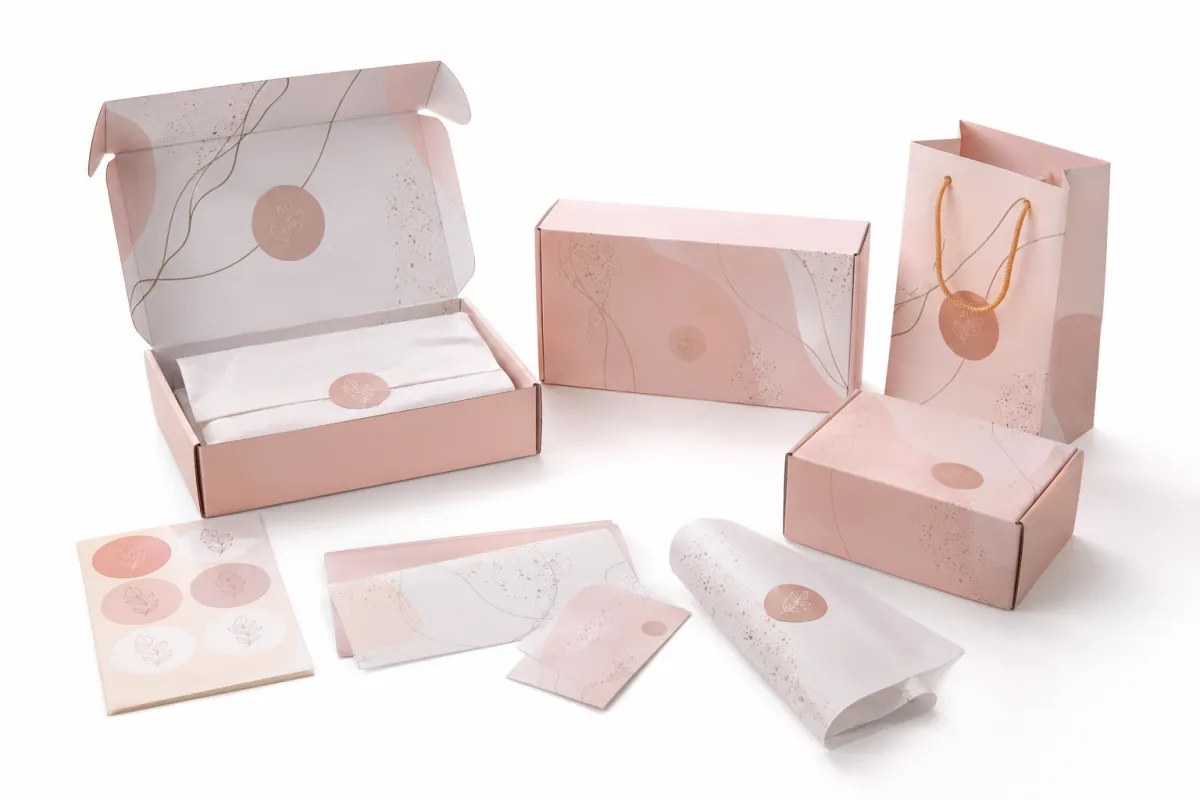
People judge quality quickly. Research on first impressions often lands around the same uncomfortable number: less than five seconds. Before the box opens, before the product is touched, the brain has already started sorting the package into categories like cheap, thoughtful, forgettable, polished, or trustworthy. A plain mailer says one thing. A package with shape, order, and a point of view says another. Branded Packaging for Small business has unusual power because it becomes the first proof that the company is organized and worth taking seriously.
Branded packaging includes every visible touchpoint a customer encounters. Custom printed boxes, printed mailers, tissue paper, labels, stickers, belly bands, thank-you cards, inserts, sleeves, and even the tiny details of logo placement all count. Readability matters. Placement matters. Consistency matters even more. Package branding is not one object. It is a cluster of signals that either agree with one another or fight for attention.
Most small brands make the same mistake: they try to make the package look expensive instead of making it feel aligned. A handmade soap brand may not need a rigid box. An apparel company may not need custom cartons for every item. A candle maker may get more value from a strong label, a clean insert, and a mailer that arrives intact than from a premium finish that never survives the trip. Branded packaging for small business works when the package tells the truth about the brand.
Consistency beats spectacle. A modest custom mailer with the right color, a clear logo, and a tidy interior can outperform a more expensive package that feels generic or overworked. Smaller brands often see the largest lift because the starting point left plenty of room for improvement.
Categories that depend on trust tend to benefit the fastest. Food, beauty, candles, apparel, supplements, gifts, and subscription products all depend on confidence. A package that feels settled and thoughtful reduces friction. It suggests that the brand understands detail, and detail is where customers decide whether to return.
My view is simple: the best packaging is rarely the loudest package. The strongest systems answer practical questions without ever sounding defensive. Will the order arrive intact? Does the brand feel established? Is the product protected well enough that a reorder feels easy? Branded packaging for small business is effective because it answers those questions before the customer asks them.
A strong package does not need to shout. It needs to make the buyer think, "This brand has its act together."
If you want to see how structure changes brand value beyond the surface layer, it helps to study Case Studies and compare what changed in real orders. You can also browse Custom Packaging Products to see how different formats support different goals. The basic lesson holds: branded packaging for small business works when the system matches the business model.
How Branded Packaging for Small Business Works From Box to Unboxing
Think of the customer journey as a chain of small moments. Checkout, order confirmation, delivery, unboxing, first use, review, reorder. Each moment can carry a different kind of signal. Branded packaging for small business shapes those signals in stages, which is why the best packaging systems are built around the journey rather than the shipment alone.
The outer layer does the practical work first. A shipping box or mailer protects the product and delivers the initial visual cue. The middle layer creates the reveal. Tissue, crinkle, sleeve wraps, or a custom insert can slow the opening just enough to make the experience feel considered. The final layer is the memory layer: a note, care card, QR code, product guide, reorder prompt, or discount offer that keeps the brand present after the package is opened.
That structure matters more than fancy finishes. A clean package with a clear hierarchy usually outperforms an expensive package that has no system behind it. In branded packaging for small business, repetition carries real weight. The same color family, the same logo placement, the same tone of voice across mailers, labels, and inserts creates a stronger imprint than one dramatic feature used once and never repeated.
Different business models call for different packaging choices. A boutique skincare brand might choose a white mailer with a soft-touch insert and minimal copy. A playful accessories brand may use bright tissue and a bold sticker. An eco-conscious brand might favor kraft stock, water-based inks, and FSC-certified materials. Branded packaging for small business performs best when those decisions reflect the actual positioning instead of borrowing from a larger retailer's style book.
There is a practical side to the unboxing sequence that gets ignored far too often. Packaging should be easy to assemble, fast to pack, and hard to mess up on a busy shipping day. A beautiful package that adds three minutes to every order can become a labor problem very quickly. Good branded packaging for small business looks right, but it also fits the fulfillment process.
From the buyer's perspective, the package should do three jobs at once. It should protect the order, communicate the brand, and invite action. That last one is easy to miss. A smart insert can encourage a review, explain product use, or point toward a reorder. For a small business, that is not decoration. That is revenue support hiding in plain sight.
To see how packaging decisions affect repeat orders, many owners compare their current setup against examples in Case Studies before ordering samples. Guessing rarely saves time. Branded packaging for small business is a chain of decisions, and each one changes the next one.
When the chain works, the effect feels subtle but strong. The customer opens the box, notices the consistency, feels the product has arrived in good hands, and is more likely to trust the brand again. That is the real value of branded Packaging for Small Business: it turns a shipment into a brand experience without demanding a luxury budget.
At the same time, this is also about the unboxing experience that follows a visual promise. If your pack says "careful," but arrives loose, the promise fails. If your pack says "premium," but the insert text is hard to read, the promise fails. Branded packaging for small business succeeds when visual cues and practical execution stay in lockstep.
Does Branded Packaging for Small Business Drive Repeat Business?
That question comes up in almost every discovery call, and the answer is not a yes-or-no. Branded packaging for small business tends to influence repeat behavior when it reduces uncertainty. The buyer is not always buying emotion; often they are buying confidence. Packaging can become a quiet proof point in a pattern where every prior touchpoint may have been perfect yet still feels disconnected.
Look at it like this: if a customer has a good unboxing once and a bad unboxing once, they remember both. The second memory often carries more weight than the first. Branded packaging for small business that is reliable, clear, and consistent performs better for retention than the one-time wow package. A strong first impression does not excuse a poor second impression.
Some owners assume branded packaging for small business is a demand driver on day one. In many cases, it is not. It is more often a retention driver measured over time. If your damage rate drops, if your review language shifts from "arrived crammed" to "beautifully packed," if your team ships faster with fewer steps, then the system is working. The ROI is often visible in behavior, not a single conversion spike.
There is a useful comparison from small operations that treat packaging as an experiment. Version A gets one extra branded element. Version B gets two branded elements and one added insert. Version A is often easier to run at scale, while Version B may feel richer at first but creates fatigue for the packers and complexity in reorders. That is why branded packaging for small business should be treated like a brand identity system, not a design event.
For many entrepreneurs, the winning move is to use one metric-first framework: customer retention signals, fulfillment speed, and protectability. If one of those deteriorates when adding new design layers, the package is no longer helping the business. Branded packaging for small business should support growth, not just appearance.
One more honest caveat: packaging alone will not rescue a weak product, sloppy fulfillment, or a confusing offer. It can improve perception and reduce friction, but it cannot do all the heavy lifting. That is where trust gets thin, and customers notice fast.
Branded Packaging for Small Business Cost and Pricing Factors
Price is where packaging decisions stop being abstract. Branded packaging for small business can be surprisingly affordable at the entry level, yet the cost climbs quickly once custom structures, specialty finishes, or low-volume runs enter the picture. The useful question is not, "What is the cheapest option?" It is, "What actually moves the customer experience forward?" That shift changes how money gets spent.
The biggest cost drivers are material, print method, quantity, finishing, setup, and shipping. Paperboard usually costs less than rigid chipboard. Digital print can work well for smaller runs, while offset becomes more attractive as quantities rise. Foil, embossing, soft-touch lamination, spot UV, and custom die lines all add production cost and complexity. Branded packaging for small business does not need every premium feature to look polished.
Order volume changes the math. Unit cost usually drops as quantity rises because setup costs spread across more pieces. The trap is over-ordering and tying up cash in inventory that sits in a back room for months. Many brands do better with one hero item and one support piece, then reorder once the design proves itself in real orders. Branded packaging for small business should scale before it tries to impress anyone.
Here is a practical comparison of common entry points:
| Packaging Option | Typical Minimum | Approx. Unit Cost Range | Best Use Case | Notes |
|---|---|---|---|---|
| Stickers or seals | 250-500 pieces | $0.03-$0.12 | Fast brand marker for bags, tissue, and boxes | Low cost, easy to reorder, strong for small business branding |
| Insert cards or thank-you cards | 250-500 pieces | $0.08-$0.20 | Review prompts, care instructions, cross-sells | Good for adding value without changing the outer pack |
| Printed tissue or paper wrap | 500-1,000 sheets | $0.06-$0.25 | Retail packaging and unboxing reveal | Brand lift is strong if the pattern is simple and repeatable |
| Printed mailers | 500-1,000 pieces | $0.45-$1.10 | Direct-to-consumer shipments | Good balance of protection and branding |
| Custom printed boxes | 500-1,000 pieces | $0.70-$2.50 | Premium product packaging, subscriptions, gifts | Higher setup cost, stronger perceived value |
| Rigid boxes | 250-500 pieces | $2.50-$6.00 | High-value products and presentation sets | Premium feel, but not always practical for fast fulfillment |
Those ranges are not universal, and they should never be treated like a formal quote. They still reveal the pattern. Smaller orders pay more per unit. Complex finishes cost more than simple print. Custom structures cost more than stock formats. If a supplier gives you a low sticker price without explaining setup, shipping, or sampling, ask for the full picture before you commit to branded packaging for small business.
A sensible budget usually follows a hierarchy: one primary branded item, one support piece, and one operational safeguard. A mailer, a sticker or label, and an insert card often get the job done. That combination can make branded packaging for small business feel credible without turning the project into a design maze. If budget is tight, start with the item customers see first, then add layers later.
Return matters as much as cost. A package that reduces damage, improves repeat purchase rates, or raises response from reviews can justify a higher per-unit spend. Not every brand needs custom printed boxes on day one. Every brand, though, benefits from making the package easier to recognize and easier to trust.
For businesses comparing production options, the range of Custom Packaging Products can help narrow the decision before asking for quotes. That is especially useful if you are deciding whether branded packaging for small business should begin with labels, mailers, or a full box program. A visual identity system that grows with demand is usually cheaper to maintain than a stack of disconnected experiments.
Another useful lens is shipping cost per retained order. Sometimes a higher packaging cost is offset by lower damage, fewer reshipments, and fewer support tickets. Branded packaging for small business should be evaluated like any other operating decision: what is the net effect on revenue, not just unit cost at print sign-off.
Step-by-Step: Building Branded Packaging for Small Business
The cleanest way to build branded packaging for small business starts with a packaging audit. Lay out the current shipment experience from start to finish and mark where the brand disappears, where the package feels generic, and where the process wastes time. A plain shipping carton may be fine if the product is fragile, but if the brand only appears on the invoice, there is room to improve.
Next, choose one primary goal. Reduce damage? Improve reviews? Support sustainability? Raise perceived value? Simplify fulfillment? The answer changes the format. Fragile items need structure and protection first. Low-margin products may need cost control more than a premium finish. Branded packaging for small business gets easier once the job is clear.
After that, pick the format that matches the most visible touchpoint. If customers see an outer mailer first, brand the mailer. If the product ships inside a plain shipper, add a sticker, sleeve, or insert. If the product itself is the star, the inner reveal may deserve the most attention. The most effective packaging usually concentrates effort where the eye lands first.
Then move through the design sequence:
- Confirm product dimensions and shipping method.
- Request a dieline or template before designing anything.
- Place logo, color, copy, and required information with enough breathing room.
- Review print limits, bleed, safe zones, and assembly requirements.
- Order samples before bulk production.
- Test the pack with actual products and actual packing staff.
That order matters. Designing before checking structure is one of the most common mistakes in branded packaging for small business. A polished layout on the wrong template wastes time and usually leads to expensive revisions. It is better to lock dimensions first, then build the visual system around them.
Sampling should never be treated as a luxury add-on. Paper thickness, print quality, and fold behavior often feel different in hand than they do on screen. A sample also reveals whether inserts fit, whether tape holds, and whether the box closes cleanly after the product and protective materials are added. That is the real test of branded Packaging for Small Business: does it work in a live order?
Finally, create a reorder path that anyone on the team can follow without guessing. Record the approved artwork, supplier spec, quantity breakpoints, and backup contact. If the system is simple enough to repeat, branded packaging for small business becomes a stable operating tool instead of an ongoing design project.
One practical way to shorten the learning curve is to compare your draft against real examples in Case Studies. Seeing how others solved similar product, size, and budget problems often reveals the simplest next move.
Do not forget the words around your visuals. A short phrase on the outer box and a short phrase inside the insert can work better than a perfect logo if it stays consistent with the brand position. For many small teams, branded packaging for small business begins to look stronger when they stop asking, "What is flashy?" and start asking, "What helps the buyer move to the next step?"
Process and Timeline for Branded Packaging for Small Business
A realistic timeline keeps packaging from becoming the thing that delays a launch. Branded packaging for small business usually moves through a clear workflow: brief, template review, artwork setup, proofing, sampling, production, and shipping. The more custom the structure, the more time each step tends to take. The simpler the format, the faster the cycle can move.
Simple items like stickers, insert cards, or printed tissue may move quickly if the artwork is ready and the supplier has standard sizes available. Custom mailers and printed boxes usually need more back-and-forth because the dieline has to match the product dimensions and any finishing choices. Specialty coatings, foil, embossing, or new structural tooling can add extra time. That is normal, not a setback.
The real friction usually comes from slow approvals. One late copy change can trigger a new proof, which can push the schedule by several days. Color matching can also add time if the brand depends on precise shades. When branded packaging for small business is tied to a product launch, seasonal campaign, or marketplace deadline, those delays become expensive very quickly.
A practical planning range looks like this:
- Simple print items: often 5-10 business days after proof approval, depending on quantity and finishing.
- Printed mailers or standard boxes: often 10-15 business days after approval.
- Custom structures or specialty finishes: often 15-25 business days, sometimes longer if tooling is involved.
- Sampling and revisions: add 3-7 business days, and more if a second sample is needed.
Those numbers help because they keep expectations grounded. They also show why branded packaging for small business should be planned well before inventory runs out. If the last cartons are gone and the next batch has not even been approved, every choice gets rushed. Rush jobs cost more and leave less room for testing.
Assembly is the other hidden timeline issue. Some packaging looks great in a mockup and turns into a drag in the warehouse. A box that needs multiple folds, inserts, and stickers may be manageable at 20 orders a day and miserable at 200. Branded packaging for small business should fit the labor capacity of the team, not just the brand board.
Build a buffer around known spikes. Seasonal promotions, gift periods, and product launches always expose weak planning. A safe buffer is not caution for its own sake. It is a sign the packaging system has moved past guesswork. If the business can maintain stock levels and approved artwork before demand rises, branded packaging for small business becomes an asset rather than a bottleneck.
Before you submit anything, check the supplier specs carefully. If the structure depends on exact product sizing, print coverage, or folding instructions, a small mismatch can create avoidable delays. Many teams keep a master file with approved dimensions, finish notes, and reorder quantities. That file saves time every cycle.
If the team is still choosing between formats, a quick scan of Custom Packaging Products can help map available timelines against the packaging type. Branded packaging for small business is easier to manage once the production path is visible.
Timing is also where a clear packaging strategy shows discipline. If your roadmap says two iterations before scale, your launch plan and creative refresh are no longer competing departments. They are now synchronized, which is exactly what a small operation needs when demand moves quickly.
Common Branded Packaging for Small Business Mistakes
The most common mistake is overbranding. A package can become noisy quickly if every surface carries a logo, a slogan, a pattern, and a second message all fighting for space. Customers do not read packaging like a brochure. They skim it. In branded packaging for small business, clarity usually beats decoration.
The second mistake is choosing a package that looks good but ships badly. Pretty packaging that splits in transit, crushes under pressure, or leaks when handled by carriers destroys value fast. Testing matters for that reason alone. A box that passes a visual check but fails a drop test is not a success. If the product arrives damaged, the brand image loses more than it gains from the unboxing.
There is a subtler problem too: designing before confirming print and structural specs. Artwork that ignores bleed, safe zones, ink coverage, or assembly allowances can create expensive revisions. Sometimes a supplier has to adjust the layout after the fact, and the original concept weakens in the process. Good branded packaging for small business respects production realities from the beginning.
Variety overload is another budget trap. Too many box sizes, too many insert versions, and too many material combinations can make fulfillment messy. Small teams often try to solve every product scenario with a unique pack, but that creates inventory sprawl. A tighter system usually works better: one or two core formats, a small set of inserts, and a clear rule for exceptions.
Money also gets wasted on the wrong upgrade. Not every brand needs foil, embossing, or a rigid box. Sometimes a better logo placement, a stronger material choice, or a more useful insert delivers more value than a premium finish. Branded packaging for small business should improve the buyer's experience, not just the visual score on a proof.
My rule of thumb: if a packaging choice does not help the product, the brand story, or the fulfillment process, it probably does not belong in the first version.
Another common error is ignoring sustainability expectations. That does not mean every business needs to claim a fully circular package system. It does mean many buyers now notice recyclability, material waste, and excess air in a shipment. Brands that reduce waste without sacrificing protection often earn goodwill. If eco claims are part of the plan, they should be accurate and backed by supplier specs, not vague language.
For brands that want a standard to compare against, the industry uses testing and material references from groups like ISTA for transit performance and FSC for responsibly sourced paper options. Those references do not solve every packaging decision, but they help separate marketing language from measurable performance. In branded packaging for small business, that distinction matters.
Finally, do not let packaging become a one-time creative burst. A strong launch without a reorder plan is fragile. Once the first batch is gone, the team needs a system that can be replicated without redesigning every time. That is where branded packaging for small business either becomes a lasting advantage or a recurring headache.
One recurring slip is to confuse branding with complexity. A clear, repeatable system can carry more authority than a fragmented catalogue of premium gestures. If your team can execute consistently with confidence, branded packaging for small business starts to look less like marketing and more like an extension of good operations.
Expert Tips and Next Steps for Branded Packaging for Small Business
If the budget is limited, choose one signature cue and repeat it consistently. That cue might be a specific color, a texture, a tape pattern, a phrase on the insert, or a simple icon. One strong cue is easier to remember than four weak ones. In branded packaging for small business, memorability usually comes from restraint.
Build a simple packaging style guide before the next reorder. It does not need to be a giant document. A page or two is enough if it records approved colors, typography, logo placement, material choices, and how the package should be assembled. The goal is to make sure the same branded packaging for small business looks and feels the same across multiple orders, even if different people pack the orders.
Test the package with real orders, not just mockups. Put the product in the box. Add the insert. Tape it shut. Stack it. Ship it. Open it. Measure what happened. Did the damage rate drop? Did the team save time packing? Did customers mention the unboxing in reviews? Those outcomes tell you more than a polished render ever will.
Track a few simple metrics so the packaging discussion stays practical:
- Damage rate: how many orders arrive compromised.
- Repeat purchase rate: whether the packaging supports retention.
- Review quality: whether customers mention presentation or care.
- Packing time: how long each order takes to assemble.
- Inventory use: whether the chosen format matches sales volume.
That list keeps the team focused on business outcomes instead of taste. Branded packaging for small business is not just a design asset. It is part of the operating system. If it saves labor, improves response, or reduces breakage, it is doing real work.
One smart next move is to order prototypes for two versions instead of one. Compare a clean minimalist box against a kraft version with a bold insert. Test a printed mailer against a stock mailer plus sticker and insert. Branded packaging for small business often looks best on a screen in one format and performs better in another. Testing removes the guesswork.
After that, look at the reorder path and the customer story together. If the packaging is easy to repeat but does not reinforce the brand, it is only half solved. If it tells a strong story but is slow and costly to fulfill, it will not scale. The best branded packaging for small business sits in the middle: easy to pack, easy to reorder, and strong enough to leave a mark.
If you want to compare live options, start with Custom Packaging Products and review how different formats fit your product size, shipping method, and budget. Then check Case Studies to see how other brands simplified their packaging systems without losing impact.
My final recommendation is straightforward. Audit what you already ship, choose one visible upgrade, request sample quotes, and test two versions before scaling. That is the cleanest path to branded packaging for small business that feels deliberate rather than decorative. Done well, branded packaging for small business lifts perception, supports operations, and makes the brand feel larger than its headcount. And if one version feels a little too busy in hand, trust the sample, not the mockup - that is usually where the real answer lives.
Frequently Asked Questions
How much does branded packaging for a small business usually cost?
Cost depends on quantity, material, print method, and whether setup or tooling fees are involved. Stickers, inserts, and printed tape are usually the cheapest entry points, while custom printed boxes cost more but can raise perceived value faster. The smartest move is to ask for tiered pricing so you can compare starter runs, reorder pricing, and sample costs before committing to branded packaging for small business. A quote that looks cheap on paper can get kinda expensive once shipping and setup are added back in, so ask for the full landed number.
What should a small business brand first in its packaging?
Start with the item customers see first, usually the outer mailer, shipping box, or wrapper. If you ship in plain cartons, a sticker, insert, or thank-you card may create the fastest lift. Pick the piece that appears in every shipment, is easy to reorder, and supports branded packaging for small business without slowing fulfillment.
How long does branded packaging for small business take to produce?
Simple items like stickers, cards, and inserts can often move quickly if the artwork is ready. Custom boxes, specialty finishes, and new structural designs usually take longer because of proofs, revisions, and scheduling. Build in extra time for sampling and approval so branded packaging for small business does not hold up a launch or seasonal surge. If you are on a hard deadline, work backward from ship date, not approval date - that little gap is where most surprises hide.
Can branded packaging work for small batch or Etsy businesses?
Yes, small batch brands often benefit the most because packaging helps them look established without changing the product itself. Low-minimum items like labels, tissue, and inserts are ideal when order volume is still growing. Keep branded packaging for small business simple enough to pack quickly and flexible enough to avoid dead stock if demand shifts.
How do you make packaging feel premium without spending too much?
Focus on consistency, clear messaging, and one tactile upgrade instead of adding expensive finishes everywhere. Use a strong unboxing sequence: protection first, reveal second, and a concise branded message last. Premium feel usually comes from discipline, not clutter, which is why branded packaging for small business often improves more from editing than from adding layers.


