Buyer Fit Snapshot
| Best fit | Create Minimalist Eco Packaging That Feels Premium projects where brand print, material claims, artwork control, MOQ, and repeat-order consistency need to be specified before quoting. |
|---|---|
| Quote inputs | Share finished size, material target, print colors, finish, packing count, annual reorder estimate, ship-to region, and any compliance wording. |
| Proofing check | Approve dieline scale, logo placement, barcode or warning zones, color tolerance, closure strength, and carton packing before bulk production. |
| Main risk | Vague material claims, crowded artwork, missing packing details, or unclear freight terms can make a low unit price expensive after revisions. |
Fast answer: Create Minimalist Eco Packaging That Feels Premium: Material, Print, Proofing, and Reorder Risk should be specified like a repeatable production item. The safest quote records material, print method, finish, artwork proof, packing count, and reorder notes in one written spec.
Production checks before approval
Compare the actual filled-product size with the drawing, then confirm tolerance on folds, seals, hang holes, label areas, and retail display edges. Reserve space for logos, QR codes, warning copy, and material claims before decorative graphics fill the panel.
Quote comparison points
Review material grade, print process, finish, sampling route, tooling charges, carton quantity, and freight assumptions side by side. A quote is only useful when the supplier can repeat the same color, closure quality, and packing count on the next order.
If you are trying to figure out how to create minimalist eco packaging that still feels premium, start with the least glamorous lesson I learned on a factory floor in Shenzhen: the smartest fix was not a metallic finish, not a thicker carton, and not a fancier insert. It was deleting one plastic spacer. Just one. That change cut pack weight by 18% on a 12,000-unit run and still passed transit testing on the first revision after a 600 mm drop test. Honestly, I still think about that job whenever people tell me sustainability has to look expensive to work. It usually does not. More often, how to create minimalist eco packaging comes down to fewer parts, tighter structure, cleaner branding, and less waste in the shipper. It is a design problem, yes, but it is also a logistics problem with a much better wardrobe.
I have watched brands spend $0.22 extra per unit on decorative layers that vanished the moment a customer tore the box open. I have also watched a client save $14,800 on a 20,000-unit run by moving from a two-piece box-and-tray structure to one FSC-certified paperboard format with a single-color print on 350 gsm board. The pattern is blunt and, honestly, a little annoying: how to create minimalist eco packaging is not about stripping everything away. It is about removing the wrong things and keeping the two or three elements that actually protect the product, support the brand, and survive warehouse abuse in places like Guangzhou, Dongguan, or Long Beach. Warehouses, by the way, are kinda indifferent to mood boards. They only care whether the carton survives the stack.
What Minimalist Eco Packaging Really Means
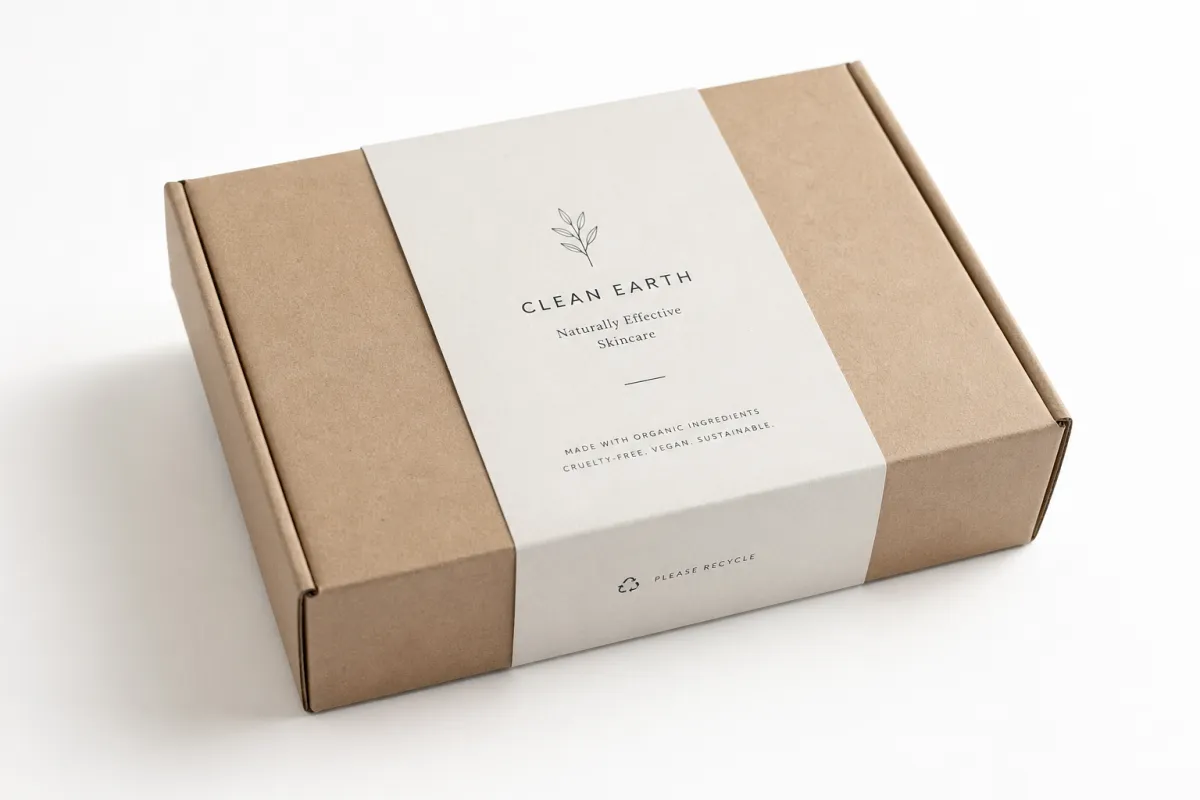
How to create minimalist eco packaging starts with a definition most teams get wrong. It is not a brown box with a leaf icon. It is not a shortcut for looking rustic. In real production, it means the smallest package that still does four jobs: protects the product, communicates the brand, ships efficiently, and can be recovered without turning the recycling stream into a puzzle. In my experience, the better designs remove one layer, one insert, or one ink-heavy flourish, not all three at once, especially on runs of 5,000 to 50,000 units.
Minimalist and eco-friendly are related, but they do not mean the same thing. Low-waste packaging focuses on using less material. Recyclable packaging means the structure can enter a recycling stream when local systems accept it. Reusable packaging is built for multiple cycles, which shows up a lot in subscription and returnable shipping in places like Berlin, Toronto, and Amsterdam. Compostable packaging only makes sense when the full material stack and disposal conditions actually support it, including the 60 to 90 day breakdown claims some suppliers make and almost never prove. If you want to get serious about how to create minimalist eco packaging, those differences matter more than whatever slogan gets printed on the back panel.
I once sat with a supplier in Dongguan who proudly showed me a premium pack made from three paper grades, a PET window, and a foam collar. The client had asked for sustainability, but the result looked like a landfill with better typography. We cut it down to one folding carton, one molded pulp insert, and one pass of water-based black ink. The unit cost fell from $1.12 to $0.79 at 8,000 pieces, and the shelf face looked calmer because there was finally some breathing room around a 42 mm logo mark. That is the real business payoff behind how to create minimalist eco packaging: less material, cleaner shelf presence, fewer shipping headaches, and fewer production surprises.
There is a psychology layer too. In retail packaging, busy surfaces read as noisy. Disciplined white space reads as deliberate. A plain kraft carton with a sharp one-color logo and a proper 4 mm margin can feel more premium than a crowded box covered in six badges and a metallic sticker shouting for attention. I have seen buyers in a client meeting choose the simpler sample because it looked like the brand knew exactly what it was doing in one glance from 1.5 meters away. That choice was not emotional fluff. It was package branding doing its job in eight seconds.
People sometimes ask me for a single rule for how to create minimalist eco packaging. I give them this one: protect the product, reduce waste, make recovery easier, then keep the design honest. That chain sounds plain. Good. Plain survives production in Shenzhen, in Guadalajara, and in Chicago. Fancy ideas that cannot survive corrugated compression or a 600 mm drop test are just expensive sketches, no matter how polished the render looks on a MacBook.
How to Create Minimalist Eco Packaging That Still Feels Premium
If you want to understand how to create minimalist eco packaging that still feels premium, think less about decoration and more about precision. Premium is rarely added. It is usually revealed. A box with clean edges, disciplined spacing, and a restrained color palette often feels more refined than a crowded package full of finish effects trying to impress from three feet away. The trick is to make the structure do the heavy lifting so the branding can stay quiet and confident.
A package looks premium when the typography is controlled, the proportions feel intentional, and the material choice supports the story. Kraft paper can read warm and natural. FSC-certified board can read modern and trustworthy. Molded pulp can read practical and considered. None of those options need a foil stamp or a second sleeve to feel complete. That is one of the biggest lessons inside how to create minimalist eco packaging: premium does not have to mean more. Often it means fewer moves, executed better.
I have seen the same product look cheap in a box with six graphics and expensive in a plain one-color carton because the second version had better rhythm. The logo was centered. The margins were even. The board thickness matched the product weight. The opening experience felt calm instead of fussy. Customers do not always describe those details, but they notice them. They register them as quality, even when they cannot explain why.
That is why how to create minimalist eco packaging should be treated as both an engineering decision and a brand decision. A package that performs well in transit but looks accidental on shelf is only half-finished. A package that looks luxurious but fails in the warehouse is worse. The best result sits in the middle: less waste, more clarity, and a Product Presentation That feels deliberate from the first glance to the last unboxing step.
How Minimalist Eco Packaging Works in the Real World
How to create minimalist eco packaging in production is never just a material choice. It is a system choice. Structure, substrate, print restraint, warehouse packing, and shipping mode all stack together. Improve only one piece and the package still feels unfinished. I have seen beautiful packaging design fail because it looked great on a render and collapsed in a carton when nobody checked stacking pressure or destination humidity in Singapore, Austin, or Rotterdam. The render gets the applause; the box gets the blame.
Think of the workflow in five steps: sourcing, converting, packing, shipping, and recovery. During sourcing, you choose board grade, recycled content, or pulp spec. During converting, the supplier decides whether die-cutting, gluing, or folding is efficient. During packing, the product has to fit without overstuffed void fill. During shipping, the carton has to handle vibration, compression, and rough handling on routes that can stretch from Ningbo to Los Angeles. During recovery, the consumer or recycler has to separate, sort, or process the components without a small engineering degree. That entire chain is why how to create minimalist eco packaging is really a logistics question wearing a design coat.
Most brands focus too hard on the substrate and not hard enough on structure. Yes, kraft paper, corrugate, molded pulp, and FSC board all matter. Oversized cartons and excess insert layers usually waste more material than a smarter one-piece design. I once helped a beverage accessories client cut shipped air by 22% simply by trimming the box depth by 14 mm and reworking the insert tabs in a plant outside Ho Chi Minh City. The board cost barely moved, yet freight efficiency improved enough to save almost $3,000 per month on domestic shipping. That is the kind of result people hope for when they search for how to create minimalist eco packaging, even if they never say the quiet part out loud.
Branding still matters, and it should be disciplined. One strong logo. A compact type hierarchy. One tactile finish. That is usually enough. Matte aqueous coating on a 350 gsm board can feel more refined than a glossy flood print, especially when the color palette stays at one or two inks and the live area is kept to 60% or less of the face panel. In branded packaging, restraint is often more memorable than decoration. If a package is clean enough to let the form speak, that usually means the brand presentation is mature, not lazy.
For practical reference points, I prefer checking material recovery and test standards instead of trusting marketing language. The FSC site helps when a team wants to understand certified fiber claims, and the ISTA standards are the kind of thing I wish more brands read before blaming the carrier for a busted corner. If you want a broader packaging policy lens, the EPA’s materials guidance at epa.gov/recycle is worth a look. None of that replaces testing. It just keeps the conversation honest when a supplier in Ohio or Shenzhen says a structure is "good enough."
"If it needs a plastic tray just to survive a 600 mm drop, the design is not simple enough yet." That was a line from a packaging engineer I worked with in Ohio, and frankly, he was right more often than the brand team wanted to admit, especially after the third sample round.
The logic never changes: protect the product first, then reduce waste, then make recovery easier, and only then worry about making the design feel premium. Reverse those priorities and how to create minimalist eco packaging turns into a style exercise with a very expensive failure mode, usually at the same moment a 10,000-unit purchase order is already in motion.
Key Factors That Decide Whether It Works
How to create minimalist eco packaging that actually performs depends on four decisions that sound simple until the first round of production starts asking questions. The first is material choice. The second is product protection. The third is brand presence. The fourth is production compatibility. Miss any one of them and the clean concept turns expensive by the third sample round, usually sometime between the dieline proof and the corrected prototype.
Material choice is the obvious starting point. Kraft paper works well for lightweight retail packaging and sleeves. Corrugate handles shipping strength and stacking better. Molded pulp makes sense when the product needs shape retention and fewer loose parts. FSC-certified board helps when a brand wants a paper-based structure with verified sourcing. Recycled content is useful, but I always ask what percentage is real, what percentage is post-consumer, and what percentage is just polished wording from a sales deck. That question alone has saved clients from a few embarrassing claims and one spectacularly awkward boardroom silence in Minneapolis.
Protection is non-negotiable. A minimalist structure still has to survive humidity, corner crush, vibration, and the occasional carrier toss that looks like someone aiming at a trash can. I have seen a cosmetic set come back from a 72-hour humidity cycle in Shenzhen with warped sleeves because the board had no coating spec and the glue line sat too close to the fold. That failure had nothing to do with eco intent. It had everything to do with skipping engineering. If you are serious about how to create minimalist eco packaging, the pack has to pass the abuse test before it earns the pretty label.
Brand presence does not disappear just because the design is restrained. One centered logo, one or two type sizes, and a disciplined grid can carry a lot of weight. I have had clients worry that fewer graphics would make the pack look cheap, but the opposite happened when we tightened the margins to 6 mm and moved the copy off the face panel. A quiet surface can read as premium if the typography is clean and the proportions are right. That is especially true for Custom Printed Boxes and branded packaging, where the consumer is judging the product in under five seconds, often while holding a phone and a coffee at the same time.
Production compatibility is the part everyone forgets until the quote arrives. A concept that needs odd folds, custom magnets, or a die that wastes 40% of the sheet can blow up the budget. I have seen beautiful packaging design turn into scrap because the structure needed seven hand operations and a special glue line nobody stocked locally in Dongguan. If your supplier has to invent a process to make your idea work, the concept is probably not ready. How to create minimalist eco packaging also means respecting the line worker, the die cutter, and the person who has to pack 400 units an hour without smashing the corners.
Compliance and recovery matter too. Do not print "recyclable" unless the whole build supports it. Do not call something compostable unless the material mix, inks, and local disposal path actually back that up. I am blunt about this because greenwashing gets called out fast in London, Toronto, and Sydney, and the brand always looks worse than the supplier. One misused claim can undo six months of careful product packaging work. Nobody wants a marketing win that turns into a legal headache with a prettier font.
Here is the short version: Choose the Right substrate, design for transport, keep the branding disciplined, and build for production before you build for applause. That is the practical core of how to create minimalist eco packaging, and it holds up whether the run is 2,500 units or 250,000.
How to Create Minimalist Eco Packaging Step by Step
If you want how to create minimalist eco packaging to work in the real world, start with the product, not the mood board. Measure the widest point, the heaviest point, and the most fragile point. I mean actual numbers: 142 mm wide, 84 mm tall, 310 g weight, or whatever the item really is after the accessories are included. A box that fits the main product but ignores the charger, cap, or instruction card is not a solution. It is a return label waiting to happen, and I have seen plenty of those waiting politely in the bin.
Step 1 is a brief. Keep it short and specific. List the product dimensions, shipping method, unboxing target, retail or ecommerce channel, and recovery goals on one page. A product that ships by parcel needs different tolerance than one that sits on a store shelf for six weeks in Tokyo or Munich. Retail packaging puts more pressure on the face panel. Direct-to-consumer packaging puts more pressure on the shipper strength. That is why how to create minimalist eco packaging should begin with usage, not aesthetics.
Step 2 is the one-material-first concept. I like asking for a version that uses only one board or one fiber family before anyone starts adding extras. Start with 350 gsm FSC paperboard or B-flute corrugate and see whether the structure can do the job alone. Add a molded pulp insert only if the product slides or breaks. Remove any decorative sleeve, inner bag, or extra card that does not clarify the product or protect it. This is the cleanest path I know for how to create minimalist eco packaging without turning the brief into a junk drawer.
Step 3 is the sample chain. A real production path should include brief, dieline, sample, revision, test, approve, and scale. Skip step 4 or step 5 and the launch usually pays for it later. I recommend building in at least two sample rounds for anything with a custom insert or a new fold pattern. For a simple paperboard sleeve, I have seen projects move from brief to approved sample in three to five weeks. For a pack with new tooling, six to eight weeks is more realistic, especially if the supplier is in Ningbo and the final assembly is happening elsewhere. That timeline is part of how to create minimalist eco packaging without fantasy scheduling.
Step 4 is testing. At minimum, run fit test, drop test, compression test, and scuff test. For shipping-heavy projects, a vibration simulation or distribution test aligned to ISTA 3A or ASTM D4169 is worth the paperwork. I have watched a box that looked perfect fail because the corner flaps rubbed the ink off during a simple 5-meter conveyor transfer. Testing is not glamorous, but neither is a refund, and refunds have an ugly habit of multiplying.
Step 5 is production review. Check glue points, print registration, board grain direction, and assembly sequence before you approve the run. A neat-looking concept can still become a nightmare if the folding order is inefficient or if the insert needs three seconds of hand adjustment per unit. On a 10,000-piece run, that turns into real money quickly. This is where how to create minimalist eco packaging becomes operational, not theoretical, especially when labor is being priced by the hour in a plant outside Guangzhou.
Step 6 is recovery labeling. If the packaging uses one material family, say so clearly. If there are multiple parts, make separation obvious. I prefer short instructions and plain icons over fluffy sustainability copy. The cleaner the instructions, the less likely a customer is to throw the whole thing away because they were confused. That detail alone improves the odds that your product packaging behaves the way you intended after opening, whether the buyer is in Berlin or Boston.
If you need a structural starting point, our Custom Packaging Products page is a useful place to compare formats before you ask for quotes. I have also sent teams to custom printed boxes options when they needed a simple shell with a precise print spec and no extra decoration. For brands that want to review product packaging possibilities in one place, that is usually faster than guessing from a PDF screenshot or a blurry factory photo from Shenzhen.
That process sounds strict because it is. A disciplined workflow is the closest thing I know to a repeatable answer for how to create minimalist eco packaging at scale, especially when the launch window is 30 to 45 days and the supply chain crosses three time zones.
How to Create Minimalist Eco Packaging: Cost and Pricing
How to create minimalist eco packaging is often cheaper than the brand team expects, though not always. The cost shows up in five places: material, print method, tooling, sample rounds, and labor. Freight can matter more than people think too, especially when oversized cartons waste cubic space on pallets measured at 40 x 48 inches or in a 1100 x 1100 mm export stack. I have seen a 12% reduction in carton volume save more money than a premium paper upgrade cost, which is exactly the kind of math nobody wants to do until the invoice arrives. Then everyone suddenly becomes interested in dimensions.
The cheapest path is usually the one with fewer components and lower ink coverage. One-color print on kraft board often beats four-color full bleed on coated stock, especially at 5,000 units or more. Removing a foam insert can save $0.07 to $0.24 per unit depending on size. Tightening the box dimensions by 8 to 15 mm can reduce shipping cost enough to matter at scale. That is why how to create minimalist eco packaging can lower the true landed cost even if the board itself costs a little more, particularly when the box is moving through Dallas, Chicago, and Atlanta distribution centers.
That said, some eco materials cost more upfront. Specialty recycled fibers, custom molded pulp tooling, and low-MOQ FSC board runs can push the prototype budget up fast. If a supplier needs a new cutter, a new mold, or a new glue jig, the setup cost can jump by $350 to $2,500 before you approve the first full run. I learned this the hard way on a cosmetics client where the team wanted a "simple" tray shape that needed a custom pulp mold. Simple on the render. Not simple on the invoice. This is the part of how to create minimalist eco packaging that people skip when they only compare unit price.
Budget works better when you split it into three buckets: prototype cost, setup cost, and per-unit production cost. Prototype cost covers samples and revisions, often $75 to $300 per version for paperboard and more for molded parts. Setup cost covers tools, plates, and die lines. Per-unit production cost covers the actual carton, insert, print, and assembly. Keeping those buckets separate makes the decision clearer and helps avoid the classic "cheap sample, expensive run" trap. That trap catches more brands than bad artwork does, especially when a sales team in New York assumes the first quote is the final quote.
| Package Build | Typical Setup | Prototype Cost | Unit Cost at 5,000 pcs | Best Use |
|---|---|---|---|---|
| FSC paperboard sleeve | 1 board, 1-color print, no insert | $120 to $240 | $0.18 to $0.32 | Light retail items and simple brand presentation |
| Paperboard box + molded pulp insert | 2 components, water-based ink, die-cut insert | $180 to $420 | $0.42 to $0.88 | Fragile product packaging with better protection |
| Corrugated mailer + branded belly band | Shipping-first structure, minimal print, fold-flat build | $150 to $350 | $0.55 to $1.05 | Ecommerce orders that need stronger transit performance |
| Custom molded pulp nest | Tooling required, fiber mold, low-ink finish | $900 to $2,500 | $0.60 to $1.40 | Higher-protection premium packaging design |
The smartest spending usually goes into structure, not decoration. If you can choose between a $0.12 metallic accent and a $0.12 upgrade to board strength, pick the board. If you can choose between a second insert and a better closure method, pick the closure. That advice sounds unfashionable, but I have yet to see a carrier care about foil stamping. It cares about corners, compression, and box integrity. How to create minimalist eco packaging is partly the art of spending the same dollar in a better place.
One more practical note: quote at 1,000, 5,000, and 10,000 units if you can. The price spread is often ugly in a helpful way. A custom printed box that costs $0.92 at 1,000 pieces may drop to $0.31 at 10,000 pieces, while the setup cost barely changes. That gives you a real view of scale, not a hopeful guess. It is also the fastest way to tell whether minimalist eco packaging will actually reduce cost or just move it around. I have seen more than one brand celebrate a low sample price and then wince at the production quote like it personally insulted their family.
Common Mistakes That Make Eco Packaging Fail
How to create minimalist eco packaging can go sideways in the same five ways over and over. The first mistake is using too many materials. If the package includes paper, plastic, foil, adhesive-heavy labels, and a foam insert, the sustainability claim becomes a sorting-room headache. The cleaner the material stack, the easier the recovery path. I have seen recycling operators in California and the Midlands toss mixed builds immediately because the separation labor outweighed the material value.
The second mistake is oversizing. Brands love to protect the product with "extra room," then wonder why freight costs keep climbing. A box that is 18 mm too tall and 12 mm too wide may not sound disastrous, but on a 15,000-piece run it adds up fast. It also makes the unboxing feel sloppy. In minimalist packaging, loose space reads as carelessness, not luxury. That is why how to create minimalist eco packaging always begins with measurement, not assumption.
The third mistake is chasing a raw look that ends up cheap. Kraft does not automatically mean premium. A rough, under-printed carton with misaligned folds and a crooked logo looks like a sample that escaped the factory. I have had clients bring me that exact problem and ask why customers said the packaging felt "unfinished." The answer was obvious: the design lacked intent. Good minimalist packaging needs tight folds, precise type placement, and enough contrast to feel deliberate, even when the palette is only black and kraft brown.
The fourth mistake is vague sustainability claims. "Eco-friendly," "green," and "planet safe" mean almost nothing unless the structure and materials can support them. If the board is recycled, say the percentage if you know it. If the pack is FSC certified, say that accurately. If the inks are water-based, mention it only when the whole system backs that claim. A sloppy claim is worse than no claim. It makes the whole brand look loose, and loose brands get expensive fast in front of a retailer compliance team.
The fifth mistake is skipping tests because the schedule feels tight. I get it. Everyone wants the sample approved in 48 hours. But if you do not run fit, drop, and scuff tests, you are basically hoping carriers become kinder than they have ever been. That hope is not a strategy. I once watched a subscription client skip test runs, launch 9,000 units, then discover the insert tabs folded during pack-out because the board grain ran the wrong direction. They saved two days and lost three weeks.
Honestly, the failure pattern is predictable. Brands ask how to create minimalist eco packaging, then accidentally add one more layer, one more material, one more color, and one more claim. The package stops being minimal, stops being clean, and stops being believable. The fix is usually to remove one thing, not add another. That sounds almost too simple, which is probably why so many teams ignore it until the first damaged shipment arrives in a warehouse in Phoenix or a returns center in Newark.
How to Create Minimalist Eco Packaging: Next Steps
If you want a practical launch plan for how to create minimalist eco packaging, keep the next 30 days simple. First, define the product size, fragility, and shipping path in one document. Second, choose one base material and ask for two sample builds instead of five mood-board variations. Third, request quotes at 1,000, 5,000, and 10,000 units so you can see where the cost actually lands. I have seen brands make better decisions in one afternoon with those three inputs than in three weeks of internal debate, which says a lot about how much time gets spent in meetings pretending to be planning.
Then run a test stack before production approval. Fit test. Drop test. Shelf test. Shipping simulation. If the product is retail-bound, check how the box faces under two types of store lighting, such as 3000K warm and 5000K neutral. If it is ecommerce-bound, check whether the outer mailer survives scuffing and compression after 48 hours in a stacked carton. That is the stuff that determines whether how to create minimalist eco packaging feels premium or just looks good in a deck.
Make the supplier review specific. Ask for the dieline, material spec, ink method, glue line, and assembly sequence. Ask whether the pack is intended to be separated into one material stream or two. Ask what changes the quote if you remove one insert or shrink the carton by 10 mm. Those are the questions that turn how to create minimalist eco packaging from a vague goal into a production plan, and they are the same questions I ask whether the supplier is in Shenzhen, Suzhou, or Kentucky.
If you are choosing between premium touches, I would spend money on three things before any decorative flourish: better board strength, cleaner print registration, and a smarter opening mechanism. A good tear strip or pull tab is worth more than a spot UV accent on a box nobody can open without a knife. I learned that in a client meeting where the sample looked beautiful, but the tabs tore off in the first 10 opens. Pretty is useless if the customer needs scissors. I still remember the sigh in the room. It was the sound of money discovering gravity.
One more thing from the factory floor: the best design is usually the one that removes one more thing. I have seen that pattern in our Shenzhen facility, in a corrugate plant that smelled like starch and hot glue, and in a late-night sampling room where everyone was too tired to pretend a useless insert mattered. The wins were almost always subtraction, not addition. That is the real answer to how to create minimalist eco packaging as a repeatable process, not a one-off trend.
So if you are ready to move, start with one material, one structure, and one clear claim. Keep the print restrained. Keep the dimensions honest. Keep the tests real. The practical takeaway is simple: choose the lightest structure that survives real testing, then stop there. That is how to create minimalist eco packaging that protects the product, respects the budget, and still feels premium when the customer opens the box.
How do I create minimalist eco packaging without making it look cheap?
Use one strong material, then let the structure, 6 to 8 mm margins, and precise typography carry the design. Matte or uncoated finishes usually look more intentional than shiny extras, and a clean one-color print often beats a crowded four-color layout for premium product packaging. I have seen a plain kraft box beat a flashy sample more than once, which still annoys the people who spent extra on foil.
Is minimalist eco packaging actually cheaper to produce?
It can be cheaper when you remove extra inserts, shrink the carton by 8 to 15 mm, and simplify the print coverage. It can cost more if you switch to specialty recycled fibers, add custom tooling, or need two or three sample rounds for structural approval. The honest answer is that how to create minimalist eco packaging saves money when the structure gets smarter, not just smaller.
How long does it take to develop minimalist eco packaging?
A simple paperboard or corrugated build can move from brief to approved samples in about 3 to 5 weeks if the dieline is straightforward. Custom inserts, new molds, or compliance checks can push the timeline to 6 to 8 weeks or longer. If a team says they want a fully custom sustainable pack in ten days, I usually smile politely and reach for coffee.
What materials work best for minimalist eco packaging?
FSC paperboard, recycled kraft, corrugated board, and molded pulp are common starting points. The best choice depends on the product weight, the shipping method, the print needs, and whether the package has to be recovered as one material or split into parts. There is no single perfect substrate, which is irritating but true.
What should I test before I launch minimalist eco packaging?
Run fit, drop, compression, and scuff tests before production approval. If the package will ship in volume, check pack-out speed in the warehouse, then confirm the unboxing still feels deliberate and premium after handling. A pack that looks gorgeous but fails at the conveyor is just a very expensive surprise.