Buyer Fit Snapshot
| Best fit | Custom Display Shipper Boxes Wholesale for Retail Brands projects where brand print, material claims, artwork control, MOQ, and repeat-order consistency need to be specified before quoting. |
|---|---|
| Quote inputs | Share finished size, material target, print colors, finish, packing count, annual reorder estimate, ship-to region, and any compliance wording. |
| Proofing check | Approve dieline scale, logo placement, barcode or warning zones, color tolerance, closure strength, and carton packing before bulk production. |
| Main risk | Vague material claims, crowded artwork, missing packing details, or unclear freight terms can make a low unit price expensive after revisions. |
Fast answer: Custom Display Shipper Boxes Wholesale for Retail Brands should be specified like a repeatable production item. The safest quote records material, print method, finish, artwork proof, packing count, and reorder notes in one written spec.
Production checks before approval
Compare the actual filled-product size with the drawing, then confirm tolerance on folds, seals, hang holes, label areas, and retail display edges. Reserve space for logos, QR codes, warning copy, and material claims before decorative graphics fill the panel.
Quote comparison points
Review material grade, print process, finish, sampling route, tooling charges, carton quantity, and freight assumptions side by side. A quote is only useful when the supplier can repeat the same color, closure quality, and packing count on the next order.
A display carton has one job until it suddenly has three. Custom display shipper boxes wholesale turn transit packaging into shelf-ready merchandising, which cuts handling, lowers damage, and puts product in front of shoppers with a lot less fuss. That matters because the cheapest carton on a quote can turn into the most expensive carton in the building once receiving, repacking, and shelf labor start taking bites out of the margin.
From a packaging buyer's point of view, custom display shipper boxes wholesale are not only shipping containers. They are part of the sales system. The box protects the product, opens the right way, and presents the SKU cleanly enough that store teams do not have to improvise with tape, knives, and bad habits. That is the difference between packaging that supports retail and packaging that simply occupies a pallet.
A good shipper should open once, stand straight, and keep the product aligned. If it needs three people, two blades, and a prayer, it is not retail-ready.
Why custom display shipper boxes wholesale make more sense than standard cartons
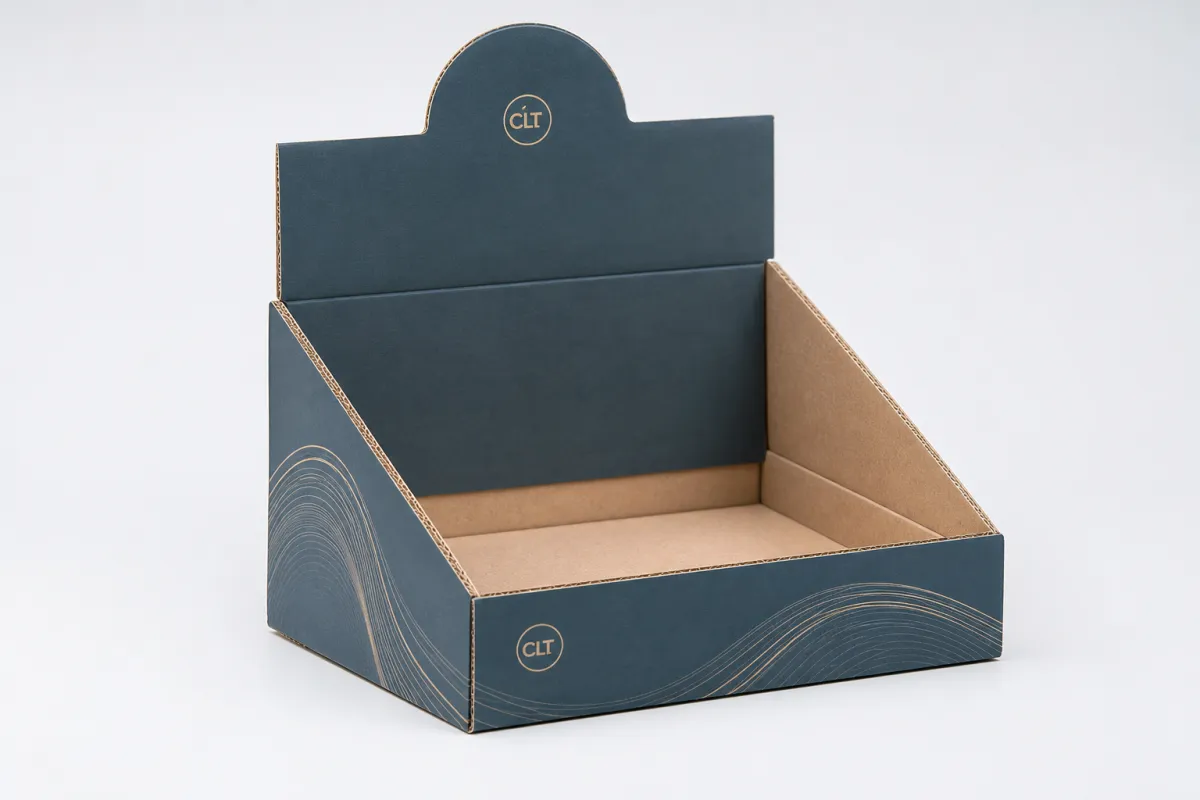
Custom display shipper boxes wholesale solve two problems at the same time: they protect product in transit and arrive ready to merchandise. Standard cartons usually handle only the first job. That means someone else has to handle the second one later, often in a warehouse aisle or on the store floor, where labor is expensive and time is tight.
The hidden cost of a "cheap" box is usually not the box itself. It is the extra touch count. Receiving teams open cartons, inspect units, repack product, throw away damaged pieces, and rebuild displays from scratch. Each of those steps burns time, and each one raises the chance that units get crushed, labels scuffed, or graphics damaged before the product reaches the shelf.
For club stores, convenience chains, and seasonal promotions, custom display shipper boxes wholesale make even more sense. Those channels want cartons that survive pallet travel, then convert cleanly into a shelf-ready or floor-ready display. The shipper has to look good under retail lighting, but it also has to survive stacking, vibration, humidity swings, and rough handling. Pretty is useless if it splits at the corner.
In real terms, the value is straightforward:
- Fewer touches: product moves from pack-out to shelf with less handling.
- Less waste: fewer broken units, less rework, fewer replacement orders.
- Faster shelf setup: store staff can open, tear, and place without repacking.
- Cleaner presentation: a well-built display supports package branding instead of hiding it.
- Better sell-through: retail packaging that looks intentional tends to stay on the floor instead of in the back room.
That last point gets missed more often than it should. A display shipper is not decoration. It is a merchandising tool. If the structure is sloppy, the product looks secondary. If the structure is planned well, the product looks ready for the aisle. That is why custom display shipper boxes wholesale often beat a generic carton even when the unit price is a little higher.
Another buyer mistake is judging only the board cost. The board is one line in the budget. Labor, damage, freight efficiency, and launch timing matter more. I have seen programs save a few cents on the carton and lose dollars on rework. That is not a victory. That is packaging design with blinders on.
Retail teams also notice how quickly a carton converts. A shipper that opens cleanly and stays square reduces the odds of bent corners, sagging panels, and rushed fixes with tape. That kind of mess sends the wrong signal on the shelf, especially when the packaging is supposed to support the product and the brand at the same time. Good custom display shipper boxes wholesale work because they reduce friction for the people who have to move, stock, and sell the product.
Product details: styles, printing, and retail-ready features
There is no single format for custom display shipper boxes wholesale, because retail channels ask for different behaviors. A convenience chain wants quick counter placement. A club store wants pallet-ready durability. A seasonal promo needs strong graphics and fast setup. The structure should follow the channel, not the other way around.
The most common styles buyers ask for usually fall into a few buckets:
- Side-loading shippers: useful when the front panel must stay clean until the carton reaches the floor.
- Top-loading shippers: a common choice for faster pack-out and direct loading from above.
- Shelf-ready trays: open-front styles that let product slide into place with minimal handling.
- Perforated display fronts: tear-away panels that convert a shipping case into a display in one motion.
- Mailer-style cases: reinforced formats that work better for heavier retail packs or ecommerce crossover programs.
Retail-ready features matter more than pretty drawings. Tear-away panels should tear cleanly, not rip the whole front into a jagged edge. Carry holes need to sit where one person can move the shipper without crushing the sides. Locking tabs should hold through transit, yet still release without a fight when store staff is opening the carton. Good custom display shipper boxes wholesale feel obvious when they work and annoying when they do not.
Printing choices also affect the final result. For value-focused runs, one-color or two-color flexo on corrugated is usually the economical choice. For high-visibility programs, litho lamination gives sharper graphics and stronger brand presentation. That is where branded packaging starts doing real work. The display becomes part of the shelf story, not just a brown box with a logo slapped on it.
Material choice should match the look and the load. Kraft liners can work well for an earthy, durable appearance. White-top board gives brighter print contrast for Custom Printed Boxes with stronger shelf appeal. If the product line depends on visual polish, white board or litho-lam stock can improve the final presentation without changing the structure.
Internal packaging details matter too. Inserts, dividers, and product restraints keep units aligned and prevent shifting during transport. That helps the display look intentional instead of messy. A shipper full of crooked units looks like no one cared. That is bad package branding, and it is easy to avoid with the right internal support.
For programs that need broader packaging support, our Custom Packaging Products page is a useful place to compare related structures. It helps buyers see where a display shipper fits inside the wider product packaging mix.
There is also a reason some buyers ask for one structure across several SKUs. Standardizing size families simplifies sourcing, speeds setup, and cuts the odds of a surprise on the line. That is less glamorous than custom art on every box, but it usually saves money and headaches.
Color choices matter as much as structural ones. A display that carries a clean brand field, a sharp logo, and a clear product message tends to feel like a retail asset, while a cluttered front panel can make even a strong product look uncertain. Smart custom display shipper boxes wholesale balance print coverage with the realities of die-cutting, folding, and stack performance so the box still behaves like a box after the artwork is done.
Specifications that decide strength, fit, and shelf performance
Custom display shipper boxes wholesale live or die on the spec sheet. If the dimensions are wrong, the board grade is too light, or the perforations are cut in the wrong place, the display will fail in the field. Not always loudly. Sometimes it just looks tired, bowed, or crooked, which is worse because the damage happens slowly and people stop noticing until sales dip.
Board grade is the first decision. Small, light SKUs can often work on standard single-wall corrugated. Heavier products, stacked club-store programs, and taller displays usually need stronger flute profiles, thicker liners, or double-wall construction. A 32 ECT board can be enough for some lighter retail programs, but 44 ECT or a stronger structure is safer when load, stack height, or pallet travel gets more aggressive. This is not theory. It is basic load management.
Dimensions are just as important. The product size, pack count, display height, overhang allowance, and pallet footprint all need to be clear before the dieline gets built. If the carton has to fit a retail shelf, the front opening cannot swallow half the shelf depth. If it has to sit on a club-store pallet, the footprint needs to match the pallet pattern and leave enough clearance for handling. Custom display shipper boxes wholesale are not one-size-fits-all because retail rarely is.
Performance specs should not get brushed aside. Buyers should ask about:
- Compression strength: how much stacking load the box can tolerate before it bows.
- Edge crush or ECT rating: a useful indicator for pallet and warehouse performance.
- Burst strength: relevant for some box styles and transport conditions.
- Moisture exposure: important for cold chain, humid warehouses, and long transit windows.
- Converted display strength: what the shipper can handle after the front panel opens.
Testing matters. Standards like ISTA give buyers and suppliers a common language for distribution testing, while compression and material checks based on ASTM methods help compare options without guessing. If a supplier cannot explain how the shipper will behave after opening, that is not a small gap. It is the entire point of the structure.
Convertibility is another detail people underestimate. The best custom display shipper boxes wholesale are engineered so the structural fold lines, glue area, and perforation placements work together. If the perforation lands too close to a score, the panel can tear early. If the glue flap is undersized, the box may open unevenly. If the artwork wraps poorly across panels, the display can look skewed under store lighting. Little mistakes become visible fast.
For buyers who need certified board, ask for FSC documentation early. The paperwork is easier to manage when it is part of the quote stage instead of a surprise after approval. A FSC chain-of-custody claim only matters if the sourcing path is clean, so get that detail settled before production starts.
Spacing, score placement, and panel depth also affect how the display feels in use. A box that is only a few millimeters off can force the product to lean, crowd, or sink too deep, and those little flaws show up fast once the carton is under store lighting. Good specs protect the look of the item as much as the item itself, which is exactly why experienced buyers press for full measurements before a run of custom display shipper boxes wholesale gets approved.
All of this sounds technical because it is. But the practical lesson is simple: fit, strength, and shelf behavior are not separate goals. They are the same job viewed from different angles. If one is wrong, custom display shipper boxes wholesale stop being useful and start becoming expensive.
Custom display shipper boxes wholesale pricing, MOQ, and quote factors
The price of custom display shipper boxes wholesale is not a mystery. It is the result of a few predictable inputs: board type, print coverage, number of colors, size complexity, insert count, special finishes, and whether the job needs custom tooling. Once you know those variables, the quote starts making sense instead of sounding like a random number pulled from a hat.
For a buyer planning volume, here is the practical logic. Larger runs spread the setup cost across more units. Simpler structures cost less to produce and less to convert. Standardizing one or two sizes across a program usually saves more than chasing tiny dimension changes on every SKU. That is one reason mature retail programs keep their packaging design disciplined.
| Option | Best fit | Typical build | Common MOQ | Approx. unit price at 5,000+ units |
|---|---|---|---|---|
| Plain flexo shipper | Value-focused retail packaging | Single-wall corrugated, 1-2 color print | 500-1,000 | $0.32-$0.68 |
| Shelf-ready tray | Fast store setup | Tear-away front, basic branded packaging | 1,000-2,000 | $0.45-$0.92 |
| Litho-lam display shipper | High-visibility launches | Full-color print, sharper graphics, premium finish | 1,500-3,000 | $0.95-$2.10 |
| Heavy-duty club-store shipper | Pallet travel and heavier loads | Stronger board, inserts, reinforced openings | 1,000-2,500 | $1.40-$3.25 |
Those numbers are directional, not a promise. Size, print coverage, and freight all shift the final cost. Still, the ranges give buyers a useful starting point. If someone is quoting far outside them, ask why. Sometimes the answer is a legitimate structural requirement. Sometimes the answer is just unnecessary complexity.
MOQ is another place where buyers get surprised. Simple custom display shipper boxes wholesale programs can sometimes start around 500 to 1,000 units. More complex retail-ready structures often land at 1,000 to 3,000 units because tooling, press setup, and conversion time need to be spread across enough pieces. Repeat orders can be more flexible because the structural work is already locked in.
Want a fast, accurate quote? Send finished dimensions, product weight, target quantity, artwork files if you have them, the shipping destination, and any retail requirements like pallet height or shelf-ready opening style. The cleaner the brief, the cleaner the number. That is true for custom display shipper boxes wholesale and pretty much every other packaging order on the planet.
If the packaging has to fit into a broader rollout, our Wholesale Programs page is a good starting point for repeat-order planning. It helps buyers think through pricing, replenishment, and production timing before the launch date turns into a problem.
Shipping method changes the math too. A design that folds flat with efficient pallet utilization can lower freight expense, while oversized cartons or awkward nesting patterns can erase savings before the boxes ever reach the retailer. Buyers comparing custom display shipper boxes wholesale should ask not only what the carton costs to make, but also what it costs to store, ship, and move through the rest of the supply chain.
Process and timeline: from dieline approval to delivery
The process for custom display shipper boxes wholesale should be orderly. Discovery first. Spec review next. Structural recommendation after that. Then a dieline gets built around the product, not around wishful thinking. If the box is being forced to fit the product, someone is already paying for the mistake.
A practical timeline usually looks like this:
- Discovery and quote: once dimensions, quantity, and channel requirements are clear, quoting can move quickly.
- Structural review: a dieline or prototype confirms fit, opening method, and load path.
- Artwork prep: packaging design gets checked against the structure so graphics land in the right place.
- Proof approval: nothing should go to press until the buyer signs off on structure and artwork.
- Production: after approval, manufacturing typically runs in business days, not vague promises.
- Freight and delivery: shipping time has to be added separately to the production window.
Realistic timing matters. Once complete specs are in hand, quoting can happen fast. Samples or proofs usually come next, and production often starts only after approval. For many custom display shipper boxes wholesale programs, the manufacturing window lands in the 12-20 business day range after sign-off, but that depends on board availability, printing method, and finishing complexity. Freight adds its own clock.
Where do schedules slip? Usually in boring places. Missing measurements. Late artwork changes. Unclear pallet requirements. Too many finish options. These are not glamorous mistakes, but they are the ones that move launch dates. If a shipper has a tricky opening or a premium finish, build in sample time. Guessing is expensive. Testing is cheaper.
A good rule: if the display will be handled by multiple teams, test it before the full run. Warehouse staff, store teams, and merchandisers do not all use packaging the same way. A carton that looks fine on a render can behave differently once it gets stacked, squeezed, and opened in a real environment. That is exactly why custom display shipper boxes wholesale should be treated as a production project, not a design exercise.
Delivery planning also matters more than people admit. Production lead time is only one piece of the calendar. Transit mode, warehouse receiving windows, and retail launch dates all affect whether the cartons land on time or sit on a dock. Build the schedule backward from the shelf date. That keeps the box from becoming a bottleneck.
Artwork approvals deserve the same discipline as the structure itself. One late color correction, one missing barcode, or one unclear panel note can push the whole schedule back. Tight programs keep production moving by treating every revision as a real cost, especially on custom display shipper boxes wholesale jobs where the retail date is already fixed.
Why buyers choose Custom Logo Things for wholesale shipper programs
Buyers do not need packaging poetry. They need clear specs, straight quotes, and advice that tells them what will actually ship and merchandise well. That is the practical side of custom display shipper boxes wholesale, and it is the side that tends to get the best long-term results.
Custom Logo Things works best for buyers who want repeatable output. Once a shipper program is dialed in, consistency matters more than novelty. Same fit. Same opening behavior. Same print quality. Same pallet pattern. That consistency protects the product packaging program, simplifies forecasting, and keeps the warehouse from relearning the same carton every season.
Honest tradeoffs matter too. If the structure needs stronger board to survive the trip, say that early. If the design needs a simpler print method to stay on budget, say that early. If the display opening should be changed so store staff can set it up faster, say that early. A supplier that tells the truth at the quote stage is more useful than one that promises everything and quietly adds cost later. That is just good buying discipline.
For multi-location programs, standardized custom display shipper boxes wholesale formats make the operation easier. Forecasting gets cleaner. Picking gets simpler. Reorders become less chaotic. Retail teams can recognize the carton faster, and that speeds up receiving. In other words, the box stops being a nuisance and starts behaving like a system.
There is also value in looking at the rest of the packaging mix, not just the display shipper. Some brands need shipping cases, inner cartons, retail sleeves, and floor displays to all behave as one family. If that is the situation, it helps to compare options inside the broader branded packaging plan instead of treating every piece as a one-off. That is where packaging design pays off.
Most buyers want three things from custom display shipper boxes wholesale: control, consistency, and a display that does not embarrass the product. That sounds basic because it is. The hard part is getting all three without bloating cost or slowing the launch. That is the job.
If you are still comparing structures, ask a blunt question: does this box help the product sell, or does it just make the shipment look organized? If the answer is only about shipping, the packaging is unfinished. A retail-ready shipper should do more than survive the trip.
That kind of decision usually comes down to the launch environment. A counter display, a pallet display, and a shelf-ready tray do not carry the same expectations, and treating them as interchangeable leads to awkward compromises. Buyers who specify their channel clearly usually get better results from custom display shipper boxes wholesale because the structure can be built around the real job, not a generic use case.
Next steps: how to order custom display shipper boxes wholesale
Ordering custom display shipper boxes wholesale is easier when you start with the right information. A short spec sheet beats a long guess. Give the supplier product dimensions, unit weight, pack count, target quantity, retail environment, and any special stack or opening requirements. That is enough to get a real conversation started instead of a vague one.
Here is the cleanest path:
- Confirm the product: finish the size, weight, and pack count first.
- Choose the retail behavior: shelf-ready, floor-ready, pallet-ready, or a mix.
- Request structure before art: a pretty layout on the wrong dieline is still the wrong box.
- Ask for a sample if needed: tricky openings and heavy loads deserve a physical test.
- Lock the schedule: build in approval time, production time, and freight time.
If your artwork is not ready, that is fine. Structure first is usually the smarter move anyway. The box has to hold the product, fit the channel, and open the way store staff expect. After that, the graphics can do their job. That order saves a lot of rework on custom display shipper boxes wholesale jobs.
One more practical note: if the display needs premium print, unusual cuts, or a very specific retail behavior, request a prototype. It is cheaper to find a flaw in a sample than in a 10,000-unit run. That sounds obvious, but obvious rules get ignored all the time when a launch deadline gets close.
For buyers who want a wider buying plan, our Wholesale Programs page can help with repeat-order planning, and our Custom Packaging Products page is useful for comparing related retail packaging formats. The goal is simple: pick the structure that protects the product, supports package branding, and does not waste labor.
If you need custom display shipper boxes wholesale, send the spec sheet, compare the options, and lock the production schedule before the launch window gets tight. That is the cleanest way to keep cost under control and make sure the retail floor gets a carton that does its job.
What board grade works best for custom display shipper boxes wholesale?
Use lighter corrugated for small, low-weight items that will not be stacked hard in transit. Choose stronger flute profiles or higher ECT when the box must survive pallet freight, club-store handling, or heavier loads. Add inserts or dividers when product shift is the bigger risk than crush strength.
How do I keep custom display shipper boxes wholesale pricing under control?
Keep the structure simple, limit special finishes, and avoid unnecessary cutouts or extra tooling. Standardize sizes across multiple SKUs when possible so setup costs are spread over more units. Use the print method that matches the job instead of forcing high-end graphics onto a budget program.
What is the usual MOQ for custom display shipper boxes wholesale?
MOQ depends on box size, print complexity, and whether the design needs custom tooling. Smaller or simpler runs can sometimes start lower, while complex retail-ready formats usually need a higher minimum. Repeat orders often become more flexible once the original tooling and specifications are approved.
How long does production usually take for custom display shipper boxes wholesale?
Proofing and sample approval come first, so the timeline depends on how fast artwork and specs are signed off. Production is usually measured in business days after approval, not calendar promises made to sound impressive. Freight time still has to be added on top of manufacturing time if the launch date matters.
What files and details do you need to quote custom display shipper boxes wholesale accurately?
Send finished product dimensions, unit weight, pack count, and the quantity you want to buy. Include the retail environment, shipping destination, and any stack or display requirements. Share artwork files if they are ready, but structure and specs should come first if the design is still in progress.
The simplest way to get the right box is to lock the product dimensions, retail behavior, and shipping conditions before you chase artwork or finishing choices. Get those three inputs right first, and custom display shipper boxes wholesale stop being a guessing exercise and start being a controlled part of the launch.

