Buyer Fit Snapshot
| Best fit | custom divider inserts for boxes for packaging buyers comparing material specs, print proof, MOQ, unit cost, freight, and repeat-order risk where brand print, material, artwork control, and repeat-order consistency matter. |
|---|---|
| Quote inputs | Share finished size, material target, print colors, finish, packing count, annual reorder estimate, and delivery region. |
| Proofing check | Approve dieline scale, logo placement, barcode or warning zones, color tolerance, and any recyclable or compostable wording before bulk production. |
| Main risk | Vague material claims, crowded artwork, or missing packing details can create delays even when the unit price looks attractive. |
Fast answer: Custom Divider Inserts for Boxes: Sizing, Cost, and Fit should be specified like a repeatable production item. The safest quote includes material, print method, finish, artwork proof, carton packing, and reorder notes in one written spec.
What to confirm before approving the packaging proof
Check the product dimensions against the actual filled item, not only the sales mockup. Ask for tolerance on folds, seals, hang holes, label areas, and retail display edges. If the package carries a logo, QR code, warning copy, or legal claim, reserve that space before decorative graphics fill the panel.
How to compare quotes without losing quality
Compare board or film grade, print process, finish, sampling route, tooling charges, carton quantity, and freight assumptions side by side. A lower quote is only useful if the supplier can repeat the same color, closure quality, and packing count on the next order.
Custom divider inserts for boxes solve a problem outer cartons keep pretending does not exist: the box can look perfect while the product inside gets beaten up by its own movement. Two items tap each other. A coated surface rubs raw. A corner takes repeated hits on the way to the customer. That is how a clean-looking shipment turns into a refund, a complaint, and a customer who does not reorder.
This matters in cosmetics, glassware, electronics, candles, beverage kits, and any retail packaging program shipping multiple items in one carton. The insert is not just a separator. It controls movement, keeps the pack tidy, and makes pack-out less chaotic. When it is designed well, it cuts breakage and improves the opening experience. When it is not, it becomes expensive board that wastes labor and solves nothing.
A divider insert only earns its keep if the product stays where you put it after vibration, stacking, and real handling. The pretty rendering is easy. Transit behavior is what matters.
If you are comparing Custom Printed Boxes, branded packaging options, or a full insert-and-carton program, the details are where the economics usually shift. A 2 mm fit change can matter more than a glossy exterior. Better board can cost less than one damaged order. A simpler cell layout can drop both unit cost and assembly time without weakening protection. For a practical view of packaging structures, you can also review our Custom Packaging Products.
Why custom divider inserts for boxes matter
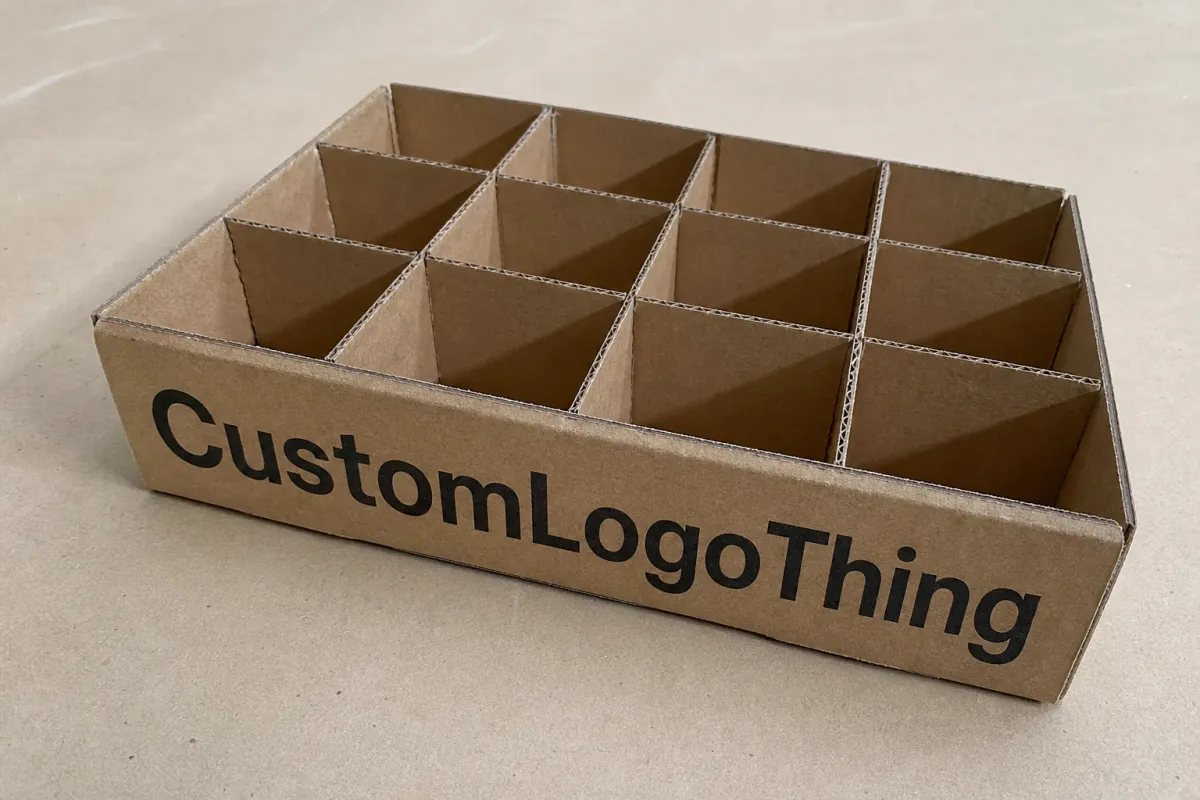
Packaging failures do not always start with a crushed carton. A box can arrive intact while the product inside has been wandering around just enough to chip glass, scuff coated surfaces, loosen closures, or deform corners. Custom divider inserts for boxes stop that movement at the source by creating fixed compartments that keep items apart.
Put simply, a divider insert is a structure inside the box that separates products. It is not loose void fill, which only occupies empty space. It is not always a molded tray either, which typically cradles one item in a formed cavity. Dividers are usually panel-based. They split the interior into cells, lanes, or rows. That makes them useful for mixed sets, multipacks, and product families where the pieces are similar but not identical. A generic partition can provide rough separation. A custom divider is sized to the product, the carton, and the actual shipping risk.
The job breaks down into four parts. Separation keeps items from knocking into each other. Stabilization limits shifting when the carton gets handled. Presentation makes the unboxing look planned instead of thrown together. Damage prevention is the business result, especially when chips, leaks, or cracked closures would trigger returns. Those jobs show up differently by category. Cosmetics need clean presentation and scratch control. Glassware needs impact spacing. Electronics need component isolation. Candles need upright support and protection from scuffing. Beverage kits need compartment strength and enough clearance to prevent label abrasion.
Category matters even more when a brand sells sets with mixed dimensions. A candle jar, matches, a small card, and an accessory do not behave the same way in transit. A divider insert keeps those pieces from turning into one impact mass. That is why the real question is not “Will the box close?” It is “Will the contents still be in the right place after vibration, stacking, and a 24-inch drop?”
For teams building a new product packaging system, the divider is often the cheapest place to fix an expensive problem. A few cents in board, cut, and assembly can save dollars in replacements, customer service time, and lost repeat purchases. That is why many packaging engineers treat custom divider inserts for boxes as part of the primary protection system, not a nice-to-have accessory.
There is also a less glamorous truth: once a product starts failing in transit, the damage spreads beyond the affected unit. Replacements eat margin. Support teams spend time on photos, claims, and reships. Retail buyers get nervous. The insert is one of the few parts of packaging that can reduce all of those costs at once if it is specified correctly.
How custom divider inserts for boxes work inside the box
The structure is simple. The behavior is not. Divider inserts usually use slotted panels that intersect into cells, cross dividers that create equal compartments, or nested panels that lock into a grid. Some designs use die-cut folds with tabs and locking points. Others stay flat and are assembled by hand. The goal never changes: hold each item in a defined location while using as little material and labor as possible.
The best way to think about performance is in three directions. Side-to-side movement is controlled by the cell width and the stiffness of the side panels. Front-to-back movement depends on the fit between the insert and the internal box length. Vertical compression is handled by the divider height, the box closure, and the resilience of the board. If any one of those dimensions is off, the product can still shift. That is why good fit is measured in millimeters, not inches. A 3 mm gap may be fine in one application and a disaster in another, depending on weight and finish sensitivity.
Material choice changes both performance and perception. Corrugated board is the common default because it offers value, crush resistance, and easy sourcing. SBS or chipboard works for lighter loads and a cleaner appearance, especially in premium retail packaging. Paperboard suits lighter products or jobs where print quality matters. Foam alternatives can help with very fragile items, but they bring recycling, sourcing, and disposal questions with them. If recycled fiber content or certification matters, ask about FSC-certified supply options and chain-of-custody documentation at fsc.org.
Process Changes the Cost structure too. A pre-assembled divider removes labor from the packing line but takes up more cube in shipment. A flat-packed divider saves freight and warehouse space, then asks someone to build it. Machine-inserted structures can improve speed at scale, though they usually need a stable design and enough volume to justify the setup. Hand-inserted formats land in the middle. They are flexible, but sloppy design shows up fast when assembly gets annoying.
One thing buyers miss all the time: the insert does not work alone. It interacts with the outer box dimensions, product geometry, and internal clearance. A perfect divider in the wrong carton is still wrong. The right move is to treat the insert and the carton as one packaging system, not two separate purchases. Branded packaging programs tend to do better here because the structure gets designed as a unit, then adjusted for print, logistics, and fulfillment.
For validation, many teams use distribution tests such as ISTA methods or ASTM-based protocols, depending on the shipping profile and the level of risk. A light retail kit and a heavy ecommerce shipper do not need identical testing. The point is to expose the package to realistic stress, not just make it look neat on a desk. If a supplier skips test data entirely, that is not efficiency. That is wishful thinking with a quote attached.
Cost, pricing, and MOQ
Pricing for divider inserts comes down to a small set of variables, and each one can move the quote more than buyers expect. Material grade is the first. A lightweight paperboard divider will not price the same way as a stronger corrugated structure. Board thickness matters too, especially when the cell walls need to resist compression. Geometry matters next. A simple 2-cell insert is faster to make than a 12-cell grid with irregular cut lines. Add print, coatings, or lamination, and the number climbs again.
MOQ, or minimum order quantity, is where the conversation gets real. Low-volume orders are possible, but custom tooling and hand assembly can make tiny runs expensive. A buyer ordering 250 units may pay a much higher unit price than a buyer ordering 5,000 or 10,000. That does not automatically make the small order a mistake. It means the math changes. For prototype work, market tests, or short seasonal runs, a simpler design often beats a complex one. For ongoing production, the setup cost spreads out and the per-unit price drops.
Tooling and setup can also make the first quote misleading if you only compare unit price. One supplier may quote a lower per-piece number but add higher tooling, higher freight, or higher assembly labor. Another may look more expensive on paper but include better fit, better board, and fewer downstream losses. Total landed cost matters more than the headline unit price. That includes inbound freight, carton freight efficiency, on-site assembly labor, and the hidden cost of damaged goods. A slightly higher insert cost can be cheaper than a broken case of products. Numbers are annoying like that, but they do tell the truth.
| Insert type | Best fit | Typical strengths | Common cautions | Indicative unit cost |
|---|---|---|---|---|
| Corrugated divider | Glass, candles, beverage kits, mixed sets | Strong, recyclable, familiar to converters | Can feel bulky if overbuilt | $0.18-$0.45 per set at mid-volume, depending on cell count and board grade |
| Chipboard or SBS divider | Lightweight retail packaging, cosmetics, premium sets | Cleaner appearance, good printability | Less crush resistance than corrugated | $0.12-$0.38 per set, depending on caliper and cut complexity |
| Paperboard fold insert | Small, light products with limited transit risk | Low material use, compact flat-pack shipping | Limited for heavier or fragile items | $0.08-$0.25 per set for simpler designs |
| Foam or hybrid insert | Very fragile items or high-value components | Excellent cushioning and positioning | Recycling and sustainability questions may arise | $0.30-$1.10+ per set depending on density and fabrication |
Those numbers are not universal, and they should not be treated as a quote. Still, they help as a planning range. A buyer specifying a 4-cell corrugated divider at 5,000 units will usually see a very different price from a team specifying a 12-cell print-facing insert at 500 units. The trick is to compare apples to apples: cost per pack, cost per protected product, and total landed cost. That framing usually exposes the real savings faster than a single per-piece line item.
It helps to ask suppliers for multiple versions side by side. Request a baseline design, a lower-cost alternative, and, if needed, a premium option. The spread can be revealing. Sometimes the premium version is actually cheaper in the full system because it packs faster, breaks less often, or ships flat more efficiently. For procurement teams, that is not a philosophical point. It changes margin.
Ask for assumptions in writing, too. If a quote depends on a certain board source, a certain glue pattern, or a specific assembly method, that needs to be visible before the order moves. Surprise substitutions are how packaging programs drift from “approved” to “why is this suddenly different?”
Process and timeline
A good divider program usually moves through intake, specification, sample development, approval, production, and shipment. The first step is not artwork. It is information. A supplier needs the internal box size, the product dimensions, the product weight, fragility level, pack count, shipping method, and any presentation requirements. If the package has to support branded packaging goals, say that early. Print and structure affect each other.
The useful brief is specific. “The box is 12 x 9 x 4 inches” is not enough if the usable inside dimension changes after the score and glued seam are counted. “The item is 3.8 inches wide” is not enough if the item has a pump top, fragile corner, or seasonal variation in fill level. Better measurements usually mean fewer sample rounds. That matters even more for custom printed boxes and inserts that need to work together on the same production schedule.
A few timeline stages trip buyers up again and again. Design iteration takes longer than expected because one small dimension can affect the whole grid. Sample approval drags when different departments are chasing different goals: operations wants fast pack-out, sales wants presentation, finance wants lower cost, and QA wants better protection. Tooling or die creation adds another step, even when the insert looks simple. Material sourcing can add delay if the board grade or finish is not in stock. Freight booking can move the finish date again, especially when the program depends on import transit or a tight launch window.
Simple divider formats can turn quickly. If the structure is straightforward, stock board is available, and the sample passes fast, production can move. Complex inserts need more buffer. That is not a supplier problem. It means the design is doing actual work. A tight schedule is one thing. A stable design is another. The smart move is to protect both.
Most teams should budget for at least one sample cycle and one internal review cycle. If the product is fragile or high value, add a pilot run. That small run catches issues CAD and a single mockup will miss. A four-hour review meeting is cheap compared with a bad launch lot.
For validation, compare the prototype against a simple test plan:
- Pack the product in the final insert and close the box normally.
- Shake the carton by hand to check for side-to-side rattle.
- Drop-test the packed sample from the likely handling height, if appropriate for the product class.
- Open the box again and inspect scuffing, corner movement, and item spacing.
- Repeat after simulated stacking or compression if the carton will sit in a warehouse or palletized lane.
This is where procurement and operations need to agree. A better spec is not just a better drawing. It is a better shared decision. If the spec lives only in one person’s inbox, it is not a spec. It is a future problem.
Key performance factors: fit, materials, and load
Fit tolerance is the first performance variable, and it deserves more attention than it usually gets. If the insert is too tight, assembly slows and the product can get damaged during insertion. If it is too loose, the item can move enough to hit the divider walls anyway. A proper fit is not zero clearance. It is enough clearance for insertion, but not enough room for repeated travel. That difference is tiny in a spreadsheet and obvious in a damaged return.
Load and stacking pressure matter next. A divider is not only resisting a quick drop. It also has to support product weight while cartons sit in a warehouse, ride in a trailer, or get stacked with other inventory. Some constructions look fine in a short handling test and then weaken under sustained compression. That is one reason many pack engineers reference ISTA or ASTM methods when qualifying a setup. The goal is to see how the insert behaves under repeated load, not just one visual check.
Environmental conditions can shift performance too. Humidity softens some paper-based structures. Temperature swings can change board stiffness. Long transit times give products more time to settle, especially if the shipper is only partly filled. If the destination climate varies widely, factor that into the spec. A divider that works in dry storage may not behave the same way in a damp facility or a hot summer linehaul lane.
Aesthetics still matter, even when the divider is hidden. Premium product packaging is not only about the outer print. A clean insert with straight cuts, consistent fold lines, and a tidy opening experience can make the whole pack feel deliberate. A rough edge can make a premium box feel rushed. That is especially true in retail packaging, where the opening sequence is part of the perceived value.
Sustainability and sourcing should sit in the same conversation. Fiber-based structures are easier to recycle than many foam options. Flat-pack shipping can reduce freight volume. FSC-certified board can support procurement goals tied to responsible sourcing. None of that means fiber is always the answer, because very fragile products sometimes need a hybrid structure. It does mean the board choice should be judged on performance and disposal. Buyers increasingly ask whether a package can be separated, recycled, or reused without a scavenger hunt.
There is also a brand reason to get this right. A good insert lowers the odds that a customer opens the box to find a loose bottle, a broken closure, or a pile of scuffed parts. That kind of experience affects returns, reviews, and repeat orders. The insert is part of package branding, even if nobody takes a glamour shot of it.
Common mistakes when ordering divider inserts
The first mistake is measuring the outside of the box instead of the usable interior. Basic? Yes. Still common? Also yes. Board thickness, score lines, and seam construction all reduce internal space. A box that measures one way on the outside can behave differently inside by several millimeters. In divider work, several millimeters is enough to turn a secure fit into a sloppy one.
The second mistake is designing around one sample product instead of the real production range. A filled jar may vary slightly from batch to batch. A glass piece may have normal manufacturing tolerance. A cosmetic bottle might change shape at the shoulder or neck. If the divider is fit to one perfect sample, it can fail once normal variation appears. Good specifications account for the actual range, not the best-case unit.
Overbuilding is the third trap. More material does not automatically mean better protection. A thicker divider can add weight, cost, and assembly time without fixing the part of the pack that actually fails. Sometimes the real fix is adjusting cell size, adding a small lock feature, or changing the board caliper. The better design is not always the heaviest one. Shocking, I know.
Skipping transit testing is another common miss. A mockup can look excellent on a table and still fail in vibration or compression. The insert may hold products apart in the hand but not during a pallet move. The carton may close cleanly but leave too much vertical play. If the program has enough value to matter, test it before volume commitment. That is especially true for custom divider inserts for boxes used in high-value ecommerce or seasonal gifting, where returns can move quickly.
The last mistake is organizational, not structural. Different teams hold different parts of the spec, and no one owns the final version. Sales says one thing. Operations says another. Purchasing approves a third. Then the reorder arrives and nobody remembers which file was final. The best spec is written, shared, and locked. That is boring. It is also how packaging programs stay stable.
Common warning signs that the spec needs work:
- The product rattles when the box is shaken gently.
- The insert tears at the score line during normal assembly.
- The box needs too much force to close.
- Customer complaints mention scuffs, chips, or shifted contents.
- The pack passes visual review but fails after compression or vibration.
If two or more of those show up, the issue is probably structural, not cosmetic.
Expert tips and next steps
Start with a one-page spec sheet. Keep it practical. List internal box size, product dimensions, target quantity, fragility level, pack configuration, and any compliance or brand requirements. If the insert needs to support a specific unboxing experience, say so. If the product ships with a liquid, a closure, or a printed finish, note that too. Small details are not clutter. They are the things that decide whether the insert works on a real production line.
Request at least two samples. One should match the exact design. The other should test a lower-cost alternative. That comparison often reveals whether the savings are real or just wishful thinking. In some cases, the cheaper sample performs almost as well and cuts material use. In other cases, the better-looking sample saves labor because it assembles faster or needs less correction on the line. A sample that looks expensive can still deliver a lower total cost.
Use a simple test plan before volume approval. Pack the box, shake it, drop it if the product category allows, and reopen it. Then inspect where the products moved and whether the insert held its shape. If you have time, repeat the process after a brief compression test. That gives a clearer view of how the package behaves once it has spent a few hours in a warehouse or under stacked load. For high-value shipments, a small pilot run is worth the extra step.
Ask the supplier where cost can be removed without increasing risk. The answer may be straightforward: reduce the cell count, simplify the cut pattern, change the board grade, or move from pre-assembled to flat-packed delivery. Sometimes the best savings come from changing the insertion sequence, not the insert itself. That is the kind of practical adjustment packaging buyers appreciate because it respects both quality and margin.
Keep the final approval file in one place. If you expect to reorder, make the record easy to find. Store the final drawing, the approved sample photos, the board spec, the box dimensions, and the pack-out instructions together. That makes the next run cleaner and easier to audit, especially if multiple people handle purchasing over time.
If your team is also planning custom printed boxes or a broader branded packaging update, align the insert decision with the carton spec instead of treating it as a separate afterthought. The best results usually come from one coordinated system, not a pile of disconnected fixes. For buyers building that system now, custom divider inserts for boxes are one of the simplest places to improve protection, control cost, and make the product feel more deliberate from the moment the box opens.
The practical takeaway is simple: define the product, measure the usable interior, test the fit under real handling, and approve the insert as part of the full packaging system. Do that, and custom divider inserts for boxes stop being filler and start doing the job they were meant to do.
FAQ
What do custom divider inserts for boxes protect against?
They keep products from hitting each other, which reduces chips, scuffs, leaks, and broken closures during transit. They also limit product movement inside the carton, which is often the real cause of damage after a box is dropped or stacked.
Which material works best for custom divider inserts for boxes?
Corrugated board is usually the default for strength and value, while paperboard or chipboard can work for lighter products and premium presentation. Foam or hybrid structures may be better for very fragile items, but they can raise sourcing, sustainability, or recycling questions.
How do I measure a box for divider inserts correctly?
Measure the usable inside length, width, and height of the finished box, not the outer dimensions. Then measure the product itself and leave only the clearance needed for insertion, movement control, and any wrapping or filler.
What affects the price of custom divider inserts for boxes most?
Material choice, divider complexity, number of cells, quantity, and whether the insert needs printing or special finishing. Labor and tooling also matter, especially when the insert must be hand-assembled or die-cut in a complex shape.
How many samples should I test before ordering divider inserts?
At minimum, test one design sample and one cost-optimized alternative so you can compare protection and assembly time. If the product is fragile or high value, add a small pilot run and run drop, shake, and compression checks before scaling up.

